The Ellison Paradox: How a Hollywood Twist of Fate Could Finally Heal Star Trek’s Greatest Rift
There is a deep, almost poetic Hollywood irony playing out right now with the future of Star Trek, and it centers entirely around one last name: Ellison.
Over fifty years ago, sci-fi titan Harlan Ellison wrote The City on the Edge of Forever—widely considered the greatest episode in Star Trek history.
Yet, that masterpiece sparked a bitter, lifelong fallout between Harlan and Gene Roddenberry over script rewrites, lost credit, and corporate interference.
Harlan spent decades as an outspoken, fierce critic of how Hollywood handled the franchise he helped elevate.
Now, decades later, David Ellison has stepped in to take the helm of the very studio that owns Star Trek. Whether or not the two share any distant Midwestern family roots, the cosmic symmetry of an Ellison finally holding the keys to the kingdom is straight out of a movie script.
Even better, I agree with Rod Roddenberry: for the first time in a long time, Star Trek is in the hands of someone who genuinely loves science fiction and respects the mythos. It is about time the franchise had an owner who understands what makes it tick rather than treating it like just another corporate asset.
And honestly? Wouldn't it be the ultimate, full-circle irony if David Ellison leaned into his namesake's legacy by bridging universes?
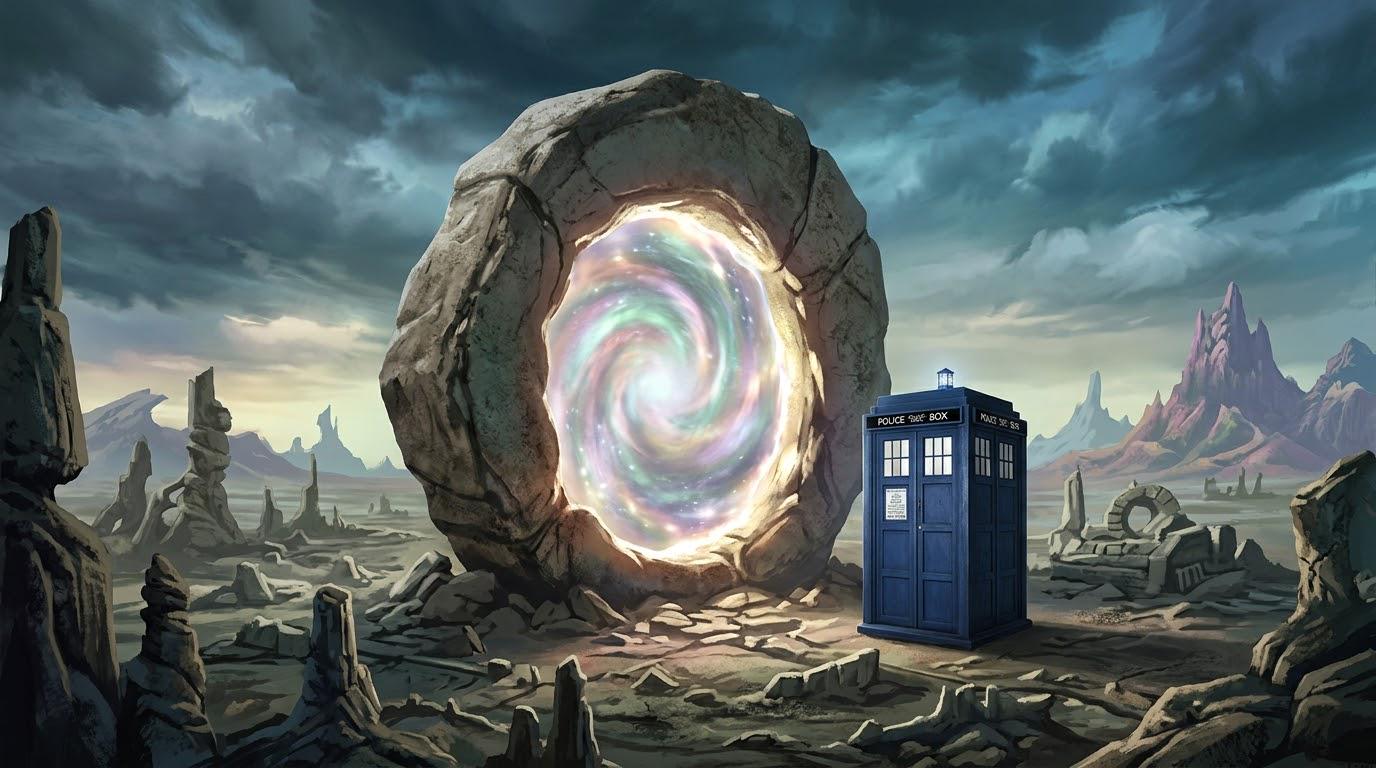
Imagine how incredible it would be if Star Trek finally found a way to officially tie the Guardian of Forever into the wider lore of the Doctor—honoring Harlan’s creation by blowing the doors off its limits and connecting it to the ultimate time-traveler.
We've already got a massive, top-secret narrative framework sketched out for how that crossover could work (and trust me, the details are staying locked in the vault for now). But history has a funny way of coming full circle.
The echoes of creative giants—and the feuds that shaped them—can finally find peace in a universe where time heals all wounds.
Here’s hoping David Ellison sees the magic sitting right in front of him, because the Guardian is still waiting.