r/Sufism • • 22h ago

A look into the traditional study of the Hanbali madhhab (Aqidah, Fiqh, Tasawwuf)

2 Upvotes

How much of a classical madhhab do we actually encounter when studying Islamic jurisprudence today? Beyond individual rulings and the opinions of particular scholars, there is a rich history of scholarship, interpretation, debate and transmission that often goes unexplored, especially in English.

This is something I've been reflecting on through my studies at Al-Madrasah al-Hanbaliyyah, and I thought it might make for an interesting discussion.

The Madrasah teaches the Hanbali tradition in both ʿaqīdah and fiqh, through classical texts and the scholarly methodology that developed around them.

One aspect I particularly appreciate is that its approach isn't centred on a single period or personality. It begins with Imam Ahmad ibn Hanbal رحمه الله and seeks to understand the tradition through the generations of scholars who preserved and developed it.

This includes learning how the school distinguishes between the various narrations attributed to Imam Ahmad (riwāyāt), the juristic positions developed by later scholars (wujūh), and the positions ultimately recognised as the relied-upon view of the madhhab (muʿtamad).

This is also relevant when approaching scholars such as Ibn Taymiyyah رحمه الله. His immense contributions to Islamic scholarship, and particularly to the Hanbali tradition, are well worth studying. At the same time, understanding a madhhab historically means recognising that its scholarship extends across generations, with its own established methodology and authorities. One can deeply respect and benefit from Ibn Taymiyyah without assuming that every position he held necessarily represents the relied-upon position of the school.

I think this broader approach to studying the intellectual heritage of Islam is valuable regardless of one's own madhhab.

The principal teacher is Shaykh Muwaffaq al-Dīn Abū Muslim Yūsuf ibn Ṣādiq al-Ḥanbalī. He studied with scholars at al-Azhar and beyond, and has taught Hanbali fiqh, hadith and tafsīr. His studies span several Islamic disciplines, including uṣūl al-fiqh, ʿaqīdah, hadith sciences and tasawwuf. He has also authored works including Foundational Principles of the Hanbali Madhhab and a commentary on Ibn Qudāmah's Lumʿat al-Iʿtiqād.

The Madrasah has also been making more of its foundational curriculum accessible in English. Recent studies include Ibn Ḥumayd's al-Risālah al-Jāmiʿah, which brings together fiqh, ʿaqīdah and matters of the heart; Ibn Qudāmah's Lumʿat al-Iʿtiqād; and Ibn al-Mulaqqin's al-Tadhkirah. These introductory classes have only recently got underway following some delays.

For anyone interested in the subject, Shaykh Yūsuf has also given a discussion on the study of Hanbali fiqh: its classical texts, curriculum and methodology:

https://www.youtube.com/live/nkOniUFazVs?si=qWNg7x2BJm6OqT9f

I thought this might be of interest not only to those studying the Hanbali tradition, but also to anyone curious about how the classical madhhabs functioned as complete scholarly traditions, and how their knowledge was transmitted across generations.

I'd be interested to hear people's thoughts, particularly from those who have studied the traditional madhhabs or explored their classical curricula. How important do you think it is to understand a madhhab through its own historical development and methodology, rather than primarily through the opinions of individual scholars?

r/Sufism • • 1d ago

The prophet ﷺ always smiled at people though he carried a lot of grief

29 Upvotes

السلام عليكم ورحمة الله وبركاته

How does one follow the sunnah of sincerely smiling at others, though that day they may be sad? How does one not let inner thoughts and worries effect their sincerity in their smile towards others and glad tidings towards them? How does one give to others though they feel broken?


r/Sufism • • 1d ago

Why doesn't anyone in the west revive the... Muslim (!) concept of Langar?

22 Upvotes

Assalamu alaykum everyone,

It just came across my mind that Sikhs seem to be the most well-liked religious community across the West and I think one of the reasons for their popularity is that they provide Langar, which are basically free hot meals, in their temples everyday, for anyone, regardless of faith, ethnicity, etc.

I then wondered where this concept might have come from and was somewhat surprised to find that Indian Sufis were particularly known for providing Langar before the Sikhs instituionalised it - this surprised me as I've never heard of Muslim institutions in the west providing food to everyone in this way, although some/many do provide food banks.

However, the benefit of a Langar system over food banks is that it goes a step further by providing already cooked meals and a setting to enjoy them in, while also allowing non-Muslims and Muslims to socialise over their food and hence get to know each other, rather than living with the fear of the unknown 'other' which has caused so many infamous problems.

Importantly, let's not forget that our Prophet sws has said 'spread salam and feed people... then you'll enter Paradise with peace' - he didn't restrict us to only feeding Muslims. There's also the saying that 'food is the way to a man's heart'.

I know that something like this may sadly be hard to imagine for many of us, maybe mainly because of the isolationist attitude of many Muslims, but I would be interested to hear if anyone knows of anything like this already in the works or even already started in the west.

For what it's worth, I live in North London and the only similar such project I know around here is Rumi's Kitchen, but they only currently seem to provide free meals to the homeless (may Allah reward them for that, regardless, Ameen).

Would love if anyone would want to work with me to try and start something like this around here or just share your thoughts about this

Many thanks


r/Sufism • • 1d ago

Even a good person will regret

6 Upvotes

Excerpt from Ibrahim Dewla’s speeches and notes.

What is the outcome of deception? The outcome of deception is regret.

Always.

There is a mosque nearby that has a caretaker. Sometimes I would give him money so he could buy tea and refreshments for himself. At that time, the twenty-currency note had the same colour as the thousand-currency note. By mistake, I gave him the thousand-currency note.

I was looking for the thousand-currency note but it was no longer there. I realized I had given it to the mosque caretaker. It’s now inappropriate to ask him to return the thousand-currency note.

Because once you give away something to someone that person becomes its owner.

This was an example; i.e. a person applying their ability or resources to the wrong place when it should have gone somewhere else. The outcome of which is regret.

Once the Prophet (saw) said, “Every dying person will have regret”

The Companions (rad) asked, “How can every dying person regret?”

Because there could be good people dying as well. Some possess virtues; some have attained excellence. Why would a good person dying experience regret?

The Prophet (saw) replied, “The evil doer will regret because of his wrongdoing. While the good doer will regret because they did not do more.”
(Tirmidhi 2403)

Because in the hereafter, a person will witness the great benefit they will receive for their good actions.

‘Here, I am rewarded greatly for my deeds. Not just for my deeds but for my efforts. Not just my efforts but for my intention as well. Not just for deeds but for consistency in carrying them out.’

A person receives reward simply for waiting for the prayer.

In Islam, there are so many opportunities to gain reward. This is why the Prophet (saw) explained that they will experience regret in not taking advantage of all those opportunities.


r/Sufism • • 1d ago

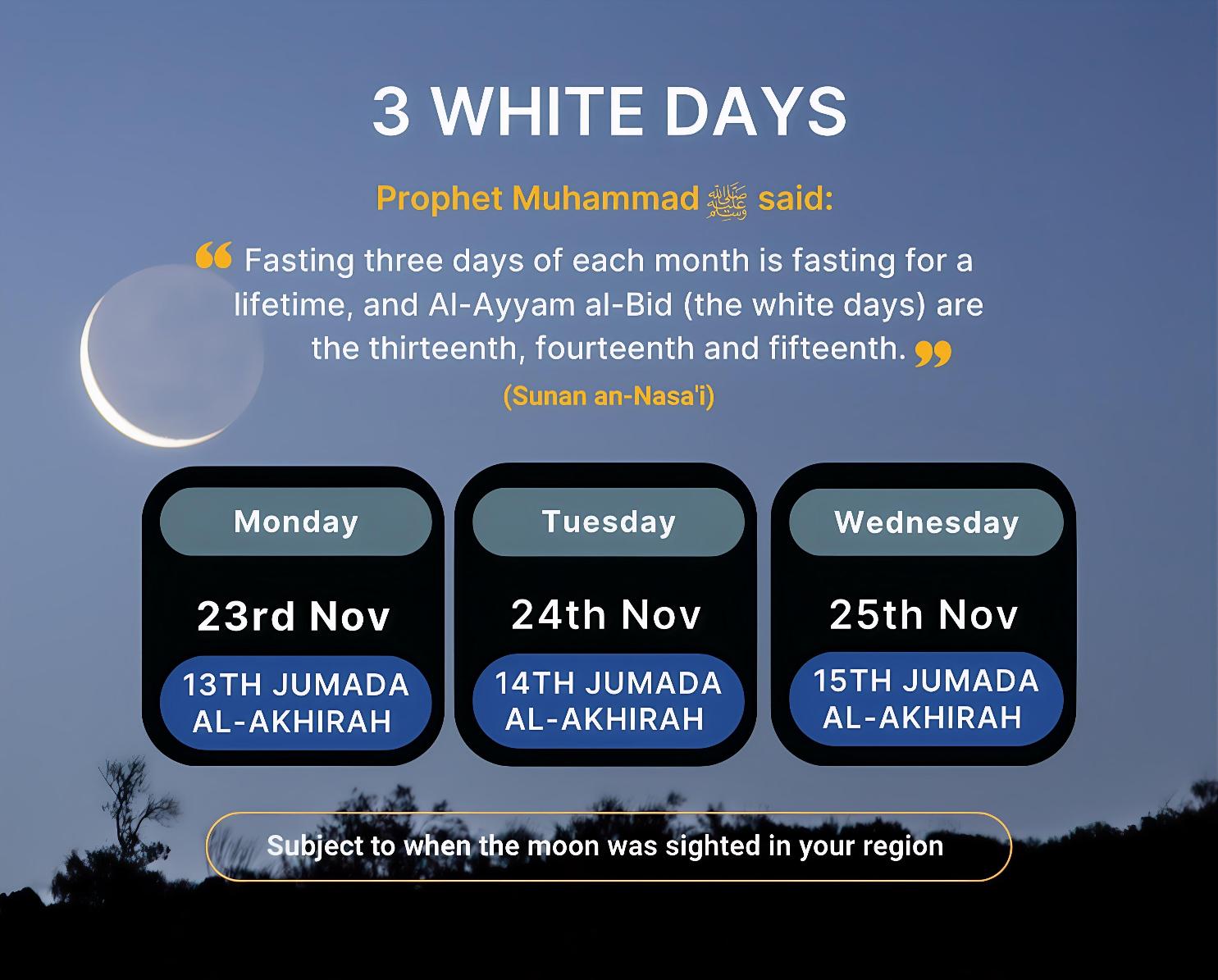
The White Days: Three Days of Fasting, a Lifetime of Reward | 23–25 November

Post image
5 Upvotes

r/Sufism • • 2d ago

Eat from others or feed others?

3 Upvotes

Excerpt from Ibrahim Dewla’s speeches and notes.

We were made to feed others. Are we supposed to eat from others?

No, others should eat from us.

Why? Because Allah has shown us the correct path. ‘You feed others.’

The Prophet (saw) said, “Spend in the name of Allah; Allah will spend on you. Don’t withhold; if you withhold, Allah will withhold.”
(Bukhari 1433)

Every day, two angels make supplication when the sun rises. This is their daily litany.

The Prophet (saw) said, “There is never a day wherein servants (of God) get up at morning but are not visited by two angels.

One of them says: 0 Allah, give him more who spends (for the sake of Allah),

and the other says: 0 Allah, bring destruction to one who withholds.”
(Muslim 1010)

Allah will continue to provide for us and we will continue to feed the servants of Allah. The prophetic temperament is to feed others. We are to feed people, show them kindness and invite them. This should be our temperament.

When the Ansar accepted Islam and people arrived in Madinah, they didn’t sell their food to them. Nor did they use them to expand their business.

Rather, the Prophet (saw) would ask during Maghrib time, “These people are gathered. Who will feed them?”

Some people would come to learn the religion. One person would say give me two. One person would say give me three. Sad ibn Ubadah (rad) would take eighty. The Prophet (saw) would take people to his home.
(Hayatus Sahaba Vol 2)

This is why Allah granted them respect and honour.


r/Sufism • • 2d ago

Esistono ancora relazioni profondamente compatibili?

Thumbnail reddit.com
2 Upvotes

Ciao a tutti sono F24, dal Veneto.

Volevo sapere se anche voi, la maggior parte qui dentro dopo aver cercato di conoscere qualcun\* la conoscenza non prospera come se la maggior parte fosse così drenata interiormente nell'investire per una conoscenza profonda, legata a condivisione degli stessi interessi di vita, valori che possono essere legati ad un tema inerente all'arrichimento interiore (coscienza, mente e cuore)

È così difficile soprattutto per me incontrare qualche conoscenza genuina e profondamente interessante?


r/Sufism • • 3d ago

I want to learn about Sufism recommend some sources

5 Upvotes

I want to learn about Sufism. I’m drawn to its message of peace, love and mysticism. Sufism was native to my land before different sects of Sunni Islam spread however traces still remain in our culture. I want to rediscover the sect which was beautiful enough to make my ancestors convert through will.


r/Sufism • • 3d ago

Concerned someone close to me is in a cult around Naqshbandi Shaykh Nurjan Mirahmadi — red flags or just intense devotion?

Thumbnail
gallery
21 Upvotes

Someone very close to me has become completely consumed by Shaykh Nurjan Mirahmadi (a Naqshbandi Sufi shaykh), and I’m honestly worried about them.

To give some context, this is a highly accomplished, intelligent person. Yet lately, their entire online presence revolves exclusively around the Shaykh—they post nothing about their own personal life anymore, EVER. They use his photo as their profile picture, watch hours-long livestreams of him talking, and listen to AI-generated music made through his platform. Seeing someone so sharp and independent funnel all their attention into one leader is really unsettling.

While digging into his organization, I came across a lot of things that raised serious red flags for me:

\* Specific allegations from a former inner-circle member (from the "In Shaykh’s Clothing" website): I read an interview with a former follower ("Zayd") who moved to the shaykh's city away from his family and entered his inner circle. He alleged several disturbing things:

\* Neglecting daily prayers and lying about it: Zayd claimed he spent an entire day on a trip with the shaykh and never saw him stop to pray once. He also shared an account from another follower (murid) who was sitting with the shaykh when the time for Dhuhr (noon prayer) entered; when asked if he wanted to pray, the shaykh claimed he had already prayed—even though the follower had been sitting right next to him the entire time and knew that was impossible. Instead of questioning it, the follower rationalized it as a spiritual lesson about "not displaying his actions."

\* Psychological control and isolation: According to Zayd, followers were told to shut off their logical faculties (with the shaykh allegedly saying, "Everything I say here is to confuse you"), discouraged from reading books not written by him, forbidden from meeting at each other's homes without his permission, and barred from discussing religion except with a few "authorized" people.

\* Intimidation, bullying, and deflecting criticism: Zayd described a cycle of public bullying and love-bombing, saying followers were told they were replaceable and everything was a "test." He alleged the shaykh claimed that doubting your shaykh is more sinful than looking at something haram, deflected criticism by claiming immunity as a descendant of the Prophet (Ahlul Bayt), and warned that leaving the tariqa meant leaving the Prophet and would bring a life of misfortune (even claiming someone who left was punished with a disabled child). Followers were also allegedly told privately not to act "cultish" when family visited so they wouldn't raise suspicions.

\* Unorthodox theological claims: Zayd also claimed that in December 2016, the shaykh taught that the Prophet Muhammad was the father of Jesus (Sayyidina 'Isa) via Angel Jibril bringing his "seed" to Maryam, and that the "Father" in the Lord's Prayer refers to the Prophet.

\* Heavy AI ecosystem and female AI singers: His organization heavily pushes AI tools—including "Shaykh AI" (a 24/7 spiritual companion app) and "Mystic Meditation Records," an app featuring AI-generated music across hip-hop, reggae, R&B, and country. Notably, several of the featured AI artists are female personas (like "Amaniii"), which seems glaringly contradictory given well-known hadiths condemning female singers/singing entertainment in traditional Islamic jurisprudence.

\* Claims about jinn in microchips and end-times narratives: I also found summaries of his talks claiming that jinn taught humans to make silicon microchips out of sand so they can inhabit smartphones, communicate with and shape human imagination, and drain users' energy—tying phone use into apocalyptic narratives about AI, surveillance, the Dajjal, and Imam Mahdi.

I don’t want to jump to unfair labels or disrespect genuine Sufi spirituality, especially since I’m an outside observer looking at their social media and reading former members' accounts. At the same time, the total erasure of their personal identity online, hours of passive livestream consumption, and the extreme control and theological claims alleged against this group make me wonder: is this a cult?

For anyone familiar with Shaykh Nurjan Mirahmadi, Naqshbandi tariqas, or high-control groups in general:

Are these recognized red flags within Sufi communities or cult recovery spaces?


r/Sufism • • 3d ago

How to open the heart to Islam

2 Upvotes

Afflicted by what I can only perceive to be sickness of the mind, heart and soul. Negligent, lazy, confused and overwhelmed when it comes to seeking the truth. Corrupted mind with tendencies to question Allah. What does it take to be sincere? How to save myself from the fire? How to have certainty? How to accept the truth?


r/Sufism • • 4d ago

New to this

14 Upvotes

Salam alaikum everyone.

Insha'allah anyone reading this finds peace and blessings in every aspect of their lives ameen.

My question is this.

How do I get into sufism/esoteric islam? Basically I converted to Islam 10 years ago because islam logically makes sense. But I've never really felt anything in my heart. Thats not to say I've literally nothing. But I've never experienced khushoo or felt anything when I've recited quran etc.

I did feel my heart open to Islam (I think.) Which basically felt like pure warmth and joy. Plus I got a tiny bit emotional when I was in Istanbul praying at the blue mosque.

Does anyone have any advice on how to further my understanding around sufism? I'm reading poetry by Rumi and even write my own at times. But basically I'm trying to become a more spiritual muslim over all and not just an outwardly practicing one. (Hopefully this makes sense.)

Also I'm in East London so if anyone knows of any tariqas/sufi/dhikr groups around there please feel free to comment them or message me.

May Allah bless you all. Ameen.


r/Sufism • • 4d ago

Mysticism and Musketballs: How the Sufi Orders Led Some of the World’s Most Robust Anti-Colonial Revolutions

Thumbnail
oliverzimbelman.substack.com
24 Upvotes

I’m hoping this is allowed here. This is less self-promotion than it is a genuine attempt to start a discussion. As a Muslim interested in Sufism and the largely Muslim-led national liberation movements of the 19th-20th centuries, I worked on this piece at first because I was genuinely interested in how Sufis were involved in these revolutionary struggles.

What I found was a rich and vibrant history of anti-colonial struggle being led (many times directly into combat) by Sufi Sheikhs. The examples began to pile up, until I was forced to literally leave out some great historical figures.

If you decide to glance at the piece, know it was written by a layperson with limited knowledge of Arabic and Sufism above just surface level. Please feel free to comment directly in the piece or else here on Reddit if you’d like to discuss what’s written here.


r/Sufism • • 4d ago

Send salawat upon the Prophet ﷺ

Post image
22 Upvotes

r/Sufism • • 5d ago

how do you justify hell (cruel and unusual punishment)?

10 Upvotes

theres a minority opinion that hell is not eternal. however how do you even justify the CRUEL punishment of hell as described in the Quran even if its temporary?

especially for sufis, who are all about cleansing the heart, love, compassion etc. how do you find even a temporary hell for sins or disbelief to be just?

how can human beings be more compassionate than God to find this torture unjust and evil?

is there a justifiable reason for this punishment that im not aware of?

is there an opinion among the major schools of kalam that hell is not LITERAL as described in the Quran and how salafis might view it but instead it is a metaphor or something?


r/Sufism • • 5d ago

What is Nur-muhammad, muhammadan light

7 Upvotes

What exactly is the nur muhammad is it a light that muhammad (Pbuh) has and is named only after Muhammad (Pbuh) because the real historical muhammad (Pbuh) is a mirror of that light. Or it is the prophet himself in a way that the real historical muhammad (Pbuh) is a first creates being like Jesus in christianity?


r/Sufism • • 6d ago

Ayatul Kursi - spiritual power

13 Upvotes

Salam, I have been deep diving into Ayatul Kursi recently and I am just curious because it is said to be very powerful in the spiritual realm (for a lack of better words) as well. Just curious if anyone would share their experiences?


r/Sufism • • 6d ago

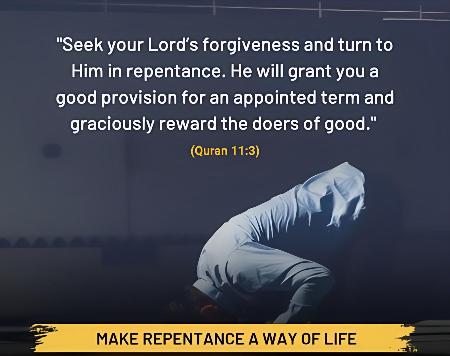
Turn Back to Allah SWT

Post image
12 Upvotes

r/Sufism • • 6d ago

Sufi books for young teens

5 Upvotes

Trying to develop some Sufi thoughts and life stories of pious, any suggestions


r/Sufism • • 7d ago

The Verse of the Throne (آية الكرسي) In Thuluth Script

Post image
2 Upvotes

r/Sufism • • 7d ago

صلوا عليه وسلموا تسليما

Post image
16 Upvotes

قال سهل بن عبد الله التسترى قدس سره الصلاة على محمد افضل العبادات لان الله تولاها هو وملائكته ثم امر بها المؤمنين وسائر العبادات ليس كذلك (يعنى ان الله تعالى امر بسائر العبادات ولم يفعله بنفسه)


r/Sufism • • 7d ago

I Need Advice

8 Upvotes

I'm currently at a point in my life where I'm confused about which path to take. I have several opportunities ahead of me, and they're all good in their own ways.

One option is to work in another country, a non-Muslim country where I've spent some time before. I don't particularly love or hate the place, but practising my deen there is undoubtedly more challenging. Finding halal food is harder, and although the environment is generally indifferent towards Islam and the people I know and been in contact with are really accepting, it still isn't necessarily a place that encourages religious practice.

The other option is to work in Saudi, where I would have easier access to halal food, a more accommodating environment for practising my deen, and the opportunity to perform Umrah more frequently.

The catch is that the salaries differ quite significantly, with the Saudi position paying considerably less. That said, it's still much better than what I could earn if I returned to my home country.

Initially, my thinking was simple: money shouldn't matter as long as my income is halal and I have the opportunity to worship in Saudi. But lately, I've started questioning that reasoning. Is being physically closer to Makkah and Madinah necessarily better for me? If the clarity of our hearts is what ultimately matters, wouldn't it be possible to achieve that in another country, too, even without having the same opportunities for worship?

I mean Awliya of Allah are scattered everywhere, not just centered in the holy city (as far as I know)

Then there's the question of wealth. We're often taught to balance our deen and worldly affairs. If I earn more, wouldn't that also mean having more means to give sadaqah, help others, and spend in the way of Allah?

I've been reading Al-Ghazali's works on the censure of wealth, poverty, and abstinence. One thing I took away is that although poverty can be virtuous, the highest spiritual station is more of reaching a point of indifference towards wealth, rather than being attached to either its possession or absence. Yet, I also hear many Muslims strongly advocating for accumulating wealth so that we can do more good with it. For me myself, so far I live frugally, even though I have the opportunity to live rather lavishly and I try to give more than what I consume. I don't know if that would change if i were to be presented with a higher income.

So what I'm really struggling with is understanding the hierarchy of these virtues. How should we weigh religious opportunities, spiritual growth, financial means, and worldly pursuits when making decisions like these?

For some context, my parents joined a tariqah a couple of years ago, and I'd say it has brought about a lot of positive changes in our family's faith and way of life. I often turn to them for advice, and they sometimes consult their teacher on my behalf. The answers aren't always definite; sometimes I'm simply advised to practise more dhikr, which I do. I understand, to some extent, what Sufism seeks to cultivate and that there are different stations of faith, although I still consider myself to be at the very beginning of that journey. So forgive me if these questions seem rather naive.

I'll be performing istikharah and continuing my dhikr as I seek clarity, but I'm curious to hear other perspectives and insights. If anyone has knowledge or experience with these matters, I'd genuinely love to hear your thoughts.

Jazakumullahu khayran.

If I were to choose myself, what I desire is to go back to my home country and join my family and their tariqah. However, they say, for now I have more opportunities outside, so I'm now wandering the earth. I think that's one part of balancing deen and worldly affairs i guess.


r/Sufism • • 7d ago

What's the symbol of this subreddit called? or represent.

4 Upvotes

I find it cool! Does anyone know what it represents?


r/Sufism • • 7d ago

do i need a sheikh to practice sufism?

9 Upvotes

i believe most sheikhs themselves arent perfect and haven't reached fana. so why should we follow them? it feels more like a cult and it can be dangerous in my opinion. do we need one to practice sufism or can we do spiritual practice on our own too?