r/TheLearnersCabin • • 1d ago

How do you retain, connect, and actually apply what you read instead of forgetting

15 Upvotes

Hi all..I read extensively across philosophy, logic, psychology, business, economics, science, technology, history, and the arts—mostly books, research papers, and articles.

My problem is that I tend to forget much of what I read, and the knowledge remains scattered in my mind. I struggle to connect ideas across disciplines or retrieve relevant information when making everyday decisions. I've tried taking notes in Word and Excel, but they've turned into hundreds of pages of information scattered across different files, subjects, and disciplines, with virtually no connections between them. It's becoming more of an information archive than a useful knowledge system.

My ultimate goal isn't just to accumulate knowledge but to use what I learn to think critically, make better decisions, and improve my daily life.

I'm struggling with two things:

Retaining and connecting knowledge: How do you organize, review, and link information from different sources so it's accessible when needed? How can I build connections between ideas from different disciplines instead of keeping everything isolated? Do you use tools like Obsidian, Anki, or Notion, weekly reviews, or other systems?

Actually applying new knowledge: Even when I learn something useful, I often revert to my old assumptions and habits. For example, I might read a study about improving attention or memory, but when making decisions, I default to my previous understanding rather than incorporating the new evidence. How do you consciously update your mental models and translate new knowledge into lasting behavioral changes?

What practical systems, tools, or strategies have helped you bridge the gap between consuming information, retaining it, connecting ideas, and actually applying what you've learned?

I'm particularly interested in sustainable approaches that don't turn learning into a full-time note-taking or reviewing exercise.


r/TheLearnersCabin • • 2d ago

I read Walden at 19 and again at 31, with rent and a car loan. The lessons I missed the first time

Thumbnail
6 Upvotes

r/TheLearnersCabin • • 2d ago

6 lessons on patience from The Count of Monte Cristo, and where each one showed up in my life

Thumbnail
6 Upvotes

r/TheLearnersCabin • • 4d ago

Pascal said our problems come from not being able to sit alone in a room. I did 20 minutes a day for 30 days, and here’s what it taught me about why I can’t stop scrolling

Thumbnail
20 Upvotes

r/TheLearnersCabin • • 3d ago

I built a free, open-source journaling app with prompts inspired by popular books (works offline, too!)

Thumbnail gallery
2 Upvotes

r/TheLearnersCabin • • 4d ago

The more I learn about psychology, the more I realize how much our everyday interactions are influenced by small things

Post image
5 Upvotes

I've been fascinated by how much psychology can change the way we interact with people

One thing I've noticed lately is that understanding human behavior can make everyday interactions a lot more interesting.

Things like how you phrase a question, how you listen, or even how you respond to someone can have a bigger impact than we realize.

I've been spending some time collecting and studying practical psychology techniques, especially the ones that can be applied in real-life conversations without being manipulative or dishonest.

It's interesting how some of these concepts seem so simple once you understand them, but you probably wouldn't think about them otherwise.

I put together a collection of 21 techniques that I found particularly interesting and useful. Some are related to building trust, others to communication, persuasion, and understanding people's behavior.

Curious to hear from others here — what's one psychological principle or technique you've learned that actually helped you in real life?


r/TheLearnersCabin • • 5d ago

My coffee cart died after 14 months. Robinson Crusoe’s two-column list showed me how to take stock of a failure, and it’s the lesson I still use

Thumbnail
2 Upvotes

r/TheLearnersCabin • • 9d ago

The Enchiridion by Epictetus is 20 pages long and taught me a mental filter that eliminated 80% of my daily stress in under a week.

Thumbnail
27 Upvotes

r/TheLearnersCabin • • 10d ago

“The Paradox of Choice” by Barry Schwartz explained why having more options in life is actually making me miserable

Thumbnail
14 Upvotes

r/TheLearnersCabin • • 11d ago

The book that fixed my negative self-talk wasn’t about confidence. It was about catching lies.

Post image
524 Upvotes

I spent years trying to think more positively. Affirmations. Gratitude journals. Telling myself I was good enough. None of it worked. The negative voice in my head was louder than any mantra I could repeat.

Then I read Feeling Good by David Burns. It’s a book about cognitive behavioral therapy, but what actually changed me was one simple idea: your thoughts aren’t facts. They’re just sentences your brain generates. And most of the painful ones are distorted.

The core idea: Depression and anxiety aren’t caused by your circumstances. They’re caused by how you interpret your circumstances. And your interpretations are full of predictable errors. Once you learn to spot the errors, the painful thoughts lose their power.

Three takeaways that stuck with me:

Your brain lies to you in patterns. Burns identifies ten “cognitive distortions” that show up over and over. All-or-nothing thinking: if something isn’t perfect, it’s a total failure. Mind reading: assuming you know what others think of you without evidence. Catastrophizing: jumping to the worst possible outcome. Once I learned the names, I started catching myself doing them constantly. The thoughts felt true. They weren’t.

Feelings follow thoughts, not the other way around. I always assumed my emotions were reactions to reality. Burns shows that emotions are reactions to your interpretation of reality. Two people can experience the same rejection. One thinks “I’m unlovable” and feels devastated. The other thinks “We weren’t compatible” and moves on. Same event. Different thought. Different feeling.

Writing it down breaks the spell. Burns has you write down the negative thought, identify which distortion it contains, then write a more realistic response. It sounds too simple to work. But something about seeing the thought on paper exposes how irrational it is. The voice in your head sounds authoritative. Written down, it looks absurd.

The book is from 1980 and the style feels dated. But the method still works. I stopped trying to overpower negative thoughts with positive ones. I started examining them like a detective looking for flaws. Most of them collapsed under scrutiny. The ones that didn’t were actually useful signals worth paying attention to.


r/TheLearnersCabin • • 11d ago

“Wanting” by Luke Burgis revealed that most of my goals were never actually mine to begin with

Post image
284 Upvotes

I thought I knew what I wanted. Turns out I was just copying other people without realizing it.

Luke Burgis builds on the work of philosopher René Girard to explain something uncomfortable. We don’t desire things because of their intrinsic value. We desire things because other people desire them. Our wants are borrowed.

He calls this mimetic desire. We learn what to want by watching what others want.

Think about it. Why do you want that job? That car? That relationship type? That lifestyle? If you’re honest, you probably first saw someone else wanting it. A friend, a coworker, an influencer, a character in a movie. The desire didn’t originate inside you. It was transmitted.

This isn’t weakness. It’s human wiring. We’re social creatures. We use other people as models for navigating a confusing world. But the problem is we rarely notice we’re doing it.

Burgis identifies two types of models. External models are distant figures like celebrities and historical icons. They’re relatively safe to imitate because you’ll never compete directly with them. Internal models are people in your actual life. Friends, colleagues, siblings. These are dangerous because you’re playing the same game for the same prizes.

The closer your model, the more intense the rivalry. That coworker who got promoted isn’t just successful. They now possess what you wanted. You didn’t even know you wanted it until they got it.

Social media pours gasoline on mimetic desire. You’re constantly exposed to models flaunting things you should want. Houses. Vacations. Bodies. Achievements. Each scroll programs new desires you mistake for your own.

His solution is developing “thick desires.” These are wants rooted in deep reflection, not reflexive imitation. They survive when the model disappears. If everyone stopped wanting it tomorrow, would you still want it?

Most of what we chase fails that test.


r/TheLearnersCabin • • 12d ago

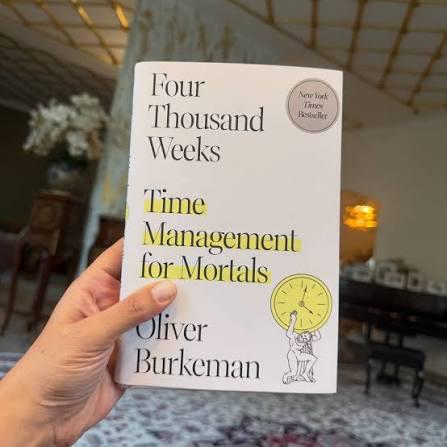
“Four Thousand Weeks” by Oliver Burkeman made me realize every productivity system I’ve ever tried was solving the wrong problem

Post image
900 Upvotes

The average human lifespan is roughly 4,000 weeks. That number hit me like a truck.

Oliver Burkeman was a productivity journalist for years. He tried every system, hack, and optimization strategy. And he concluded that the entire productivity industry is built on a lie.

The lie is this: if you get efficient enough, you’ll finally get on top of everything. Clear the inbox. Finish the to-do list. Reach the mythical state of “caught up” where you can finally relax.

It never happens. And Burkeman explains why.

Work expands to fill the time you free up. Get faster at email and you’ll receive more email. Finish tasks quicker and more tasks will appear. The inbox is a black hole. No amount of optimization closes the gap between what you could do and what you’ll actually have time for.

He calls this the “efficiency trap.” The better you get at processing inputs, the more inputs you attract. Productivity gurus never mention that their systems create the very overwhelm they promise to solve.

His solution is uncomfortable. Accept your limitations. You will never do everything. You will die with items still on your to-do list. The goal isn’t to somehow fit infinite tasks into finite weeks. The goal is to choose what matters and let the rest go undone on purpose.

This requires what he calls “strategic neglect.” Deliberately ignoring things that seem urgent but aren’t actually important to you. Not because you’ll get to them later. Because you’ve accepted you never will.

He also attacks the “when I finally” mindset. When I finally finish this project. When I finally have more free time. When I finally get organized. We treat the present as a waiting room for some future state that never arrives. Meanwhile the actual weeks keep ticking away.

Four thousand weeks. That’s all you get. The question isn’t how to cram more into them. The question is what actually deserves to be there.

Also if you're interested on joining us on r/Readandgrowbookclub where we also plan to share lessons from book like this


r/TheLearnersCabin • • 12d ago

Who are you? By prem rawat

Post image
20 Upvotes

An amazing read . ⭐⭐⭐⭐⭐


r/TheLearnersCabin • • 13d ago

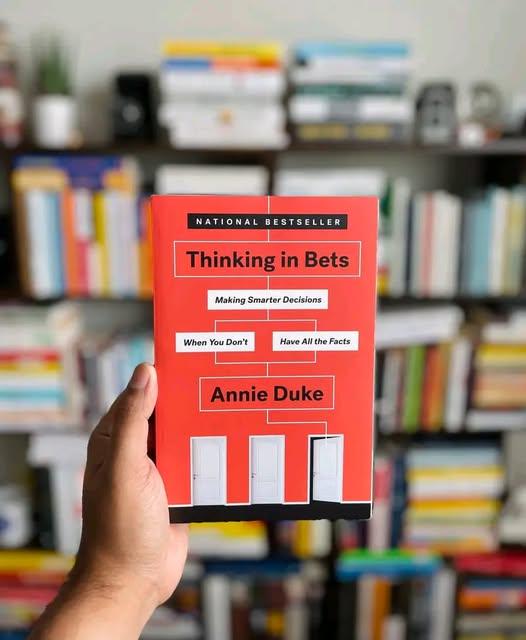
"Thinking in Bets” by Annie Duke exposed how I’ve been judging every decision in my life completely wrong

Post image
407 Upvotes

A professional poker player wrote a book that dismantled the way I evaluate success and failure. And she did it with one brutal observation.

We judge our decisions by their outcomes. Good result means good decision. Bad result means bad decision. Simple, right?

Completely wrong.

Annie Duke calls this “resulting.” And it’s destroying our ability to actually improve at anything.

Here’s the problem. You can make a perfect decision with all available information and still lose. You can make a terrible decision with no thought at all and still win. The outcome doesn’t tell you whether your process was sound. It only tells you what happened this one time.

Think about it. A drunk driver makes it home safely. Does that mean driving drunk was a good decision? Obviously not. The outcome was lucky. The decision was still garbage. But we do this constantly in reverse. We lose money on a well-researched investment and conclude we were stupid. We get the job after a sloppy interview and conclude we’re brilliant.

Duke spent years at poker tables watching people confuse skill with luck. She watched talented players question their strategy after a bad beat and mediocre players get cocky after a lucky hand. The outcome was random noise. The players treated it like signal.

Life works the same way. Your decisions play out over hundreds of iterations. One result tells you almost nothing about whether your thinking was correct.

She introduces “backcasting” as a tool. Instead of asking “what went wrong?” after a failure, ask “was my process sound given what I knew at the time?” Sometimes the answer is yes. The decision was right. The dice just landed wrong.

This reframe is uncomfortable. It means you can do everything right and still fail. But it also means you can stop beating yourself up for outcomes you never controlled.

The goal isn’t to predict the future perfectly. The goal is to make the best bet with incomplete information, then accept the variance.


r/TheLearnersCabin • • 13d ago

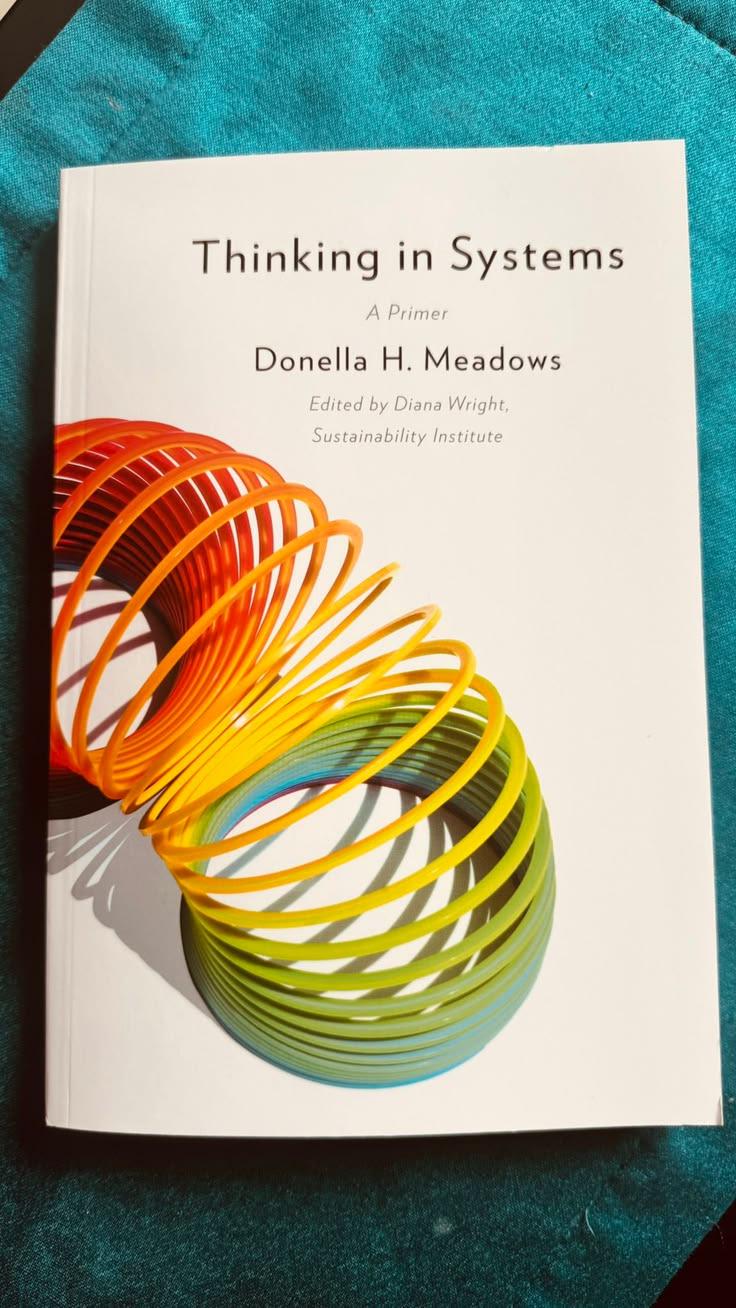
Thinking in Systems by Donella Meadows taught me why willpower fails and environments work, and it’s the same reason your thermostat is smarter than your to-do list.

Post image
1.0k Upvotes

Donella Meadows was a systems scientist at MIT. She studied how complex systems behave. Ecosystems. Economies. Organizations. Her insight: the same patterns that govern how a fishery collapses or a company spirals also govern why your habits keep failing and your life keeps producing the same results despite your best efforts.

The core idea: you are not operating in isolation. You are operating inside systems. And systems have rules that override individual effort every single time.

Feedback loops run your life. A thermostat keeps your room at 72 degrees not through willpower but through a feedback loop. Temperature drops, heater kicks on. Temperature rises, heater shuts off. Automatic. Self-correcting. Your habits work the same way. You feel stressed, you scroll. The scrolling reduces stress briefly. The relief reinforces the behavior. Loop complete. You didn’t choose the habit. The feedback loop installed it. Meadows says trying to break a habit without changing the feedback loop is like yelling at a thermostat to change the temperature while leaving the settings untouched.

The leverage point is never where you think it is. Most people try to change outcomes by pushing harder at the visible level. Work more hours. Try more discipline. Set bigger goals. Meadows says the highest leverage points in any system are the invisible ones: the rules, the incentives, the information flows, the underlying structure. You don’t fix a toxic workplace by motivating employees harder. You fix the incentive structure that’s producing the toxicity. You don’t fix your procrastination by trying harder. You fix the environment that makes procrastination the path of least resistance.

Systems produce exactly what they’re designed to produce. If your life keeps producing the same frustrating outcomes, it’s not a failure. It’s a system working perfectly. The system just isn’t designed for what you want. Your daily structure, your environment, your relationships, your information diet. All of it is a system. And the output you’re getting is the output that system was built to create. Wanting a different output while running the same system is the definition of insanity that everyone quotes but nobody applies.

Short book. Reads like science but applies like therapy. Will make you stop blaming yourself and start redesigning the invisible machinery that’s actually producing your results.

Also if you're interested on joining us on r/Readandgrowbookclub where we also plan to share lessons from book like this


r/TheLearnersCabin • • 14d ago

How to Stop Worrying and Start Living by Dale Carnegie gave me a 3-step formula for anxiety that was written in 1948 and still works faster than anything I’ve tried since.

Post image
2.5k Upvotes

Dale Carnegie interviewed thousands of people about worry. Business leaders. Soldiers. Homemakers. Factory workers. He found that chronic worriers all make the same mental error: they treat every problem like it’s permanent, personal, and unsolvable. It’s usually none of the three.

His formula is three steps.

Ask yourself: what is the absolute worst that could happen? Not the vague cloud of dread. The specific, concrete worst case. I might lose the client. I might get rejected. I might fail publicly. Name it. Carnegie says most people never do this because the vague fear feels bigger than the specific fear. It isn’t. The moment you name the worst case, it shrinks.

Accept the worst case mentally. Before you try to fix anything, make peace with the bottom. “If I lose this client, I will survive. I will find another one. I have before.” This isn’t giving up. It’s removing the panic so your brain can actually think. Carnegie says you can’t solve a problem while you’re terrified of it. Acceptance clears the fog. Solutions become visible.

Improve upon the worst case. Now, from a place of calm instead of panic, work to make the outcome better than the worst case. You’ve already accepted the floor. Everything above it is progress. Carnegie found that people who followed this sequence solved problems faster, slept better, and made clearer decisions than people who just “tried not to worry.”

The concept I use daily: Carnegie says 85% of the things people worry about never happen. Of the 15% that do happen, 79% are handled better than expected. You’re spending 90% of your worry budget on events that either won’t occur or won’t be as bad as your brain is advertising.

Written 78 years ago. Still sharper than your anxiety app.

Also if you're interested on joining us on r/Readandgrowbookclub where we also plan to share lessons from book like this


r/TheLearnersCabin • • 15d ago

This book fixed my overthinking

Post image
3.8k Upvotes

I spent years stuck in my own head. Replaying conversations. Rehearsing future arguments. Analyzing every decision until I was too exhausted to make one.

Then I read The Courage to Be Disliked by Ichiro Kishimi and Fumitake Koga. It's based on Adlerian psychology and it reframes overthinking in a way I'd never seen before.

The core idea: You're not overthinking because you're anxious. You're overthinking because it gives you a reason not to act. Your brain creates the loop on purpose. It's a protection mechanism disguised as a problem.

Three takeaways that stuck with me:

Separation of tasks. Most of your overthinking is about other people's reactions. Adler says you need to draw a hard line between what's your task and what's someone else's task. How they respond to your decision is their task. Making the decision is yours. That single distinction killed about 70% of my mental loops overnight.

Teleology over etiology. Traditional psychology asks "why are you this way?" Adler asks "what purpose does this behavior serve?" When I stopped asking why I overthink and started asking what overthinking was protecting me from, the answer was obvious. It was protecting me from the risk of being judged.

You can change right now. Not after therapy. Not after more self-reflection. Not after you "figure yourself out." Adler argues that the past has zero power over your present unless you choose to give it power. That sounds harsh until you realize it also means you're not broken. You're just choosing a pattern that used to keep you safe and no longer does.

The book is written as a conversation between a philosopher and an angry young man. It reads fast. The ideas hit slow. I've gone back to it three times and caught something new each time.

If your overthinking feels like a personality trait you're stuck with, this book disagrees. And after sitting with it for a while, so do I.

The separation of tasks concept broke the replay cycle intellectually. But I still needed something to break it practically. I started using Socialyze around the same time I finished the book and the combination hit differently than either one alone. Socialyze runs 2-minute voice conversations in your browser and gives you a breakdown of what you actually did. The reason that mattered for the overthinking problem is that my replays were always distorted. I’d remember a conversation as way worse than it was. The feedback from Socialyze gave me an objective record instead of a memory filtered through anxiety. I’d finish a round thinking “I stumbled through that,” then read the breakdown and see that my pacing was fine, I asked two good follow-up questions, and the only real issue was that I hedged my opening sentence. The gap between what my anxiety told me happened and what the feedback showed actually happened was enormous. Seeing that gap repeatedly is what finally convinced my brain that the replay wasn’t protecting me from real danger. It was manufacturing danger that wasn’t there. Adler gave me the theory. The feedback gave me the proof


r/TheLearnersCabin • • 16d ago

Ego Free Leadership by Brandon Black taught me that the best leaders I’ve ever worked for all had one thing in common: they admitted what they didn’t know before anyone had to find out.

Post image
53 Upvotes

Brandon Black was the CEO of Encore Capital Group. He took the company from near-bankruptcy to a billion-dollar valuation. His method wasn’t strategy. It was honesty about his own limitations in real time, in front of his team, while the building was on fire.

The book is co-written with Shayne Hughes, an executive coach who worked with Black through the transformation. The dynamic between them is the point. Black represents the leader trying to perform. Hughes represents the mirror showing him what the performance is costing.

Three ideas that stuck.

Your need to look competent is making your team incompetent. When the leader pretends to have all the answers, the team stops looking for their own. Why think critically when the boss already decided? Black describes meetings early in his tenure where everyone waited for him to speak first. Not out of respect. Out of learned helplessness. His need to appear decisive had trained his entire organization to stop deciding. The moment he started saying “I don’t know, what do you think?” the quality of ideas in the room tripled.

Defensive reactions are data, not character flaws. Hughes taught Black to treat his own defensiveness as information rather than something to suppress. Every time he felt the urge to push back, justify, or shut down feedback, that urge was pointing at an insecurity he hadn’t examined. Not a weakness to hide. A blind spot to investigate. Black started naming his defensiveness out loud in meetings. “I notice I’m getting defensive about this, which probably means there’s something here I need to hear.” The vulnerability didn’t weaken his authority. It made his team trust him more because they could see he was operating honestly instead of performing invincibility.

The speed of trust is faster than the speed of control. Black calculated that the hours he spent managing, double-checking, and controlling his team’s output far exceeded the hours it would have taken to trust them and clean up the occasional mistake. Control feels safe. It’s actually the most expensive operating system a leader can run. Trust has a failure rate. Control has a higher one. It’s just quieter about it.

Short book. Half memoir, half leadership framework. Will make you realize that the armor you wear to look like a leader is the thing preventing you from becoming one.


r/TheLearnersCabin • • 17d ago

I read “The Charisma Myth” by Olivia Fox Cabane twice. Charisma isn’t a gift you’re born with. It’s three signals your body sends that most people accidentally turn off.

Post image
587 Upvotes

Most people think charisma is genetic. You either walk into a room and people gravitate toward you or you don’t. Cabane spent years studying charismatic people across business, politics, and social settings and found something nobody expected. Charisma is a learnable skill with exactly three components. And the reason most people don’t have it isn’t because they’re missing a trait. It’s because anxiety, self-doubt, and distraction are actively blocking the signals.

The three signals: presence, power, warmth.

That’s it. Every charismatic person you’ve ever met was transmitting all three simultaneously. Remove any one of them and the effect collapses.

Presence is the rarest one. It means being fully locked in on the person in front of you. Not waiting for your turn to talk. Not scanning the room over their shoulder. Not rehearsing your next sentence while they’re still finishing theirs. Cabane says most people have never been given full presence by another human being. The moment you give it to someone, you become memorable instantly. Not because of what you said. Because of how it felt to be around you.

Power is the perception that you can affect the world around you. It’s communicated through body language, vocal tone, and how much space you take up. Confident posture, slower speech, calm movements. Power doesn’t mean dominance. It means groundedness. The person who isn’t fidgeting, isn’t rushing, isn’t performing, reads as powerful because their body language says “I’m not threatened by this situation.”

Warmth is the perception that you’re on the other person’s side. Without warmth, power reads as cold or intimidating. Without power, warmth reads as eager or desperate. You need both. Warmth shows up through genuine eye contact, body orientation toward the person, and facial expressions that aren’t guarded. Cabane says warmth can’t be faked because humans read micro-expressions faster than conscious thought. If you don’t actually care about the person, your face tells the truth before your words do.

The internal game is everything.

This is where the book separates from every other social skills guide. Cabane says you can’t hack the external signals without fixing the internal state. If you’re anxious, your body broadcasts anxiety no matter how hard you try to look confident. If you’re distracted, your eyes betray it within seconds. The techniques in the book aren’t “stand like this” and “say that.” They’re cognitive exercises for managing the internal discomfort that kills charisma at the source.

One example. Before a high-stakes conversation, Cabane recommends a visualization where you imagine your body flooding with warmth from your toes to the top of your head. It sounds ridiculous. The neurological effect is measurable. Your facial muscles soften. Your vocal tone drops. Your body language opens. The other person doesn’t know why you suddenly feel safe to be around. But they feel it.

What most people get wrong about charisma:

They think it means being entertaining, funny, or dominant in conversation. Cabane found the opposite. The most charismatic people in her research talked less than average. They asked more questions. They held eye contact longer. They didn’t compete for attention. They gave it. Charisma isn’t about being interesting. It’s about being interested. The paradox is that the person who makes the conversation entirely about you walks away being the one you can’t stop thinking about.

Where the book falls short:

Cabane’s visualization exercises work but take practice most readers won’t commit to. The book also assumes a level of social baseline that people with genuine social anxiety might not have. Telling someone with a racing heart and sweating palms to “visualize warmth” can feel dismissive. The framework is sound but the gap between understanding it and executing it under real pressure is wider than the book admits.

But the reframe alone changes how you walk into every room. You’re not missing a personality trait. You’re broadcasting interference. Remove the anxiety, the distraction, and the self-focus, and the charisma that was underneath the whole time finally has space to transmit.


r/TheLearnersCabin • • 17d ago

A free Mac reader that reads the books in your library aloud, lighting up each word, so you can watch and listen when reading alone isn't working

Enable HLS to view with audio, or disable this notification

7 Upvotes

r/TheLearnersCabin • • 20d ago

A free journal where you type a hashtag above a list: each line gets a label for what’s in your control, which thinking trap it is, or a check you wrote, all offline on your Mac

Thumbnail gallery
3 Upvotes

r/TheLearnersCabin • • 24d ago

A free reader where you can talk through a self-help book while you read it: the chat sees your chapters, your notes and your journal, and runs on your own Mac

Thumbnail gallery
5 Upvotes

r/TheLearnersCabin • • Oct 01 '26

After reading books on habits, why do we keep falling to old pattern n lose a sense of confidence???

7 Upvotes

r/TheLearnersCabin • • Sep 27 '26

HOW THE HELL AM I JUST KNOWING?!

32 Upvotes

When I am depressed (which happens often 😩😂), my mind can become a place I do not want to be. I find myself trapped in repetitive thoughts, worrying about my future, replaying my mistakes, and imagining everything that could go wrong. During those moments, reading a book gives me somewhere else to go. When I open a book, I am no longer completely consumed by my own thoughts; I am following someone else’s story, learning something new, or exploring a world beyond my immediate circumstances. Even if I can only read a few pages, I feel as though I have given my mind a temporary break from the weight it has been carrying.

Reading is also important to me because it reminds me that my current circumstances do not represent the entirety of my life. When I read about people who have struggled, endured hardship, learned from failure, or transformed themselves, I am reminded that human beings are capable of growth. Books give me knowledge, perspective, imagination, and language to understand experiences that I may not yet know how to explain. Instead of spending hours letting negative thoughts repeat, I can spend that time filling my mind with ideas that help me understand myself and the world better. Reading does not magically make my depression disappear, but it gives me something constructive to do when motivation is difficult to find.

For me, reading while depressed is therefore more than a hobby; it is an act of resistance against becoming completely isolated inside my own mind. I do not have to wait until I feel motivated or happy before I pick up a book. I can read while I am sad, tired, confused, or discouraged, even if I only manage five or ten pages. Every page gives me an opportunity to redirect my attention, learn something, and remind myself that my story is still being written. Depression may describe how I feel at a particular moment, but it does not have to determine who I become. By continuing to read, learn, and expose myself to new ideas, I give myself another reason to believe that there is more ahead of me than what I can see today.

I encourage everyone to pick up a book and read; it can truly help and uplift you.


r/TheLearnersCabin • • Sep 27 '26

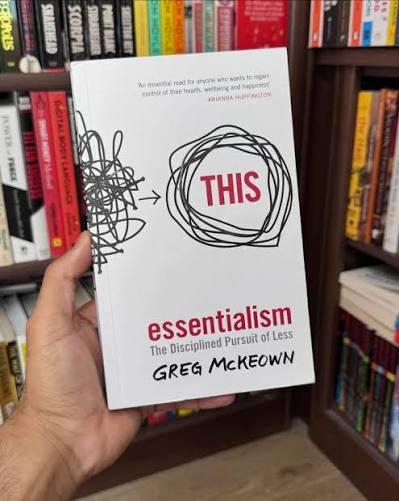
7 lessons from "Essentialism" that made me quit half my commitments and feel better than

Post image
273 Upvotes
  1. If you don't prioritize your life, someone else will.

McKeown's core argument hit me immediately. Every time you say yes to something unimportant, you're saying no to something that matters. Most people let their priorities be set by whoever asks loudest. Essentialists decide first, then respond.

  1. Almost everything is noise.

Most opportunities aren't opportunities. Most tasks aren't important. Most emails don't need responses. McKeown argues that only a tiny fraction of what competes for your attention actually moves the needle. The rest is just noise disguised as urgency.

  1. "No" is a complete sentence.

I used to think saying no required justification. Apologies. Alternative offers. McKeown showed me that a clear no, delivered respectfully, is enough. People respect boundaries more than endless maybes.

  1. The more options you eliminate, the freer you become.

This felt backwards at first. Shouldn't more options mean more freedom? McKeown flips it. More options mean more decisions. More decisions mean more depletion. Cutting options creates clarity. Clarity creates momentum.

  1. Play is not a break from work. It's essential to good work.

McKeown dedicates a chapter to play. Not productivity hacks disguised as fun. Actual unstructured play. It sparks creativity, reduces stress, and creates connections that rigid schedules never produce. I stopped feeling guilty about downtime.

  1. Sleep is a weapon, not a luxury.

I used to sacrifice sleep to get more done. McKeown presents research showing that approach backfires. Sleep-deprived hours produce worse work that you then have to redo. One hour of rested focus beats three hours of exhausted grinding.

  1. The disciplined pursuit of less creates more.

Doing less isn't laziness. It's strategy. When you spread effort across twenty things, you get mediocre results in all of them. When you concentrate effort on three things, you can actually achieve something meaningful.

What changed:

I dropped commitments I'd been carrying for years out of guilt. My calendar opened up. My stress dropped. And somehow, my actual output improved. Turns out doing fewer things better beats doing many things poorly.

The first few nos were terrifying. Then they became liberating. I stopped being everyone's backup plan and started being intentional about what got my energy.