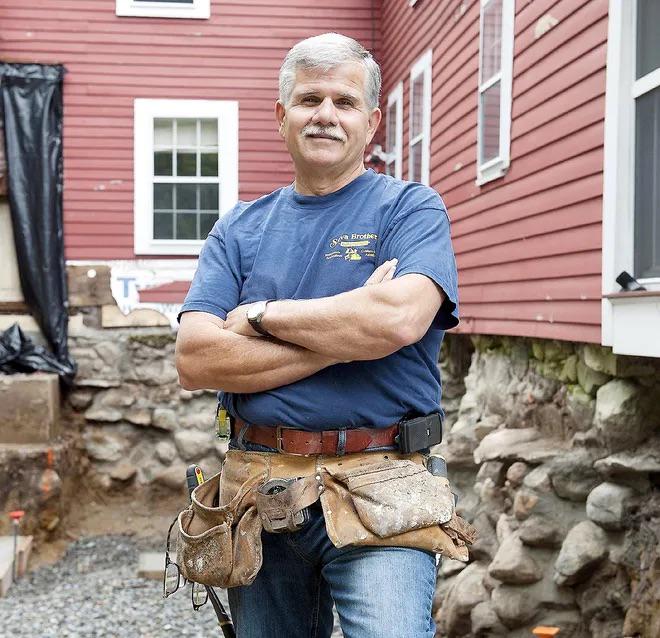
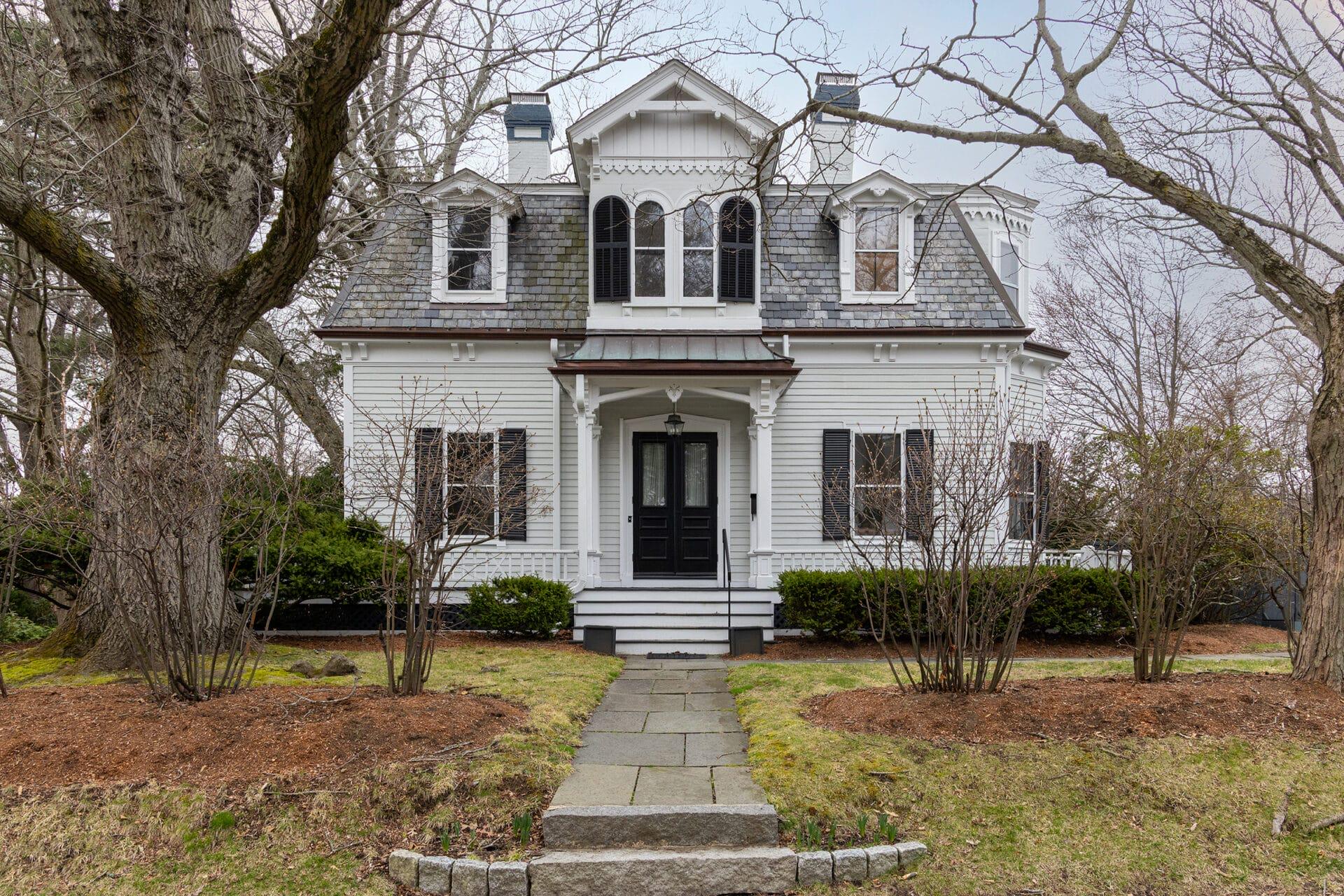
If you are interested in how the show is made today, this is the most insightful thing I’ve ever seen about it. This past August, TOH and Ask TOH executive producers Sarah Chasse, John Tomlin and Chris Wolfe appeared on Roku’s internal podcast, Remotely Interesting. You have to be a Roku employee to listen to the podcast on Spotify, but I found the video of it on YouTube. You can watch it yourself, for now.
I’ve written before about how the presentation of the show has changed over time and who has creative control of the show at this point. Sarah Chasse is definitely responsible for Ask This Old House. For House, my updated view is that unlike thirty years ago, when TOH creator Russell Morash ran the show, it is now a true collaboration between the executive producers and the producer-directors who plan segments and decide how they are filmed. If there was a “showrunner” today, it’s probably the three people in this interview, along with senior producer Sara Ferguson.
Here’s a link to the video.
https://www.youtube.com/watch?v=MypMjz5Z0y8
To document the interview and in case the video is taken down, I’ve transcribed some highlights. I edited them for clarity and conciseness.
On comparing TOH to other home-improvement shows:
Sarah Chasse, Ask TOH showrunner: We’re the original. In comparison to other shows, I feel like we’re more educational. And now there is this other home-improvement genre that’s more entertainment. You maybe might learn one or two things, but it’s really just to see the before and after. TOH is about the journey, not the destination. The other shows are about the destination and they throw a little journey in for fun. …I think what other shows see is that TOH is a really successful brand. They say, let’s take that model and try to put more entertainment in it. Let’s put actors in it. Let’s come up with story throughlines and stories that are more personal and less about the work. Those are entertaining, but the reason we have the staying power is because we’re okay with being an educational show. There’s a joy and entertainment in that. People didn’t watch the painter Bob Ross for the thrill of it. It was to watch him be a master craftsman.
On how TOH has changed over time:
Host Hannah Perselli: Do you think the brand has stayed true to its original formula?
John Tomlin: Absolutely. You never try to fix something that works on television. The producers who came before us, they didn’t try to fix it. They kept it going the way you know and we adhere to the same principles that they set up.
Chris Wolfe: We try to be as open to new technology and new approaches to storytelling as we possibly can be. So we shoot the show with drones, with GoPro cameras, with multiple cameras sometimes when it’s appropriate, sometimes with a single camera when that is more conducive to the story that we’re trying to tell. While the technologies have changed, the mission hasn’t.
On the timeframe for each project:
JT: We’re working on a project now that we’ve been working on for two years. Most of them are six to ten months.
CW: We ask the contractors to occasionally help us accommodate the broadcast schedule. They’ve always kept us on schedule. We appreciate that.
JT: We were going to shoot something the day before yesterday. The building inspector was tough on us and we were delayed a week. So those are the challenges we have.
CW: The work comes first. There are times we’ve had to cancel shoots. We’re not going to fake it. We’re going to let the construction work guide the content of the show.
On Ask TOH:
CW: I helped launch Ask TOH 25 years ago. I produced Ask for many years and Sarah Chasse is now the executive producer of the show and she’s the showrunner day-to-day.
SC: There was a desire to scale back TOH a little bit. The show was so big, and the renovations were so big.
CW: The renovations on TOH are large budgets and they are aspirational for most homeowners. There’s a lot of home improvement that happens on the weekends, on a much smaller scale. And Ask TOH was created to help homeowners through those projects. …What for us is a one-day project at someone’s house, for that homeowner is a once-in-a-lifetime experience. They are meeting their heroes and working alongside them for a day. I remember that feeling when I got to work alongside Tommy and Norm and Richard and Roger for the first time, it was like I won the lottery. The homeowners understand that this is a moment for them where they get to meet their heroes and be an apprentice to them and you can see how affected they are by it.
On the brand’s expansion to other platforms:
HP: There’s a consistent brand experience across platforms like Roku, YouTube, PBS, Samsung and social media. How do you keep the brand consistent with the original theme and what it became fifty years later?
SC: We have this discussion at least once a week.
CW: We want to be everywhere that people are consuming content. We don’t want to be limited to a particular network or platform. People are consuming media differently than they used to, so it’s important to be accessible. We have distribution of PBS, Roku, third-party streamers like Samsung and Pluto and Tubi and others. We’ve diversified the distribution of our content. We’ve leaned into social media, TikTok and Facebook and YouTube. We’re creating spin-offs to reach different audiences on entirely different platforms. We launched a radio program that’s carried on 250 stations and heard by a million people a week. How do we do that and maintain the brand equity and trust that we’ve built? We have a lot of conversations about that. We hire producers and talent who are very thoughtful about this and don’t take the responsibility lightly to maintain this equity. We don’t want to tell the same stories over and over again. There’s an essence of TOH that’s about expertise, authenticity, and that’s fundamental.
SC: I think the challenge now for us is to figure out at the highest, broadest level, what is TOH? What are the non-negotiables? Each format is a little different. It could be as simple as, on PBS we don’t do integrated content (native advertising) because on public television there are restrictions around that but on our other platforms we do advertising integrations, ad-supported things. How do we keep that trust, because we weren’t ad-supported on PBS. How do we keep that trustworthiness on ad-supported platforms? And so we work really hard, especially when we’re partnering with other groups of people on what we make that look like so that it’s mutually beneficial.
JT: We know this instinctively. When we deal with a third-party, we have to educate them about what’s important to us.
CW: We think of this production company as a media lab, an incubator of different content. It’s in the service of Russ Morash’s idea from fifty years ago, but we’re trying to be inventive with the platforms that we adopt and the programs and the content that we pursue, whether that’s radio or podcasts or short-form or long-form. These are ways that we’re experimenting. The idea of TOH has been maintained and there aren’t a lot of television programs or brands that fifty years on, they’re going strong with their original core idea.
On the brand’s future:
CW: We are developing an AI tool that will be available through our website and through other platforms to allow people to research any home improvement topic and have it supported by the expertise and the video content. To pull from fifty years of content.
SC: Our main goal for the brand is to put our content everywhere. We just want people to watch us. So we’re on social media, streaming platforms and we’re on broadcast TV and we’ve got an AI tool and we’ve got the website. Our hope is always that anyone who needs home improvement advice comes to us. If we put ourselves in front of them enough times, people who don’t know us yet will know we are the go-to source.
JT: For the same reasons that it worked in the beginning. Viewers will recognize that our people know what they’re talking about. They’re not actors, not fake, these are the people who do this work on a regular basis.
On the nostalgia factor and viewers’ love for the show:
SC: A viewer told me about how watching the show became a family ritual, and every Saturday they watched the show with their kids. I’m sorry I’m getting a little emotional. It’s really touching, how he watched it with his kids growing up and it was always their thing and it bonded them. This guy told us that at his daughter’s wedding, the song that they picked for their father-daughter dance was Louisiana Fairytale, which is the original theme song of This Old House.
CW: And when his son was getting married, he invented the father-son dance so he could do it again. …It is humbling for us, honestly, to hear those stories and to know that the impact that we have just extends so far. And we take seriously that responsibility.
SC: It’s just good family programming that anyone can watch and get something out of. When you have that kind of broad appeal, it’s easy to have those sorts of connections. Especially if you become a fan of something, you bond over that. And if every Saturday morning you’re curling up with Dad on the couch and watching the show, it will obviously have a more emotional connection.
JT: And you know, what’s more important than shelter? It’s something that every human needs.
On working with homeowners:
CW: Homeowners have to be willing partners in telling these stories with us. They are going to open up their lives to a national audience and represent the audience in many ways. So they have to participate with us and share our values for what the house can be, what the show can be, but also do it from their perspective. It would be easier for us to do this show without homeowners, but we find that the show is better when we have real homeowners who are invested in the home.
SC: When you have these cameras in your face, it’s a very vulnerable experience. You’re inviting all these strangers into your home, which is your safe space. We’re asking them to be very vulnerable, and putting all their finances on the line, too. So we ask, what can we do to protect them and make them feel safe in that process.
JT: We have to have a heart-to-heart talk with them and walk them through the process and we’re going to be here for eight months. Can you put up with us?
CW: Any home renovation is stressful. To make a television show on top of that, that isn’t for everybody. For like-minded people who want to help tell the story of their house and help others benefit from their own experience, it’s a great fit.
SC: On Ask TOH, we’re just going to record you being yourself, and it’s always fine. I have personally been in over five hundred houses. I can’t tell you one homeowner where we walked away and said that was a disaster and we can’t air it.
On host Kevin O’Connor:
JT: Kevin, the current host, has been there the longest. For me, he’s the best. Kevin could have been the host of the Today Show. He could have been a correspondent on 60 Minutes. He’s incredible.
CW: We looked at a lot of different people before we hired Kevin. We did screen tests in the barn loft with lots of different people and we weren’t finding what we were looking for. And we sat in a conference room downstairs in this very building and Russ Morash, the guy who created the show, said, after we’d talked about this for a while, what we’re really looking for is somebody like that red-haired kid that we worked with a couple of months ago (as a homeowner on Ask TOH). And there was a pause in the room and not a word was said. And I said, I’ll call him. From day one, he’s been a natural. He’s a big part of what has sustained the show.