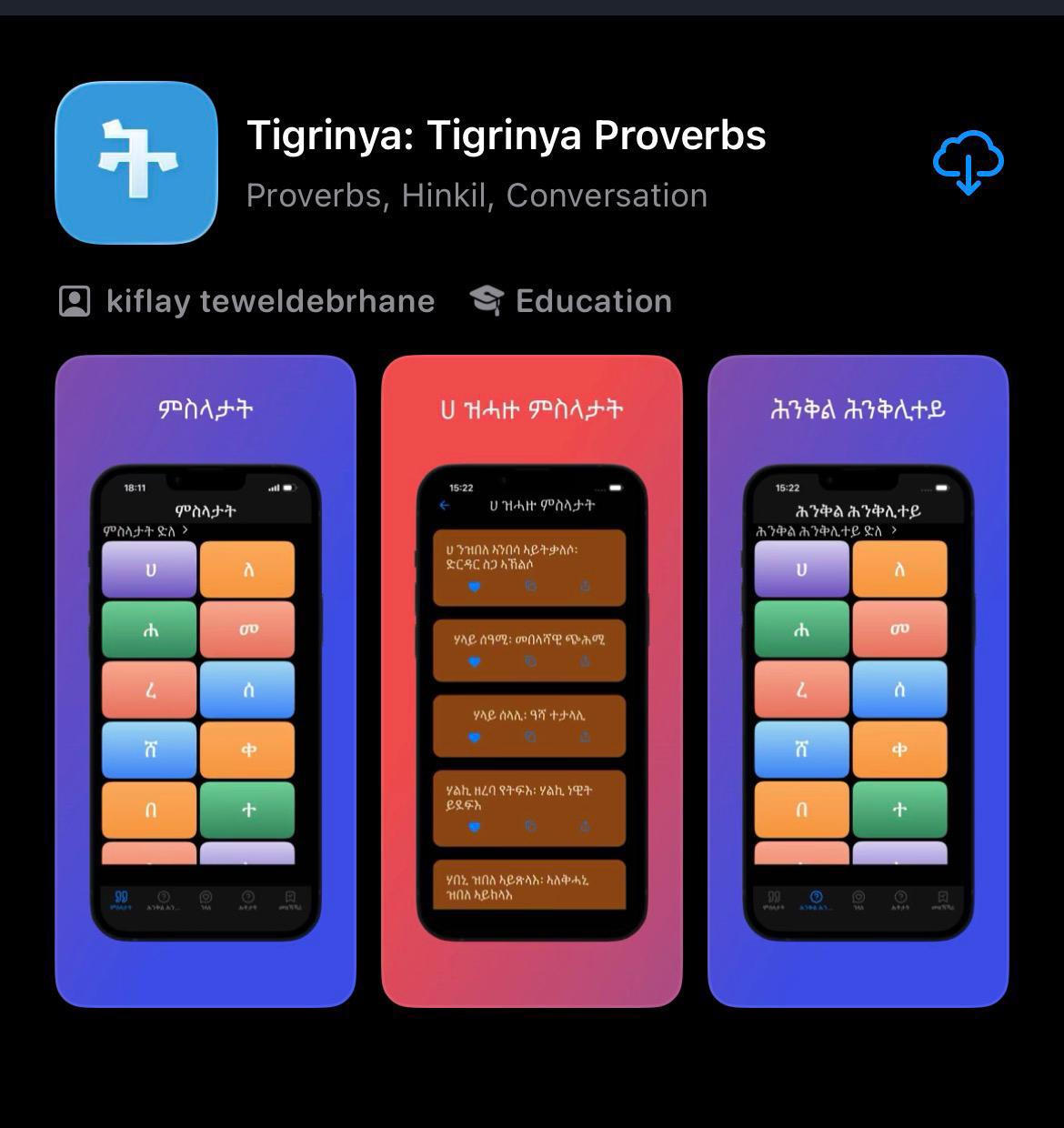
I've been studying Tigrigna over the last few years and have been able to memorize the entire fidel for both reading and writing. What I have noticed after memorizing all the characters is that reading and writing Tigrigna is much easier and simpler than reading and writing in English. The Tigrigna fidel comes from Ge'ez which is an abugida writing system, where every character represents a consonant combined with a vowel sound. Each character can be sounded out alone and is unaffected by adjacent characters. There are no hidden characters or counter-intuitive pronunciation rules that change the sound the characters make depending on placement, meaning, etc., like it is in English.
For example, the word "selam" is written in the Tigrigna exactly as it sounds: ሰ(se) + ላ(la) + ም(m). No unnecessary letters or special rules applied. In English, the word "hello" has two ls for seemingly no reason. If you are a native Tigrigna speaker learning English for the first time you might not understand why "helo" is incorrect and "hello" is correct. The only reason I know which one is correct is simply because I was taught that two ls is the correct spelling in school, even though "helo" and "hello" sound the same phonetically.
Let's look at the word "peace". In Tigrigna, "selam" means "peace", and can only be spelled one way no matter what: ሰላም. Even spelling "peace" phonetically in Tigrigna can only be done one way: ፒ(pee) + ስ(s). In English, "peace" and "piece" have the same exact sound, but have different meanings due to the spelling. Why? Idk. Why is "peece" incorrect spelling when it sounds exactly the same? What is the difference between "ee" and "ea"? Matter of fact, why is adding a silent "e" after the "c" necessary? You can see how someone who is learning English for the first time could be confused by all these rules in the writing system of English.
Now, obviously there are some characters in the Ge'ez language families that share the same sound but are used more predominantly depending on language or regional dialect, such as ሰ(Tigrigna) and ሠ(Amharic), or ጸ(Eritrea) and ፀ(Tigray/Amhara), but those are pretty much the only two caveats. English has way more caveats and rules you need to memorize, so coming from someone who speaks English as a first language, reading and writing in Tigrigna is much easier and simpler in this regard.
I'm saying all this to tell you guys to not be intimidated by the number of characters used in Tigrigna. Learn it, memorize it, and you will see how easy it is to read and write Tigrigna!