r/UKmonarchs • • 8h ago

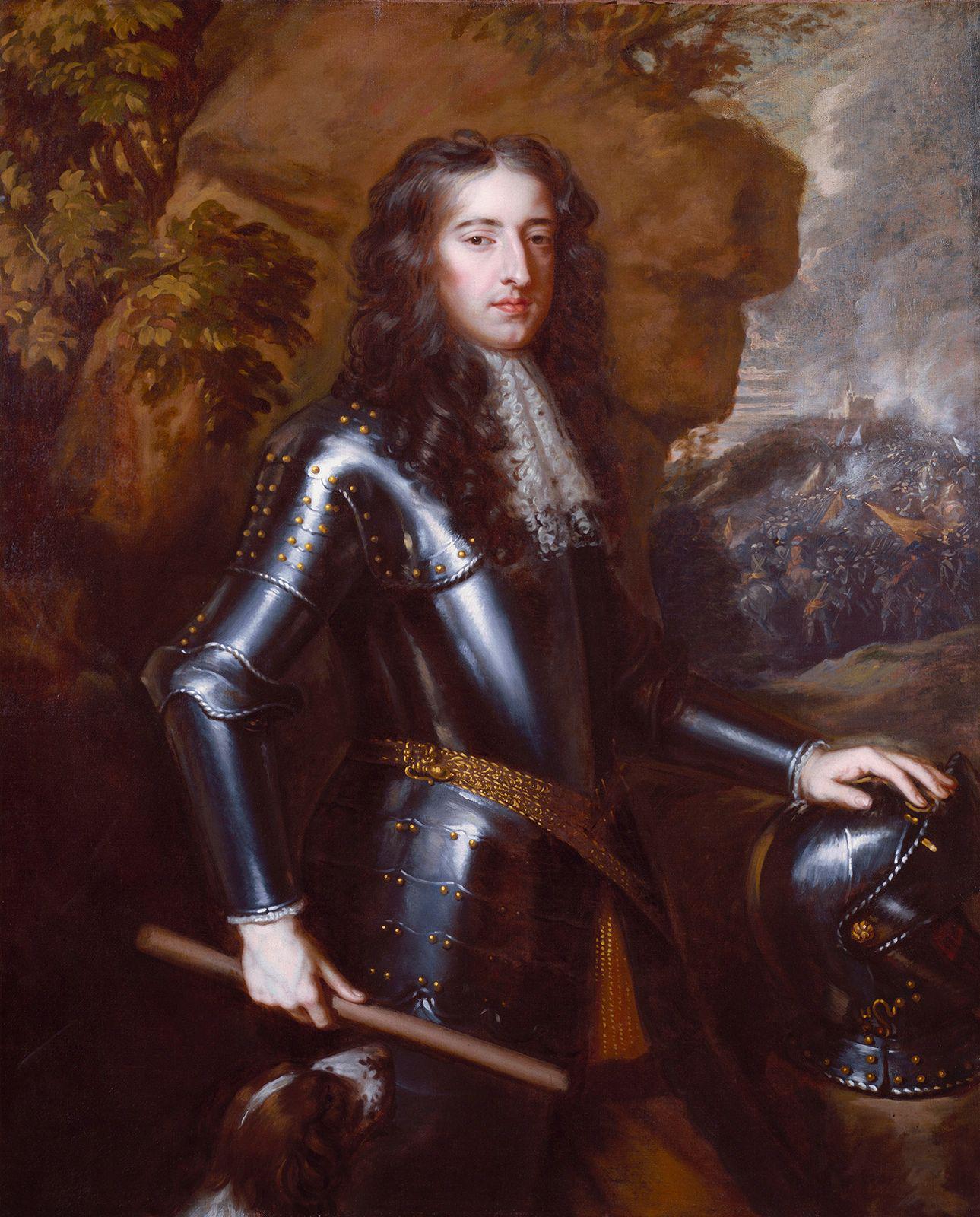
Question How is William III seen in the UK today?

Post image
50 Upvotes

He seems to have been a successful king, with both the good and the bad of course, but he did hold his ground against France. How is he perceives today? Is he considered to be a usurper, or justified in his taking the throne? Or both? I am not from the UK so I would really like to know how he is seen nowadays.


r/UKmonarchs • • 14h ago

Question What was the marriage between Princess Diana and King Charles III really like?

Thumbnail
gallery
43 Upvotes

Since I practically live on another continent, I'm not very close to what the British public actually thinks about this matter, as all I've ever heard is sympathy for Lady Di and disdain for King Charles III. However, for a while now, I've seen defenders of His Majesty arguing that the story wasn't simply a case of "villain vs. victim" and claiming that the widely spread version isn't truly faithful to the facts, so I would appreciate it if you could clarify how everything really happened.

(If the images I used turned out to be AI-generated, as happened on a previous occasion, please let me know and sorry in advance.)


r/UKmonarchs • • 59m ago

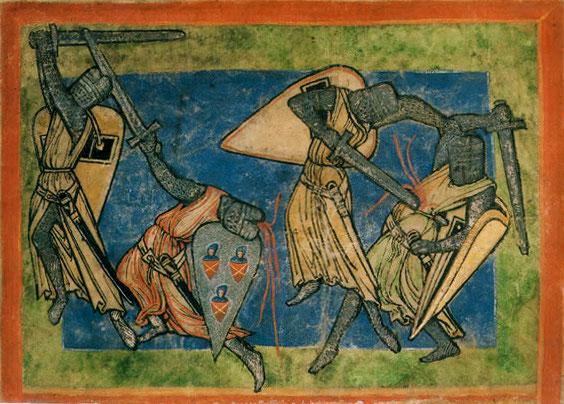
Discussion Battle of the Monarchs ROUND THIRTEEN!!

Thumbnail
gallery
2 Upvotes

You all eliminated Elizabeth II with 67% of the votes!

I thought this would be a fun game for us all.
Find out who would be the ultimate winner in a Monarchs Battle Royale. Here's the rules!

  1. Monarchs have to be between William I and Charles III. This was the most request timeline.
  2. All Monarchs in this scenario are at their prime they were at any point DURING THEIR REIGNING YEARS, but they are fighting ALONE. No armies and no outside help.
  3. All Monarchs in this scenario have one sword and one shield and that's it. Otherwise they have to rely on strength, cunning, and intelligence to get them through. Think of it like The Hunger Games, but with British Monarchs.
  4. William and Mary fight TOGETHER as they are co-monarchs. They are the ONLY ones together! Keep that in mind.

Round THIRTEEN! Which British Monarch is eliminated next?

As always if you have any suggestions or requests to help the poll and make this more fun for everyone, please don’t hesitate to let me know!

Remember to be kind and civil and have fun!


r/UKmonarchs • • 12h ago

Discussion What if Edward III had Henry V as his successor?

Thumbnail
gallery
17 Upvotes

r/UKmonarchs • • 12h ago

Discussion While the Kings faltered in foreign lands, the Queens conquered the homelands

Post image
12 Upvotes

Misguided movie myths like to tell stories of medieval queens sitting inside stone towers doing needlework while their husbands marched off to war. The surviving Exchequer wardrobe books, Patent Rolls, and fourteenth-century chronicles tell a completely different story. When Edward II rode north into Scotland, his eighteen-year-old queen, Isabella of France, was running diplomatic backchannels, managing a parallel royal household, and eventually fighting her own way out of a coastal blockade by sea.

Start with June 1314, the month Robert the Bruce and Sir James Douglas shattered Edward II’s army at Bannockburn. Isabella was nowhere near Scotland, nor was she sitting idle. Just weeks earlier, in March and April 1314, she had crossed the Channel to Paris on a diplomatic mission to her father, King Philip IV, negotiating disputes over English-held Gascony; arriving the day after Templar Grand Master Jacques de Molay was executed and straight into the Tour de Nesle adultery scandal that brought down her French sisters-in-law.

By June 1314, while Edward II was panicking through the Scottish burns toward Dunbar Castle, Isabella’s surviving household accounts (the Exchequer compotus books kept by her wardrobe clerk and treasurer, preserved in the British Library and The National Archives) show her operating a mobile administrative court across southern England. Moving between Windsor, Eltham, and Canterbury, she hosted French envoys, paid messengers, audited estate revenues, and kept diplomatic lines open with Paris while her husband’s military reputation collapsed in the north.

Five years later, in 1319, Isabella moved closer to the front lines and nearly paid for it. While Edward besieged Berwick, Isabella stayed near York, where Scottish raiders launched a covert snatch-and-grab operation to kidnap the Queen of England and use her as a bargaining chip to end the war. English scouts caught a Scottish spy carrying the abduction plan just in time, forcing Isabella to evacuate south to Nottingham under armed guard.

The real breaking point came in October 1322, after Hugh Despenser the Younger had taken control of Edward’s court. Marching north again, Edward left Isabella behind at Tynemouth Priory, an exposed monastery on the Northumberland coast. On October 14, Robert the Bruce ambushed Edward at the Battle of Old Byland in Yorkshire, sending the King fleeing south so fast he abandoned his royal seal, silver plate, and luggage train.

Bruce’s raiders immediately swept toward Tynemouth, cutting off the roads south while Flemish privateers allied with the Scots patrolled the North Sea outside the harbor. Although Edward sent orders from Rievaulx dispatching troops under Sir Henri de Sully and the Earls of Richmond and Atholl to relieve her, the rescue force could not break through in time. Left without a garrison, Isabella’s own household knights commandeered a vessel and evacuated her down the coast to Scarborough by sea. Chroniclers record that the winter crossing was so brutal that two of Isabella’s ladies-in-waiting died; one during the voyage and a second shortly after reaching shore.

Four years later, in her 1326 invasion manifesto, Isabella weaponized Tynemouth against the regime, accusing Hugh Despenser of deliberately leaving her stranded on an undefended coast hoping the Scots would capture or kill her.

Between 1314 and 1322, Isabella’s wartime record was never about embroidery. It was household logistics, cross-Channel diplomacy, and maritime survival, the exact operational skills she used four years later when she landed at Orwell with an invasion fleet of her own.

Sources: Household Book of Queen Isabella (British Library / The National Archives Exchequer Accounts); Chronicon de Lanercost; Vita Edwardi Secundi; Rotuli Parliamentorum (1326–1327).

Isabella of France was far from the only English consort forced to operate outside the castle walls when royal authority cracked. Two other medieval queens, Matilda of Boulogne in 1141 and Philippa of Hainaut two centuries later in 1346, stepped directly into military logistics, troop mobilization, and battlefield command when their husbands were completely taken off the board.

Start with February 1141, during the civil war known as the Anarchy. At the Battle of Lincoln, King Stephen was unhorsed, captured, and hauled off in iron chains to Bristol Castle by the forces of his rival cousin, Empress Matilda. With the king locked in a dungeon and the royal administration collapsing, Empress Matilda marched on London to claim the crown—until Stephen’s queen, Matilda of Boulogne, organized a counter-offensive from the ground up.

Drawing on the wealth, ships, and Flemish mercenaries of her own inheritance as Countess of Boulogne, Queen Matilda rallied loyalist barons in Kent and marched straight toward London. Chronicles including the Gesta Stephani and William of Malmesbury’s Historia Novella record how her forces blockaded the Thames supply routes, stirred up the London citizenry to drive Empress Matilda out of the city before her coronation could take place, and trapped the rival army at the Rout of Winchester in September 1141. When Queen Matilda’s troops captured Robert of Gloucester, Empress Matilda’s half-brother and primary field commander, she controlled the exact bargaining chip needed to force a prisoner exchange that freed King Stephen from Bristol that November.

Two centuries later, in the autumn of 1346, Queen Philippa of Hainaut faced a different kind of crisis, not a captured husband, but an absent one. King Edward III had just won the Battle of Crécy in northern France and was completely bogged down in the grueling year-long siege of Calais, taking England’s main field army and senior commanders across the Channel with him.

Seeing England stripped of its frontline troops, King David II of Scotland, honoring the Auld Alliance with France, invaded northern England in October 1346 with roughly 12,000 men, burning through Cumberland and advancing toward Durham. While Archbishop William Zouche of York and northern lords like Henry Percy and Ralph Neville mustered the northern levies, Philippa moved north to York and Durham to anchor the royal presence behind the lines.

Chroniclers including Jean Froissart and the Lanercost writers describe Philippa riding out to review the English ranks outside Durham just before the Battle of Neville’s Cross on October 17, 1346, urging the men to defend the realm in Edward’s absence before retiring behind the lines to pray for the army. When the English longbowmen shattered the Scottish host and captured King David II himself, Philippa intervened directly in the aftermath, securing custody of the wounded Scottish king from his captor, John Coupland, and overseeing David’s transfer to the Tower of London while Edward III remained entrenched outside Calais.

In both 1141 and 1346, the crown survived not because the king fought his way out of trouble, but because the queen controlled the silver, supply lines, and high-value prisoners back home.

Sources: Gesta Stephani; William of Malmesbury, Historia Novella; Chronicon de Lanercost; Jean Froissart, Chronicles; Calendar of Patent Rolls (Edward III, 1346).

By the early sixteenth century, the administrative machinery behind an absent king had become far more formalized, and no consort demonstrated that better than Catherine of Aragon in the summer of 1513. When Henry VIII crossed the English Channel to invade France with roughly 30,000 men, he left Catherine behind with formal royal commissions naming her Governor of the Realm and Captain General of the Home Forces.

Surviving Exchequer warrants and state correspondence preserved in the Letters and Papers of Henry VIII show that Catherine treated those titles as an active quartermaster’s command rather than ceremonial window dressing. With the kingdom’s primary field army and heavy siege train tied up in northern France, King James IV of Scotland honored the Auld Alliance by marching south across the Tweed in August 1513 with one of the largest, best-equipped armies Scotland had ever assembled, backed by French artillery specialists and heavy brass cannons.

Working out of Richmond and Windsor, Catherine operated the rear-echelon logistics pipeline that kept the northern defense from buckling. State papers from August and September 1513 record her issuing direct orders to sheriffs and royal treasurers to raise emergency county levies, authorizing thousands of pounds in Exchequer silver for troop wages, and coordinating the overland transport of artillery, gunpowder, bows, and victuals north to Thomas Howard, Earl of Surrey. While Surrey commanded the vanguard in the field, Catherine raised a second reserve army in the Midlands, inspecting muster rolls and personally ordering banners and battle standards sewn for the reinforcements.

On September 9, 1513, Surrey’s forces met James IV at the Battle of Flodden in Northumberland. In brutal hand-to-hand fighting in the rain, the English billhooks and longbows annihilated the Scottish pike formations, wiping out the Scottish nobility and killing King James IV himself on the field—the last monarch in Britain to die in battle.

Catherine’s reaction in the immediate aftermath shows how clearly she viewed the victory as an operational triumph rather than a passive court event. Writing to Henry VIII in France on September 16, 1513, she reported that the victory had been far greater than even the capture of the French king would have been, adding that she was sending him a piece of James IV’s blood-soaked surcoat to use as a battle banner; and casually noting that she had originally thought of sending Henry the dead Scottish king’s body instead, before deciding against it because "our Englishmen's hearts would not suffer it."

Taken together, Isabella of France in 1322, Matilda of Boulogne in 1141, Philippa of Hainaut in 1346, and Catherine of Aragon in 1513 dismantle the quiet-queen trope from the ground up. Across four centuries, when medieval and early Tudor kings marched away or stumbled in the field, the queens left behind were not waiting passively for news; they were moving silver, marshaling ordnance, managing diplomatic intelligence, and keeping the crown intact behind the lines.

Sources: Letters and Papers, Foreign and Domestic, of the Reign of Henry VIII, Vol. 1 (1509–1514); British Library Cotton MS Vespasian F. III; Edward Hall, Hall’s Chronicle (1548).


r/UKmonarchs • • 18h ago

David II was crowned king of Scotland 24th November 1331 at the old age of 7. He spent most of his reign outside of Scotland and spent most of it in France or captivity in England.

Thumbnail
gallery
27 Upvotes

The pictures show him shaking hands with Edward III


r/UKmonarchs • • 15h ago

Discussion How would Future Events change if Thomas of Brotherton had Male descnedants?

Thumbnail
gallery
5 Upvotes

r/UKmonarchs • • 1d ago

Painting/Illustration Cross-eyed monarchs: A compilation

Thumbnail
gallery
87 Upvotes

I’m sure there are countless other examples, but these stood out to me the most.
That portrait of Henry VIII is going to appear in my dreams. That’s going with the other atrocious portrait of him by Holbein.


r/UKmonarchs • • 5h ago

Has Charles ever cheated on Camilla

0 Upvotes

I’m not too interested in the royals tbh but I know rumours of William cheating on Kate and we know that Charles and Diana were cheating on each other. Is there any rumours or open secrets of Charles cheating on Camilla, after they officially got together, so either before or after they got married? Or the other way round as well I suppose


r/UKmonarchs • • 23h ago

Why Did King Eadwig Flee His Coronation? The Truth About Dunstan

Thumbnail
youtube.com
4 Upvotes

Imagine walking out of your own coronation party, and the most powerful churchman in the country sending men to drag you back.

In this clip from Reign Check, the hosts tell the story of Eadwig, the teenage King of England, crowned in 956. According to monks’ accounts, he got bored at the coronation banquet and slipped away. A noblewoman, Æthelgifu, and her daughter Ælfgifu were allegedly waiting for him, hoping for a royal marriage. The angry nobles sent Abbot Dunstan to fetch him, and Dunstan reportedly dragged him back to the feast. Eadwig later drove Dunstan into exile in Flanders. He married Ælfgifu, but the church objected because they were closely related. Eadwig died in 959, aged about 19, with no children, and Dunstan returned and eventually became Archbishop of Canterbury.

Did any of it happen? The hosts point out that the story comes from a biography of Dunstan written around the year 1000 by monks who loved Dunstan and hated Eadwig.


r/UKmonarchs • • 1d ago

Discussion Battle of the Monarchs ROUND TWELVE!!

Thumbnail
gallery
5 Upvotes

You all eliminated William IV with 88% of the votes!

I thought this would be a fun game for us all.
Find out who would be the ultimate winner in a Monarchs Battle Royale. Here's the rules!

  1. Monarchs have to be between William I and Charles III. This was the most request timeline.
  2. All Monarchs in this scenario are at their prime they were at any point DURING THEIR REIGNING YEARS, but they are fighting ALONE. No armies and no outside help.
  3. All Monarchs in this scenario have one sword and one shield and that's it. Otherwise they have to rely on strength, cunning, and intelligence to get them through. Think of it like The Hunger Games, but with British Monarchs.
  4. William and Mary fight TOGETHER as they are co-monarchs. They are the ONLY ones together! Keep that in mind.

Round TWELVE! Which British Monarch is eliminated next?

As always if you have any suggestions or requests to help the poll and make this more fun for everyone, please don’t hesitate to let me know!

Remember to be kind and civil and have fun!


r/UKmonarchs • • 1d ago

On this day Today in Tudor History

Post image
29 Upvotes

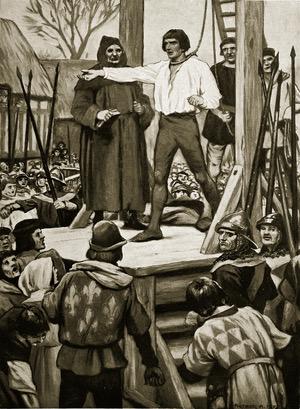
1499 - Perkin Warbeck, false pretender to the English throne under the assumed identity of Richard of Shrewsbury, Duke of York (and my own 15x-great-granduncle-in-law), is lead from the Tower of London to Tyburn. There he confesses to being a Belgian named Piers Osbeck and is hanged. His Irish ally John Atwater is beheaded on the same day.


r/UKmonarchs • • 1d ago

Write a text written by a royal during a time of crisis. I'll start:

24 Upvotes

"Where R U? ETA?" (From Henry Tudor to Thomas Stanley and William Stanley at the Battle of Bosworth Field.)


r/UKmonarchs • • 11h ago

Question Has anyone heard this?

Post image
0 Upvotes

I don't believe it's true. Well not until Buckingham Palace announce it


r/UKmonarchs • • 1d ago

Discussion How influential was Jane shore during Edward IVs time?

Thumbnail
gallery
15 Upvotes

r/UKmonarchs • • 1d ago

Today 187 Years Ago (23rd of November, 1839): Queen Victoria of the United Kingdom announced that she wanted to marry Prince Albert of Saxe-Coburg and Gotha

29 Upvotes

It was today, 187 years ago, that Queen Victoria announced to the Privy Council her intention to marry Albert. They married on the 10th of February 1840 at St James's Palace, London


r/UKmonarchs • • 2d ago

Eadwig became king 23rd November 955 after the death of his uncle Eadred. Sadly he was only the throne for 4 years, succeeded by Edgar the peaceful

Thumbnail
gallery
21 Upvotes

His uncle picture is in picture 2


r/UKmonarchs • • 1d ago

Poll A dress worn by Queen Victoria in her later years

Post image
3 Upvotes

r/UKmonarchs • • 2d ago

Media GOD SAVE THE KING. Programme sign-off, British Empire

Thumbnail
youtube.com
5 Upvotes

r/UKmonarchs • • 2d ago

Discussion Battle of the Monarch ROUND ELEVEN!

Thumbnail
gallery
3 Upvotes

You all eliminated Mary I with 34% of the votes!

I thought this would be a fun game for us all.
Find out who would be the ultimate winner in a Monarchs Battle Royale. Here's the rules!

  1. Monarchs have to be between William I and Charles III. This was the most request timeline.
  2. All Monarchs in this scenario are at their prime they were at any point DURING THEIR REIGNING YEARS, but they are fighting ALONE. No armies and no outside help.
  3. All Monarchs in this scenario have one sword and one shield and that's it. Otherwise they have to rely on strength, cunning, and intelligence to get them through. Think of it like The Hunger Games, but with British Monarchs.
  4. William and Mary fight TOGETHER as they are co-monarchs. They are the ONLY ones together! Keep that in mind.

Round ELEVEN! Which British Monarch is eliminated next?

As always if you have any suggestions or requests to help the poll and make this more fun for everyone, please don’t hesitate to let me know!

Remember to be kind and civil and have fun!


r/UKmonarchs • • 2d ago

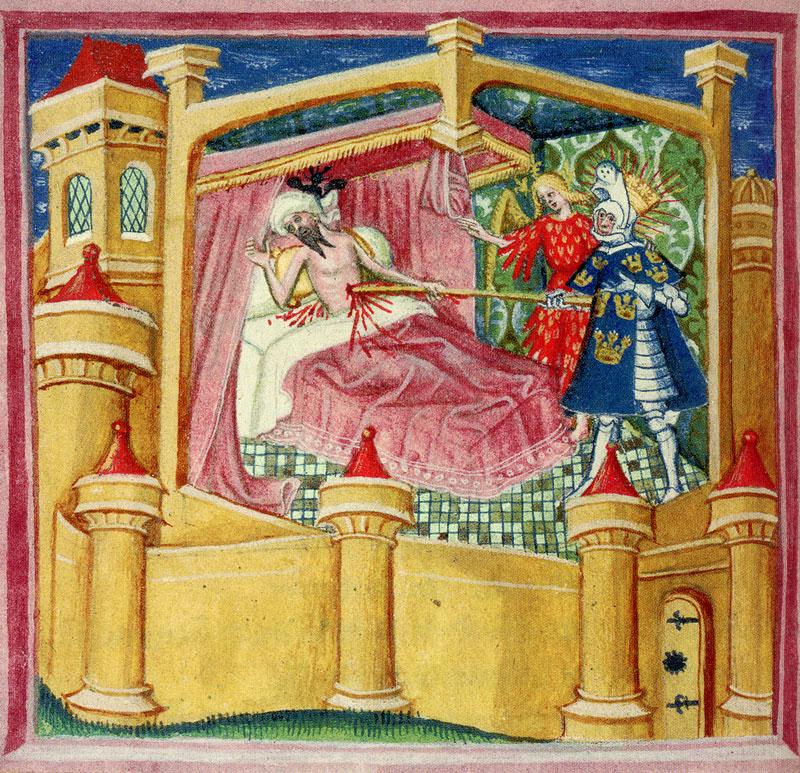
Painting/Illustration St. Edmund striking down Sweyn Forkbeard for attempting to plunder the abbey shrine (15th century)

Post image
35 Upvotes

A common legend at the time, used to explain Sweyn's early death and only brief reign as King of England. Later when Edward Longshanks came to the town he briefly considered appropriating funds from the abbey but, thinking on this story, decided against it.


r/UKmonarchs • • 1d ago

Question Without Googling name a King of the Plantagenet dynasty.

0 Upvotes

My answer is King Edward III.


r/UKmonarchs • • 2d ago

What if Queen Victoria married Tsarevich Alexander (future Alexander II), making him Prince Consort, while Grand Duke Konstantin Nikolayevich became Tsar?

5 Upvotes

Consort. Back in Russia, Emperor Nicholas I’s second son, Grand Duke Konstantin Nikolayevich, becomes the new Tsarevich and eventually ascends the throne as Tsar Konstantin II in 1855.

How do you think this would change 19th-century Europe?

• Would the Crimean War even happen, or would Britain and Russia form an unstoppable alliance against Napoleon III and Austria?

• How would Konstantin—who was known for his liberal views and naval reforms—rule Russia compared to Alexander II?

• Would British society and Parliament ever accept a Russian Orthodox prince as the Queen's husband?

Curious to hear your thoughts on how this timeline plays out!


r/UKmonarchs • • 3d ago

Happy Birthday, Mary of Guise

12 Upvotes

Mary of Guise was the second wife of King James V, King of Scots and mother of Mary, Queen of Scots. She was born on this day in 1515 in Bar-le-Duc, Lorraine. She served as Queen Consort of Scotland from 1538-1542, Queen Mother from 1542-1560 and Queen Regent from 1554-1560. She lived from the 22nd of November 1515 to the 11th of June 1560.


r/UKmonarchs • • 3d ago

Discussion Battle of the Monarchs ROUND TEN!

Thumbnail
gallery
8 Upvotes

You all eliminated Edward VII with 78% of the votes!

I thought this would be a fun game for us all.
Find out who would be the ultimate winner in a Monarchs Battle Royale. Here's the rules!

  1. Monarchs have to be between William I and Charles III. This was the most request timeline.
  2. All Monarchs in this scenario are at their prime they were at any point DURING THEIR REIGNING YEARS, but they are fighting ALONE. No armies and no outside help.
  3. All Monarchs in this scenario have one sword and one shield and that's it. Otherwise they have to rely on strength, cunning, and intelligence to get them through. Think of it like The Hunger Games, but with British Monarchs.
  4. William and Mary fight TOGETHER as they are co-monarchs. They are the ONLY ones together!
    Keep that in mind.

Round NINE! Which British Monarch is eliminated next?

As always if you have any suggestions or requests to help the poll and make this more fun for everyone, please don't hesitate to let me know!

Remember to be kind and civil and have fun!