r/VirginiaNativePlants • u/svdggm • 11d ago
Piedmont Grass Identification
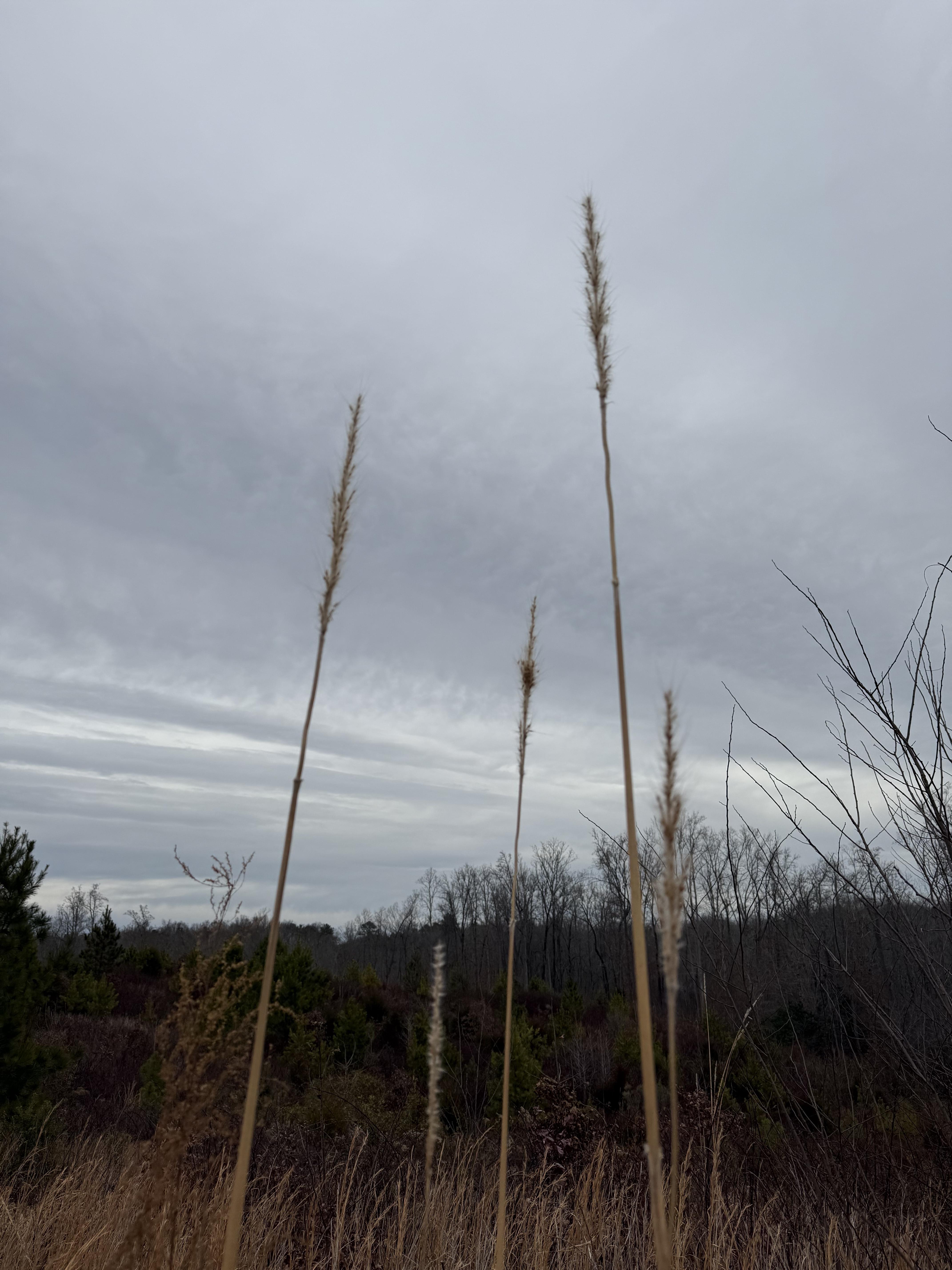


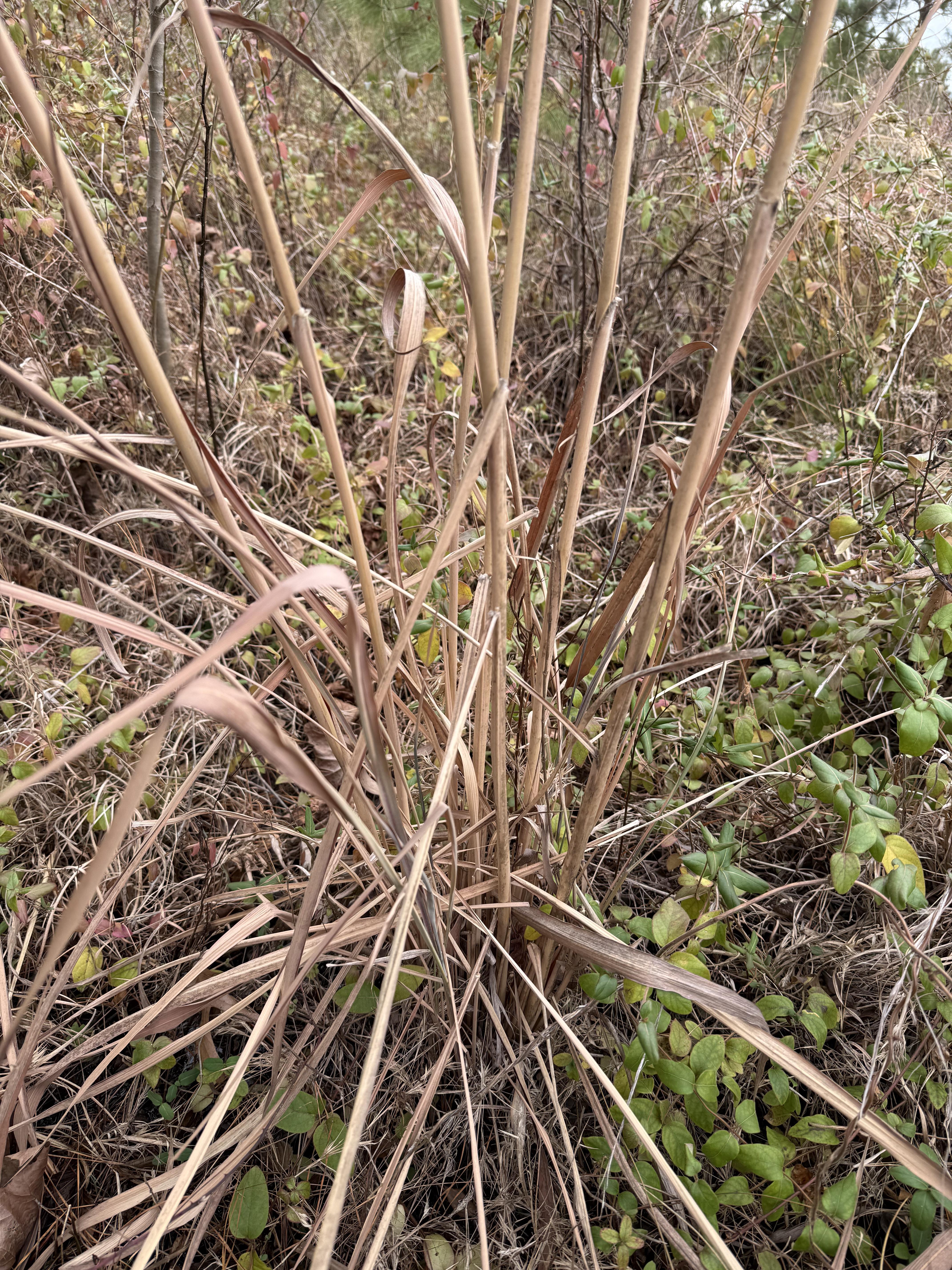
Photos from December 21, 2025 at the Varina LandLab southeast of RVA.
I became briefly obsessed with this grass after first noticing it along roadways on a drive between Richmond and Asheville in late November last year. I've been seeing the seed heads glowing on 64 again and am here to (re)learn what this is.
My first guess was Anatherum ternarium but these are well over 6' high so I don't think that's it. Anatherum glomeratum gets up to 6' tall, but these don't have glomeratum's bushy inflorescences. Andropogon gerardi grows up to 8', but these don't have gerardi's split inflorescences.
What is it? Thanks!
ETA: I just found where I recorded my best guess last year: Saccharum alopecuroides, syn. Erianthus alopecuroides. Can anyone confirm or educate me otherwise?
ETA2: E. giganteus confirmed — thanks everyone!
7
u/germwarfare72 11d ago
Yes, Erianthus sp! Perhaps giganteus, from a glance?Unlikely alopecuroides given how straight the awns are but I found this awn/spiklet comparison a while back and it's helped me immensely.
3
u/Henhouse808 11d ago edited 11d ago
This is likely Erianthus giganteus, sugarcane plumegrass. You can tell from the straight awns (little tails) on the seeds, and an additional clue is that the grass is growing in a wet area with standing water (based on the photos). Sugarcane plumegrass likes persistently moist ditches and wetlands, and boggy slow draining soils often with standing water. It can get up to 10 feet tall if it has ample water, and usually doesn't occur outside of this sort of habitat.
The other two most commonly encountered Erianthus to central Virginia are Erianthus contortus and Erianthus alopecuroides, both occur in dry to moist soils, but usually only well draining, rarely in boggy areas with standing water.
Erianthus contortus has seed awns that are bent rather than straight (hence the common name bent-awn plumegrass). Erianthus alopecuroides has seed awns that are like cork screws, and the seeds are notably hairier and give the seedheads a silvery fluffy appearance.