r/VocabWordOfTheDay • • 1d ago

Word of the day: Delphic

Post image
13 Upvotes

Delphic means deliberately obscure or ambiguous, especially in a way that seems to conceal deeper meaning; resembling the cryptic pronouncements of the ancient Oracle at Delphi.

Origins

From Delphi, the ancient Greek sanctuary on Mount Parnassus where the Pythia delivered famously ambiguous prophecies. The site was considered the center of the world by the ancient Greeks.

Interesting fact

The most famous delphic prophecy was given to King Croesus of Lydia, who asked whether he should attack Persia. The Oracle replied that if he did, a great empire would be destroyed. Croesus attacked and it was his own empire that fell.

Common misuse

Sometimes used to mean simply 'wise' or 'prophetic.' The key connotation of delphic is deliberate ambiguity wisdom wrapped in riddles, not clear-eyed prediction.


r/VocabWordOfTheDay • • 1d ago

Elicit has more in common with delicious than with illicit, despite the spelling

Post image
21 Upvotes

Elicit and illicit look like one stem with two different prefixes, and that's the trap. Illicit goes back to Latin illicitus, in- plus licitus, "allowed", from licet, "it is permitted", the same verb that eventually gave us license. Elicit goes back to elicere, ex- plus lacio, "to entice, ensnare". Latin turned that a into an i once a prefix went on, so a word about luring ended up spelled like a word about permission. Lacio is an odd verb. It almost never shows up on its own outside ancient glossaries, and we know it mostly from its compounds. One of those, delicere, "to allure", sits under deliciae, "delights", which gave Late Latin deliciosus and, through French, delicious. I would never have guessed that pairing, but it makes sense once you see it: something delicious draws you in, and when you elicit an answer you are drawing it out. The reconstructed Proto-Italic ancestor is even glossed "to draw, pull", which is close to what the card says.


r/VocabWordOfTheDay • • 2d ago

Under impecunious there are cattle, under affluent a stream flowing your way, under bankrupt a broken bench. Sumptuous just has the bill, and I like it least of the six.

Post image
13 Upvotes

The one thing I was going to say for sumptuous is that it gave us scrumptious, and even that is disputed. Etymonline says scrumptious is probably a colloquial alteration of sumptuous, first recorded in 1833 in Seba Smith's Major Jack Downing sketches from Maine. The OED points instead to scrimp, as in being stingy, which is an odd parent for a word we mostly save for food. Without that, sumptuous is all invoice. It comes from Latin sumptus, "expense," from sumere, to take or spend, and the Latin adjective sumptuosus could mean costly or simply wasteful. Compare impecunious, which goes back through Latin pecunia, "money," to pecu, "cattle," from a time when a herd was what wealth looked like; Etymonline notes the cattle were still visible in the word to Cicero. That's the kind of picture the other five carry. Strip the splendor off a sumptuous dinner and what's left is the price.


r/VocabWordOfTheDay • • 1d ago

Word of the day, built from pieces: “Friendly and easy to talk to.” 7 letters. Which 3 pieces make it?

Post image
2 Upvotes

Hey there :)

This clue is from one of the games over at Lexicon, a free word puzzle site I make. Can you find the three pieces that make the seven-letter word?

I've enjoyed the run of friendly words in the game lately: congenial, gracious and amicable all have their own shades of meaning. Which would your friends call you?

Every word you solve comes with its meaning and an example, with more to explore if you want. Come and try today's Daily: Lexicon Daily

Thanks for playing!


r/VocabWordOfTheDay • • 2d ago

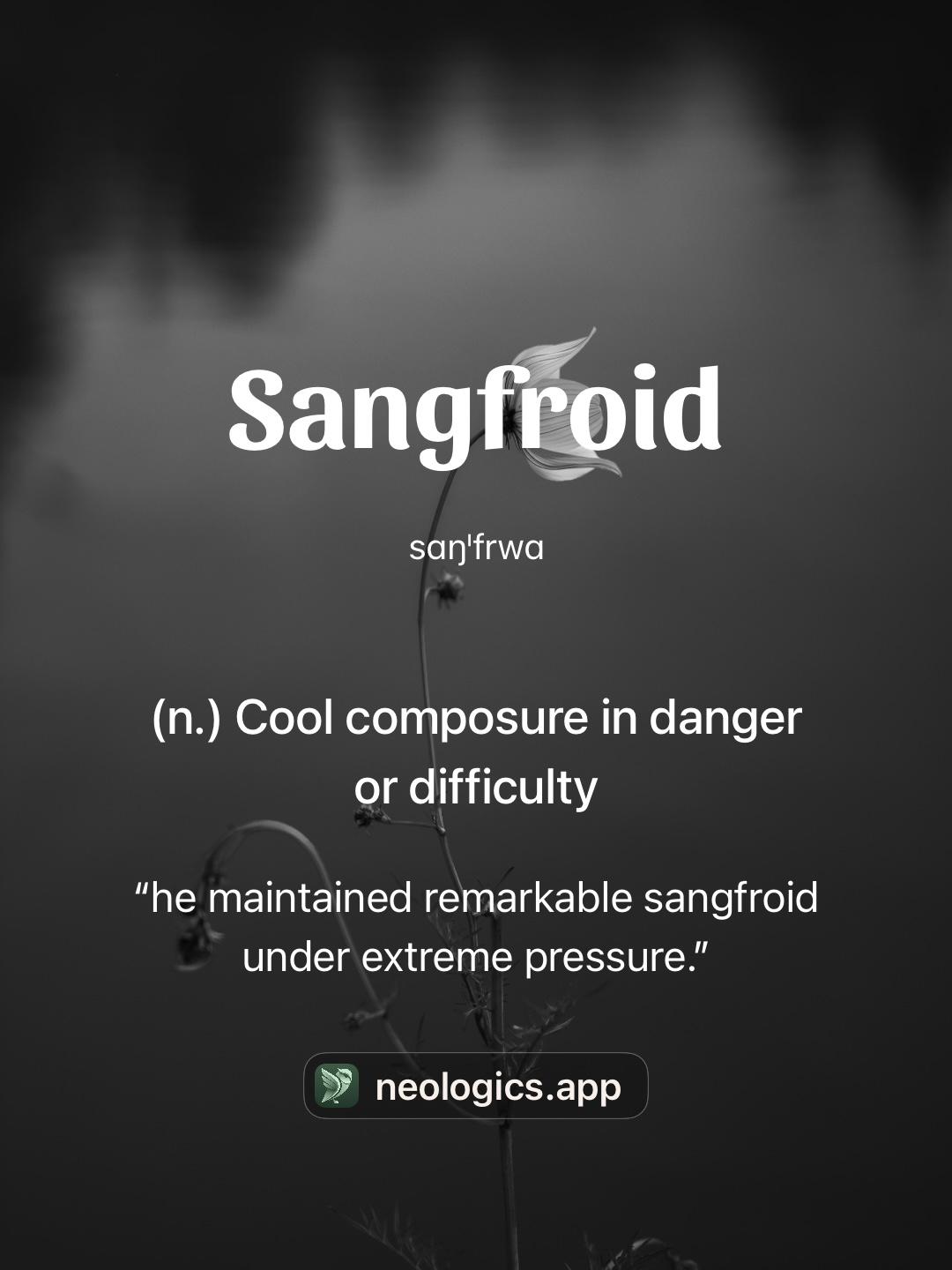
Word of the day: Sangfroid

Post image
23 Upvotes

Sangfroid means cool, unflappable composure and self-possession in the face of danger, crisis, or extreme pressure, suggesting an almost preternatural calmness.

Origins

From French 'sang-froid,' literally 'cold blood,' from 'sang' (blood) + 'froid' (cold); adopted into English in the mid-18th century to describe a distinctly French ideal of unruffled composure

Interesting fact

The concept of sangfroid became a celebrated cultural ideal in 18th-century France, where aristocrats prided themselves on maintaining perfect composure even at the guillotine during the Revolution.

Common misuse

Sometimes confused with indifference or callousness, but sangfroid implies deliberate emotional control under pressure, not a lack of caring.


r/VocabWordOfTheDay • • 3d ago

Preclude shuts the door before you get there. Obviate means you never needed to go through it.

Post image
17 Upvotes

Both get used as a dressier "prevent", and the card glosses preclude exactly that way. The Latin keeps them apart better. Preclude is praecludere, to shut in front, from prae and claudere, the verb behind close; in the 1620s English even used it for literally shutting something up, a sense dictionaries now mark archaic. Obviate took a longer road: Late Latin obviare, to go against, from obvius, standing in the way, from obviam, "in the way". Its first English sense, per Etymonline, was "to meet and dispose of, clear out of the way", and that's still the best picture of it I know. Obvious comes from the same obvius, and in the 1580s it meant "frequently met with" before it meant plain to see. So the useful question is what's left afterwards. Bad weather precluded any further attempts on the summit: the climbers still wanted to go, and the door was shut. Had a helicopter dropped them at the top, it would have obviated those attempts, because nobody would have needed to make them. Merriam-Webster notes that it's mostly needs that get obviated, and that's the rule of thumb I'd keep: obviate takes away a need, preclude takes away a chance.


r/VocabWordOfTheDay • • 4d ago

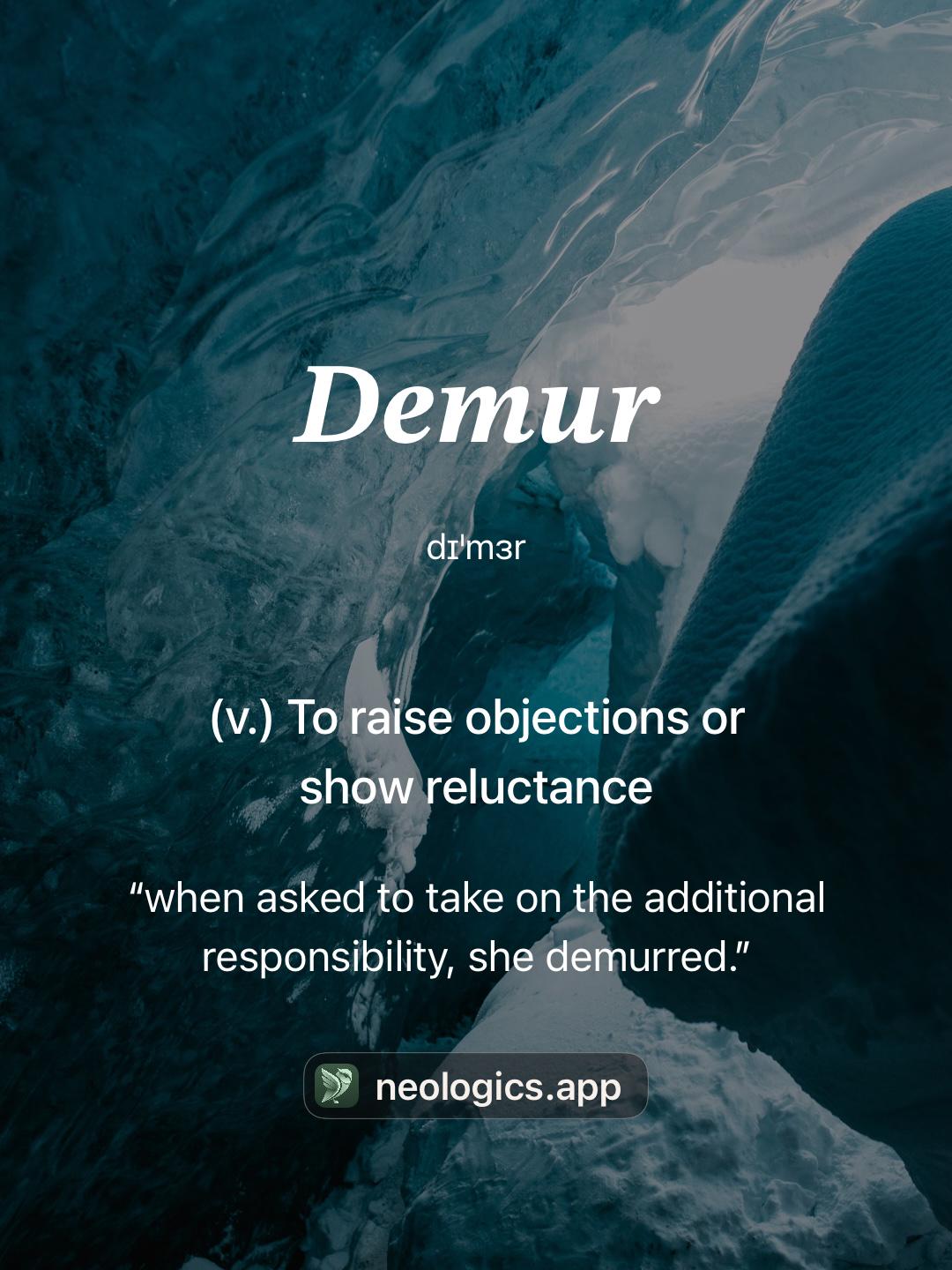
Word of the day: Demur

Post image
32 Upvotes

Demur means to raise doubts or objections; to show reluctance or hesitation about accepting something.

Interesting fact:

In law, a 'demurrer' is a formal objection arguing that even if all the opponent's facts are true, they still do not constitute a valid legal claim. It challenges the legal sufficiency of an argument without disputing the facts a pure exercise in philosophical reasoning within the courtroom.


r/VocabWordOfTheDay • • 4d ago

Unscathed, hapless, feckless: people call these orphaned negatives because the positive half went missing. I think most of those halves are still around, just not where you'd look.

Post image
20 Upvotes

Hap was the Middle English word for luck, and it never really left: it's sitting inside happy and happen, so a hapless person is short on exactly the thing a happy one has. Scathe, an old verb for harm, is still at work every time a review gets called scathing. A scathing review and coming out unscathed are the same word pointed in two directions. Feck is a Scots clipping of effect, which makes feckless effectless with an accent, and pervious is ordinary civil-engineering vocabulary, since pervious concrete is the kind built to let rainwater soak through. The two that really sound orphaned to me are maculate (spotted) and peccable (liable to sin). Both are in the dictionary and almost nowhere else. I'm a little sorry about peccable, because impeccable started out in the 1500s as a theological word for someone incapable of sin, and only later came down to describing a person's shirts.


r/VocabWordOfTheDay • • 3d ago

Word of the day, built from pieces: "Pleasant because it suits someone's interests, needs or temperament." 9 letters.

Post image
1 Upvotes

Hey there :)

Here's a word of the day with the word left out. It's an adjective, nine letters, and five of the ten pieces make it.

Which word is it? Once you've got it, I'd love to see a sentence of your own with it.

I make Lexicon, a free word game where every word you solve comes with its meaning and an example sentence, and you build the words from pieces. Nine games, over 1,000 levels, all free.

If you fancy building words yourself, today's Daily is here: Lexicon Daily

Thanks for reading!


r/VocabWordOfTheDay • • 5d ago

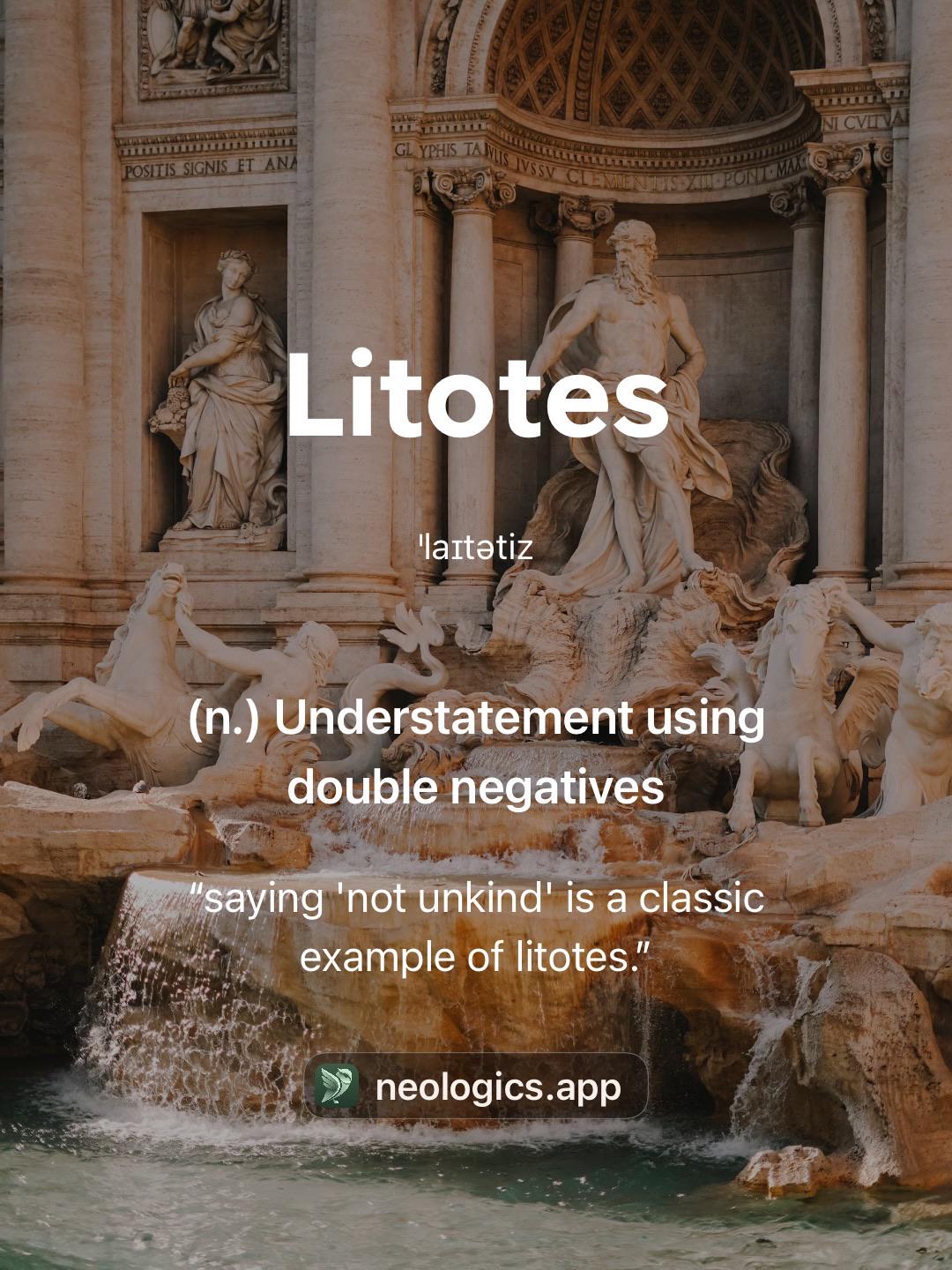
Word of the day: Litotes

Post image
22 Upvotes

Means a figure of speech that uses understatement by affirming something through the negation of its opposite, often for ironic or emphatic effect


r/VocabWordOfTheDay • • 5d ago

I'd rather my work got called a parody than a pastiche. Both copy someone's style, but a parody gets to say it was joking.

Post image
19 Upvotes

Pastiche came into English through French from the Italian pasticcio, a pie, and the pie is built on pasta, the Late Latin word for dough, which Latin took from a Greek word for barley porridge. Yes, that pasta. One version, pasticcio di maccheroni, puts macaroni and meat under a sweet crust. So the word started out meaning a mix, and in the 18th century a pasticcio was an opera assembled from other composers' arias; Handel put several together. That medley sense is still in the dictionary, next to the one people mostly mean now, a work that imitates an earlier style. Parody is older in English. Ben Jonson has the first recorded use, in the 1590s, and it came through Latin from Greek parōidia, para- "beside" plus ōidē "song", the word ode comes from. What separates them is motive. Wiktionary says a pastiche imitates "usually in a positive or neutral way", and I think that neutral part is why the word stings in a review. Fredric Jameson called pastiche "blank parody, a statue with blind eyeballs." A parody is mocking you on purpose. A house said to be "slipping into pastiche" copied the look and had nothing to say about it, and given the choice I'd take the mockery.


r/VocabWordOfTheDay • • 4d ago

Word of the day, built from pieces: "Pleasant because it suits someone's interests, needs or temperament." 9 letters.

Post image
2 Upvotes

Hey there :)

Here's a word of the day with the word left out. It's an adjective, nine letters, and five of the ten pieces make it.

Which word is it? Once you've got it, I'd love to see a sentence of your own with it. And while you're here: which word do you always mix up with another one?

I make Lexicon, a free word game where every word you solve comes with its meaning and an example sentence, and you build the words from pieces. Nine games, over 1,000 levels, all free.

If you fancy building words yourself, today's Daily is here: Lexicon Daily

Thanks for reading!


r/VocabWordOfTheDay • • 6d ago

Word of the day: Aporia

Post image
19 Upvotes

Means a state of puzzlement or impasse in philosophical inquiry, where contradictory arguments seem equally valid and no resolution appears possible.


r/VocabWordOfTheDay • • 5d ago

Word of the day but first you have to solve the clue and build the word :)

Post image
7 Upvotes

Hey there :)

Today’s word of the day comes with a puzzle: the word is hidden, and you build it from three of the nine pieces in the image. It’s a noun, 8 letters, meaning mercy or leniency shown by someone with the power to punish.

It’s a lovely, slightly formal word. You’ll mostly meet it in courtrooms, petitions and history books (“The petition asked the ruler to show ___”). It comes from the Latin for mildness, which is why its adjective cousin still turns up in weather forecasts: a mild day is a clement one.

Once you’ve got it, I’d love to see your own sentence with it in the comments.

I make Lexicon, a free word game where you build words from pieces, and every word you solve comes with its meaning and an example sentence like the one above. If you enjoy picking up words like this, the Daily might be something you like - it brings you three new words a day, today’s Daily is here: Lexicon Daily

Thanks for reading!


r/VocabWordOfTheDay • • 6d ago

Epitome started out as a word for a summary, which makes "the epitome of patience" sound like patience condensed rather than perfected. I prefer that reading.

Post image
13 Upvotes

Epitome came into English in the 1520s meaning an abstract: the short version of a longer piece of writing. It came through French épitomé and Latin epitome from Greek epitomē, an abridgment, built on epitemnein, to cut short. The verb inside that, temnein, to cut, also produced Greek tomos, a piece cut off, which reached English by way of Latin as tome, first meaning one volume of a multi-volume work. So a tome was a slice of the book and an epitome was the whole book trimmed down. I like that pair a lot. The sense of a person or thing that typifies something shows up around 1600, and I can't say whether the people who first used it that way had summaries in mind. Still, when I call someone the epitome of patience now, I picture patience with the padding cut out rather than patience done flawlessly, and that seems like the kinder compliment. Quintessence, next to it on the card, went a similar way: the alchemists' fifth essence had become, by the 1560s, an extract holding a thing's virtues in a small amount. Of the other tags, my favorite is exemplar, which in the late 1300s meant the model of the universe in the mind of God.


r/VocabWordOfTheDay • • 7d ago

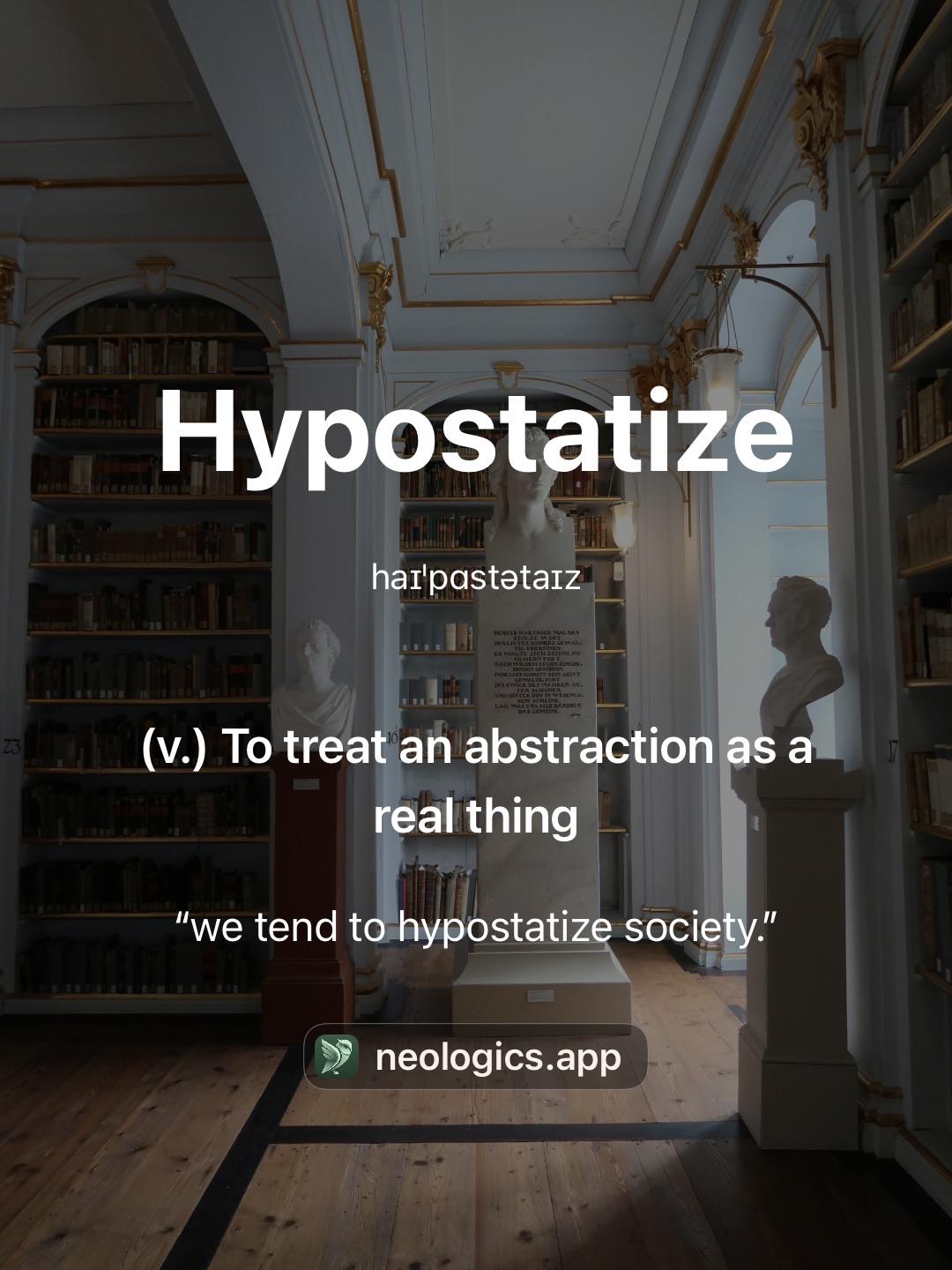
Word of the day: Hypostatize

Post image
22 Upvotes

Means to treat an abstract idea or quality as though it were a real, independently existing thing or substance.


r/VocabWordOfTheDay • • 7d ago

Fortuitous and fortunate come from the same Latin word for chance, so I don't mind the mix-up much. The old meaning still matters after "not", though.

Post image
14 Upvotes

Both words come from the Latin fors, "chance." Fortuitous is from fortuitus, "happening by chance, accidental," and English borrowed it in the 1650s with that meaning and no promise about how things turned out. Fortunate took a longer road, through fortuna and the verb fortunare, "to make prosperous," and arrived in the late 1300s already meaning lucky. Fors itself may go back to a Proto-Indo-European root meaning "to carry," as in whatever chance brings you, though Etymonline quotes de Vaan saying that semantic jump is not obvious. Strictly, then, a fortuitous meeting could have gone badly. Etymonline still says the word means "accidental, undesigned," not "fortunate." Merriam-Webster is more relaxed: it lists "fortunate, lucky" as a second sense, in "standard if not elevated use" for some 70 years and still disdained by some critics. With roots that close I don't mind the blur much, and the example on the card is the newer sense anyway. I can't read "a more fortuitous time" as "a more random time." Where I'd still be careful is after "not." Merriam-Webster notes that the chance sense is the only one commonly used in negative constructions, so "the timing was not fortuitous" reads as a hint that somebody arranged it, not a complaint about bad luck.


r/VocabWordOfTheDay • • 6d ago

Word of the day challenge: to reveal information that was private or not previously known. 7 letters. Can you build it from the pieces?

Post image
2 Upvotes

Hey there :)

Here's a word of the day with the word left out. The meaning is on the card, along with an example sentence with the word blanked. It's a verb, 7 letters, built from 3 of the pieces.

Which word is it? Once you've got it, I'd love to see your own example sentence with it.

I make Lexicon, a free word game where every word you solve comes with its meaning and an example sentence like this one, and you build the words from pieces. Nine games, over 1,000 levels, all free.

If you fancy building words yourself, today's Daily is here: Lexicon Daily

Thanks for playing!


r/VocabWordOfTheDay • • 8d ago

Word of the day: Bowdlerize

Post image
20 Upvotes

Means to remove or alter passages in a book, play or film that are considered indecent or offensive, usually in a way that weakens or distorts the work.


r/VocabWordOfTheDay • • 8d ago

None of these six is an insult on paper, but if someone said one about me I'd hear a dig. Quaint stings the most.

Post image
12 Upvotes

Around 1200, calling someone quaint meant they were clever, or possibly too clever. The word came from Old French cointe, "knowledgeable, clever, elegant," which goes back to Latin cognitus, "known," from cognoscere, "to get to know" (co- plus gnoscere, from the same Indo-European root as know). Acquaint is built on the same participle with ad- in front, so being acquainted with something and being quaint both began as knowing things. From there quaint drifted to "elaborately made" and then to "strange, fanciful," and the sense on the card, charmingly old-fashioned, doesn't turn up until 1782. The best part is in the same Etymonline entry: the word had gone rare after about 1700, so the new sense could have described quaint itself. That's why it stings the most of the six for me. Charmingly is doing the work of an apology for the old-fashioned part, and when someone calls my opinions quaint, I know which half they mean.


r/VocabWordOfTheDay • • 8d ago

Word of the day: QUIP. Everyone’s maxxing something in 2026, so I’m vocabmaxxing

6 Upvotes

Hey there :)

Today’s word is quip (noun): a quick, clever, funny remark.

“She had a quip ready for everything.”

It can be a verb too: “‘Nice weather for it,’ he quipped, as the rain came down.”

A bit of history: it goes back to the 1530s, from an earlier “quippy”, probably from Latin quippe, meaning “indeed”, which was often said sarcastically. So a quip may have started life as a dry “oh, indeed”.

I made the video because Dictionary.com just named “maxxing” its word of the year, and vocab is the only kind of maxxing I’m qualified for 😄

Can you write a sentence with “quip” in the comments? Bonus points if it’s a quip itself.

I make Lexicon, a free word game where every word you solve shows you its meaning and an example sentence, so you pick up a new word or three every day. Come and try today’s Daily: https://lexicon.zone/today

Thanks for playing!


r/VocabWordOfTheDay • • 9d ago

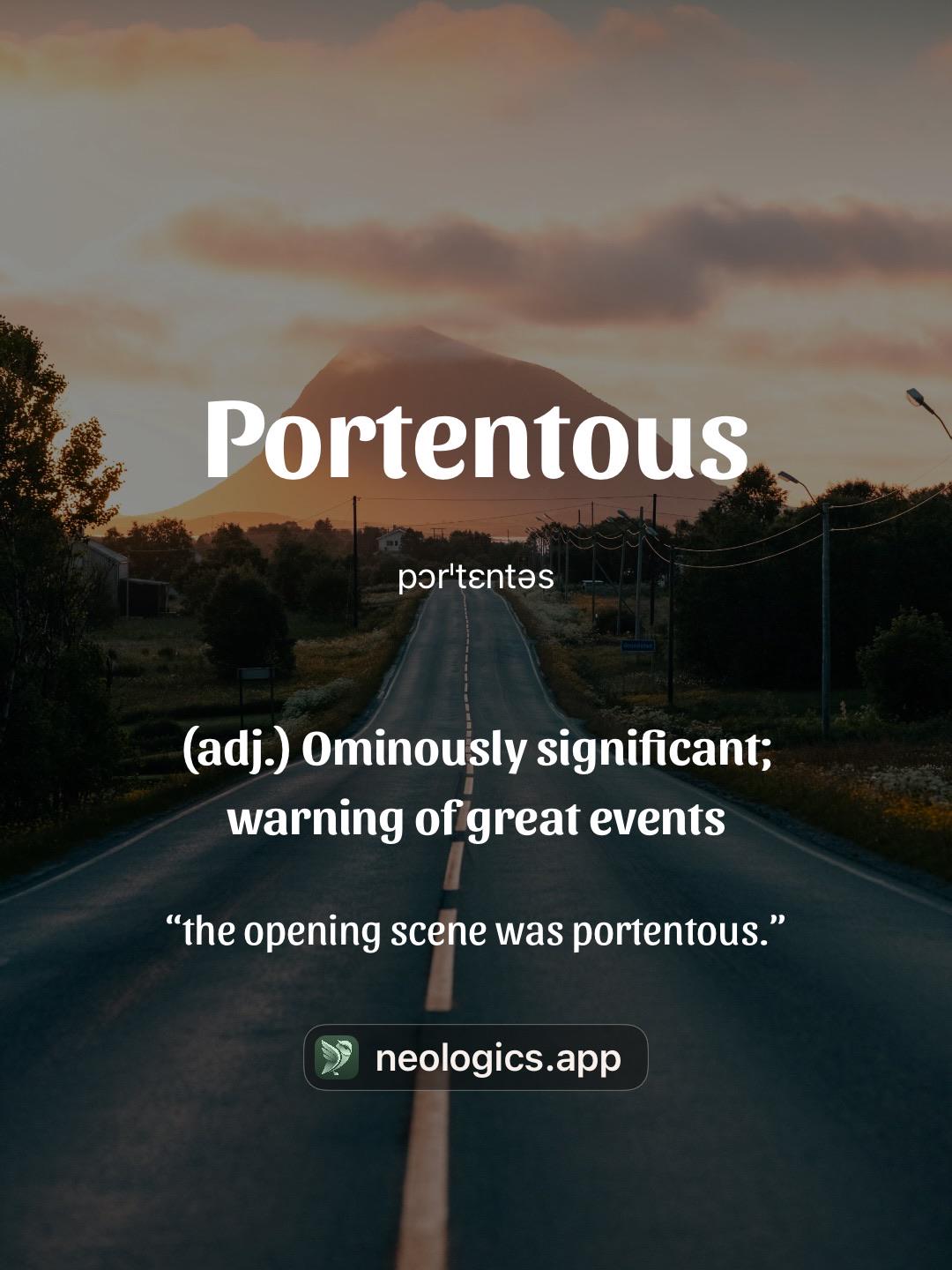
Word of the day: Portentous

Post image
17 Upvotes

This adjective has three meanings

Acting as a sign or warning that something bad, dangerous, or disastrous is about to happen.

Awe-Inspiring: Carrying great importance, seriousness, or wonder

Acting in a self-consciously serious, dramatic, or pretentious way to impress others


r/VocabWordOfTheDay • • 9d ago

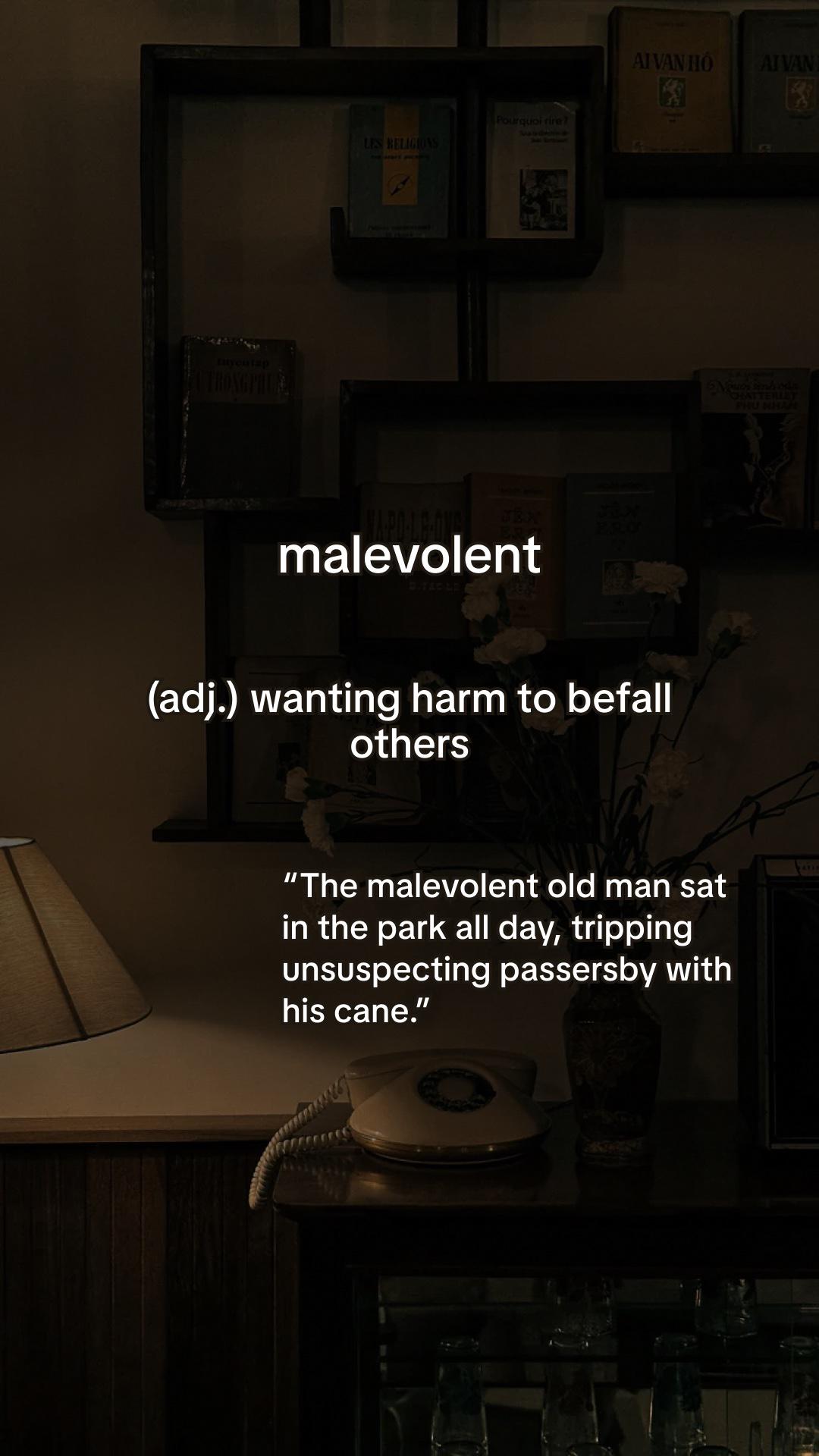
Sleeping Beauty's villain is Maleficent, not Malevolent. The Latin says one wishes you harm and the other does it.

Post image
9 Upvotes

Both words open with Latin male, "badly," the adverb from malus. After that they split. Malevolent ends in volens, a form of velle, "to wish," so it describes what someone wants to happen to you. Maleficent ends in -ficus, from facere, "to do," and describes the harm itself. Benevolent and beneficent are the same split on the friendly side. I won't pretend English keeps the line clean. Merriam-Webster gives malevolent a second sense, "productive of harm or evil," and Etymonline glosses maleficent as acting "with evil intent or effect," so each word has wandered a little into the other's yard. The card's example is still a fair test. The old man with the cane is malevolent because he wants strangers to fall over. Actually tripping them is the maleficent part. Maleficent had been sitting in English since the 1670s when Disney gave it to a fairy in 1959, and as names go it's the more honest one for her, since she curses the baby instead of just resenting that she wasn't invited.


r/VocabWordOfTheDay • • 10d ago

Unabashed, shameless and brazen all skip the embarrassment. I'd only take the first one as a compliment.

Post image
22 Upvotes

Brazen started out as a material. Old English bræsen meant made of brass, and by the 1570s a shameless person could be called brazen-faced, which Etymonline suggests is about a face that can't show shame. That's my problem with it as a description: the word assumes the embarrassment ought to be there. Unabashed comes from abash, an Old French borrowing that once covered being thrown by any strong feeling, wonder as much as shame, before it narrowed to shame alone. The second half may come from a verb for gaping, though Etymonline only offers that as a maybe. So unabashed reads to me less like having no shame and more like refusing to be knocked off balance, and I'd happily answer to it. Shameless I'd hear as a complaint. Mortifying sits at the other end of the grid. It came through French from Late Latin mortificare, literally to make dead, and English used the verb for killing and then for subduing the flesh for about three hundred years before the humiliation sense showed up in the 1690s.


r/VocabWordOfTheDay • • 11d ago

Word of the day: Oneiric

Post image
32 Upvotes

Means of, relating to, or suggestive of dreams; having a dreamlike quality.