r/WenwanHub • • 1d ago

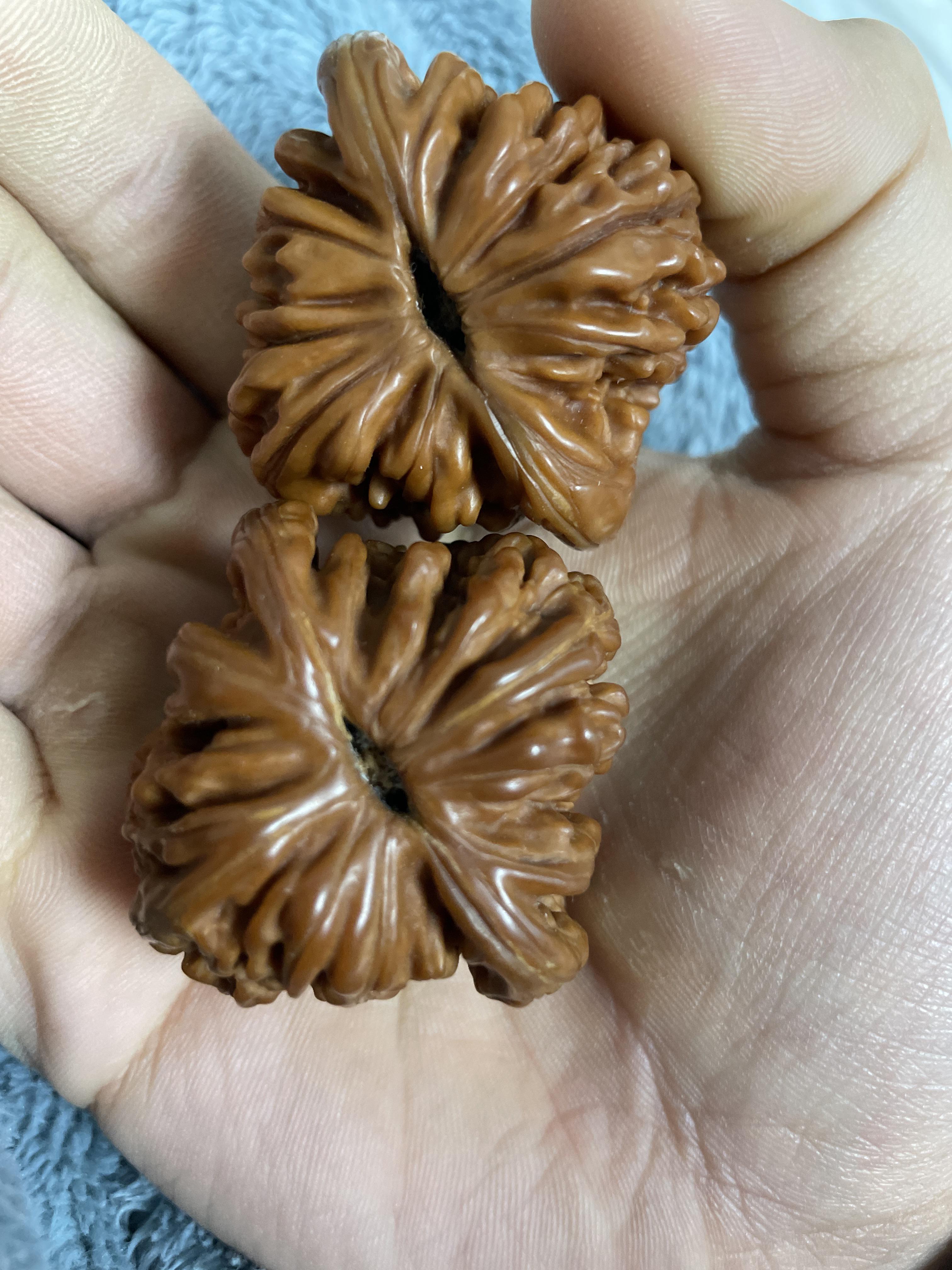
Ask question Has this been carved?

Post image
6 Upvotes

I’m concerned about the seller carving out my walnuts so they matched together because I spent a ton of money on these.


r/WenwanHub • • 1d ago

Ask question Yellow tips?

Thumbnail
gallery
12 Upvotes

Hello all! Just had some nuts come in, specifically three pairs.

I am particularly curious about the first pair, especially whether there are slight yellow spots and / or yellow tips. As I was prepping the base, I noticed that as I shift them around, there is slight yellow variation at some of the veins surrounding the tips. If so, any chances of them going away with time / play?

Thrown in two photos of the other two pairs of walnuts each + two group shots towards the end for viewing / appraising pleasure.

Would appreciate the wisdom and guidance of this sub! Do let me know should better photos be required.


r/WenwanHub • • 1d ago

SHOW! New Brush😆

22 Upvotes

But the price is a bit expensive, I need to pay for a cat can every time I use it🥫🤯🌚


r/WenwanHub • • 2d ago

Ask question Are my Wenwan walnuts real? If they are real, what variety are they?

Thumbnail
gallery
5 Upvotes

r/WenwanHub • • 2d ago

Ask question Is it normal for this part to be open like this? Could it be a defect? 😭

Post image
11 Upvotes

r/WenwanHub • • 2d ago

SHOW! Good morning

Thumbnail
gallery
26 Upvotes

r/WenwanHub • • 3d ago

SHOW! Three months with my Zuoshan Eagle

Thumbnail
gallery
33 Upvotes

r/WenwanHub • • 5d ago

SHOW! Rolling walnuts after gym is my favorite part!

31 Upvotes

r/WenwanHub • • 6d ago

Ask question Wondering How to Begin / Overwhelmed with Options

3 Upvotes

Hi all! I just discovered wenwan after purchasing some cyber walnuts (a fidget toy that I didn't even realize was inspired by this when I bought it). I found this subreddit and have read several of the guides, which are wonderful! I feel like I have a decent understanding now.

That being said, I'm feeling a bit of decision paralysis. I'm quite interested in getting a pair of walnuts, but at least for now, I don't see myself wanting to collect them or anything. I like the idea of getting one good pair and keeping/using them for years. At the same time, since I'm completely new to all of this, I don't want to waste money on a good pair just to ruin them because I mess something up.

I also feel a bit like I'd lose interest if I put a lot of effort into a beginner pair only to need to start all over with a better pair, given the amount of time and dedication needed to really see a difference. But maybe if I got a cheap pair, I could switch to a better pair sooner than I think?

If anyone has advice, suggestions, or specific shop recommendations, I would really appreciate it! Here are my main considerations:

  1. I know "good" and "beginner" can be subjective - ideally, I want my first (and potentially only) pair of walnuts to meet these requirements:

    • not modified/repaired in any way (other than being cleaned, if done properly)
    • size difference of 1mm or less
    • weight difference under 2g
    • at least 40mm size
    • a decently matched texture/pattern
    • dense and mature (passes the sound test/weight check)
    • no yellow tips, worm holes, or cracks
  2. I'd prefer to spend no more than $100 on a good pair, or $50 on a beginner pair. Are those budgets realistic, given the requirements listed above?
  3. I am unsure of how processed I want the walnuts to be. Would it be better to look for a completely uncleaned pair so I can learn to remove the white frost and fruit, or should I look for a pair that has had some/all of the prep work taken care of for me?
  4. Need to purchase from somewhere that can ship to USA (with tariffs prepaid if possible).

Thank you!!!


r/WenwanHub • • 7d ago

SHOW! A variety that has not yet been named

Thumbnail
gallery
35 Upvotes

The grain is deep and the leather is oily and waxy.

Not yet grafted, the location of the original tree is closer to the sea than the common walnut, and more northern.

In 2026, a total of about 350 seeds were produced, and 17 pairs were actually paired. Can someone give it a cool name?! Welcome!!!💪


r/WenwanHub • • 10d ago

SHOW! 6 months with my Longkui

Thumbnail
gallery
26 Upvotes

r/WenwanHub • • 10d ago

SHOW! Starry Walnuts Day 41

14 Upvotes

Day by day, the natural patterns become more beautiful. Every turn brings out new details, and every day adds a little more character.
Slow progress, beautiful results.


r/WenwanHub • • 11d ago

Ask question Can I have too many nuts?

Post image
20 Upvotes

The walnuts are for dad, the bracelet for mom. Trying to put in some color before I give it to them in a few months


r/WenwanHub • • 12d ago

SHOW! Single-ridged NJS

13 Upvotes

Roman centurion helmet looking walnuts 🏛️


r/WenwanHub • • 12d ago

Ask question Where to buy my first pair?

0 Upvotes

I am looking for a pair of walnuts that aren’t tn expensive and are from a reputable seller (no Ali express, temu, etc) I also don’t know much about the process and caretaking any insight would be great!!!


r/WenwanHub • • 12d ago

SHOW! Starry Walnuts Day 40

23 Upvotes

40 days of patience, care, and consistency. Their beautiful round shape and intricate patterns make every turn worth watching. Slowly developing a deeper color and a richer shine.


r/WenwanHub • • 13d ago

Ask question Could someone identify the shape of this pair and their significance?

Thumbnail
gallery
14 Upvotes

My friend selected this gorgeous pair for me while he was in china! I was wondering if anyone could identify the specific style of walnut and the significance of their shape.


r/WenwanHub • • 14d ago

SHOW! The Beauty of Wood-Fired Blue-and-White Porcelain — Chinese Wenwan Culture | Huajun Dingcheng Kiln Opening

16 Upvotes

Title: The Beauty of Wood-Fired Blue-and-White Porcelain — Chinese Wenwan Culture | Huajun Dingcheng Kiln Opening

Blue-and-white porcelain is a classic expression of traditional Chinese ceramic art and an important part of Chinese Wenwan collecting culture.

For collectors and enthusiasts, its appeal lies not only in the timeless contrast of blue and white, but also in its hand-painted designs, craftsmanship, and rich cultural heritage.

Wood-fired kilns have a long history in China and played an important role in the development of Chinese ceramics. Traditional wood firing requires years of experience and exceptional skill. Controlling the fire, managing temperatures, and maintaining the kiln atmosphere throughout a lengthy firing process make it a demanding and unpredictable craft.

Today, we're sharing a glimpse into the opening of a traditional wood-fired kiln at Huajun Dingcheng (华军鼎成), featuring blue-and-white porcelain.

Every firing is unique. Through the interaction of fire, craftsmanship, and time, each piece reveals its own character.

This is part of what makes Chinese Wenwan culture so fascinating: objects are valued not only for their beauty, but also for the craftsmanship, history, and culture they represent.

Do you appreciate Chinese blue-and-white porcelain? What makes it special to you?


r/WenwanHub • • 14d ago

Ask question Any feedback on Jorjajaneco Etsy seller ?

Post image
13 Upvotes

I'm tempted to get 3 ridges nuts from this seller but seems to good to be true.

3 ridges sells for 300 to 500 $+ on Bhudda3 but those are listed at 75 $ ?

Also the listing don't show actual pictures from the nuts but it's the same on Bhudda3, any feedback on this seller?


r/WenwanHub • • 14d ago

SHOW! A little history about Millstone walnuts...

16 Upvotes

The Millstone Lion Head (磨盘狮子头) has a long history in Chinese walnut culture.

Originally found around Miaofeng Mountain in Mentougou, Beijing, this traditional variety became famous for its distinctive shape.

Its name, “Millstone,” comes from the resemblance to traditional stone mills once used in Chinese villages.

Over generations, the original trees faced challenges, but through grafting, this classic variety has continued to survive and reach walnut enthusiasts around the world.

More than just a pair of walnuts, it’s a little piece of Chinese tradition that we can still hold in our hands today.


r/WenwanHub • • 15d ago Heartwarming

Knowledge dissemination A Thousand Pairs, a Thousand Faces: Why Nanjiang Shi Walnuts Vary So Much

Thumbnail
gallery
22 Upvotes

Previous post explained how to identify genuine Nanjiang Shi and select a good pair.

The "Nanjiang Shi" : How to Identify and Select the Perfect Pair

However, recognizing the variety’s typical traits should not lead us to believe that all Nanjiang Shi walnuts are supposed to look the same.

As this collage of walnuts from the original tree (as shown in the picture), even walnuts from the same tree can differ noticeably in overall shape, tips, shoulders, bases, outer edges, and the depth and flow of their ridges. Some closely match the familiar “textbook” examples, while others fall outside what newer collectors might expect from Nanjiang Shi.

No single top-tier pair or reference photo can represent the entire variety. A better way to understand it is this: a shared set of varietal traits, expressed through remarkable individual variation. “A thousand pairs, a thousand faces” is the result of both growth and pairing.

1. Why Is There So Much Variation?

The diversity of Nanjiang Shi cannot be attributed to a single cause. Nor is it accurate to explain this diversity simply by saying that every shell has a different genetic makeup.

The original tree’s genetic makeup is relatively stable, but this does not mean that every walnut develops under identical conditions.

Genetics and Tree Condition

The variety’s genetic background establishes its general range of forms; it does not prescribe an exact size, shape, or ridge pattern for every walnut.

Branches on the same tree vary in vigor. Walnuts also grow in different positions, while the tree’s crop load and internal nutrient distribution change from year to year. A walnut growing on a strong fruiting branch does not experience the same conditions as one growing on a weak or heavily laden branch.

Pruning, fertilization, pest and disease management, and harvest timing can further influence the walnut’s final size, fullness, and overall condition. The variety provides the shared foundation, while the condition of the tree influences how that foundation is expressed.

Geography, Geology, and Growing Conditions

Soil depth, texture, drainage, and fertility, together with factors such as slope and elevation, affect root growth and the tree’s access to water and nutrients. These conditions ultimately influence tree vigor and nut development.

When the variety is propagated or grown in a different location, its walnuts may develop differently as a result. But this does not mean that one type of soil automatically produces one type of ridge pattern, or that a particular location can only produce one shape.

There is no simple one-to-one relationship between a particular growing condition and a particular walnut trait.

Rainfall and Water Availability

What matters is not only the annual rainfall total, but also when the rain falls, how long wet or dry periods last, and how these conditions coincide with key stages of nut development.

Insufficient water can weaken the tree and limit nut growth, while excessive rainfall or prolonged waterlogging can disrupt normal root activity. Rainfall distribution varies from year to year, and irrigation and drainage further affect the amount of water actually available to the tree.

Consequently, the same tree may produce walnuts in different years that vary in size, fullness, and overall development. Water is one of the factors involved, not a universal explanation for every difference in appearance.

Weather and the Microclimate Within the Canopy

Light, temperature, humidity, spring cold spells, summer heat and drought, and prolonged rain near maturity can all influence tree growth and nut development during a given season.

Even on the same tree and in the same year, individual walnuts do not experience exactly the same microclimate. Different parts of the canopy—outer versus inner, upper versus lower, and different exposures—receive different amounts of light and can vary in temperature and humidity. A walnut growing in full sun on the outside of the canopy does not develop under the same conditions as one shaded deep inside the tree.

The variety provides the foundation; site conditions and water influence tree vigor; weather leaves its mark on each season; and branch position and tree management further shape individual walnuts. Pairing then brings these differences together in new combinations, giving us a thousand pairs with a thousand different faces.

2. What Makes the Original Tree Special?

If we display only a few beautifully matched, top-tier pairs from the original tree, our understanding of Nanjiang Shi becomes unnecessarily narrow. The original tree can also produce walnuts that are irregular, less typical, difficult to pair, or unusual in appearance. These walnuts do not diminish the tree’s value; they are part of its authentic record.

The purpose of this collage is therefore not merely to show that the original tree can produce outstanding walnuts. It is to present a fuller picture of the variety’s natural variation.

Beyond its importance as the genetic source of the variety, the original tree also holds particular significance in terms of walnut quality.

In the experience of many collectors, walnuts from the original tree generally have an advantage in both skin quality and shell density (often referred to as “bone” quality in the walnut-collecting community). Their skin texture, surface character, and overall feel are often highly regarded, while their shells are valued for their density, hardness, and substantial feel.

These qualities are part of what makes walnuts from the original tree especially sought after. Its value is therefore not limited to provenance or genetic authenticity; it also serves as an important quality benchmark for evaluating Nanjiang Shi walnuts.

However, this should be understood as an overall tendency rather than an absolute rule. Not every walnut from the original tree is necessarily superior to every walnut from a grafted tree. Rootstock, growing conditions, tree management, and the individual development of each walnut all contribute to the final result.

Nevertheless, when discussing the variety's origins and quality characteristics, walnuts from the original tree deserve special attention—not only because they represent the original genetic source, but also because they provide an important reference for the skin and bone qualities that collectors value in Nanjiang Shi.

The wok-shaped base, diamond-shaped navel, sloping shoulders, and dense texture discussed in my previous post should be understood as typical identifying clues—not as a rigid checklist that every walnut from the original tree must satisfy in every respect.

The original tree does not offer a single definitive template. It is a living archive that helps us understand the variety.

3. What Does “First-Generation Grafting” Mean?

In the context of wenwan walnuts, first-generation grafting usually means taking scionwood or buds directly from the original tree and grafting them onto another plant, known as the rootstock. The resulting grafted tree is commonly called a first-generation grafted tree.

The key point is that the scion comes directly from the original tree.

A tree grown from one of the original tree’s seeds is a seed-grown tree, not a first-generation grafted tree. “First-generation” describes the source of the scion and the propagation relationship; it does not simply refer to the tree’s age or the first year in which it bears nuts.

Provided that the scion source is authentic and properly documented, first-generation grafting has three main advantages:

First, it preserves and propagates the original tree’s genetic line.

Because grafting is a form of vegetative propagation, it avoids the genetic reshuffling that occurs during seed reproduction. This allows the original scion’s genetic line to be maintained and propagated more widely.

Second, it has a direct, traceable connection to the original tree.

Because the scion comes directly from the original tree, the propagation chain is relatively short. This also makes it easier to compare walnuts from the grafted tree with those from the original tree.

Third, it allows the variety to be cultivated more widely.

First-generation grafting increases the number of bearing trees and gives us an opportunity to observe how the same scion source performs under different growing conditions, rootstocks, and management practices.

However, walnuts from a first-generation grafted tree are not exact copies of those from the original tree. The scion provides the varietal genetics, but the rootstock, soil, climate, and subsequent management still affect tree vigor and nut development.

Final Thoughts: Diversity Does Not Mean the Absence of Standards

The standard for Nanjiang Shi should not be a single fixed template. It should be a set of shared traits that can still be recognized across a range of individual variation.

These shared traits allow the walnuts to be identified as Nanjiang Shi, while environmental, seasonal, and developmental differences give each one its own appearance.

The original tree shows us the source and full range of variation within the variety. First-generation grafting allows that source to be propagated. Soil, rainfall, weather, and the condition of the tree shape each crop and each walnut differently.

Pairing is not about finding two perfectly identical walnuts. It is about finding harmony in size, shape, texture, and overall character between two unique individuals.

A thousand pairs, a thousand faces. This diversity does not mean that Nanjiang Shi lacks standards; it is a central part of the natural beauty that makes the variety worth a closer look.


r/WenwanHub • • 15d ago

SHOW! Nanjiang Stone

Thumbnail
gallery
19 Upvotes

r/WenwanHub • • 15d ago

SHOW! Triangle Nanjiang Stone ASMR

16 Upvotes

Three unique angles, dense natural纹理, and a satisfying sound with every rotation.

No talking, no distractions. Just the natural texture and sound of Nanjiang Stone walnuts.


r/WenwanHub • • 16d ago

SHOW! A little history behind this walnut.

6 Upvotes

Handcrafted walnut appreciation has been part of Chinese culture for centuries, becoming especially popular during the Ming and Qing dynasties.

Panshan walnuts are treasured for their natural shapes, deep ridges, and unique character. A beautiful three-ridge pair is especially rare.

Every turn is a small connection to a centuries-old tradition.


r/WenwanHub • • 17d ago

Ask question Can you play a pair of walnuts that are two different varieties?

13 Upvotes

The answer is YES!

Today I’m playing a Four Building and an Official Hat together. Two completely different varieties, with different shapes, patterns, and personalities.
But here’s the thing: walnut playing isn’t always about having two identical pieces. It’s about how they feel in your hands, how they rotate, and how much you enjoy the process.

Don’t be afraid to mix things up. Sometimes, an unconventional pair brings its own unique charm.

Would you play a mixed pair?