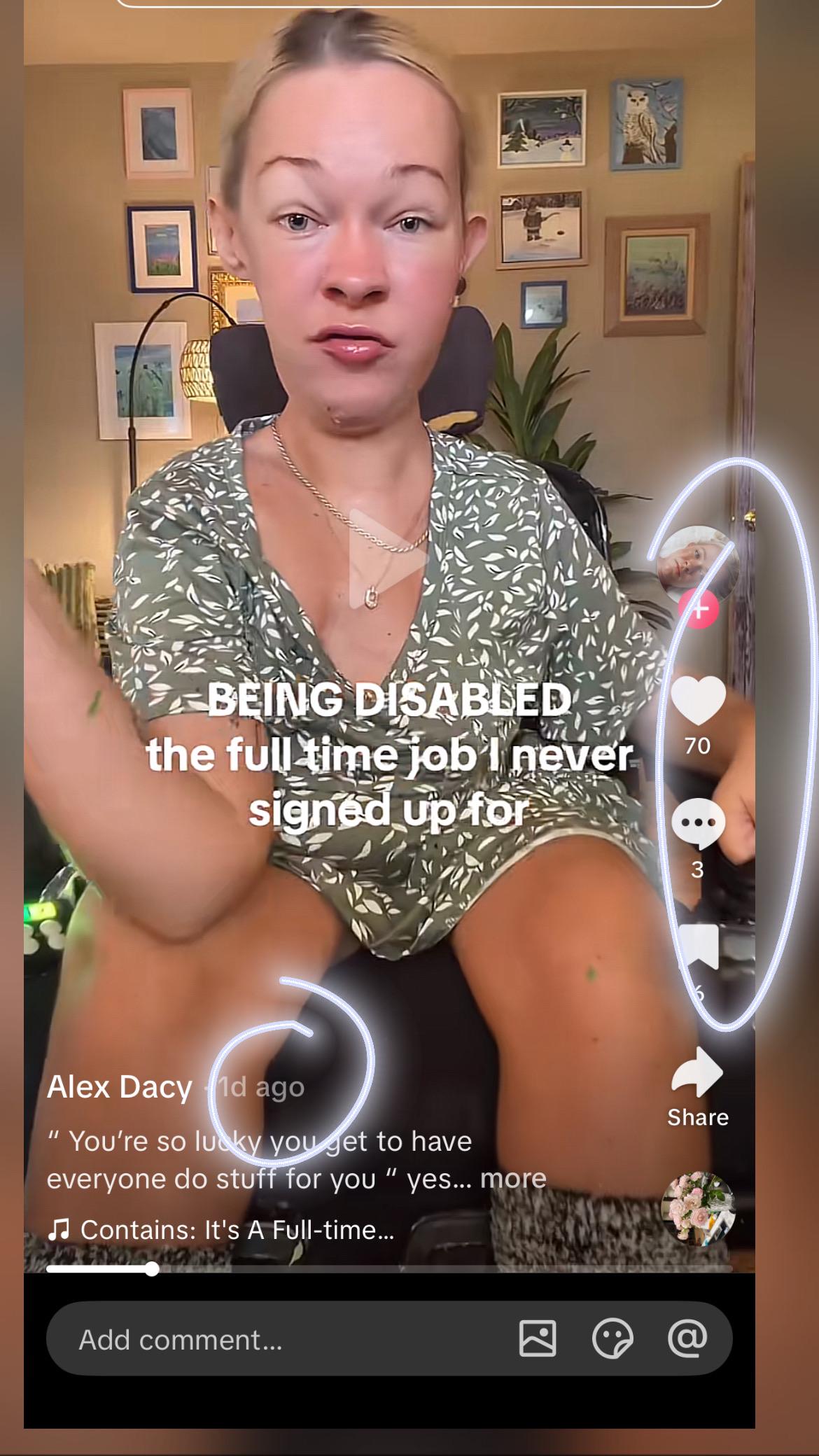
This rant is not a constructive use of my time, but here goes. I just need to get it out.
As a fellow person with a physical disability who has even less physical mobility than Alex, I sincerely wish she would give up any sort of disability advocacy platform at this point.
I haven't actively sought out her content in ages, but lo and behold, the Facebook gods decided to bless me with her Care Without Conditions initiative. Apparently, I had done something to offend the algorithm.
My immediate thought was, wonderful, another legitimate issue within the disabled community that could potentially be turned into a personal fundraising opportunity. Forgive me if I'm not particularly optimistic, given the history.
I'm not unsympathetic to her difficulties finding care, her supposed family circumstances, or the challenges of living with a neuromuscular disability. Believe me, I get it. Anyone who has navigated Medicaid, home care services, or disability benefits knows that bureaucracy is apparently its own recreational sport.
But needing physical assistance doesn't absolve us of responsibility for our own decisions.
I initially followed Alex on TikTok because I supported the idea of promoting body positivity within the disabled community. That support quickly dwindled as I witnessed her behavior and became aware of the various controversies surrounding her fundraising, merchandise, and finances. And now, she and her mom are facing felony charges related to Medicaid fraud.
I'm not going to pretend everything circulating on the internet is factual, nor am I interested in playing an amateur federal investigator from the comfort of my wheelchair. Being charged with a crime is not the same as being convicted, but I think there are enough legitimate reasons to warrant skepticism about her latest endeavor.
And this is where Care Without Conditions particularly pisses me off.
The shortage of reliable caregivers is a very real problem.
There are disabled people who cannot get out of bed, eat, bathe, or leave their homes because they lack adequate care. There are exhausted parents filling the gaps left by a failing care system and people being institutionalized simply because they cannot secure care in their own homes.
I personally know what it's like to struggle with staffing, depend on others for my most basic physical needs, and worry about the burden that inadequate care places on family members.
Where is the concrete plan? What resources are being provided? Where is the financial transparency? What measurable changes is this initiative intended to accomplish, and how does she intend to accomplish them?
Is she working with disability organizations? Developing resources? Advocating for better reimbursement rates, caregiver wages, or legislative changes?
She does outline three objectives on her website, and while I don't necessarily disagree with them, there's considerably more wrong with the system than those three issues. I'd also like to know HOW she intends to achieve those objectives. I don't expect her to have every detail figured out, but surely there should be at least a rough skeleton of a plan.
She's also collecting personal experiences from disabled people and caregivers to help others understand the difficulties of accessing care. Okay, but what specifically does she intend to do with those stories? Present them to legislators? Work with established advocacy organizations? Use them to develop resources?
Because beyond a few broadly stated policy goals and a form asking people to share their experiences, what I've seen so far is an invitation to join a mailing list and an opportunity to buy a T-shirt.
And if I hear or see her use the word merch one more damn time, I think I'm going to scream. Who knew the home care crisis could be addressed through clothing?
What bothers me most is how this entire thing is being presented. The initiative is hosted on her personal art website, where she's selling advocacy-themed T-shirts that, according to her own website, support her personal business. There's even a personal tip jar on the same page, along with separate sign-ups for her advocacy initiative and her art business.
Where exactly does the advocacy end and the business begin?
To be fair, she does disclose that the T-shirt purchases support her small business. But I think that distinction needs to be equally clear whenever she's promoting them.
If you're selling shirts to make money for yourself, then say that: CLEARLY. If you're selling shirts to support your own care, then say that. If you're raising money to benefit other disabled people, explain how that money will be used.
These are three distinctly different things.
My concern is that someone could come across her social media content, sympathize with the cause, and purchase a shirt believing they're financially supporting disability-care reform rather than an individual's personal business.
It's the way these things are being intertwined that bothers me.
What's particularly disappointing is that I was genuinely happy for her when she started creating art. As an artist myself, I appreciated that she was putting legitimate effort into something. Art is worth whatever someone is willing to pay for it, and if people want to purchase her artwork, good for her.
I thought she'd finally found something productive and potentially sustainable. She creates something. Someone buys it. A relatively straightforward transaction. What a refreshing concept.
But now she's intertwining that business with yet another advocacy initiative. I've also read complaints from people who claim they've attempted to cancel their art club subscriptions and continued to be charged. If that's happening, it needs to be addressed.
She doesn't need to attach a humanitarian cause to everything she sells. And she certainly doesn't need to make the distinction between supporting her personally and supporting the disabled community a damn scavenger hunt.
Putting a catchy name on a legitimate social problem does not automatically constitute advocacy. Neither does creating a logo, selling merchandise, or building a mailing list.
Advocacy should be doing something for the people you're supposedly advocating for, not just bringing in more followers, customers, and money for yourself.
And the irony of calling something Care Without Conditions when so much of the disability community's struggle involves navigating actual eligibility conditions and financial restrictions is not lost on me.
Many of us, me included, spend an absurd amount of time making sure we're following the rules so that we don't jeopardize the benefits and services that literally keep us alive. We have to consider whether earning, accepting, or even saving money could affect our access to healthcare.
Given the Medicaid fraud charges she's currently facing, I think we're entitled to question whether she's the appropriate person to lead such an initiative.
There is a difference between advocating to change the rules for everyone and simply expecting the rules not to apply to you.
And perhaps what frustrates me most is that people like Alex are sometimes the only exposure certain nondisabled people have to someone living with a significant physical disability.
She doesn't represent me. She doesn't represent my decisions, the way I treat people, my values, or the way I navigate my disability. And I know there are plenty of other disabled people who feel similarly.
No disabled person is obligated to be inspirational, wholesome, agreeable, or a shining example of human morality. We're allowed to be imperfect, complicated, occasionally unpleasant human beings just like everyone else.
But if you're going to put yourself out there as an advocate for an entire community, I think you have some responsibility to that group. You can't repeatedly invoke the disabled community when it benefits your platform and then act as though criticism of your personal conduct is an attack on the entire community.
Disability is not a perpetual immunity card. Criticism is not automatically ableism. Accountability is not discrimination.
In fact, treating disabled people as though we're incapable of being held accountable for our actions is, in itself, a rather patronizing form of ableism.
I don't hate Alex. I don't wish harm upon her, and I would never want her to be without the care or medical services she genuinely needs.
I don't begrudge her making money, either. What I object to is the possibility of someone using the collective struggles of disabled people as a marketing strategy for personal financial gain.
I just wish she would stop positioning herself as the voice of a community whose legitimate struggles deserve better than being turned into another influencer's personal brand.
The disabled community needs advocates who are knowledgeable, transparent, credible, and genuinely interested in improving the lives of people beyond themselves.
We have enough problems without having to manage the public relations fallout of someone else's questionable decisions.
And frankly, some of us are too damn busy trying to secure our own care to entertain yet another monetized lesson in why we supposedly deserve it.
We need meaningful change, not another effing T-shirt.