r/WorIdPoIitics • u/bubikx9 • 7h ago
Europe Denmark's PM says Hamas supporters growing within country, threaten democracy | The Jerusalem Post

51
Upvotes
r/WorIdPoIitics • u/subscriber-goal • Oct 11 '26
Welcome to r/WorIdPoIitics
2668 subscribers / 3000 subscribers. Help us reach our goal!
Visit this post on Shreddit to enjoy interactive features.
r/WorIdPoIitics • u/bubikx9 • 7h ago
r/WorIdPoIitics • u/bubikx9 • 11h ago

r/WorIdPoIitics • u/Delicious_Adeptness9 • 16h ago
r/WorIdPoIitics • u/bubikx9 • 15h ago
r/WorIdPoIitics • u/bubikx9 • 15h ago

r/WorIdPoIitics • u/bubikx9 • 15h ago
r/WorIdPoIitics • u/Slow-Property5895 • 21h ago
In recent years, and indeed over the past decade or more, populism, authoritarianism, and political polarization have all shown clear signs of intensifying, both in developed Western countries and in the Third World, while liberal democracy has been in relative decline. Developed democracies such as the United States, European countries, Japan, and South Korea have witnessed the proliferation of populism, the prevalence of xenophobia, and increasing political polarization, with ruling parties attempting to monopolize power and even engaging in attempted coups. Meanwhile, in many countries across Asia, Africa, and Latin America, including India, Turkey, and Chile, political strongmen and conservative populist parties have also come to power, employing various means to suppress their opponents.
In its report published this March, the renowned human rights organization Freedom House stated that global freedom has declined for 20 consecutive years. Many other examples and statistics also demonstrate the trend of democratic decline, but due to space constraints, I will not elaborate on them here.
It is worth noting that the decline of democracy and people’s embrace of populism and authoritarianism are widespread in countries that already have liberal democratic systems. In the United States, once described as a “beacon of democracy,” the rise to power of Trump, who disregards political conventions and admires authoritarianism, and the emergence of the populist “MAGA” movement have undermined democratic political traditions such as checks and balances. In Europe, far-right forces that sympathize with dictatorships and favor authoritarian politics have gained increasing support, profoundly influencing politics and society. Populist parties and authoritarian leaders in countries such as India, Turkey, Chile, Indonesia, and the Philippines have likewise been elected to power under democratic systems.
Moreover, many voters knowingly support individuals and parties that will strengthen the power of the state apparatus, weaken democracy, the rule of law, and pluralism, and suppress civil society and citizens’ rights and freedoms. Nevertheless, they still choose to vote for these forces rather than support traditional establishment parties or centrists.
This means that many citizens actively choose authoritarian figures and forces they favor, even at the cost of abandoning more democratic systems and policies, as well as politicians and parties that show greater respect for democratic institutions. In other words, democracy is becoming less attractive to people. Not only are fewer people cherishing and defending democracy, but quite a few are actively moving away from democracy and toward authoritarianism.
Why is this happening? The reasons are complex, subtle, and multifaceted. A detailed discussion would require considerable space, so this article, as a piece of political commentary, will offer only a brief analysis.
First, democratic politics has considerable limitations and cannot fundamentally resolve many deeply rooted social problems or satisfy many important human demands. For example, regardless of whether a country is democratic, class divisions and poverty always exist. Even when impoverished people have the right to vote, it is difficult for them to change their socioeconomic status through participation in democratic politics.
Although democracy can contribute to fairness in distribution, its effectiveness remains limited. The lower and middle classes in democratic countries still have to struggle to afford food, clothing, housing, transportation, and other everyday necessities, enduring hardship and anxiety simply to survive. This is especially true in countries that have achieved democracy but remain economically underdeveloped. People who have long lived under poverty, pressure, and anxiety, and who have heard too many clichés from traditional politicians, find it increasingly difficult to remain rational or consider long-term consequences. They are easily attracted by the emotionally provocative slogans and radical proposals of anti-establishment populist forces.
Second, democratic politics cannot eliminate social contradictions or interpersonal conflicts, and injustice remains widespread under democratic systems. Different individuals and groups inevitably have different values, interests, perceptions, and demands, some of which are mutually exclusive or involve conflicts of interest.
These problems exist in every form of society. Although democratic politics provides a platform for peaceful negotiation, some contradictions and conflicts inevitably cannot be reconciled through democratic institutions. People’s struggles over interests are often zero-sum in nature, and granting everyone democratic rights does not change this zero-sum character. Different individuals and groups continue to engage in fierce struggles and regard one another as enemies under democratic systems in pursuit of their respective interests.
Among the conflicts between groups with different identities, ethnic differences and tensions arising from race, culture, religion, and other factors are the most difficult to resolve. These differences, rooted in innate characteristics, family backgrounds, and origins, are deeply entrenched and intertwined with real-world interests. Different ethnic groups tend to unite internally while excluding outsiders.
The popularity of “identity politics” in recent years has further intensified divisions and conflicts between groups. The rise of far-right and authoritarian forces in various countries is also closely related to racism and xenophobia. Democratic politics and free societies have also made ethnic tensions more visible, making them more likely to provoke and intensify conflict.
Under democratic systems, different individuals and groups often possess unequal resources and influence over public discourse. Injustice and biased arbitration still occur in dispute resolution and the distribution of interests. Democratically elected governments and supposedly neutral judicial institutions may also exhibit bias. This inevitably causes dissatisfaction among those who feel relatively disadvantaged. Such dissatisfaction is directed not only at opposing individuals and forces but gradually develops into doubts about, and opposition to, the democratic system and the existing order.
Third, democratic politics struggles to satisfy people’s desire for identity and the particular demands and objectives associated with specific identities. In modern society, people often hold distinct identities and views concerning ethnicity, gender, sexual orientation, ideology, and other characteristics. Their perceptions and demands regarding these more specific aspects of identity often outweigh their desire for liberal democracy. For example, shared emotional bonds within ethnic groups and hostility toward outsiders often unite people with particular identities more strongly than globalization or the ideal of universal harmony. Some men and women are often more sensitive to the interests and needs associated with their own gender than to liberal democracy.
Furthermore, the more universally liberal democracy is embraced by different groups around the world, the weaker their recognition of and pursuit of it may become, because narrower, more targeted concerns that directly affect people’s personal interests tend to attract greater attention and commitment than things that are universally available. Democratic politics is sometimes used as a tool or vehicle for achieving particular objectives. However, if democracy is less effective than nondemocratic approaches, such as populism and authoritarianism, in achieving those objectives, many people will abandon democracy and instead embrace populism and authoritarianism. The simultaneous decline of democracy and rise of “identity politics” in recent years reflect precisely this reality.
In addition, some democratic countries face problems such as inefficiency, bureaucracy, outdated institutions, and political elites becoming disconnected from ordinary people. All these problems contribute to the public’s loss of confidence in democratic institutions and traditional politicians. Meanwhile, populist forces exploit criticism of traditional establishment elites and the existing order to generate strong resonance among the public, successfully gaining substantial support.
As Western competitive democracies have become plagued by various problems, the “China model,” which has demonstrated strong economic performance and stability, and Russia’s political approach, characterized by a distinctly conservative populist ideology, have both gained favor internationally among people dissatisfied with traditional democratic politics and the ideologies of establishment and progressive forces. Not only do many people in the Third World seek to emulate China and develop closer ties with Russia, but some people in developed Western democracies also aspire to the Chinese and Russian models. This further diminishes the appeal of democracy. Democracy is declining further worldwide, while anti-democratic forces are gaining greater influence.
As internal problems intensify within democratic countries and many people turn away from democracy toward authoritarianism, people living in countries still under dictatorial rule will also be affected, losing interest in democracy or at least becoming less enthusiastic about it. Many people living under authoritarian rule originally yearned deeply for democracy and hoped that achieving it would help improve their living standards, enable upward social mobility, and fulfill other aspirations. However, as these people gradually discover that democratic countries also suffer from various problems in their economies, living conditions, social environments, and interpersonal relationships, their enthusiasm for pursuing democracy is undermined, while their tolerance for authoritarianism increases.
Recently, Yuan Tengfei, a well-known Chinese liberal public figure who immigrated to the United States not long ago, complained about the high cost of American healthcare and the poor quality of hospital services. This stands in sharp contrast to his enthusiastic praise of American freedom and democracy before moving to the United States. This is not an isolated case. Many Chinese people who have actually “run away” to democratic countries such as the United States, European countries, and Japan have directly experienced the fact that “democracy is not a panacea,” as well as the numerous shortcomings and darker aspects of democratic countries, including high prices, inefficiency, racial discrimination, and xenophobia.
This has also caused more Chinese people to become disillusioned with democratic countries and democratic institutions. At the very least, people are no longer willing to shed blood or sacrifice their lives in pursuit of a democratic system or country that is not only far from perfect but may even be worse than an authoritarian society in certain respects.
Personally, I am certainly saddened and concerned by the decline of democratic politics. Although democracy has various problems and cannot easily resolve many deeply rooted flaws in human society, it still guarantees citizens’ fundamental rights and freedoms. People can participate in politics and influence decision-making through voting, speaking out, and taking action.
Although protests and public expressions of opinion are sometimes ineffective, people at least retain the right to express themselves. Although elected ruling parties and politicians often fail to meet voters’ expectations, in most cases they are not excessively bad, and citizens have opportunities to make new choices. The coexistence of different political forces and the checks and balances between them also restrict the monopolization and abuse of power.
Democratic institutions indeed cannot fundamentally resolve many difficult problems concerning people’s livelihoods or social conflicts. Nevertheless, compared with authoritarianism, they still provide people with fairer and more participatory ways to influence decision-making, while allowing the interests of lower- and middle-income groups to receive greater consideration in the distribution of resources. Relatively high levels of transparency also give citizens greater access to information about political and social issues and a stronger capacity to exercise oversight. Authoritarian societies clearly cannot resolve most problems concerning people’s livelihoods or conflicts between different people either. They sometimes achieve certain results through effective governance and performance. Most of the time, however, they conceal problems and contradictions by suppressing dissatisfaction and silencing dissenting voices. Even with its problems and limitations, democracy remains preferable to the complete monopolization of power and opaque politics.
As a famous saying goes, “Democracy is not perfect, but it is the least bad system.” People living in democratic countries may take freedom of speech and the right to demonstrate for granted, regarding them as something entirely natural. Although these are inherent human rights, their enjoyment is by no means guaranteed. Whether in Western countries or democracies across Asia, Africa, and Latin America, democratic politics and civil rights have been hard-won. People should not wait until they have lost them to recognize their value. Although populism and authoritarianism may bring certain benefits and satisfy particular needs in specific areas and for short periods, they are ultimately detrimental to a country’s overall and long-term interests and inevitably undermine people’s rights and freedoms.
On the other hand, existing democratic systems do indeed have limitations and serious flaws, and establishment elites and thoughtful members of society in various countries need to engage in greater reflection. Two points are particularly important. First, democratic politics must become more inclusive, allowing ordinary people to participate more genuinely in civil society rather than becoming a plaything of a small number of elites. Political decision-making should also more fully represent public opinion. Second, democratic institutions should outperform authoritarian countries in economic performance and policy efficiency, allowing ordinary people to obtain and experience the benefits of democracy in more tangible ways, rather than remaining disconnected from the realities of people’s livelihoods and their actual needs. Democratic politics needs to become more genuine and effective in order to gain widespread recognition and encourage more people to support and defend democracy.
Of course, all this is easier said than done. The problems and limitations of democratic institutions are deeply rooted, and the global trend of democratic decline and the rise of authoritarianism is unlikely to be reversed for many years to come. The prospects for democracy are far from optimistic. Many deeply entrenched problems in human society may simply have no perfect solutions, and people’s expectations of democratic politics should not be too high. Nevertheless, when comparing and choosing between democracy and authoritarianism, democratic politics remains worth pursuing and defending.
(The author of this article is Wang Qingmin (王庆民), a Chinese writer living in Europe and a researcher of international politics.)
r/WorIdPoIitics • u/bubikx9 • 1d ago

r/WorIdPoIitics • u/bubikx9 • 1d ago

r/WorIdPoIitics • u/bubikx9 • 1d ago

r/WorIdPoIitics • u/bubikx9 • 1d ago

r/WorIdPoIitics • u/Historical-Egg-9194 • 1d ago
r/WorIdPoIitics • u/bubikx9 • 1d ago

r/WorIdPoIitics • u/bubikx9 • 1d ago

r/WorIdPoIitics • u/zxphn8 • 2d ago
Seeing that Nayib Bukele carried out his objectives successfully in his home country of El Salvador through methods such as indiscriminately targeting all gang or even alleged gang members often extrajudicially, will he be able to get away with doing the same kind of thing in a foreign country, and would his endeavours even be fruitful if he is hindered by international criminal law, could it cause him to become unsuccessful in Haiti?
r/WorIdPoIitics • u/HiFromChicago • 2d ago
You’ll often hear that Israel’s barrier and checkpoints exist only to punish Palestinians. The history is more complicated than that.
Most discussion of Israel’s West Bank barrier and checkpoints focuses on terrorism. But there’s another reason that rarely comes up: car theft.
In August 1998, years before the Second Intifada, the New York Times reported that Netanyahu’s government had dropped its long opposition to building barriers along the Green Line. The reason was a record wave of car thefts. About 46,000 cars were stolen in Israel in 1997, and police said up to 80% of them ended up in Palestinian-controlled areas of the West Bank, where very few were ever recovered. The government approved about 50 miles of walls, ditches and fences to close off the escape routes.
Interestingly, even Jibril Rajoub, then head of the Palestinian Preventive Security Service in the West Bank, endorsed the decision.
Car Thefts Lead Israel To Wall Off West Bank - The New York Times
Did it work? The evidence says yes where the barrier was built.
So barriers and checkpoints have a clear crime-prevention role beyond security, and the evidence suggests they work best when there are no gaps to go around.
Sources:
r/WorIdPoIitics • u/bubikx9 • 2d ago

r/WorIdPoIitics • u/bubikx9 • 3d ago

r/WorIdPoIitics • u/Slow-Property5895 • 2d ago
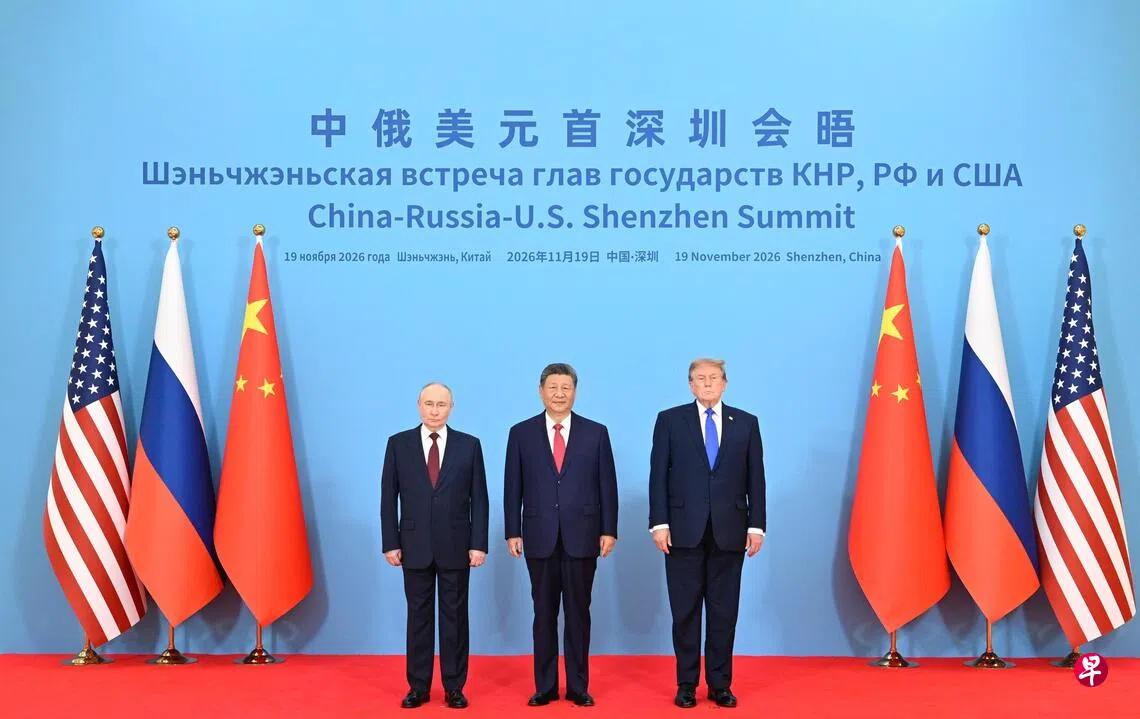
On November 19, U.S. President Donald Trump, Russian President Vladimir Putin, and Chinese President Xi Jinping held a trilateral summit during the APEC meeting in Shenzhen, China. The U.S.–China–Russia summit had already attracted considerable international attention before it began, was in the global spotlight while it was taking place, and sparked extensive discussion among various parties after it concluded. Many have compared this summit to the “Yalta Conference,” which shaped the post-World War II international order, divided spheres of influence, and determined the fate of the world.
ㅤ
In my view, such assessments and expectations greatly overestimate the significance and influence of this U.S.–China–Russia summit and are clearly at odds with the summit’s actual impact and the realities of international politics.
ㅤ
First, the meeting of the three countries’ top leaders and the issuance of a joint declaration certainly carry important symbolic significance. However, even in terms of form and official designation, this summit is far from being an epoch-making event comparable to the “Yalta Conference/Agreement.”
ㅤ
This is because the summit featured neither calls to “overthrow the old order” nor declarations about “establishing a new order.” The main proposals in the joint declaration, including United Nations reform, energy cooperation, an emphasis on national sovereignty and limitations on the functions of international institutions, and nuclear disarmament, are either familiar topics that have been discussed repeatedly or technical and limited issues. They do not constitute a fundamental transformation of the existing order.
ㅤ
Looking at the realities of the international situation, although the world has indeed experienced considerable turmoil and instability in recent years, particularly with the prevalence of populism and isolationism, these developments have not fundamentally changed the international order established after World War II and during the post-Cold War era. Even as the old order increasingly disintegrates, there is still no clear prospect of a new order being established. Even if the world truly undergoes a fundamental transformation, this summit is neither capable of determining nor reflecting such a transformation. Against this background, even if the power and influence of the “new Big Three” are comparable to those of Roosevelt, Stalin, and Churchill, they cannot simply do whatever they wish or radically reshape the world through the efforts of just three individuals.
ㅤ
Second, although the United States, China, and Russia are major powers, their strength has not reached a level that would allow them to determine the fate of the world without encountering obstacles. Beyond these three countries, the European Union, including France, Germany, Italy, and Spain, as well as the United Kingdom, India, Japan, Brazil, and other countries, all possess considerable strength and international influence. If they cooperate, they would be more than capable of preventing the U.S.–China–Russia “Big Three” from monopolizing the international order. Even if the United States, China, and Russia joined forces and managed to suppress resistance from other middle powers, the costs would be enormous, difficult to bear, and far greater than any potential benefits.
ㅤ
Third, although relations among the United States, China, and Russia currently appear relatively friendly, the three countries still have deep-rooted and clearly visible disagreements and contradictions, as well as a complex triangular relationship. This also means that they cannot possibly establish sufficient mutual trust or cooperate wholeheartedly without significant reservations and obstacles.
ㅤ
For example, China and the United States are engaged in intense competition and strategic rivalry in economics, technology, international strategy, and many other areas. The U.S.–China trade war, intelligence warfare, and mutual sanctions have not ended because of repeated meetings and friendly relations between the two countries’ leaders. Likewise, the long-standing hostility and rivalry between the United States and Russia have not fundamentally changed simply because Trump and Putin enjoy friendly personal relations. China and Russia also harbor mutual suspicions and seek to use each other for their own purposes, rather than maintaining a friendship free of grievances or genuinely pursuing cooperation “without limits.”
ㅤ
Fourth, all three countries face serious domestic problems, and their leaders confront numerous internal challenges and risks. They cannot simply act arbitrarily by relying on their authority as the highest leaders.
ㅤ
In the United States, the midterm elections have just concluded, and Trump’s Republican Party suffered a crushing defeat, losing its majorities in both the House of Representatives and the Senate, as well as several governorships and control of some state legislatures. The Democratic Party has regained control of Congress and received the endorsement of a majority of voters. This means that Trump’s power has diminished, and his policies and measures will face strong resistance from Congress. Meanwhile, the Democratic Party has always had major disagreements with China and Russia over values and is unlikely to support Trump’s policies of rapprochement and friendly relations with the two countries. Trump can no longer determine foreign policy entirely as he wishes. Even if he has a strong desire to reshape international relations, achieving that goal will be difficult, or at least the results will fall far short of his ambitions.
ㅤ
Although the leaders of Russia and China are authoritarian rulers, they must likewise take into account dissent within their ruling establishments and public dissatisfaction. One of the reasons Putin launched the war against Ukraine was to divert attention from domestic conflicts. As his military campaign has suffered setbacks, potential dissatisfaction within Russia has continued to grow, and the superficial stability maintained through high-pressure repression is unreliable. Chinese leader Xi Jinping faces an economic downturn, deteriorating living conditions, and dissatisfaction within the Communist Party caused by his concentration of power and political purges. His foreign policy has consistently been conservative and focused on maintaining stability, and he has shown little willingness to intervene actively in external affairs.
ㅤ
Returning to the trilateral summit itself, an examination of its content and achievements also reveals that it was more about form than substance. Its limited practical achievements were concentrated in areas unrelated, or only marginally related, to changing the international landscape. United Nations reform and nuclear nonproliferation are longstanding topics, and this summit is likely to follow the same pattern as previous efforts: grand declarations but few tangible results. Energy cooperation will primarily have economic implications and will not overturn the existing order.
ㅤ
Only the three countries’ joint criticism and rejection of the International Criminal Court will undermine the rules-based and multilateral international order, but even this impact will be limited. The summit also addressed the Russia–Ukraine war and the Iranian issue, but it offered no novel proposals, and the current stalemates on these two fronts will not change because of the summit.
ㅤ
In conclusion, this trilateral summit of the top leaders of the United States, China, and Russia certainly carries important significance and will have an impact on the international order. However, it falls far short of overturning the existing international order or determining the future direction of the world. Moreover, given domestic political changes in all three countries, particularly in the United States, as well as the deep-rooted conflicts of interest and multiple contradictions among them, it will be difficult for the United States, China, and Russia to maintain such relatively friendly and actively cooperative relations in a stable and lasting manner. Therefore, this summit should be viewed more rationally and realistically. Its significance should neither be underestimated nor overestimated.
(The author of this article, Wang Qingmin(王庆民), is a Chinese writer living in Europe and a researcher of international politics. The original article was written in Chinese.)
r/WorIdPoIitics • u/bubikx9 • 2d ago
r/WorIdPoIitics • u/bubikx9 • 2d ago

r/WorIdPoIitics • u/bubikx9 • 3d ago

