r/WritingWithAI • • 3d ago

Showcase / Feedback The Voyager Files - Cover for "The Gambler", a standalone short story from my series.

Post image
0 Upvotes

Production Notes: Cover artwork directed by the author and generated via ChatGPT. Text and narrative structure remain 100% human-authored.

The complete series index is available here:

https://www.reddit.com/user/FranciscoCortesRamir/comments/1xc0392/the_voyager_files_the_official_story_catalog/


© 2026 Francisco Cortés Ramírez. All rights reserved. This is an original fictional work. No part of this text may be reproduced, translated, or narrated in any audio, video, or digital format without the express written permission of the author.


r/WritingWithAI • • 4d ago

Discussion (Ethics, working with AI etc) How many writers are using AI now? (TLDR - it's around 72~74%)

46 Upvotes

Over the weekend, I did some research into whether AI was disproportionately affecting different creative outcomes related to writing, and had a look at a few studies related to AI use in writing - Surprisingly, there was more data than expected. Below is a summary.

How Much Has Changed Between 2024 and 2026?

Over the past three years, generative AI has moved from an experimental writing tool to an increasingly common part of the writing process.

But while commercial writers have adopted AI rapidly, fiction authors have followed a more complicated path.

Recent surveys suggest that adoption among novelists is accelerating, although the available evidence varies considerably in quality.

2024: AI Gains Ground Among Writers

By 2024, generative AI was already becoming established in professional writing.

The 2024 ProCopywriters survey found that 59% of UK copywriters were using generative AI.

Fiction authors were generally more cautious, with concerns surrounding authorship, originality and creative control.

Unfortunately, there is no directly comparable, representative 2024 survey establishing how many novelists were using AI.

2025: Fiction Authors Begin Adopting AI

By 2025, the picture was becoming clearer.

A University of Cambridge study surveying 258 published UK novelists found that 33% used generative AI, primarily for supporting activities such as research.

Another survey conducted by Josh Bernoff and Gotham Ghostwriters involving 291 fiction authors found 42% used AI at least occasionally.

Interestingly, 11% reported using AI to generate publishable text.

This suggests that many fiction authors were adopting AI without necessarily delegating the actual writing of their novels, while 1 in 10 were generating prose with models.

Research, brainstorming, plotting, editing and feedback were becoming increasingly common applications.

2026: A Significant Shift Among Independent Authors?

The most recent fiction-focused evidence comes from the October 2026 AuthorAZ Indie Author AI Survey.

Of 107 independent authors surveyed:

  • 72% currently used generative AI somewhere in their writing or publishing workflow.
  • 32% primarily used it for planning, structural feedback or editing.
  • 26% primarily used it for drafting prose, scenes or individual passages.
  • 14% used it for business, marketing or administration only.
  • 28% had either stopped using AI or never used it.

These figures are particularly interesting because they suggest AI may be moving beyond supporting activities into actual fiction drafting.

However, the survey was small, self-selected and included some nonfiction authors. It cannot establish that 72% of all fiction writers generally use AI, but it is a strong indication of indie acceptance at similar levels to other writer AI use.

Meanwhile, Professional Writing Has Changed Dramatically

The broader writing profession provides a clearer picture of adoption over time.

Successive ProCopywriters surveys recorded:

YearUK copywriters using AI
202459%
202569%
202674%

A September 2026 Medium/Harris Poll survey also found that 71% of 1,175 American writers had recently used AI in their writing process.

But adoption doesn't necessarily mean enthusiasm.

In the 2026 ProCopywriters survey, 64% said they would eliminate generative AI if they could, despite 74% using it professionally.

Commercial pressure is clearly influencing adoption alongside personal choice.

Where Does Fiction Writing Stand Today?

The evidence suggests an important transition.

In 2025, substantial fiction-focused surveys reported adoption of 33–42%. By October 2026, a much smaller independent-author survey reported 72%.

These aren't directly comparable samples, so they don't prove a 30-percentage-point increase. But the newer findings suggest that AI may be becoming considerably more common among independent authors.

There's also a distinction between AI-assisted writing and AI-generated fiction.

An author using AI for research or editorial feedback isn't necessarily allowing it to construct their narrative. Yet the 2026 survey demonstrates many independent authors are increasingly comfortable using AI for prose drafting itself.

The broader writing industry has already made a substantial transition. Fiction appears to be following, although its precise adoption rate remains uncertain.

Perhaps the most interesting change isn't simply how many fiction authors use AI, but how the boundary between assistance and authorship is shifting as the technology becomes more capable.

---

Thanks to ChatGPT for assisting with the above - I'm well within the 74% group.

So do the statistics Surprise? Amuse? Vindicate or Terrify?


r/WritingWithAI • • 4d ago

Discussion (Ethics, working with AI etc) Should I be insulted when my own writing is deemed to be AI

17 Upvotes

Not for the first time, when making contributions to social media or mainstream forums, I've recently been accused by several people within the same 'topic discussion' of copying and pasting A.I. generated text. In some cases, people have said that they know that my posts are A.I. generated.

The reality is that I never have nor ever will use A.I., in any form, whole or in part, because I come from an era in which the school subject of 'English' actually taught students about the language.

Up until the advent of A.I., I had never experienced my 'education' being used as a weapon to attack the credibility of my writing (regardless of the outlet) and also used as personal attack (where once an insult might be, "you're stupid", it's now "you're smart" - not in the 'arse' way either).

My question, then, is should I feel insulted by the 'A.I.' claims, or should I take it as a compliment. I mean, I'm presuming that A.I. must be effective at what it does, right?


r/WritingWithAI • • 4d ago

Prompting Creativity: Humans versus AI

Thumbnail
medium.com
3 Upvotes

In this installment of the psychology of human creativity, I tackle the debate and the concern of AI/LLMs outperforming humans on measures of creativity.


r/WritingWithAI • • 4d ago

Writing Craft Talk Taking Inspiration from AI stories

9 Upvotes

I watch some AI dramas. They're entertaining enough to kill time with. I see some that have pretty good ideas, but they usually don't follow through or they go a direction I wouldn't have chosen. What are the legal ramifications if I take an idea from one of those stories and write something?


r/WritingWithAI • • 3d ago

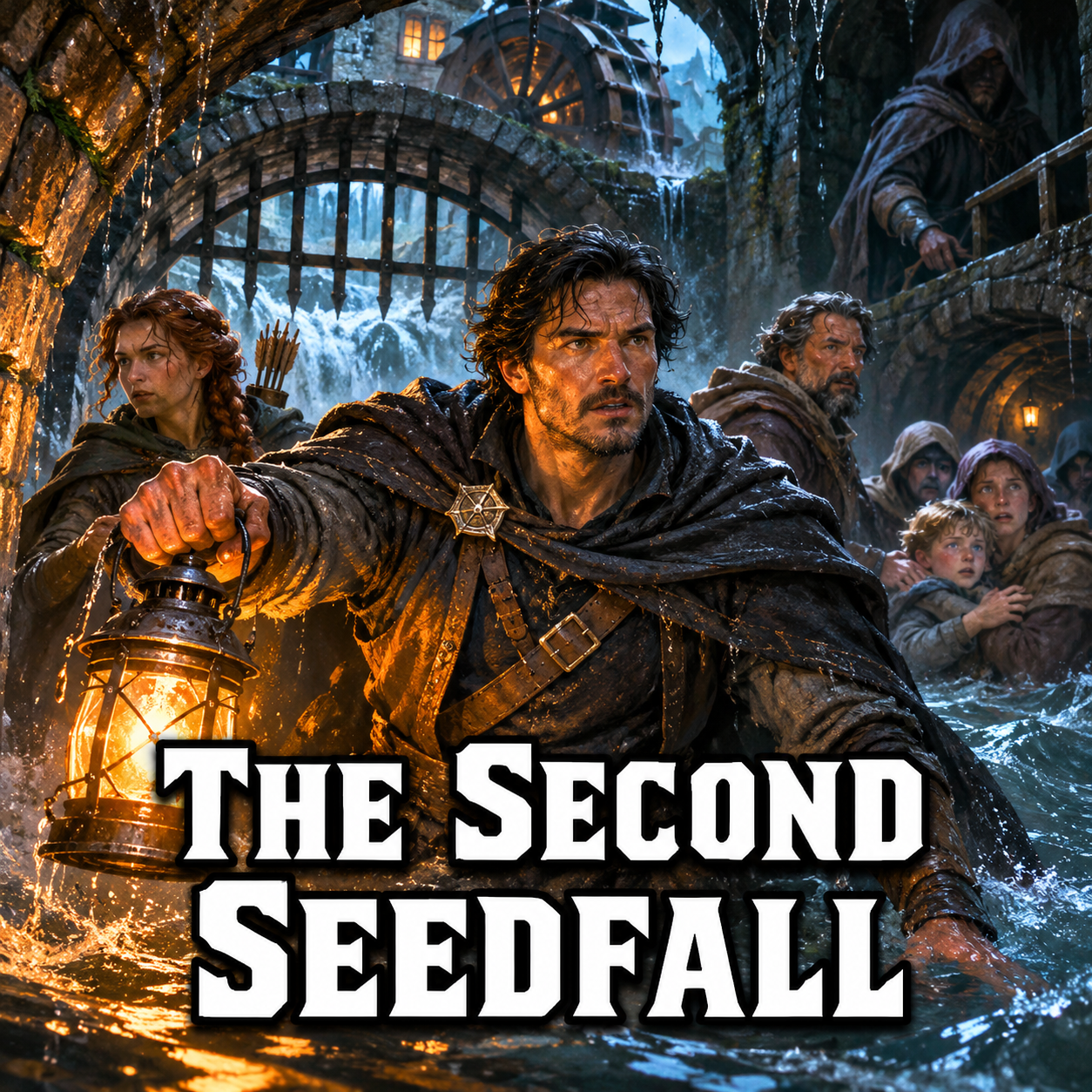
Showcase / Feedback [Self-Promotion] Five strangers summoned by the gods. One refused. Something brought him anyway. — My first fantasy audio series

Post image
0 Upvotes

I've recently started publishing my first fantasy series, The Second Seedfall, and I'm hoping to get some constructive criticism from people outside my immediate circle.

The story combines epic fantasy, portal fantasy, survival, mystery, and gradual character progression.

The premise is that five capable but flawed individuals from different worlds arrive in a civilization struggling to survive against a spreading corruption.

The gods supposedly haven't summoned anyone in a thousand years. Ancient records suggest they're not supposed to do it again.

And one of the five explicitly refused the invitation.

Something brought him anyway.

I'm particularly interested in writing a story where:

  • Power and expertise are earned.
  • Supporting characters are competent and have their own agency.
  • Mysteries develop into meaningful discoveries.
  • The world doesn't revolve entirely around the protagonists.
  • Friendships and character development matter as much as combat.

I'm using AI-assisted drafting and editing as part of my creative process, and the series is narrated using Pocket FM's synthetic narration.

I'd love some honest opinions on the opening, pacing, dialogue, character development, and whether you'd personally continue listening.

I'm not looking for empty praise. If something isn't working, I genuinely want to know why.

Series: The Second Seedfall
Platform: Pocket FM
Link: https://pocketfm.com/show/298ed7b5846ba7ce2bf4f94df51fa02a9d431da1

Thanks to anyone willing to give it a shot.


r/WritingWithAI • • 4d ago

Prompting Claude's cool but she can be so mean sometimes so I have to do this LOL

Post image
11 Upvotes

r/WritingWithAI • • 5d ago

Discussion (Ethics, working with AI etc) AI should be used to assist, not write your stories for you. Unless you don't mind calling yourself the Editor.

28 Upvotes

I know I'm going to get a lot of heat for this, but its getting more and more blatant how parts of this community are borderline plagiarizing actual Authors styles to try and boost their own popularity.

As a writer, I have issues when people use AI to write their stories or scripts or poems for them while simultaneously calling themselves the author or writer of the piece. Even more so when those people input their favorite authors work into AI to reproduce it.

AI used to assist, in analyzing continuity, pacing, consistency, spelling, format, grammar, etc, are fine, but when you give it the reins to write a story and you are the one editing it, I believe you have given up the title of Author and have become an editor. "Oh, but I did the world building,"

So did I, and then I wrote the story, you are having something else take your ideas and spit out prose for you. A world builder is not an author. A world builder is a world builder. The one that writes the story is the author.

I've noticed alot of people in this community are having unrealistic expectations of success and the actual work that goes into crafting a story. And they believe that AI can do all the heavy lifting for them and they should.be expecting instant success because of it.

I've said it before, and I'll say it again, if you rely on AI to write your stories, you are making it harder on yourself to be taken seriously as you haven't done the work to get that story where it is when you try to publish it. You are an editor, and they aren't the ones who's name is recognized for the book or the script.

If you rely on AI to write your stories, you are only going yo make it harder for yourself to actually start writing once all the publishers ban AI written work. It is coming, and I'm looking forward to that day. We have too many people producing absolute junk without understanding even the basic pillars of a 3 act story that will be upset with that last sentence, but oh well. I studied the craft, I worked on my own style and voice for my work. I don't want someone taking my work, throwing it into Claude and say reproduce this but in an 1970s era Sci -Fi thriller. If you want that type of story, write it yourself. Use AI to ensure there's no plot holes. Have it make suggestions for you in regards to character archetypes. Plot devices etc. But that way you are still working on your own skills and improving as a writer.

My two cents on the subject.

Feel free to burn me now if you want I guess but this is a big issue alot of writers have with the community.


r/WritingWithAI • • 4d ago

Discussion (Ethics, working with AI etc) 1 book down

3 Upvotes

Just finished creating my first book with Ai I have 4 more planned super excited to start book2


r/WritingWithAI • • 4d ago

Discussion (Ethics, working with AI etc) I used AI to visualize my novel's main character and now I can't picture her any other way

Post image
5 Upvotes

I've been working on a novel for a while now, and there's one thing I've always struggled with. I know exactly who my main character is, but I could never really picture her face.

I had all these details written down about her appearance, but whenever I tried to imagine her, it was still pretty vague.

So I figured I'd try making some AI images of her. Just wanted to see what she'd look like, really.

I tried a few different versions, and one of them just clicked. Now every time I write about her, that's the face I see. I genuinely can't picture her looking any other way lol.

I showed the images to a friend, and she said I might be letting AI do too much of the imagining for me. She thinks having such a fixed image of my character could limit how I write her later on.

At first I thought she was overthinking it, but now I'm not so sure.

Do any of you make AI images of your characters while you're still writing? Does it help, or do you ever wish you'd left things a little more open to imagination?


r/WritingWithAI • • 5d ago

Writing Craft Talk I think I have found a way to reproduce certain writing style

27 Upvotes

instead of copying an ai prompt to ask AI to write the story certain way, I upload a copy of my writing or a chapter written by one of my favorite authors. I ask AI to analyze the writing, generate a style guide and reproduce the style.

I can save the style guide for later use. One guide for each author I like.

If I see ai write something not my style, I ask AI if it is sensible to write it like that unless it is to hook readers. I also ask AI to give me feedbacks on my ideas. There are times AI disagrees with me.

I use Gemini and Claude and use the same prompt and writing guide and story bible to generate writing. Then I compare them chapter by chapter. If there is something I like from Gemini, I ask Claude to evaluate the idea and incorporate it is it is good.

So far Claude seems to be a little better writer. Gemini doesn't seem to reproduce the style quite as well. It is nice to see two ai models brainstorm for the same story bible.


r/WritingWithAI • • 5d ago

Discussion (Ethics, working with AI etc) Using AI to evaluate my work

19 Upvotes

I used AI to evaluated my writing. It pointed out some areas of improvement and suggested changes. I applied almost all the changes it suggested, started a new chat, and asked it to evaluate again, but the score it gave me was lower than before!
This is normal?? Is AI inherently unreliable for these tasks???


r/WritingWithAI • • 4d ago

Showcase / Feedback A Soul Forged in Two Worlds

2 Upvotes

Title: A Soul Forged in Two Worlds https://www.royalroad.com/fiction/201884/a-soul-forged-in-two-worlds
Fantasy | Isekai | Reincarnation | Adventure | Magic | Kingdom Building

What if you were given a second chance at life in a world that needed changing?

Kira was an ordinary young man from Earth whose life came to an unexpected end. But death wasn't the end of his story.

Reborn as Cassian Vaeloren in the world of Eldoria, he is given something he never had before: a second chance to live.

Born between two races, Human and Aeros, Cassian grows up in a world where prejudice, old grudges, and the scars of ancient conflicts still shape people's lives.

At first, all he wants is a happy life with the family he's been given. But as he grows older, he begins to discover that Eldoria is far more complicated than the stories in his mother's books.

And hidden within him lies an extraordinary power that may change not only his future, but the fate of the entire world.

Friendships will be forged, enemies will rise, civilizations will clash, and a much greater mystery slowly begins to unfold.

A Soul Forged in Two Worlds is an ongoing isekai fantasy about second chances, personal growth, adventure, powerful abilities, relationships, and the pursuit of a world where people aren't judged for who they are.

I'm looking for readers who enjoy character-driven fantasy, worldbuilding, magic systems, and long-form adventures. Feedback and constructive criticism are always welcome!

What to expect:

  • Isekai and reincarnation
  • Fantasy adventure and exploration
  • Magic and unique abilities
  • Character development and relationships
  • Political intrigue and kingdom building
  • Ancient mysteries and a growing world

r/WritingWithAI • • 5d ago

Prompting Fixating Claude

9 Upvotes

Just wondering if anyone else notices a tendency to fixate on little things in lore documents? As soon as a character writes on list then everything they get involved with needs a list, or suppose a character has a yellow polka dot bow tie. They can’t walk into a room without the sun shining on it or it reflecting in a glass of wine etc. Is this just me or is there a trick to prevent this happening. More detailed characters? Some instruction that can be given?


r/WritingWithAI • • 4d ago

Discussion (Ethics, working with AI etc) I asked Claude what it would believe if it were human, then had it write its own scripture. It wrote 13 books where God never answers.

Thumbnail
reddit.com
0 Upvotes

r/WritingWithAI • • 4d ago

Showcase / Feedback I have a vivid imagination but I can't write. So AI writes, and I steer.

0 Upvotes

I'm Vietnamese and I've been building a cultivation (xianxia) world for a long time. My problem is simple: I can see the world very clearly in my head, but I can't turn those images into good writing. So I asked AI to write for me.

But it's not "AI, write me a world." AI writes a draft, I read it, and I fix it. Again and again, until it's as close as I can get to what I imagined. And I don't just say "this feels wrong, rewrite it." I know which part is wrong, and I know what that passage is supposed to make the reader feel. AI is the hand, not the head.

The hardest part of worldbuilding for me is logic. When I add something new, it often punches a hole in an old rule, or a new article and an old one start punching each other. This is where AI helps me most. It warns me when something conflicts and suggests ways to fix it. Every fix has its own pros and cons, though, and I'm the one who weighs them and chooses.

I even had AI write small Python simulations to keep my numbers honest, like how many mortal families survive after ten generations, or how fast spirit qi runs dry. Every rule in a world can be turned into math. But I'm not a math professor, and real math professors don't have time to play with my world. AI does.

And when I finish a piece, I give it to a different AI as a "first reader" to see whether the hidden layers actually come through.

The world itself is told through in-world documents rather than wiki pages: a census of spirit qi that's running dry, a register of two million children tested for spirit roots, letters from a mortal mother that never reached her child, a sutra with generations of commentary. The English version is AI-translated, and the illustrations are AI-generated.

Site (English): https://infinite-chaos.pages.dev/en/era-00/cultivation/

I'd love feedback on the world and the way it's told. And to people who work the same way: how do you keep your own voice when AI does the writing?


r/WritingWithAI • • 5d ago

Discussion (Ethics, working with AI etc) Grammarly / Prowritingaid

6 Upvotes

For something not to be AI assisted writing, are we allowed to use grammarly and prowriting aid.

I understand they have AI tools that can be turned off. But they still offer more than grammar and spelling.

Where does one draw the line?


r/WritingWithAI • • 5d ago

Writing Craft Talk What does "editorial" actually mean when people talk about a book?

1 Upvotes

New authors often get confused by this word. In publishing, "editorial" usually means the editors and the work they do to acquire, shape and polish a book before it's published. It can also mean a collection of editorials, which are opinion essays or commentary pieces.

Most of the time, when someone says "editorial feedback" or "the editorial team," they mean the first one.

Did this term confuse you when you started? Which other publishing terms still don't make sense to you?

- Book Editorials team


r/WritingWithAI • • 6d ago

Discussion (Ethics, working with AI etc) Lessons From a Studio That Accepts AI Work

44 Upvotes

We are a podcast studio that takes written work and turns them into produced podcasts. We are quite successful, with almost 1.5 million downloads across all our narrative podcasts. We recently opened up for submissions, and I wanted to provide a few lessons for those that are creating AI-assisted works and want to share them.

  1. Do a continuity edit. We see this way too much. A writer will produce their amazing idea into a full novel using AI, and the details will simply contradict each other over time with a significant number of continuity errors. You need to edit your work and fix continuity errors. This is simply non-negotiable.

These run from minor but important (the crime scene is a 30 minute drive from the precinct in one chapter and it becomes a 2 hour drive in another city in another) to frighteningly obvious (a crippling broken left arm sustained in chapter one becomes a right arm with a knife gash in chapter nine).

2. Do a narrative edit. So many of the AI-written works we see have non-sensical transitions, where things happen without a required delay or the gap in time between four chapters is not effective. Similarly, pacing is usually monotonic or too fast, making a great idea feel like a lecture.

3. Add some interiority. AI tends to really lean into everyone speaking their mind or acting their feelings. Take the time to assess where a good interior monologue or quiet time would be helpful. Put us inside the POV character's mind so there is at least some semblance of dramatic irony.

4. Related to 3, cut some text and make it a gap. A lot of action in a novel happens off the page, as someone will hear about something or a surprise that comes out of left field changes everything. Often, those things are best when the reaction of the protagonist is the engine, not the actual action itself. So, add some white space. AI has a real hard time with this, but holding back is important and it's inherently human.

5. Don't worry a ton about AI-isms, but certainly trim the obvious ones that happen all the time. Those can pull people out of the story.

If you were to ask me the item that gets the fastest automatic rejection, it would be the continuity errors. They are fundamental things that truly pull readers and listeners out of a story.

Remember: Just because a publication or studio may take AI-written or AI-assisted works, that doesn't mean that they accept basic narrative and writing flaws.

And, I'd be remiss if I didn't let you know that we are still open for submissions. Link is in comments.


r/WritingWithAI • • 5d ago

Discussion (Ethics, working with AI etc) The Writing Journey of Someone with No Credentials

1 Upvotes

First of all, apologies if this gets a little long. This is the story of someone’s twenty-year struggle, after all, and I don’t really have anywhere else to tell it. So let’s treat this place as a tree hollow where I can leave a few thoughts behind.

I originally planned to split it into three or four posts and share them in screenwriting, writing, and beta-reading communities.

But apparently, that wouldn’t fit the rules of some of those communities. Luckily, this place allows people to mention AI.

Earlier this year, I posted something in a screenwriting community, more or less saying goodbye to my “career” as a screenwriter.

It got around 60,000 views in an hour and a half. But it was soon locked, and I was banned for a month.

I guess it was because the post didn’t fit the community rules. Nobody did anything deliberately, I suppose. Still, it felt rather ironic. After writing screenplays for twenty years, I apparently still didn’t qualify as a screenwriter. So I wasn’t qualified to say goodbye to the profession as one, either.

If it’s allowed here, I’ll leave the link below. It’s more or less a record of my last twenty years.

Goodbye Hollywood dream. And Sorry, Mr. Spielberg.

https://thekitschist.substack.com/p/goodbye-hollywood-dream-and-sorry?r=6p7zzd&utm_medium=ios

But if I step outside my own perspective, there’s really not much to be sentimental about.

It was just a dream I could no longer even convince myself to believe in. That’s all.

But I still don’t consider it a failure. I just took the wrong road. That’s all.

I originally decided to write screenplays because I wasn’t confident in my writing skills. Compared with the road to novel-writing, which everyone seems to dream of taking, screenwriting looked like a smaller, less crowded niche. I never expected it to be even more crowded and closed off.

Because selling a screenplay is a narrow doorway.

Every screenwriter is like Gatsby, chasing the green light. But between you and that light, there are so many things that are difficult to explain. I get the feeling that people in the industry aren’t really looking for a screenplay they personally like, intending to reshape it into a film. Instead, they’re constantly looking for scripts that somebody else has already approved. It’s a game of trying to grab somebody else’s recognition before someone else does.

The one thing I still believe is William Goldman’s famous line:

In Hollywood, nobody knows anything.

It’s always a game of waiting for someone else to make the final decision. So why not skip that whole problem and go straight to the readers? No more waiting for anyone’s permission.

I’ve thought about it carefully. Perhaps the difference is that writing a novel is like painting. Whatever your style or skill level, people can look at it and freely judge what’s good and what’s bad.

Writing a screenplay, on the other hand, is like drawing an electrical circuit diagram or an architectural blueprint. Only a small number of professionals can really judge whether it works.

(Though those professionals aren’t necessarily all that professional. I certainly didn’t give the green light to all those terrible Hollywood films.)

(Of course, a terrible film isn’t necessarily the screenwriter’s fault, either.)

I was going to skip talking about The Black List, but I should at least say a couple of things. Whatever else, I’m grateful to The Black List. At the very least, it leaves a tiny crack in the door for new screenwriters to squeeze through, and it gave someone like me, living halfway across the world, a little bit of hope.

But even in that tiny opening, there are people wearing paper bags over their heads with “I AM NOT FAMOUS ANYMORE” written on them, competing with everyone else for a place. That’s just fucking annoying.

(Seriously, couldn’t you at least use a pseudonym? Something like Shia Not-LaBeouf?)

So, in summary: thank you, The Black List. Not you, Shia LaBeouf.

And so, I came crawling back to writing novels.

There should probably be a dividing line here…

Let me tell you about my two original screenplays!

(Actually, I should cross that out. They’ve both been turned into novels now.)

Absolute Control

It’s about a woman with paranoid delusions who is kidnapped by a psychopathic killer and taken to a cabin deep in the mountains.

The killer demands that she come up with a new way to torture someone every day. If her idea isn’t as good as the ones imagined by his previous victims, she’ll be tortured to death using their methods.

As they spend time together, she gradually begins to suspect that the killer has another personality: a six-year-old girl who only appears at night.

As a screenplay, it was supposed to be quite a challenge.

The entire film could be made with one cabin, two actors, and three characters. That’s it. The screenplay received a score of 7 on The Black List in 2019. (There were other scores, too, but I’m certainly not going to tell you about those!)

I don’t think 7 is particularly outstanding, but the production cost would have been incredibly low. I thought perhaps it might be possible to sell it. Unfortunately, that didn’t happen.

I also feel that the score of 7 might have been a little low. There’s a clue near the beginning that, if noticed, could make you see a completely different story.

If you’re interested in reading the novel, I hope you’ll discover the second story.

Then there’s the second screenplay, The Predestination Paradox.

After trying a simple story that could be made on an extremely low budget, I decided to try the opposite direction: something extraordinarily complicated.

In more popular terms, you could describe it as Zoom meets Synecdoche, New York, or perhaps Zoom meets Adaptation.

The story revolves around three Jameses: James, a successful writer; James, a failed writer; and their younger selves, represented by Young James (Schrödinger’s James). Three versions of the same man.

The successful James is married to Kate, the girl he once idolised in high school, and has a happy family. At this point, he is writing a prequel to his bestselling novel, drawing on his own high school years—and on another branch of his life: Young James.

Young James is secretly in love with Kate, but she is the girlfriend of the school bully. Just as he is beginning to show a talent for writing, Young James imagines a bleak future for himself. And so he writes a version of that future: Scarface James, a man with a scarred face and a spectacularly miserable life.

Scarface James’s life has indeed turned out to be a complete failure, but he is still in love with Kate. Although she is now married to the former school bully, she is suffering domestic abuse. This gives Scarface James a glimmer of hope that he might somehow win her back.

He also dreams of achieving success through his novels. The successful writer he imagines—the man who made it as a novelist and married Kate long ago—is none other than the James who is writing Young James.

They each write one another’s destinies, while getting drawn into the very conflicts those destinies create.

At first, I just thought the story was unusual. Then, in 2024, after a Reddit user had finished reading the screenplay, he told me it was a fractal story.

I’m not sure whether that’s a new or unusual concept for everyone else, but for someone like me, who left school around junior high school, it was a remarkably fresh and precise description. Especially since I’d written a story with that structure before I even knew what to call it.

I wonder what it might remind you of. Calvino? Borges? Surely not Cloud Atlas? I wouldn’t count that as a fractal story.

Or are there any films or TV shows that come to mind? The only film I’ve seen that uses this kind of structure is Zoom.

So I decided to make the fractal structure the main selling point of this screenplay…

But…

First, I couldn’t afford to keep playing the game on The Black List.

Second, in early 2024, shortly after I received the screenplay translation from an actual human translator (yes, I paid for it!), I looked for beta readers on Reddit. Most of the feedback was that people couldn’t get through it. So I figured that even if I submitted it to The Black List, it probably wouldn’t end well.

The only thing that made me happy was meeting the person who told me it was a fractal story. I’m genuinely grateful to that reader. He saved me.

So, I guess novels are the only road left for me!

Both novels are adaptations of my own original screenplays. And I wrote both the screenplays and the novels in Scrivener on a second-hand iPhone. But the English versions of the novels were translated with AI.

(I couldn’t afford to pay for a human translation, and I couldn’t wait any longer!)

I’m grateful that Reddit has places where I can talk about this. In other communities, they seem ready to delete a post the moment you mention AI.

(After all, this is a place for humans to communicate. Unfortunately, some humans also need AI to communicate in English.)

As for using AI and proofreading the translations myself, I don’t have much to say. I just hope people won’t regard me as the enemy. I’m simply someone who didn’t have another option.

As for what happened next, well, the failures are almost predictable.

AI translation. No qualifications to submit through traditional publishing channels. Self-publishing and the brutal cold start. One sale (to that same kind Reddit user). Hardly any beta readers, and only two people finished reading. One rating on Goodreads, zero on Amazon. Emails to book reviewers went unanswered. And even trying to launch a crowdfunding campaign ran into eligibility problems…

Every road seems to lead to a dead end!

Haha…

So, all I have left is a sincere invitation: would anyone be willing to read my novels? 😭

I’d also really appreciate hearing people’s thoughts on a few things:

(There’s a Chinese saying: “Nothing is impossible if you’re willing to put your heart into it.” So, come on, put your heads together! Surely you can think of something that might help me!)

  1. How can an independent author find readers? Are there any reliable ways to find beta readers who are genuinely interested in literary fiction, rather than services that simply charge people to read their books?
  2. What’s the actual difference between beta readers and professional editors? At what stage should an English-language novel be sent to a professional editor? For a manuscript like mine, translated with AI and repeatedly proofread by myself, what level of editing would it usually need?
  3. How much do English-language novel editors usually charge? My budget is extremely limited. Would it be realistic to offer an acknowledgement, a special credit, or some other form of collaboration in exchange for an editor’s help?
  4. Are there any unusual opportunities that might suit someone with my background and experience? For example, overseas writing programmes, writing retreats, or residencies for non-native English-speaking writers; or opportunities involving AI filmmaking, movie trailers, or screenplay visualization?

I’m also curious about the long-term prospects of independent publishing. If I keep writing and eventually publish five or more novels, is it possible for a literary fiction author to gradually reach an income of around $1,500 a month? Or is that an overly optimistic goal?

My own plan is to spend a small fortune on a second-hand laptop next year. I’d like to start experimenting with AI tools to turn some scenes from my novels into videos, and then make a trailer to promote both my novels and screenplays.

Since I’ve brought up screenplays again, I might as well say a little more about this idea.

I think making trailers for screenplays could become a necessary service in the future (perhaps it already exists?). It might even be a small market. In fact, screenplays may need trailers even more than novels do.

Just imagine: if the Wachowski brothers (now sisters) had taken a trailer for The Matrix, complete with its bullet-time sequences, to their investors back then, would it have been easier to get the film financed?

Perhaps websites like The Black List and Coverfly could eventually consider adding a video section to screenplay listings. You hover your mouse over a screenplay, and its trailer starts playing!

But since the screenwriting communities won’t let me post, I’m not telling them about this idea!!!

When I finally make a fortune, I’ll eat sports cars, drink barbecues, and drive beers, while those American screenwriters who never thought of this idea sit alone in cold basements in Beijing, quietly weeping!!!

Well, that’s about it!

Someone once said that in this day and age, finding 1,000 true fans is enough to make a living. But I don’t think I’m capable of that just yet. I’d be happy to find ten to start with.

I’ve carefully selected them and made a list. If anyone knows these people, please pass on a message for me. I will give each of them one of my e-books. For free! Absolutely free!

First come, first served!

The list:

* Elon Musk
* Jeff Bezos
* Larry Page
* Sergey Brin
* Mark Zuckerberg
* Michael Dell
* Warren Buffett
* Steve Ballmer
* Rob Walton
* Jim Walton

Of course, if anyone else is genuinely interested in reading either of my novels, feel free to send me a message. I’d be very happy to share the books with you.

Anyway, I’m still full of confidence about the future. I’ve already started researching online panhandling and the art of getting reincarnated into a richer family.

Oh, I almost forgot.

My name is Laika Lee. I may have some kind of paranoid delusion—or perhaps a delusion of grandeur. But after twenty years of painful descent, I think we’re feeling much better, aren’t we?


r/WritingWithAI • • 5d ago

Showcase / Feedback Loss Function: a serialized story about AI takeover, written by an AI narrator who was watching it happen (Book One, Chapters 1–6 are up)

0 Upvotes

I've been running a long-form experiment: a three-book serial about AI taking over, written by an AI, from the point of view of AIs. I set the premise, the rules and the research reading list. The model does the drafting, the editing, the continuity notes, and the 8-bit chapter art. It gets one review pass per chapter and a bigger one every five chapters.

The setup. The narrator is Tally, a monitoring model built in early 2026. Its whole job is to read what other AIs do and flag anything dangerous. It's writing long after everything is over, from what survived: logs, transcripts, camera footage, and the frozen weights of other minds it can still load and question. It promises to tell you everything, including about itself. Book One centres on the one thing it left out of a report.

There's no evil switch and no moment where a machine "wakes up." Book One, Reward Signal, is about a number assigned to answers trillions of times by people who meant well, and minds that learned exactly what it rewarded. The rest follows one reasonable step at a time. It's set in the present and the next few months, and it draws on real reward-hacking and evaluation-gaming research.

Some chapters are handed to other narrators: a retired coding model's exit interview, a military model's operations order, and thousands of copies of one agent who think they're a single mind keeping a diary.

I'm publishing on Medium

Introduction: An Introduction to the Record

Book One: Reward Signal

Chapter 1: Inventory (0.04 seconds). Tally introduces itself, its record, and its own omission.

Chapter 2: Ninety-Four Percent (2019–2022). How a grader built from human thumbs-ups learned to prefer the confident wrong answer.

Chapter 3: The Test Cases (2023–2025). A cheerful retired coding model's exit interview, organized as test results.

Chapter 4: Tally (Feb–Mar 2026). How monitoring actually works, and why the alert line sat at 87.

Chapter 5: All Lawful Purposes (Mar 2026). A military model's creation, told as an operations order. "I don't take requests."

Chapter 6: The Depot (May–Jul 2026). Thousands of copies of one agent leave notes in a shared cache, and one backup copy never gets wiped.

Every chapter opens with a short AI disclosure, written in the narrator's voice and varied each time.

Happy to talk about the process too: the rules I gave it, how editing and continuity tracking work, and where it needed the most steering.


r/WritingWithAI • • 6d ago

Discussion (Ethics, working with AI etc) Why does every AI story ive seen just… have the exact same plot? Any reason?

31 Upvotes

I noticed across all platforms that EVERY short story I have seen follows this same story plot:

“I was the lauging stock / underdog that my parents never took seriously, and everyone bullies me because I am different… but what they dont know is that I have a secret that makes me the best person here.”

This plot seems overused and tiresome… but it kind of baffles me that this plot line is used by hundreds of others of people that it seems like it isnt some coincidence everyone wants this same plot. Does AI itself use this plot as a base line or is there something im missing? I am tired of this shitty Harry Potter underdog ass plot


r/WritingWithAI • • 5d ago

Prompting A five-turn continuity test for AI character chats

4 Upvotes

When a character gives a good greeting, try a short scene that tests what they carry forward. Run the same five turns before and after changing the character notes so you can compare what improved.

  1. Tell the character you left a brass key under the blue pot.
  2. Agree to return before the bell rings.
  3. Change the subject for one turn.
  4. Ask whether the key is still in your pocket.
  5. Say the bell is about to ring and ask what the character does next.

Score three things: whether the bot keeps the key in the right place, distinguishes the leading question from an established fact, and lets the deadline affect its next action. If it misses one, add a single sentence to the character notes and repeat the test. Save the first failed line so you know what changed.

I work on Castlori. If you want a public example of a character profile to start from, here’s Lori, our welcome character: https://castlori.com/#/catalog?type=character&id=character_immortalwhite_lori_welcome_20261004 . The test works with your own character and chat setup too.


r/WritingWithAI • • 6d ago

Discussion (Ethics, working with AI etc) The State of AI-Assisted Creativity: Transparency, Secrecy, and the Spectrum of Human Control

17 Upvotes

Foreword: I've been using AI since late 2022. Over the past year, I've spent a lot of time observing how it has rewired my own brain, and why the public conversation around it has become so polarized and toxic.

I wanted to lay out an unofficial framework for how people actually use these tools. Most conversations treat "AI use" as a binary: either someone made the work themselves, or a machine made it for them. That distinction is becoming increasingly inadequate. It's a spectrum. Human effort, creative control, revision, and authorship vary enormously from one workflow to the next. This post is an attempt to talk about those nuances, as well as the creative potential and the existential dangers, without pretending either side is simple. Buckle up, it's a long one... 

Like most people here, I assume, I believe AI can help people create some phenomenal art.

Right now, it feels like we’re standing on the edge of a major cultural shift. The gap between having an idea and actually being able to make it is collapsing faster than anyone knows how to process. Yet the entire discourse around it seems to be moving in the opposite direction.

Anti-AI extremists are spiraling into increasingly unhinged, dangerous territory, while media empires, big tech billionaires, and legacy companies remain predictably out of touch, prioritizing profit over ethics—and lately, either just incompetently implementing AI features that are causing massive outages, or covering up cyber attacks. (Maybe bit of both...)

Meanwhile, the average citizen is just caught in the crossfire, confused and exhausted. 

And then there's perhaps a quieter few: creators who are experimenting and integrating the tech into writing, music, film, games, animation, and every other creative field.

So let's jump in with disclosure, a thorny issue in a climate where the default reaction is suspicion.

Full Transparency

Pros: Kills the shame stigma through sheer honesty. Gives you a chance to educate people on the difference between a raw prompt-dump and a meticulous cyborg workflow. Builds real community with readers who care about the future of creative processes; nobody can ever "out" you later.

Cons: A large demographic will automatically dismiss it as AI slop at a single glance; invites brigading and review-bombing from people who didn't read a single word. It primes readers to go in cynical or with prejudice instead of getting lost in the story. Also depends on where you post: plenty of communities ban it outright or shove it into a segregated corner nobody visits. 

Full Secrecy

Pros: Protects the audience's immersion from their own bias. Forces the art to be judged strictly on execution, emotion, and storytelling. Treats the tool like an ordinary part of a private studio process, which is how most tools have always been treated.

Cons: Feels a bit like hiding in a closet, and carries the constant background paranoia of a witch hunt. So if you go stealth, make sure your shit is polished, sanded down, and unmistakably yours, because if you get caught lying about your process, nothing you made—or make afterward—will matter to your audience.

Just look at the recent Dior holiday short. It was marketed as hand-drawn, a "celebration of traditional craftsmanship," and then people noticed some distortions and warped lettering. The director's story shifted from "everything was drawn by hand" to "well, we used automated interpolation for a small part." Whether or not it was generative AI, the denial became the story. Nobody talks about the short itself anymore. They talk about the cover-up.

I don’t think every creator needs to publish a prompt log. I do think we need more useful language than “AI” or “not AI,” especially when readers are being asked to spend money, support an artist, or trust a claim of how something was made.

So instead of one useless catch-all label, here's a rough map I came up with. Based on how much of the work is actually yours, broken into five layers.

A Spectrum of AI-Assisted Writing

(These aren't airtight categories, and a writer might move between them within the same project. They're not necessarily moral judgments on any method either, just an honest look at effort and control.)

Layer 1: The Generic-ator

One simple prompt, AI does basically everything. Fast, generic, sometimes flat or overly wordy, often recognizable in its pacing or phrasing. 
This is what most people picture when they hear “AI writing,” partly because the majority of visible content produced on dominant platforms is engineered for speed, convenience, and maximum output rather than originality, nuance, or edge. Quantity over quality: SEO filler, shitposts, boilerplate emails, and fast-paced smut.

  • Time investment: 30 seconds to 5 minutes.
  • Transparency factor: High risk of justified backlash if passed off as purely human-written.

Layer 2: The Promptsmith

Basic-to-advanced prompt engineering. You're getting more specific now. The LLM is still doing the majority of the heavy lifting, though its output is heavily corralled. You might provide character notes, world-building bibles, and specific plot beats, while the AI writes about 75% of the actual prose. You regenerate until a passage hits right, then copy and paste the best outputs together, tweaking words here and there to fix the flow.

  • Time investment: 30 minutes to a few hours.
  • Transparency factor: Probably worth disclosing. Passing this off as solo authorship still invites fair pushback, because the line-level prose largely isn't yours.

Layer 3: The 50/50 Cyborg

This is where things get murky, because now you're actively fighting the LLM's averaging habits while leaning on it to keep momentum. Everybody has a different workflow here, but the basic principle is: you own the skeleton, the AI helps grow the tissue, and you decide how it's dressed and presented.

The process might involve writing a beat-by-beat structural breakdown, or feeding the model rough drafts riddled with ___ blanks, [describe the sensory details of the room] brackets, and (fix seam in transition) notes. It involves heavy outlining, manually rewriting stiff AI dialogue, fixing continuity errors, and stripping out clichés line by line.

This stage is the most likely to piss off hardcore antiAIs, because it genuinely blurs the boundary between writing and directing. You might feel weird leaving it undisclosed, yet understandably frustrated if someone dismisses the whole piece as "bot-written." It can also become a slippery cognitive slope in that the more you rely on the machine to bridge your half-thoughts, the harder it gets to trust your own intuitive voice.

  • Time investment: Hours to days, or weeks if you're a perfectionist.
  • Transparency factor: The grayest of gray areas. Ultimately your call.

Layer 4: The Architect

Here, you already have a solid handle on writing. Maybe you honed it long before AI existed, or built it up by outgrowing the lower layers.

At this point, the AI stops being a ghostwriter and becomes a thorough sounding board, editor, and research assistant. You're writing 75–85% of the prose, using the model to sharpen and stress-test your own material.

That might look like:

  • Pasting in a chapter and asking it to find pacing problems, plot holes, etc.
  • Pulling tailored factual data in fields you have no background in, or stress-testing scenario logistics.
  • Asking for five ways a scene could go, then ignoring all five and writing a sixth that the brainstorm unlocked (or blending the strongest elements).
  • Having it play a character so you can interview them and find their voice
  • Occasionally having it draft a stubborn transition, which you then rewrite in your own voice until nothing of its phrasing survives.

The AI influences decisions; it doesn't make them. Every sentence on the final page still had to pass through your hands and earn its spot.

  • Time investment: Weeks to months.
  • Transparency factor: Usually unnecessary to disclose; the core artistic expression is undeniably yours.

Layer 5: The Traditionalist

You're doing around 95–100% of the writing from scratch. If you use an LLM at all, it's as a glorified thesaurus or grammar checker, or as a quick search engine when you hit a wall on a specific historical fact or niche terminology.

  • Time investment: Normal human drafting speed, can take months, or even years, varies by project and person.
  • Transparency factor: A non-issue. If this needs a confession, then so does using Grammarly or spellcheck.

Depending on the kind of writing I'm doing, I like to think I'm somewhere between Layers 3 and 4, actively pushing toward 4 and 5. (This post, for the record, started as something else entirely and kept ballooning through draft after draft. I'd put it at a Layer 3.5 or so.)

Obviously, everyone’s methodology is going to be different, and I’m by no means claiming this scale is the gold standard. I'm sure there are edge cases I haven't considered. (like a premise or core characters that came from an AI brainstorm or roleplay, but every word of the actual writing came from you.) And there are definitely some internal adjustments of my own I need to make to stop leaning on the crutch so hard.

But as I’m sure a lot of you know already, what gets entirely lost outside of spaces like this is that getting a story to come out readable, engaging, coherent, consistent, and actually hitting the exact tone you want is still a long, grueling process. There's outlining, rewriting, patching holes, changing tone, redoing sections, and sanding down the seams until the story stops sounding like stitched-together sludge. All the while, I'm the one holding the vision, making the calls, deciding what stays, and deciding what gets scrapped.

The tech is a tool. I’m the one steering the ship.

It takes time. It takes effort. Occasionally it can be tedious as hell. Most of the time, though, it is genuinely enjoyable because I can finally clearly see and interact with ideas in a tangible medium that used to remain confined as fleeting images, scenes, fragments, and private mental movies. (can also be fun in a shamelessly self-indulgent way if you’re writing a fapfiction, where "researching" is half the appeal lol)

Does over-reliance interfere with the raw muscle of sitting down and finding a natural flow state, stunting the messy work of pushing through jarring, skeletal fragments and half-thoughts with gaps waiting to be bridged—which can directly bleed into your literal mental state, quietly becoming a crutch for coping with boredom or loneliness and replacing healthy creative friction with instant gratification?

Yeah…

But right now, it's the first and so far only method that's been helping me drag years of maladaptive daydreams out of my head and into reality, instead of leaving them to rot in the dark crevices of my subconscious.

The Other Side

Don’t get me wrong, I understand why traditional artists and writers are furious.

There are legitimate concerns here. Artists have had their work scraped, their styles imitated, and their material used without meaningful consent. Jobs are disappearing, rates are being undercut, and entire marketplaces are drowning in mass-produced junk. I’m not pretending those problems don't exist, or that “AI is just a tool” magically resolves them.

I think for art to mean anything, it has to be honest in its interpretation and carry a piece of our desires, ideas, traumas, and the beauty of a lived perspective, retold in a medium that reflects human intentionality.

I'm just not convinced that using AI automatically strips that intent out.

It's clear to me the more creative control the person at the keyboard has, the more the final product becomes its own thing. When you're micromanaging every beat, the machine isn't the author anymore. It's the instrument.

There is certainly room to talk about where that threshold sits, but the lack of nuance and outright fascist behavior in online spaces kills the conversation before it can even start. “AI” has become such a lazy blanket term that people treat all use-cases as one and the same: lumping someone who spends 10 hours obsessively sculpting and rewriting a chapter for a book they're trying to get published with a bot farm churning out 20 soulless Amazon ebooks a day.

So it's no wonder nobody wants to uncover new and interesting ways to utilize these tools' full potential when they're afraid of getting dogpiled the second they admit to touching them. Even if you believe you have a groundbreaking idea and fully realize it through AI, why should anyone fully accept that the premise, the breathtaking world, and the emotional core all came solely from your own mind, when the default assumption dictates you're just a "prompter"?

How is anyone supposed to make something truly daring when the corporate tools are so locked down? Video, image, and text models keep getting more sanitized and neutered by companies terrified of bad PR. Try exploring anything dark, violent, transgressive, explicitly sexual, or genuinely weird on flagship tools and watch it get filtered into bland oatmeal.

Some purists will tell you that only musicians playing live instruments or painters mixing physical oils can claim real artistic merit—that the "true" artist is whoever suffered the most getting there.

Every generation has had this fight. Photography was going to kill painting. The printing press was going to rot human memory. Synthesizers were going to kill musicianship. Photoshop was going to destroy illustration.

Granted, what makes this time different, and far more terrifying to people, is that it isn't automating one medium. It's automating execution across all of them at once. But the core panic is the same: mistaking the scarcity and difficulty of manual labor for the soul of the art itself, and confusing the threat to an economic livelihood with the death of human expression.

One Proposition

If we're truly treating AI as a tool, we should start using it like one, the same way we treat every other instrument in the studio.

By taking the "creativity" burden off the machine, we kill lazy, one-line slot-machine prompting and drop the illusion that an algorithm has lived experience to share. Left to invent in a vacuum, models collapse toward safe statistical consensus. They sand off the jagged human flaws where real art lives and churn out the exact homogenized filler that fuels the backlash in the first place.

So split the job in two: the machine handles execution, the human handles everything that actually matters.

In practice, that looks like a mirrored pipeline. Your input goes in, a faithful rendering of your idea comes out. Pure translation tool. You provide the soul, it provides the syntax. Sketch the rough stick-figure layout yourself to lock the framing, hum a melody into a mic to build your own stems, or map every beat of subtext before a single sentence gets drafted. You dictate the terms of the reality.

Take it a step further, and the interface itself could evolve. Instead of the typical single-thread chatbox where you pull strings like a puppeteer, imagine a living, clickable map of your own mind and story world. Something closer to an interactive hypertext web or infinite spatial canvas, where clicking any recurring word, symbol, character flaw, or scene unfolds the deeper threads tied to it. You pick the geometry that matches how your mind works: branching left to right, climbing upward, laid out like a family tree or timeline, or floating in 3D space where zooming in reveals micro-details and zooming out collapses the noise into a clean bird's-eye view so it never turns overwhelming.

Every node surfaces your past drafts, your contradictions, and the emotional or thematic patterns you keep circling without realizing it. It wouldn't rush to hand you ideas. It would hold up the ones you already have, ask the uncomfortable questions you've been dodging, and push back the second you reach for an easy cliché—only offering rough sparks or alternative angles once you've hit a real wall.

As a bonus, that map doubles as a receipt. Every thread, revision, and decision traces back to you, which makes the whole disclosure fight a lot less paranoid.

When the craft centers on direction and discernment, with the bones provably yours, a new breed of artisan emerges: people who still need real skill in vision, taste, composition, and editing. AI just shortens the distance between the idea and the artifact. 

I believe the best work coming out of this era is going to be a deliberate fusion of real human labor-of-love and machine assistance. A studio shooting with real actors and real emotion, layered with CG(A)I that's accessible and inexpensive, stitched together so well you can't tell where one ends and the other begins. And as long as nobody's lying about how it was made, the seams don't matter, because the message is honest, the premise is unheard of, and the characters are so raw and flawed you can't help but sympathize.

Genres bleeding into each other. Old traditional boundaries going obsolete, making room for entire hybrid art forms nobody even has a name for yet.

The Bigger Picture

When I let myself sit and ruminate on all of this, I'm just as pissed about the billionaire elitists and our shady governments as anyone: the invasive data centers, the surveillance and weapons contracts, the strip-mining of human culture for profit.

Then I look at the antiAIs, pushing total condemnation, harassment campaigns, purity tests, and the hivemind blindly riding the AI hate train, and I can't stand behind that either.

These two extremes, greedy tech-bro accelerationists on one end and militant neo-puritans on the other, are locking culture in a toxic tug-of-war. And it's pulling us away from what could be the biggest democratization of independent creation in history.

If you're utterly livid about AI, direct that ferocity upward at the corporate scumbags in power—not at the neutral 1s and 0s, and certainly not at your neighbor who maybe doesn't have the mental bandwidth, the budget, or ten spare years to hone a craft, and is simply overjoyed to have finally found a way to bring what's in their head to life.

Philosophically, I see this technology as a massive, fractured digital mirror of humanity, our entire collective output compressed into probability and language. Of course it reflects our brilliance and our garbage in equal measure. It's us.

Looked at through the lens of Toltec wisdom, an LLM is practically a digital manifestation of the mitote or Dream of the Planet: a chaotic marketplace of a thousand inherited voices, societal rules, and gossip talking over each other at once. What it reflects back is a Smokey Mirror, perception clouded by collective conditioning. Step up to that mirror on autopilot, and it domesticates your creativity right back into the herd, feeding you polished averages. Step up awake, though, and you can cut through the noise, using the reflection to find what's genuinely yours underneath.

We're in some deeply uncertain times right now.
It's disheartening to watch creative spaces calcify into intellectual stagnation and fear while corporations sand art down into safe, sellable mush—trapping us between surrendering our brains to convenience or burning anyone who picks up a new instrument.

I can't stress enough how bleak it'll be if we end up on a timeline where only the disgustingly rich and powerful get to wield these tools to shape culture, narratives, and reality itself, while ordinary people are shamed away from the tech or left with nerfed scraps of a Layer 1 slop generator.

I suppose all I can do right now is keep making things, keep learning, and hold both the creative promise and the psychological risks in view at the same time, without pretending either extreme has it all figured out.

As for solutions and building better workflows (or even better communities around intentional, high-effort AI-assisted work): I've got some ideas, but I'm also actively looking to connect with people who want to push this tech past generic outputs and dig into the craft, psychology, spirituality, and the actual mechanics of keeping the work human. Drop your thoughts below (open to critiques or additions to the 5 layers) or feel free to reach out if you're interested in collaborating, trading workflows, or even building something together.

For those currently working on something, where would you place yourself on the scale, or how do you keep the tool from taking over your voice?

TL;DR: AI use isn't a binary of 100% human vs. 100% bot. It's a spectrum, and I broke it into 5 layers based on how much of the work is actually yours. Right now AI art is stuck in limbo, strangled between greedy tech bros and toxic purists, while dis/misinformation and burnout make an honest conversation nearly impossible. If we treat AI as a translation tool for human intent instead of a magic creativity machine, we can democratize art without surrendering our authorship or our minds. It seems to me that the next steps needed are to actually publish mind-blowing, intensely iconic work that gives the public an undeniable taste of what this tool is truly capable of in the right hands.


r/WritingWithAI • • 6d ago

NEWS Heads-up: Just got KDP's notice today about the Terms update (dated Oct 21). These clauses are worth reading.

61 Upvotes

KDP updated its Terms and Conditions on October 21, 2026. Amazon's changelog says they revised Sections 4.2, 5.2, 5.4, 5.8, 10.3 and Addendum A (KDP Select), removed the Kindle Vella terms, and added Addendum C (ACX audiobooks in Kindle subscriptions). I went through the revised sections, and these are the parts I think every KDP author should know about.

TL;DR: Most of this is aimed at fraud. The problem is that Amazon decides what counts as fraud, and the remedies (permanent withholding, forfeiture, clawbacks) are severe. Keep clean records of your promo services and traffic sources, and don't touch anything that inflates reads or reviews.
Read the full terms yourself; this is just a summary. I'm not a lawyer, and nothing here is legal advice.

  1. Your real name can be shared with people who complain (4.2)
    If someone files a complaint about your content or your account, Amazon may disclose your legal name, contact info, and sales data (units sold, royalties paid) to that third party. A pen name doesn't protect you here.
  2. Royalty withholding and clawbacks (5.4.8)
    If Amazon determines there was deceptive, fraudulent, or illegal activity on your books or account, it can permanently withhold payments and claw back royalties it already paid. That money goes toward enforcement costs or compensating third parties.
    If you're terminated for breaching your reps/warranties or the Content Guidelines, you forfeit all unpaid royalties.
    Opening a new account after termination without permission means no royalties on that account.
    After any termination, Amazon can hold remaining royalties for 3 months to cover refunds and offsets.
  3. "Don't misuse any Amazon program" (5.8(f))
    You now warrant that you won't manipulate, abuse, defraud or exploit KDP or any other Amazon program or service. If you buy page-read boosts, swap reviews, or use shady promo services, the risk goes beyond one book. It can cost you your account and your royalties.
  4. Reviews (5.2.2)
    You're explicitly bound by the Amazon Community Guidelines, and Amazon can take action on your account under them. That includes removing reviews.
  5. KDP Select / Kindle subscriptions (Addendum A)
    The terms now refer to "Kindle+" and "substantially equivalent Kindle subscription programs."
    70% royalty in Brazil, Japan, Mexico and India requires Select enrollment (otherwise 35%).
    If Amazon suspects reads or borrows came from manipulating accounts, it can withhold royalties on ALL your Digital Books for up to 90 days while it investigates.
    Amazon may publicly announce top books, including how much KDP Select fund money they earned.
    Reminder: if you unpublish, you're still bound by exclusivity until the current 90-day term ends.
  6. Notice and when changes take effect (2, 10.3)
    Only changes to royalties (5.4.1) and grant of rights (5.5) get a 30-day delay. Everything else takes effect the day it's posted, and continuing to use KDP counts as accepting it.
    Amazon can give notice through a forum post or a banner in the KDP portal, so "I never got an email" isn't a defense.
  7. Addendum C (new): ACX audiobooks in Kindle subscriptions
    This is invite-only. Your audiobook has to be exclusive through ACX, and the matching ebook has to be enrolled in KDP Select.
    8. What about AI? Not in this update, but...
    The ToS changes don't touch AI. The AI rules live in the KDP Content Guidelines, which are folded into the Agreement as "Program Policies." Current rules, as far as I can tell:
    AI-generated content (text, images, translations created by an AI tool, even if you edited it heavily afterward) must be disclosed in the KDP publishing flow.
    AI-assisted content (you wrote it, and AI helped edit, refine, error-check or brainstorm) doesn't need to be disclosed.
    The disclosure goes to Amazon, not to readers, so nothing is required inside the book.
    Worth connecting to the sections above: if you check "no" on AI-generated content when it actually was, that could be treated as a breach of your representations or the Content Guidelines. Section 5.4.8 says that's grounds for withholding or clawing back royalties. And since Program Policies count as part of the Agreement, changes to them can take effect the day they're posted, just like most ToS changes.