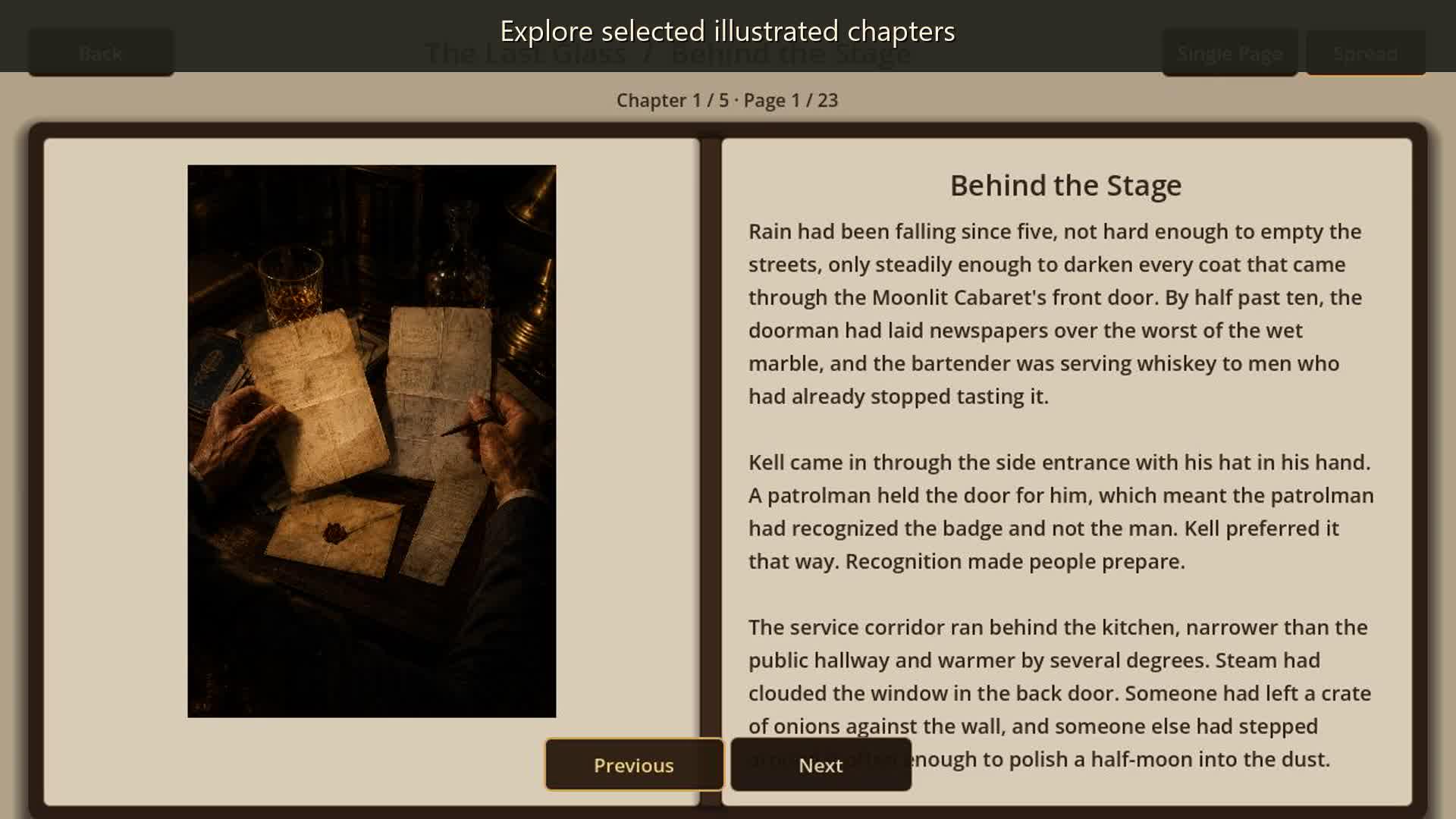
I feel it’s important to share this, especially at a time when everything is flooded with "AI slop"—games, trailers, and other content that clearly stem from a single prompt, yet the creator expects to sell them. I’d like to share something I’m reasonably proud of. I’ve been working on it for about 45 days; the only parts I created by hand were the original illustrations, which I then converted into pixel art using AI. Even the trailer was created 100% with the help of Claude—it captured the gameplay clips, wrote the script, and edited the video (with my own iterations and corrections, of course). I think it’s worth highlighting that you can create a product you’re proud of without having any programming knowledge. (I’m not claiming it’s the best game, or even a good one—I’m simply proud of what I’ve built and wanted to share it.)
Here is the itch.io link where you can download it for free and provide any feedback you’d like—thank you very much!
We're a small indie studio, two friends in France. Dark Dice Dungeon is our first game: a roguelite where you build your heroes' dice face by face instead of levelling up. It came out on Steam on October 9, after six months of work. We used AI tools all the way through, Claude for the code and the writing, other tools for the art and music, and it's disclosed on the store page.
Where it came from: I'm a huge fan of dice games, on the table as much as on screen. Too Many Bones is one of my favourite board games, and I've put hours into Slice & Dice. I love the moment you roll and have to make something out of the faces you get. What I kept wishing for was more story around it and more choices between fights: events, paths, decisions that change your run. So that's what we set out to build. Keep the dice rolling I loved, give it a narrative layer and more choices, and build the combat around what I love in Too Many Bones rather than copying Slice & Dice.
In practice, that means two things. Upgrading your dice faces goes much further than in Slice & Dice, with a lot more face effects to build around. And there are two adventures that play completely differently: in one, Lantern points are a resource you spend during fights; in the other, it's Rage. Each one comes with its own original dice face effects, for the heroes and for the monsters.
The numbers, straight from Steamworks:
- 13 copies sold, plus 3 keys activated, 1 refund
- $78 gross, $62 net
- 135 wishlists added, 107 still open
- 19 players, median playtime 48 minutes
- 27 real demo downloads (the "free licenses" figure is far higher, but that's mostly people collecting free demos)
- 1 player review, 2 curator reviews showing on the store page
We didn't sit still. Fifteen short videos, posts here and on X, a free demo, 65 copies offered to Steam curators. None of it was wasted. All of it came too late: our first wishlist arrived 16 days before launch.
About 5% of wishlists turned into sales, which is roughly normal. The game convinced the people who saw it. Too few people saw it.
What AI changed, honestly: it made the building fast. Six months for a game with four languages, PC, iOS and Android. That speed is exactly what hid the problem. We were always one more feature away from "ready", and nobody outside knew the game existed.
What we do differently now:
- The page for our next game, Wildball League, went up four months before release, with a demo planned for Next Fest.
- We work with several separate Claude conversations, one per job (each game, marketing, Discord, Reddit), that pass work to each other through shared text files. Nothing goes public until one of us has read it.
- Translation got cheap enough to just do it: Dark Dice Dungeon has been in Simplified Chinese since Wednesday, with no native review yet. We'll see if that was a mistake.
Two questions for people here who've shipped:
- When did you start collecting wishlists, and what actually moved the number?
- Has disclosing AI on your store page cost you anything you could measure?
Store page, with a free demo (50% off in the Steam Winter Sale from December 17):
I’m making a game with Godot and Claude, I’m not showing any development footage, mostly as I’m a perfectionist and it’s not ready to be showed. But recently there was a post a guy made that shown an example of someone completely stealing his ai concept level. How do you market a game hoping to make sales, but at the same time don’t show any footage until it’s out? You need to market games before they are out usually.
There's not a single asset in this game that came from an image generator or a music generator. AI wrote the code, and the code made everything: the 3D models, the UI, the sound, the music, the levels, and the store art.
Aussie Pop is a free mobile tower-defense / popping game. You place koalas, kangaroos, wombats and cockatoos to defend the pantry from snack thieves, across 100 levels, with upgrades like Turbo, Freeze and Boom.
The whole game is in C#: combat rules, map, shop, ads and in-app purchases. It has about 270 code tests, plus about 40 tests that actually play the game with drags and taps.
The characters (koala, kangaroo, wombat, cockatoo and the thieves) are sculpted by a Python script that generates the models. Nobody ever opened Blender. The buttons, panels and icons are drawn in code at runtime. The sound effects and both tunes are synthesized note-by-note by a Python script.
Two of the levels were handmade. The other 98 came from a generator, and every level is validated by code players: a smart bot that has to 3-star it, and a random bot that must not win too often.
Screenshots, the icon, the banner and the trailer are all generated from the game itself with one command. The trailer was captured frame by frame while code plays a level.
I'd love to hear from anyone else who has tried to keep image and music generators out of the asset pipeline and do it all in code. What would you still refuse to hand off?
Asked Claude to buff me after getting wrecked multiple times by a sheep. I guess this is called “balance testing”.
First game, turned out quite fun. Having a blast creating it and playing it.
finallight.pages.dev
Free, made for a phone browser. Feedback appreciated if you do check it out.
It’s inspired by ARPGs and roguelikes like Hades and POE2. I could never find a casual mobile game that scratches the itch like those games do because they don’t usually have any depth. Also they are all pay to win. So why not just make it myself!
Cheers
Workflow Prompt: “Claude, what’s the best way to do X” Flow for art, I got Claude Chrome connected so it can prompt flow directly lol
Hi everyone! I recently released Nebulite, a brick-breaker where the breakout
is just the core: between levels you explore a procedurally generated star map,
collect minerals, upgrade your ship and take on missions.

This clip shows all 26 good ones, one per letter, Z to A.
(Sound on: the announcer calls out each one.)

Can you tell what each power-up does just by watching?
Do any of them look confusing, weak, or too similar to another?
Do the effects feel satisfying when you catch them?

Any feedback helps, even the harsh kind. Thanks!

It's available in the browser, Android and iOS.
A couple days ago I posted some of the art from Memory House, the game I’ve been making alone in Godot. I’m a backend programmer from Central Asia with basically zero budget for art, so AI was the only way this many illustrations were ever going to exist. Figured I’d come back and show what I actually did with them.
One of the smallest things I made turned into one of my favorites. In winter you can drag the mouse across the window and scrape the frost off. I like drawing a little circle just big enough to see the garden through it. Leave it alone for a while and the glass frosts over again. If you were reading something by the window when you started, the text fades out and picks up right where you left off.
I also spent way too much time on the rain. There’s the soft background wash, and then you can actually pick out individual drops. In autumn the wind moves the leaves differently depending on which window you’re looking through. There’s a cup of coffee on the table with a little curl of steam. And by the fireplace you can turn the music off and just leave the crackling wood. These are the things I keep fiddling with when I should probably be working on something more important.
The full version has seven games now. Jigsaws, Mahjong Solitaire, Klondike, sorting objects into a tray, making mosaics, restoring illustrations. The seventh one is Atlas of Peaceful Wonders — you start by figuring out how to make bread and eventually end up developing a settlement across seven eras and sending heroes on expeditions. That’s probably the biggest thing I’ve built inside the house.
The art from the last post is part of Atomic 1974. It currently has 1,088 pictures across 33 albums. You can turn them into jigsaws or just save the ones you like from the gallery.
There’s also a collector’s room. While you’re playing and reading, you find stamps, seals, quotes, and little cards with historical facts. I really like the moment when you find a new stamp, open the album, and place it on an empty spot. Then you flip through the pages and remember what you’ve already found.
You can write in a journal too — a few lines about your day, add a photo or a picture from the game, pick a cover. If you don’t know where to start, there are reflection prompts. In the full version you can have multiple journals, lock entries with a password, and export the finished one as a PDF.
The house also has a library with 18 books and four Atlas encyclopedias, three windows (garden, town, valley), and a gramophone with 20 tracks.
The free demo gives you the jigsaws, the first era of the Atlas, 62 spreads from four books, and the garden window. You can try all four seasons, draw on the frost, put music on, and fill three pages in the journal.
I’m proud of the pictures I shared last time. I’m also proud that I can now just sit in a house I built, put the puzzle aside, and listen to the rain for a bit.
If you try the demo, I’d genuinely like to know what you ended up doing first.
(Admins: Please move this thread if it would be better located in another area.)
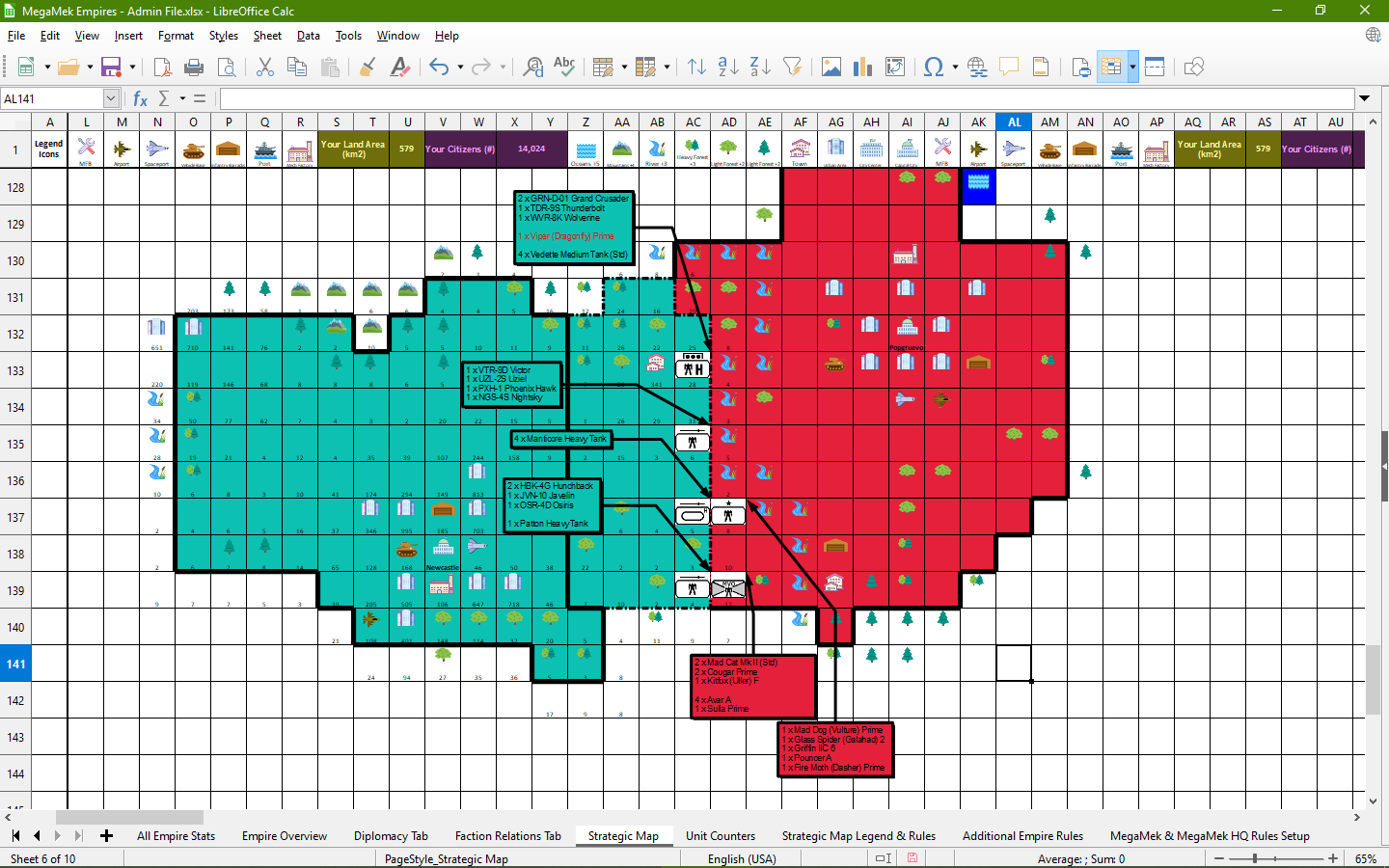
Looking for someone to assist me with using AI to develop this. The VASSAL images below should give a good beginning idea of what is required. I have no experience with using AI for coding projects. Most of the art resources are already created, I just need the basic framework that I can use to build the strategic map, and upload or set up the necessary data within.
What is MegaMek Empires? (General Description)
MegaMek Empires is meant to be a quasi-real-time (strategic game turns take one real week), multiplayer, Play-By-Email, umpire lead, 4X strategy game mode utilizing the MegaMek HQ and MegaMek software for break-out game play and unit management. It is based off the futuristic BattleTech setting, and uses its rule sets (for tactical play), but is not directly based on in universe canon (ie: There are no direct references to Great or Minor Houses/Powers, Clans, specific years, notable personalities, military units, planets, etc. You get to make the story and create your own faction!)
Like any 4X game it allows players to own an “Empire”, [Explore] send scouts across the map to reveal territory and report on your enemies movements and forces (the fog of war is real), [Expand] allows players to claim new territory by capturing existing settlements and special structures across multiple worlds and solar systems, [Exploit] gather C-Bills through taxation of the population under your control or defeating AI controlled bandits, and [Exterminate] attack and eliminate rival players as threats, salvage their fallen assets, or ally with them in productive treaties. This game mode and support tool is based on a combination of games such as BattleTech inspired Neveron, Kriegsspiel, Space Empires IV, Sid Meier's Civilization, and the Total War series. It includes a collection of strategic maps created and over-watched by an umpire administrator(s), diplomatic treaty options for players vs players, and an economic system that allows you to spend money in a MekHQ file, purchase the “land rights” to territory your faction controls and make custom maps to fight on, or purchase key structures for the campaign map that support your empires perseverance.
A Proven Concept
MegaMek Empires has already been play-tested as a functioning concept in three prior iterations. The first test iteration involved 20+ players on a single shared planetary map in spreadsheet format, with attending password protected Google Drive files for each player to lay out hidden movements and directives.
The second attempt bumped the player count to 40+ on a developed series of spreadsheets passed back and forth to the controlling admin umpire. It introduced “double-blind” campaign play. Therein players would plot out unit movements, consult their own personal version of a manually updated strategic map, record financial purchases and manage diplomatic relations. This version stalled out as manual entry of every individual unit’s movements was cumbersome for players, maintaining 40+ individual maps and an admin main map made turn processing slow, and issues with comment boxes and picture icons failing to load correctly as we approached a large number of collectively active units.
The most advanced attempt to date utilized a series of VASSAL built modules for each solar system in the active game. Many graphic resources were created for layered player pieces and tokens that replaced comments and icon image files. Player unit movement was handled by the player’s individual files showing movement paths per turn. But a lack of support for “fog of war” elements meant the admin was still generating 40+ individual player maps manually per week. Javascript, which VASSAL is built around, also had significant memory issues as entire strategic maps had to be rendered in memory with no ability for viewpoint culling.
During this time new rules were play-tested or conceived for space travel, the utilization of faster rail and monorail systems for ground-based campaign map travel, new biomes and settings for tabletop map generation, and the allowance of custom units and actions such as players hiring other players as mercenaries. We introduced new unique structures that could be purchased and built on the campaign map to buff combat, player economy, allow for limited spy and sabotage operations, yield faster and more successful repairs and refits or boost personnel medical healing within range limits, limited free unit production and much more.
Finally, a system was created for allowing players to build custom tabletop maps so these special facilities could be raided or actually attacked and destroyed by other human players. This also allowed for the building of fortifications and defensive works on your territory and give you even more reason to fight for your home turf, among much much more. Airfields, airports and spaceports would have to be modelled in maps and utilized for housing non-VTOL conventional airframes or larger DropShips.
All in all, the concept survived multiple years of development, growth and playtesting, but the programs we used couldn’t support our needs over time.
That is where this “call to action” comes in. The admin and core players over the years have no coding experience. VASSAL module development was the best we could manage on our own.
If anyone has the knowledge or the ability to assist us in developing a new toolkit that supports these needs, or can even surpass them, we would be very interested. The admin has experimented with some AI code generators, but this is not something they can ultimately tackle on their own.
Examples of the the campaign map toolkit in action across the various iterations, and other various components:
Options for labelling player pieces on any Strategic Map in VASSAL (MegaMek Empires 3.0):
Player View - Groombridge VI Strategic Map, in VASSAL (MegaMek Empires 3.0):
A player notes another "neutral" player's Invader-class JumpShip has arrived in system. (MegaMek Empires 3.0):
Hundreds of optional game pieces, most patterned off the NATO symbol system, and each with thousands of available color shades, different formation sizes including clan formations, status indicators, friend or foe identification, height level, etc. Includes many different map markers for plotting and planning. Strategic map toggle mode between textures or solid colors for biomes. (MegaMek Empires 3.0):
Unit information window and Player Faction territory color options (MegaMek Empires 3.0):
A very large and active civilian spaceport (player custom map) gets attacked (BattleTech gameplay happening in MegaMek) calling out the defenders to action:
Roads, Highways, Trains and Maglevs can make long-distance ground based travel simplified, just don't let the enemy cut your tracks. We built a series of custom train cars and engine designs as standard for all players to rely on and purchase for use in MegaMek:
Diplomacy Grid and Treaty Options (MegaMek Empires 2.0):
A new player faction template spreadsheet file (MegaMek Empires 2.0):
The Prototype Strategic Map - Player View, in spreadsheet form (MegaMek Empires 1.0):
Defensive Base Building assets in action (in MegaMek, not this program). They might cost a pretty penny to create, but they just might be what keeps the Mongol hordes at bay!
Play kingdoms of Verdantia now watch the full video. I used AI as a development assistant for parts of Kingdoms of Verdantia, helping with coding, brainstorming gameplay mechanics, debugging, and creating some visual assets. However, I’m the one designing the game, making decisions, integrating everything into Unity, testing mechanics, and shaping the overall gameplay. AI is a tool in my development process, not a replacement for building the game myself.
Hello! I have been working diligently on a major vibe coded project which will be available for FREE on makeplay. I have made a few AI games before but they have been much smaller in scope and I have learned a lot through those experiences including a much simpler arkanoid project called Sahara Breakout.
The current game is a Roguelike RPG Arkanoid experience that aims to reinvigorate the genre with fresh ideas and it will be posted on makeplay but eventually I have full intent to release this on steam and continue to improve the foundation as this for me is a passion project. The technology is good enough that I am able to actually bring this to life in a manner that is of reasonable quality.
It has innovations such as offering multiple different forms of attack beyond just your ball hitting blocks and enemies. It ends up giving the player a lot of agency and creates a lot of opportunities for skill expression. The 3 current playable characters all have varying stats which can level up over the course of any campaign. You can also collect resources and purchase new gear or find it out in the wild. The boss battles have AMAZED me with how fun, reactive, and skill based they can be. My honest assessment is 10/10 gameplay for boss battles while the ordinary levels can feel like 8.5-9. I am working to improve the feel of the levels and the core foundations to improve that even further.
There are dozens of unique enemies each with their own abilities, behaviors, attacks, and spells. And currently 3 high quality bosses with many more to come over time. There are over 200 unique blocks and many of which have interesting properties. 7 different biomes. etc etc.
Let me know if you have any questions and I do have some slots available for playtesters in the near future. This is a dead genre but I feel it doesn't have to be. The core gameplay could use serious innovation and I feel the improvements here are going to change a lot of minds. At least I hope so.
Additionally if you have ideas that you would like to see explored in your dream arkanoid game I'd love to hear it if you're willing to share.
Looking for playtesters and feedback on my AI-vibe-coded stealth puzzle game, Ghost Grid!
Hey everyone!
I'm a game designer experimenting with AI-assisted development, and I've been building Ghost Grid, a turn-based cyberpunk stealth puzzle game created largely through vibe coding.
The concept is simple: navigate a grid, avoid security patrols, hack systems, and complete objectives. Every move matters, and the puzzles get progressively more complex.
The game is currently playable for free in your browser, and I'd love some honest feedback!
I'm especially interested in thoughts on the gameplay, difficulty, controls, visual design, and overall fun factor.
This is both a passion project and an experiment in seeing how far AI-assisted game development can go.
Hi, i'm an aspiring vibe coder with a huge love for Sonic and Spider-Man. Some days ago i came across Spiderbench by xikhar which was made with Opus 5.5 and i thought. How would i make this even better? So, i got Fable 5.1 and Opus 4.7(through APIs) and try to create a Spider-Man game based on the MCU called Darkest Day which follows the Brand New Day movie. I hope i could get some advice or inputs which i could use?
Hey guys! Unity Dev here. Was wondering which AI is best and most affordable at this current date?
Right now I'm using Gemini with a 20€ per month plan, but I'm not that happy as with bugfixing, Gemini is often not able to find the bug sources.
20€ or $20 USD is also roughly my monthly budget at the moment since I'm not yet making money from my games. I work on my game 5 to 9 hours per day. I only need it for coding! So no 3D assets or visuals. I also don't care weather it's in engine (Unity) or in my IDE or if I copy-paste my scripts to a website (as I'm doing now). I'm working on a quite complex system with lots of cutsom physics and stuff. For personal reasons, I'd like to stay away from open AI.
I drew the cast and storyboarded the opening for my tactical RPG, Year without a Summer. I made the animation with Claude and Seedance. Seedance generated the shots, and I spent days retouching frames by hand to keep the characters recognizable. For the latest cut, I rebuilt some shots from scratch.
Hi guys, so this is my latest trial on threejs (before this always straight go with godot). But even with claude opus, go straight with godot, i found that the graphic it generate sometimes clunky. Then try a bit of threejs and the result quit good.
So for this i try fully dev with threejs with the help of claude opus, Building the based game. But since the quota limited, then proceed with deepseek 4.1 with opencode.
A little bit of deepseek 4.1 vs opus, for me (yes maybe only me) the results produce especially on threejs a bit similar. But!! Opus is far far faster of course. 3 minutes task on opus will take maybe 15 to 30 minutes on deepseek.
And since i am programmer myself, cant get away from vscode 😅 even though only check the code during git commit haha.
Back to the game, just casual simple control motocross with a little skill and upgrade. For now on browser and support pwa, so can add to home screen for fullscreen play. Support landscape and potrait but of course the best i think play on desktop browser with keyboard.
On the server side, deployed all on cloudflare workers, with all other cloudflare component like functions and db. And of course cloudflare works seemlessly with AI. Be it opus or deepseek.
Later will try convert to godot for mobile. 👉 try here 👈
Hi all, I'm building a fantasy MMORPG that runs in the browser, inspired by OSRS, with no download. It is a top down game point and click game, where you start of with a single hero. A hero can choose one of three races, one of three combat specializations and one of seven non combat specializations. As you progress throughout the game, you will be able to add new heroes to your fellowship, eventually allowing you to control up to 5 heroes at a time. The game takes place in Valemor, a massive ~45 square kilometer world with over 2000 quests. It features a wide variety of biomes. Play for free at: https://www.valesofvalemor.com I am looking for volunteers who would like to playtest my game. I am curious to hear what you think works well in the game, what can be improved and what is currently missing? I am also curious about the performance on your pc (with your specs). There is a toggle to enable an fps indicator. The game is primarily focussed as a PC game, however, it should run on the latest mobile phones (through the browser). The current to do list is as follows. - Improve character models for elves & dwarves - Improve models for equipment - Fix misplacements of assets (buildings, trees) throughout the world - Improve 3d models of buildings Thanks in advance!
I'm developing my browser-based 3D MMORPG (velundra.io) using pure TypeScript and Babylon.js.
Over the past few months, I realized that AI tools are nowhere near capable of generating playable, bug-free 3D maps on their own. At best, AI gets me 10% of the way there with rough layouts or visual ideas—the remaining 90% has to be manual level design.
To solve this, I ended up building my own custom map editor (still a WIP) directly into my stack.
Here is what my current world-building pipeline looks like:
- Concept & Layout: I use Gemini (Nano Banana) to brainstorm visual themes, biomes, and rough terrain layouts, iterating until the mood feels right.
- Custom Map Editor: I block out the terrain, place props, set collisions, and structure the zones using my own TypeScript/Babylon.js editor.
- 3D Assets: I generate base meshes using a local 3D diffusion pipeline, then clean, optimize, and rig them via custom Python scripts in Blender.
- Iteration: Each full map takes nearly a month of heavy iteration—and I'm still going back to polish my first two zones.
Right now, the game has 2 live maps supporting 40+ hours of quests, free-roam events, and world bosses. I’m releasing the third map next week, which is easily the biggest and most complex one yet.
For other solo devs building custom engines or web games: how are you handling your level design pipeline?
Claude is really good at coding but terrible at visuals. What AI agents are you using for the best result in terms of creating good visuals for your game? Tried Tripo3D, it does good modeling but texturing is atrocious, what else is there? Give some recommendations about good workflow please