Hi everyone, I want to share an Alocasia that has been quite confusing plant enthusiasts in Indonesia for some time.
It grows wild in Tanah Karo (Karo Regency), North Sumatra, on the slopes of the Bukit Barisan range at around 600 to 1,400 masl. It also turns up around Bahorok in Langkat Regency. It usually grows in colonies, so you often find a whole stand of them together on shaded, humid slopes.
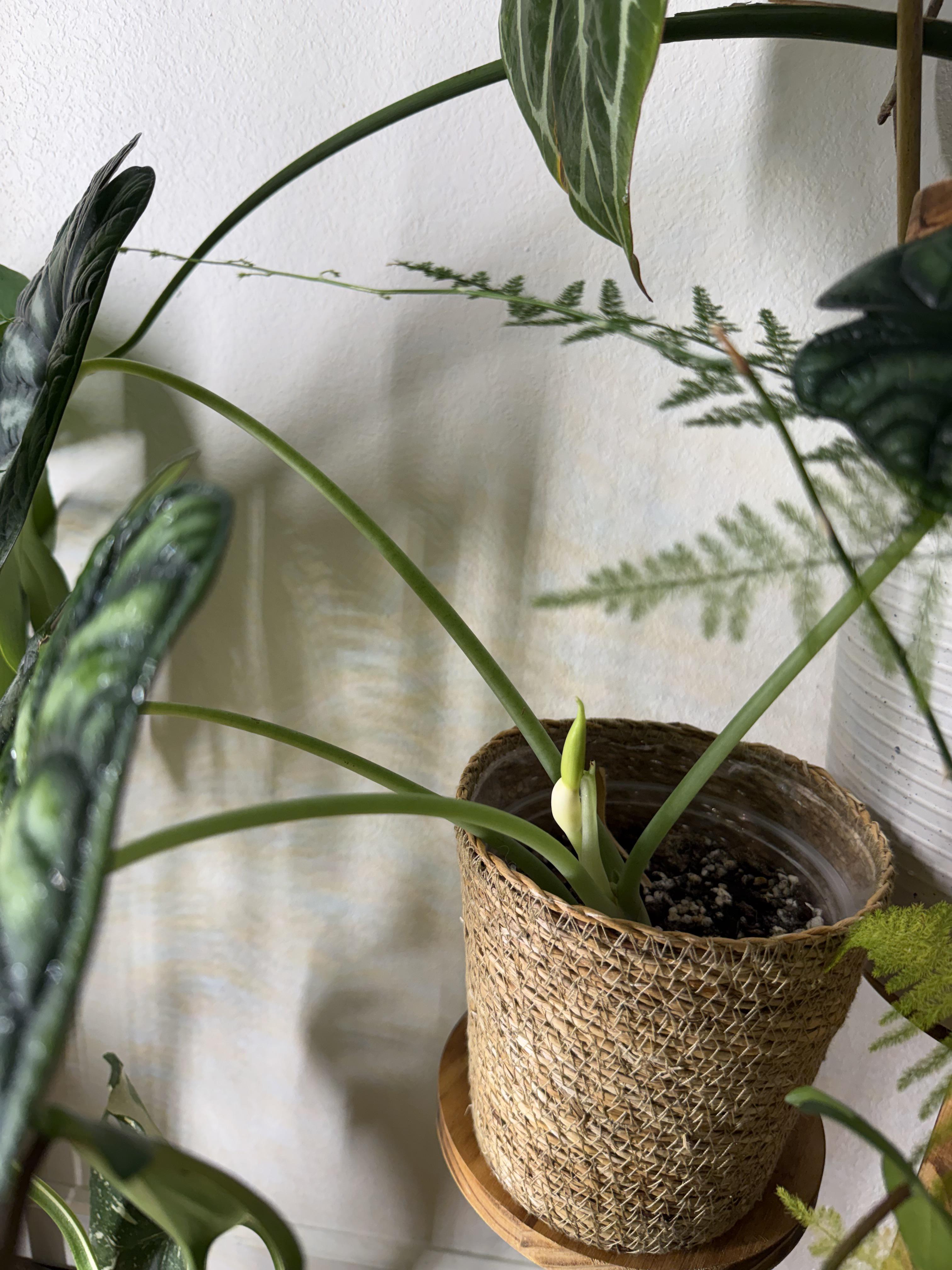
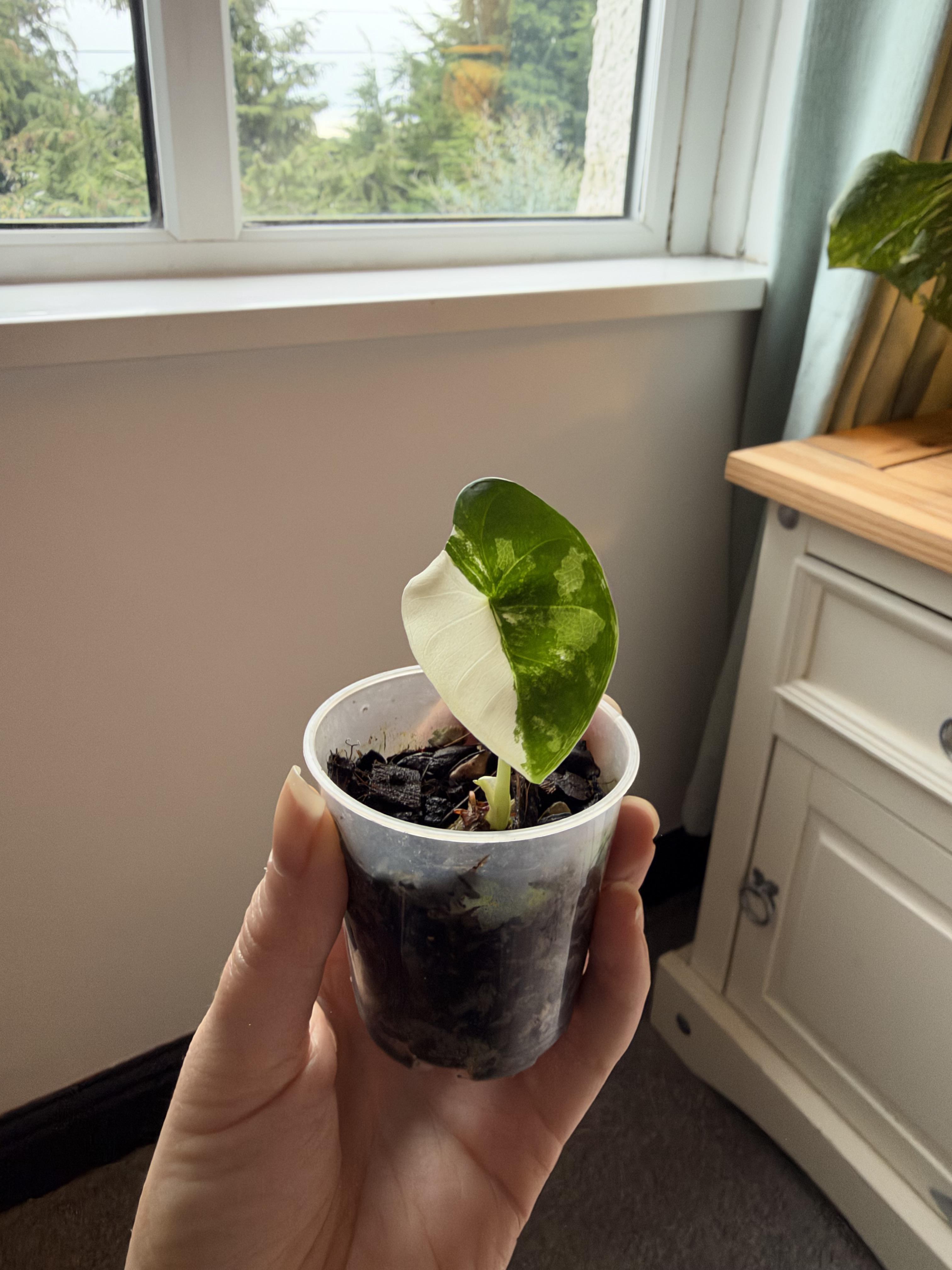
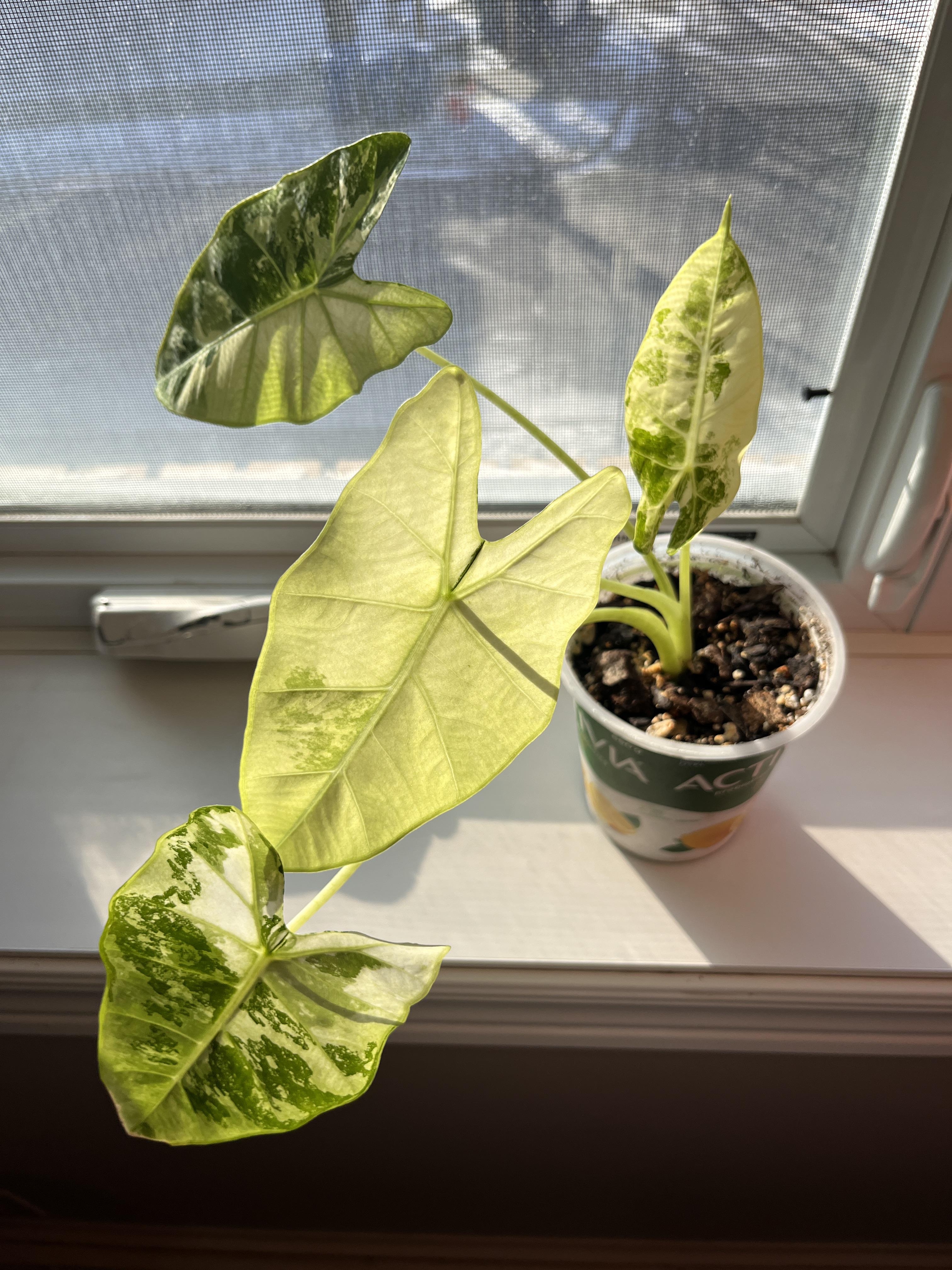
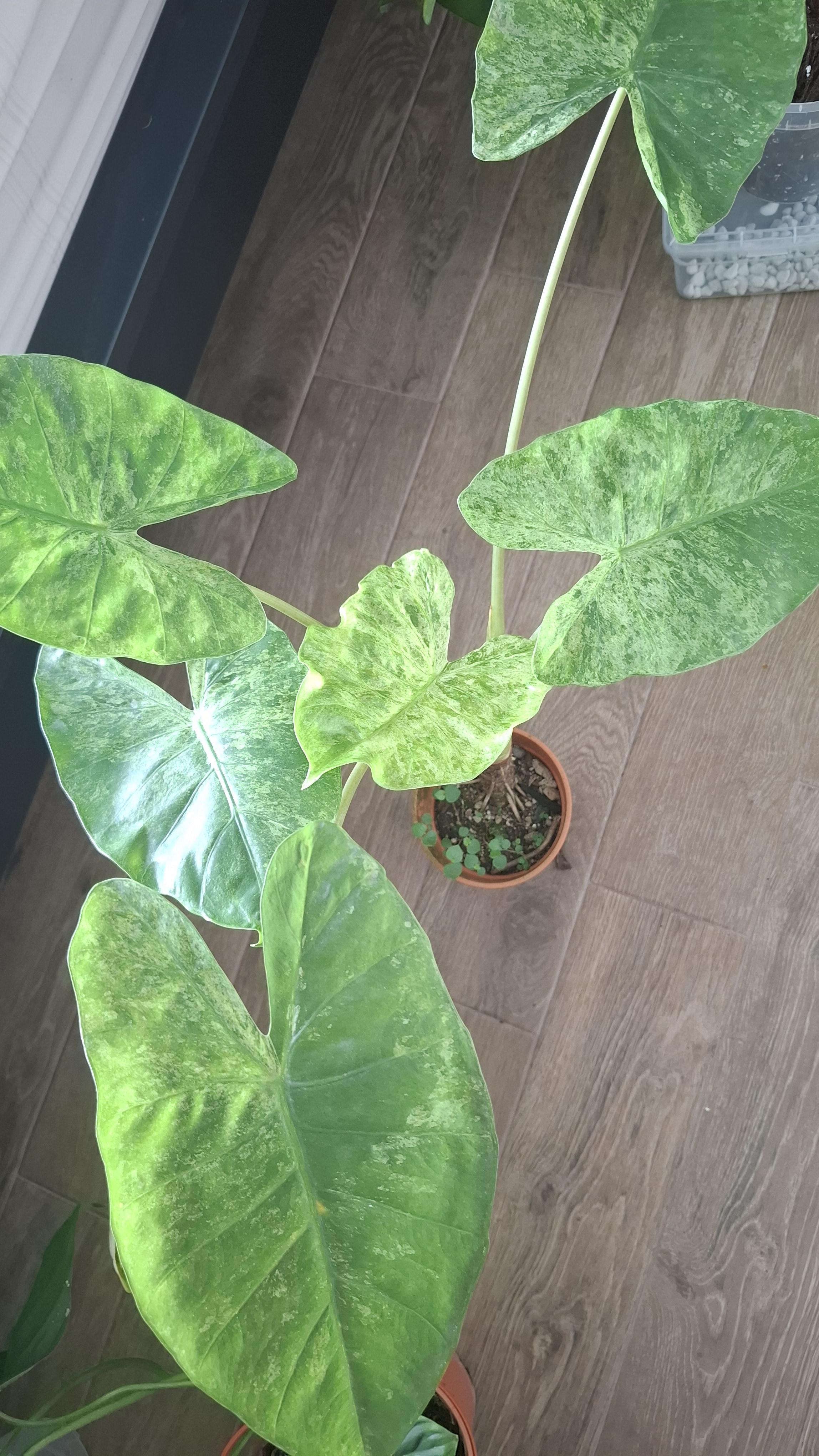
The leaves are big and broadly sagittate, with a long tapering tip and prominent lateral veins. Wild plants (photos 7 and 8) have matte to softly glossy blades in pale, grey-green tones, sometimes slightly glaucous, with a fairly flat, gently undulating surface and a few pale flecks. In cultivation (photos 1 to 5) the same plants turn deeper and glossier. Photo 1 shows a dark, lacquered leaf with pale veins, and photo 5 shows a large, bright green, strongly ribbed blade on a long upright petiole, with new cormlets coming up around the base.
The sinus is deep, usually V-shaped to narrowly U-shaped, with rounded to obtuse posterior lobes that are shorter than the anterior division. The petiole attaches at the base of the sinus, so the blade is not peltate. The opening varies a bit from leaf to leaf, from narrow with lobes almost touching to wider with lobes spreading apart, and cultivated plants tend to flare more. That may just be leaf age or light.
There seem to be two forms: one with dark, almost black petioles and stems, and one with plain green petioles. The leaf shape is the same and they grow in the same region. I don't know yet whether they are two taxa, one variable population, or simple phenotypic variation.
It looks a lot like Alocasia arifolia, and mature plants also recall Alocasia princeps. Many local hobbyists suspect a natural hybrid between arifolia and alba, but that is only speculation. I have no molecular data, and my sampling so far is informal.