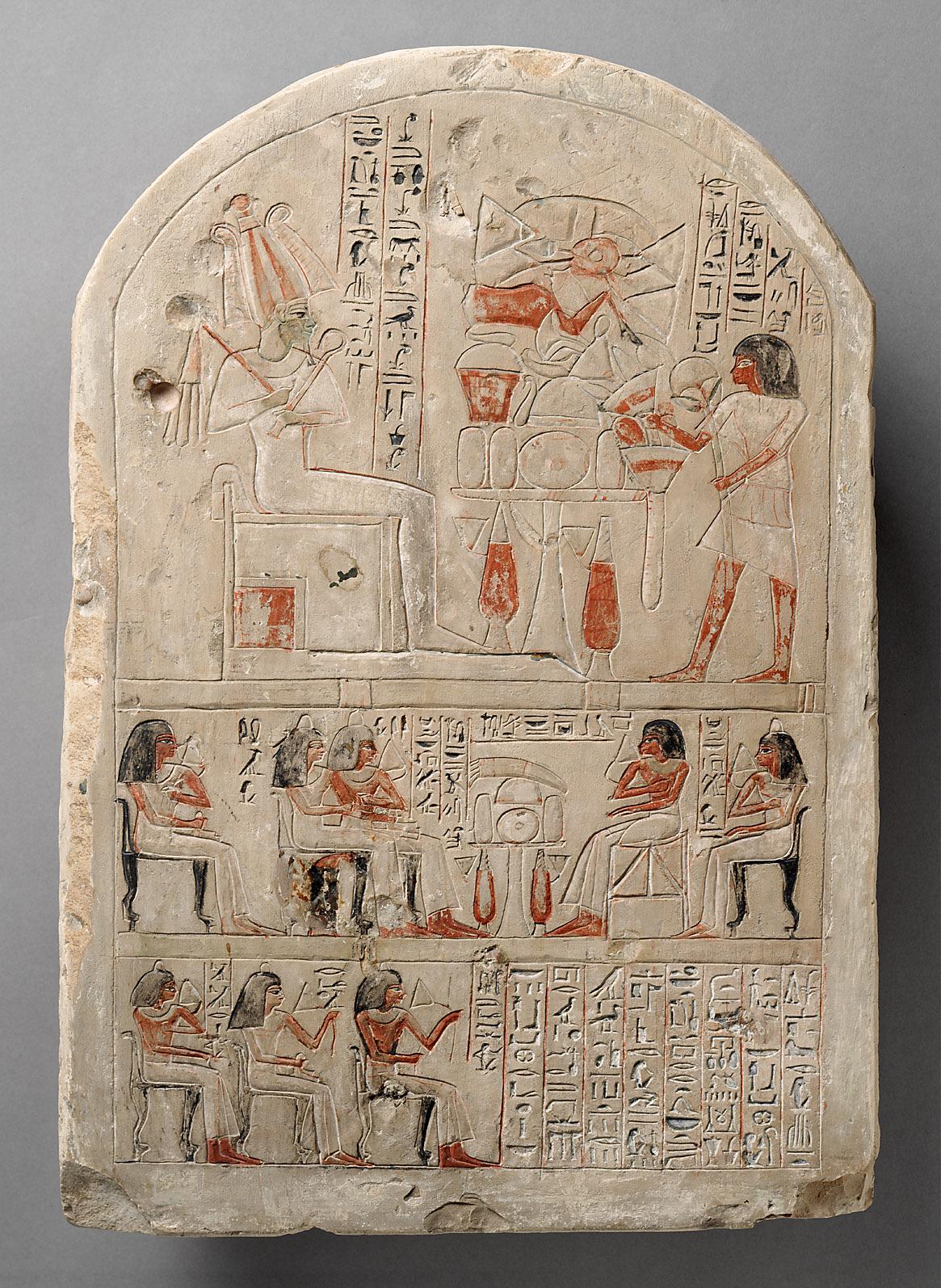
Stelophorous statue of Amenemipet
This ‘stelophorous’ statue is an example of the tomb’s connection with the celestial plane. Statues of this type date back to the New Kingdom and were placed, facing the rising sun, in the niches of the pyramidal superstructures of private tombs. They depict a kneeling person holding a stela in front of them, bearing a representation of the sun god in his boat and a hymn dedicated to the deity.
Inv. no. :
Cat. 3038
Material:
Stone / Limestone
Dimensions:
20 cm x 55 cm x 26 cm
Date:
1539–1292 BCE
Period:
New Kingdom
Dynasty:
Eighteenth Dynasty
Provenance:
Egypt, Luxor / Thebes
Acquisition:
Purchase Bernardino Drovetti, 1824
Museum location:
Museum / Floor 1 / Room 06 DEM / Showcase 10
Selected bibliography:
Fabretti, Ariodante-Rossi, Francesco-Lanzone, Ridolfo Vittorio, Regio Museo di Torino. Antichità Egizie (Cat. gen. dei musei di antichità e degli ogg. d’arte raccolti nelle gallerie e biblioteche del regno 1. Piemonte), vol. I, Torino 1882, pp. 413–414.
Malek, Jaromir, Topographical bibliography of ancient Egyptian hieroglyphic texts, statues, reliefs and paintings VIII: objects of provenance not known. Part 2: private statues (Dynasty XVIII to the Roman Period), statues of deities (Topographical bibliography of Ancient Egyptian hieroglyphic texts, statues, relief and paintings 8/2), Oxford 1999, p. 575.
Orcurti, Pier Camillo, Catalogo illustrato dei monumenti egizi del R. Museo Egizio di Torino, Torino 1855, ii, p. 193.
Tiradritti, Francesco, Il cammino di Harwa: l'uomo di fronte al mistero: l'Egitto [mostra: Brescia, Mus. Diocesano ott. 1999-gen. 2000], Milano 1999, p. 30 e 161, fig. a p. 31.
Vidua, Carlo, “Catalogue de la collect. d'antiq. de mons. le chev. Drovetti, a 1822”, in Ministero della Pubblica Istruzione (a cura di), Documenti inediti per servire alla storia dei Musei d'Italia, vol. 3, Firenze - Roma 1880, p. 288, n. 91.
Title
Stelophorous statue of Amenemipet, 1539– 1292 BCE New Kingdom Eighteenth Dynasty, Findspot Luxor / Thebes, Limestone, Museo Egizio di Torino.
https://collezioni.museoegizio.it/en-GB/material/Cat_3038/?description=&inventoryNumber=&title=&cgt=&yearFrom=&yearTo=&materials=4755b4240b924e1ba0a5fae2d57f85d4&provenance=&acquisition=&epoch=&dynasty=&pharaoh=&searchLng=en-GB&searchPage=13
Museo Egizio di Torino