r/bhartiya_languages • • 4d ago Regret Heartwarming

Meta/ Mod announcement Common myths in Indian Linguistics (Spreading these can get you banned!)

132 Upvotes

Seeing a rise in misinformation, we have decided to ban users who peddle common linguistic myths even once, so as to keep the decorum academic and reliable. If anybody is seen peddling the common linguistic myths shown below, they will be subject to moderator action:

  1. OIT (Out-of-India) Theory: This theory has been proven incorrect by academia both within India and outside it. The accepted theory based on genetic and linguistic evidence is the Aryan Migration Theory (AMT).
  2. Sanskrit/Tamil is the mother of all Indian languages: Neither language has the claim to be the "mother" of all Indian languages due to the reason being that Indian languages do not belong to a single language family.
  3. Tamil is the mother of all Dravidian languages: The Dravidian language family is diverse and consists of numerous branches and sub-branches. Comparative linguistics has proven that none of the living Dravidian languages, including Tamil, has a claim to be the "mother" of all the modern Dravidian languages leading to the reconstruction of Proto-Dravidian.
  4. AIT (Aryan Invasion Theory): While the Aryan Migration Theory is academically accepted, the older and outdated 'Aryan Invasion Theory' isn't. It posits that the Aryans destroyed the Indus Valley Civilization while Steppe Nomads from Central Asia actually migrated to India AFTER the Indus Valley Civilization had already collapsed.
  5. Alternative origins of Prakrit and Sanskrit: We have seen people arguing that Classical Sanskrit originated from Gandhari Prakrit. Many people also erroneously believe that Prakrit is a "corrupted" version of Sanskrit or that Sanskrit is a refined version of Prakrit. Neither is true. Prakrits might have evolved naturally from Vedic Sanskrit or an earlier language now re-constructed called Proto-Indo Aryan, while Classical Sanskrit is an independently standardised form of the language, codified by Rishi Panini. (Some research does indicate that Prakrits may instead have evolved from a different Indo-Aryan language related to Vedic Sanskrit. However, the point remains that no research suggests that Prakrits evolved from Classical Sanskrit or vice versa.)
  6. Bengali is the mother of all Eastern Indo-Aryan languages theory: One must reject the misconceptipn that other Eastern Indo-Aryan languages originated from Bengali or are merely its dialects. This misconception, partly rooted in colonial-era misclassification, has led to distinct languages such as Chakma, Bishnupriya, Hajong and Kamtapuri being treated as dialects of Bengali. The same applies to Rangpuri, spoken primarily in Bangladesh but also in Eastern India, as well as the dialects and subdialects of closely related languages like Western Assamese (Goalpariya) and Northern Odia (Midnapore). Such classifications are outdated and should not be accepted as definitive linguistic facts. These languages must be recognised according to their actual genealogical relationships, many of which do not place Bengali as their parent or even their closest sister language.
  7. The "dialects" of Hindi: The Uttar Pradeshi, Pahadi, Rajasthani, Bihari and Eastern Indo-Aryan languages are often erroneously thought to be dialects of or broken, rural versions of Hindi even though all of these languages are much older tha Hindi and are fully-fledged, respectable languages in their own right
  8. Languages tied to religion (Urdu and Sanskrit): Another common misconception is that Urdu is inherently a Muslim language and Sanskrit is inherently a Hindu language. In reality, Urdu has prominent non-Muslim poets like Firaq Gorakhpuri and Gulzar, while Sanskrit was extensively used by Buddhists and Jains, with scholars like Aśvaghoṣa, Nāgārjuna and Hemachandra making significant contributions to its literature. Neither language belongs exclusively to a particular religious community.
  9. Intentional, agenda driven mischaracterization of a language: No independent language shall be intentionally be mis-classified as a dialect of another one e.g. Konkani being called a dialect of Marathi, Khandeshi being called a dialect of Marathi, Saraiki being called a dialect of Punjabi etc.
  10. The myth of linguistic purity: The obsession with linguistic purity is ideological and has more to do with cultural chauvinism than linguistics. Languages have always borrowed words, sounds and grammatical features from one another through centuries of contact and cultural exchange. Treating such influences as signs of linguistic corruption creates unnecessary hostility between speakers of different languages while ignoring the historical reality of how languages naturally evolve. Linguistic experimentation, revival and creative reconstruction are perfectly welcome, as reflected in the experimental subreddits featured in our widget list. However, politically motivated linguistic agendas, manufactured identity conflicts and attempts to create unnecessary divisions are not permitted.

Contributions by: u/Icy_Function_5839, u/Ill_Poem_1789, u/e9967780, u/MonsieurNong, and u/GrumpyGuyMugdha


r/bhartiya_languages • • 6d ago

Meta/ Mod announcement Check out the subs pinned in the description!

10 Upvotes

Almost a week ago I had made a post asking our dear users which subs we should promote and over the course of two days we had pinned numerous subs in our description. There were so many subs that we actually had to make four separate widgets lol.

The widgets that we have are:

1. Large linguistic sister subs

2. Lesser known linguistic subs

3. Experimental linguistic subs

4. Indian script subs

Some of the pinned subs that I really like are r/Dakhani, it is small but has amazing posts on the language, media and culture, r/RajasthaniLanguage, for a small and recent sub, the in-depth quality of the linguistic discussion is impeccable and I really like the representation of all the Rajasthani dialects in it. r/AssameseHub has amazing Linguistic posts and I learnt a lot about the Assamese language and Indian history in general in this sub, some of the most well-researched posts on this app I have seen are in this sub! r/Magahi, while not that many posts on the language does have a lot of illuminating posts on Magahi culture and the sub users are fighting very hard to make sure their language doesn't die

Mod sub spotlight:

u/MonsieurNong and u/Frequent-Head-6063 also moderate r/Konkani, and would like you to check it out!

u/GrumpyGuyMugdha also moderates r/TaiAhomLanguage and would like you to check it out! This sub truly has a lot of wonderful discussion!

u/tuluva_sikh created r/Byari and also moderates r/modi_lipi and would like you to check those subs out too!

u/Angry_Aryan_AA, while not a moderator of r/SylhetiLanguage, does want y'all to check out that sub, and I personally also like the discussion in it and wish that that sub would also have more activity.

Have a nice day!


r/bhartiya_languages • • 7h ago

Discussion Modern Countries that Indian Language Families trace back to

12 Upvotes
  • Indo-European: Russia, Ukraine
  • Dravidian: India
  • Sino-Tibetan: China
  • Austroasiatic: China, Vietnam, Laos, Cambodia
  • Tai-Kadai: China
  • Great Andamanese: India
  • Ongan: India
  • Nihali (isolate): India
  • Burushaski (isolate): India, Pakistan
  • Turkic: Mongolia, China

Alternate theories (more exist):

  • Indo-European: Turkey
  • Indo-European: India (largely debunked)
  • Dravidian: India, Pakistan
  • Austroasiatic: India, Myanmar
  • Burushaski (proposed as part of larger family with Na-Dené family of USA & Canada): Russia, Georgia, Azerbaijan, Armenia (highly unpopular theory)

I find it fascinating that so many of our primary language families have roots in modern-day China.

Also curious if anyone has any disagreements with these theories, or alternate theories you would like to suggest!


r/bhartiya_languages • • 5h ago

Language AMA!

6 Upvotes

Heya there people!
I have been following this subreddit (although without making my presence known hehe) and I've seen the passion all of you have for languages for India! You all basically have the same passion as me in linguistics! So I am here to conduct and AMA (and totally not flex the languages I know in front of yall). Here are the 12 Indian languages I know apart from the 2 separate foreign languages (German and French) I have been learning!
-Odia (mothertongue)
-Hindi
-Bengali
-Kannada
-Punjabi
-Sanskrit
-Bhojpuri
-Gujarati (Can read fluently but not write)
-Maithili (currently learning, only basic level words)
-Malayalam (currently learning, can speak with locals)
-Tamil (currently learning, can speak with locals)
-Urdu (currently learning, can speak with locals)


r/bhartiya_languages • • 1h ago

Language Name common words in ALL or MOST Indian languages

2 Upvotes

Are there any words which are common throughout all Indian languages? Sometimes words which are common might be due to shared origins but there are different shared origins in Indian languages (ex- Dravidian, Indo Aryan)

So are there any words which are/can be used commonly throughout all/majority languages? Name as many as you can!

I think chaabi is a common word.

Do tell me if that word isn't used in your language.

Im too sleepy to think of others.


r/bhartiya_languages • • 15h ago

Question How do u say "thank you" in ur native language?

Post image
24 Upvotes

r/bhartiya_languages • • 7h ago

Resource We tested legacy Hindi font (Kruti Dev) PDF → Word conversion on a 25-page government Act. Here's what survived and what didn't.

4 Upvotes

Disclosure: IndicPDF, a tool that converts Indian-language PDFs to editable Unicode. This post is about the problem, with our own results, including what we still get wrong.

The problem

Millions of Hindi documents (court papers, government Acts, books) were typeset in old fonts like Kruti Dev. They look like Hindi on screen, but the text underneath is Latin letters mapped to Hindi shapes. Copy a line and you get something like:

\`vkt ge cgqr \[kq'k gSa\`

when it should read:

\`आज हम बहुत खुश हैं\`

You can't search these files, edit them, or paste them anywhere without the text turning to junk. Many "Hindi PDF to Word" tools just copy these codes into Word, so the output looks broken the moment the font changes.

The test

We used pages 1–25 of a Bihar state Act: legal Hindi, numbered sections, nested lists like (क)…(छ), and a running header on every page.

What worked

\- About 64,000 Devanagari characters recovered as real Unicode text. It is searchable and copyable, and it works in any font.

\- Section numbers and Hindi legal terms came through correctly.

What didn't work (yet)

\- The running header at the top of each page is missing.

\- Bold section headings lost their bold, and some run on after the previous paragraph.

\- A few list items merged together.

\- The output is 26 pages instead of 25.

\- One real text loss: "(2) उपधारा (1)" came out as "धारा (1)". This is the one that bothers us most, because for a legal document a missing word matters more than any formatting problem. It's our top fix.

What we learned

Happy to answer questions about how legacy Indic fonts work under the hood. If you have a tricky Hindi, Telugu, Tamil or other Indic PDF that nothing handles well, I'd genuinely like to test it.


r/bhartiya_languages • • 11h ago

Dravidian Fish Names Across Five Dravidian Languages: Malayalam, Tamil, Kannada, Telugu and Tulu

8 Upvotes

I've been compiling a comparative list of common fish and seafood names across five Dravidian languages: Malayalam, Tamil, Kannada, Telugu and Tulu.

The list focuses on commonly consumed and commercially important species, including regional names and variations. Names are given in their respective scripts, with Roman transliterations. Tulu names are presented in Roman transliteration.

1. Major Marine and Freshwater Fish

No.FishScientific nameMalayalamTamilKannadaTeluguTulu
1Indian Oil SardineSardinella longicepsമത്തി / ചാള (Mathi / Chaala)மத்தி (Mathi)ಭೂತಾಯಿ (Bhoothai)నూనా కావళ్ళు (Noona Kavallu)Boothai
2Indian MackerelRastrelliger kanagurtaഅയല (Ayala)கானாங்கெளுத்தி (Kaanang-keluthi)ಬಂಗಡೆ (Bangade)కనగుర్త / కన్నಂಗడత (Kanagurta / Kannangadatha)Bangude
3Seerfish / KingfishScomberomorus commersonനെയ്മീൻ / അയക്കൂറ (Neymeen / Ayakoora)வஞ்சிரம் (Vanjiram)ಅಂಜಲ್ (Anjal)కోనేము / వంజరము (Konemu / Vanjaramu)Anjal
4Little TunaEuthynnus affinisഉരുളൻ ചൂര (Urulan Choora)சூரலை / சூரி மீன் (Suralai / Choori Meen)ಕೆದರ್ / ಖೇದಾರು (Kedar / Khedaru)సూర (Soora)Kedar
5Yellowfin TunaThunnus albacaresകേര ചൂര (Kera Choora)மஞ்சள்தூவி சூரை (Manjalthoovi Soorai)ಗೆದರ್ (Gedar)రెక్క సూర (Rekka Soora)Kedar
6Silver PomfretPampus argenteusവെള്ള ആവോലി (Vella Avoli)வெள்ளை வவ்வால் (Vellai Vavval)ಮಾಂಜಿ (Manji)తెల్ల చందువ (Tella Chanduva)Maanji / Manji; Boldu Maanji
7Black PomfretParastromateus nigerകരുത്താവോലി (Karutha Avoli)கருப்பு வவ்வால் (Karuppu Vavval)ಕಪ್ಪು ಮಾಂಜಿ (Kappu Manji)నల్ల చందువ (Nalla Chanduva)Kappu Maanji
8Pearl SpotEtroplus suratensisകരിമീൻ (Karimeen)சேத்துக்கெண்டை / கரசார் (Sethukendai / Karassar)ಎಲಿಮೀನು (Elimeenu)దువ్వెన చేప (Duvvena Chepa)Irpe / Kari Meen
9AnchovyStolephorus spp.നത്തോലി / കൊഴുവ (Netholi / Kozhuva)நெத்திலி (Nethili)ಬೋಳಿಂಗೆ / ಕೊಳ್ಳತೂರು (Bolingei / Kollathuru)నెత్తళ్ళు (Nethallu)Kollatharu / Bolingir
10Threadfin Bream / Pink PerchNemipterus spp.കിളിമീൻ (Kilimeen)சங்கரா (Sankara)ರಾಣಿ ಮೀನು (Rani Meenu)గులివిందలు / ఎర్ర గులివిందలు (Gulivindalu / Yerra Gulivindalu)Madimal / Madmaal Meen
11Mangrove Red SnapperLutjanus argentimaculatusചെമ്പള്ളി / ചെംകലവ / മുറുമീൻ (Chempalli / Chemkalava / Murumeen)கருவாளை / கர்வா / செங்கண்ணி / செப்பிலி (Karuvalai / Karva / Chenganni / Cheppili)ಚೆಂಬಲಿ (Chembali)రంగు / తుండవ / కలివయ్య (Rangu / Thundava / Kaliviyya)Kyavaji / Themberi
12Barramundi / Asian SeabassLates calcariferനരിമീൻ / കാളാഞ്ചി (Narimeen / Kalanji)கொடுவா (Koduva)ಕೊಳಿಜಿ (Koliji)పాండు చేప (Pandu Chepa)Kulegg / Modavu
13BarracudaSphyraena spp.ചീലാഹൂ / തിണ്ട (Cheelahoo / Thinda)சீலா / ஊழா / கோலி (Sheela / Oozha / Goli)ಓಬಂಟೋಲ್ / ಕಂಡಾಯಿ (Obantol / Kandai)జెల్లో (Jello)Kandai / Kandayi, Sheela, Tonki
14SnakeheadChanna striataവരാൽ (Varaal)விரால் (Viral / Veral)ಕೊರವ / ಕುಚ್ಚು ಮೀನು (Korava / Kuchchu Meenu)కొర్ర మీను (Korra Meenu)Modenji
15CatfishVarious speciesകൂരി / കാരി (Koori / Kaari)கெளுத்தி (Keluthi)ಥೇಡೆ (Thede)జెలలు / వాలగ (Jelalu / Walaga)Thede / Mugudu
16SolefishCynoglossus macrostomusമാന്തൾ (Manthal)அரல் (Aral)ನಂಗು (Nangu)జెర్రీ పోటు (Jerree Potoo)Nang
17RibbonfishTrichiurus lepturusകാസിത്തളയൻ (Kasi Thalayan)சவாலை (Savalai)ಪಂಬೋಳೆ (Pambole)సవాలు / సవల్లూ (Savala / Savallu)Pambolu / Kadal Baale
18SharkVarious speciesസ്രാവ് (Sravu)சுறா (Sura)ತಾಟೆಮೀನು / ಶಾರ್ಕ್ ಮೀನು (Taate Meenu / Shark Meenu)సొరచేప (Sora Chepa)Thaate / Balyar
19StingrayDasyatis spp.തിരണ്ടി (Thirandi)திருக்கை (Thirukkai)ತೊರಕೆ (Thorake)టెంకీ (Tenkee)Thorake
20SwordfishXiphias gladiusതള മീൻ (Thala Meen)வாள் மீன் (Vaal Meen)ಕತ್ತಿ ಮೀನು (Katti Meenu)కత్తి చేప (Katti Chepa)Katti Meen

2. Shellfish and Cephalopods

No.SeafoodScientific name / groupMalayalamTamilKannadaTeluguTulu
1Prawns / ShrimpVarious speciesചെമ്മീൻ / കൊഞ്ച് (Chemmeen / Konju)இறால் (Eral)ಸೀಗಡಿ (Seegadi)రొయ్యలు (Royyalu)Yetti
2CrabVarious speciesഞണ്ട് (Njandu)நண்டு (Nandu)ಏಡಿ (Edi)పీత (Peetha)Jenji / Denji
3SquidLoligo duvauceliiകണവ / കൂന്തൽ (Kanava / Koonthal)கணவாய் (Kanavai)ಬೊಂಡಾಸ್ (Bondas)కణవ / కనవ చేప (Kanava / Kanava Chepa); కలిమిందలు (Kalimindalu); కోమటి సంచులు / కోడు సంచులు (Komati Sanchulu / Kodu Sanchulu)Bandase / Bondas

The accompanying Excel file contains the same comparative list, including scientific names, language-specific names and transliterations:

https://docs.google.com/spreadsheets/d/14ZPr5shxfw9CjMfrPzziqqJjzgXSlyFd/edit?usp=sharing&ouid=111388019247645378659&rtpof=true&sd=true

The names have been compiled from fisheries publications, dictionaries and regional vocabulary sources. Some species have multiple names depending on the region and local fishing community.

I'm sharing this list to invite contributions, particularly from native speakers of these five languages. Corrections to names, spellings and transliterations, along with additional regional names used by fishing communities and coastal markets, are welcome.

The objective is to build a useful comparative vocabulary of fish and seafood names across these five Dravidian languages.

Note on Tulu: Although the Tulu-Tigalari script has a Unicode encoding, its complete implementation and practical digital support for writing modern Tulu are not yet consistently available. Therefore, Tulu names are provided only in Roman letters, with their transliterated equivalents, rather than in Tulu script.


r/bhartiya_languages • • 9h ago

Sounds of Kashmiri and Shina language

4 Upvotes

r/bhartiya_languages • • 6h ago

Indo-Aryan Seems UP has a Bhojpuri academy now, possibly a step in the right direction

Thumbnail
jagran.com
2 Upvotes

What do y'all think? Let me know your thoughts!


r/bhartiya_languages • • 17h ago

Article How much of South Asia specifically India was once Dravidian? The answer is in who marries(d) whom

Thumbnail
gallery
14 Upvotes

The sources are on page 2 of the post. They explain why some ethnic groups that speak Indo-Aryan, Sino-Tibetan and Austroasiatic languages, with kinship terms derived from Indo-European, Sino-Tibetan and Austroasiatic still keep or practice an elaborate Dravidian kinship system. This points to a language shift at some point in their past. See the three examples.​​​​​​​​​​​​​​​​

https://www.reddit.com/r/Dravidiology/s/q6CVEGgqqU

https://www.reddit.com/r/Dravidiology/s/5rTH669qax

https://www.reddit.com/r/Eezham/s/fXbDvDfXeP

Dravidian kinship terms split cousins into two groups: those you can marry (cross cousins) and those you cannot (parallel cousins). The Indo-European kinship system, from which Indo-Aryan comes, makes no such split, and no cousin is marriageable. Parkin considers the Dravidian kinship system a decaying one, on its way out. Its original base is a matrilineal descent system, now largely gone even among Dravidian speakers, in which the maternal uncle, not the father, played the key role in family affairs. Indo-Aryan communities borrowed the word mama (maternal uncle) very early on. The system also uses the same terms for certain uncles and aunts as for father-in-law and mother-in-law. All of this is very strange to Indo-European speakers, which is why, as Trautmann notes, it is hardly mentioned in early Indo-Aryan literature such as the Vedas. Yet there is historical evidence of the Buddha and Krishna marrying their cross cousins. Many Indo-Aryan-speaking communities, from Nepal to Sri Lanka, still keep this system thousands of years after shifting their language and customs.


r/bhartiya_languages • • 17h ago

Indo-Aryan Hindi and Braj comparison

13 Upvotes

r/bhartiya_languages • • 20h ago

One of the few remaining Indian Uyghur Speakers

19 Upvotes

Uyghur is the only Turkic family language that still has native speakers in India, as far as I know.

While the first generation of Uyghur refugees to India can still speak Uyghur, they're very old now, and so are their children. Many also left India to Turkey and other countries .

Wasim Abdullah, the President of the Indian Uyghur Society, is one of the very few (if not only) third-generation Indian Uyghurs who can speak Uyghur fluently.

By third-generation, I mean both he and his parents were born Indian, and his grandparents were refugees from Xinjiang.

- Video Source (Facebook)
- Indian Uyghur Society Website


r/bhartiya_languages • • 15h ago

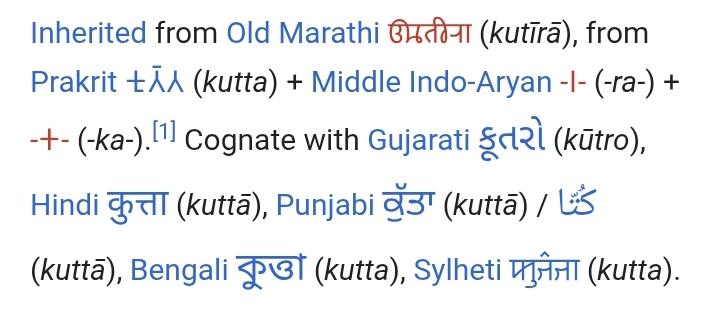
Article Origin of Marathi word 𑘎𑘳𑘝𑘿𑘨𑘰/कुत्रा

Post image
4 Upvotes

r/bhartiya_languages • • 15h ago

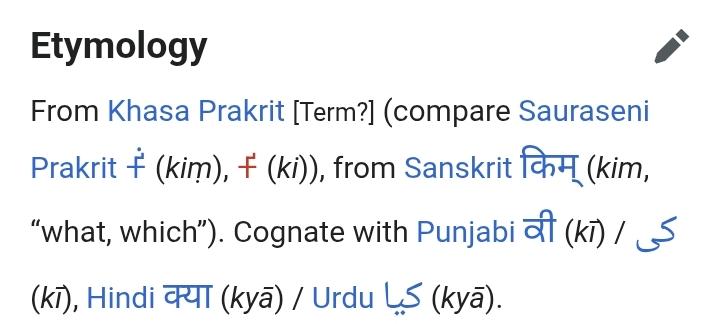
Article Origin of Dogri word 𑠊𑠳𑠪𑠹/केह्

Post image
4 Upvotes

r/bhartiya_languages • • 9h ago

Two Sangam Era Poets Hailing From The Ancient "Mysore"

1 Upvotes

Hey everyone,

I wanted to share a fascinating bit of history I came across while reading about the contributors to Sangam literature.

We usually associate Sangam (Koodal) poetry strictly with ancient Tamil-speaking territories - predominantly the regions what is now Tamil Nadu, Kerala, and Eezham. However, the literary corpus actually includes contributions from people living well beyond those borders - including a father whose official name is எருமை வெளியனார் - Erumai Veḷiyaṉār (Veḷiyaṉ of Erumai), and his son எருமை வெளியனார் மகனார் கடலானார் - Erumai Veḷiyaṉār Makaṉār Kaṭalāṉār (Kaṭalāṉ, son of Veḷiyaṉ of Erumai) both of their natives being Erumaiyur (Ancient Mysore).

What I find most intriguing about this is what it says about the cultural and linguistic landscape of South India over 2,000 years ago. It shows that Classical Tamil literary culture wasn't isolated within modern state boundaries.

  • The Father: Contributed 3 poems - Akanāṉūṟu (73), Puṟanāṉūṟu (273, 303)
  • The Son: Contributed 1 poem - Akanāṉūṟu (72)

There are two really interesting possibilities for who these poets were:

  1. Non-Ancient TN Tamils: They could have been Tamil speakers who are native to ancient Mysore region (them having an official name 'Erumai' renders it their native) who continuously learned Classical Tamil and kept the literary traditions alive.
  2. Local Non-Tamils: They might have been native inhabitants of the region who learned Classical Tamil and actively patronized and participated in its poetic culture.

Either way, it’s a great reminder of how alluring and prestigious Classical Tamil was in ancient world that a potential "foreign" father learnt it and also made his son learn it. It is also fascinating how interconnected ancient South India was, and how far the reach and prestige of Sangam literature extended beyond ancient Tamil Nadu.


r/bhartiya_languages • • 9h ago

Indo-Aryan A video on Angika made by ilovelanguages and I have some questions

Thumbnail
youtu.be
1 Upvotes

Angika is a language commonly spoken in Bihar that is often claimed as a Maithili dialect even though international organisations and Linguists disagree. It is rich in culture and literature. I really love how Andy not only talks about the language but also gives a brief about the culture and using a greater number of examples like the North wind and the sun and The wren is better for providing a more enriching experience and feel of a language.

My questions for Angika speakers:

  1. Bihari languages are getting 'hindified', as in undergoing loads of influence from Hindi. Could you feel any 'hindified' vocabulary in this video? If so, how much? Ik the UDHR probably would have a lot of it.
  2. I saw some vocab words had a tadbhav and tatsama pairing Ig. How many tatsama words are there in Angika?

r/bhartiya_languages • • 17h ago

Resource Numbers in Thadou

4 Upvotes

r/bhartiya_languages • • 1d ago

Question How do u say "Orange" in ur native language?

Post image
24 Upvotes

r/bhartiya_languages • • 1d ago

Article The language of the Maldieves... spoken in Lakshadweep?

Thumbnail
gallery
17 Upvotes

Mahl is a northern dialect of Dhivehi, the language spoken by the Maldieves. Mahl is spoken by the Mahl people, residing in the Minicoy island of Lakshadweep, India. It is pretty intelligable with the standard malé dialect of Dhivehi, but retains archaic features, like an unique pronounciation of the Dhivehi letter Shaviyani (ށ), which is normally pronounced as 'sh' but in Mahl is pronounced something in between 'r' and 'sh' (internet won't tell me more).

Unfortunately, the dialect is becoming endangered as education above the primary level on Minicoy is in Malayalam and English and Malayalam is the more dominant Language.


r/bhartiya_languages • • 1d ago

Tai-Kadai A word a day in Tai-Ahom

Post image
7 Upvotes

I find it very interesting that the word for cat is basically just the sound it makes, 'meow'. Amazing, huh! Ngai khen di!


r/bhartiya_languages • • 16h ago

Question What does word ಪೂಞೆ means in Kodava?

1 Upvotes

r/bhartiya_languages • • 1d ago

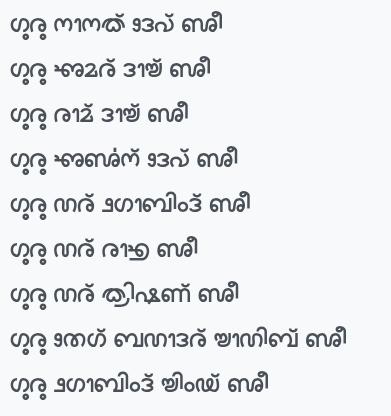
Resource Name of 10 Sikh Gurus in Tulu script

Post image
10 Upvotes

r/bhartiya_languages • • 1d ago

Question How do u say "what" in ur Kannada dialects?

7 Upvotes

r/bhartiya_languages • • 1d ago

Saree in Maithili is called Nua (नुआ)

3 Upvotes

Saree in Maithili is called Nuwa (नुआ) but alongwith it there is one more word, लुगरी (Lugari) — Everyday Worn / Household Saree

A classic rural word for an older, soft cotton saree worn while doing daily chores. There's a famous Maithili proverb about it: "नुआ नौ दिन, लुगरी बीस दिन" (Nuwa nau din, lugari bees din — "A new saree lasts nine days, a daily-wear saree lasts twenty").