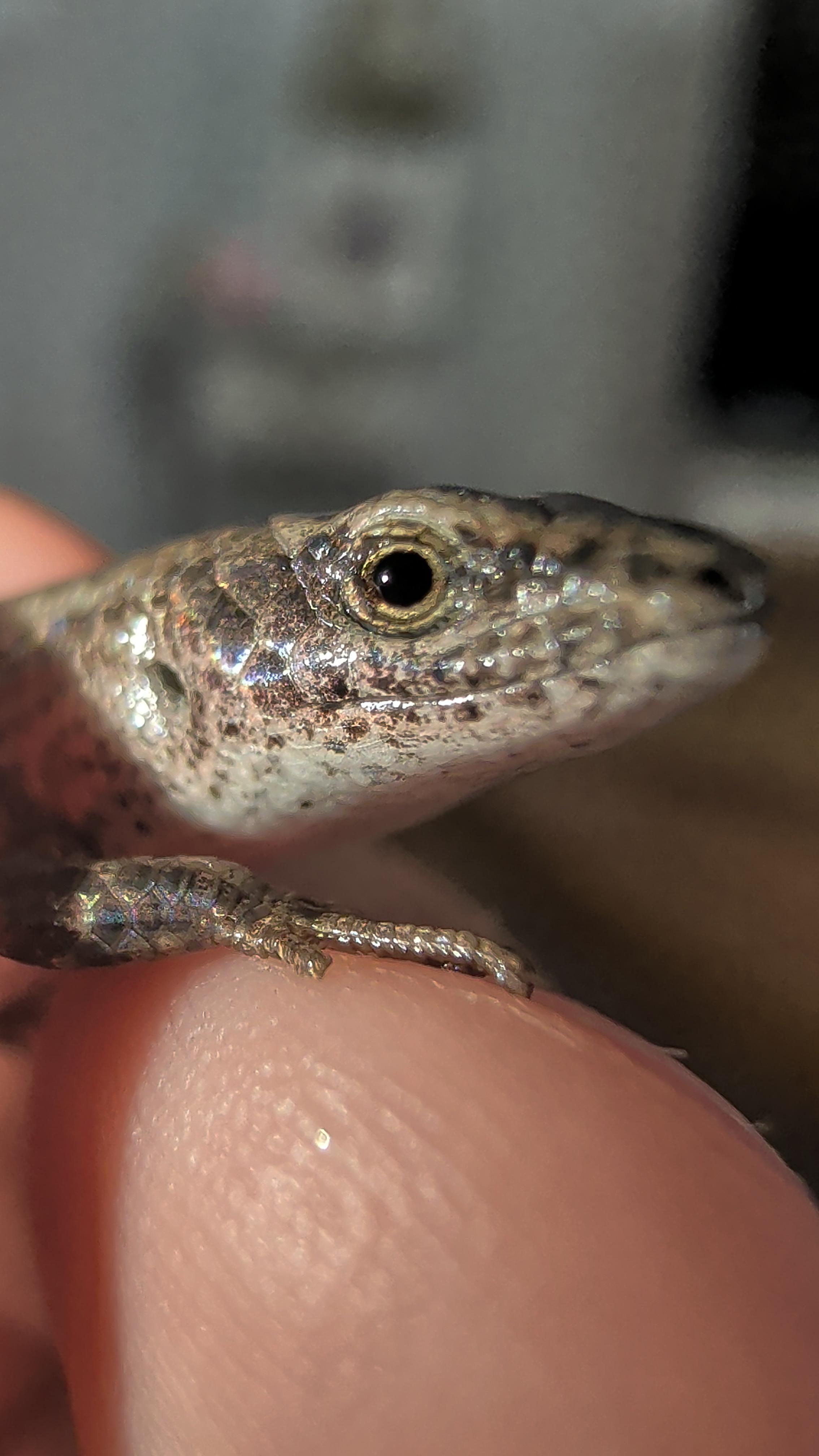
r/bluetongueskinks • u/Daves_Skinks • 14h ago
Education YEAR IN THE LIFE OF A REPTILE BREEDER: PART 16 - Every Life Deserves a Fighting Chance
68
Upvotes
Save A Baby, Dave A Baby
r/bluetongueskinks • u/FolkvangExotics • Mar 14 '26
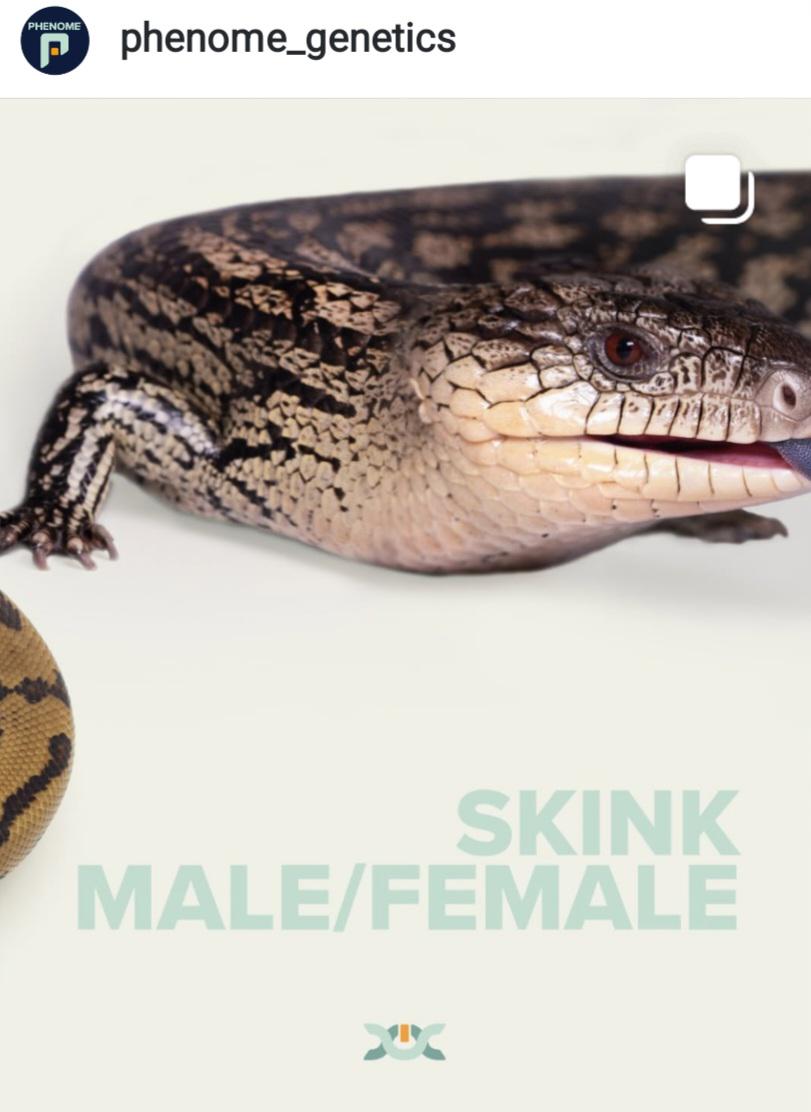
It's official! BLUE TONGUE SKINK MALE/FEMALE SHED TESTING is now available!
An absolutely amazing thank-you to Phenome.com for the production and all the other blue-tongued skink breeders that collaborated on this project! I am grateful to be part of this project as well.
Hit up https://phenome.com/product/skink/ to order your test today!
US-based company. Please look into your country's laws on Exporting/Importing sheds.
r/bluetongueskinks • u/FolkvangExotics • Oct 24 '25
Only their Australian cousins do - even then, not all of them decide to brumate.
I have made this a yearly reminder since many places online do not actually differentiate and it gets really confusing!
The following temperature information is gathered from multiple studies that recorded ground temperatures within Indonesia, Papua New Guinea, and Australia. If others have more recent (and therefore more accurate data), please provide the links and we will dig through and adjust!
Indonesian blue tongue skinks do not experience ambient temperatures below 70℉ (21.1℃). Indonesia/Papua New Guinea is a tropical climate that does not experience seasonal variation aside from “wet” and “dry” seasons caused by the amount of rainfall.
| Region / Population | Temp Min–Max (°F) | Temp Min–Max (°C) | Humidity Min–Max (%) | Notes |
|---|---|---|---|---|
| Papua New Guinea Peninsula (Trans-Fly & Peninsula lowlands) (Irian Jaya, AKA Papuan) | 73–96 ℉ | 22.7–35.5 ℃ | 68–100 % | Hot, humid tropical lowlands; humidity remains high even at night |
| Merauke region, South Papua | 72–98 ℉ | 22.2–36.6 ℃ | 60–96 % | Seasonal wet–dry cycles; some early dry season drops in relative humidity |
| Sorong (West Papua lowlands) | 74–95 ℉ | 23.3–35 ℃ | 70–98 % | Stable warm temps year-round; low night cooling |
| Aru Islands | 73–95 ℉ | 22.7–35 ℃ | 68–99 % | High canopy coverage; buffered extremes |
| Kei Islands | 75–95 ℉ | 23.8–35 ℃ | 72–100 % | Coastal and forest edge habitat |
| Ambon / Seram (Maluku) | 72–93 ℉ | 22.2–33.8 ℃ | 70–99 % | Strong diurnal relative humidity cycle, small temp fluctuation |
| Halmahera (North Maluku) | 74–94 ℉ | 23.3–34.4 ℃ | 60–100 % | Lowland rainforest floor and edge; high humidity |
| Tanimbar Islands | 75–97 ℉ | 23.8–36.1 ℃ | 62–95 % | Drier than Halmahera; more open woodland |
| Northern Papua rainforest interior | 72–91 ℉ | 22.2–32.7 ℃ | 78–100 % | More buffered temps, extremely high night humidity |
Due to the consistency in temperature in their tropical environment, Indonesian blue tongue skinks are active year-round.
The majority of Australian blue tongue skinks do not experience ambient temperatures lower than 50℉/10℃. Blotched blue tongue skinks, however, can experience as low as 45℃ based on the studies we found. This seasonal variation is why Australian species brumate. Some species, such as Shinglebacks, Blotchies, Westerns, and Centralians require quite low brumation temperatures to successfully reproduce. Too high of temps have caused reproductive struggles.
NOTE: WITH EXTREME HIGHS AND LOWS THESE SKINKS ARE HIDING AWAY IN SAFER TEMPERATURES. Also; Aussie skinks do experience some higher humidity, but these are MICROCLIMATES and not consistent year-round.
MAINTAIN TYPICAL RECOMMENDED RANGES!
| Region / Species (Common) | Temp Min–Max (°F) | Temp Min–Max (°C) | Humidity Min–Max (%) | Notes |
|---|---|---|---|---|
| Northern Territory (Top End, Arnhem Land) NORTHERN | 71–102 ℉ | 21.7–38.9 ℃ | 45–96 % | Seasonal wet–dry fluctuations; strong midday peaks, high humidity at night |
| Eastern Queensland (coastal) EASTERN | 68–97 ℉ | 20–36.1 ℃ | 50–95 % | Humid subtropical forest edges and open woodland |
| New South Wales (Sydney Basin) EASTERN | 59–95 ℉ | 15–35 ℃ | 35–88 % | Cooler nights, warm sunny days; high variability |
| Victoria & Tasmania (cool temperate) BLOTCHED | 45–86 ℉ | 7.2–30 ℃ | 55–100 % | Morning dew, fog common; basking critical for activity |
| South Australia / Western Australia (arid) SHINGLEBACK | 55–110 ℉ | 12.7–43.3 ℃ | 10–65 % | Very hot ground temps midday, humidity spikes pre-dawn |
| Southwestern WA forest WESTERN | 50–102 ℉ | 10–38.9 ℃ | 25–80 % | Ground shade buffers peaks |
| Arid interior (Spinifex plains) CENTRALIAN | 60–113 ℉ | 15.5–45 ℃ | 8–60 % | Extreme heat; uses burrows to escape |
| Nullarbor & semi-arid south SHINGLEBACK | 53–108 ℉ | 11.6–42.2 ℃ | 12–58 % | Pronounced daily fluctuation |
| Northern arid NT / WA WESTERN | 72–107 ℉ | 22.2–41.6 ℃ | 20–70 % | Recorded at ground level under spinifex |
| Central Australia (desert margins) CENTRALIAN | 66–111 ℉ | 18.8–43.8 ℃ | 10–55 % | Midday temperatures often exceed activity thresholds |
NOTE: WITH EXTREME HIGHS AND LOWS THESE SKINKS ARE HIDING AWAY IN SAFER TEMPERATURES. Also; Aussie skinks do experience some higher humidity, but these are MICROCLIMATES and not consistent year-round.
MAINTAIN TYPICAL RECOMMENDED RANGES!
Reptiles are ectothermic, which means they need to warm up via their environment. They need heat to digest food; they need heat for their immune system to work and to fight off infections; they need heat for literally everything regarding bodily function.
If you put any reptile that doesn’t naturally brumate into too cold of an environment to “force” brumation, those reptiles become lethargic and can get quite sick due to their dropped immune system. They naturally shut down to try and preserve resources, as they cannot do anything without their proper heat range. This is not brumation. This is a physiological stress response. This can be very harmful to them!
Arguably, Indonesian blue tongue skinks experience this physiological stress in response to temps that are too cold. If your Indo is showing “brumation” symptoms, the environment is most likely too cold, too empty, or the animal is sick.
Winter in the northern hemisphere is the equivalent of dry season in Indonesia/Papua New Guinea. This means that our winters are the breeding season for Indos. It is quite common for some skinks to go off of food during this time due to hormones.
Indo temps and humidity should be as follows:
Please let me know if there are any questions!
References are in the comments!
r/bluetongueskinks • u/Daves_Skinks • 14h ago
Save A Baby, Dave A Baby
r/bluetongueskinks • u/Small_OT • 10h ago

I’ve had this gorgeous creature for about three months now. She was never handled the first eight months of her life and I’m getting to the point where if I talk to her she doesn’t always run away. She still is very skittish (I’m assuming she’s wild caught/was never handled due to rehoming) any recommendations for helping her feel safer? She’s an indo in a huge bioactive and can get away when she wants with no problem and I never chase after her or approach if she doesn’t want it.
r/bluetongueskinks • u/Vieris • 2h ago
Northern here, her staple feed is leafy greens and bugs. Sometimes other vegetables like squash, carrots, etc. Occasionally, adding in egg, berries, reptilinks, repashy. I think I've used high quality wet dog food like twice.
With new diet recommendations for bearded dragons, rec 0 fruit at all, have you adjusted ratios for the skinks? They're obviously not the same animal but I'm curious if that's affected how you approach things. I don't know how much dental disease impacts skinks vs beardeds, their teeth shape seems so different as well.
It's the same with discouraging fruits in parrots now due to high sugar content in agricultural produce vs what one would encounter in the wild
Google ai summarized:
Key Scientific Literature on Tiliqua Stomach Contents
• Shea, G. M. (2006) and Shea, G. M. (1992) analyzed preserved museum specimens and compiled genus-wide records, showing that plant matter (fruits, seeds, flowers) and fungi appear more frequently than arthropods (beetles, insect larvae) and occasional carrion.
• Koenig, J., Shine, R., & Shea, G. M. (2001) investigated suburban Tiliqua scincoides, confirming an omnivorous diet consisting of gastropods (snails and slugs), beetles, larvae, wildflowers, berries, and fungi.
• Dubas, G., & Bull, C. M. (1991) studied the closely related shingleback skink (Tiliqua rugosa), detailing a predominantly plant-based intake of flowers, fruits, and leaves supplemented by arthropods and carrion.
• Webb, G. A. (1987) examined roadkill specimens of Tiliqua nigrolutea, similarly recording fungi, berries, and invertebrates in the gut contents
..adding those paper references so I can read up on em later too
r/bluetongueskinks • u/Upper-War865 • 18h ago

hello! We adopted this little buddy from an exotic pet shop a week ago. We named him Seamus and we were told he’s around 7 months old! The guy assisting us said he was northern, but this guy is definitely an Indonesian blue tongue.. I think he may be a halmahera but wanted to know your thoughts!!
thanks!!
r/bluetongueskinks • u/bugggcollector_ • 19h ago

This is my handsome northern blue tongue skink, he’s 4-5 years old (I’ve only had him 6 months). Recently he’s shown half his normal interest in food and from what I’ve read that’s normal for this time of year (I’m in Canada and it’s getting cold) but I wanted to double check that this is a normal behaviour his skinks? I’ve gotten him to eat but in much smaller portions, and yes his heat and humidity is the same as it normally is so he can digest. Overall he’s acting normal and isn’t losing weight of anything!
and I recently put in substrate after a quarantine period. I used 60% top soil and 40% plays and ROUGHLY and it seems too dry?? I have the same mix but 70% top soil and 30% playsand and for my two Leo’s as well and it’s also ALWAYS freaking dry. Should it be that dry for my skink? He has a humid hide that normally has spagnum moss but currently using paper towels, but his belly scales seem a bit rough so I’m worried the substrate is too dry. Would it be helpful to pour some water and mix it through his substrate 1-2x a week? I do mist a bit when the humidity drops below 40% (which is not often). It typically sits at 40-60%. Just double checking because he is my first skink and I want to make sure he’s getting the best care possible.
r/bluetongueskinks • u/Loser-Lainy • 21h ago
I have a northern blue tongue skink that I got over the summer this year. He’s usually a pretty good eater and I feed him once or twice a week. But, he hasn’t eaten a real meal now in 2 weeks. He’s been burrowed most of the time which is not unusual for him and he was out 4 days ago. But he was back burrowed by the time I got him food and didn’t come out to eat after that. He also just shed. I’m getting quite worried but I don’t wanna dig him up and make him upset. I just wanted to know if this was normal behavior for winter (I live in a colder area but my home should be the same temperature with his heat lamp)? And, if I should dig him out and make sure he’s alright or just wait it out?
r/bluetongueskinks • u/Mr-Marsupial • 2d ago

Her name is Tilli, I got her when she was newly hatched. I feed her mostly snails, crickets, woodies, super mealworms and boiled egg, but she’s never interested in any fruit or veggie I offer (not even blueberries or carrot).
Could anyone recommend me some greens that your BTS has enjoyed so far? I will try it all :) please and thank you.
r/bluetongueskinks • u/Least_Profession3082 • 1d ago
we have pretty strong right now and power went out for just a second and now I am wondering what I should do with that happens for my bluey’s light and heat lamp
r/bluetongueskinks • u/AsleepWoodpecker5295 • 1d ago
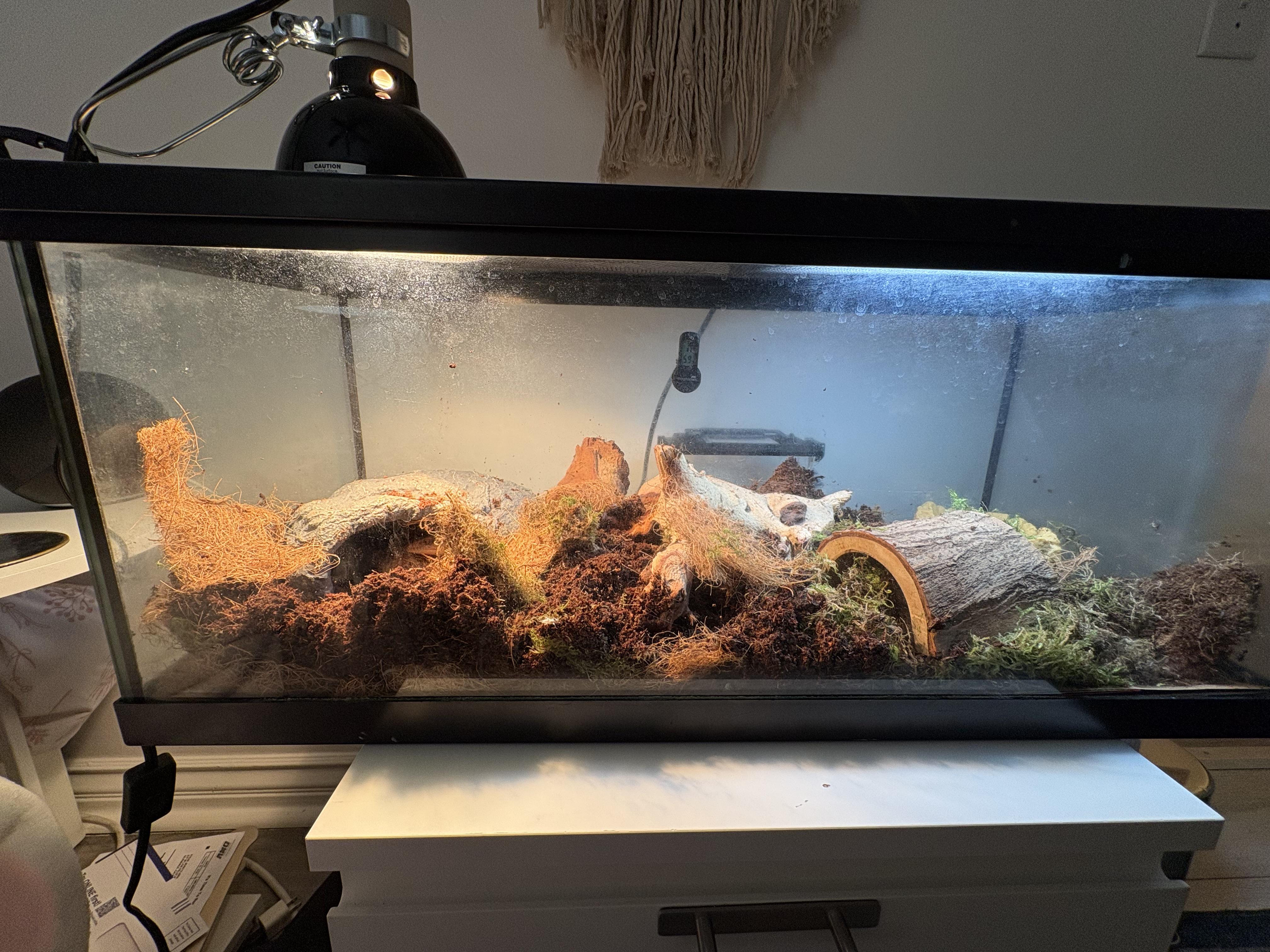
I just got him a week ago. Any tips for his enclosure? He’s a juvenile currently.
r/bluetongueskinks • u/Hefty-Animal-5730 • 1d ago
Hi there! I will be away from my home from tuesday to early morning sunday. No reptile shops near me board. I was thinking I could leave him with a timer and a lot of water. Will this be okay?
r/bluetongueskinks • u/ScoobersMcGhee • 2d ago

My boyfriend and I went to an expo today and found a really good deal from a guy who’s been breeding northern skinks for 30+ years, and it’s been onna my dream reptiles! We’ve decided to name him Pico (unsure about the gender yet, but we think maybe male)
Any advice would be appreciated, I’m definitely planning on adding some succulents and other decor once I can grab some from home (just moved into an apartment, his enclosure will also be off the floor in a couple days)
r/bluetongueskinks • u/Psychological-Bee908 • 2d ago
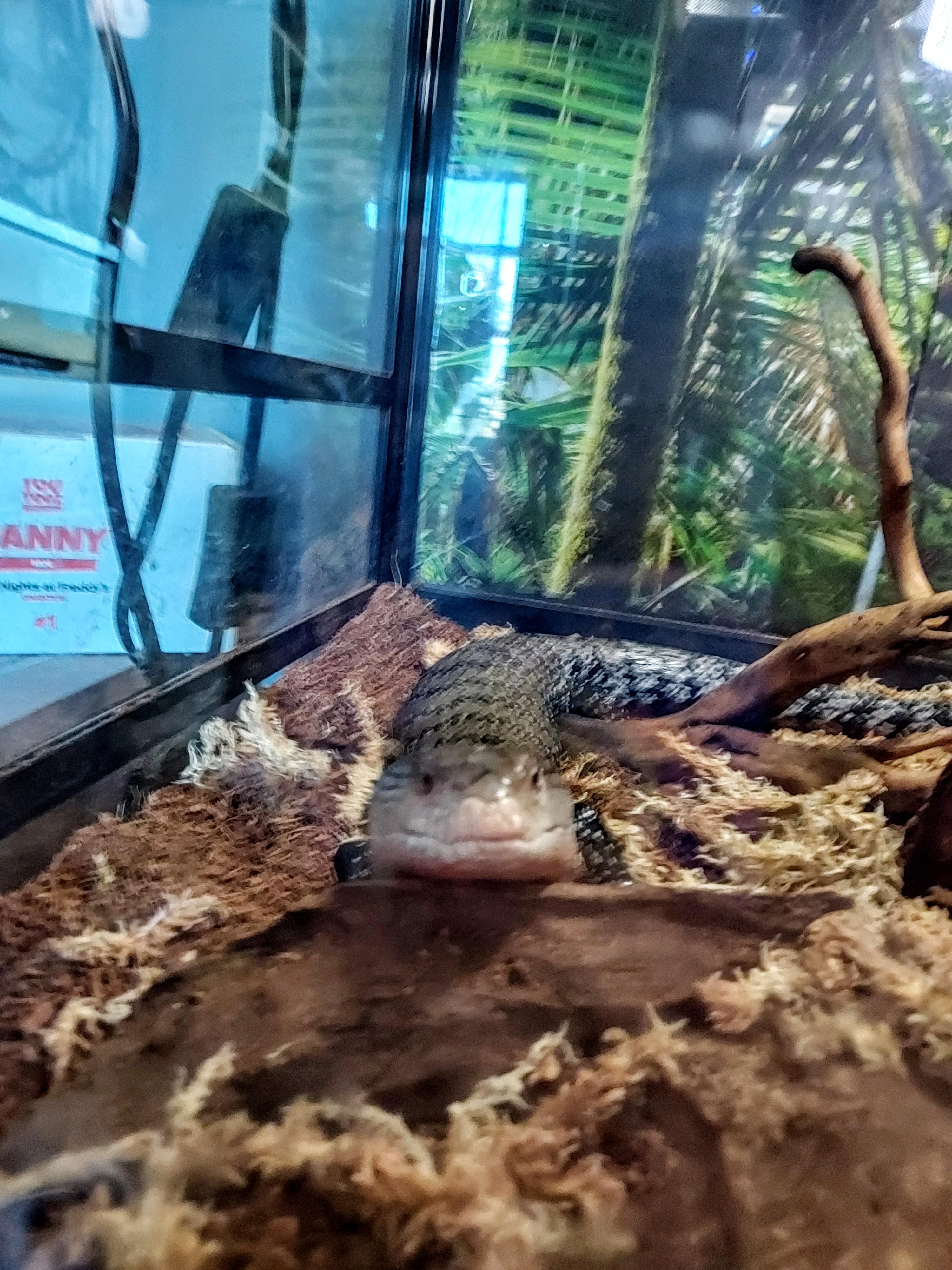
Title. I'm brewing in my guilt that I can't save every single Indo that are caught and transported in deadly conditions. Who knows what my baby boy had to endure before I found him??? I feel helpless.
On a lighter, he turns 5... At some point this year lol. He's come so far!! I'm actively working to upgrade his tank and stuff.
r/bluetongueskinks • u/666PSYCHOTIC • 2d ago

He's about 7 years old now. It's a major upgrade for him. I spent weeks researching and gathering supplies getting it setup. I think it came out beautiful. It's nice to see him exploring around in the many paths I made up for him. I've got one live plant on the left side that is thankfully growing well so far. So how did I do? Any ways I could make it better for him? Pic of the good boy as well.
r/bluetongueskinks • u/Fish_in_yo_cooler • 2d ago
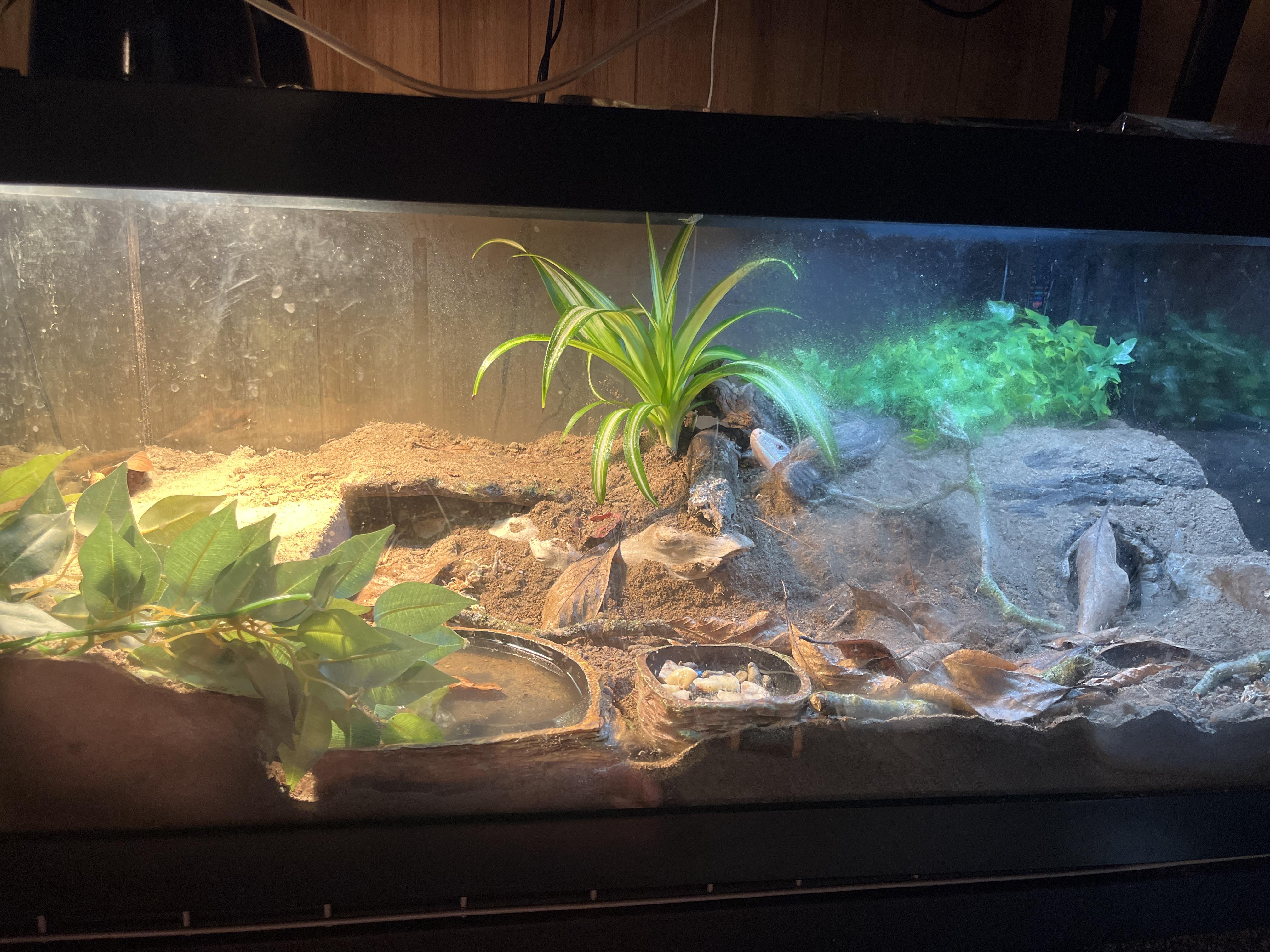
I’m new to blue tongues and this guy is my first.
I wanted to see what If there is something I could do better for his enclosure
Got his basking area to 95
I got him a nice big hide with sphagnum moss
And the sub straight is top soil mixed with sand and a little bit of coco quire.
I also added some dead magnolia leaves and a spider plant which he seems to enjoy.
r/bluetongueskinks • u/willsteavens_42 • 3d ago
I rescued him recently and know he’s a 7 year old Indonesian but am having trouble on the subspecies is this a Halmahera or Merauke? I did a lot of research and have had him not long and he’s comfortable eating out of my hand or with tongs. He seems to be in fairly decent shape for his neglect. It seems that his humidity was not regulated correctly and they said they only fed him insects. So far he loves pumpkin, squash, Banana, meal worms, Horn worms, I have been using calcium with d3 and the uvb they supplied me. I’m looking to replace his UVB asap! Please give me your best suggestions. He’s currently in a 4x2x2 I will be going bioactive and buying a 6x2x2. I’ve heard berries, grapes, snails are great so I will be trying those. He has lost all of his toes from previous owners but if anyone has any suggestions on how to help him in the future. All in all I want to give him his best life. Any words of encouragement or suggestions regardless of topic will be very helpul and appreciated.
r/bluetongueskinks • u/Commercial-Employ133 • 3d ago
i just got my first northern bts ~3 days ago!! i noticed a bit hissing and brushed it off but noticed it even happens when no one is around their enclosure? twice every minute or so? they’re on a mixture of reptisoil and forest floor and they burrow a bit. should i be worried???
r/bluetongueskinks • u/umbry232 • 3d ago

(old photo not as chunky anymore🙏)