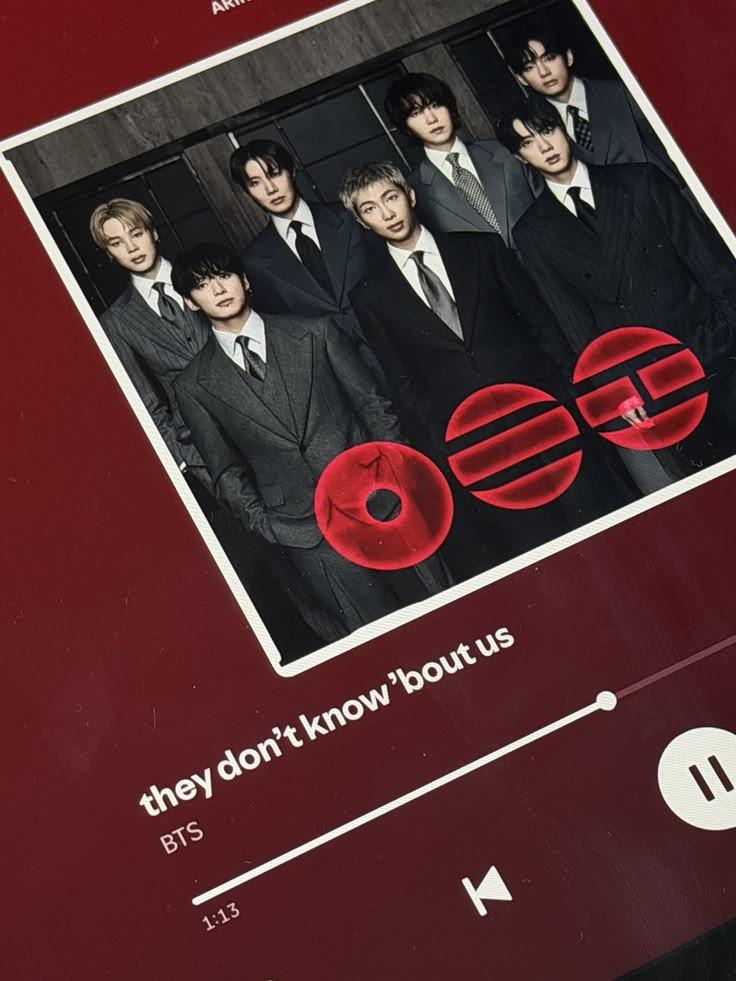
Overanalyzing this song way too late lol, but here we gooo (Numbers are timestamps for the lyrics/part of the song I am speaking of).
0:47 I think its expressing the frustration of trying to explain yourself to people who have already made up their minds about you.
I think this part could be interpreted as BTS expressing their frustration with constantly having to explain themselves to people who don't genuinely want to understand them in the first place. Especially Namjoon's lyrics saying "Oh it's hard and we cannot explain. Everytime we tryna explain we find that-" followed by the chorus of "They don't know bout us".
Like how people constant questioning what makes them different, while everyone seems to have already decided on their own explanation for BTS's success. In my opinion it also connects with how they've been treated by certain media outlets, critics, and antis throughout their career. No matter how much they try to explain their artistry, their intentions, their identity, or what they stand for, it doesn't necessarily matter when the person listening has already decided what they want to believe.
You can't explain yourself to someone who has no intention of listening.
So when the chorus comes up, it's almost like they've accepted that some people will never understand them, and they don't need to spend their entire lives trying to prove themselves to those people. They know who they are. Other people's assumptions don't change that. "They don't know bout us" "Damn right." And then moving on to the next lyrics after accepting this fact.
1:50 being the pedestal, Asian exceptionalism, and the idea that they're somehow unbreakable. Hobi starts talking about how they're considered "special among Asians" and portrayed as these almost heroic and untouchable figures, I feel like it is imitating the way both the media and sometimes even ARMY tend to portray them. Being described as special among Asians almost implies that Asians, generally speaking, aren't expected to possess those same qualities in the first place. BTS are treated as an exception to their own race rather than simply being recognized as talented, successful individuals. And I think this connects with the way they've experienced racism throughout their career.
Remember that BTS have actually spoken publicly about experiencing discrimination as Asian artists. In their 2021 statement during the Stop Asian Hate movement, they recalled being mocked for their appearances and even being questioned about why Asians spoke English like it was weird for them to even be intelligent beings with feelings, they also admitted that these experiences made them feel powerless and affected their self-esteem.
There is a pretty interesting contradiction there that I enjoyed a lot! They're celebrated as some extraordinary exception to the expectations placed on Asians, but they have also had to deal with the very same racial prejudice that other Asian people experience.
And then there's the second part of this interpretation: the way people idolize them to the point of treating them as if they're almost impossible to hurt. I think this applies to both the media and certain parts of the fandom. Sometimes BTS are spoken about as though they're untouchable, superior to everyone else, or somehow immune to criticism, exhaustion, and insecurity but the response in the song rejects that entire image. "We can't relate" They don't relate to being portrayed as these invincible, heroic figures because they're just seven ordinary people. (As hobi sings in the lyrics.) They're human beings they experience things the same way the rest of us do, and being incredibly successful doesn't suddenly make them immune to hurtful comments or the pressure that comes with fame. I also think that this isn't necessarily criticism directed only at antis or the media It could also be directed at fans who unintentionally dehumanize them through excessive idolization.
We can admire them, appreciate their achievements, and be proud of them without pretending they're somehow above the rest of humanity.
2:02 The whole "old BTS" discussion and the idea that they've somehow lost themselves.
I feel like this section could also be directed toward people who constantly complain about BTS changing and insist that they want the "old BTS" back. And this discussion has existed for years, even before ARIRANG. I think a lot of this criticism became more noticeable around the release of Dynamite, Butter, and Permission to Dance. Those three English-language singles were definitely a departure from the Korean-language, hip-hop-heavy music that originally established so much of BTS's identity and sound.
However, I think it's important to distinguish between changing as artists and actually losing your identity. The circumstances surrounding those releases were also more complicated than people sometimes make them out to be. The pandemic had completely disrupted their ability to perform and connect with audiences, and BTS spoke about wanting to give people something cheerful and hopeful during an incredibly difficult time. At the same time, RM acknowledged the pressure to maintain their momentum when live performances were no longer possible. Not all the members initially felt the same way about moving toward English-language releases, either. So I wouldn't necessarily say they all disliked those songs or that the company simply forced them into it like some Army claim but I do think those releases created a very specific perception of BTS, especially among people who weren't familiar with their earlier music. And honestly, I don't think BTS has ever been a group that stays musically frozen in one place. Their sound has evolved, their experiences have changed them, and they've explored so many different genres throughout their career. But that doesn't mean they've lost the core of who they are.
That's why I find the response in this section so interesting because instead of just denying that they've evolved, it feels more like they're questioning why people interpret that evolution as them becoming entirely different people.
They feel the same. (Literally saying "We feel the same"). And Tae's part at 0:25 being "They keep asking what was different, I tell them, I don't know either." And I think ARIRANG itself makes this even better since the album revisits elements of their original hip-hop identity, but through the perspective of seven artists who have grown considerably since their debut. It's not necessarily an attempt to recreate their past, but to bring those roots into who they are now.
Then we ge the chorus again "they don't know bout us" you can hear the other members in the background singing it aswell followed by Tae and Jungkook essentially agreeing with him "damn right".
At that point, I interpret it as a final dismissal of everything people have been saying about them. Whether it's the media's assumptions, the public's misconceptions, the pedestal people put them on, or the constant accusations that they've changed, none of those things necessarily reflect who BTS actually are. People can have their opinions about BTS, but that doesn't mean they actually know BTS.
That's my interpretation, anyway. I might be overthinking this entire song I have no movies to overanalyze lol.