https://canadiandimension.com/articles/view/the-far-right-is-armed-should-the-canadian-left-be-too
As ‘end times fascism’ looms, socialists weigh the case for armed self-defence.
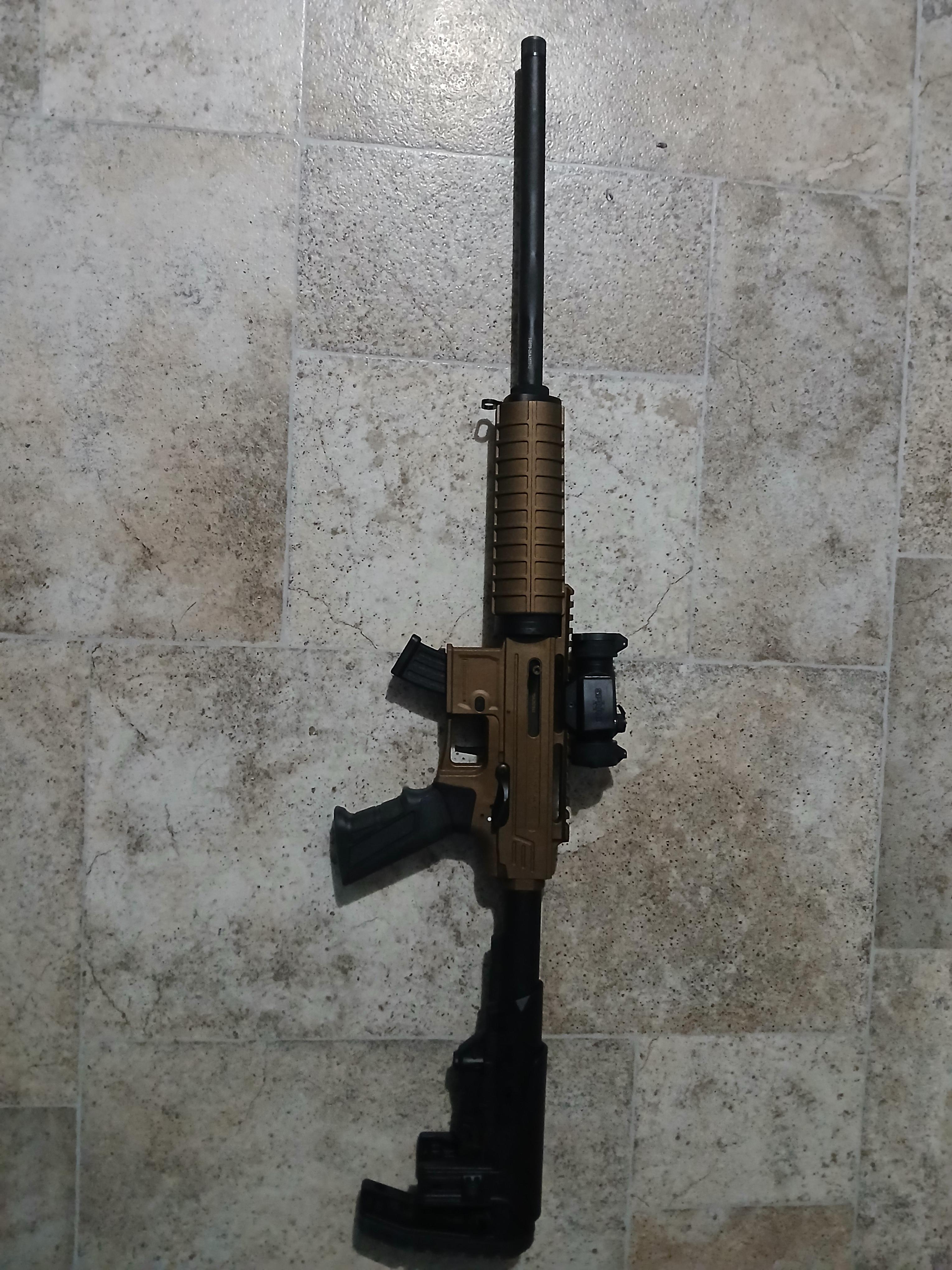
On a Sunday in late June, beneath the sprawling prairie sky west of Red Deer, ten members of the Canadian Socialist Rifle Association (CSRA) gather on public land to shoot. Some lie on tarpaulin or kneel in the grass commando style, while others sit in folding chairs waiting their turn. Then, one by one, they shoulder their firearms, settle their sights on the concentric black-and-white circles in the distance, and squeeze their triggers. The shots ring out across the foothills, momentarily drowning out the chatter of other members eating at a nearby camp.
On the surface, it’s an odd tableau. The politics of firearms in Canada have been overwhelmingly associated with the political right since the passage of the Firearms Act by Jean Chrétien’s Liberal government in 1995, which mandated licensing, a national registry, and stricter background checks. But on this Alberta range, as in other places across the country, the old political boundaries around guns are beginning to erode.
According to recent data published by the RCMP, more Canadians than ever are obtaining firearms licenses, and this general trend is reflected in the memberships of groups like the CSRA, which has seen an uptick over the past year or so. It now counts over 600 non-dues paying members across the country. The organization stresses it is not a militia and forbids its members from advocating for illegal actions (Section 34 of the Criminal Code permits reasonable force in self-defence, but carrying a weapon for that purpose can create legal risks). Rather, the CSRA says it exists to provide marginalized communities and the working-class with the education and knowledge to be “effectively and legally armed.” The group attributes its membership growth to a greater social media presence.
But interviews with some left-wing licence holders point to another driver: increasing anxieties over the spectre of a resurgent far-right amid deepening economic insecurity, the unchecked expansion of artificial intelligence, climate breakdown, and the growing threat of war.
This turn toward firearms is one of numerous, sometimes contradictory, responses emerging as socialists grapple with a deepening political crisis across North America and beyond. As Naomi Klein and Astra Taylor write in their new book End Times Fascism: And the Fight for the Living World, “Fascism’s resurrection caught a great many of us off guard, and now that it is surging again, many seem equally unclear about how to effectively combat it.”
History teaches us to always be prepared
Norman (we are not using his real name to protect him from reprisals), a heavy-duty mechanic and one of the organizers of the Alberta CSRA event, was familiar with guns from an early age, having grown up on a farm. Yet, he explains, it wasn’t until 2017—when he watched white supremacists march through Charlottesville, Virginia chanting “Jews will not replace us”—that he began thinking seriously about owning one.
At the time, Norman was reading about the brutal suppression of left-wing movements by US-backed right-wing dictators Augusto Pinochet in Chile and General Suharto in Indonesia. He argues that these leftists “were eradicated as a result of not having the capabilities to defend themselves, regardless of whether they believed in violent class conflict or not.”
would protect Canada’s sovereignty against the US because the two countries’ “military systems are so hopelessly intertwined.” In the event of a US invasion, he believes, a “détente agreement” would be reached to manage annexation, since that would work “better for capital.” Civilian resistance would then be repressed by both states.
Out west, despite the result of the Alberta referendum and the US midterms, Norman is still concerned that Washington may eventually try to capitalize on the small but vocal movement of far-right Alberta separatists and use the province as “a point of entry” to begin annexing Canada. He also believes, however, that in this event, it would be futile for Canadian leftists to arm themselves against the world’s most powerful military.
Author and journalist Vincent Bevins has written extensively on how left-wing movements succeed and, even more so, how they are crushed, in If We Burn: The Mass Protest Decade and the Missing Revolution and The Jakarta Method: Washington’s Anticommunist Crusade and the Mass Murder Program That Shaped Our World. Asked about the feasibility of armed resistance, he is blunt: “if the US military really believed that there was a situation in which their order… is being overthrown, they would come after us and we would lose.”
the tactic’s efficacy was short-lived: after the Panthers’ armed appearance at the California State Capitol in 1967, lawmakers swiftly passed the Mulford Act, restricting the public carrying of loaded firearms (except by police and soldiers). In the years that followed, much of the party’s leadership was killed, imprisoned or driven into exile.
The 1990 Oka Crisis, in turn, saw Mohawk protesters confront the Québec police, the RCMP, and eventually the Canadian military over plans to expand a golf course onto land that included an ancestral burial ground in Kanesatake. The 78-day standoff began with a police raid during which an officer was killed. Weeks later, a 14-year-old Mohawk girl was stabbed in the chest with a bayonet by a Canadian soldier. The confrontation led to a significant, if incomplete, political concession: the federal government purchased the disputed land and opened negotiations to transfer it to the Mohawk community. More than three decades later, the land remains federally owned.
landscape. And both acknowledge that it could take years, if not decades, for the left to become formidable and organized enough to effectively protect communities from far-right threats, whether from within or without Canada’s borders.
For now, the rifles of Canadian socialists mainly serve as objects of debate. On the Alberta range, their barrels are trained on paper targets and the threats they are meant to contain remain distant. No one is preparing to repel an imminent American invasion or expecting to defeat the far-right in a shootout.
In the end, as Bevins argues the question of whether the left should be armed is not a moral but a strategic one. “We’re confronted with the terrain of possible struggles, all the tools available, and you get to select… how do you want to fight and where are you most likely to win?”