r/CIVILWAR • u/SolidTiger6302 • 1h ago
Grateful for an Old Salt
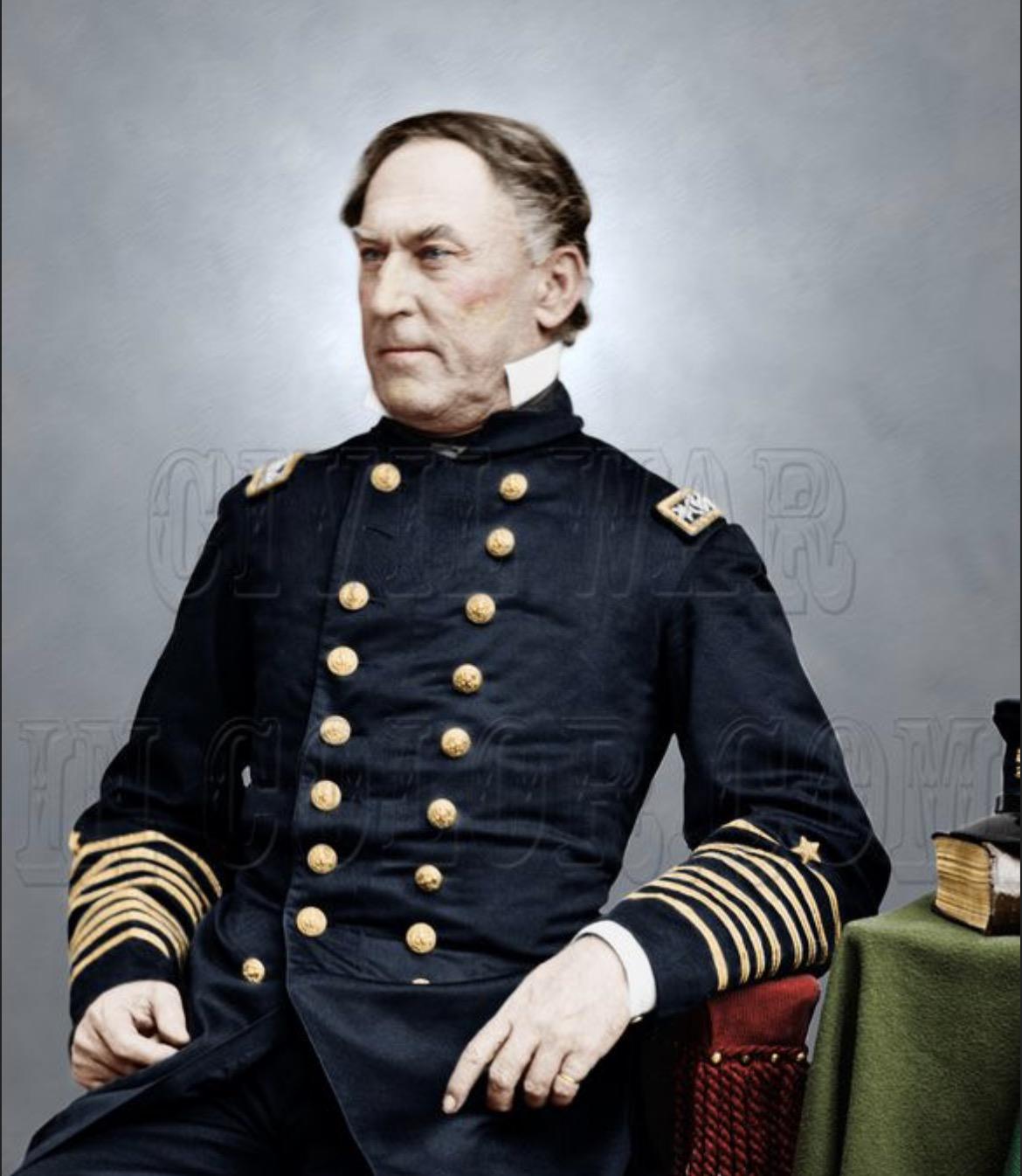
Today, the day after Thanksgiving, I’m grateful for David Farragut - one of the great stories of 19th century American history.
James Glasgow Farragut was born in 1801 in Tennessee. His mother died shortly thereafter, and he was raised by a neighbor - Commodore David Porter.
Commodore Porter became famous in the early years of the US Navy. He fought the Barbary pirates in the Mediterranean. He also fought during the war of 1812. He captured numerous prize ships, and he put the young Farragut, who was sailing the Pacific with him as a midshipman, in charge of one of them. So at the age of 11 or 12, James Glasgow Farragut was captaining a whaler that had been captured as a prize.
What was I doing when I was 11 or 12? 🤔
In honor of Porter - his mentor, he changed his name from James to David; so that by the time of the Civil War, the 60 year-old captain was known as David Farragut.
Farragut lived in Norfolk; and when Virginia seceded from the union, most of his family rebelled against the USA. He refused to do so, and he did it stridently. He said he had sworn an oath to serve the United States of America, and he would honor that oath. It forced him to move away from Virginia to New York. Still, he was not fully trusted by the leaders in Washington since his family was so disloyal.
However, he won over the leadership and by 1862, he was in charge of the attack on the largest city in the Confederacy - New Orleans. New Orleans had a population of over 160,000. That was bigger than the next five largest rebel cities combined - Charleston, Savannah, Richmond, Mobile, and Memphis. It was by far the most important city in the Confederacy with regard to population and economic clout. Only New York was a bigger port city in the USA. New Orleans was also a banking center, and it controlled the Mississippi.
It was protected by two large forts, but Farragut led his attack squadron right past both of them. It was a daring move, and it was very dangerous. In addition to the forts and their guns, he also faced the confederate navy; and he faced fire rafts and a blocking cable strung across the river, hooked up to numerous boats. His own ship was hit by a fire raft and ran aground. It was only saved when one of his men exploded the raft with some of the munitions on board the ship. Others put out the fires and got the ship back into the water.
During much of this, he had climbed up into the mizzen to watch the battle and oversee the ship. He did not come down until one of his men told him it was dangerous to be up there. It’s reported that shortly after he came down, that portion of the mizzen was struck and wiped out.
Through this fiery battle, he succeeded, and many of the men who fought with him said it was one of the most daring attacks in the history of the Navy.
His foster brother - David Dixon Porter - was in charge of mortars that attacked the forts and helped him run the gauntlet and capture the city. Some historians say this was the fatal blow to the Confederacy. Others disagree, but everyone agrees that it was a severe blow – and it was unexpected.
Later, in 1864, Farragut led a similarly daring attack on Mobile. He was warned about how the bay and river were blocked with mines – called “torpedoes” in those days.
As he did in New Orleans, he brushed aside the fearful objections. Nobody knows if he really said, “Damn the torpedoes. Full speed ahead!” But that’s where the statement came from.
Moreover, that is certainly what he did – full speed ahead, whether it was taking command of a British whaler when he was 11 years old, capturing the largest city in the Confederacy, winning the battle of Mobile Bay, or climbing up into the rigging during combat when he was 60 years old!
Congress created the rank of full admiral for him in 1866. In other words, he became the first true admiral in the US Navy.
His story is known by few nowadays. I’m thankful that I’ve had the opportunity to become one of them.