r/cronometer • u/letmeseeitman • 11d ago
Question about TEF Setting
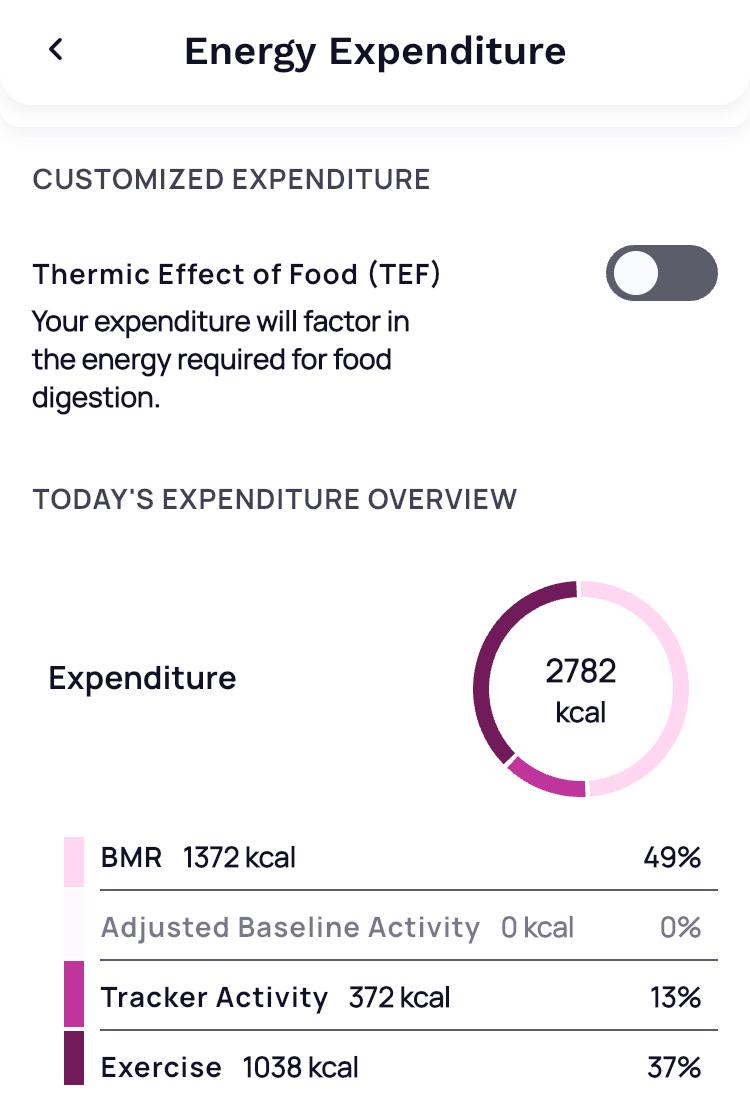

Just had a question about TEF Setting. I have had it off all this time. Have I been undercounting my daily expenditure all this time? Have I been unintentionally creating a greater deficit than what I wanted and thus could’ve been eating a little bit more food everyday?
Do you guys have this setting on or off. What’s the moderators’ take on this setting? Should we have it on or off, and would it be wise of me to turn this on now or just keep it off since I’ve had it off since I started using the app?
3
Upvotes
7
u/InnesPort 11d ago
It does indeed take energy to burn the food you eat, so that raises your expenditure.
Most people using the app are trying to lose weight, so I think that’s why the developers have it turned off by default, and most people leave it off to give themselves some buffer.
But, it’s a good idea to turn it on if you want to zero in on a more accurate expenditure or are trying to maintain or add weight.
In my personal experience, I didn’t know what it was when I started. And for many months I couldn’t figure out why I was losing faster than the weight goal I set. Turning it on did get me closer to that deficit. I’ve since gone into a maintenance and now I’m in my first bulk and everything has been accurate and consistent in my results.
1
u/CronoSupportSquad Crono Customer Support Team 10d ago
Your digestive system has been clocking in this whole time, even with the setting off 😄
TEF is the energy used to digest and process food. Turning it on adds an estimate of that expenditure to Cronometer—it doesn’t change what your body burns. Cronometer’s guide confirms it’s optional and off by default, but doesn’t say that’s specifically to create a weight-loss buffer.
So yes, you may have been burning more than the app showed, and your deficit could have been larger than intended. But it isn’t guaranteed: food logging, activity estimates and wearable readings all introduce uncertainty. Leaving TEF off might happen to work well for someone’s setup, but it won’t reliably cancel out a watch’s errors.
The comments about TEF depending on how much and what you eat are right. It’s separate from BMR, which represents your baseline needs at rest.
You can absolutely turn it on now, there’s no need to keep it off just because that’s how you started! I’d use your weight trend over several weeks as a reality check:
On the age comment: some research has found lower TEF in older adults, but lower doesn’t mean zero, so that alone doesn’t justify switching it off. (Study) I’d also avoid a blanket “GLP-1 users should disable it” recommendation.
Think of the toggle as another estimate to help fine-tune things, rather than a guaranteed daily snack allowance 🍪
Hope this helps!
Michelle, Crono Support Squad
1
u/negative-nelly 11d ago
I use a Garmin watch for tracking and find my stuff more accurate with it off.
1
u/Zealousideal_Eye8277 11d ago
I'm confused why that isn't included in the BMR
1
u/static34622 11d ago
I leave it off. With the inaccuracy delta wearables have leaving this off is an attempt to balance that delta.
0
u/damewang 10d ago edited 10d ago
I believe that TEF is reduced with age. I’m not sure if the app’s computation considers age, and if not older folks might want to switch it off.
Also, I think GLP-1 drugs can reduce TEF. That’s why folks on these medications often feel chilly