r/econometrics • u/GayTwink-69 • 38m ago
Is Computational Economics a good journal for an undergrad's first publication?
It's only Q1 by citescore, Q2 in every other metric and B in ABDC
r/econometrics • u/GayTwink-69 • 38m ago
It's only Q1 by citescore, Q2 in every other metric and B in ABDC
r/econometrics • u/No-Customer4385 • 4h ago
Hello everyone, I’m trying to find a good bachelor’s programme in EU which is suitable for Econometrics master’s uni in Norway/Denmark. What would you recommend? Applied Economics, Applied Mathematics/Mathematics..? I know that there are great BSc Econometrics programmes in the Netherlands, but I am not from the EU, so that would cost a lot. I’m ready to spend more money on Master’s, but I see no point in doing so for BSc. Would be really thankful for answers.
r/econometrics • u/ActiveProgress3288 • 5h ago
Hello, I would like to know the materials and pathways as economists you used to get acquainted with ML methods that economists usually use..
I'm from a developing nation where most economists haven't acquinnted themselves with how ML can be used in economics.
r/econometrics • u/Sousuke511 • 3d ago
Hello everyone, hope you are having a great day.
I would like for some recommendation on books that treat causality in a macro setting as The effect or Causal Inference: The Mixtape. I have some background in econometrics, but mostly old school, where all we cared was having the perfect regression, and each coefficient was treated as causal.
I've updated myself with the previous books in micro settings, and I've read about the difficulties in macro, that are kind of addressed with VARs. I am currently reading Structural Vector Autoregressive Analysis by Kilian and Lutkepohl (2016) and while I do understand some of the explanations, the order and how is presented are a bit confusing/hard for me. As an example, I (think I) understand that the Wold theorem is important, because its how Impulse Responses are created, but it is not that clear what is the use of the theorem when they are presenting that for the first time.
Anyway, is there any book or video or lecture that could help me with filling that gap in knowledge in VARs?
r/econometrics • u/NNguy97 • 3d ago
I built a forecast for Sydney petrol prices and ran into something I'd like opinions on.
The model says "fill now" or "wait" each day. Over the last 12 months of walk-forward testing it was right 72% of the time. That sounds good until you notice that prices fall slowly most of the time and jump suddenly, so just saying "wait" every day is right 48% of the time. Over the full 2021–2026 backtest, it's 83% against 63% for always-wait.
So I report it against the best constant call, not a coin flip. For the price itself I compare MAE against a no-change forecast (4.9c vs 11.3c at 7 days for unleaded).
Is the best-constant-call baseline the right one here, or is there something better for a three-way call (up, flat, down)? I've thought about a skill score against climatology, but I'm not sure how that works with three classes.
(Project's at checkbowser.app if you want to see how it's presented.)
r/econometrics • u/justastudent002 • 3d ago
Hello there!
I'm attending an advanced causal inference course and I have to do a project work on Stata. As of now I have 0 ideas on the topic. The professor suggested to find a policy and start from there, but I'm having issues with finding a decent dataset.
If it was environment or climate related somehow it would be awesome since I'm enrolled in environmental economics (it's not mandatory though since the advanced course is elective). Any idea? thanks in advance 😄
r/econometrics • u/EOJ_me • 4d ago
working on a small project. i have about 4 months of daily 24h forecasts for btc from a crowd/market source (a probability for each price range) and the actual closes. i also have my own AR-GARCH forecast for the same days.
the question is simple: does the crowd forecast hold information my model doesnt?
ideas so far:
- forecast encompassing test, regress the actual on both forecasts and see if the crowd one gets a weight
- compare log scores of the full distributions, then a diebold mariano test on the difference
- just add the crowd mean as regressor and see if its significant
not sure which is right for distributions instead of point forecasts, or if i'm missing something obvious. any pointers appreciated
r/econometrics • u/Alternative_Room8500 • 4d ago
Hello, I’m planning to get ready for the economic consultancy interview? And I need to know some econometrics ? can someone recommend me good courses or materials that I can use to start getting proficient ? Thank you in advance !
r/econometrics • u/Maximum-Panda5866 • 7d ago
r/econometrics • u/Remote_Syllabub3812 • 7d ago
r/econometrics • u/happypeanut-t • 9d ago
doing a small project on 24h interval forecasts for btc. what i keep seeing, with my own GARCH(1,1) and with the other forecasts i compare against: most days the 80% interval is fine, probably because btc moves sideways most days and vol clusters. almost all the misses come from a handful of big jump days.
so coverage over the whole sample looks ok, like 78-82%, but on the top 10% vol days its closer to 40%.
questions:
- is GARCH with t errors still the standard answer, or do people use jump models or realized vol (HAR) for this now?
- is it even fair to judge a 24h interval on jump days, or should those be scored separately?
- has anyone tried mixing a GARCH band with a market implied one?
r/econometrics • u/Worth_Ad_2142 • 10d ago
Hi all, this post is quite long, just a heads up!
I am thinking of applying for a phd in economics or econometrics 2028 in germany. The applications start next year.
My background is not in econ I did a bachelors in commerce with accounts and finance specialization and am currently in the last yr of my masters in commerce.
I decided to do a phd when starting masters but I didn't know much about how the phd works. When I was looking into topics that interests me I thought why not test economic theories with statistics (our program covered basics of both). Then i stumbled upon econometrics and I really loved it.
I realised I need to have a masters in economics and because of personal reasons I cannot do another degree after completing my m.com as I would not have any income to support it. I applied for a MA economics degree in ignou. For those of you outside India its a government institution which is recognised and a distance learning college. I got accepted into ignou but while reading through the material I realised its mostly on par with a bachelor level economics and is not rigourous enough for a phd. The ma is recognised in anabin database even in odl mode, the college too although Idk how the admission commitee will view it. The degree will still help with the credit deficiency side.
So now I can either apply for a masters in economics or even a research masters, but the only con is that i wont have enough money to cover the living expenses for two years in germany, the only way is to get a loan.
Another thing is that I was thinking of studying the syllabus of lse's msc econometrics syllabus on my own through mit ocw or online courses as lse's syllabus is preparing the candidates well for a phd, and do research on the topics i learnt to show that I do know the stuffs.
So is doing the self studying worth it or is the masters route worth it for the long run?
I know the post was long and thank you for reading if you reached here! My long term goal is to become a policy analyst, work with macroeconomic data.
r/econometrics • u/tessailluminas • 10d ago
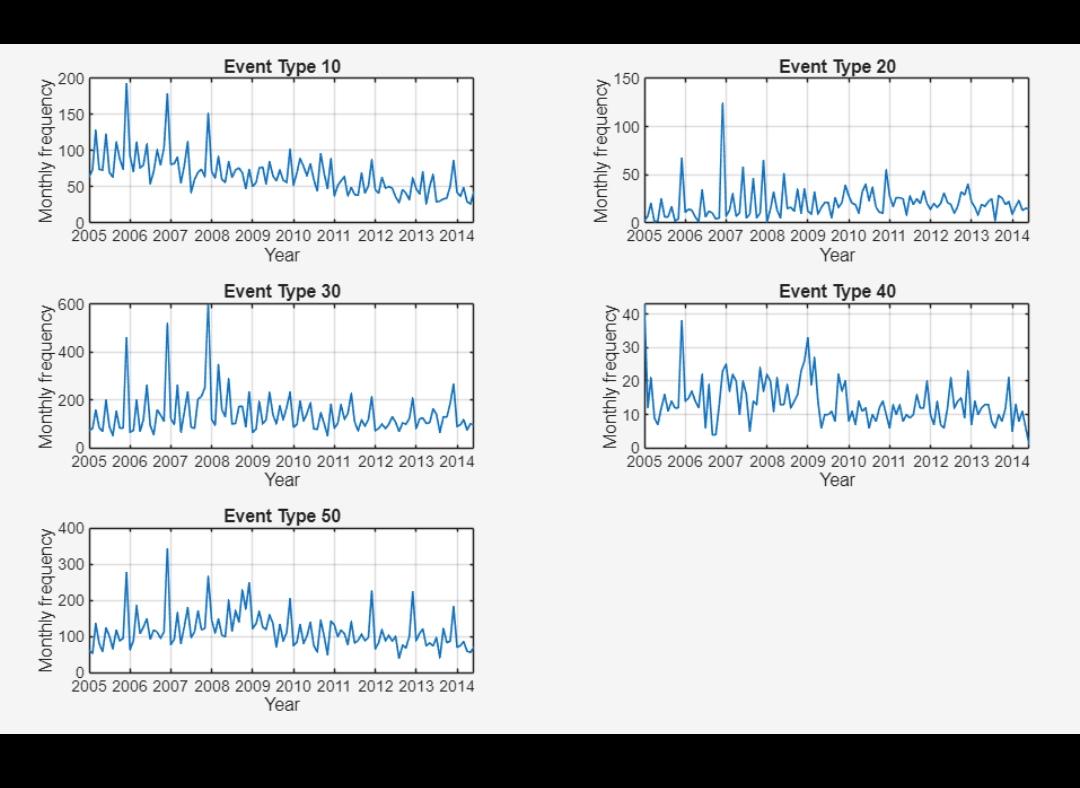
Hello, my knowledge in this topic is very limited so I have several things I'm not clear with. My dataset consists of State and Year with one dependent variable and a few independent variables. Let's say I have obtained the values for all variables, except for State X where the GDP (independent variable) figures are not available. Is there any way to handle this or do I need to remove entirely State X in my analysis? The GDP of that state is available very recently, starting from year 2024 (which isn't included in my analysis).
I also tried running panel regression analysis using R with missing values on State X and the software automatically removed the observations. I got significant p-values for pooled OLS and FE model, but using Hausman test, RE is preferred. Would RE be a valid model? In previous studies, FE is always a favourable model. How do I choose the best model?
r/econometrics • u/Academic_Initial7414 • 11d ago
Hi guys, I work in energy sector and i have some data about generaton from some plants. Some of the plants are mixed (solar, diesel) or just one kind of energy (hidroelectric, solar), so my question, how would you make a kind of monitoring system? Would you use a kind of overfitted model with confidence intervals, or would you look for the best forecast model?
r/econometrics • u/camerongreen95 • 12d ago
hey everyone, sharing this because it covers a question that comes up quite often in time series modeling: when do more complex models actually perform better?
packt publishing is running a hands on workshop comparing traditional forecasting methods with newer machine learning approaches. what gets covered:
it is led by Graeme Davidson, Lei Ma, and Jeffrey Tackes, over 2 days online, November 28–29, starting at 10:30 AM ET. the models are evaluated using the same retail dataset.
Full details and the agenda are here
happy to answer any questions about what gets covered.
r/econometrics • u/Substantial-Age-2733 • 13d ago
I have a final round predoc interview with DIL. They asked me to bring a pen and paper, a calculator only to the interview. What sort of questions should I practice? Any suggestions will be helpful. Thank you.
r/econometrics • u/back_to_the_priors • 13d ago
Currently working through the history of economic thought and started out with philosophy of science and some basic epistemological ideas which naturally had to include econometrics at some point. This is the first article that really covers econometrics (1b did cover Meehl, but thats more psychometrics). Next time I will go through the 2010 retrospective on Leamer and I am really looking forward to it.
Looking forward to hear what you think, while I did my focus on data science in my Bachelor's and feel pretty confident during my master's modules, I am only starting to read into the theory behind it.
r/econometrics • u/CHERRYdesire • 15d ago
Hi everyone!
I'm new to econometrics (my background is in public policy and political science) and have a question about the use of pre-treatment variables in the SCM, specifically variables used as predictors/covariates rather than as outcomes.
Suppose my pre-treatment period runs from 2000 to 2011 (the treatment year is 2012). Is it acceptable to use census data from just one year (e.g., 2001 or 2011) for these pre-treatment covariates? Or should I ideally aim to have a complete panel covering the entire pre-treatment period?
I'd also really appreciate any recommendations for literature on SCM. I already know about the Mixtape, so I'm looking for other references, ideally with accessible explanations and practical guidance.
Thanks!
r/econometrics • u/WachuQuedes • 15d ago
r/econometrics • u/phosphor09 • 18d ago
Hi everyone! I’m considering Econometrics and Operations Research at Erasmus University Rotterdam, but I’m also looking at Applied Mathematics, and I honestly don’t know which to choose.
Maths has always been my strongest subject, and I enjoy it. Finance also sounds interesting to me, but I don’t actually know much about it yet, so it’s hard to tell whether I’d enjoy studying it or working in the field.
I feel pretty lost about what I want to do with my life in general, which makes choosing a degree stressful. Applied Mathematics seems like it might keep more doors open, while econometrics sounds interesting because it combines maths with economics and real-world applications.
Another thing worrying me is AI and how it might change the jobs an econometrics degree leads to. I don’t know enough about the field to judge how realistic that concern is.
Has anyone been in a similar position?
r/econometrics • u/luckiimii • 19d ago
Hello!
I am an undergraduate economics student, so very amateur in the field. To identify determinants of economic concentration, I decided to construct a panel of input costs (+ other variables) by estimating IO_year0 * GDP_location_year for three input measures. Basically looks like this:
Concentration = A_year0 * GDP_location_year + B_year0 * GDP_location_year + C_year0 * GDP_location_year + 2 other variables
This resulted in high multicollinearity with VIFs exploding to the 100s-1000s in the pooled OLS estimates. I took the natural logarithm (since skewed) and ran a code to get the within variation accounting for time and location fixed effects, and the pairwise correlation dropped two pairs to around 50-70% (from above 95%) while the other pair stayed above 90%. I ran the fixed effects regression, and including all three of them were not significant. However, including only some pairs made at least one significant (not in all specifications though), the signs and magnitudes change for one variable (A) when including the pair that had the high pairwise within correlation (A and B), while the other variables (B and C) had a consistent sign although magnitude changes. It appears that the model is sensitive to which variables I include as a result of the high multicollinearity.
I tried mean centering as I understand these are interaction terms, but I don't really plan include A, B, C, and GDP separately. Their effects on their own are highly insignificant to what I'm trying to address, so I believe that's why the mean centering changed their coefficients. The VIFs also remained high. I am not sure now how to approach it, this is the most feasible construction of these input costs given the lack of data in my country.
The Within R^2s appear to be in acceptable and consistent ranges across all specifications (around 30-35%). And I think I can make an interpretation of the changes in signs and magnitudes when I present all specifications of my model (since, as I mentioned, I noticed a pattern with the pairs). Is it acceptable in practice to disclose this problem and simply report all specifications of this model?