I was lazy and didn’t get much footage of the faceting process, missed a few meet points and left a few scratches, but all in all closer than my last one, and this one didn’t chip when coming out of the dop, always awesome when they come out unchipped.
This is another interesting flame fusion piece where you get the saturated color (orange) when looking through the off angles, and the lighter color (yellow) looking straight down the table. 8.3mm.
Hi everyone! I’m a young lapidary looking to buy a used or good-condition faceting handpiece (any brand or model of this three-legged / platform style, like the one pictured).
My budget is around €170 (shipping included, or depending on condition and included accessories like dops, index gears, or a transfer jig).
If anyone has one available—ideally shipping within Europe—or knows a good place to find one within this budget, please comment or send me a DM! Thanks in advance.
I want to start learning faceting but also wanting a flat lap to still work on my other stones but with a flatter surface. What machines do you recommend
I had this awkwardly shaped piece of Aquamarine sitting around and I finally decided to cut it. After preforming I was left with a nice fan shaped piece and I knew the perfect design for it. A simple design yes, but achieving perfect meet points with the polish and frosted facets took some figuring out, I got it eventually. I went from left to right and would bring the first facet to final polish which would in turn over cut the meet point of the adjacent frosted facet, so then I would switch back to my 600 sintered and recut the frosted facet until the meet point was perfect with the polished facet. That resulted in the following facet's meet point to be undercut, so I would then bring that facet's meet point back by first doing a pre-polish followed by final polish. I had to repeat that process all the way until I reached the last facet on the far right. So very time consuming constantly switching laps, but in the end it was worth it because I think it turned out great with nice crisp lines between the frosted and polished facets along with perfect meet points. Lovely color and very nice dispersion with this gemstone too which is always nice to see.
Whenever a cutter makes a gem design it's important to actually cut a stone to test the performance of the actual stone to that design. Sometimes designs need to be tweaked a bit to get the look you want out of a stone. I'm happy to say this gemstone confirmed this design I made which I named "Fishtail". I think it's one of the nicest gemstones I've made this year, finishing off with 125 facets in total.
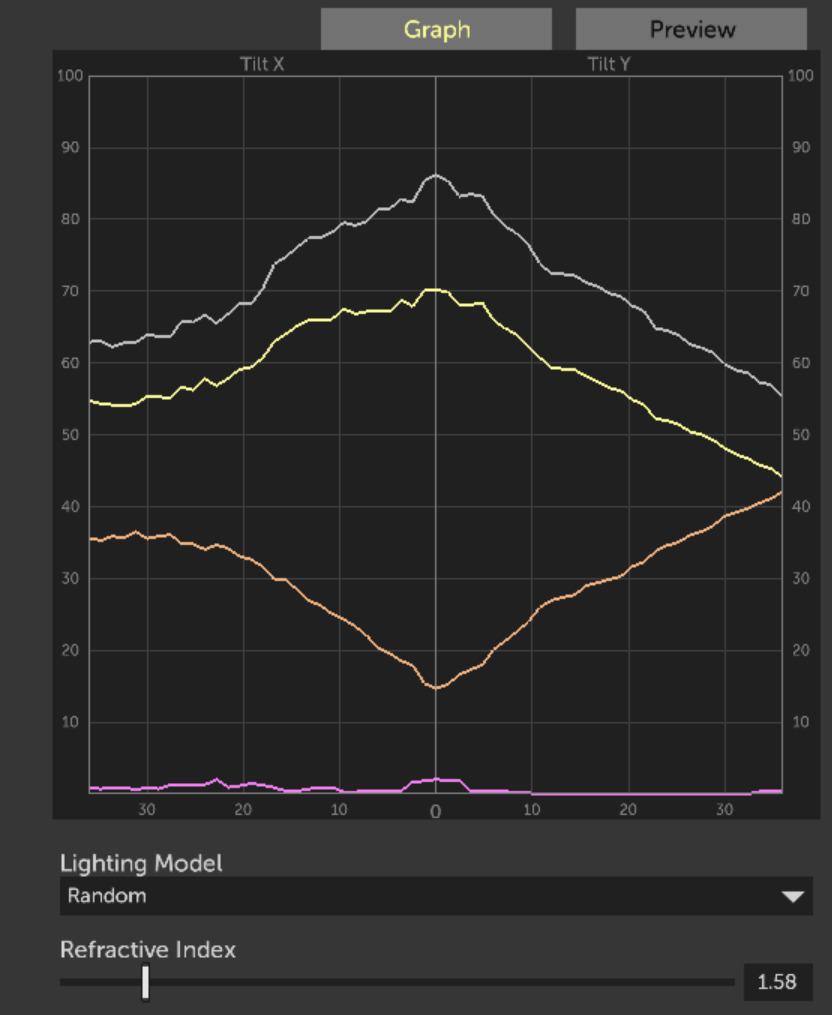
I am working on a cut using Eight Main Pear PC 5.042 by Long and Steele in beryl. I did one practice cut that came out pretty well, but could be improved on, so im modifying the design in gem cut studio to better fit for beryl. I want to confirm that this graph shows acceptable performance. I've gathered that with pear shaped designs there is often a tilt performance issue due to the shape itself, but I'm not sure if this performance is within tolerance or what else I should look to improve. TIA
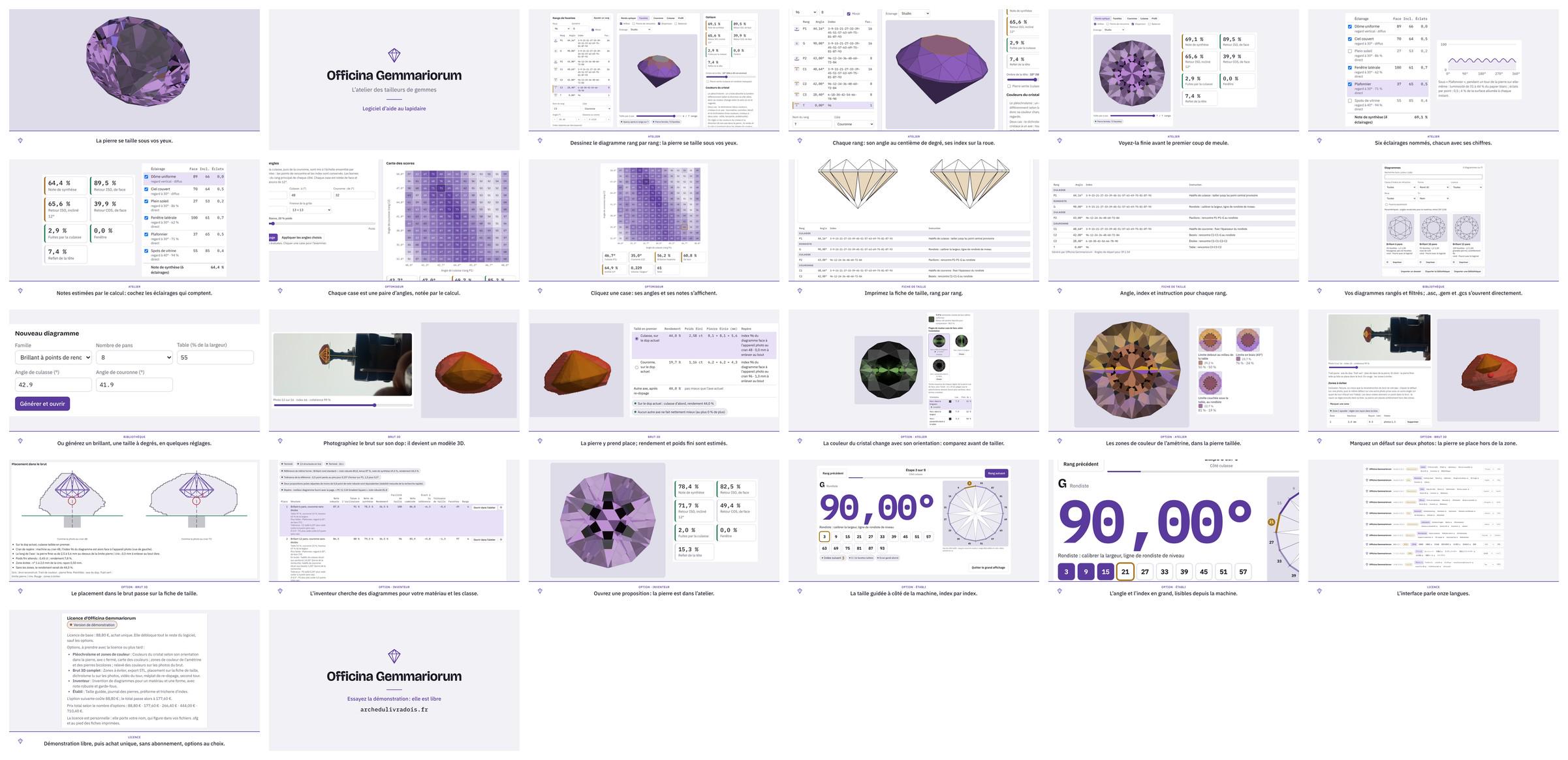
I'm a gem cutter in France. I got tired of guessing how a design would fit a piece of rough, so I wrote a program for it.
How it works: I leave the rough on the dop, in the machine, and take a photo every few index steps on the 96 wheel. The program rebuilds the rough in 3D from those photos, then places the stone inside it and estimates the finished weight. It reads GemCad and Gem Cut Studio files, so I can try my existing diagrams in the model.
I'd like your opinion as cutters:
- Would you trust a model built from photos, or would you still measure everything by hand?
- What would you want it to tell you before you start cutting?
Happy to share more details or screenshots in the comments.
Hey all, I'm looking to purchase a used ultratech v2 and am trying to understand the pricing on used machines. The seller is an experienced faceter who I know well enough to trust their word and they say the machine is in good shape with all its parts. They're asking $3k so just trying to understand if that's a fair price.
Hey everyone, the Pleochroma Android app is now officially available in the Play Store. Feel free to try it yourself. If you have any issues or questions, feel free to ask!
Here are some screens from the Android app:
Together with the public app store release, I also released v0.12.0 of the app. The worker / coordinator for remote rendering now has an UI to make it easy to pair your Android app via QR code with your computer. You can find the connection manual here:
To add something nice and because I already collected all that spectral data and so on, I added a material overview:
Besides that, some things have been made more user-friendly:
The most current version and it's sources are available via the website https://pleochroma.com. Besides the Play Store for Android, the easiest way to install it under Windows is the Microsoft Store. Of course, the most current version is also on cargo:
cargo install pleochroma-cut --features="gpu"
I'd love to hear your feedback and hope you like the latest changes. If there are any questions, feel free to ask!
The YouTube tutorials aren't updated yet after the UI changes, but will be in the next one or two days
P.S. Those renderings are rutile, diamond and tanzanite. As you can see, the renderer now also gives (optional) reflections and shadows :)
The rough weighted ~50ct; GemSim auto-fit projected yield of ~32%, 15.6ct. The finished stone is 12.5ct, ~25%. The rough was scanned into 3D with Kiri engine.
Sorry for the low quality of the finishing, I only applied pre-polish with 8000 grit paste.
GemSim provides a couple visual tools to help mark the dopping surface and center on the rough stone. Here's the video walk through the full process: https://youtu.be/JO5r-jRq_Ug
Any tricks on preparing the dopping surface and center more accurate?