r/freefolk • u/Elegant-Half5476 • 3h ago
Maester Luwin never fails

535
Upvotes
r/freefolk • u/Haunting_Homework381 • 9h ago

I would imagine the tyrell army enforcing the Starks and possibly winning over the lannisters. It's interesting because Catelyn was ready to make a deal with Renly before he was murdered
r/freefolk • u/Mindless-Cat1453 • 2h ago

r/freefolk • u/No_Vast_3309 • 7h ago

r/freefolk • u/Beautiful-Long7646 • 7h ago

I start with mine
r/freefolk • u/lakeber-28 • 1h ago

I Don't really know how often this is asked on the sub, have only a few months here.
But what if Jon Snow had the Targ looks (silver hair, purple eyes, etc.) like Rhaegar instead of the Stark features of his mom?, which was the only factor that made him pass as Ned's bastard. What would be Catelyn's reaction and all other characters in general? Especially when Bobby B. came to Winterfell.
r/freefolk • u/Impressive_Peak_4035 • 14h ago
r/freefolk • u/MechaNutzilla • 8h ago

r/freefolk • u/MrPrinceVegeta • 1d ago
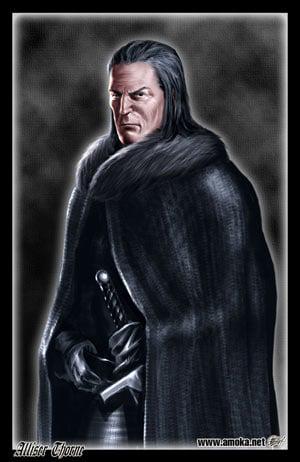
He is still 100% a dick, and sending Jon to kill Mance Rayder was basically a death sentence, but outside of that, he isn't actually evil. Tywin sents him to the Wall after the Sack of King's Landing for just defending the city which is total BS anyone would be bitter after that. He spends years as Master-at-Arms training wildly unqualified recruits, so being completely done with everyone is pretty understandable. Even so, he does his job well and genuinely cares about the Night's Watch. Then, when the Others show up and he tries to get help, the rest of the Kings Hand completely blows him off, which is beyond frustrating. By the time the battle at the Wall happens it's a very bad and desperate situation which kills alot of men so moral is low so you send Jon Snow a suspected turncloack to kill Mance which hey is bad but like what else are they going to do against the wildings they didn't know the Mannis was going to pop. After Stannis arrives and Thorne loses the Lord Commander election to a teenager, he just fucks off. At the end of the day, he isn't a villain he's just a spiteful dick doing his job.
r/freefolk • u/ObedStark19 • 1d ago
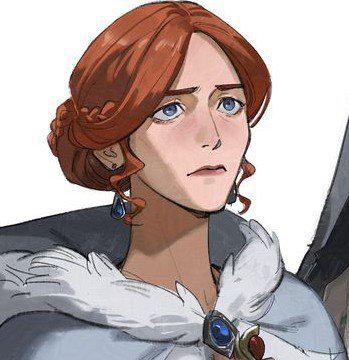
Con muchos hijos te arriesgas a una guerra civil como la que estamos viendo con los Frey, en dónde a pesar de tener un hijo mayor, existen muchos bandos que quieren el control de la casa.
Pero con un solo hijo o dos, te arriesgas a quedarte sin herederos.
Creo que un solo hijo es muy malo, dos tampoco son suficientes ya que sabemos que las mujeres pueden morir al dar a luz, existen las guerras o en los torneos también mueren los hombres.
Por eso para mí Catelyn Tully siempre me a parecido una gran esposa...además de ser una esposa amorosa y una buena madre, demostró ser fértil y darle al norte suficientes herederos como para resistir una guerra, traiciones y secuestros.
Que opinan ? Cuantos es el número ideal de hijos que debe de tener una esposa noble ?
r/freefolk • u/V-TriggerMachine • 1d ago
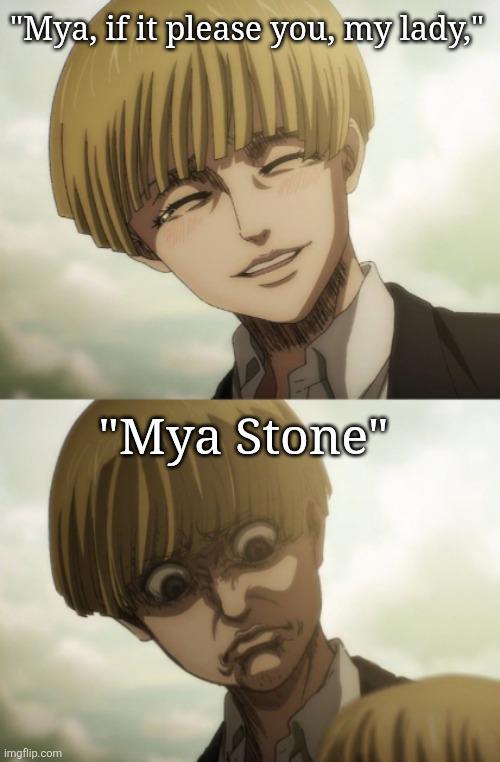
"It did not please her; it was an effort for Catelyn to keep the smile on her face" Lmao
r/freefolk • u/RiverCreative6315 • 19m ago
TOROQUE — Universe Lore Bible (Thalorym)
Genre & Tone: Grimdark oceanic epic, political intrigue, deep-time cosmic horror, and fractured mythologies. Never-ending rain, ancient bio-tech fused with living divine flesh, and morally complex factions where no one is a pure hero or simple villain.
Cultural Roots: Greco-Roman, Yoruba/African, Brazilian, Hawaiian, Polynesian, Norse, and Tupi traditions woven into an original setting.
Maricon & The Biological Ultraverse
Maricon (The Eternal Sea / Outer Vacuum): Beyond the reality bubble lies an infinite, lightless ocean of ontological negation. It does not merely lack matter—it actively unmakes logic, physics, hope, and even Death itself, trapping minds in endless cycles of lucid drowning and psychological torment.
Anatomical Reality: Reality is structured like a living organism rather than empty space: Worlds → Dimensions → Universes → Multiverses → Ultraverses → Great Bubbles separated by organic dimensional membranes and connected by vascular conduits known as the Tree Without Trunk (Árvore Sem Tal), all suspended within Maricon.
Mama (Mother of Everything and Nothing): The primordial weaver who spun time, matter, and life with golden threads while singing the Song of Existence. Devastated by the death of her children, she fell into a deep slumber upon the Eternal Sea. Her dreams still shape reality, though the vascular network carrying her connection is severely damaged.
The Pillars, Papa & The Immeasurables
The Altíssimos & The 56 Pillars: Colossal primordial serpents birthed the Pillars—amoral living laws of existence. Exposed to the crushing ontological pressure of Maricon, the Pillars went mad and waged a war of mutual annihilation. Their spilled blood (Cruor Caelestis) birthed galaxies and stars.
The Official Seven vs. The Hidden Truth: The ruling church (Ecclesia) recognizes only 7 Pillars (Okún, Aerion, Kaeros, Morvak, Ignar, Nythera, Eidolon). In truth, up to 56 existed, and an 8th Pillar—whose name was erased because its existence makes organized religion unnecessary—was imprisoned beneath Tarfarst and is now breaking free.
Papa (Rector Maris): The youngest Pillar, who refused to fight. He remains in the deepest abyss singing the Carmen Abyssus (Music of the Tides)—the literal frequency holding reality together. That frequency is now shifting.
Thalorym (The Suspended God-Body): From the carcasses of fallen Pillars arose the Immeasurables. The greatest of them crystallized into Thalorym—not a dead rock, but a cosmic organism in suspended death. Continents and islands are its flesh and bone; oceans are its blood; Linfa Primordial is its active nervous system; and the Eternal Rain (which never stops) is its blood evaporating and returning in an endless circulatory cycle.
Death & The Afterlife
The General Cycle (Aureth): Mortal souls cross the Veil into Aureth (a spiritual archipelago of white-gold islands) to rest before reincarnating out of cosmic duty—unless corrupted, in which case they sink into Maricon to be slowly unmade.
The Children of Light (Aiyé-Valkar): A distinct luminous lineage whose souls wander the cosmos like comets upon death to merge with the Four Beings—unless devoured by darkness, which twists them into demonic/Titanic entities.
2. DEEP HISTORY: THE ANCIENTS & THE TRANSPLANT
The Ancients (Artan): Originating on Artan (evolving from parasitic organisms into beings of sublime, angelic beauty and lethal arrogance), the Ancients erased the boundary between biology, magic, and technology. They pierced dimensional membranes using artificial vascular rings and created the Consumers—reality-devouring cosmic serpents—to police their routes, only for the Consumers to spiral out of control and destroy Artan.
Thalorym as a Cosmic Base: Discovering Thalorym's unprecedented concentration of primordial power, the Ancients fused deep-crust megastructures (such as Kāne-iki and sea-mines in Orkion) with the planet's living magic.
Humanitas Are Not Native: The Ancients abducted humans from Earth (Éden) during the Middle Ages—chosen not for strength, but for extreme adaptability. Their memories were wiped and their biology altered to survive Linfa Primordial and the Eternal Rain. Earth still exists, completely unaware.
The Golden King (Rei de Ouro): Bio-engineered by the Ancients using human, Ancient, and native genetics plus a stolen fragment of Mama's spine (the Spark of Mama) to serve as a living key to the Eternal Sea. Realizing he was a disposable tool, he rebelled, slew the Ancient leader, sealed the dimensional gates, and founded the first human empire before being betrayed and executed by early nobles and priests—triggering the Silence of Mama and the Pillars.
3. GEOGRAPHY & EXTREME BIOMES
Thalorym is split into a Continental Half and an Insular Half, divided by the Crown of Thalorym / Iron Hills—razor-sharp mountain ranges whose only two land passes were sealed over a thousand years of construction by the Thousand-Year Walls (O Portão do Mundo and A Garganta Selada) after the War of the Two Shores.
Valdoris ("The Land That Persists"): Seat of the 17 Noble Houses, divided into regions like Emmen Glarp, LaFrenar, Tarfarst, Dorrlagen, and Carog.
Insula Primordialis & Aetheryon: The neutral capital island. Aetheryon (2.8 million inhabitants) is guarded by three massive walls and built around the Obeliskum Thalassae—a 300-meter black monolith that bleeds saltwater, breathes with the tides, acts as throne and temple, and physically plugs the Vulnus Mundi (World Wound) beneath it.
Mataraz ("The Breathing Iron"): A larger, untamed continent of dark-purple metallic mountains, independent clans, and the Arcarus (River of Blood), a neutral river of healing/magic-amplifying water whose level rises as the World Wound opens.
Orkion ("The Frozen Hell"): An uninhabitable northern continent ringed by shifting ice-stone spires, Grey Rain (sandstorms carried from distant deserts), and thousands of active Ancient sea-mines. Even apex Colossi freeze and shatter here.
Ataparu ("The Multicolored Desert"): A brutal desert of corrosive red, pink, and purple mineral sands stalked by seismic deep-worms, ruled by a fanatic techno-religious slaver elite from black ziggurats (Megaliths) and blood-dye pits.
Ossavorn & Yggravorn: The sunken bone-archipelago of the fallen Stone Empire, serving as Thalorym's underworld, where the sacred tree Yggravorn weeps crystallized Linfa and screams ancient truths.
Ocambá & The New Sea (O Recém): Roughly a generation ago, the Toroque occurred—after 40 years of ignored omens, an entire ocean collapsed in under an hour, drowning the wealthy empire of Ocambá (House Anarib) and birthing a volatile new ocean (O Recém) around the Vulnus Mundi.
4. SPECIES & SECRET ORDERS
Humanitas: Divided into six major cultural lineages (Auran, Ìdánilójú, Teva, Costeiros do Jade, Cinzentos, Imperiais).
Abyssari: Translucent blue-grey deep-sea matriarchs living 300 years, masters of living biotechnology in Abyssara.
Maré: Amphibious, gill-bearing humanoids with pupil-less eyes and underwater song-libraries, enslaved for two centuries by the Empire.
Terramorphi: Cavern-adapted humans with stone-veined skin and mineral blood guarding memory crystals in Grímhold.
Akua: Stateless mist-navigators whose living tattoos shift to record sea routes; the only mortal people who know Papa is alive.
Thal'kin: Volcanic-skinned twilight-zone dwellers communicating in sub-audible frequencies, now ascending from the depths because something worse is rising below them.
Colossi: Living incarnations of fallen Pillar fragments; once 30,000 strong, now down to 500 and converging on the Vulnus Mundi.
The Whisperers (As Sussurrantes): Non-native beings abducted from a destroyed world who live ~1,000 years and wear human disguises as a political strategy. Organized like a shadow sisterhood (Tecelãs, Madres Douradas, Amarelas, Pretas, Brancas) serving the Three Weavers, their voices carry lethal physical force.
Order of the Eternal Rain (Aeth'Karum): Autonomous guardians (Thalari) bound by voluntary drops of Pillar blood, operating rescue fleets rather than armies.
5. MAGIC, RELICS & POWER STRUCTURES
Wild Magic vs. Tamed Magic: Wild Magic uses blood and raw intent to tap total cosmic memory—like a wolf, immense and lethal. Tamed Magic filters Linfa through Mal'Thalass (circular intention-script) and power grids fed by Ancient seed-reactors (Kāne-iki) replicated by the United Species Society (Ignis Marinus)—like a tamed hound. Overuse causes the Black Tide (Maré Negra), crystallizing flesh and erasing memory.
The Amaru Set: Three living bio-tech artifacts designed to interact with reality's boundaries: the Crown of Amarul (activated via the resonance-oath Voraen), The Sword / Key (cuts dimensional veils), and the Scale Armor (metamorphic protection with restraining bracelets). Reuniting broken pieces carelessly risks tearing the reality bubble open to Maricon.
Politics, Economy & Faith: The throne is held by the Obeliscal / Obelisca (House Aetherion, which abandons its former House name upon ascension and loses everything if deposed during the 40-day Conclave of Tides). Power is contested among the Great Houses (Varethos, Malokai, Drauvenn, Aumarea, Thalvaris), backed by Luopan artifact-coins containing sealed Linfa (currently being counterfeited). Meanwhile, the Ecclesia Thalassae secretly harvests the Spark of Mama from true chosen ones to puppet false messiahs (Amaru'Kai), unknowingly infiltrated by Sultão—a metaphysical virus from the Void working to shatter the Primordial Cores anchoring the planet.
6. THE SEVEN SIMULTANEOUS CRISES (THE GREAT DISSOLUTION)
CHAPTER ONE — The Last Crowning
The rain never stops in Thalorym. It is the first thing any stranger learns, and the last thing any of us forgets. They say it is the blood of the world coming home. When I was young, I thought that sounded beautiful. Now I know blood is never beautiful—only constant.
My name is Elaris Aetherion, and if you are hearing this, it is because someone decided the truth deserved to outlive me.
I will start with what my father taught me before I knew it was a lie: that the Obelisk never stops breathing because the world never stops needing it. I was seven when I learned those words by heart, chanted like a prayer, as if repeating a line were the same as understanding what it cost. It took me years to see that no one at court truly knows what the Obelisk is. They only know that if it stops, everything stops with it.
I grew up called Heir before I was ever called a person. My mother rules through measured silences; my father carried a weight of which I only ever saw the edges—his steps growing heavier with each season, his eyes clouding like frosted glass. I had a little sister too young to see the drop, a half-brother who loved me in all the wrong ways, and a question that lived in me long before I could give it shape: if I am not a symbol, then who am I?
No one ever answered. I think no one knew.
The year was 5,125 since the fall of the Old World, and the world had been cracking for a long time—though cracks in Thalorym do not roar at first. They hum softly underneath. Colossi vanishing by the thousands. The sea shifting its temper without warning. Tamed magic choking where it had never choked before. My mother kept a brooch carrying a ciphered message from the deep, about something she never let me read in full, and I had no idea what it meant until it was too late to pretend I did not know.
My father began walking slower in March. By May, he could no longer stand unaided. The court physicians spoke of exhaustion; the priests spoke of trial. I—the only one in that house willing to ask ugly questions out loud—looked him straight in the eye and asked what was happening to his own body.
He told me he knew the cause.
And he did not let me understand what it was.
It was the last real conversation we had before everything came apart, and I have not forgiven either of us since—not him for locking the truth away until the end, and not me for taking his silence as an answer.
The funeral was to be held at Bahia das Sete Quedas, where seven colossal waterfalls plunge in a relentless roar. I knew that ahead of time, because in House Aetherion everything is planned before it happens, even death. What I did not know—what none of us knew, not the priests, not my mother with all her calculated silences—was that my father's death would end nothing at all.
It would only be the first visible fracture in an entire world about to break.
CHAPTER TWO — Bahia das Sete Quedas
Bahia das Sete Quedas greets the dead with wet banners.
I saw it the moment our ship sliced through the mist: hundreds of black cloths hanging along the docks, too heavy with water to snap in the wind, swaying slowly as if the whole city were sighing in slow motion. The smell reached us before the harbor—salt, soaked timber, and underneath it, too much incense burning to cover up something else. Rotting fish, maybe. Or fear.
The streets were packed, yet no one ran. That was what set my teeth on edge. A mourning crowd moves slowly, heads bowed, eyes red—I expected that. What I did not expect was the wrong kind of quiet beneath the bustle: merchants shuttering stalls too early, doubled guards on corners, children yanked indoors by mothers who never glanced back. Bahia was not merely in mourning. Bahia was afraid, and no one dared say out loud of what.
My mother came down the gangplank ahead of me, as she always did. She wore absolute black, no jewelry at all—only a single silver thread at her throat, tight enough to mark the skin. She greeted Malokai's envoy with an exact bow, measured even in the tilt of her neck, and I realized, not for the first time, that my mother grieves inside the same way she rules: without letting anyone see the machinery.
"Stay close to me," she said without looking back, as if she knew I would drift away the second my boots hit solid ground.
I did not stay.
I found Joran leaning against a wharf pillar, far enough from the procession not to be noticed, close enough to watch everything. He had a way of living along the margins—never in, never out—that I had known since childhood and never knew whether to admire or fear.
"Thought you wouldn't come," I said.
"And miss this?" He gave a crooked smile that never reached his eyes. "Half the world's nobility packed into one place, all pretending to mourn the same man most of them wanted dead for years. I wouldn't miss it for anything."
"You talk like you aren't his blood."
"I'm the son he pretended didn't have enough wild magic to be dangerous." His voice dropped, sharper now. "That isn't the same as being a real son, Elaris."
I held my tongue. Not because I had no answer—but because, for the first time, I saw he was right in a way that hurt to admit.
Then his fingers closed around my wrist—not hard, yet with a quiet certainty that asked no leave.
"Watch who comes in behind us," he said, holding my gaze with a seriousness I rarely saw in him. "Some of the people coming to this funeral didn't come to grieve anyone."
Behind him, at the far end of the pier, a second ship was easing into berth. A white banner with a gold sigil I knew before I could even name the dread it brought: the Ecclesia had arrived at Bahia das Sete Quedas.
And my father's funeral had not even begun.
CHAPTER THREE — What the Dead Do Not Forgive
My father's coffin was white, not black.
An old custom of Emmen Glarp, the land he came from before his bloodline merged with Aetherion—the Varethos bury their kings in the color of sea-foam rather than night, holding to the belief that the tide eventually gives back whatever it takes. I could not have said whether I believed in such a promise. Yet seeing that stark white amid so much heavy mourning cloth stirred a quiet defiance in me, as though my father were refusing to follow the script even in his descent into the earth.
The Ecclesia entered the chapel of Bahia das Sete Quedas without asking leave of any soul present.
They did not come like mourners seeking grace, nor like guests mindful of another's house. They came in procession—deep bronze bells, incense too thick for the damp air, a choir chanting an older hymn I had never heard before, speaking of the return of something they named Amaru'Kai. At their head walked the Cardinal: tall, draped in heavy scarlet robes, his gaze sweeping the assembly like an auditor counting old ledgers, weighing who mattered and who could be cast aside. Just behind him walked a younger man, dressed with a restraint almost too deliberate for one who carried the weight of a house that governs half the world's faith.
My mother did not rise to greet them. It was the first time I had ever seen her defy public protocol in full view of the court, and the hush that fell afterward weighed heavier than any tolling bell.
"Empress," the Cardinal said, dipping his head just enough that the gesture could not be taken as a formal slight. "The Ecclesia deeply mourns the passing of the Obeliscal."
"The Obeliscal never welcomed you into court while he drew breath," my mother replied, raising her voice by not a fraction. "It would be hypocrisy to pretend his death alters that."
A murmur rippled through the gathered nobility—too swift for laughter, too measured for mere shock. The Cardinal showed no anger. He smiled, not with wrath, which would have been simpler to read, but with the cold patience of a man who knows time is on his side.
"Death alters everything, Empress. It is the only thing that always alters everything."
It was then that I caught the younger man behind him watching me. There was no desire in his look, and no pity. Only a careful, guarded curiosity, like someone judging the span of a bridge before trusting it with his weight.
Joran appeared beside me without a sound on the wet stone.
"That one," he murmured, eyes fixed on the youth, "is the heir they brought to set upon the board."
"Set upon the board for what?"
"Have you still not seen it?" Joran gave a low laugh devoid of humor. "They didn't come to bury our father, Elaris. They came to take stock of what's left of our House and see what they can still strip from it."
I wanted to argue, yet could not find the words.
The rite dragged on through long prayers, my father's name spoken until it hollowed into sound, my little sister weeping softly beside her nurse because no one had ever told her plainly what it meant never to come back. Through it all, one small motion held me fixed: my mother's fingers locked around the brooch at her throat, gripping it too hard for ordinary grief.
She knew something.
She had always known something.
And only as the white coffin began its slow drop on rain-soaked ropes did the real weight strike me: no one—not the priests, not the court physicians, not my own mother—had ever told me, in plain words, what my father had truly died of.
r/freefolk • u/JovemAprendizNaVida • 1d ago
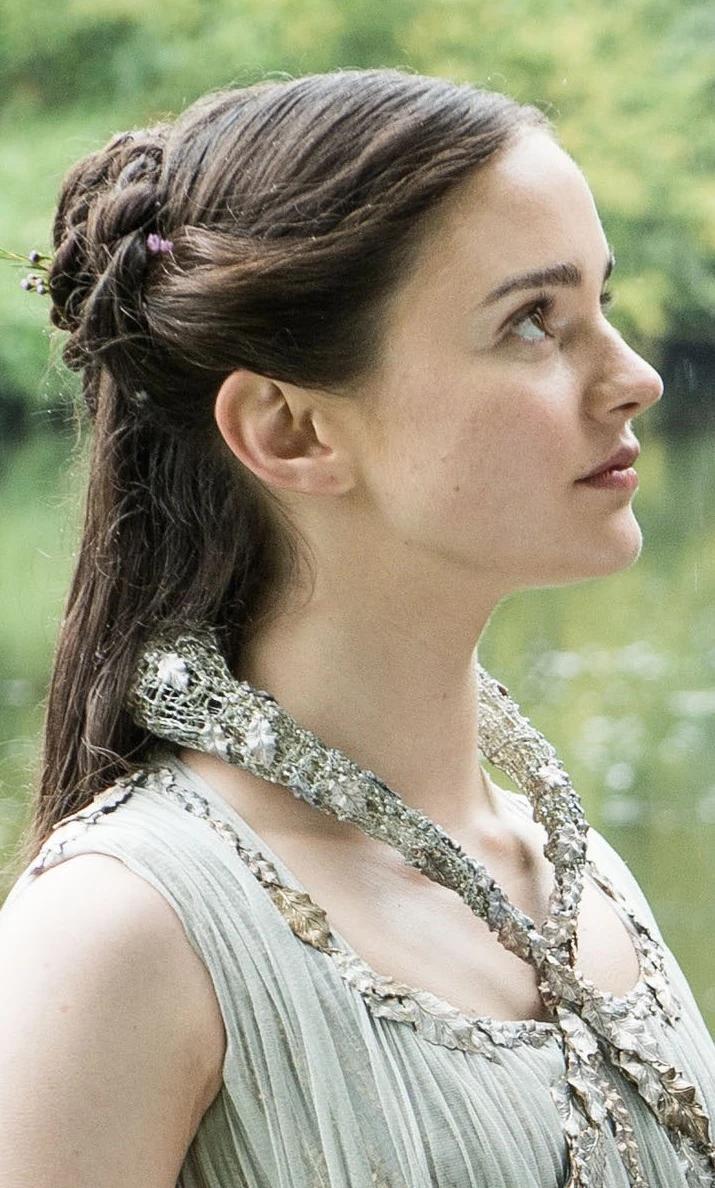
Well, as the title says… I don’t understand Lyanna Stark. I mean… She mentioned not wanting to marry Robert because he was a shameless womanizer who had an illegitimate daughter—but wasn’t that, to some extent, to be expected?
Robert Baratheon was a young, single man; he wasn’t even engaged to her yet. Illegitimacy is also relatively common in Westeros, so was this really such an unexpected thing for a lord or nobleman? Not to mention that, by Westerosi standards, Robert was a great catch: Lord of Storm’s End, Warden of the Stormlands, strong, young, and virile. This wasn’t the alcoholic, fat, and foul-smelling Robert; this was a young Robert—and, to be perfectly honest, likely the best match Lyanna was ever going to get.
And then there’s the matter of respect. I’m not saying Robert and Lyanna would have been a happy couple, but rather a typical feudal one. Robert wouldn’t have been anything like the husband he was to Cersei—either because the obese, alcoholic version of Robert might never have come to be in this marital context, or simply because Robert would have tried to treat Lyanna with respect out of regard for Ned.
Furthermore, isn’t falling in love with—or running off with—Rhaegar completely counterintuitive? He was a married man with a very frail wife and two children. Worse yet, Aerys II was known as the "Mad King"—something Lyanna likely would have witnessed at the tournament.
Anyway… As far as I’m concerned, I just can’t wrap my head around Lyanna’s logic.
r/freefolk
•
u/Rockgod98
•
1d ago

r/freefolk • u/Financial_Library418 • 10h ago
r/freefolk • u/Rough_Ad_8702 • 1d ago

r/freefolk • u/GodKingFloch • 1d ago
It's not like Robert and the rest of the Divided realm could have stopped them, Aegon I and Daeron I but tried and failed miserably and both were great warriors and had like 10x the amount of men Robert could muster at the time.
r/freefolk • u/fragmented_reality01 • 21h ago

im on ep4 i sob. s1
r/freefolk • u/Apprehensive_Tea_308 • 3h ago
I have read the books; I have reviewed the text extensively. But I have also listened to a hundred hours of George discussing the books, the story. I am interested in the differences between between the books and the TV show. But most of the clues from the books are in the TV show. The first episode of the TV show was re-shot and changed in fundamental ways from the pilot. Those changes are very interesting; things were changed to make them more like the book.
I will stick to the premise that Jon is a Wildling, and that is a key to understanding everything. And I will limit myself to points made in the books.
For me that all points to Jon being the son of Mance Rayder, and a Wildling. This is analysis of the foreshadowing. George said someone sent him a letter interpreting foreshadowing and they were basically correct in their analysis. I sent in this theory years ago to George. But there is no evidence he was referring to my analysis of the foreshadowing. But why all this foreshadowing if it serves no purpose? What point is it trying to make? I predict that next year, one way or another, if my theory is correct..
I can provide quotes from the books to support the items.