r/govfire • • 1d ago

Mid 30s, making $85k with FRS pension, 457, and good benefits. Would you stay or leave for more money?

29 Upvotes

I'm in my mid 30s and currently work in local government making around $85k a year. I've been with my employer for over 10 years and I'm trying to figure out what my next move should be financially and career wise.

I'm part of the Florida Retirement System (FRS) pension, have access to a 457 deferred compensation plan, and have really good health insurance. I've also built up over 10 years of retirement service, so leaving government employment isn't a decision I want to make lightly.

For some background, I work in fleet maintenance and have an ASE Master Technician certification, a Bachelor of Applied Science, and an MBA. I've been trying to figure out how to use my education and experience to move into a higher-paying position, preferably outside of physically working on vehicles.

My biggest issue is that I feel like my salary is starting to plateau. I have good job security, benefits, and retirement, but I don't see many opportunities to significantly increase my income in my current position.

Ideally, I'd like to eventually earn $150k–$200k annually. I know that's a big jump, and I'm not expecting it overnight. I'm open to changing fields entirely, moving into management, or pursuing additional education or certifications if there's a realistic return on investment.

I've considered looking for other FRS positions, but I'm not sure how realistic it is to reach that income level within the system. I've also considered federal employment or moving into the private sector, although I'd have to weigh the higher salary against losing some of my current benefits.

One thing that makes staying attractive is the retirement and health insurance. I have a good amount of time invested already, and my current employer offers valuable retiree health benefits for employees who meet certain service requirements.

For those who have been in a similar situation, what would you do?

Would you stay in government and try to move into a higher-paying FRS position, look into federal employment, or leave for the private sector if the salary increase was significant enough?

Also, for anyone familiar with FRS, are there particular career fields or agencies worth looking into that offer better earning potential?

I don't hate my job, but I don't want to look back 10 or 15 years from now and realize I stayed comfortable when I could have done significantly better financially.

Just looking for some outside perspectives from people who understand the value of government retirement benefits and have faced similar decisions.


r/govfire • • 3d ago

Don't want to start a new 457b at a new job.

Thumbnail reddit.com
2 Upvotes

I work for a government agency. I have a new job opportunity at a different government agency. Increased pay. I currently have almost $300k in my 457b. I'm 50 so this year I did catch up provisions. If I take the new job, I'll have to start a new 457b starting from $0. I really don't want to start at $0. Im at the sweet spot where my contributions are really going to kick the compound interest of the $300k into overdrive. I'm thinking about not taking the job bc my 457b is in such a good place and I do not want to have to build up a 457b from scratch. It took 7 years just to get where I am now. I mean, in 7 more years, I will likely hit $1 mil in my current 457b. Thoughts?


r/govfire • • 3d ago

TSP/401k Converted Roth money during a downturn

4 Upvotes

I want to convert some funds from my TSP to Roth.

I understand that converted Roth money is invested in the same investment fund(C Fund for me.)

Is it a disadvantage to convert to Roth during this downturn in the market or does it not matter as it is the same fund.

Am I fine doing this conversion now.


r/govfire • • 4d ago

FEDERAL PSA for Open Season: on 39 FEHB plans, Self Plus One costs more than Self and Family for 2027

33 Upvotes

Links first:

Disclosure: I built it and run FERS-Ready. The FEHB tool is the free part.

What the tool does. Everyone compares FEHB plans on the biweekly premium, which is the number that tells you the least. This ranks plans on the total for a year: premium, plus what you'd expect to pay out of pocket, minus any HSA or HRA money the plan puts in. You pick:

  • your state, coverage (Self Only, Self Plus One, Self and Family) and whether you're an employee or a retiree
  • how much care you expect (a healthy year, a typical one, managing a condition, worst case), or add your own: a monthly prescription, weekly therapy, an out-of-network provider
  • your current plan, so every other plan shows what it would save or cost you vs. yours, and what changed since 2026

It also counts the tax you save on your own HSA contributions, handles plans that cap one person's costs below the family max, and lets you filter by provider network.

New this week, and the reason for the PSA: when you pick Self Plus One, the tool now catches plans where Self and Family is cheaper, prices them at the lower rate, and tags them "Self & Family saves $X/yr." Someone using the tool asked for it after noticing they kept flipping between the two settings to see the real order.

The PSA. For 2027, 39 of the 118 FEHB plan options charge more for Self Plus One than for Self and Family. On the worst ones the gap is $1,984 a year.

You're allowed to enroll Self and Family with only one family member. OPM says it directly on its 2027 premiums page: "Enrollees who wish to cover one eligible family member are free to elect either the Self and Family..." enrollment or Self Plus One.

On all 39 of these plans the 2027 deductible and out-of-pocket max are the same for both enrollment types, and HSA/HRA deposits aren't lower on Self and Family. So for a two-person household on one of these plans, Self Plus One is the same coverage for more money.

The extra cost is the same dollar amount for employees and annuitants. Kaiser Washington High, for example: employees pay $76.29 more per paycheck for Self Plus One ($500.13 vs $423.84), retirees pay $165.30 more per month ($1,083.62 vs $918.32). Both come to $1,984 a year.

The 39 plans (sorted by how much extra Self Plus One costs; each links to the plan's page):

PlanWhereSelf Plus One codeSelf and Family codeExtra per year for Self Plus One
Kaiser Washington, HighID, WA543542$1,984
Kaiser Fresno, HighCANZ3NZ2$1,984
Kaiser Northern California, HighCA593592$1,984
Kaiser Mid-Atlantic, HighDC, MD, VAE33E32$1,984
Altius (Aetna Health of Utah), StandardID, UT, WYDK6DK5$1,631
Aetna HealthFund CDHPAL, AR, DC, FL, GA, LA, MD, NC, TN, VA, WVF53F52$1,586
Aetna HealthFund CDHPIA, ID, IL, KY, MN, MS, MT, ND, NE, OR, PA, WYH43H42$1,572
Aetna HealthFund CDHPAZ, CO, KS, MI, MO, NM, NV, SD, UT, WAG53G52$1,558
Altius (Aetna Health of Utah), HighID, UT, WY9K39K2$1,552
Kaiser Northern California, StandardCA596595$1,548
Aetna HealthFund CDHPCT, DE, MA, ME, NH, NJ, NY, RI, VTEP3EP2$1,531
Aetna HealthFund CDHPAK, CA, HI, IN, OH, OK, SC, TX, WIJS3JS2$1,530
Aetna Open Access (Capital Region), HighDC, MD, VAJN3JN2$1,497
Aetna Value PlanAK, CA, HI, IN, OH, OK, SC, TX, WIJS6JS5$1,470
Aetna Open Access, BasicNJJR6JR5$1,399
Aetna HealthFund HDHPAll 50 states + DC226225$1,389
Aetna Open Access, BasicDE, NJ, PAP36P35$1,382
Aetna Open Access, BasicNYJC6JC5$1,379
Aetna Open Access, HighDE, NJ, PAP33P32$1,346
Aetna Open Access, HighNYJC3JC2$1,338
Aetna Open Access, HighNJJR3JR2$1,252
Aetna Value PlanAZ, CO, KS, MI, MO, NM, NV, SD, UT, WAG56G55$1,237
Altius (Aetna Health of Utah), HDHPID, UT, WY9K69K5$1,218
Foreign Service Benefit Plan, HighNationwide (eligibility limited)403402$1,214
Aetna Value PlanAL, AR, DC, FL, GA, LA, MD, NC, TN, VA, WVF56F55$1,176
Kaiser Southern California, HighCA623622$1,128
Aetna Value PlanIA, ID, IL, KY, MN, MS, MT, ND, NE, OR, PA, WYH46H45$1,120
MHBP, StandardNationwide456455$1,092
Aetna HMO, HighCA2X32X2$1,062
Aetna Value PlanCT, DE, MA, ME, NH, NJ, NY, RI, VTEP6EP5$1,031
Presbyterian, Standard (Central)NMPS6PS5$870
Kaiser Northwest, HighOR, WA573572$699
Kaiser Georgia, HighGAF83F82$671
Presbyterian, Wellness (Central)NMPS3PS2$653
Presbyterian, High (Central)NMP23P22$648
Panama Canal Area Benefit PlanNationwide (eligibility limited)433432$522
Geisinger, StandardPAGG6GG5$310
Baylor Scott & White, StandardTXA86A85$288
Baylor Scott & White, StandardTXP86P85$163

Few things to know before you switch:

  • Self and Family covers all of your eligible family members. If you and your spouse are the only ones, nothing changes about who's covered.
  • Foreign Service Benefit Plan and Panama Canal Area Benefit Plan have their own eligibility rules, so they're only an option if you already qualify.
  • To switch, enroll in the plan's Self and Family code during Open Season (Nov 9 to Dec 14). Employees do it through their agency's benefits system, retirees through OPM Retirement Services Online.
  • These are 2027 rates. The inversion isn't guaranteed to stay, so check again next Open Season.

Check your own plan in about a minute: open the comparison tool, pick your state and Self Plus One, and any plan with this pricing shows the tag and the Self Plus One price it replaced. Premiums are from OPM's 2027 rate tables; if you spot one that doesn't match, tell me and I'll fix it.


r/govfire • • 5d ago

Expect higher prices and stricter approval requirements for weight-loss GLP-1s in FEHB next year

Thumbnail
federalnewsnetwork.com
20 Upvotes

Federal annuitants who take GLP-1s and are Medicare beneficiaries should consider enrolling in an FEHB plan that offers a standalone Part D plan (PDP). That’s because Part D coverage produces dramatically lower costs for GLP-1s compared to prescription drug coverage from your FEHB plan.

For example, in Aetna Direct CDHP, you would pay $655.87 for a one-month supply of Wegovy through your plan’s prescription drug coverage, and only $45 through Part D.

Federal annuitants paying more for Medicare Part B and Part D because they’re subject to an Income Related Monthly Adjustment Amount (IRMAA) may decide to disenroll from Part D to save money. However, if you need a GLP-1, the savings from Part D in most FEHB plans will be worth more than paying even the highest Part D IRMAA.


r/govfire • • 5d ago

When health changes your federal retirement plans: a simple way to organize the paperwork

6 Upvotes

Hi everyone, I’m Emily, owner of The Federal Disability Review. The moderators approved my sharing an introduction here. I provide paid, non-attorney administrative coaching for federal disability-retirement applicants. TFDR is independent and is not affiliated with or endorsed by OPM.

When a health-related interruption changes your retirement plans, keeping track of the application can become a project of its own. One practical starting point is a simple tracker:

Item | Who handles it | Date requested | Date received | Next follow-up | Submission confirmation

A few ways to use it:

  1. Separate responsibilities. The SF 3112 package includes applicant, supervisor, physician and agency components. Track each separately rather than treating “the paperwork” as one task. OPM’s SF 3112 package: https://www.opm.gov/forms/pdf_fill/sf3112.pdf
  2. Confirm the current submission process. OPM’s current FERS guidance directs current employees to their agency HR office to start through the Online Retirement Application platform. Former employees start their disability application directly through ORA. Follow current instructions rather than assuming an older printed packet’s mailing directions still apply. OPM’s FERS disability-retirement guidance: https://www.opm.gov/retirement-center/fers-information/types-of-retirement/
  3. Keep copies and confirmations. Save completed documents, dated requests and submission receipts in one secure place. Distinguish “requested,” “received” and “submitted.”
  4. Maintain a question list. Record what needs clarification from HR, OPM or an appropriate professional, along with the answer and its source. Don’t fill gaps with guesses.

These are organizational suggestions, not an eligibility assessment or a substitute for official instructions, legal advice or medical advice.

My work focuses on organizing paperwork, tracking missing items and helping people prepare questions and understand administrative next steps. I don’t decide eligibility, guarantee approval or replace an attorney. More about that narrower service: https://www.thefederaldisabilityreview.com

What organizational tool has helped you keep a complicated benefits process manageable? Please keep personal medical details and identifying documents out of the comments.


r/govfire • • 6d ago

OPM Extends Suspension of Federal Long-Term Care Insurance Applications

Thumbnail plansponsor.com
87 Upvotes

r/govfire • • 6d ago

Recommended FIRE courses?

6 Upvotes

I’m looking for a decent FIRE course/class option! Ideally minimal to no scheduled class-time, and covers various aspects of personal finance like repaying debt, managing medical expenses etc.

Any recommendations?

Looking to use this as an alternative to a suggested Ramsey course. For various reasons, Ramsey isn’t for me, and I don’t think his “program” is very relevant to my situation anyway.

I’m a DOD fed, currently sole income for myself and husband stationed in Germany.


r/govfire • • 7d ago

Best 2027 FEHB Option for Major Surgeries?

Thumbnail reddit.com
6 Upvotes

r/govfire • • 10d ago

TSP/401k 401(k) limit increases to $25,500 for 2027

Thumbnail
irs.gov
196 Upvotes

The annual contribution limit for employees who participate in 401(k), 403(b), governmental 457 plans, and the federal government’s Thrift Savings Plan is increased to $25,500, up from $24,500 for 2026.

Catch-up Contribution: $25,500 + $8,500 = $34,000

Special Age 60–63 Catch-up: $25,500 + $11,7500 = $37,250


r/govfire • • 11d ago

STATE Traditional v. Roth 457(b)

12 Upvotes

My wife and I are currently in the 24% tax bracket, we make between $200-250k/yr. combined. We are both state government employees. We have a mix of Roth and traditional options, but our employer just began offering a Roth 457(b) option. I’m looking for advice for either keeping our 457(b) contributions pre-tax or transition future contributions to Roth.

Our current accounts:
Traditional 401(a)- contribute 19% of $132k combined salaries bi-weekly pre-tax (employer 16%, us 3%)
Traditional governmental 457(b)- $325 combined/ bi-weekly pre-tax
Roth IRA- $15,000/yr. combined (both max $7,500/yr. each)
Roth 401(k)- max employer portion $24,500/yr. (only me)
Taxable brokerage- $370 combined/bi-weekly

Because we do not have a pensions, we plan to fill lower tax brackets with social security, the 401(a), the traditional 457(b), and taxable brokerage if need be. My main goal is to not leave a large inheritance to our children with taxable RMD’s. Our retirement horizon is 25-30 years out. If anyone has any advice I’d really appreciate it.


r/govfire • • 11d ago

Planning for gov pension at 51

12 Upvotes

I 58 M FIRE'd former small business owner (semi unplanned retirement when covid hit and just never went back to work) circa $1.3M NW mostly in dividend paying stocks, and I expect to inherit more someday in the form of farmland when my elderly mother passes (likely within the next 10 years), my wife is 43, local public agency administrator in LCOL area with 21+ years paid into state pension plan (3% per year, retire at any age after 30 years at 90% pay, state pensions are exempt from state income tax, so effectively more than 90% take home, and semi COLA), she also has been paying into 457B at less than max rate, and has about $100K in inherited stock in a regular brokerage account, and an IRA account.

Her pension plan will allow working up to 480 per year post retirement without benefits being cut, full time employment after retiring suspends pension. I personally enjoy the FIRE life, like having my free time, but I am not sure my wife will like not working at all when she is still in her early 50's. Which leads me to question of has anyone else here dealt with similar pension system with comparable pay, and restrictions of future employment, any thoughts on types of work she might be able to do and stay under the 480 hour per year limit that she might find satisfying, etc. Note we like to travel, but would not do it full time, we have a motorhome now, and travel for several weeks per year most years as my wife gets a good number of vacation days, currently around 36 per year, and gaining about 1.3 days for every year she stays in the current job, though she is limited taking them by fixed date work obligations (ie she can never take off the first week of the month, etc).

Any other general thoughts and strategies on retirement finances, investment, etc. I am asking here as most online advice does not consider government pensions much less ones that allow retiring with 90%+ pay by age 51. Also there is our 14 year age gap, so that I will be 65 prior to her retirement date that factors into things when it comes to medicare cost, etc.


r/govfire • • 11d ago

FEDERAL TSP

Post image
0 Upvotes

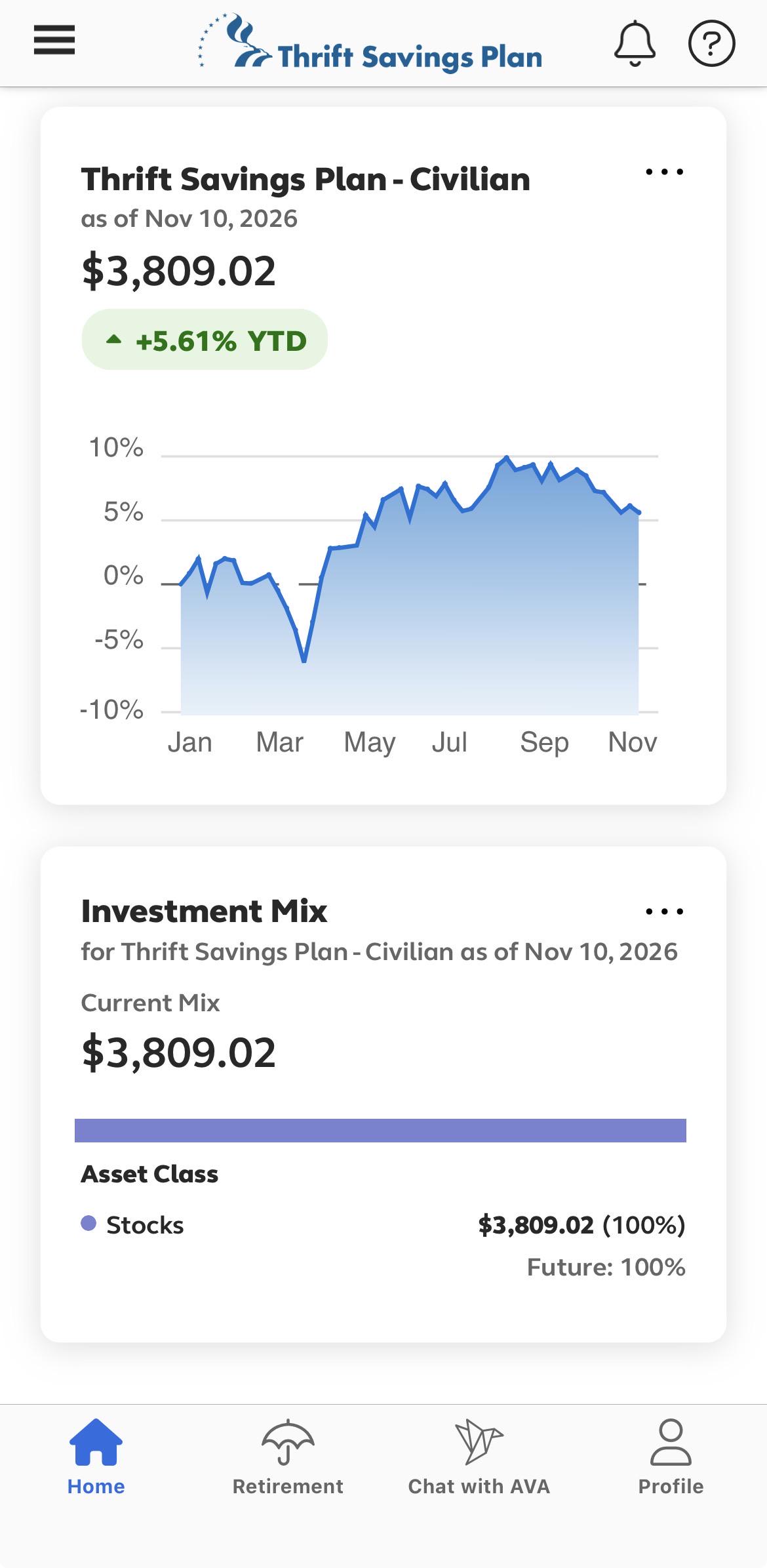
I was with the IRS back in 2025” during the few months I literally was able to get my TSP to $$3,500. This was from December 24- May 25 until I was RIFed. Now I’m back with another agency and it seems like my TSP is crawling literally. With the IRS I was recommended to put it on the L-Fund 2045. This is where I saw the jump in a short period of time. Now I have it on S-10% I-10% and C-80%. I am not sure if I’m investing correctly. ( I’m 50 yrs old and once again new to the federal sector).


r/govfire • • 13d ago

FEDERAL 2027 FEHB GLP-1 coverage: what every plan charges for Wegovy and Zepbound (free plan-by-plan comparison)

62 Upvotes

GLP-1 coverage is one of the biggest FEHB questions this Open Season, so I added it to the free FEHB comparison tool at FERS-Ready.

For all 118 FEHB plan options for 2027, it shows:

  • What you pay for a GLP-1 prescribed for weight loss (Wegovy, Zepbound, the Wegovy pill, Saxenda/liraglutide)
  • Which GLP-1s each plan's formulary covers, and which it doesn't
  • Whether the deductible applies first, and whether the cost counts toward your out-of-pocket maximum
  • The required weight-management program and prior approval rules
  • Your estimated yearly cost on each plan, with or without premium

Every fact comes from the plan's 2027 brochure or its formulary, with the page number listed.

A few things that stood out:

  • 84 of 118 options charge 50% of the plan's price for a weight-loss GLP-1. Only 8 cap it per fill.
  • Plans differ on which drug they cover. FEP Blue Standard and Basic cover Wegovy but exclude Zepbound. UnitedHealthcare's plans cover Zepbound only.
  • For 2027, OPM requires every plan to cover at least one GLP-1 for weight loss, but you must take part in an intensive behavioral therapy program before and during treatment.
  • Wegovy's list price drops to $675 a month on January 1, 2027. At 50% coinsurance that's about $338 a month. On a plan whose formulary leaves your drug out, you pay the full price.

You can filter the main plan list by "Covers GLP-1", or add a GLP-1 to "Add your own costs" so every plan's yearly total includes it.

GLP-1 coverage by plan: https://fersready.com/fehb/glp1

Some formularies couldn't be confirmed, and those plans are marked "not confirmed". Check the plan's formulary before you enroll. If you spot something wrong, tell me and I'll fix it.


r/govfire • • 19d ago Bravo

FEDERAL 2027 FEHB Open Season (Nov 9 to Dec 14): free tool ranks every plan by what your year will actually cost

Thumbnail
gallery
160 Upvotes

FEHB Open Season for 2027 runs Nov 9 to Dec 14, and the 2027 plans and premiums are out. I built a free FEHB plan comparison so you can do your homework before the window opens. No signup, no paywall, nothing to buy on it.

Most comparisons stop at the premium. This one adds the premium and what you'd pay for care, subtracts any HSA or HRA money the plan deposits, and ranks every 2027 FEHB plan on that yearly total. It covers every plan, from BCBS Basic and Standard, GEHA, MHBP, Aetna and Kaiser to the HDHPs.

An Open Season checklist you can run in it

  1. Pick your state, coverage and status (active or retiree), so you only see plans you can enroll in
  2. Pick the kind of year you expect: healthy, typical, managing a condition, or worst case
  3. Add the care you already know about, like weekly therapy, a monthly brand name drug or an MRI. Every plan re-ranks on its own copays, deductible and caps
  4. Put your current 2026 plan next to the 2027 options here HERE and see exactly what changed
  5. Check the details that bite: drug terms (per fill caps, specialty tier, separate drug max), provider network, maternity costs, Medicare Part B terms and out of network coverage, with brochure page cites

Also in there

  • Tap any total to see the math behind it
  • HSA tax savings calculator using your income and state
  • 2027 premium increases, plus premium history back to 2020 for every plan
  • Living overseas? How each nationwide plan pays foreign claims and who translates the bill

Several of these started as suggestions on Reddit, so keep them coming.

Also free: a FERS pension calculator for Regular FERS, LEO, Firefighters and ATC, and TSP projections.


r/govfire • • 23d ago

VERA Vs. VSIP: How To Evaluate A Federal Buyout Offer Before You Sign | FedSmith.com

Thumbnail
fedsmith.com
31 Upvotes

r/govfire • • 26d ago

Is the FSBP worth the premium after the massive increase?

Thumbnail reddit.com
2 Upvotes

r/govfire • • 26d ago

FERSReady.com/fehb now has 2027 FEHB plan brochures

Thumbnail gallery
6 Upvotes

r/govfire • • 26d ago

MHBP Consumer Option Ending in 2027. What Is Everyone Switching To?

25 Upvotes

I switched to the MHBP Consumer Option in 2026, and now with it being discontinued for 2027, I’m trying to figure out what everyone else is switching to.
I’m on a self-only plan and liked having the HSA, but it’s not a deal breaker. My biggest priorities are keeping costs reasonable, having a large provider network, and having good coverage without a ton of restrictions.
With premiums and healthcare costs continuing to rise, I’m trying to find something comparable without paying an arm and a leg.
For those currently on MHBP Consumer, what plans are you considering for 2027? Any recommendations or plans you would avoid?


r/govfire • • 26d ago

FEDERAL 2027 FEHB Plan Information available on OPM

Thumbnail opm.gov
70 Upvotes

Open season is Nov 9 through Dec 14. Most plans are seeing an increase, some pretty significant.

Looking to jump over to GEHA HDHP myself to get the premium down and take advantage of the HSA.


r/govfire • • 28d ago

STATE 457/401k or Roth IRA

6 Upvotes

Hello! Newly found this forum which more aligns than /Fire.

I (42yo) work in California and may have a decent pension. At 52yo 23% and 62yo 66% of highest 3yr average pay. I make $140k at govt job. I plan to select kids as beneficiaries and it will lower pension.

457/401k $250k
Pension 8% contribution
Retiree healthcare 3% contribution
House: won’t be paid off but will downsize after kids move out.

I planned to retire at 62. After my son’s health issue this year, I want to retire early at 52 and consider enjoying life, helping him, and take care of my health. Also not commute/work for 10 hours of my day.

I am contributing a little to 457/401k. I’m doing pre-tax since my son started college for financial aid. I did 50/50 pre-tax/Roth previously. I am allowed to contribute $24,500 to each 457/401k so $49k total. Should I do a backdoor Roth IRA before I max 457/401k?

I started a side business with bf and it’s beginning to profit. So I can contribute more to my retirement in 2027. I’m also considering max 457/401k and using my savings to increase financial aid. If I max 401k/457 at $49k for 10 years, it would be $1M at 52. I may not have to touch it with side business.

No 529 for college son. My 9yo I started 529 this year with just a little. It’s just $200/mo. I don’t know how much I should save since /fire thread, they make a lot more while I get financial aid. Do you contribute to 529?! My 9yo may not get any financial aid if my business income is higher in future.

My current tax bracket is 22% federal & CA 9.3%. Even if I retire at 52, my tax bracket maybe same/higher with business income. After kids college, I would probably split 50/50 Roth/pretax 401/457 again. Should I start a backdoor Roth IRA? Any advice? Any suggestions or recommendations is greatly appreciated. I know I’m starting late to think of FIRE.


r/govfire • • Oct 23 '26

Tinymac12's 2027 FEHB Comparison Tool and Tutorial | How to Pick Your Health Insurance

Thumbnail
reddit.com
19 Upvotes

Slightly different demographic here. But maybe helpful to someone.


r/govfire • • Oct 21 '26

Which FEHB Plans Work Well for Extended Stays Abroad?

Thumbnail reddit.com
2 Upvotes

r/govfire • • Oct 21 '26

FEDERAL Don't need FEHB, but is it worth enrolling in cheapest FEHB for the 5 yrs immediately before retirement to give options in retirement?

51 Upvotes

I know this is a very individual specific situation, but hoping this sub may have some considerations to keep in mind when considering this path.

I'm on my spouse's health plan and expect to stay on their plan, so not enrolled in FEHB. Would it make sense to buy the cheapest FEHB plan for the next 5 years with the purpose of being able to carry FEHB into retirement in the case of a VERA offer 5+ years from now? I plan on retiring before MRA regardless of VERA availability.

I have 20yrs of service and I suspect we're going to see DRP/VERA events every time a Repub takes office. Thought is I get on a cheap FEHB plan now so that when I become VERA eligible in 5yrs, I can take it if offered and go into retirement with FEHB eligibility in case my spouse's health benefits get worse or disappear.

I recognize there are a lot of "ifs" at play here and there's no definitive answer. The cheapest FEHB plan available to me in FY27 is $62/pp which would be ~$10k for 5 years (swagging for inflation). Is it worth paying at least $10k to have the option to use FEHB in retirement? I guess you could say I'd be buying insurance coverage insurance.

Edit to answer some common questions:

  • Spouse's insurance is very similar to FEHB in that they have to be on it for 5yrs, take immediate retirement, and then they can keep us on it until through retirement. No premium increases or dropping +1s after retirement.
  • No kids, no plans for kids. Age 42, MRA is 57, plan is to retire no matter what at 52yrs old so not getting FEHB unless there's another VERA in 5-10yrs.

r/govfire • • Oct 19 '26

Advice on FERS - staying for 30, VERA, reduced annuity at MRA

Thumbnail reddit.com
2 Upvotes