r/grasshopper3d • • 15h ago

How to simplify model for 3d printing?

1 Upvotes

This is a long shot but I used a script tutorial by June Lee on YouTube (shout out) for a circular wavy pavilion. I’m working on a physical model and would really like to 3d print this to place onto my design. The pavilion has like 4000+ surfaces is there any way to simplify this so I could possibly print?


r/grasshopper3d • • 21h ago

WASP Question

Post image
2 Upvotes

How is it possible for the purple elements to arrange themselves only within the xy-plane, rather than standing upright? The blue connectors are intended to provide connections both vertically and horizontally.

I’ve attached the Grasshopper file via a WeTransfer link, in case anyone wants to play around with it. I would be incredibly grateful for a solution!

https://we.tl/t-s6k4B1qVy6X0125d


r/grasshopper3d • • 1d ago

Brick Color Attractor

50 Upvotes

In this Grasshopper example file, you can create a parametric brick facade with random colors controlled by curve attractors.

Free Example File 👇

https://parametrichouse.com/parametric/parametric-ideas-326/


r/grasshopper3d • • 2d ago

How I modeled a foldable chair from a flat rectangle in Grasshopper

Post image
0 Upvotes

The slats start flat and open up to form the seat and backrest. In the video, I switch off sections of the definition to show what each one controls and why I chose those components.

How would you approach the folding geometry in Grasshopper?

Here’s my full breakdown on YouTube:

https://youtu.be/_iRHHv5zJBY


r/grasshopper3d • • 3d ago

How to *export* block from 3d max to rhino i try but i want the line to be strait line as default when i use wireframe any one understand me🫣🫣🧸

Post image
1 Upvotes

r/grasshopper3d • • 3d ago

Simulating a solid object pushing outward from inside a balloon

Thumbnail gallery
13 Upvotes

r/grasshopper3d • • 8d ago

Procedural 3D fields

Thumbnail gallery
56 Upvotes

Wanted to share some of the tests ive rendered as ive built my volumetric field plugin. Its basically a field math plugin that renders interactively in the rhino viewport as hundreds of millions voxels. The fields can be manipulated by unary/binary and mass math operations. As each field can be materialized as voxels in dense or sparse grids, it allows you to run simulations on each field. Ie your crazy organic forms can be used as parts of simulations. Currently the simulations are fairly limited, but the idea is that you are able to set up agentic, fluid or experimental simulations with just GH nodes, you are not locked to precompiled simulations, if you want your fluid to have free will, you can.

Im still not sure what practical uses it can have, but its fun to play around with. If you are a computational designer, plsss let me know if there are some features that are a MUST that i might have overlooked


r/grasshopper3d • • 10d ago

Those working in architecture related fields: what do you actually use Grasshopper for day-to-day?

6 Upvotes

Hey everyone,

I'm curious about how Grasshopper is actually used in day-to-day architectural practice versus the wild organic pavilions you usually see in tutorials.

If you use GH at an architecture studio (especially on the technical, documentation, or fabrication side), what are the most common problems or tasks you solve with it?

I am a experienced rhino user but not so much with grasshopper, would love to hear what ends up being the most useful in real production!


r/grasshopper3d • • 12d ago

Template for building and debugging Grasshopper plug-ins from VS Code

14 Upvotes

Edit: Thanks to u/Swennick for the .NET comment. The template now builds net10.0 for Rhino 9, net8.0 for Rhino 8 and net48 for Rhino 7. If you only use one Rhino version, delete the other targets in one line.

I used to develop GH plug-ins in Visual Studio because it builds the project, starts Rhino and lets you debug the .gha directly. VS Code has no equivalent, so I was copying the .gha into the Libraries folder and testing by hand.

I made a small template for this. Press F5 in VS Code and it builds the project, starts Rhino with Grasshopper open, loads the .gha from the output folder and attaches the debugger, so breakpoints work.

What's in it:

  • A Visual Studio style solution (.sln, project folder, Properties) with one sample component
  • One F5 profile per Rhino version: Rhino 9 (net10.0), Rhino 8.21+ (net8.0), Rhino 7 (net48)
  • A setup script that renames everything and finds your Rhino installs
  • A Claude Code skill that runs the setup for you

Windows only. You need VS Code with the C# extension and .NET SDK 10. Rhino 7 needs a one-time GrasshopperDeveloperSettings step because it doesn't read RHINO_PACKAGE_DIRS; the steps are in the README.

https://github.com/calvinlee6806/RhinoGH-VSCode-Starter

I've only tested F5 on Rhino 8. If you try it on Rhino 7 or 9, let me know how it goes. If something breaks, tell me what you see and I'll fix it.


r/grasshopper3d • • 12d ago

Dachkonstruktion Google Bay View Campus

2 Upvotes

Hallo, ich muss die Dachfläche von dem Google Bay View Campus nachbilden. Da ich bisher keine weiteren Grasshopperkenntnisse habe, ist das ziemlich schwierig. Hat jemand schon einmal eine ähnliche Konstruktion gebaut oder wäre bereit mir zu helfen?

Vielen Dank :)


r/grasshopper3d • • 14d ago

Bubble Packing

35 Upvotes

In this Grasshopper Python Script tutorial, you’ll learn how to use our Python script with Kangaroo to arrange circles, control their minimum and maximum radii, and adjust the spacing between them.

Watch on Youtube👇

https://youtu.be/SrqMjlDmWQw


r/grasshopper3d • • 14d ago

Dwight - A tool based , AI helper inside the Grasshopper canvas

Thumbnail gallery
30 Upvotes

Hello everyone,

Grasshopper is how a lot of us learned to program. We drop a component, wire it to a slider, and the logic comes alive in front of us. We learnt it by watching things change on the Rhino canvas, live, tweaking as we went. That was the fun part, and it made me feel smart a lot of the time.

So when AI tools started dropping finished scripts onto the canvas, something bothered me: the job gets done, and you skip the part where you understand it. I wanted a helper instead. One that looks at what you've selected, explains it, tidies it when it gets messy by finding the logic that runs through it, tells you why what you built broke, and builds only when you ask.

It started as a couple of tools I was building for myself on the side (Reorganise and Explain). Over the past few months I turned them into a Grasshopper plugin, and it's out now. It's called Dwight.

Select some components, press Ctrl+Shift+Right-click, and pick a tool:

  • Explain - what does this part do? In plain words, or step by step on the canvas, in the order the data flows. There's also Learn, which turns it into a few questions. That idea came out of teaching Grasshopper.
  • Diagnose - why is this red or orange, or empty? It traces the problem back to the component that started it, and changes nothing.
  • Reorganise - we keep building and it gets messy. Reorganise groups and labels the logic, rewires nothing, and checks the definition still does the same thing before it keeps the change.
  • Simplify - suggests a sturdier version of a selection. You tick what you want, and anything whose output changes is put back. Collapsing to a C# or Python script is in there too, marked experimental. I use that one the most, to make repeatable chunks of code instead of clusters.
  • Build- the one you talk to. It plans, builds, and asks before it changes anything (you choose how often). Each change is one Ctrl-Z.

Each tool has its own panel, so most of the time you don't write a prompt at all.

How it uses AI. The model does the thinking: what a group is for, what to call it, which component is probably at fault. Dwight does the work on your canvas in C#, like ids, positions and wiring, and checks every change it makes.

Your key, or fully local. Anthropic, OpenAI, Google or Ollama Cloud on your own key, or a local Ollama so nothing leaves your machine (that one needs a machine with a good GPU). There is no Dwight server and no account.

Every run shows what it cost. On a small definition, Diagnose and Reorganise each came in under a cent on Sonnet, and Explain under a tenth of a cent on Haiku. A Build conversation costs more, from about a cent to most of a dollar on the runs I've logged.

Limits you might want to know upfront:

- Windows only, Rhino 8.24 or later. No Mac or Rhino 7 build.

- It's a v1, tested mostly on small definitions. Big messy ones are where I expect it to fall over first.

- Script conversion verified equal to the originals 39.6% of the time in testing. When it can't verify, it says so and labels the result a draft.

- A Build on a local Ollama model timed out on my machine. The cloud providers worked.

- No MCP server yet. It's first on the v1.1 list.

There are good AI tools for Grasshopper already, like Raven, Ant and SmartHopper. Dwight is my take on it. I find tools more useful than prompting a model every time; it checks that a change didn't break your definition before it keeps it; and it's as useful for understanding a file as for building one.

Install: Package Manager, search Dwight.

Docs: dwight.tha.run (what each tool sends to the model is listed tool by tool)

Source: github.com/tharuneswarj/dwight

How it was built: I wrote it up as I went, at tha.run/blog

What would help most: open your messiest definition, run Explain or Reorganise on it, and tell me where it gets it wrong. Would love your honest feedback in this.


r/grasshopper3d • • 15d ago

Thoughts on this?

Post image
30 Upvotes

I'm curious on this person's thoughts on computational design as a whole. İ don't agree with him, as grasshopper has helped me learn a lot of fundamental skill sets for other programs and understanding the logic within design and fabrication.


r/grasshopper3d • • 17d ago

[Free Resource] Parametric Facade Generator for Rhino 8 + Free .gh Definition

Post image
7 Upvotes

Hey r/grasshopper3d!

I recently built a parametric Grasshopper definition designed to generate dynamic building facade patterns and louvers directly from site/surface boundaries in Rhino 8.

It’s built with **100% native Grasshopper components** (no external plugins required) to ensure fast loading and zero compatibility errors.

**✨ Key Features:**

- Fully parametric control over louver density, angle, and panel depth.

- Automatic boundary surface mapping.

- Clean output geometry organized for instant rendering in D5 Render / V-Ray.

I just submitted it to Food4Rhino. I’ve shared the free `.gh` file link in the comments section below so you can test it out right away!

I’d love to hear your thoughts or feedback on how to improve the cluster for v2.0. Hope this helps with your early-stage facade studies!


r/grasshopper3d • • 17d ago

[Free Resource] Parametric Facade Generator for Rhino 8 + Free .gh Definition

Post image
3 Upvotes

Hey r/grasshopper3d!

I recently built a parametric Grasshopper definition designed to generate dynamic building facade patterns and louvers directly from site/surface boundaries in Rhino 8.

It’s built with **100% native Grasshopper components** (no external plugins required) to ensure fast loading and zero compatibility errors.

**✨ Key Features:**

- Fully parametric control over louver density, angle, and panel depth.

- Automatic boundary surface mapping.

- Clean output geometry organized for instant rendering in D5 Render / V-Ray.

I just submitted it to Food4Rhino. I’ve shared the free `.gh` file link in the comments section below so you can test it out right away!

I’d love to hear your thoughts or feedback on how to improve the cluster for v2.0. Hope this helps with your early-stage facade studies!


r/grasshopper3d • • 17d ago

[Free Resource] Parametric Facade Generator for Rhino 8 + Free .gh Definition

Post image
2 Upvotes

Hey r/grasshopper3d!

I recently built a parametric Grasshopper definition designed to generate dynamic building facade patterns and louvers directly from site/surface boundaries in Rhino 8.

It’s built with **100% native Grasshopper components** (no external plugins required) to ensure fast loading and zero compatibility errors.

**✨ Key Features:**

- Fully parametric control over louver density, angle, and panel depth.

- Automatic boundary surface mapping.

- Clean output geometry organized for instant rendering in D5 Render / V-Ray.

I just submitted it to Food4Rhino. I’ve shared the free `.gh` file link in the comments section below so you can test it out right away!

I’d love to hear your thoughts or feedback on how to improve the cluster for v2.0. Hope this helps with your early-stage facade studies!


r/grasshopper3d • • 17d ago

[Free Resource] Parametric Facade Generator for Rhino 8 + Free .gh Definition

0 Upvotes

Hey r/grasshopper3d !

I recently built a parametric Grasshopper definition designed to generate dynamic building facade patterns and louvers directly from site/surface boundaries in Rhino 8.

It’s built with **100% native Grasshopper components** (no external plugins required) to ensure fast loading and zero compatibility errors.

**✨ Key Features:**

- Fully parametric control over louver density, angle, and panel depth.

- Automatic boundary surface mapping.

- Clean output geometry organized for instant rendering in D5 Render / V-Ray.

I just submitted it to Food4Rhino, but you can grab the free `.gh` file directly and test it out.

**👉 Download & Demo:**

https://davidarch.gumroad.com

I’d love to hear your thoughts or feedback on how to improve the cluster for v2.0! Hope this helps with your early-stage facade studies.


r/grasshopper3d • • 19d ago

I am getting closer to what i want with this grasshopper custom gcode

2 Upvotes

THE MAIN PROOBLEM IS THE LAYERS DOES NOT STICK TO EACH OTHER USING PETG AND 0.

NOZZLE GIVE ME YOUR THOUGHTS


r/grasshopper3d • • 20d ago

text tag problem

Post image
4 Upvotes

Hi there! New to Grasshopper and Rhino.

When using text tag to read tree path the visualization in rhino appears unreadable . Anyone knows why this's happening?

Thanks in advance


r/grasshopper3d • • 20d ago

Been loving the use of Raven

Thumbnail gallery
17 Upvotes

Been loving Raven on a hillside resort project in Rhino. I've mostly used it for the landscape, shaping the terrain and contours so the buildings sit into the slope. I've also used it for detailing: trim bands, glazing, and the oculus on the bridge building.


r/grasshopper3d • • 20d ago

trying to nest model parts

Thumbnail drive.google.com
1 Upvotes

hi i'm learning grasshopper and trying to nest model parts which i've already created by hand, using open nest : i've managed to write a script which differentiates the inner and outer cutouts (closed curves) as well as the engraving of the next layer (closed & open curves) while keeping all pieces together : im running into the problem of open nest writing NAN, and doesnt seem to nest that well? If anyone has tips on how to improve my script?


r/grasshopper3d • • 21d ago

Simple questions

Thumbnail reddit.com
1 Upvotes

r/grasshopper3d • • 22d ago

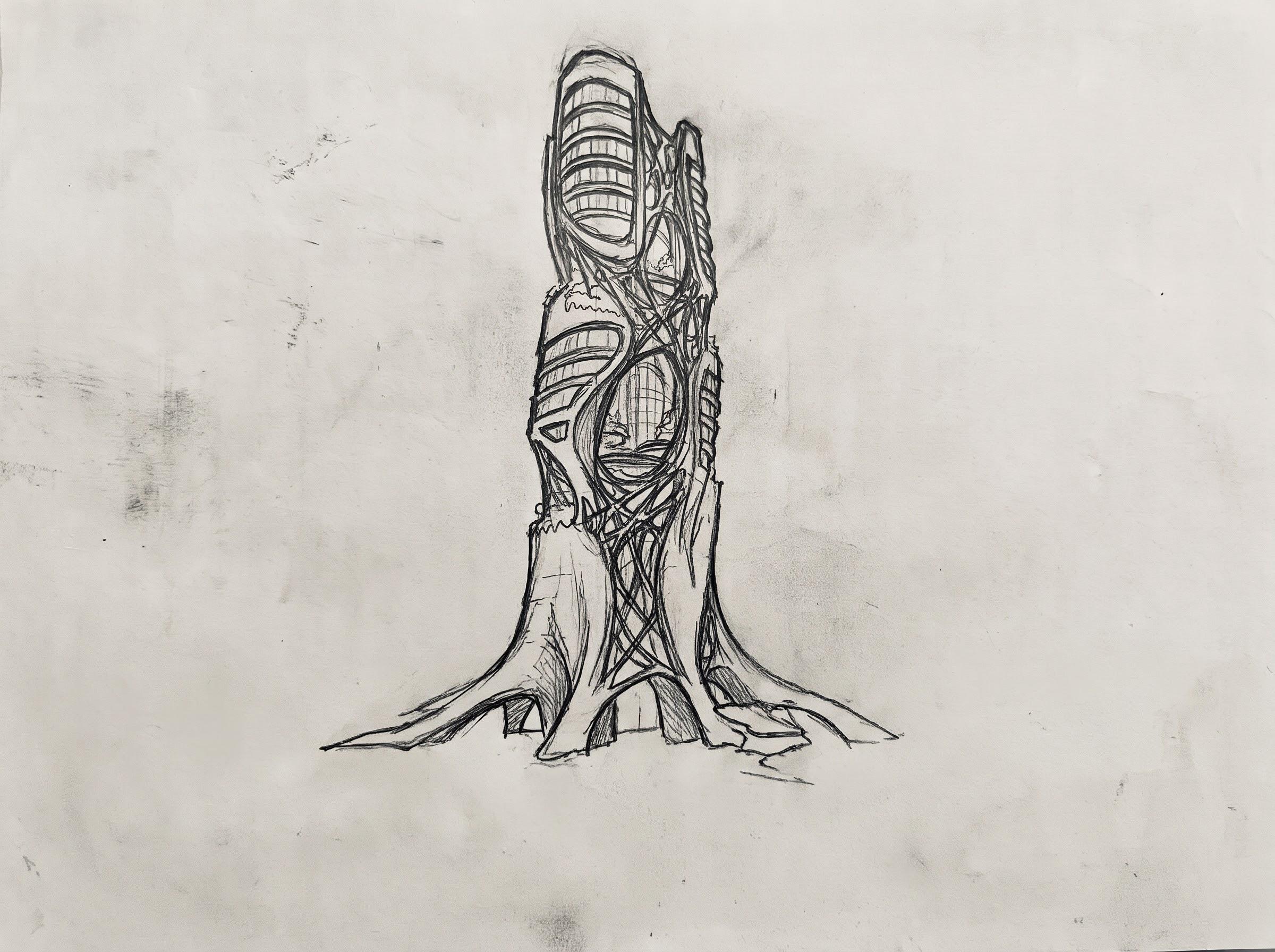
Best workflow to turn this sketch into a parametric Grasshopper model for optimization?

Post image
4 Upvotes

Hi everyone,

I have this conceptual sketch (attached) and I want to translate it into a 3D parametric volume using Rhino and Grasshopper.

The end goal is to run performance optimization on the geometry, so I need the setup to be clean and fully parametric rather than static surfaces.

Does anyone have recommendations on the best logic, native components, or plugins to tackle this efficiently? Any advice on how you would break down this massing would be greatly appreciated!


r/grasshopper3d • • 22d ago

Lampshade Ribs

6 Upvotes

Watch on Youtube👇

https://youtu.be/HxKdDgXvfZI

In this Rhino Grasshopper tutorial for beginners, you’ll learn how to create a parametric lampshade from a single profile curve. Follow along step by step to build the ribs, arrange them with a polar array, and control their count, width, and thickness.


r/grasshopper3d • • 25d ago

How to create a terrain from flat curves?

4 Upvotes

Is there a way to create a terrain from a flat dwg? For some reason all of the tutorials i watched about the topic already have the contours in their correct heights. What I want to know is how did they get the contours there in the first place? Do i have to do it manually one by one or can I do it in gh?