r/greenberets • • Oct 17 '26

Top 20 Most Frequently Asked Questions and Topics

44 Upvotes

1. Am I physically ready for SFAS? Are my numbers good enough?
-       Here are some Performance Benchmarks for pre-OSUT
-       Here are some Performance Benchmarks for pre-SFAS
2. What is the best training program for SFAS?
-       How To Pick the Best Prep Program
3.  How much should I ruck, how often, and how heavy?  
-       The best way to improve rucking performance is field based progressive load carriage, usually 2-3 times a week, focused on short, intense sessions.
4. What run times should I target for selection?
-       Running Prep
-       Faster Runs and Rucks
5. Should I enlist as an 18X or take another route to SFAS?
-       18X vs OP-40  
-       18Xvs OP-40 – Rerunning the Numbers  
-       18X – Updating the Numbers
-       The 18X Program is Broken!
6.  How should I balance strength training, running, and rucking?
-       Here is the Formula
7.  How long should I train before attending SFAS?
-       Candidates who train a year or longer were 3x as likely to get Selected
8.  How do I improve my rucking speed and endurance?
-       Faster Runs and Rucks
-       The best way to improve rucking performance is field based progressive load carriage, usually 2-3 times a week, focused on short intense sessions.
9. Am I too young, too old, or too inexperienced for SFAS?  
-       Am I Too Young? Am I Too Old?
10. What boots, rucksack, and equipment should I use?  
-       SFAS Packing List Manifesto
-       Rucking Gear Manifesto
-       Gift Guide
11. How do I prepare for land navigation?  
-       Do This Free Prep
-       Read A Book Written by a SME
-       Attend a Land Nav Muster
12. What strength standards should I achieve before selection?  
-       Here are some Performance Benchmarks for pre-OSUT
-       Here are some Performance Benchmarks for pre-SFAS
13. How do I prevent injuries and take care of my feet?    
-       TC 31-2 Field Food Care for the Tactical Athlete
14. What actually causes candidates to fail selection?  
-       We can tell you exactly why.
15. How should I prepare mentally for SFAS?
-       Read this.
-       Then follow this program.
16. What happens during Team Week, and how should I prepare?  
-       We can tell you exactly what happens and how to prep.
17. Can I attend SFAS with a previous injury or medical waiver?  
-       It Depends
18. What is the best way to improve push-I ups and pull-ups?
-       Follow This Program
19. Should should I pursue Special Forces through the National Guard?  
-       National Guard SF Part 1
-       National Guard SF Part 2
-       National Guard SF Part 3
20.  What happens if I fail SFAS, and can I return?  
- You tell me


r/greenberets • • Mar 16 '25

Faster Rucks and Runs

Thumbnail
tfvoodoo.com
174 Upvotes

This is easily in the Top 5 of post frequency…”How do I go faster?” I find myself writing the same responses often, so it’s time for a post. We’ll cover both running and rucking.

Running

This one gets a little variation sometimes. “I can sprint really well, but I’m gassed by 2 miles.” Or, “My 2 mile pace is decent, but my 5 mile is really bad.” Or the odd, “My 5 mile isn’t too bad, but my 2 mile is awful”, which isn’t as uncommon as you might think. The remedy for all of them is the same. You have to train. Properly.

Establish a Baseline

The first thing that you need to do is to establish a cardio baseline, which includes lots of Zone 2 running. In fact, Zone 2 should be the training zone for 80% of your volume. Even elite runners follow this formula. Zone 2 is the zone that allows your body to make critical physiological adaptations. You will build slow twitch muscle fibers which help build lactic threshold (this is what makes your legs feel heavy and burning when you run). You will build capillary function which helps transport blood to your tissues. You will build mitochondrial density which helps in energy management. You will build heart resilience which makes pumping blood more efficient. And you will start to strengthen your joints which will help you avoid injury.

But, Zone 2 is boring. Early into your training it may be very slow, even down to near walking pace. It doesn’t matter. Stay in Zone 2. You can’t skip this part, because you need those physiological adaptations to occur, and they take 5-7 weeks to start to manifest. It doesn’t matter what your pace is, it matters what your Zone is. Stay in Zone 2.

There’s lots of ways to measure Zone 2.

  • I like the formula 220-age = max x .6 - .7 to establish the range. It’s simple, it’s free, but it can be a little inaccurate. But it is simple and free. Plus, it’s simple and free.
  • Your fitness wearable can calculate it; but - chest mounted straps are superior, up to 20% more accurate; Apple Watch is notoriously inaccurate; some people just don’t test well with a wearable.
  • The Talk Test, wherein you should be able to comfortably hold a conversation without gasping. Not a few words, but a regular conversation. Can be inaccurate.
  • The Karvonen Formula, which also incorporates your resting heart rate and can give a more accurate calculation than just the 220-age formula. Look it up, but be prepared for some calculations.
  • You can have a Lactate Threshold test done, but it can be challenging to find a test facility, it’s a bit invasive, and it can be expensive. But, if done correctly it can be very accurate and useful.
  • RPE (Rate of Perceived Effort) can be your metric, but most new athletes can struggle to gauge this accurately without significant coaching. You are essentially guessing.

But Zone is Slow and I Want to Go Fast!

Okay, but as we just noted you have to let your body manifest those adaptations for a few months. Once you can run 90 minutes unbroken (in zone, without stopping) then you can start speed work. Can you start earlier? Sure, I’m just giving a model and protocol that maximizes return and minimizes risk of injuries.

As we noted, Zone 2 should encompass 80% of your training volume. So if you run 4-5 times a week that’s probably 2-3 x Zone 2 runs, a speed session, and a Zone 1 recovery session. Your speed work should be deliberate. Whatever your speed work methodology…track intervals or repeats, threshold or tempo runs, Fartleks, hill repeats…you are essentially training yourself to run faster (at or near your desired pace) for a short period, then slowing down to partially recover, then running faster again. Over time, this will enable you to maintain that faster pace for longer periods and you should be able to complete your run at that now faster pace. You still have to train 80% in Zone 2 though.

So, you can pick any of the “speed work” methods that I listed above (and there are others), but the protocol is the same. A simple one that I like is the track intervals (you don’t need a track per se, you just need accurate measurements…but using a track makes you more athletic…#science). Here is the formula: Do mobility and warmup drills, then do 400m sprints (one lap). You should be aiming to hit 1:30 a lap, which is a 6 minute mile pace. Slow jog/rest period is 1:30. If you finish faster than 1:30 slow down. Hit the 1:30 on the dot. Week one do 6-8 total sets. If you can’t do a full lap then do a half lap at half the time.

On week two, increase sets by 2. So, if you started with 6x400m, then you will do 8x400 in week two. Continue to add sets until you can do 12x400m.

Once you can do that while maintaining that 1:30 pace, you will graduate to 800m sprints. Start off at 4x800m. Maintain a 3min pace with 3min rest. Add sets each week until you hit 8x800m.

Once you can do that consistently, you graduate to 1600m sprints. 6min mile with a 6minute rest x 3 sets. Now you are running 6 minute miles. It may take you months to get there, all while maintaining 80% of your volume in Z2, but that’s the best way to do it.

Okay, But How to I Actually Go Faster?

There are only 2 ways to go faster…a longer stride (so each step propels you forward more) or faster cadence (so your feet are moving quicker between foot strikes). Faster cadence is probably better as altering your stride length can force odd form, unnaturally alter your gait, and significantly increase the likelihood of injury. That doesn’t mean that you shouldn’t examine your stride, as poor biomechanics can really slow you down. Lots of resources for evaluating your gait, but a qualified coach is probably your best option.

But, a quicker cadence is the better option. And there is a lot that you can do to improve this. It takes some dedication, some public math, and some trial and error, but even small improvements add up to significant amounts of time in the aggregate. There are entire cadence/pace playlists on all of the music services that can help. If you’ve been following Terminator Training’s ultra run journey then you know that he monkeyed (that’s a technical term) with his cadence to great effect. And he was an experienced runner at that point, so even ‘advanced athletes’ can benefit.

There are multiple techniques to generate a faster cadence. Contact time (the time your foot is touching the ground), knee drive, strike position, follow through. These all come with cues like quick feet, high knees, strike lightly, shorten your stride. So it’s often worth the effort to spend some time exploring these options to see which one works for you. If it’s stupid and it works, then it’s not stupid.

How To Get Faster at Rucking

Rucking is much the same as running, but not identical. First, strength training is much more important. The literature demonstrates that strength training is a reliable prerequisite for rucking performance, specifically the benchpress and the squat. This is because in order to adequately stabilize the ruck, thus decreasing excessive body movement, you need to be strong. A sloppy load compromises efficiency. So you should have a comprehensive strength plan if you want to maximize your rucking performance.

Second, you should probably establish a baseline cardio, with lots of Zone 2 running (we recommend 90 minutes unbroken), before you start rucking. Rucking is a unique physical load, with unique features, techniques, and misery. So the more that you can prepare the baseline physical stuff…strength and cardio…the less you’ll have to contend with when you want to focus on the ruck specific stuff. So, lots of Z2 running to establish good cardio and a proper strength training regimen to build a musculature capable of managing the ruck load. Thick traps for thick straps.

Once you start rucking you should know that the best way to build rucking performance is field based progressive load carriage, usually 2-3 times a week, focused on short intense sessions. That’s not my opinion, that’s what the literature demonstrates. Conventional wisdom might say that the best way to get better at rucking is more rucking, but conventional wisdom probably accounts for more injuries than it should. Just follow the protocol.

Start with a light weight, ease into both your pace and your distance, and never increase any domain more than 10% week to week. Low and slow, gradually build, allow the adaptations to manifest, enjoy the results.

Okay, But How to I Actually Go Faster?

Just like with running, there are only 2 ways to go faster…a longer stride (so each step propels you forward) or faster cadence (so your feet are moving quicker between foot strikes). Faster cadence is probably better as altering your stride length can force odd form, unnaturally alter your gait, and significantly increase the likelihood of injury. This is especially true given that you are now loaded…the ruck can exacerbate problems. That doesn’t mean that you shouldn’t examine your stride, as poor biomechanics can really slow you down. Lots of resources for evaluating your gait, but a qualified coach is probably your best option.

So, a quicker cadence is the better option. And there is a lot that you can do to improve this. Just like with running, small improvements add up to significant amounts of time in the aggregate. In RUSU we did some cadence calculations for rucking, so you can see what small changes do in the long run.

The same principles from running cadence training apply here, but we should cover arm swing, posture, and foot placement more carefully. Your arm swing can have a huge impact on your ability to maintain a proper cadence. If you’re training for a military application, like SFAS, then a weapon is in your future. That can obviously alter your arm swing. But train early without this impediment so you can develop a proper form, then introduce the weapon (or pipe or sledge [not recommended]).

Your posture can affect your cadence, your stride, and your breathing. You want a heads up, chest open, slight forward posture. Good luck with that…you’ve got a ruck pressing on your neck, pulling you back, and compressing your torso. This is why it’s important to strength train! Build the musculature that allows to remain head up, open chest, and mostly erect.

A “standard” ruck time is 15 minute miles. A competitive ruck time is 12-13 minute miles. Many, maybe even most, can’t get to 12 minute miles just walking. But you might be surprised how fast you can go ‘just walking’. You might really benefit from some speed walk training, following the run speed training protocols, and just concentrate on fast feet. The ruck load definitely complicates things, but if you don’t train it then don’t complain about your lack of ability. Fast feet (non-running) speed sessions can pay huge dividends.

The Shuffle

Short Ruckers are definitely at a disadvantage. Short legs just struggle at higher speeds. As discussed, to go faster you either have to lengthen your stride or increase your cadence. Fast walking can get you close, but at a certain point you will likely need to do more. Fight the urge to run. Ruck running is tremendously impactful and you should be well into a comprehensive strength and conditioning regimen before any ruck rucking. A shuffle is a compromise solution…more impactful than walking, less impactful than running. Faster than walking, slower than running. It’s all about trade-offs.

The difference between a shuffle and run is load management. This comes down to foot placement and hip/knee alignment. In a walk, the leg extends entirely, locking the knee. This briefly relaxes the muscles allowing for extended periods of activity. When you run, the muscle never fully relaxes, thus it fatigues quicker. But it’s faster. So the the aim of a shuffle is to find that sweet spot in between. It is very much an art, not a science. And you can spend years dialing in the right elements to perfect your shuffle. It’s almost impossible to describe and there is no universal “This is what right looks like”, because it depends on the load, the terrain, the pace, the person, and many innumerable other factors. Experience is the best teacher.

It’s a bit like riding a bike. You can’t do it at all until suddenly you can and then it’s easy. And once you learn how to do it you never forget. But try explaining it to a non-rider how to ride a bike with just words. It’s almost impossible. But there it is.

Injury Prevention

The number 1 predictor of an injury is a previous injury. So it’s important to not get injured in the first place, thus “Injury Prevention”. I would say that there are two equally important components to injury prevention; strength training and proper programming.

In SUAR we spent an entire chapter (Chapter 4) talking about the most common SFAS prep injuries and they’re almost all lower extremity. Shin splints, ankle strains, runners knee, plantar fasciitis, and Achilles tendonitis. They either result from weak structure or overuse, so the mitigation strategy is the strengthen them and don’t overwork them. We deliberately program an extended time early in the program to allow you to acclimate to the work. We also prescribe specific exercises to help. And it’s nearly the same exercises for all of the injuries (there’s only so many ways you can strengthen your lower legs!). You would be amazed what a step, a towel, an anchor point, and some resistance bands can do.

Spend some time early in your training to work specific injury prevention exercises and strategies. Call them mobility drills, or warmups, or whatever, but do them. They seem like a minor inconvenience for most as they’re little movements with little to no loads, so they don’t present like they would be consequential. But a few weeks struggling with shin splints can make you miserable, delay progress, and now you are predisposed for the injury.

Recovery

We would be remiss if we didn’t cover the non-working out stuff. Everyone focuses on the workouts, almost exclusively, and ignores the other stuff. Even though the workouts are 10% of the equation. You have to focus more on the other variables…the sleep, the nutrition, the recovery. Just think about it this way. I think we’ve covered the importance of Zone 2 running enough, haven’t we? But if Zone 2 is dependent on a reliable and accurate heart rate measurement and you have such poor sleep, recovery, and nutrition habits that you can’t get a consistent heart rate reading, how effective is your long range programming going to be? You sleep so poorly and chug so many Monsters that your heart can barely get through a regular day, much less a data-driven workout regimen. You think more running equals better running so you just stack endless miles because you are afraid that you’re not doing enough. Stop doing this. Don’t just workout. Train. Actually follow a program. A program that was specifically designed with all of these variables in mind.

So that’s how you go faster for both running and rucking. Simple, but not easy. Lots of nuance, lots of conditional language (likely, proper, mostly, etc) that makes the definitive guidance seem less definitive. But that’s the nature of the beast. This is why we developed a whole program for this stuff. SUAR is all of these variables packed into one comprehensive package. RUSU covers lots of the timing variables and expectations. There are other great programs out there depending on your goals. But the takeaway is that rucking and running faster is just exercise science. We know how to do it. Just follow the protocols and trust the process.

r/greenberets • • 3h ago

Question Prior Service Air Force

1 Upvotes

I am 23 with a wife and baby.
Currently active duty Air Force with a combat job.
I have airborne and SERE C.

I do not get fulfillment from my job, I love the guys and learning new shit but I’m just not scratching that itch. Really it’s probably ego driven or just missing being deep in the bullshit.

Anyway, I’d like to go blue to green guard.

What does the retrain process look like prior to and during SFAS?

Is there a significant difference in the pipeline between guard and active (for PS)?

Would I be required to go to OSUT?
If so, what does that look like for prior service and how is the family life?

I see a lot of previous posts saying to wait until after the Q to go to ranger, would this stand for blue to green as well?

Would AF SERE transfer to Army or would I have to complete the army course as well? Would skipping it separate me from the team I’d be going through with?

How could I posture myself and family to ensure they are the most comfortable while going through?
(My wife previously handled about a year and a half of on/off no contact training quite well)

Really any information would be pretty helpful. Thank you gents


r/greenberets • • 7h ago

Q Course Geo Bachelors with families

2 Upvotes

Looking for legit insight from the homies that have graduated Q after doing the geo bachelor life with families? Its a common question for applicants, and I am looking for legit experiences to share. Bonus points if anyone attempted the BAH waiver (and got promptly denied). Thanks in advance!


r/greenberets • • 9h ago

Question CDQC

2 Upvotes

Is true there is a Pre dive program that you can volunteer when you are in language course? How hard is it to do it?


r/greenberets • • 7h ago

Best path to SF/SFAS

1 Upvotes

Hi all, what are your thoughts on the best pathway to getting the chance to go to SFAS and possibly getting selected?

Sign 3-3.5 year 11x contract without airborne and without RASP -> Submit packet for SF

OR

Sign 4-4.5 year 11x contract w/ either airborne or RASP -> Submit packet for SF

OR

Sign 5-6 year 18x contract

For context, I am a 21M with a Bachelors degree in Accounting/Finance. I strictly want to enlist and don't want to consider the officer path.

Also, please let me know if there are any other better ways of going about getting the chance to go to SFAS.

Not sure if the Army life is for me so I am hesitating on that extra 2 year commitment upfront to sign an 18x because yes, I'll get a chance to go to SFAS if I meet PT standards and don't get injured, but if I washout then that's another 2 years as an 11x (or needs of the army) which I want to experience with a 3 year contract, but who knows I might not like being in for that extra 2 years as an 11x.


r/greenberets • • 17h ago

Question Practice Ruck packing list?

1 Upvotes

My understanding is majority of SFAS, you are going to be underneath a ruck. So it obviously makes sense to be rucking more. With that being said, after thinking about it a little, it would also make sense to get good at packing the RUCK. What does a typical packing list at SFAS look like? I’m wanting to get some reps in packing it quickly and figuring out the best way to pack it for the events ahead.


r/greenberets • • 1d ago

AD officer in Q transitioning to NG as 18A

10 Upvotes

A lot of the guard content on here is more enlisted specific- was wondering if any 18As could weigh in on what it is like balancing the guard with their civilian jobs, quality of guard units compared to active, etc.

I’m post SFAS in the Q right now- has always been sorta looking at the guard as an option to balance the SF mission with starting a stable civilian career and building a family. I was selected as an AD officer so obviously I know I would have some hoops to jump through to even get to the guard (ADSOs/etc).

Is it the best of both worlds- or the worst of both worlds? Appreciate any input y’all have. Just trying to gather more data points in addition to what I hear around the block.


r/greenberets • • 1d ago

Looking for advice on improving my AFT and 5-mile run

4 Upvotes

Looking for some input from especially those who have experience with training and preparing for selection. I recently took my Army Fitness Test and wanted to get some honest feedback on my scores and where I should focus my training, particularly when it comes to improving my running.

My current scores:

Deadlift: 310 lbs
Hand-Release Push-Ups: 59
Sprint-Drag-Carry: 1:42
Plank: 3:40
2-Mile Run: 15:31
5-Mile Run: 49:25

I’m looking to improve my overall performance, but running is probably where I need to make the biggest gains, specifically my 2-mile and 5-mile times. I’m also looking at purchasing a program from Terminator Training Method and wanted to see if anyone has experience with their programs. Which program would you recommend for someone with my current numbers and goals? Would you recommend one of their programs, or would I be better off following a different approach?

I’d appreciate honest feedback on my scores, where you think my biggest weaknesses are, and what you would prioritize to get me better prepared physically.

Thanks in advance for any advice.


r/greenberets • • 1d ago

Recent AFT/Physical Prepardness

5 Upvotes

I just recently have found out about Guard SF and want to go to an SFRE, hopefully within a 6 month window of getting home. With that being said I wanted to give myself some time to get under my ruck, work on knot tying, push-up’s and pull-up’s in that 6 month window. I haven’t decided where I’ll attend an SFRE yet either but I’m pretty flexible when it comes to that part and I need to do more research. I wanted to share my scores so that I could get some advice as to how physically prepared I would be for something like selection.

Prior to this PT test I thought I had a lot of work to do fitness wise to get back into the shape I was in before I shipped, but I shocked myself today. Still need some work but here were my scores.

3 Rep Deadlift: 350

Hand-Release Push Ups: 55

Spring Drag Carry: 1:27

Plank: 3:40

2 Mile Run: 11:49

Definitely could improve on my push-ups I think that goes without saying. Does anyone have any advice on how to improve significantly on those? I feel like I just have plateaued and can’t break the 55 mark. In addition, does anyone have any coaching/prep programs they would recommend? I have been looking a lot into terminator training recently for when I finish AIT.

Lastly, does anyone have any recommendations for states to attend an SFRE in?


r/greenberets • • 2d ago

Christmas gift ideas

10 Upvotes

My fiance is a Green Bean and he’s getting ready to deploy soon. Any useful/cool gift ideas for him to bring on his deployment? Thank you all! He’s a Charlie if that’s helpful at all!


r/greenberets • • 2d ago

Question Q course

3 Upvotes

If I already have Airborne and Sere C how will my timeline work after passing selection?


r/greenberets • • 2d ago

SF/ Special Operations Officer Career progression

6 Upvotes

Just curious about this. I'm way too old to be going in the military. I'm enjoying lots of special ops podcasts, and this crossed my mind. I'm curious if it's possible and/or likely for an officer to spend most or even all of a 20 to 30 year career in SF. I know that a Capt. only gets to stay on a team 2 years, maybe get an extra year if good/lucky. I guess I can expand the question to any and all special ops: Ranger Regiment, Delta. Does an officer have to do "big Army" time too?


r/greenberets • • 3d ago

Book Recommendation: On Wings of Eagles

5 Upvotes

Just finished this book. True story of two executives working for Ross Perot in the late 1970s taken as hostages by the Iranian Government. Perot (who I need to do some further reading on but comes off as a pretty stand up dude) enlists the help of retired Col. Bull Simons (7th, 8th SFG) to break the men out when diplomacy fails. Awesome read.


r/greenberets • • 3d ago

Best way to get assigned to 5th SFG at Fort Campbell.

2 Upvotes

I’m currently a 92F/SGT (P) here at Fort Campbell, and I’m trying to request an IPT to 5th SFG.I’ve been hearing different things about the process. Some people have recommended reaching out directly to the unit’s CSM, while others have said to work through my retention NCO.
For those who have experience with this process, what’s the best way to approach it as an E-5? Should I start by contacting the unit’s leadership, go through retention, or try both?
I’d appreciate any advice on the proper steps to take and what I can realistically do at my current rank to make this happen.

P.S. If anyone is currently assigned to 5th Group or knows someone who is, I’d really appreciate a POC I could reach out to see if I can get some assistance with the IPT process. Thanks in advance!


r/greenberets • • 4d ago

18x looking for advice

9 Upvotes

Hey guys, got my 18x contract and I ship out in 4 months. Tried to get a date a little further out but this is the best my recruiter could do. My current stats are
2 mile 15:20
Strict pull ups 20
HRPU 46
Plank 3:15
Haven’t tested a 5 mile run yet
Haven’t test a 12 mile ruck yet. ( I have been working my way up to it)

My question for you guys is what program would more likely be the best option for me? I’ve thought about ordering TFVooDoo shut up and ruck but was curious about other programs out there, Thanks guys.


r/greenberets • • 4d ago

Updated Stats for SFRE

5 Upvotes

So im planning on going to an SFRE in 3ish months. I’ve been training for about a year and just recently started TTM’s RRL program to prep for my SFRE. Well I’ve made pretty good progres, especially on my ruck (which if you’ve seen my last post, my ruck was tragic and I couldn’t ruck over 4 miles). I’ll list my stats for when I started to now and the stats I want to hit before SFAS (5.5 months away).

My stats a little before RRL

  • 10 strict pull-ups
  • 45 HRPU
  • 3:00 plank
  • 14:45 2-mile
  • 45:15 5-mile
  • ruck was maxed at 3.70 miles and was supposed to be a 12 mile attempt

My stats currently (halfway through RRL and about 6 months from previous stats)

  • 13 strict PU
  • 57 HRPU
  • 3:40 plank
  • 14:11 2-mile
  • 39:53 5-mile
  • 12 mile ruck is 2:39

I haven’t tested some of these in about 2 months but I will have a test week in about 3 weeks. I believe i wouldve made a lot of progress on my run times when I do test.

Stats I’m aiming for, for SFAS

  • 13:30 2-mile
  • 37:00 5-mile
  • 2:20 12 mile
  • 18 PU
  • 65 HRPU
  • 4 min plank

Ive got some work to do but I believe it’s in my reach now, despite some people basically saying I wouldn’t make it without 1 on 1 coaching. The rucking gains I’ve made from RRL is insane. Walking only rucks have been a game changer. I plan on doing TTM’s selection prep after my SFRE. Some people might see that as over kill but I think it’ll give me that final push of gains to crush selection. Anyways, open to question, suggestions and criticisms. I will post how I do on test week. Expect run time progression


r/greenberets • • 4d ago

Question 12B to 18C?

3 Upvotes

Current 12B here, love what I do but don’t really get to do it. Honestly 12B is a dying MOS so even more motivation to go. Wanting to pick 18C as my MOS assuming I get selected. Main question is what are the primary differences between the 2? Any 12B’s in here that became an 18C and like it more as far as the engineer side of the job? As far as where I am in the process. Working on my physical packet ATM. Just waiting to get a root canal done to start phase 2. Also been doing the TB1 operator for strength and TB2 for conditioning.


r/greenberets • • 5d ago

Ranger Selection

0 Upvotes

My IQ is -50 do you think I'm too smart to join the army rangers?


r/greenberets • • 5d ago

Career Advice

3 Upvotes

New account just to keep anonymity. Really feel like my career hasn’t turned out the way I’ve wanted it so far. Infantry CPT who is about to graduate MCCC and then has to go to ranger. Overall had a pretty normal LT time. Got two PLTs and got to be an XO. Got MQs and performed well. However without the tab my marketplace didn’t go great and now I’m heading to an armored unit for command. Biggest regret is not going to SFAS. I self selected since I didn’t have a tab. I love the army and want to continue but the big army glide path for an infantry officer seems awful. I have no interest in any other MOS. Is there any hope for me going to selection or is my window closed? Is the NG an option after command? Honestly just looking for some advice. Completely recognize this situation is due to my own choices.


r/greenberets • • 5d ago

Question SF vs Rangers

1 Upvotes

TLDR, need second opinions on this as it is good practice to get second opinions when planning stuff out, especially as a young guy: Given my objectives of serving, serving long enough on a team to justify selection+ qualification, and also get out in time to avoid excessive injury, get an education and start a family, is rangers the right direction to go towards?

Hello wanted people’s take on this: as I consider a military career, I am trying to balance several objectives that may compete with each other.

1: First, I want to serve in the military as a combatant and in special operations. I also want to be a medic and the best two units I’ve come across so far are SF and the 75th ranger regiment.

2: I also want to get out in time to get an education afterwards as a physician assistant and have a family. Hopefully in my early to mid 30s (I will enlist in about a year and a half from now at 23).

3: The third and fourth objectives sort of go together and that is to have a good Selection/qualification to team time ratio but also minimize injury. The selection+qualification for SF, if I get the 18d MOS (not guaranteed of course), is going to extend my time in the military past what I want (Enlist at 23 and then 2-3 of selection and qualification will mean I stay until 33 ish if I am going for about a 1:4 ratio, and yes I know contract lengths don’t work like that but this is with the assumption that I reenlist and try to get as close to the ratio) whereas rangers shows a more favorable exit at 29. This is also while trying to minimize accumulating physical wear and tear as much as possible. The thought is that this should be a a well thought out and calculated risk. What are your thoughts, thank you.


r/greenberets • • 6d ago

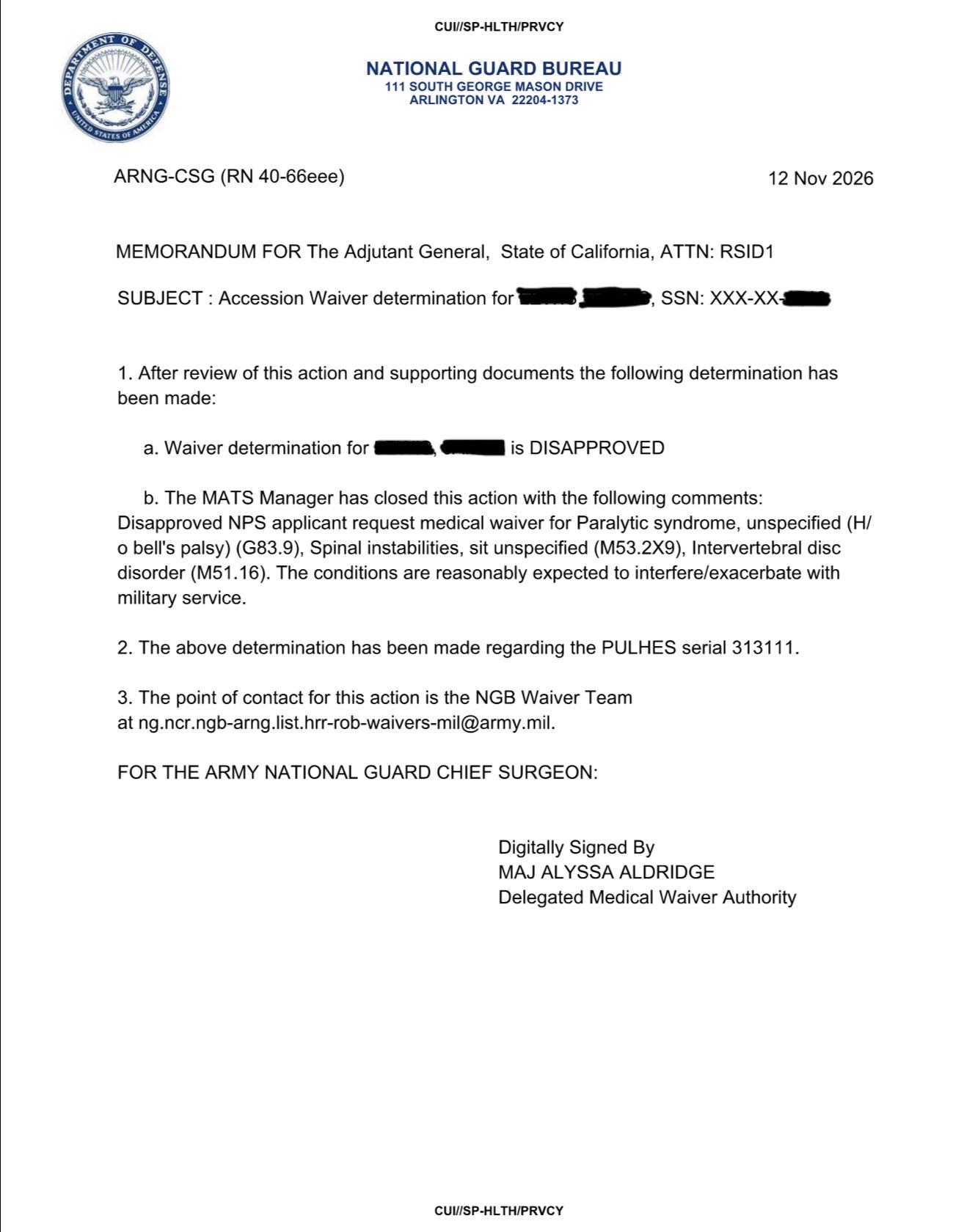
NG 18x waiver

Post image
26 Upvotes

Long time reader, first time posting. Prepped for a year and passed my second SFRE a couple months ago. MEPs doc told me I would need waivers for the following. The lumbar history looks a lot worse on paper. I’ve been asymptomatic 5+ years with my back and 10 years for Bell’s palsy.

ASVAB -85
GT -124
HRPU -51
Pull ups -15
Plank -3:40
2mile -13:24
12mile 45lb dry 2:47


r/greenberets • • 6d ago

Rasp prep

0 Upvotes

I’m doing a long run intervals and a ruck a week rn prob gonna add one more run I need a rucksack though and don’t know which one to get in prep for rasp im thinking the Rothco G.I. Style Large O.D. Alice Pack With Frame I’m 6 4 195 thanks


r/greenberets • • 7d ago

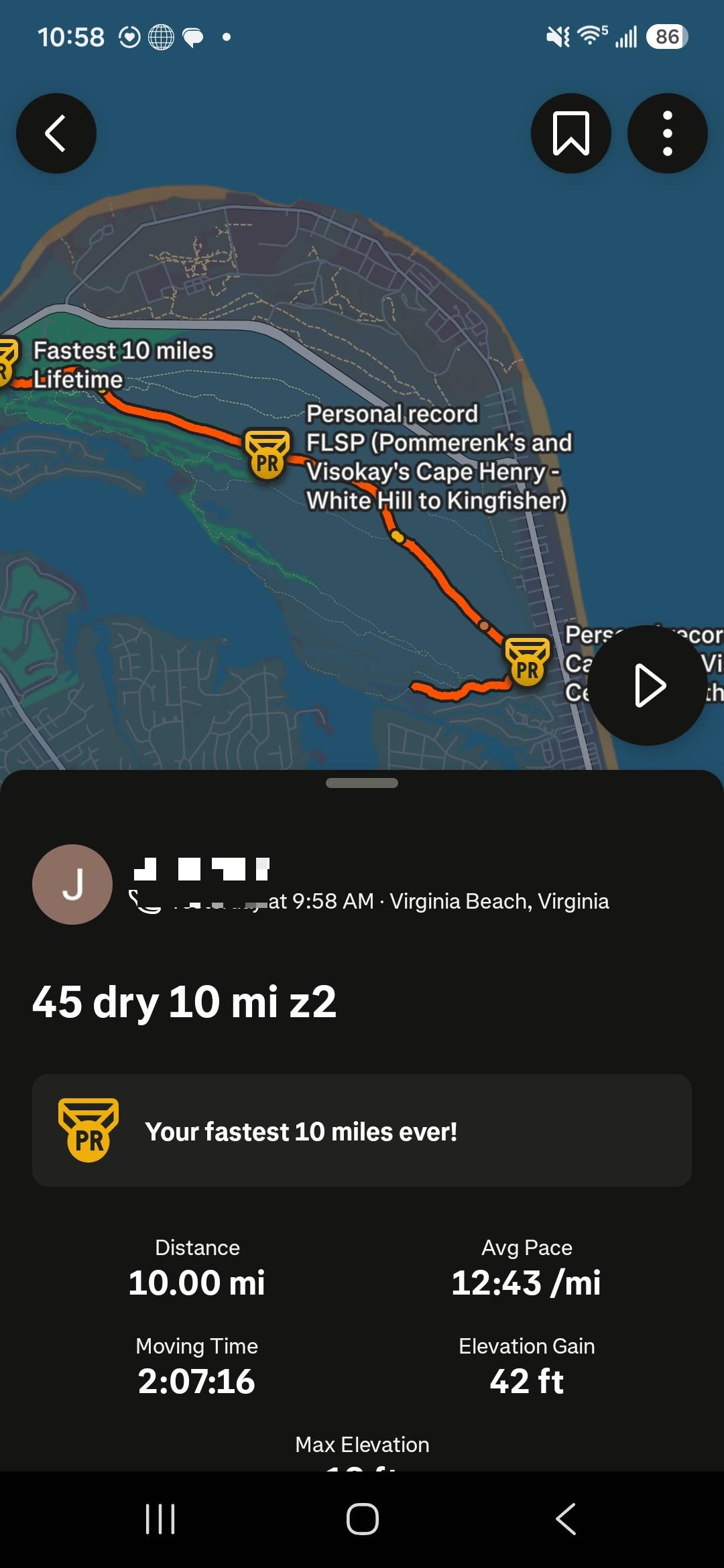
Other Last ruck before SFRE

Post image
26 Upvotes

Felt absolutely great, that mid Atlantic November cold hits just right. Hope to see some of you studs out there this weekend, cheers!


r/greenberets • • 7d ago

Question Anyone in selection try them?

Post image
8 Upvotes