
r/hikinggear • u/PossibilityOpening47 • 2h ago
Rain Shell options?
reddit.com
1
Upvotes
r/hikinggear • u/DestructablePinata • Oct 27 '25
THE FOOTWEAR INFORMATION THREAD. CONSOLIDATED: UPDATE 1/05/2025
Update: 15 March 2025!
Update: 5 April 2025 - Simplifies fitment section re: spacing; draws attention to flex point.
Update: 18 August 2025 - Salomon included in recommendations after several months of testing, in which they performed flawlessly.
Update: 5 December 2025 - Links to all other FOOTWEAR related posts linked within this post to streamline subreddit.
Update: 13 May 2026 - slight edits made for clarity and to correct found typos.
UPDATE: 29 May 2026 - Product "Pecard Leather Dressing" added to care and maintenance! Read information below!
Links to my subreddit and all supplementary posts to this thread are included below!
Full subreddit ...
https://www.reddit.com/r/Hiking_Footwear_Info/
Fitment info thread ...
https://www.reddit.com/r/Hiking_Footwear_Info/s/cuNpzfpL7a
Support info thread ...
https://www.reddit.com/r/Hiking_Footwear_Info/s/7IKv2UHuWn
Cold Conditions - Footwear ...
https://www.reddit.com/r/Hiking_Footwear_Info/s/IFurIJmPaB
Treating your Footwear ...
https://www.reddit.com/r/Hiking_Footwear_Info/s/pgVc0EZhYa
Hydrolysis ...
https://www.reddit.com/r/Hiking_Footwear_Info/s/GbxroCmjfN
Preface
If you have something productive to add to the list, please post it below.
If you have any criticisms, post them below, and I'll try to get back to you.
If you need recommendations for footwear, post your questions here. People who can help can respond directly to you within the thread. Feel free to PM me for additional information or help with fitment.
Let's make this a place of learning!
First piece of advice
Go to a store and try things on in person. There's no substitute for seeing how things feel on your own feet. What works for one likely doesn't work for the next, so you'll have to do the legwork of trying things on and seeing what suits YOUR feet. Some outfitters in some locations are very knowledgeable and helpful when it comes to assisting with footwear sizing and selection. Others, not so much.
If you don't have that option, be very careful about what footwear you order online. Do your due diligence before ordering and see what reviewers and your peers say on quality, performance, and fitment. You may have to order online, but you don't have to go on a wild goose chase.
Do your due diligence, people.
Boots vs. Trail Runners: Which one?
Waterproof boots are better in cold weather and cold, inclement weather. They don't perform as well in hot, humid weather because they may not dry fast enough if submerged, and you may sweat through them quickly. They do a much better job protecting your feet from foliage, debris, and ingress of water, especially when paired with gaiters. Non-waterproof boots are better for hot, humid environments because they can get wet and dry out as you're moving.
Boots typically have a more rigid midsole, which is typically where the support comes from in a mid boot. The collar doesn't add much support until it gets around the ~6-8" mark and/or is made of thick leather. Boots like the Salomon X Ultra series offer no more support than their low-top counterparts. Boots like the Asolo Fugitive GTX and, especially, the Asolo TPS 520 GV Evo will offer loads more support. Supportive boots are better for hauling heavy packs, uneven terrain, sidehilling, and overgrown terrain.
Non-waterproof trail runners are beneficial in warm, dry weather, warm, wet weather and when you need to do lots of water crossings. They can get soaked and be walked dry quickly. They're not good for harsh terrain and bushwhacking, at least, not for very long. They just aren't durable enough. Never go with GTX low-tops! They still allow the ingress of water very easily due to the low collar, and they will take a very long time to dry because the waterproof-breathable membrane will inhibit the evaporation process. You'll be stuck with waterlogged shoes.
Which one is better? That depends entirely on the wearer's use case. There is no right or wrong answer unless you're jeopardizing your safety or the safety of others on the hike through being ill-prepared. If you want to use a mountaineering boot on a flat, easy trail, more power to you. If you want to use a trail runner in the mountains, be safe but have fun. Do your research and go with what suits you best.
Materials
Leather vs. Synthetic - Leather is more hard-wearing and durable at the expense of weight and ease of break-in. Synthetics are lighter and more flexible at the expense of durability.
PU vs. EVA midsoles - PU never loses its shape or elasticity, maintaining its original shock absorption and support for the life of the footwear. It will eventually degrade due to hydrolysis; how rapidly depends upon conditions the footwear is stored in and how often it's used. EVA is lighter and lasts indefinitely in storage, but it compresses over time, losing shock absorption and support. Note that while the EVA midsole may store well, other components of the boots may be PU or adhesives that do deteriorate.
GTX or no? - Go with GTX for cold, wet environments, environments that are generally dry but with random showers, and day hikes if the environment is not too hot. Go with non-waterproof options for hot, humid environments, especially with water crossings. GTX will keep water below the collar out, but it will also inhibit breathability and the footwear's ability to dry out. It's a detriment in the swamps but a huge benefit in subfreezing, wet conditions.
Insulation - Personal choice. It may be necessary for some use cases, such as static use in subfreezing temps, but it will also make you sweat more, requiring more frequent sock changes. This is very personal.
Maintenance
Boots and shoes will need regular maintenance to preserve their functionality and increase lifespan.
Generally, water and a nylon bristle brush are enough. However, both waterproof and non-waterproof footwear should be cleaned regularly with a tech wash of sorts, such as Grangers Footwear + Gear Cleaner or Nikwax Footwear Cleaning Gel to remove dirt and debris.
Waterproof boots and shoes and leather boots and shoes should then be treated with the appropriate product, such as:
Full-grain leather - Nikwax Waterproofing Wax for Leather; Grangers Waterproofing Wax; Meindl Sport Wax.
Addition: Pecard Leather Dressing
Pecard Leather Dressing is a product I've been testing for a few months now on my pairs of Asolo TPS 520s. Nikwax is woefully inadequate for conditioning my boots in my current environment. Grangers did better, as it seemed to lock in the moisture that was already present. Still, inadequate. Pecard Leather Dressing is a combination of several ingredients, namely oils and beeswax. It's pulled deeply into the leather, softening, conditioning, and waterproofing it. It works exceptionally well in dry climates to preserve your boots. That said, it can overly soften your boots if you use it too frequently or in too thick of coats. If you want the boots a little softer, you can use more to achieve that. I'm unsure of how it affects resoles, but honestly, I'm planning not to resole my Asolos. Why? The price of shipping to and from Italy and the cost of the resole itself are just too much for me. Plus, they put a toe cap on, which I do not want. I'd rather just buy a new pair.
Nubuck - Nikwax Nubuck & Suede Proof; Grangers Footwear Repel Plus; Grangers Waterproofing Wax or Meindl Sport Wax (will change texture and appearance).
Suede - Nikwax Nubuck & Suede Proof or Grangers Footwear Repel Plus.
Synthetics - Nikwax Fabric & Leather Proof or Grangers Footwear Repel Plus.
Read the instructions for your footwear to see what will provide the results you most desire.
Some products can be detrimental to the health of your footwear by drying out leather, preventing conditioning, preventing resoling, rotting stitching, and overly softening leather. Research things before you do them.
Break-in and fitment
Go with what fits best.
Getting the wrong footwear, regardless of what's wrong with the fitment, can lead to a lot of issues. It can lead blisters, blackened and lost toenails, bunions, hammer toes, and more. It's important to take your time in choosing your footwear, and it's important to go into your search with good information and knowledge on fitting techniques.
Boots and shoes should be comfortable out of the box with no issues, such as slippage, hot spots, pinching, rubbing, pressure, etc. They should be good to go right away. You'll still have to break them in, but there should be no initial discomfort. Break them in gradually with work around the house, followed by yard work, followed by light hikes. After one or two weeks, depending upon the shoe or boot, they should be broken-in. Some all-leather boots may take a bit longer.
Why do this if they should be immediately comfortable? To ensure that they're the correct fit and to get the boots moving with your feet. A break-in will never fix a poor fit, but it can make an already great fit even more comfortable as materials stretch and compress with the movements of your feet.
Disclaimer: sizing is not consistent between brands, or sometimes, even between different models within the same brand! Do not assume that you are always the same size! You may need to go up or down, depending upon the brand!
Try shoes and boots on at the end of the day when your feet are most swollen, wearing the thickest socks you intend to use for hiking with that pair of boots. Take the insoles out if that's an option and stand on them shoulder width apart. This will give you a good idea of the fit before you even try on the shoes or boots. Your feet should fit within the outlines of the insoles without much overhang or excess space. Boots often balloon out in shape, so if there's a tiny bit of overhang with the insole but no discomfort within the boot, it's OK. If there's a lot of empty space, the boot is likely too high in volume for your feet, lending itself to a sloppy fit and blisters. There should be roughly [a finger's width to thumb's width] of space between your longest toe and the end of the boot or shoe. You should have at least 1 cm of space. Less space is not enough to prevent injuries. You can have more space if it doesn't throw off the flex point of the boot or shoe. The widest part of your foot should fit inside the widest part of the boot or shoe; the boot or shoe should naturally flex at the same point as your foot.
The insole trick does not work with all shoes or boots. Some brands use the same insoles for a full- and half-size, meaning a US 10.5 and US 10, for example, may use the exact same insole. You will have to go by feel in some circumstances. Put the shoes or boots on, seating your heel firmly. Lace the footwear snug--but not tight! Be sure that there are no loose areas. Get up, walk around, go up and down the inclines if the store has them and tap your toes into the ground, checking to see if there's any slippage, pressure points being aggravated, play with the lacing, etc. Wear them around a good while.
This is a general guide that will help you better assess the fit of footwear you try, but there is no 100% foolproof method of finding the right footwear without some trial and error. Try footwear on inside the house for several days until you're confident that they're the ones for you. Shops with generous return policies are disappearing, so be patient and take the time to test things while still keeping them clean and able to be resold by the shop. Nothing stings quite like having to eat the cost of footwear that doesn't work for your own feet--we've all been there!
Brands of footwear
The best brands and models I've discovered...
Boots: Asolo Fugitive (men's)/Stynger (women's) GTX, Asolo TPS 520 GV Evo, La Sportiva Nucleo High II GTX, La Sportiva Ultra Raptor Mid II GTX, Lowa Zephyr GTX, Lowa Renegade GTX, Scarpa Zodiac Plus GTX, Scarpa Kinesis Pro GTX, Meindl Comfort Fit Hiker, Extreme, or Hunter, Hanwag Tatra, Hanwag Lhasa II, Hanwag Tatra II, Kenetrek Mountain Extreme, Zamberlan Vioz Lux GTX RR, Zamberlan Vioz GTX, Zamberlan 971 Guide LUX GTX RR, and Zamberlan 972 Guide MAX GTX RR, Salomon Quest 4 GTX, Salomon X Ultra series.
Trail runners: La Sportiva, Altra, Saucony, Scarpa, Hoka, Salomon, Topo Athletics.
If it works for your feet and your needs, that is literally all that matters. Listen to your feet!
If you need help sorting through the plethora of options and information out there, please post below for assistance from myself and your fellow hikers.
Socks
Preface: Socks are like boots and shoes. They're very personal. They all offer a different fit, and they all cater to different needs and preferences. They all use different blends, meaning that some will have more merino wool, and others will have more nylon or a similar synthetic as the primary material. Be careful when ordering and check the materials. Go with synthetics or merino wool blends. Synthetics will dry quickly and remain cool. Wool will insulate to a degree when wet and go longer before it begins to stink. More merino wool means better thermoregulation properties, especially when wet, as well as more warmth. They will be slightly less durable than predominantly synthetic socks. More synthetic materials mean the socks will feel cooler, dry faster, and be harder wearing.
Darn Tough appears to be the major force in hiking socks. They make high-quality merino wool blend and synthetic socks in various weights, heights, and patterns that you can trust. They also come with a lifetime warranty should a pair fail you. They run narrower than some brands, but Darn Tough runs the brand Wide Open, which caters to wide feet and thick legs with the same quality Darn Tough is known for.
Smartwool. Following Darn Tough, Smartwool also makes high-quality socks in many weights, heights, styles, and patterns. They offer both 4-degree fit and 2-degree fit options to suit the wearer's preferences. They tend to be more relaxed in fit than Darn Tough but not loose enough that blisters are a concern. They come with a 2-year warranty, which they do honor well. The Smartwool full cushion and extra cushion socks are my preferred socks.
Icebreaker is another company making excellent merino wool blends. They also come in various weights, heights, and styles. These are also socks that you can trust.
Honorable mentions: Kirkland merino, great if you're on a budget; Farm to Feet; Danish Endurance.
Do not stack socks on socks on socks. Wear one pair of socks or one pair of socks with a pair of liner socks. Consider liner socks if you deal with friction or if you have sweaty or sensitive feet. The liners will transfer friction and sweat away from your feet. You do not want a ton of compression around your feet. That will restrict blood flow and make your feet cold. Make sure your boots or shoes are sized for the socks you intend to wear.
Buy from a reputable store. Always. There are fakes out there.
Insoles
Necessity
Insoles provide the support you need to keep your arches from hyperextending, ankles from rolling, and they provide shock absorption for your feet. They also keep your feet in-line. They are not necessary for all people, but they are highly useful for most, especially those with flat feet and chronic pain. The factory insoles for most boots are generic sock liners meant to feel inoffensive to most people trying on the boots or shoes, so aftermarket insoles can really provide the support you need and elevate your comfort.
Superfeet
A staple in the off-the-shelf insole market, Superfeet insoles provide support through rigid polymer caps and firm cushioning covers. They're guaranteed for 500 miles or 12 months, whichever comes first. There are Superfeet options for many different arch heights. They also vary in volume, making them ideal for many boots and shoes.
Models
Green: High Arch. Thick. This insole provides excellent, rigid support for anyone in need of maximum arch support.
Orange: High Arch. Thick. Similar to the Green but with dual density cushioning in the forefoot for better cushioning.
Blue: Medium Arch. Thin. These insoles are comfortable for most people to wear as the arch height is very inoffensive. They also work well with most boots and shoes due to the thin design. That said, the baseplate design can damage waterproof-breathable membranes as it can dig into the liner and membrane. Keep an eye on that!
Trailblazer: Med-High Arch. Very Thick. These insoles provide maximum cushioning and med-high arch support. They take up a substantial amount of volume in the footwear, negating them as an option for some brands and models of boots and shoes. They have a gel capsule in the heel to absorb shock.
SOLE
SOLE is known for making semi-custom, high-quality insoles that mold to the wearer's feet over the course of a few days. Thanks to the materials used, they have unique properties that make them very effective and comfortable. They are offered in three thickness: thin, medium, and thick.
Models
Performance: Made with recycled cork, these insoles quickly mold to the wearer's feet, providing excellent support and shock absorption, as well as insulation.
Active: Made with EVA foam, these insoles take longer to mold, but they're also more durable and hard-wearing. They also handle exposure to moisture better than the cork options.
Metatarsal pads: These insoles provide support for the wearer's metatarsals, relieving stress and pain for many.
Tread Labs
Tread Labs offers insoles with various arch heights, thicknesses, widths, and levels of rigidity. They are made of two pieces: top cover and rigid base, allowing the wearer to replace only the top cover and save money. They're known for their million mile guarantee and great CS.
Currex
Currex offers semi-rigid insoles in varying thickness and with varying levels of rigidity. They are sorted based on activity. They are fairly thin and fit into most footwear well.
PowerStep
A favorite of podiatrists, PowerStep offers numerous insole options to suit any needs the wearer may have.
Cadence
Slightly harder to find, Cadence offers several high-quality insoles to suit the wearer's needs.
Fitting your insoles
Firstly, you'll need to find the insole that either matches your arch height or molds to its form.
Secondly, you'll need to find the insole length that correlates to your shoe or boot size. Most insoles are meant to be trimmed to fit. You want the insoles to match the profile of the factory insoles that your footwear included. Line up the insoles, and using a Sharpie, draw the outline of the factory insoles on the new insoles. Then, carefully cut the new insoles to match the factory insoles. Insert the new insoles into your footwear and check the fit. Always trim in small increments. You can always trim more off. You can't add any back.
Getting used to the insoles
Wear the insoles for roughly one to two hours on the first day. If there is pain, wear them for a shorter period of time. Using that experience, decide if you will increase the amount of time worn the next day or if it will remain the same. Take your time. Do not cause yourself pain by being in a rush.
Maintenance
Replace your insoles anytime the cushioning wears down or the support begins to deteriorate. Insoles need to be regularly replaced, just like footwear.
To clean them, remove them from your footwear and clean them with a technical wash, such as Grangers Footwear + Gear Cleaner or Nikwax Footwear Cleaning Gel. Allow to air dry.
Enjoy your new insoles!
Gaiters
Yes, use gaiters with any waterproof footwear to enhance its ability to prevent ingress of water. There are also non-waterproof gaiters that will prevent ingress of debris but still work well with your non-waterproof footwear.
Outdoor Research is my favorite, trusted brand for waterproof gaiters. There are other brands out there, though.
Dirty Girl Gaiters make excellent non-waterproof options. Again, there are other brands out there.
Foot care
Make sure you have moleskin or a similar item on you during hikes. Keep your feet as dry and clean as possible. Use foot powder if you find yourself getting stinky or sweaty or enduring friction.
Change socks regularly. You do not want to keep wet socks on your feet if you can help it. It can even be a danger in frigid temperatures.
Shopping and budget
If possible, buy from somewhere that will let you return used footwear. Don't just try things at random and waste money and resources. Be methodical in your approach.
Be careful where you buy from because fakes are out there for pretty much all hiking products. Some companies only honor warranties from authorized sellers, too.
As far as budgeting goes, this is a personal choice that depends upon what you're doing, what you can afford, and what you want to pay. I will say that your budget should be as big as you can comfortably make it to allow for the most options when trying things on.
Realistically...
You're probably going to have to try a few pairs before you stumble across your Goldilocks pair. That's the nature of the beast. Be patient and settle for nothing less than a perfect fit. Your feet will thank you.
In conclusion...
I hope that this has been helpful. Footwear is something that I'm passionate about because it took me a long time to find the right footwear for myself, so I've gone through a lot of time, money, blisters, and bad hikes discovering what does and does not work. If you have questions, post them below. I, and others, will try to help you find the right things for yourself. Take everything with a grain of salt and trust your feet!
r/hikinggear • u/cwcoleman • Oct 06 '20
This community does not currently have any official rules. I'd like to change that with this basic set.
What do you think? Objections? Recommendations? Too strict? Not strict enough?
This doesn't have to be the only ruleset for the end of time. Just a starting point that we can adjust if needed as new scenarios arise. If there are no objections in a few days I'll put this on the sidebar + wiki and start enforcing accordingly.
Oh yeah - and I'm a new moderator. Hi! I like to hike. I currently live in the Pacific Northwest. I hike most often with my husky/shepard and girlfriend. Dog tax: https://i.imgur.com/nXJL9sx.jpg
--------------------------
Discussion and spirited intelligent debate is acceptable and encouraged; however, name calling, bashing other user's religion, racism, misogyny, anti-LGBTQ+ and generally being mean is forbidden with a zero tolerance policy.
2. Stay On-Topic
Content must align with /r/hikinggear community description.
3. Low Effort Posts
Details are required with all picture posts.
Photos should be original content (OC), high effort, and not Earthporn images.
Please don't ask questions without providing enough context and/or without doing your own research first.
4. Self Promotion and Sponsorship
Advertising of your own blogs, websites, social media accounts, Youtube channel, etc. must make up no more than 10% of your overall contribution to this Subreddit.
Additional rules for sponsorship (including Employees): Posts/comments made regarding gear received for free or at a significant discount via employment, sponsorship, or ambassadorship (for a review or pro-bono) needs to be disclosed at the top of your post/comment. Disclosure is only required one time per post or thread.
5. Commercial Brand Marketing
Promotions and exciting new gear announcements are welcome from companies with products that fit within the Sub's Directive. These posts require prior approval before posting so please message the Mods via Modmail first.
6. Buying/Selling/Trading & Sale Posts
Posts and comments intended to buy, sell or trade gear are not allowed. This content belongs on the affiliated /r/geartrade subreddit.
7. Surveys
Survey posts are not permitted and will be removed.
r/hikinggear • u/SeaPilot2133 • 2h ago
r/hikinggear • u/Dismal-Air5604 • 17h ago

Hello! Sorry for the drawing, just thought it could explain the issue I keep having my unisex backpack—when I have the hip belt sitting correctly on my hips, it pulls down really uncomfortably in the back and digs into my butt. If I tighten the belt it ends up riding up too high in the front, or it I shorten the torso length on the pack I just end up carrying all the weight in my shoulders. I just can’t get the weight to sit on my hips. It may have something to do with the curve of the hip belt?
Am hoping to get a new pack during holiday sales and would love any recommendations, especially if anyone’s experienced a similar issue! For reference, I’m 5’10 with a long torso / wide hips / waist 27in.
Edit: thanks for the replies! A lot of interesting details about pack fittings beyond what I’ve been guided through in stores. I was cursing this pack for 6 days in Norway backcountry and definitely experimented with every adjustment point that week lol, in particular torso length and hip belt tightness. Hoping for some recs for a different pack and wanted to reach out if anyone has experienced a similar issue / has a positive experience with some gear that might work for my body type ✨
r/hikinggear • u/Edslittleworld • 4h ago
r/hikinggear • u/capleo8 • 14h ago
Best rain jackets for traveling to places where it rains a lot? During my costa rica and iceland trips, I realized mine only hold for about 20 minutes before water starts seeping through and soaking everything. I’m looking for items that will hold through hours of heavy rain. Willing to spend a decent amount if it will last a long time.
Looking for pants recs too!
Thanks in advance!
r/hikinggear • u/SubstantialCarry3241 • 12h ago
Hi, I was searching for some budget hiking shoes and I came across Salomon EXVANTAGE MID WATERPROOF. Do you think that salomon waterproof membrane will be enough for trip in winter or should I buy Gore-Tex?
r/hikinggear • u/Competitive-Use-9245 • 1d ago
The 40 L pack I took on the Colorado Trail was fine with a soft food bag. A BV475 upright in the same pack feels like a paint can against my lower back. Last weekend I stuffed my puffy between it and the back panel. Felt fine until the puffy slid down.
Torso’s about 17 inches and I’m usually at 27 lb loaded for a weekend with the can. I’m taking the loaded BV475 to REI to try packing around it in an Exos 48 and a Focal 48. I can use a Fluz gift card there once I know I’ve got a fit.If you’ve fit the 475 sideways in either pack with a shorter torso, where does it end up sitting once your quilt and everything else are in?
r/hikinggear • u/Winter-Lake6056 • 6h ago
I used to use Naturehike's tents and other gear back in my home country. Their products were not only affordable but also very practical.
Now that I've moved to the US, after looking at all the available options, I still chose Naturehike, simply because of my budget. I thought it was a great decision.
They shipped out the package later than I expected, which was fine with me because I had some flexibility with my trip dates. However, the tracking information showed that the package was supposed to be delivered on Nov 22. Due to the following issue — "YueExpress couldn’t access the delivery location, please connect to the sender" — my package still hasn't been delivered as of today (Nov 25).
I understand that many areas in Florida are experiencing flooding, but the roads leading to my house are not flooded. Even if delivery is not possible, I'm more than willing to pick up the package myself. The problem is that I can't get in touch with anyone who can help me arrange a pickup.
I reached out to Naturehike, but they told me to contact YueExpress myself. I then asked for the last-mile carrier's information, and they told me it was GOFO. However, since I only have the tracking number from YueExpress, GOFO is unable to locate my package.
This is extremely frustrating, not only because Naturehike's customer service is only available during business hours in China, but also because I can't call anyone at YueExpress since they don't provide a phone number.
All I can do is email both YueExpress and GOFO myself, while Naturehike is doing nothing to help resolve the issue.
As a customer, I shouldn't have to chase down multiple shipping carriers just to receive a package I paid for. I've always liked Naturehike's products, but this experience has been incredibly disappointing.
r/hikinggear • u/Johnboy898_ • 18h ago
I purchased the Oboz Bridger Mid Waterproof for $183.14. Allthough a new sale for the Sawtooth X Mid Waterproof is $110 after tax.
I hike with around 4,000–5,000 feet of elevation gain, sometimes encounter a little snow. Minimum is 6-mile day hikes.
Is it worth returning the Bridger for the Sawtooth?
Thank you!
r/hikinggear • u/Wonderful-Clerk2723 • 11h ago
Pls,help me chose best buy
The goal is to have a jacket that is wind/water resist
for everyday use and ocasionaly to go hiking
-Patagonia torrentshell 3l
-North face dryzzle futurelight II
-RAB downpour
Or anything you reccomend,when i chose i had arcteryx beta in mind,so smth simiral but not punishent for my wallet :))
r/hikinggear • u/Sea-Two-7462 • 1d ago
Did the brook trail to mount major to beaver brook loop this weekend. It's about 11km, and it took me just under 5 hours with a few stops for photos and snacks. I'm a newbie to hiking, so finishing the trail felt like a huge win. But the next morning my quads and calves felt stiff as hell. I probably underestimated the downhill section and didn't pay much attention to my pace on the way down. I stretched a little after getting home, but clearly my post-hike routine needs work.
For those who hike regularly, do you focus more on pacing downhill, trekking poles, or recovery afterward? Looking to hit hikes with higher elevation gain someday. I'm wondering whether I need to work on downhill technique, leg strength, or hiking gear.
r/hikinggear • u/Long_Ad_136 • 20h ago
Im in the market for new winter boots for backpacking and normal camping. I would like to have 200g but would be too cold for static camp use on snow but the 400g i feel might be too hot for active hiking. Anyone have any experience with 400g winter boots being too hot while hiking in and out of snow?
(West Virginia winters)
r/hikinggear • u/MysticRaider • 1d ago
Quick question. I bought some nice Scarpa shoes (Scarpa Rapid XT) and ordered some Darn Tough socks because of the lifetime warranty, which sounded nice. Now, the rest of the hiking gear is expensive. Even with black friday, it doesn't really help. Do I just buy my whole loadout from Decathlon? And then, if something starts breaking after a while, I start upgrading one by one?
r/hikinggear • u/RetRick23 • 1d ago
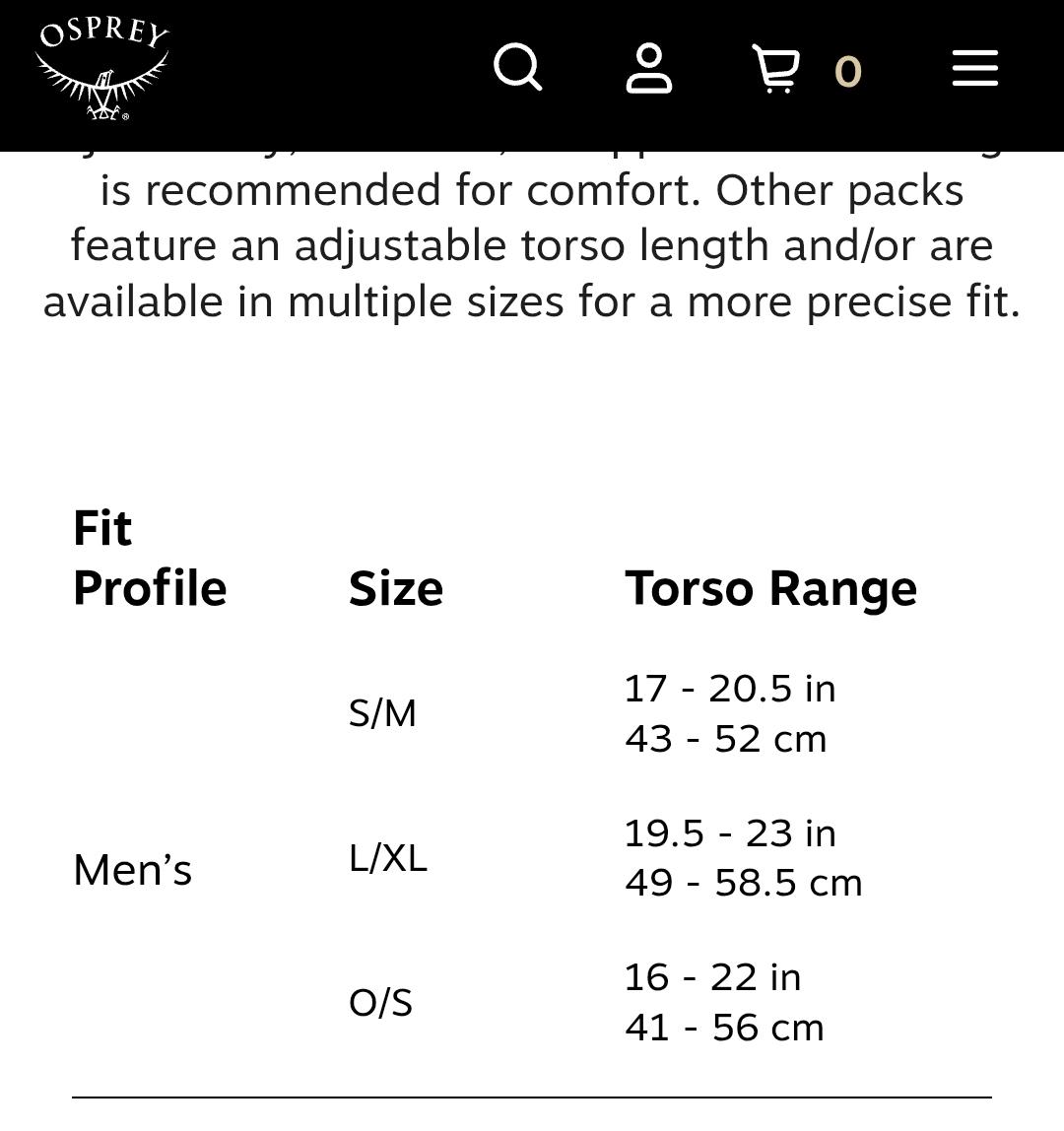
Hello everyone, I've decided to upgrade my cheap backpack. After a long search, I settled on the Osprey Aether 65. But I can't decide between a L/XL and a S/M. My back length is 49 cm and I'm 182 cm tall. According to the size chart, I fit into both sizes, but I'd still like to hear your opinion. I'm buying online and going hiking in the spring, so the "try it on and see" option isn't really working in this situation. Thanks.
r/hikinggear • u/Aware-Potential-7641 • 1d ago
I'm looking to finally invest in a high quality jacket that will keep me dry.
I'm a geologist who is constantly in the field and I'm also an avid hiker and I want to make the jump from leaky "waterproof " jackets to something that will genuinely keep me dry.
I'd love if anyone could recommend any good jackets that could keep me dry while being fairly durable and lightweight, this Jacket will definitely get a lot of use so I want to invest properly.
I'm looking to spend around $200 - 250 and would love if there are any good Black Friday deals going.
I would love if you could give me some advice :)
r/hikinggear • u/Waste_Environment246 • 1d ago
Taking a very spontaneous trip to Guatemala. Plan to hike to Acatanaego(guided) although I walk/run about 7.5 miles everyday and have been on a few beginner hikes. Please tell me what I would need on this hike as it is probably one of the most challenging hikes I will probably attempt. Any tips and advice is so greatly appreciated.
What clothes ? Shoes? Accessories—> headlamp, walking stick, backpack etc would you recommend that are focused on functionality I am a very short female 4 ft 11in tall female just for reference!
r/hikinggear • u/pixygal123 • 1d ago
Hey everyone! Im exploring various camping and outdoor gear through GearVilla and im curious to hear from people who have considerable experience.
What is that one piece of camping gear than you have bought and wondered how you would ever manage without it?
It could be something expensive or something inexpensive like a multitool but really helpful in ways unpredictable.
Also anything that i should totally avoid?
Looking for some interesting gear ideas and recommendations.
Love to hear from yall