r/jameswebb • u/Neaterntal • 11h ago
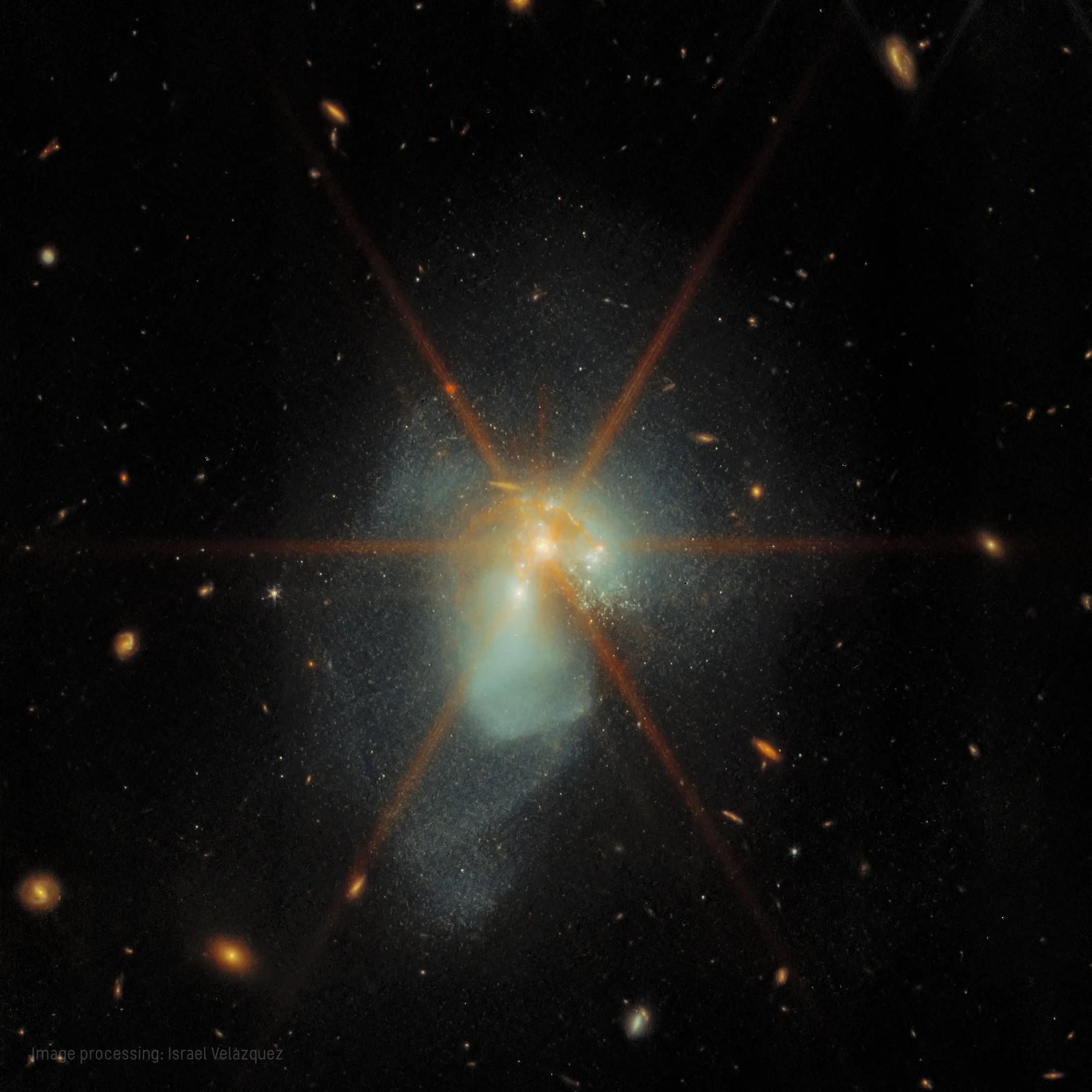
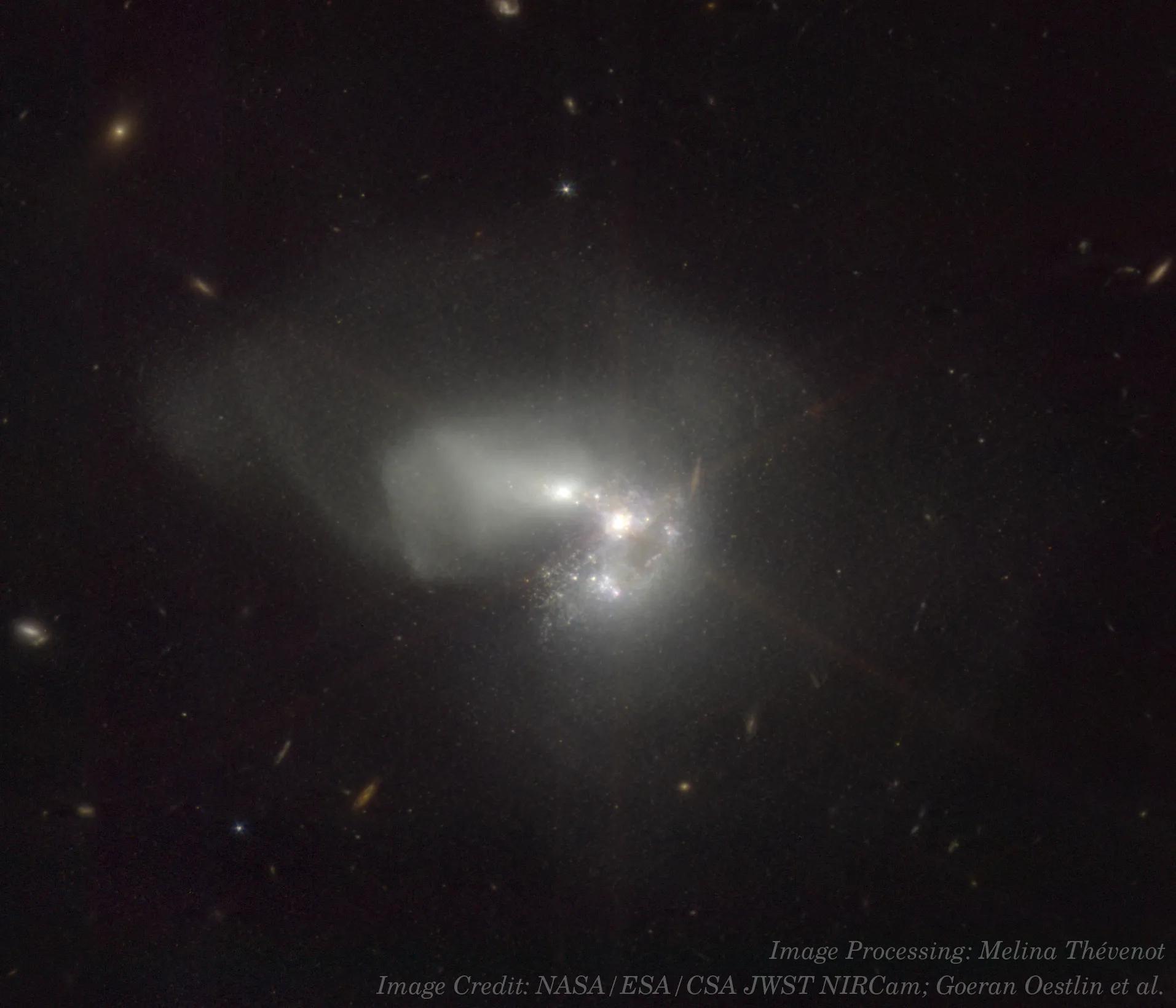
Self-Processed Image Galaxy cluster ABELL 2813 | NIRCam JWST Webb

111
Upvotes
r/jameswebb • u/Neaterntal • 11h ago
r/jameswebb • u/TrafoScotty • 10h ago
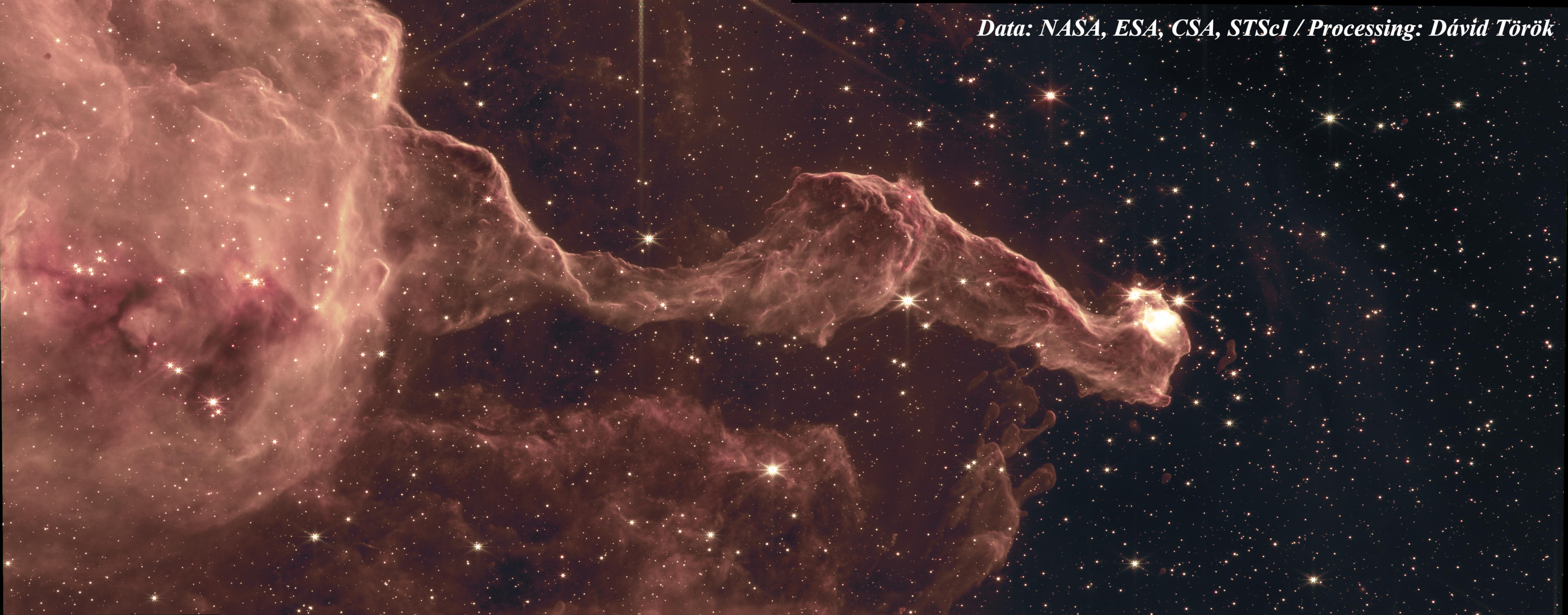
Used for processing: FITS Liberator5, Siril, GIMP
Filters: f277w, f335m, f444w-470n
Most of the work was done in GIMP, layered filters and coloring, colorbalance, curves, channel mixer.
r/jameswebb • u/Neaterntal • 11h ago
r/jameswebb • u/Neaterntal • 11h ago

r/jameswebb • u/JapKumintang1991 • 2d ago

See also: The publication in Nature
r/jameswebb • u/Live_Put_5031 • 2d ago

r/jameswebb • u/impala_aeme • 3d ago

r/jameswebb • u/Galileos_grandson • 3d ago

r/jameswebb • u/Galileos_grandson • 5d ago

r/jameswebb • u/SubstantialFlan8329 • 5d ago
Webb's MIRI coronagraph imaging found TWA 7 b in 2025 (Lagrange et al., Nature). It's about a Saturn mass, the lightest planet yet seen by direct imaging, orbiting a roughly 6-million-year-old red dwarf about 111 light years away.
I've been building a free, non-commercial site that turns published data into interactive views, and this page shows the system in 3D:
https://13point8.in/near/s/twa-7/
What's on it:
- Orbit about 52 AU out, one lap roughly 550 years
- Star: red dwarf, about 0.46 solar masses
- The habitable-zone band for comparison (the planet is far outside it)
- A plain-language note on how direct imaging works: block the starlight, find the faint dot
Values come from the NASA Exoplanet Archive. Distances and orbital speeds are to scale, but the star and planet are drawn enlarged so you can see them. For the actual Webb image, NASA's June 2025 release is the place to go.
Corrections very welcome. If anything is off, tell me and I'll fix it.
r/jameswebb • u/TomaszNowakowski • 7d ago

r/jameswebb • u/yubla • 7d ago
r/jameswebb • u/Neaterntal • 7d ago
r/jameswebb • u/Brighter-Side-News • 8d ago

One of the brightest objects in a survey of the early universe had a faint neighbor. The two points were less than an arcsecond apart on the sky. Both showed the hallmarks of a quasar, the intense glow produced by gas falling toward a supermassive black hole. Seeing two points was the first clue. Figuring out whether they represented two black holes took a closer look.
Silvia Onorato of NSF NOIRLab led the team that identified the system, J1602+4228AB. The study in The Astrophysical Journal Letters combines observations from the James Webb Space Telescope and Gemini North. The light shows the sources as they appeared about 900 million years after the Big Bang, during a period astronomers call cosmic dawn.
The sources are about 18,100 light-years apart as projected onto the sky. At that distance, the two would fit well within the span of the Milky Way. If they are distinct quasars, the system would be the most distant compact quasar pair yet identified and the closest known from that period. Other Webb searches have found candidate pairs among a different population of compact red objects.
r/jameswebb • u/Galileos_grandson • 9d ago

r/jameswebb • u/JapKumintang1991 • 10d ago

r/jameswebb • u/TomaszNowakowski • 11d ago
r/jameswebb • u/JapKumintang1991 • 11d ago

r/jameswebb • u/Neaterntal • 16d ago
r/jameswebb
•
u/TrafoScotty
•
20d ago

My first attempt to process JWST data.
Softwares used: Fits liberator, Siril, GraXpert, GIMP.
r/jameswebb • u/Neaterntal • 21d ago
r/jameswebb • u/Neaterntal • 22d ago