r/learnmachinelearning • u/Fearless-Quote-7019 • 1d ago
Day one of learning ML
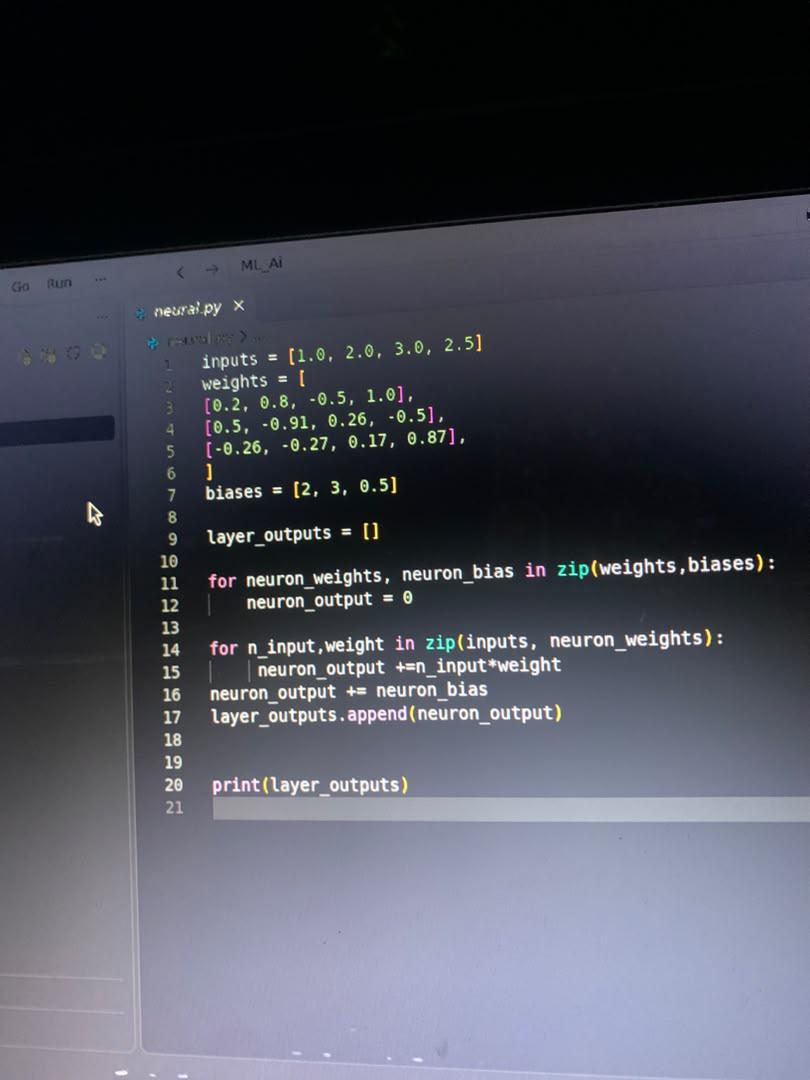
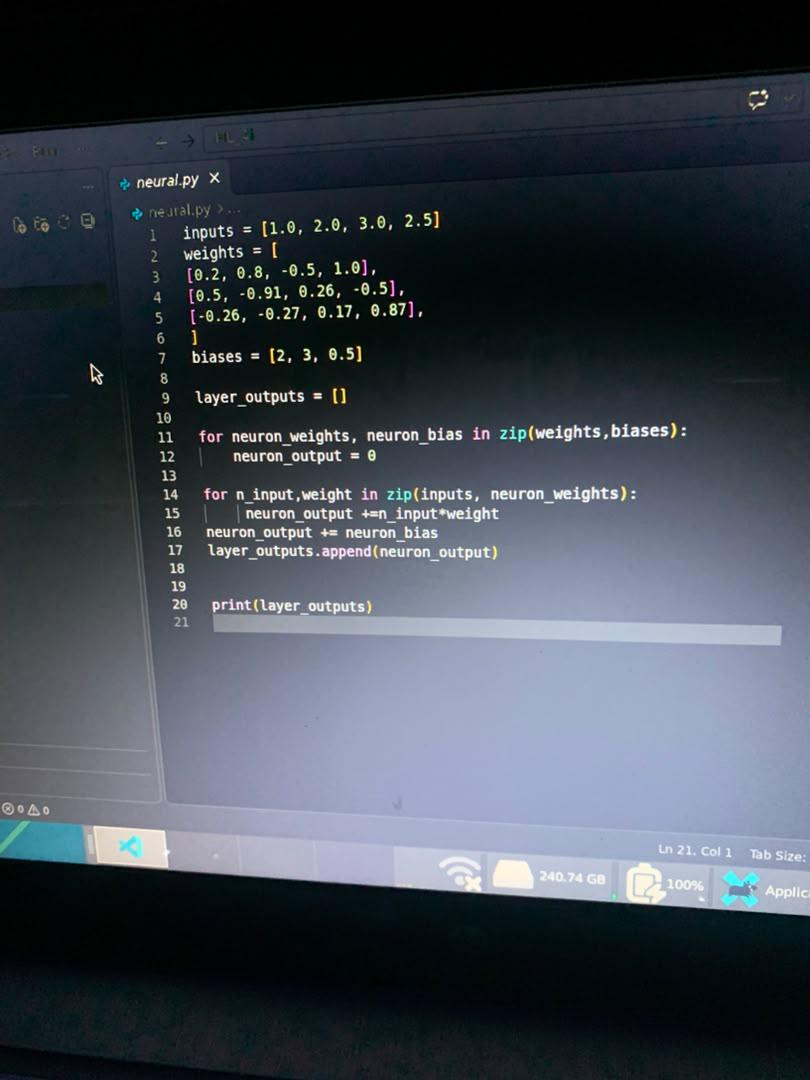
Any advice.
226
Upvotes
r/learnmachinelearning • u/Fearless-Quote-7019 • 1d ago
Any advice.
45
u/om_nama_shiva_31 1d ago
Your lines 11 and 12 aren’t doing anything. In your line 14, you’re probably wanting to use weights instead of neuron_weights. But the weights variable is a list of lists, so you need a way to handle that. You’re also mixing up the concept of layer and neuron.
104
u/Graylian 1d ago
Print screen
38
u/Sisyphus0609 1d ago
You might wanna get your python fundamentals right. Just the basics. Also, its worth it to learn numpy and implement the matrix representation of NN
8
u/Neither_Adeptness784 1d ago
show me day 1000
7
u/Pitiful_Tough6412 1d ago
Use .ipynb files in vs code.
5
u/Bye_Todd 1d ago
Welcome to the party
4
u/CallMeTheChris 1d ago
Your second zip isn’t doing what you think it is doing
2
u/captain_obvious_here 22h ago •
I'd get a bit more Python experience, and then play with Numpy and Pandas, before going deeper into ML.
Have fun!
4
u/vmathematicallysexy 1d ago
From implementing ML algos the biggest lesson I've taken away is that it's like 2% programming and 98% understanding mathematically and conceptually what is actually happening. Getting the code to run without errors is easy, the important part is understanding exactly what just happened, why the output is what it is, and understanding exactly why you chose the model you did
2
u/kbr89 1d ago
Day one is a good time to decide what the first month looks like, because the common way to stall is collecting courses instead of finishing one. Others here already covered Python and NumPy, so here is what I'd add:
I built beyondtube (beyondtube dot pro) for the video part: it pulls lecture videos on one topic from several YouTube channels into one place, so you can ask questions across them and see which video each answer comes from.
What's your background so far, more programming or more maths? The order shifts a bit depending on which one you already have.
1
u/mfranzwa 18h ago
great! keep doing this every day
1
u/tryna_be_bookworm 1d ago
Never knew you could make simple code very appealing just by naming the variables smartly😆
1
u/israelavila 22h ago
Welcome to this journey. 👍