r/lebron • • 2h ago

LeBron James tonight - 21 PTS, 7 REB, 6 AST, 1 BLK, 61.5 FG% and +19

Post image
28 Upvotes

r/lebron • • 5h ago

2008-09 was the season LeBron surpassed Kobe. Here’s why

Thumbnail youtu.be
0 Upvotes

r/lebron • • 11h ago

🤯

Post image
168 Upvotes

😏🐐


r/lebron • • 18h ago

"I'm not denying that" - Jalen Brunson admits 41-year-old LeBron James is more athletic than him

Thumbnail basketballnetwork.net
94 Upvotes

r/lebron • • 1d ago

Happy Thanksgiving LeBron fans. I’m thankful for LeBron and his greatness

32 Upvotes

r/lebron • • 1d ago

Still the greatest duo I ever seen hoop

316 Upvotes

4 straight finals x back 2 back rings x 👑 x ⚡️= 🐐


r/lebron • • 1d ago

LeBron’s Averages for the Last 4 Games.

Thumbnail reddit.com
1 Upvotes

r/lebron • • 1d ago

Bron-phobic

118 Upvotes

r/lebron • • 1d ago

Erik Spoelstra on LeBron’s basketball IQ: “The best way to explain it is when we competed against them in the bubble. LeBron was making adjustments to my adjustments and to my fake adjustments to the adjustments which probably only he and I can really understand”

6 Upvotes

r/lebron • • 2d ago

LeBron James full highlights vs. Miami Heat today (111-104 W): 25 Points on 9/15 FG (60.0%), 4/6 from 3, 3/3 from the line, 10 Rebounds (1 Off. Reb), 12 Assists (3 TOV), 1 Steal, no fouls, and a +/- of +14 (game high) in 35:01 minutes played.

11 Upvotes

r/lebron • • 2d ago

LeBron James tonight - 25 PTS, 10 REB, 12 AST, 60 FG% and +14

Post image
156 Upvotes

r/lebron • • 2d ago

LeBron the G.O.A.T

13 Upvotes

No debate. 👑 🐐


r/lebron • • 2d ago

For fans of a player who supposedly "only cared about winning," why are Michael Jordan fans the most obsessed fanbase in sports when it comes to talking about LOSING?

Thumbnail tiktok.com
0 Upvotes

Challenge any Michael Jordan fan on the internet to go pure achievement-for-achievement against LeBron James without dodging the scoreboard, and watch how fast their entire argument collapses. For a fanbase that claims "winning is the only thing that matters," Jordan purists spend 90% of their energy obsessing over losses rather than comparing actual hardware, career milestones, and postseason wins.

The Accolade-for-Accolade Scoreboard They Refuse to Touch

Put LeBron James and Michael Jordan side-by-side on pure career accomplishments, sustained dominance, and winning volume across NBA and international basketball:

- All-NBA Selections: LeBron James (21 — including 13 First-Team selections) vs. Michael Jordan (11 — 10 First-Team, 1 Second-Team). LeBron has nearly doubled Jordan's All-NBA resume across over two decades of elite play.

- All-Star Selections: LeBron James (22 — an all-time NBA record) vs. Michael Jordan (14).

- Conference Championships: LeBron James (10 NBA Finals trips across both conferences) vs. Michael Jordan (6).

- Total Playoff Series Wins: LeBron James (41 career playoff series victories, 183+ total playoff wins) vs. Michael Jordan (30 career playoff series victories, 119 total playoff wins).

- Playoff Game-Winning Buzzer-Beaters: LeBron James (5 — an all-time NBA record: 2009 vs. Orlando, 2013 vs. Indiana, 2015 vs. Chicago, 2018 vs. Indiana, 2018 vs. Toronto) vs. Michael Jordan (3 — 1989 vs. Cleveland, 1993 vs. Cleveland, 1997 vs. Utah).

- Olympic Gold Medals: LeBron James (3 — 2008 Beijing, 2012 London, 2024 Paris Olympic MVP) vs. Michael Jordan (2 — 1984 Los Angeles, 1992 Barcelona).

- All-Time Offensive Production: LeBron James ranks #1 all-time in regular-season points (43,000+), #1 all-time in playoff points (8,100+), #4 all-time in regular-season assists (11,800+), #2 all-time in playoff assists, and is the ONLY member of the 40,000-point / 10,000-rebound / 10,000-assist club. Michael Jordan ranks #5 all-time in regular-season points (32,292), #2 in playoff points (5,987), and #45 in career assists (5,633).

Why Jordan Fans Sprint Straight Into the Mud

The exact second you lay out that objective resume comparison, MJ fans abandon the "winning" conversation completely and pivot to obsessing over LeBron's losses:

- They bring up the 2011 NBA Finals against Dallas over and over because it is the single series in 24 seasons where LeBron underperformed expectations.

- They weaponize LeBron losing in 2017 and 2018 to the 73-9 Golden State Warriors who added prime Kevin Durant—conveniently ignoring that Jordan never once faced a 70-win team or four Hall of Famers in their prime in any Finals series.

- They treat winning three playoff rounds to reach the NBA Finals in 2007, 2014, 2015, 2017, and 2018 as worse than losing in the first or second round in April and May.

Grading Career Lows: Jordan’s Sub-.500 Seasons & Zero Wins Without Pippen

If MJ fans actually want to turn the GOAT debate into an audit of career lows and early exits rather than accomplishments, Jordan’s 15-season resume holds up far worse than they pretend:

- Five Losing Seasons in 15 Years: Across just 15 NBA seasons, Jordan’s teams finished with a losing, sub-.500 record FIVE separate times—1984–85 (38-44), 1985–86 (30-52), 1986–87 (40-42), 2001–02 (37-45), and 2002–03 (37-45)—including missing the playoffs entirely twice in Washington in a weak Eastern Conference. By comparison, LeBron has only missed the playoffs four times across 23+ completed seasons (two of which were his age-19 rookie year and his injury-shortened 2018–19 campaign).

- Zero Playoff Series Wins Without Scottie Pippen: Before Scottie Pippen arrived in Chicago in 1987, Jordan went 1-9 in his first 10 career playoff games, getting swept in back-to-back first rounds by Boston (1986 and 1987). After Pippen was traded in 1999, Jordan never played another postseason game. Across his entire NBA career, Michael Jordan won 0 playoff series without Scottie Pippen on his roster. Meanwhile, LeBron James led three different franchises to NBA championships and carried the 2007 Cavaliers and 2018 Cavaliers to the NBA Finals without a single active All-Star teammate on the floor.

You cannot claim to care strictly about "winning" while refusing to compare All-NBA teams, conference titles, playoff series wins, buzzer-beaters, Olympic golds, and all-time scoring and playmaking records.

Why are Michael Jordan fans terrified to go pure accolade-for-accolade with LeBron James without pivoting to losses?

Drop your honest answer below. Let’s debate in the comments.


r/lebron • • 2d ago

[Academic Research] LeBron Fans – NBA Survey (5–7 minutes)

1 Upvotes

Hey everyone!

I'm a graduate student at the University of Texas at Arlington (UTA) conducting an academic research project for a graduate-level research methods course. This survey is being conducted solely for educational purposes as part of my coursework.

I'm looking for NBA fans to participate in a survey examining how fans respond to discussions and criticism involving their favorite NBA players.

The survey takes approximately 5–7 minutes to complete. Participation is entirely voluntary, responses are anonymous, and the information collected will be used only for this academic course project.

Survey link: https://utaedu.questionpro.com/t/Ad0TNZBAUrW

I'd really appreciate you taking a few minutes to participate. Thanks for your time!


r/lebron • • 3d ago

The Last Dance painted Jerry Krause as the villain—yet if Krause hadn't rejected every single roster and coaching demand Michael Jordan made, the Chicago Bulls would have finished the 1990s with ZERO championships.

Thumbnail tiktok.com
201 Upvotes

When Michael Jordan’s production company released The Last Dance in 2020, Jerry Krause—who passed away in 2017 and wasn't alive to defend himself—was framed as the petty, ego-driven antagonist who ruined the Chicago Bulls dynasty.

Strip away the 10-hour PR spin and look at the documented NBA transaction log from 1987 to 1998. Every single foundational move that turned Chicago from a one-man first-round exit into a six-time champion happened ONLY because Jerry Krause ignored Michael Jordan’s wishes and did the exact opposite. Had Krause listened to "GM MJ," Jordan would have retired ringless in Chicago.

The 1987 NBA Draft: Joe Wolf Over Horace Grant & Scottie Pippen

Entering the 1987 NBA Draft with the #8 and #10 picks, Jordan had went 1-9 across his first three postseasons and was lobbying hard for Chicago to draft his University of North Carolina teammate, 6'11" big man Joe Wolf:

- Krause ignored Jordan, packaged #8 pick Olden Polynice to Seattle to steal #5 overall pick Scottie Pippen from Central Arkansas, and used the #10 pick on Clemson power forward Horace Grant.

- Jordan’s immediate reaction to Krause taking Horace Grant over his Tar Heel buddy? "You took that dummy?"

- The numbers tell the rest: Joe Wolf went at #13 to the Clippers and averaged a forgettable 4.2 PPG and 3.3 RPG on 42.3% shooting across 11 journeyman seasons (finishing his final NBA season in 1998–99 with 0.0 PPG). Meanwhile, Horace Grant averaged 12.6 PPG and 8.6 RPG across seven Bulls seasons, made an All-Star team and four All-Defensive teams, and anchored the interior with Pippen—a 7-time All-Star and 8-time All-Defense First Team Hall of Famer—for the entire first three-peat.

The 1988 Center Trade: Bullying "Medical Bill" Cartwright Over Charles Oakley

In June 1988, Krause saw what Jordan couldn't: Chicago had a logjam at power forward with Oakley and rookie Horace Grant, and zero legitimate 7-foot post presence to battle Patrick Ewing, Brad Daugherty, and Detroit's frontcourt. Krause traded Jordan’s best friend and bodyguard, Charles Oakley, to New York for 7'1" center Bill Cartwright:

- Jordan threw a massive tantrum, nicknamed Cartwright "Medical Bill," intentionally fired uncatchable rocket passes at Cartwright’s hands in practice to embarrass him in front of coaches, and even ordered Bulls teammates not to pass Cartwright the ball in the final minutes of games—until Cartwright confronted Jordan privately and threatened to break his legs if he ever tried freezing him out again.

- Once again, Krause was dead right: swapping Oakley opened the starting power forward spot for Horace Grant, Cartwright became co-captain and anchored the low post for three straight NBA championships (1991–1993), and Jordan eventually had to admit to SLAM Magazine nine years later that Krause made the right trade.

The 1989 Coaching Change: Firing Doug Collins & Promoting Phil Jackson

Jordan loved playing for head coach Doug Collins, whose entire offensive game plan was handing Jordan the ball 25+ times a night to win scoring titles (37.1, 35.0, and 32.5 PPG) while Detroit bounced Chicago out of the playoffs back-to-back years.

- After the 1989 Eastern Conference Finals loss, Krause fired Collins despite Jordan’s loyalty to him and promoted assistant coach Phil Jackson to install Tex Winter’s Triangle Offense.

- Jordan openly resisted the Triangle at first—complaining it was an "equal-opportunity offense" that took the ball out of his hands—yet Krause’s coaching hire unlocked all six championships of Jordan's career.

The 1990 & 1993 Roster Battles: Trading Pippen/Grant & Bullying Toni Kukoč

After losing Game 7 of the 1990 Eastern Conference Finals to Detroit, Jordan’s impatience nearly blew up the dynasty eight months before it even started:

- According to longtime Bulls scout and Krause assistant Jim Stack—as well as The Jordan Rules author Sam Smith—Jordan railed at management to ship out young Scottie Pippen and Horace Grant for aging ACC veterans he idolized: 35-year-old UNC alum Walter Davis and 30-year-old Maryland forward Buck Williams (who shared Jordan's agent, David Falk), complaining he didn't want to wait on young players. Krause refused to trade Pippen and Grant—and Chicago won three straight rings starting that exact season.

- Meanwhile, starting at the 1992 Barcelona Olympics, Jordan and Pippen relentlessly targeted 23-year-old Croatian phenom Toni Kukoč simply because Krause scouted him and prioritized signing him. Had Jordan scared Kukoč away from Chicago, the Bulls lose a 6'11" playmaking forward who won 1996 NBA Sixth Man of the Year and averaged 13.1 PPG, 4.0 RPG, and 3.5 APG on the 72-10 championship squad.

The 1995 Power Forward Search: Jayson Williams at a NYC Nightclub vs. Dennis Rodman

After Shaquille O'Neal and Horace Grant bullied Chicago out of the 1995 Eastern Conference Semifinals in 6 games, the Bulls desperately needed a power forward. Who did Michael Jordan try to recruit?

- In June 1995, Jordan flew to New York and waited nearly an hour inside a Greenwich Village nightclub just to pitch backup New Jersey Nets big man Jayson Williams—who had just averaged 4.8 PPG and 5.7 RPG in 13.1 minutes per game in 1994–95 (after putting up 4.6 PPG and 3.8 RPG in 1993–94).

- When Williams re-signed with the Nets, Krause pivoted and pulled off an absolute heist: trading backup center Will Perdue to San Antonio for 2-time Defensive Player of the Year and 4-time rebounding champion Dennis Rodman. Rodman promptly led the NBA in rebounding all three years in Chicago (14.9, 16.1, and 15.0 RPG), unlocking the second three-peat (1996–1998).

Washington & Charlotte: What Happened When Jordan Finally Got Roster Power

If anyone still doubts that Jerry Krause saved Michael Jordan from himself, look at what happened the instant Jordan actually got the keys to an NBA front office without Krause telling him no:

- Washington Wizards (2000–2003): As President of Basketball Operations, Jordan used the #1 overall pick in the 2001 NBA Draft on high schooler Kwame Brown (who averaged 4.5 PPG on 38.7% shooting as a rookie and 6.6 PPG for his career), traded away a young Richard Hamilton (who immediately won the 2004 NBA title as Detroit’s leading scorer) for Jerry Stackhouse, signed his 38-year-old buddy Charles Oakley (1.8 PPG), missed the playoffs every single year, and got fired by owner Abe Pollin in 2003.

- Charlotte Bobcats/Hornets (2006–2023): After taking over basketball operations as minority owner in 2006 (and majority owner from 2010 to 2023), Jordan drafted Adam Morrison #3 overall in 2006 (who shot 37.3% FG for his career and was dumped after two active seasons), drafted busts like Michael Kidd-Gilchrist (#2 over Bradley Beal and Damian Lillard) and Frank Kaminsky (#9 after turning down four first-round picks from Boston), and oversaw the worst single-season winning percentage in NBA history: the 2011–12 Bobcats going 7-59 (.106). Across 13 seasons as majority owner, Jordan’s franchise went 423-600 (.413—26th in the NBA), never finished higher than 6th in the East, and won ZERO playoff series.

Michael Jordan is an all-time basketball icon between the lines—and arguably the worst talent evaluator in modern NBA history in a suit.

Is it finally time to admit that Jerry Krause built the Bulls dynasty by protecting Michael Jordan from his own disastrous roster demands, or does Krause still deserve the blame for 1998?

Drop your honest take below. Let’s argue in the comments.


r/lebron • • 3d ago

Update: Let Bron Shine has been taken to Kaiser Permanente; signs of improvement are evident. Will he rejoin the Witness Army?

Post image
1 Upvotes

r/lebron • • 3d ago

Comparing LeBron and Jordan at the same Age makes LeBron look way more impressive. The reason his career looks worse is he’s better at an older age and younger age than Jordan was taking losses at a further stage so Jordan’s resume looks more perfect . Long explanation of why LeBron is the goat.

0 Upvotes

AGE 18-21
2003-2006
LeBron is in his first 3 seasons in the NBA

1982-1984
Jordan is in college .

LeBron missed playoffs twice in 04 and 05 and a 2nd round exit in 2006 at age 21 but at age 21 Jordan was on a super team in college with future NBA players Brad Daugherty , Sam Perkins and Kenny Smith losing in the 1984 NCAA tournament before having his rookie year and first NBA playoff appearance age 22. LeBron is obviously more impressive 18-21 but he’s “dirtying” up his NBA resume being better than any 18-21 year old basketball player in NBA history, granted he didn’t come into to the league with any chance of competing for Championships like Magic with prime MVP Kareem on his team.

AGE 22-26
2007-2011
LeBron wins 2 MVP , goes to 2 NBA Finals and loses , won a total of 10 playoff series in 5 seasons .

1985-1989
Jordan wins 1 MVP and 1 DPOY , won a total of 3 playoff series in 5 seasons.

LeBron’s resume looks worse to people because he’s getting further at a younger age losing and playing poorly in the 2007 and 2011 Finals but winning 10 playoff series to 3 and making 2 Finals to zero doesn’t make him worse to me .

AGE 27-31
2012-2016
LeBron wins 2 MVPs , goes to 5 Finals 3 championships in 5 seasons.

1990-1994
Jordan wins 2 MVPs , wins 3 championships in 5 seasons

if Lebron retired in 2016 at age 31 and Jordan retired in 1995 at age 31 .

LeBron would’ve had the better resume 4 MVPs to 3MVPs for Jordan , 3 championships to 3 , with LeBron’s wins coming against greater teams 2012 Thunder, 2013 Spurs , 2016 Warriors

That 5 year run 2012-2016 LeBron’s resume looks worse to people than Jordan 1989-1993 because LeBron loses in the Finals in 2014 to an all time Spurs team and in the Finals 2015 to a 67-15 fully healthy Warriors team with his 2 best teammates Kyrie and Love out injured.

But because Jordan’s loses came before the championship run and his young teammates Pippen and Grant had developed yet and Jordan is fouled hard and he didn’t make it as far as the finals he’s excused for the 2 losses in 1989 and 1990 before the 3 peat and in 1994 he’s retired which keeps his resume clean.

So the difference in the resumes comes in the next stage

AGE 32-35
2017-2020
LeBron is the best player in the world 2017 and 2018 age 32 and 33 but the 2 other best players in the world Steph and KD , the greatest scoring point guard and shooter ever plus with a 4x scoring champ team up to create greatest team of the Era with Klay Thompson the 2nd greatest shooting prime ever and the best defender of the era Draymond Green who also averages 7 assists and one of the best 5th best players on a team ever 2015 Finals MVP former all star and all NBA defender Andre Iguodala .
.
LeBron faces the best team ever in 2017 Finals
Then Kyrie leaves and faces them again in 2018 . He loses twice in Finals getting destroyed 4-1 and 4-0 while averaging efficient 30 point triple doubles .

Jordan never had to guard an offense like the Warriors or face any teams as great as the 2014 Spurs 2015 Warriors (with teammates out injured and definitely not the 2017 and 2018 Warriors).

LeBron does not add any MVPs or all defensive team hardware during this era while Jordan adds 2 MVPs and 3 1st Team Defense.

From 2007-2020 LeBron plays in 10 finals in 14 seasons
By 2015 he has to start thinking about the long haul with significantly more miles on his tires starting his career 3 years earlier, not retired for 1 and half years and having way more playoff minutes with the long playoff runs.
So LeBron smartly load manages his effort during regular seasons and has a playoff mode from 2015-2020 the majority of NBA fans know he’s actually the best player when it matters most . 2015 or 2016 Curry who had the greatest offensive season ever to that point in 2016
But LeBron outshined him in the 2016 Finals becoming the first player ever to lead both teams in points , rebounds , assists steals and blocks for an entire playoff series and he did it in one of the most epic NBA Finals
ever coming back from down 3-1 vs a 73-9 team .

2019 LeBron has a down year misses 27 games , the 2nd best player on his team is non allstar Brandon Ingram who missed 30 games , Lakers miss playoffs.

2020 LeBron finishes 2nd in MVP voting , leads the league in assists and leads Lakers to best record in the West .

Other best players in the world Giannis MVP loses in round 1 , Kawhi upset by Denver in round 2, Steph and Durant both out injured the entire season. Luka only a 2nd year player losing in round 1, Jokic before he became an MVP caliber losing to LeBron in conference finals , Embiid getting swept in round 1 . Some say AD was the real MVP of the team but I believe it was close enough and clear LeBron was the leader.

Age 35 in 2020 is LeBron’s last year with the best case to be called best player in the world, Jordan 1998 age 35 best player in the world but

Jordan 1995-1998 age 32-35 looks way better on paper than LeBron 2017-2020 because of the competition.

1996-1998 the league has several horrible teams and it’s a transition period between stars in the 90s starting to decline like Hakeem, Barkley , Stockton , while young stars like Shaq , Kobe , Duncan aren’t ready yet.

Jordan is on the most stacked roster in the league goes 72-10 in the Finals plays just ok 27 points 5 rebounds and 4 assists on 41% in 1996 Finals but that was enough to win while LeBron’s 30 point triple doubles wasn’t enough in the 2017 and 2018 Finals because Jordan wasn’t having to guard the greatest shooting backcourt ever and a 4x 6’11 scoring champ .

1998 age 35 Jordan barely gets to the finals winning game 7 of the East Finals 9/25 fg 36% missed 5 free throws but his team pulls through and he ends his career on this perfect note 6-0 with a game winning shot in the highest rated most watched NBA game in history game 6

2020 age 35 LeBron is playing in the bubble after covid in the weirdest NBA playoffs ever with his final goat season getting disregarded.

AGE 36-38
2021-2023 Lebron makes playoffs 2x in 3 years
Goes on conference finals run in 2023 the year he breaks the all time scoring record.

1999-2001 Jordan is retired

AGE 39-40
2024-2025
Lebron is still in the league making the playoffs 3rd Team and 2nd Team All NBA selections

2002-2003
Jordan returns and has 2 37-45 non playoff seasons with the Wizards

AGE 41 plus
2026-2027
LeBron wins a playoff series in 2026 as the best player on a team , 2026-27 season so far is helping 76ers be #1 seed in the East as arguably still a top 30 player in the league

LeBron could be averaging 5ppg on the worst team in the league and LeBron would be more impressive than Jordan age 41 plus because he didn’t do anything past age 40 .

So long story short

AGE 18-21 LEBRON is in the NBA way better than Jordan at the same ages.

Age 22-26 LEBRON accomplished way more in these 5 years than Jordan.

Age 27-31 LeBron and Jordan have 3 titles in 5 years . But Jordan gets hypothetical credit for retiring but LeBron is more impressive to me.

Age 32-35 is the only stage 1995-1998 that Jordan looks better on paper than Lebron but I just think his circumstances were better he wasn’t actually better than LeBron 2017-2020 .

Past age 35 it’s no contest , LeBron has done so much more past the age of 35 than Jordan did but because Jordan didn’t stick around past his prime of being the best player in the world there’s less examples of him losing.

4 championships to 6 means nothing to me because it’s a team sport , individuals don’t win championships but LeBron proved he was the goat in that 2012-2016 5 year stretch with the 3 Championships he did have that I don’t really doubt he could’ve won 4 more championships if he didn’t go through the toughest run of Finals difficulty matchups in 2014 Spurs , 2015 Warriors with Injured teammates, 2017 Warriors and 2018 Warriors with Kyrie gone.


r/lebron • • 3d ago

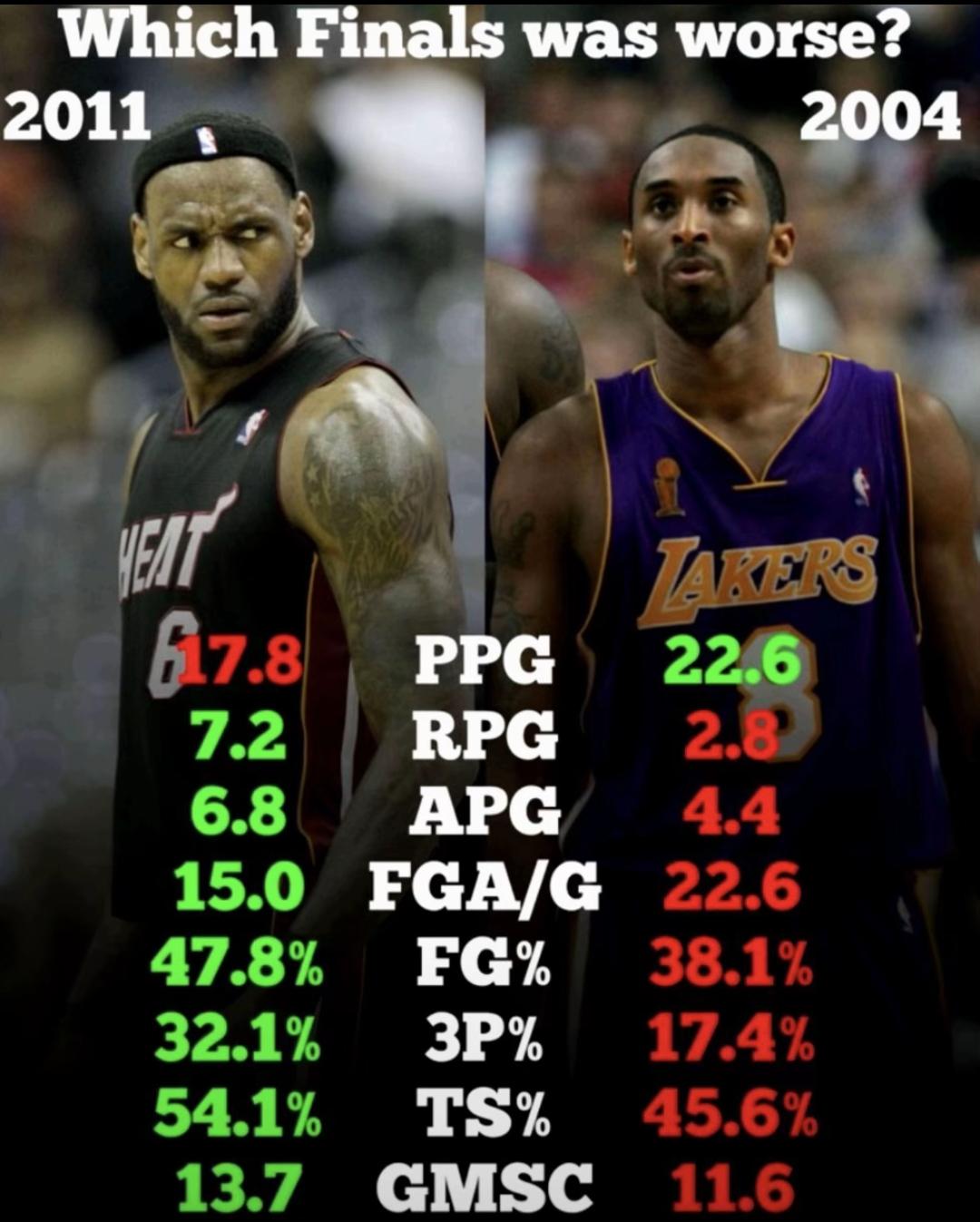
Which finals was worse?

Post image
181 Upvotes

r/lebron • • 4d ago

Is LeBron The Next YouTube Golf Star?

Thumbnail youtu.be
2 Upvotes

r/lebron • • 4d ago

😂😂

Thumbnail youtube.com
2 Upvotes

r/lebron • • 5d ago

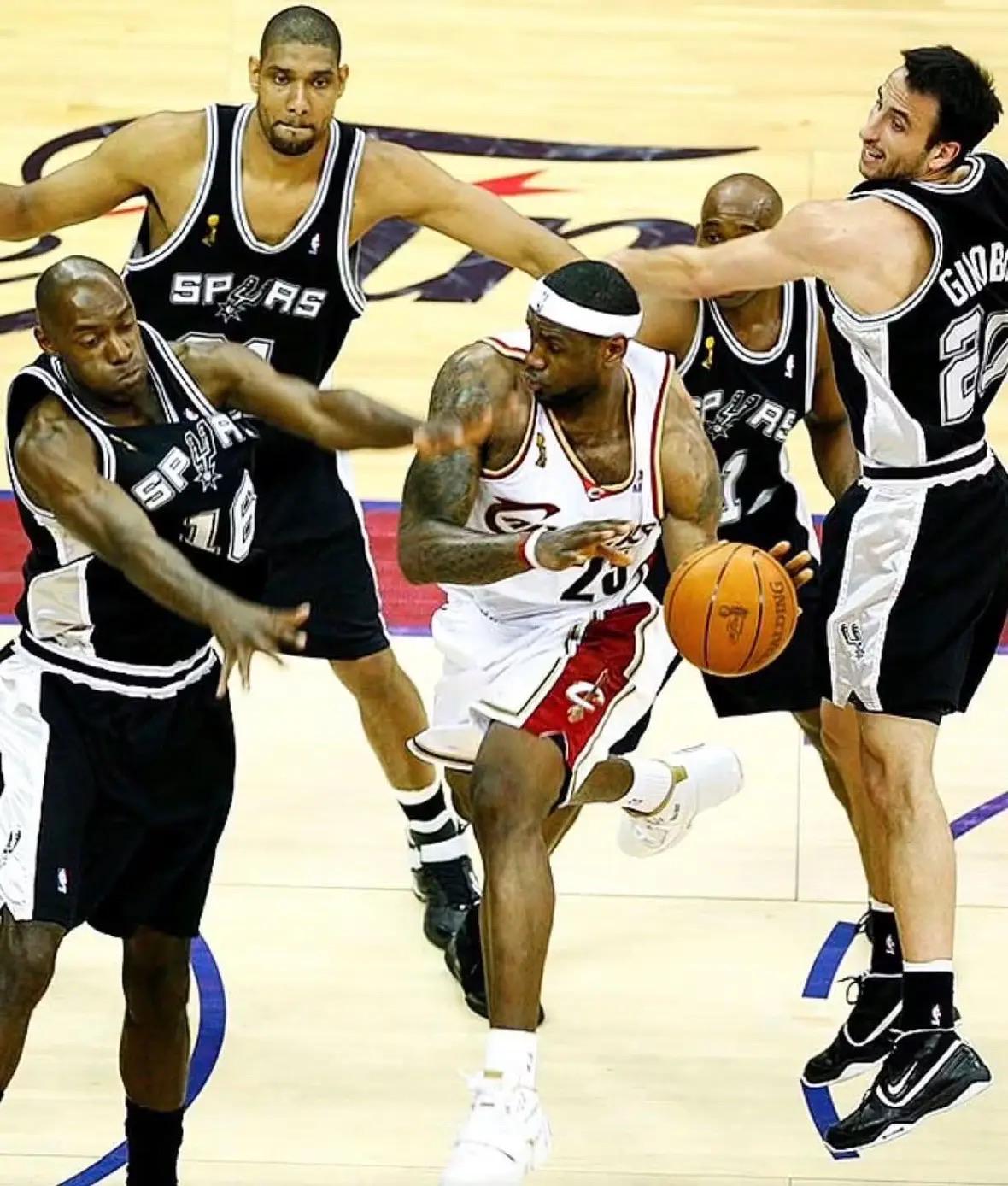
People claiming this image is fake/photo shopped is another example of LeBron’s greatness.

Post image
174 Upvotes

One man being guarded by four players is so unfathomable (much less in the playoffs) that it must be fake. That’s just how much attention LeBron commands.


r/lebron • • 5d ago

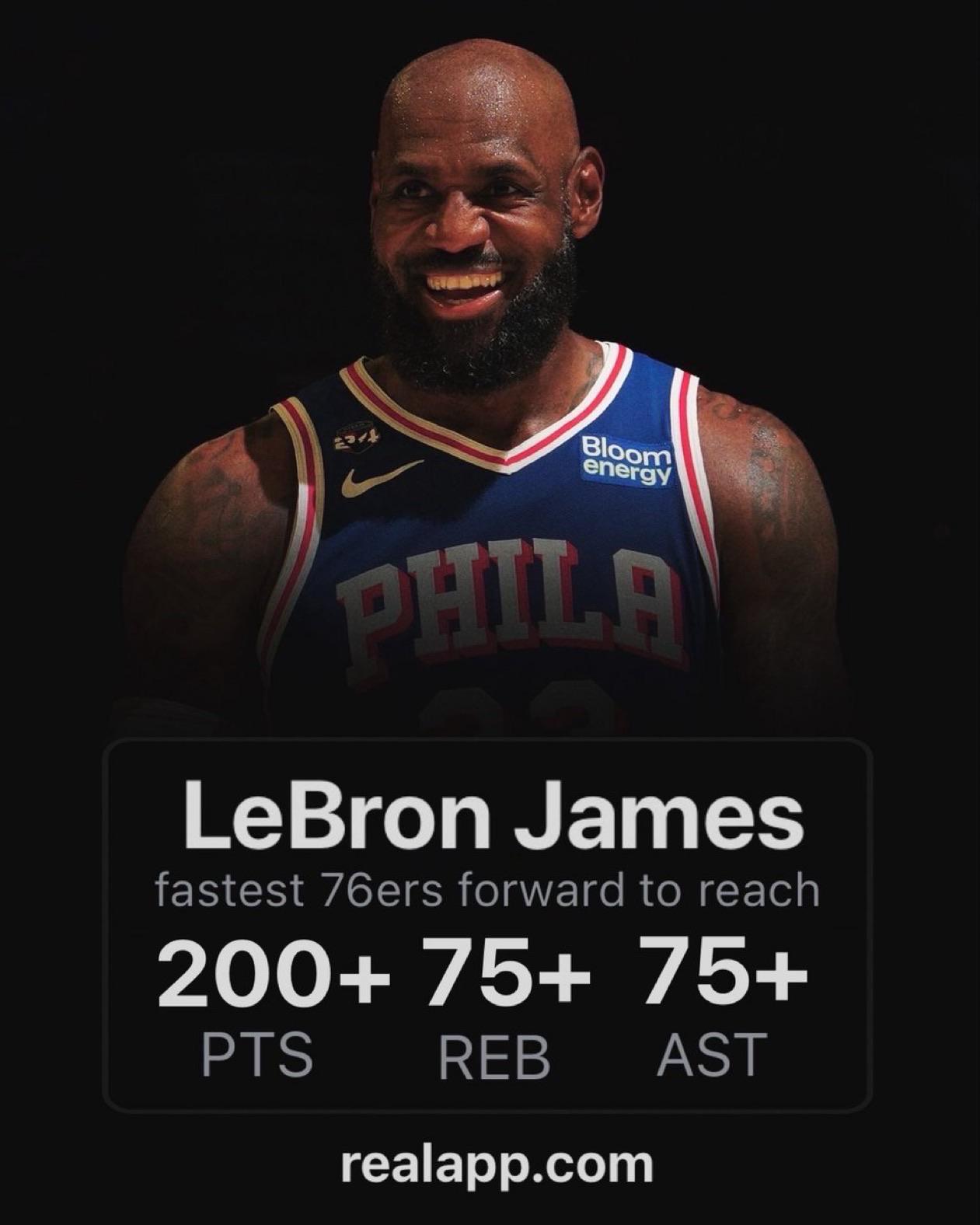
LeBron James is the fastest forward in 76ers history to reach: 200+ PTS 75+ REB 75+ AST

Post image
80 Upvotes

r/lebron • • 5d ago

NBA head coaches on LeBron’s basketball IQ. Does LeBron have the highest basketball IQ ever?

Thumbnail gallery
40 Upvotes

r/lebron • • 6d ago

Michael Jordan’s GOAT case is frequently defended with exaggerated folklore, marketing narratives, and cherry-picked talking points rather than complete statistical context and NBA records.

Thumbnail tiktok.com
0 Upvotes

Era Rules, Physicality & Expansion Myths

  • Myth: MJ played his entire prime in a no-flagrant-foul era. The NBA introduced the Flagrant Foul rule in 1990–91, meaning Jordan won all six of his championships under flagrant foul protections.
  • Myth: Defenders could swarm MJ with modern zone schemes. The NBA strictly enforced the "Illegal Defense" rule until 2001, making it a technical foul for defenders to sag into space or pre-rotate without committing to a hard double-team.
  • Myth: MJ would have averaged 45+ easily against modern defenses. Jordan himself admitted in 2001 that if teams had been allowed to play zone defense during his career, he never would have had the career he did.
  • Myth: Hand-checking made perimeter scoring impossible in the 90s. The NBA banned hand-checking from the endline to the foul line before the 1994–95 season, meaning Jordan’s entire second three-peat happened under tightened perimeter rules.
  • Myth: The 1990s was the deepest, most talented era in NBA history. Between 1988 and 1995, the NBA added six expansion teams (Heat, Hornets, Magic, Timberwolves, Raptors, Grizzlies), diluting league-wide roster depth with over 70 new expansion spots.
  • Myth: Expansion didn't water down the 72-10 Bulls' schedule. Jordan himself later acknowledged that league expansion diluted competition during Chicago's 1995–96 record run.
  • Myth: The 1980s and 1990s were slower, lower-scoring defensive grinds. During Jordan’s first seven seasons (1984–1991), NBA teams averaged between 106 and 110 points per game—higher than most of the 2000s and early 2010s.
  • Myth: Nobody got superstar foul calls like modern players. Magic Johnson famously joked at the 1992 Dream Team photo shoot that you couldn't get too close to Michael or the referees would call a foul.
  • Myth: MJ never hunted fouls or complained to refs. Jordan averaged 11.9 free throw attempts per game in 1986–87 and routinely worked officials for whistle protection.
  • Myth: Every team played Bad Boys Pistons-style physical defense. Detroit was widely hated by the rest of the NBA specifically because their physical style was an outlier, not the league standard. [1, 2, 3, 4, 5]

Defensive Myths & Stat Inflation

  • Myth: MJ’s 1988 Defensive Player of the Year stats were 100% legitimate. Audits by Tom Haberstroh revealed an 82% home-versus-road inflation in Jordan’s combined steals and blocks—the largest home/road split of any DPOY in NBA history.
  • Myth: Scorekeepers never fabricated steals for MJ. Six reviewed full game tapes from 1987–88 showed Chicago scorekeepers credited Jordan with 28 steals when game film showed he only recorded 12.
  • Myth: MJ legitimately recorded 10 steals in his famous January 1988 game against New Jersey. Game film review showed Jordan only recorded six actual steals in that game, with four phantom steals added at home.
  • Myth: Scorekeepers couldn't credit MJ with impossible stats. In one 1988 game against Atlanta, Jordan was credited with four steals while the Hawks were officially charged with only three turnovers.
  • Myth: MJ guarded the opposing team’s best perimeter scorer for 48 minutes. Scottie Pippen and 6'6" Ron Harper routinely took primary defensive assignments on elite guards and wings so Jordan could conserve energy for offense.
  • **Myth: MJ never backed down or tapped out of a defensive matchup.**Phil Jackson admitted on Legends in Session that after Tim Hardaway Sr. torched Jordan in the first half, Pippen stepped in at halftime and had Ron Harper take over the assignment.
  • Myth: MJ locked up Magic Johnson for the entire 1991 Finals. After Magic dominated Game 1 with a triple-double, Phil Jackson switched Scottie Pippen onto Magic in Game 2 to disrupt LA's offense.
  • Myth: Quick, shifty point guards couldn't score on MJ. Smaller guards with elite handles—like Tim Hardaway Sr., Mahmoud Abdul-Rauf, Damon Stoudamire, and rookie Allen Iverson—routinely broke Jordan down off the dribble.
  • Myth: Mahmoud Abdul-Rauf couldn't touch peak defensive Bulls. Abdul-Rauf dropped 32 points and 9 assists straight at Chicago's backcourt—with 23 in the first half—to snap the 72-10 Bulls' 18-game winning streak.
  • Myth: Rex Chapman was scared of MJ’s perimeter defense. Chapman dropped 39 points on 9-for-10 three-point shooting to beat the 72-10 Bulls while talking trash directly in Jordan's face.
  • Myth: MJ was an elite rim protector for his position throughout his title runs. During his entire second three-peat (1996–1998), Jordan averaged just 0.5 blocks per game.
  • Myth: MJ led the Bulls in defensive win shares during the dynasty. Scottie Pippen, Horace Grant, and Dennis Rodman consistently anchored Chicago's interior and help-defense metrics above Jordan. [1, 2, 3, 4, 5, 6, 7, 8]

Stat-Padding & Box Score Watching Myths

  • Myth: MJ never cared about his stats or looked at the box score. During his 1989 point guard stretch, Jordan openly admitted the Bulls' scorer's table signaled to him during games how many rebounds and assists he needed for a triple-double. [1]
  • Myth: Players in the 80s didn't view MJ’s triple-double streak as stat-chasing. Magic Johnson publicly called out Jordan in real time in 1989, noting it was obvious he was hunting triple-doubles to chase the MVP award.
  • Myth: MJ organically averaged 8 rebounds and 8 assists in 1989. Once Phil Jackson installed the triangle offense in 1989–90 and stopped letting Jordan dominate every possession at point guard, Jordan’s triple-doubles dropped from 15 in 1988–89 to just 1 in 1989–90. [1]
  • Myth: MJ never chased scoring titles over team flow. Jordan led the NBA in field goal attempts nine times, including taking 27.8 shots per game in 1986–87 while the Bulls finished 40–42. [1]
  • Myth: MJ came back to Washington purely for the love of mentoring. Jordan took 22.1 shots per game in 2001–02 on 41.6% shooting to ensure he crossed the 30,000- and 32,000-point milestones. [1, 2]

Shooting, Skill Set & Efficiency Myths

  • Myth: MJ shot 51% from mid-range for his entire career. Official NBA shot-distance tracking didn't exist until 1996–97; the viral ~50% number only covers two Bulls seasons, and including his Wizards years drops his tracked mid-range mark to roughly 44%–45%.
  • Myth: MJ could shoot threes whenever he wanted. Outside of the three seasons the NBA shortened the three-point line to a uniform 22 feet (1994–1997), Jordan shot roughly 28.8% from standard NBA three-point range.
  • Myth: MJ’s high-percentage three-point seasons were from standard range. His two best full-season three-point percentages—42.7% in 1995–96 and 37.4% in 1996–97—came exclusively with the shortened 22-foot line; the moment the line moved back in 1997–98, he dropped to 23.8%.
  • Myth: MJ embarrassed himselfless in the Three-Point Contest. Jordan competed in the 1990 NBA Three-Point Contest and posted the worst round in NBA All-Star history, making just 5 of 30 shots (16.6%).
  • Myth: MJ had zero flaws with his off-hand. Scouting reports from the Detroit Pistons ("Jordan Rules") and New York Knicks explicitly focused on forcing Jordan left to cut off his driving angles and force pull-ups.
  • Myth: MJ never had inefficient Finals series. Jordan shot 41.5% from the field in the 1996 Finals against Seattle and 42.7% from the field in the 1998 Finals against Utah.
  • Myth: MJ was an elite 85%+ free-throw shooter in every Finals. Jordan shot 69.4% from the free-throw line in the 1993 Finals against Phoenix and 76.4% in the 1997 Finals against Utah. [1, 2]

"No Help" & Supporting Cast Myths

  • Myth: MJ won without a superteam. The 1996–1998 Bulls featured three Hall of Famers in their roles (Jordan, Pippen, Rodman), European legend Toni Kukoc (Sixth Man of the Year), elite sharpshooter Steve Kerr, Ron Harper (a former 20-PPG scorer), and Hall of Fame coach Phil Jackson.
  • Myth: MJ won multiple playoff series before Scottie Pippen arrived. Jordan went 1–9 in playoff games and 0–3 in playoff series before Chicago drafted Scottie Pippen and Horace Grant in 1987.
  • Myth: MJ turned the Bulls into winners the day he was drafted. Chicago had losing records in all three of Jordan's pre-Pippen seasons: 38–44 (1985), 30–52 (1986), and 40–42 (1987).
  • Myth: Making the playoffs with 30 wins in 1986 proves MJ carried scrubs. Sixteen out of 23 NBA teams made the playoffs in 1986—meaning over two-thirds of the league qualified, allowing a 30–52 Bulls team to sneak in as the 8-seed.
  • Myth: The Bulls collapsed into a lottery team when MJ retired in 1993. Without Jordan in 1993–94, Scottie Pippen led Chicago to 55 wins—just two fewer than the 57 games they won with Jordan in 1992–93.
  • Myth: Pippen couldn't lead a team without MJ. In 1993–94, Pippen finished 3rd in MVP voting, won All-Star Game MVP, made All-NBA First Team and All-Defensive First Team, and led the Bulls in points, assists, steals, and blocks.
  • Myth: The 1994 Bulls got blown out in the playoffs without Mike. Chicago took the eventual Eastern Conference champion New York Knicks to Game 7 in the second round, losing Game 5 by one point on the infamous Hue Hollins phantom foul call.
  • Myth: MJ came back in 1995 and immediately fixed a terrible Bulls team. Even with Jordan back for the final 17 games and playoffs in 1995, Chicago lost in the second round to Orlando because they lacked interior rebounding after losing Horace Grant—until they traded for Dennis Rodman.
  • Myth: Horace Grant was just an average role player. Grant was an NBA All-Star and a 4-time All-Defensive selection who immediately helped Orlando eliminate Jordan's Bulls in 1995.
  • Myth: MJ never played with All-Star teammates outside Pippen. B.J. Armstrong and Horace Grant both made the 1994 All-Star team, and Dennis Rodman and Ron Harper were proven All-Star-caliber veterans before taking specialized roles in Chicago.
  • Myth: MJ made his teammates better statistically. Multiple star scorers—including Ron Harper (dropped from 20.1 PPG on the Clippers to 6.9 PPG in Chicago), Toni Kukoc, Rip Hamilton, and Jerry Stackhouse—saw their touches and scoring numbers slashed playing next to Jordan.
  • Myth: MJ could win rings with any coach. Jordan won zero championships and never reached the NBA Finals under Stan Albeck, Doug Collins (twice), or Leonard Hamilton—winning exclusively under Phil Jackson.
  • Myth: Scottie Pippen being underpaid didn't unfairly stack Chicago's roster. Pippen’s notorious 7-year, $18 million contract made him the 122nd highest-paid player in the league by 1997–98, giving Chicago massive financial flexibility to pay Kukoc, Rodman, and Harper. [1, 2, 3, 4, 5, 6]

Playoff, "6-0" & Competition Myths

  • Myth: Losing in the first round is better than losing in the Finals. Jordan went 6–0 in the Finals only because he failed to reach the Finals in 9 of his 15 NBA seasons, getting eliminated early in 1985, 1986, 1987, 1988, 1989, 1990, and 1995, and missing the playoffs entirely in 2002 and 2003.
  • Myth: MJ never lost in the 1990s. Jordan lost in the 1990 Eastern Conference Finals to Detroit and the 1995 Eastern Conference Semifinals to Orlando.
  • Myth: MJ never got swept in the playoffs. Jordan was swept twice in the first round by Larry Bird's Boston Celtics (1986 and 1987), going 0–6 against Bird in the postseason.
  • Myth: MJ beat prime Larry Bird and Magic Johnson to take the torch. Jordan never won a single playoff game against Larry Bird (0–6), and only beat Magic’s Lakers in 1991 after Kareem Abdul-Jabbar had retired and both James Worthy and Byron Scott suffered series-altering injuries.
  • Myth: MJ conquered the peak Bad Boys Pistons. Chicago went 0–3 in playoff series against Detroit from 1988 to 1990, finally beating an aging, banged-up Pistons squad in 1991 after Isiah Thomas missed half the regular season with wrist surgery and Detroit went 50–32.
  • Myth: MJ beat stacked superteams in the NBA Finals. None of Jordan’s six Finals opponents featured three simultaneous All-Stars, and zero Finals opponents were defending NBA champions.
  • Myth: The 1992 Trail Blazers had multiple Hall of Fame stars. Clyde Drexler was the only Hall of Famer on Portland’s entire 1992 Finals roster.
  • Myth: The 1993 Suns had elite interior defense. Phoenix started 6'9" Mark West and rookie Oliver Miller at center with zero All-Defensive players on the roster, allowing Jordan to feast at the rim.
  • Myth: Gary Payton guarded MJ for all six games of the 1996 Finals. Seattle head coach George Karl didn't put Payton on Jordan until Game 4 when the Sonics were already down 3–0; once Payton switched onto him in Games 4–6, Jordan’s scoring dropped from 31.0 PPG (46% FG) to 23.7 PPG (36.7% FG).
  • Myth: MJ dominated Game 6 to close out the 1996 Finals. Jordan shot a brutal 5-for-19 (26.3%) with 5 turnovers in Game 6 against Seattle while Dennis Rodman grabbed 19 rebounds (11 offensive) to save the closeout win.
  • Myth: The 1997 and 1998 Utah Jazz were a young, athletic juggernaut. John Stockton was 35–36 years old, Karl Malone was 33–34, and Utah started Jeff Hornacek and Greg Ostertag in the backcourt and paint.
  • Myth: Karl Malone played like an MVP against Chicago. Malone choked heavily in both Finals, seeing his scoring efficiency and free-throw shooting plummet in fourth quarters against Rodman and Pippen.
  • Myth: MJ never played in a Game 7. Jordan played in three Game 7s (1990 vs. Detroit, 1992 vs. New York, 1998 vs. Indiana)—going 2–1—and shot just 9-for-24 (37.5%) in Game 7 of the 1998 Eastern Conference Finals while Pippen and Kukoc carried Chicago.
  • Myth: MJ never got outplayed or choked at the end of a playoff game. In Game 1 of the 1995 playoffs vs. Orlando, Nick Anderson stripped Jordan from behind in the final seconds for the game-winning fast break, and Jordan threw away another late-game turnover seconds later.
  • Myth: MJ holds the record for most championships as a franchise centerpiece. Bill Russell won 11 NBA championships—nearly double Jordan’s six—while Kareem Abdul-Jabbar tied Jordan with six rings and won six MVPs to Jordan's five. [1, 2, 3, 4, 5, 6, 7, 8]

Clutch & Fourth-Quarter Myths

  • Myth: MJ never missed a game-winning shot in the playoffs. In NBA playoff games, Jordan went 9-for-18 on game-tying or go-ahead shots in the final 24 seconds and 5-for-11 (45.5%) in the final 5 seconds—meaning he missed half the time.
  • Myth: MJ is statistically far more clutch than LeBron James in the playoffs. On game-tying or go-ahead shots in the final 5 seconds of playoff games, LeBron has more makes on slightly higher efficiency (9-for-19, 47.4%) than Jordan (5-for-11, 45.5%).
  • Myth: MJ hit every Finals series-clinching shot himself. Teammates John Paxson (1993 Game 6) and Steve Kerr (1997 Game 6) hit the series-clinching shots in two of Chicago's six titles because defenses doubled Jordan.
  • Myth: MJ didn't push off Bryon Russell on his 1998 Game 6 shot. Clear baseline replay shows Jordan placing his left hand squarely on Russell’s hip/thigh to redirect Russell’s momentum on the crossover.
  • Myth: MJ never missed clutch shots in the NBA Finals. Jordan missed a potential series-winning three in Game 5 of the 1992 Finals, missed late shots in 1993 Game 3 (3OT loss), and missed a three at the buzzer in Game 4 of the 1997 Finals.
  • Myth: Teammates never had to bail MJ out of atrocious shooting nights in elimination/pivotal games. In Game 7 of the 1998 ECF against Indiana, Jordan went 9-for-24 from the field and 10-for-15 from the line while Toni Kukoc dropped 21 points on 7-for-11 shooting (3-for-4 from deep) to save the season. [1, 2, 3]

Athleticism, Folklore & Personal Legend Myths

  • Myth: MJ had a verified 48-inch vertical leap. Jordan admitted to Larry King and Sports Illustrated that his vertical was never officially measured, and video math (head 1–2 inches above the rim at 6'6") puts his real max vertical at roughly 43–44 inches.
  • Myth: MJ was cut from his high school varsity basketball team. Laney High School coach Clifton "Pop" Herring never cut Jordan; as an undersized 5'10" sophomore, Jordan was placed on the JV squad to start and develop while seniors and 6'7" Leroy Smith filled varsity.
  • Myth: MJ played through the viral flu in the 1997 "Flu Game." Both Jordan and his trainer Tim Grover confirmed in The Last Dance that he didn't have influenza—it was acute food poisoning (or stomach illness) the night before Game 5.
  • Myth: Five Utah Jazz fans poisoned MJ’s pizza. The Pizza Hut employee who actually made and delivered the pizza, Craig Fite, went on the record debunking Grover's story, stating only two employees delivered it and nobody tampered with it.
  • Myth: The NBA banned the Air Jordan 1 and fined Nike $5,000 every game. The shoe flagged by the NBA in October 1984 was actually the Nike Air Ship (the AJ1 wasn't released yet), and ESPN investigations found zero evidence Jordan ever wore them in regular-season games to rack up $5,000-per-game fines.
  • Myth: MJ jumped from behind the free-throw line first. Julius "Dr. J" Erving did the free-throw line dunk 11 years earlier in the 1976 ABA Dunk Contest, and Jordan actually stepped squarely on the free-throw line during his 1988 dunk.
  • Myth: MJ fairly beat Dominique Wilkins in the 1988 Dunk Contest. Widely considered one of the biggest hometown robberies in All-Star history (held in Chicago Stadium), judges docked Dominique's two-handed windmill in the final round to a 45 so Jordan could win at home.
  • Myth: LaBradford Smith mocked MJ by saying "Nice game, Mike." After Bullets guard LaBradford Smith dropped 37 on him in 1993, Jordan told reporters and teammates Smith mocked him to fuel a revenge game—before admitting years later he completely made the quote up.
  • Myth: MJ never fabricated stories against opponents. Former Raptor Walt Williams and multiple Hall of Fame speech fact-checks confirmed Jordan routinely invented fake slights—even lying about UNC coach Dean Smith overlooking him for a 1981 Sports Illustrated cover—to manufacture motivation.
  • Myth: Everyone in the league feared MJ and backed down from him. Reggie Miller shoved Jordan and talked trash constantly, Allen Iverson crossed him twice as a rookie, Xavier McDaniel stepped right up to him, and John Starks went chest-to-chest with him every series.
  • Myth: MJ retired in 1993 purely because he had nothing left to prove. Jordan was dealing with intense NBA gambling investigations, media burnout, and the tragic murder of his father, James Jordan.
  • Myth: MJ crushed Minor League Baseball pitching. Playing for the Double-A Birmingham Barons in 1994, Jordan hit .202 with 114 strikeouts, 3 home runs, and 11 errors in the outfield. [1, 2, 3, 4, 5, 6, 7, 8, 9, 10]

Leadership, Wizards Era & Post-Playing Myths

  • Myth: MJ’s leadership style elevated young players. As an executive and player in Washington, Jordan verbally berated 19-year-old #1 pick Kwame Brown with slurs in practice until Brown broke down, shattering his confidence.
  • Myth: Teammates loved playing with Wizards-era Jordan. Jerry Stackhouse publicly stated he wished he had never played with Jordan in Washington, and Rip Hamilton got into shouting matches with MJ over refusing to just be a "Jordannaire" before getting traded—and immediately winning an NBA title in Detroit.
  • Myth: MJ never punched or bullied smaller teammates. Jordan punched sharpshooter Steve Kerr in the eye during a 1995 Bulls practice (which Phil Jackson kicked him out for) and punched center Will Perdue earlier in his career.
  • Myth: A 38-to-40-year-old MJ could still carry any roster to the playoffs. Jordan went 67–75 across two seasons with Washington and missed the playoffs in a weak Eastern Conference both years (37–45 in 2002 and 37–45 in 2003).
  • Myth: MJ outperformed LeBron James at ages 38–40. At age 39–40 in 2002–03, Jordan averaged 20.0 PPG, 6.1 RPG, and 3.8 APG on 44.5% shooting while missing the playoffs; LeBron at ages 38–40 averaged 25+ PPG, 7+ RPG, and 8+ APG on 50%+ shooting while making All-NBA teams and the Western Conference Finals.
  • Myth: MJ’s basketball IQ translated into elite talent evaluation. As an executive/owner in Washington and Charlotte, Jordan drafted Kwame Brown (#1), Adam Morrison (#3), Michael Kidd-Gilchrist (#2), Cody Zeller (#4), and Frank Kaminsky (turning down four first-round picks from Boston).
  • Myth: MJ turned the Charlotte Hornets/Bobcats into a winning culture. During Jordan's 13-year tenure as majority owner (2010–2023), Charlotte went 423–600 (.413), won zero playoff series, and posted the worst winning percentage in NBA history in 2011–12 (7–59, .106).
  • Myth: MJ never blacklisted players out of pettiness. Isiah Thomas met every statistical standard for the 1992 Olympic Dream Team, and archival audio later confirmed Jordan explicitly refused to play if Isiah was on the roster—despite denying it publicly for decades.
  • Myth: The Last Dance was an objective historical documentary. Jordan’s own production company (Jump 23) co-produced the series and retained final editorial control over footage, leading Scottie Pippen, Horace Grant, and Luc Longley to call out its biased framing.
  • Myth: MJ only greenlit The Last Dance for fans during 2020. Reports confirmed Jordan kept the 1997–98 archival footage locked in a vault for 18 years and gave the green light in June 2016—the exact week LeBron James completed the 3–1 Finals comeback against the 73-9 Warriors. [1, 2, 3, 4, 5]

Statistical & All-Time Ranking Myths

  • Myth: MJ holds the major all-time NBA career totals. Jordan ranks 5th all-time in points, 47th in assists, 117th in rebounds, and outside the top 50 in games played.
  • Myth: MJ never got outscored or out-rebounded in his own series. Charles Barkley averaged 27.3 PPG, 13.0 RPG, and 5.5 APG in the 1993 Finals, while Magic Johnson averaged 18.6 PPG, 8.0 RPG, and 12.4 APG in the 1991 Finals.
  • Myth: MJ won MVP every year he was the best player in the league. Jordan lost MVP voting to Magic Johnson (1987, 1989, 1990), Charles Barkley (1993), and Karl Malone (1997) during the heart of his prime.
  • Myth: MJ was an untouchable rebounder for a guard. Jordan averaged 6.2 rebounds per game for his career—behind guards/wings like Oscar Robertson, Magic Johnson, Luka Dončić, Russell Westbrook, and LeBron James.
  • Myth: MJ was an elite floor general when needed. Jordan averaged 5.3 assists per game for his career and dropped to just 3.5 APG in 1997–98 (and 2.3 APG in the 1998 Finals).
  • Myth: MJ never took plays or seasons off. Jordan took nearly two full NBA seasons off in his prime (1993–1995) and three more seasons off (1998–2001), avoiding the physical cumulative wear-and-tear of playing 8–10 consecutive Finals runs.
  • Myth: If MJ hadn't retired in 1993, Chicago was guaranteed 8 straight rings. Even when Jordan returned in 1995, Chicago lost to Orlando, and both Hakeem Olajuwon’s Rockets (who went 5–1 against the Bulls from 1991–1993) and fatigue from three straight Finals runs stood directly in their way.
  • Myth: Hakeem Olajuwon’s Rockets couldn't match up with MJ’s Bulls. Chicago had no interior answer for Hakeem prior to acquiring Rodman; Houston held a winning head-to-head record against Jordan during the first three-peat era.
  • Myth: MJ never had high-turnover playoff series. Jordan committed 24 turnovers in 6 games in the 1992 Finals (4.0 per game) and averaged 3.7 turnovers per game across the entire 1989 playoffs.
  • Myth: Even Michael Jordan calls himself the undisputed GOAT. In interviews with NBC and CBS, Jordan himself rejected the GOAT label entirely, calling cross-era GOAT rankings an "empty comparison" because he never played against legends before or after his era. [1, 2, 3, 4, 5, 6, 7]