r/mahabharata
•
u/Wooden-Tear-4938
•
18h ago
Veda Vyasa Mahabharata What happened between Kunti and Surya might be more complicated than you think
Disclaimer : In this post, I will be coming to no conclusion, merely showing evidences and hypothesis, at the end, you yourself can come to whatever conclusion you like. This post is based on BORI CE version of Mahabharata
Karna's birth is a sensitive topic. And the question arises whose fault was his birth, Kunti, Surya, Durvasa, or destiny itself? And for that, knowing why exactly he was born is necessary.
Few days ago u/Separate_Record9354 made a post regarding actual boon which Durvasa gave to Kunti and how it was not that Kunti can get son from whichever God she manifest.
Now, there are some nuances in it, and we need to understand contradictions related with this boon.
Now, the story of Kunti accidentally summoning Surya is described in detail in two places, Adi Parva and Vana Parva.
In Adi Parva's Sambhava Parva, we first time get the story of Kunti getting boon, and there it's explicitly written that
Whichever gods you summon through the use of this mantra, will grant you sons through their grace.
Sambhava Parva, Adi Parva
However, the account here is quite brief, we don't get dialogues between Surya and Kunti, and it's just description of what happened.
In Vana Parva's Kundala Haran parva, we get a different boon,
O fortunate one! O one with the sweet smiles! If you do not wish for a boon from me, accept this mantra. Through it, you can summon the gods. O fortunate one! Whichever god you invoke through this mantra will be under your control. Whether willing or unwilling, the god will be under your control, pacified by the mantra, and will be like your servant.
Kundala Harana Parva, Vana Parva
Both the boons are completely different or we can say that the first boon is an extension of the second boon.
But, one of them has to be interpolated. Which one is it?
Now, since both are in the same text, we can't be sure on which interpolated or not, however there are certain clues which might help us.
The first one is in Adi Parva itself, Kunti tells this to Pandu about the boon,
He is known as Durvasa. Pleased with my service, the illustrious one gave me a boon and taught me a mantra. Any god that I summon through this mantra will come to me and be subservient to me, whether he desires it or not. O descendant of the Bharata lineage! This is what he told me in my father’s house.
Sambhava Parva, Adi Parva.
So in the same Sambhava Parva itself, we get the contradiction that the boon was not specifically for a getting a son.
2/3 times, the boon is about controlling the God and not getting son from him.
However, there's one more detail which makes things clearer here.
The first reference of Kunti's childhood story comes in Adi Parva, which comes before Vana Parva.
And yet, in Kundala Harana Parva, Janmejaya says this to Vaishampayana,
Janamejaya asked, ‘What was the secret that the one with the strong rays did not tell Karna? What were the earrings like? What was the armour like? O excellent one! Where did the earrings and the armour come from? O one rich in austerities! I wish to hear all this. Tell me.’
The way Janmejaya asks this is as if he's unaware of the story of Karna's birth. If Janmejaya had already heard the story in Sambhava Parva, why is he asking this as if he has never heard it before.
It's not the first instance however that Vaishmpayana has repeated things, but in most of those narrations, conversations were happening amongst the characters Vaishmpayana is narrating.
Even Janmejaya has asked for repetitions at times, but in almost all of those times, he has specifically mentioned about repeating something in detail. For example, this
I have now heard from you the great origins of my ancestors... But I am still not satisfied with this account because it is too brief. Therefore, narrate it to me in greater detail—the divine account from Prajapati Manu onwards.
But in this specific instance of Kunti's story, Janmejaya's curiosity doesn't makes sense because it's clear he's not asking to repeat already told instance in detail but instead asking it for the first time, specially the line "Where did the earrings and the armour come from?" should not be even a question as in Sambhava Parva, it's clearly told.
I tried searching but couldn't find any instance where Janmejaya is asking Vaishmpayana to repeat any story Vaishmpayana has already told as if he has never heard it before.
Based on these observations, it seems a logical conclusion that the boon written in Sambhava Parva is interpolated or added as a summary later. And the original boon was indeed only for controlling Gods, not getting a son from him.
Now, taking that into account, let's see what actually happens according to Kundala Harana Parva,
The sequence of events is a bit crazy, so hold on,
After Durvasa goes away giving Kunti the boon of controlling any God, Kunti one day got curious about the sequence of mantras.
And at the same time, Kunti gets her periods,
While thinking in this fashion, the young girl noticed that with puberty, her menses had arrived and she was ashamed.
She looked towards Surya and the texts implies, she wasn't satisfied with seeing the beauty of Surya,
On seeing the beauty of Bhanu in the morning, she was not satisfied.
But then something weird happens, she gets divine eyesight to see Surya,
She became gifted with divine eyesight and she saw the god whose form was celestial, clad in armour and adorned with earrings. O lord of men! She became curious about the mantra. The beautiful one invoked the god.
This divine eyesight was solely responsible for her final temptation to summon Surya. But who gave this divine eyesight to Kunti? Was it result of Durvasa's boon, any other power? We actually indeed get the answer of who gave this eyesight. Keep reading, it only gets more interesting.
Now, Surya appears before Kunti as per rules of the mantra, and says this to Kunti,
O fortunate one! I have appeared here because I am under your control, thanks to the strength of the mantra. O queen! Now that I am under your control, what do you wish me to do? I will do whatever you ask me to.
Surya himself confirms that the mantra had made him under control of Kunti and he himself asks Kunti what she wishes him to do.
Kunti tells what she wants Surya to do in the very next line,
O illustrious one! Return to the place you arrived from. O illustrious one! I summoned you out of curiosity. Please be gracious.
So, Kunti already has commanded Surya what she wanted of him. By the rules of mantras, Surya was in control of Kunti and he should have gone immediately without any argument.
But Surya says this,
I will go as you have asked me to. But having invoked a god, it is not proper to send him away in vain.
Surya himself is agreeing that he should go, but then he cites it's not PROPER to send a God in vain. Note the word "proper", he isn't saying the mantra requires it or anything, he's saying it's not proper to return a god just like this. And in fact, he even later reveals why it's not proper. Keep reading.
In his very next statement, he says something absurd,
Your desire is to have a son through Surya. He will be unrivalled in this world in valour and he will wear armour and earrings. O one whose gait is like that of an elephant! Give yourself to me. O beautiful one! I will beget a son, like the one that you desire. O fortunate one! O sweet-smiling one! I will depart after having united with you.
There has been no implication from Kunti or the text itself that Kunti desires any son. Yet Surya says her desire is to have son with him. It's also illogical that Kunti, just a teen, who also just got her period, and unmarried would desire a son. Which makes us think either Surya is lying or perhaps pulling out some subconscious suppressed wish from Kunti's mind.
In fact, he also says what will happen if Kunti doesn't agrees to it,
Else, I will leave in anger and will curse that brahmana and your father. There is no doubt that I will consume them because of what you have done. Though he does not know about this offense, your father is stupid. That brahmana gave you this mantra without knowing about your character and conduct and I will impose extreme humility on him.
He is straight up threatening Kunti by saying he will consume both Durvasa and Kuntibhoja.
Note that Surya is already violating the clause of the mantra, he was supposed to be in control of Kunti, but he doesn't seems to be.
He then says how Indra etc is proof of how Kunti has "deceived" him, and then he reveals the answer of the question I asked earlier,
All the gods in heaven, with Purandara at the forefront, have seen how you have deceived me and seem to be smiling. Behold those masses of gods through your divine eyesight. I gave that to you earlier, so that you could see me.
Surya reveals that he himself was the one who gave divine eyesight to Kunti. So the very divine eyesight which made Kunti see Surya in his human form, was given by Surya himself. The earlier verses implies that Kunti got attracted to that form of Surya. So Surya himself was the cause of Kunti summoning him.
Kunti, once again tries to persuade Surya,
O lord of the cows! Leave in your vimana. I am a maiden and this conduct of yours is causing me unhappiness. My father, my mother and other elders are the only ones who have the power to give the body away.
She clearly says that she can't give her body without permission of her parents and elder. And she repeatedly asks him to leave in his vimana. Note that according to boon, Surya should have departed already, but he clearly doesn't respect the boon here.
And then Surya reveals the real reason of why he's asking Kunti to unite with him,
You have invoked me and I cannot depart in vain. O one with the unblemished limbs! If I go away, the world will laugh at me. O beautiful one! All the gods will speak about me in jest. Therefore, unite with me and obtain a son who will be like me.
His real worry was the world will laugh at him and how all the gods will mock him that a little girl just summoned him for absolutely nothing. You can also say, he was more worried that his aura points will decrease if he lets a little girl summon him for no reason. There was no bondage of the boon itself, in fact Surya is the one who has disrespected the boon in the first place.
Also, it's ironic that the world curses Kunti that she was scared of public opinion, but in truth it was Surya who was more worried about what the world will say about him, how they will jest of him. Karna's birth was Surya's fear of humiliation and not just Kunti's. And Surya was a God, Kunti a mortal.
Also, look at how Surya is calling Kunti,
“O one with the beautiful smiles! O one with the beautiful hips! O fortunate one! Your father, your mother and your elders are not capable of bestowing you. Listen to my words. O beautiful one! O one with the beautiful complexion! O one with the beautiful buttocks!
But this is more of how any women or even men were addressed, so it's not really a big issue.
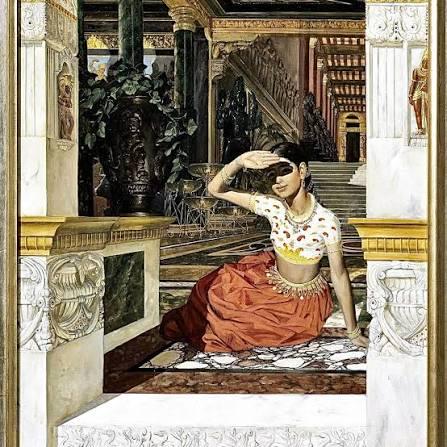
Regardless, Kunti was scared, you may ask, why didn't she wish for anything else or command Surya? Because she was a literal child, barely 13 or 14 by description. On the top, she also saw this,
The princess then saw the thirty gods, all stationed in the sky in their respective places, as resplendent and beautiful as the great and dazzling Aditya. On seeing them, the maiden was overcome with shame.
Seeing all Gods in sky, a God in front of you asking to give yourself to him otherwise he will destroy her family, do you think wits and cunning would be natural in such a time? No, it never would be, and that too for a teenage girl.
Kunti asks Surya about how losing virginity without marriage like this is "adharma" and how can she commit such act which will bring dishonor to her family?
And yes, how can Lord Surya commit "adharma"? That might be your question as well.
Surya himself answers this,
O beautiful one! You will not commit any adharma. How can I, with the welfare of the world in mind, commit adharma? O one with the beautiful complexion! It is natural in this world that all women and men should be without restraints. Anything that is against this is a distortion. Having united with me, you will again become a virgin.
Surya's philosophically is clear, men and women should be without restraints in this world, he's quite liberal, I will give him that. And he says how can he commit "adharma", the one who has welfare of the world in mind.
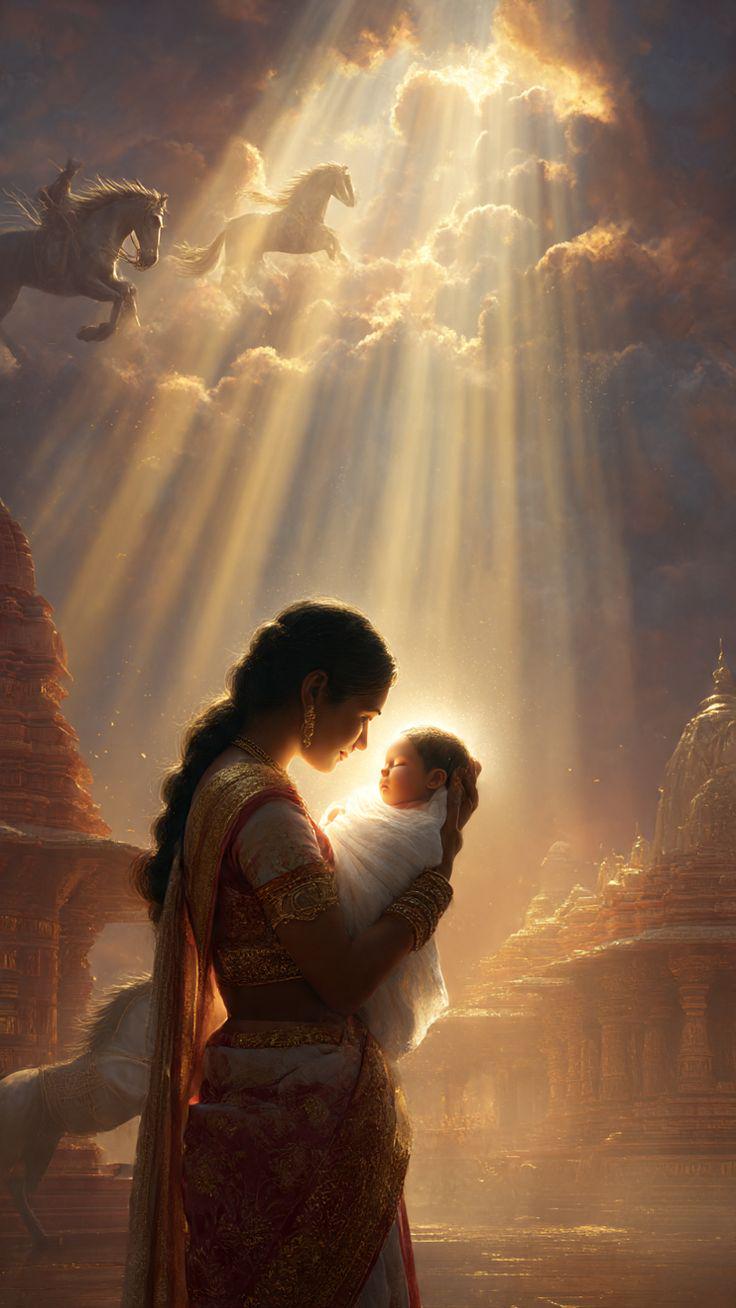
And then, the story you know, Surya enters into Kunti, 9 months later, Karna is born and Kunti sets him afloat in Ashva river.
In short, Kunti gets boon of having control of any God she wants, in her periods she sees Surya in the morning, Surya gives her divine eyesight to see his actual form, Kunti gets attracted, summons him, and Surya then wants to unite with Kunti not because the boon required it but because other Gods would make fun of him.
So, is Kunti really entirely at fault for the birth of Karna, I would let you readers decipher that.
But do you think Surya can't commit or desire anything wrong? or Devas in general?
There are multiple references of carnal desires of Gods too.
Indra previously lusted over Ahalya and took form of her husband to do the deed with her.
Agni was attracted to wives of Saptrishis, to the point that Swaha took form of the wives of Saptrishis and Agni did the deed thinking it was wives of Saptrishi.
In the Shatapatha Brahmana (1.7.4.1–3), we get the reference of Prajapati desiring her own daughter Ushas and uniting with her. Rudra punishes him for this.
So, it's not the case that Gods are morally perfect, so I see no reason to believe Surya is any more morally superior to Indra, Agni or the Prajapati.
Of course all this was my own interpretation and research, form your opinions only after reading the actual sources.
In my opinion, in this whole scenario, Surya was heavily at wrong here, there was no need to produce Karna just because you fear the Gods will jest at you. His fear of this minor offense resulted in lifetime of suffering of Karna.
I think this also reflects a broader social reality. Many couples have children despite neither being financially or emotionally prepared to raise them, or even genuinely wanting them, simply because they fear societal judgement. They worry about what people will say if they remain childless, and end up bringing a child into the world to meet society's expectations. Yet, once the child is born, they have little idea of how to raise them or what responsibilities parenthood actually entails.
Thanks for reading till here, I genuinely appreciate it! Let me know what are ur thoughts on this
Also thanks to u/Separate_Record9354 for the original post debunking this myth, I can't tag that post as this illustrious sub doesn't allow it.