r/micro_saas • • 38m ago

Upload iOS apps to the App Store without a Mac - iOSLaunchKit

1 Upvotes

Hey guys! I made a website that lets you upload your iOS app (.ipa) to TestFlight and the App Store from any computer, Windows, Linux or Mac, so you don't need Xcode or a Mac just to publish. Developers can upload builds, owners can approve them with one click, and you can track every step until the app is processed. It also has a free built-in Screenshot Studio to make your App Store screenshots. There's a free plan, and the site is still new, so please let me know if you find any bugs or areas for improvement. Would be very appreciated. You can find it at https://www.ioslaunchkit.online


r/micro_saas • • 49m ago

Upload iOS apps to the App Store without a Mac - iOSLaunchKit

1 Upvotes

Hey guys! I made a website that lets you upload your iOS app (.ipa) to TestFlight and the App Store from any computer, Windows, Linux or Mac, so you don't need Xcode or a Mac just to publish. Developers can upload builds, owners can approve them with one click, and you can track every step until the app is processed. It also has a free built-in Screenshot Studio to make your App Store screenshots. There's a free plan, and the site is still new, so please let me know if you find any bugs or areas for improvement. Would be very appreciated. You can find it at https://www.ioslaunchkit.online


r/micro_saas • • 2h ago

I built a free “Seed to Plate” app that connects your 2D vegetable garden, freezer inventory, and recipes — and just shipped a huge update (live demo, no signup!)

Thumbnail
reddit.com
1 Upvotes

r/micro_saas • • 3h ago

Zero sales from indie hackers after months of trying. Should I pivot my audience? (disposable email API for devs and AI agents)

Thumbnail reddit.com
2 Upvotes

r/micro_saas • • 4h ago

Index your SaaS here

2 Upvotes

I found an amazing SaaS directory where you can list your SaaS without the vote hassle lime on Product Hunt. It's free and you can even enhance your listing with only $1.99 one time payment by adding profile views, social media links, more image uploads, video etc. I listed 5 websites there for backlinks. Check out weblisty.net


r/micro_saas • • 5h ago

I built a tool where a shop owner talks for a minute and gets a real website (made for small Indian businesses)

0 Upvotes

Most small shop owners I know don't have a website. They have a WhatsApp number and an Instagram page. Hiring a developer costs too much, and website builders ask them to pick templates and write text, which they won't do.

So I built SiteGenie. You speak and it builds the site.

How it works

  1. The owner talks about their business in their own words.
  2. AI transcribes it and asks follow-up questions if something is missing, like timings or prices.
  3. It plans a website in one of 6 themes.
  4. The owner checks a live phone and desktop preview.
  5. They pay, and the site goes live on its own Cloudflare Pages address.

What else it does

- Simple product pages with options, stock and categories

- Optional second-language translation

- A QR poster for the shop counter

- Login by WhatsApp code to edit the site later

- Payments through Razorpay, one-time ₹2,499 (I'm still working out the hosting and edit terms)

Stack: Next.js on Vercel, Cloudflare Pages and D1, Gemini free tier for the AI, Razorpay for payments. I'm a student building this alone, so every AI call is kept to a minimum. I can't pay for Gemini billing.

Where I'm at: The live payment flow works. I tested it with a real ₹1 payment. I don't have real customers yet, so honest feedback is what I need most.

Try it: https://sitegenie-ai.vercel.app

What I'd like to know

- Would a shop owner you know trust a site built this way?

- Is ₹2,499 one-time too low, too high, or about right?

- What would you want added before you'd pay for it?

Happy to answer questions about the build.


r/micro_saas • • 5h ago

We build practical web apps and SaaS. 4 are live, 2 are still concepts. Here's what we learned.

Thumbnail reddit.com
1 Upvotes

r/micro_saas • • 5h ago

Do i build Mailjar or Kazan ?

Thumbnail
gallery
1 Upvotes

So basically i have built 2 apps lately and i don't know which on to go all in on now that both are built at a comparable level. (Will explain the 2 saas in very simple, won't go in details)

First is Mailjar. Mailjar is a webapp which allows users to link their claude code through mcp. We all make new features and struggle to communicate the feature to your user, well mailjar allows you to send emails to all of your users using the emails that you already collect to log in users to your app. Just build the feature then ask your coding agent to ship the release to users, your agent uses Mailjar, sends emails to your users announcing the feature. Inside the mailjar webapp you will also find email designs, saas explainer videos references your coding agent can refer to and also app screenshot references too. Because of course, you can't announce a release without screenshot of the feature or product demo videos.

Then there is Kazan, kazan is basically the animation studio to make those viral code based animation videos we are all seeing online (ricksclip etc.) You just boot up the desktop app, choose a style and the title and your own coding agent you link to the app will build the screen, generate voiceover with kazan, start making the video, showing you the storyboard in the process so you catch mistakes before it renders and finally boom you got a ready to post animation in less than 30 minutes.

Both apps im projecting them to be 20 dollars a month subscriptions. So which one should i build. I like mailjar because it feels like it could be useful to MORE people while kazan i like it because it gives that WOW moment very fast into the app while mailjar well we need to wait for the dev to actually need to ship a new release for it to become useful and have its moment to shine.

Please just tell me which one to build further, just don't tell me neither, either mailjar or kazan, i need to get one of these 2 going.


r/micro_saas • • 6h ago

Thirama finds businesses where their customers are complaining about the problems that you solve

Thumbnail
thirama.app
1 Upvotes

For example, if you run a cleaning company, you could pitch it to every local bar and restaurant, or better, you can go to the ones where people are complaining about the dirty bathrooms.

More realistically for this sub, if you help businesses with AI phone receptionists, missed-call text-back, websites with online booking forms, etc, you might get some good leads here.

I'm still launching so first 50 signups get 30% off for life, and you get a free trial where you can search 25 businesses. I'd love to hear your feedback.

Here are some sample leads (feel free to reach out to them if they're relevant):

https://www.thirama.app/#samples


r/micro_saas • • 6h ago

Launching my first app service with zero budget, not registered yet. What do I need in my Terms & Conditions?

Thumbnail reddit.com
1 Upvotes

r/micro_saas • • 6h ago

Lots of signups, few paying users, and no time to follow up with the rest?

2 Upvotes

If you're running a SaaS, this probably sounds familiar. People sign up, poke around for a few minutes, and disappear. Some never finish onboarding. Some use the product for a week and then stop logging in. Some start a trial and never pay. Some cancel without telling you why.

Over time this adds up. You might have a few hundred or a few thousand signups, but only a small share of them actually pay. The rest just sit in your database, and you never find out what happened.

You know you should follow up with them. Ask what went wrong, help the people who got stuck, remind the ones who forgot about you, and win back some of the ones who left. Often a single short, personal email is enough to bring someone back or get honest feedback you'd never hear otherwise.

But when you're a small team, there's always something more urgent. You're building features, fixing bugs, answering support, and trying to get new users in the door. Following up with people who already left feels like it can wait, so it never happens. And when you do get to it, it's one generic email blast that nobody answers.

That's the part I'd love to take off your plate. I work in customer acquisition, and I handle this for early-stage SaaS founders and teams. With your permission, I reach out to users who signed up but never finished onboarding, stopped using your product, or canceled. I write to them personally, handle the replies, answer their questions, help the ones who got stuck, and tell you why people aren't converting or staying. You get the feedback and the users who come back, without adding another tool, campaign, or workflow to manage.

Customer data is sensitive, so I sign a DPA and an NDA before accessing anything. My rate is $49/month. I keep it simple and affordable for early-stage startups.

I'm curious how other founders handle this:

Do you follow up with users who signed up but never paid or stopped using your product?

If you do, what has actually worked: personal emails, automated sequences, calls?

If you don't, what's stopping you: time, not knowing what to say, or not being sure it's worth it?


r/micro_saas • • 6h ago

I will review your saas, app, website

1 Upvotes

I will say what your website saas is on first impression, Give you SEO tips, design tips and others. For free and yeah..

Just your website link - and a one line.

FYI, I will be brutally direct and at the same time give you meaningful and useful tips..


r/micro_saas • • 6h ago

If you are selling online, you are probably losing 10-20% of your customers

Post image
0 Upvotes

If you sell through social media DMs or you have an e-commerce website, you know how it goes. A customer asks something, the chat gets buried, two of you reply with different answers, or nobody replies, and they buy somewhere else.

That's why I built Wasla. It's a unified inbox for WhatsApp, Instagram and Messenger, so your whole team works from one place. You can see who's on which chat, the AI moves people who are ready to buy to the top, and you can just ask it "who asked about the black hoodie?" and it finds them.

It's on AppSumo right now as a lifetime deal: $48 once and it's yours forever. No monthly bill. Honestly, if it saves you one order, it's already paid for itself. Once the deal ends, it goes back to monthly pricing, so now's the time if you're even a little curious.

And if it's not for you, you can get a refund within 60 days.


r/micro_saas • • 7h ago

Turn a competitor’s product page into a price alert

Thumbnail reddit.com
1 Upvotes

r/micro_saas • • 7h ago

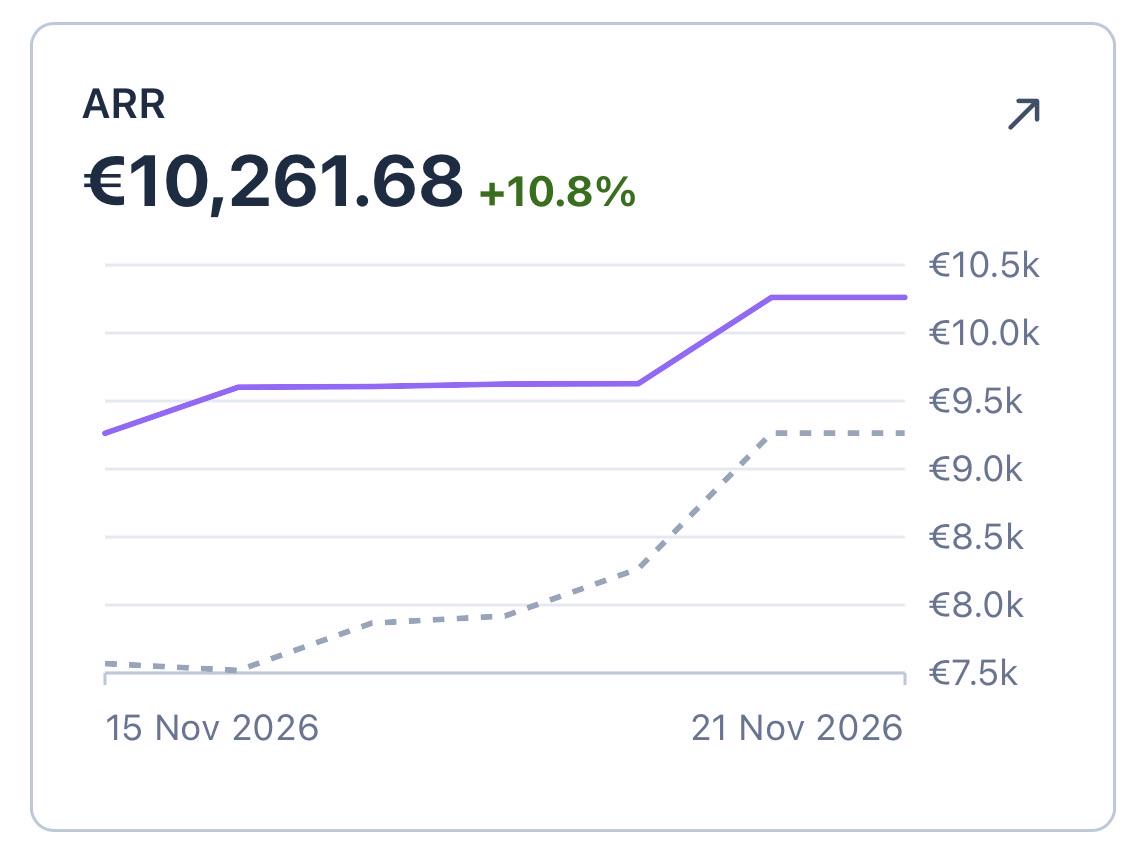
How I got my first 10 paying SaaS customers (now at $10k ARR) - my marketing process

Post image
5 Upvotes

I recently crossed $10k ARR with a SaaS I built myself.

Not life-changing money, but seeing people pay for something I made is still pretty damn cool.

I got my first 10 paying customers within two weeks of launching, and I thought I'd share how I marketed it, because I keep seeing people asking this question.

A little context first.

I've been running a consulting business for 7 years, so I already had around 55k followers on LinkedIn and an email list of 6k people.

That's a massive head start. I'm not going to pretend I started from zero.

But I was launching a completely new piece of software, so I still had to figure out how to get people interested enough to pay for it.

Here's what I did, and how I'd replicate the process if I were starting today.

  1. I started with complaints, not features

I'd used software in this particular industry for years and was frustrated with how unnecessarily complicated it was.

So I started building something simpler.

But before going too far, I surveyed people who used similar software.

I wasn't asking whether they'd buy my hypothetical product.

I wanted to know what annoyed them about the tools they already paid for.

That distinction is important.

People will happily tell you your idea is cool. Their actual frustrations are much more useful.

Here's how you can do the same without an audience:

Go to Reddit, YouTube, Facebook comments or wherever your competitors' customers hang out.

Search for:

- "[competitor] alternative"
- "[competitor] too expensive"
- "[competitor] sucks"
- "how do I [task your software solves]"
- "I wish [competitor] could..."

Find 20 complaints and put them in a spreadsheet.

Three columns:

What they said | What they want | What they're currently doing

Keep their exact wording.

If somebody says "I hate clicking through six screens to do this", that's better copy than "streamline your workflow with intelligent automation."

Nobody talks like that.

Look for complaints that keep appearing. Those are potential topics for your landing page, videos, posts and emails.

2. I started marketing before the software was ready

While building, I shared what I was working on with my existing audience.

I also created a waitlist.

Nothing fancy. I wanted people to be able to raise their hand if the problem sounded familiar.

When the beta was usable, I offered an early price to the people who'd expressed interest.

I got my first 10 paying customers within two weeks.

If I were starting from zero followers, I'd do something slightly different.

I'd pick ONE place where potential customers already discuss the problem.

Maybe Reddit, LinkedIn, X or whatever i would be most comfortable using.

Then I'd spend two weeks answering questions, documenting problems, sharing useful workarounds and showing what I was building where permitted.

I wouldn't spend those two weeks promoting a product.

I'd spend them becoming useful to the people who might eventually buy it.

Which brings me to the most useful marketing system I've developed.

3. I collect receipts instead of inventing content

Most founders build their software all day, then sit down wondering what to post about.

I've been creating content for years, and I used to do this too.

Now I collect what I call "receipts."

Basically, evidence of something I've done, learned, built or experienced.

I use 4 categories.

• Marketing receipts

Graphs, SEO experiments, website traffic, conversion rates, ad results.

For example, I recently documented how my SaaS's domain rating increased from 6 to 18 after working on backlinks.

That became a post explaining what I'd done.

You don't need huge results. A failed experiment with 50 visitors can be interesting if you explain what you learned.

• Sales receipts

Your first customer, a payment, an objection, a conversation about pricing.

Instead of just posting "I made my first sale!", explain what convinced that person to buy.

What problem did they have? What were they using before? What nearly stopped them?

• Building receipts

Before-and-after screenshots, features you've improved, bugs you've fixed, decisions you've made.

I've been improving my SaaS's onboarding, for example.

Rather than announcing a shiny new feature, I can show what was confusing people and what I changed.

• Life receipts

Running, family, personal experiences.

I run marathons. Sometimes I share what happens along the way.

Not everything needs to turn into a business lesson. People like following humans.

This one's optional, obviously. But it played its role.

4. Here's exactly how I'd turn receipts into content

Create a folder called RECEIPTS.

Inside it:

- Marketing
- Sales
- Building
- Life

Whenever something happens, save the screenshot, graph, recording or note.

Then pick one receipt and answer:

  1. What was happening?
  2. What did I try?
  3. What happened?
  4. What would I do differently?

Here's an example.

Imagine you're building scheduling software and discover that rescheduling an appointment requires 7 clicks.

You redesign it to take 3.

Instead of posting:

"Excited to announce our latest scheduling optimisation!"

Write:

"Someone complained that rescheduling an appointment in my app was annoying.

I checked.

Seven clicks.

For something that should take five seconds.

Spent the afternoon removing unnecessary steps.

It's down to three now.

Here's what I removed and why."

Attach the before-and-after.

That's a post.

Now imagine you run an experiment with your landing page.

You change the headline.

Conversion goes from 2% to 4%.

That's another post.

Show the original headline, the new headline, your traffic numbers, and explain what you think happened.

Don't hide the sample size or pretend the result is statistically meaningful if it isn't.

And if the experiment fails?

Post that too.

You don't need to constantly succeed to create useful content.

You need to actually DO things worth talking about.

5. I gave people somewhere to express interest

This part is ridiculously important.

You can create great content and still get zero customers.

Because someone finds your post interesting, then disappears forever.

Before launching, I created a waitlist.

If I were doing it again, I'd start with a very simple landing page.

Something like:

Headline: Do [specific task] without [specific frustration].

Visual: A screenshot or 30-second demonstration.

Button: Get early access.

That's enough to start.

Then I'd send everybody who joins a short welcome email:

"Hey, thanks for joining.

Quick question: what's the most frustrating thing about [problem] for you right now?

I read every reply."

Those replies are incredibly valuable.

They help you understand how people describe the problem, what they're currently using and why they might switch.

And they give you more things to build and write about.

6. I charged for the beta and kept the first customers close

I didn't want thousands of free users telling me my product looked cool.

I wanted people who actually needed it.

So I launched with an early beta price.

After those first customers joined, I put them in a group chat.

This was one of the best decisions I made.

People reported bugs, asked questions and told me what was confusing.

I spent the following months improving the software based on real feedback.

But here's the marketing benefit.

You can ask actual customers:

- What made you decide to buy?
- What were you using before?
- What nearly stopped you?
- What's still frustrating?
- What would you tell someone considering this software?

Use the answers to improve your landing page, onboarding and future content.

Get permission before publishing customer messages.

Your first 5 customers can teach you more about your positioning than a hundred hypothetical marketing exercises.

7. How I'd do this if I had ZERO audience

This is the 14-day process I'd try.

Days 1–2: Research

Find 20 genuine complaints in your niche.

Group them into recurring problems.

Pick the one your software solves best.

Day 3: Create a simple waitlist

One promise, one demonstration, one email field.

No need for a beautiful 15-section website.

Days 4–5: Create three useful posts

Post 1: Explain a common problem and how to solve it.

Post 2: Show a frustrating workflow and how you'd improve it.

Post 3: Share something you're building or testing.

Use actual examples and screenshots.

Days 6–7: Distribution

Spend time in communities where your potential customers hang out.

Answer questions properly.

Don't spam your link. Don't disguise promotion as advice.

Become a useful participant.

Days 8–10: Collect more receipts

Build something people complained about.

Document it.

Run a small experiment.

Save the evidence.

Publish what happened.

Days 11–12: Speak to interested people

Ask what they're using, what's frustrating, and what would make them switch.

Listen more than you pitch.

Days 13–14: Offer the beta

If the product is usable, invite interested people to become paying beta customers.

Explain exactly what works, what doesn't and what it costs.

If nobody buys, ask why.

Don't automatically assume you need another 15 features.

Would I guarantee 10 customers in 14 days?

Of course not.

I had an audience when I launched. Starting from zero is harder.

But at least you've started building distribution while learning what people care about.

8. What I'm doing now

Getting the first 10 customers and building a repeatable way to get the next 100 are very different problems.

I'm still figuring that out.

Alongside the content system, I've been experimenting with SEO, directories, backlinks, email onboarding and small paid ad tests on Instagram as that’s the easiest to set up, I’ve found.

Some things are working better than others.

And I don't think having $10k ARR suddenly makes me an expert on SaaS growth.

But I do think I've learned something useful:

Marketing gets a lot easier when you stop trying to invent things to say and start documenting the things you're actually doing.

One customer conversation becomes a lesson.

One product improvement becomes a demonstration.

One marketing experiment becomes a case study.

One unexpected result becomes something worth discussing.

You don't need 30 revolutionary content ideas.

You need to keep solving problems, collect the evidence, and share what you're learning.

Anyway, I hope this helps somebody who's building their first SaaS.

Curious what other solo founders are doing to get their first 10 paying users, especially those without an existing audience.


r/micro_saas • • 8h ago

How Do You Create Product Video Ads Without Filming?

2 Upvotes

Creating video ads for an online store can take a lot of time, especially if you don't have the equipment, budget, or skills to film and edit videos.

I've been working on AdKingoo, a tool that turns a product URL into an AI-generated video ad.

The idea is simple: paste your product link and let AI create the video.

You can try 2 free video generations with your own product.

I'm curious about your experience:

What's the biggest challenge when creating video ads for your products?

Is it the cost, time, filming, or editing?


r/micro_saas • • 8h ago

SweetMargins: a tool for small food businesses

1 Upvotes

A few months ago, released an app for a small niche market. it was basically a tool I built for family business who’s in the bakery business. Got 5 users who signed up till now. I’ve further worked on and opened the app to work for every small food businesses .
Please have a look https://sweetmargins.com/


r/micro_saas • • 9h ago

How Do You Create Product Video Ads Without Filming?

1 Upvotes

Creating video ads for an online store can take a lot of time, especially if you don't have the equipment, budget, or skills to film and edit videos.

I've been working on AdKingoo, a tool that turns a product URL into an AI-generated video ad.

The idea is simple: paste your product link and let AI create the video.

You can try 2 free video generations with your own product.

I'm curious about your experience:

What's the biggest challenge when creating video ads for your products?

Is it the cost, time, filming, or editing?Adkingoo


r/micro_saas • • 9h ago

is an upfront deposit of a month and a half standard for an eor service?

1 Upvotes

We're hiring 1 person in a country where we have no entity. We have 3 employees like that through deel already, but the renewal is up, so I priced this one with 3 providers. Two of them want a deposit before anything starts, about a month and a half of what she'll cost all in, refundable when she leaves, they say. Our finance lead won't sign off a deposit that size for a single hire, and if we move the other 3 as well we'd be paying deposits to one provider while waiting for them back from another.

The third quote is from kleos. io, where we have the one contractor. 200 a month on top of her pay and a deposit smaller than the other two. Still a deposit, and the finance lead still asked what it's for. I couldn't tell her.

Is a month and a half standard, and when you left a provider, how long did the deposit take to come back?


r/micro_saas • • 9h ago

I built a free-entry project directory. My own CTA made it look paid

Thumbnail
reddit.com
2 Upvotes

r/micro_saas • • 10h ago

My first user came from a nested comment on Reddit. Here is what 30 days of doing that manually actually looked like.

2 Upvotes

My first user signed up on day one. Not from a Product Hunt launch, a viral post, or paid ads, just a reply to a nested comment on Reddit.

Someone was describing a problem my SaaS was built to solve. I joined the thread, wrote a useful reply based on what they were stuck on, and mentioned what I was building at the end. That single interaction changed how I think about early-stage distribution: you don't need an audience or a marketing budget to get your first users, you just need to find people actively dealing with the problem.

So I kept doing it. 30 days later:

  • 1,039 unique visitors
  • $0 spent on ads
  • No cold outreach, influencers, or bots

More importantly, people are actually using the core features, not just bouncing off the landing page.

I look for threads and nested comments where people are troubleshooting problems my product solves. I don't drop a link and leave. I read the thread, see what they've already tried, and write something genuinely useful. If my product fits, I mention it casually at the end. (I've also started repurposing those same real use cases into short demos on Instagram and TikTok instead of generic marketing clips.)

To save time searching, I wrote a small script to surface relevant Reddit discussions. That's the only automation involved. I still manually read every thread and write every reply, automating the conversation defeats the point of understanding the context.

That script eventually turned into a small SaaS of its own, Hark.

The downside is that it's repetitive. Some days you spend two hours reading threads, write thoughtful replies, and get zero clicks, zero feedback, and zero signups.

1,039 visitors isn't massive scale and it's still very early, but getting real people to discover and use something you built from scratch without spending money on acquisition is a pretty good feeling.


r/micro_saas • • 10h ago

14yo in India, zero coding/SaaS skills, phone-only setup — where should I start learning?

2 Upvotes

I’m 14, in India, and full of product ideas—but I have almost zero technical or SaaS knowledge, and my only device is a mid-range 5G phone with ~2–3 hours a day to learn and build.

Not looking for shortcuts or someone to build my ideas. I want to learn the basics properly first:

How a simple SaaS app works under the hood

Which concepts to learn first without drowning in jargon.

What’s actually doable on a phone (and where mobile hits a wall)

Early mistakes to avoid when you're hyped about ideas

If you’ve ever built a small SaaS or web app, what’s one lesson or mental model you wish you had from day one? Honest advice and beginner resources appreciated.


r/micro_saas • • 10h ago

I’m building my first SaaS after years of selling WordPress plugins. What are you building?

Thumbnail
reddit.com
1 Upvotes

r/micro_saas • • 11h ago

Your best-selling Shopify product is running out of stock. Would you know before it happens?

1 Upvotes

One problem I’ve been focusing on with Shopify stores is inventory running out at the worst possible time.
Imagine this:
Your best-selling product is selling consistently, your ads are bringing in customers, but your inventory is getting dangerously low.
You don’t notice until you’ve already missed sales opportunities.
I built Minion AI to tackle this specific problem.
It creates an inventory monitoring agent for your Shopify store that can:
Monitor stock levels of your products.
Identify best-selling products approaching a stockout.
Alert you when inventory needs attention.
Analyze sales patterns to help you anticipate replenishment needs.
Help you decide which products should be prioritized for restocking.
Instead of constantly checking Shopify analytics and inventory manually, you have an AI agent monitoring the situation and bringing important problems to your attention.
I’m currently looking for Shopify store owners to try it and give me honest feedback.
What’s your current way of knowing when a best-selling product is about to run out of stock?


r/micro_saas • • 11h ago

If your SaaS can be cloned in a weekend, what the heck are you even selling??

16 Upvotes

Been thinking about this all week and it kinda ruined my weekend

This month I cancelled 2 tools I was paying for. Wispr Flow at $15 a month, switched to Amical which is free, open source and does like 90% of the same thing. Then UseFastlane at around $50 a month, which I rebuilt with Claude in two evenings and the UI looks almost the SAME, no joke

The funny part is I build SaaS myself. I'm the guy who's supposed to be on the other side of this

Three years ago the answer to the title was easy, you were selling code because nobody else could write it. Now anyone with a $20 Claude sub can write it, your users included

After that I went through every subscription I have. The ones I kept have something I can't download, like years of my data sitting inside them or support I'd miss. Everything that was basically a nice UI around a model got cut, zero hesitation

For my own products I stopped adding features nobody asked for. Half my week is Reddit and X now instead of code and it's paying off more than anything I shipped this year