r/musichistory • u/SAMTIMONIOUS • 1h ago
The Who & LIVE AT LEEDS (1970):
'LIVE AT LEEDS (1970) has umpteen examples of The Who pushing their incredible talents to the limits of a genre they had created.
r/musichistory • u/SAMTIMONIOUS • 1h ago
'LIVE AT LEEDS (1970) has umpteen examples of The Who pushing their incredible talents to the limits of a genre they had created.
r/musichistory • u/ElvisIsNotDjed • 51m ago
r/musichistory • u/SAMTIMONIOUS • 20h ago
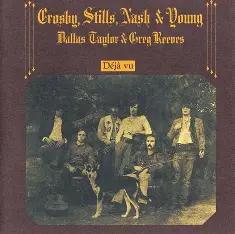
DEJA VU (1970): Parts of 'Deja Vu' are good,' reflected Neil Young, 'but they're the parts I'm not on.'
r/musichistory • u/CiroPerrino_Music • 7h ago
Hello progressive rock historians and vinyl collectors,
Following our introductory invitation, today we explore a truly exceptional event for its time: the Primo Incontro Davoli Pop on October 14, 1971. In this segment, we travel to the Palazzo dello Sport in Reggio Emilia for a massive gathering patronized by the legendary "Ciao 2001" magazine. While sharing the stage with heavyweights like New Trolls, Le Orme, and I Trip, we face the technical challenges of a primitive era of live sound engineering and an unexpected restriction imposed by the legendary Davoli brand on our stage gear. Here is Chapter 17: First Part – The Gathering at Reggio Emilia.
***
The Davoli company, a historic musical instrument brand, with artistic direction managed by Maestro Franco Norma and Franco Cantarelli, had organized a truly exceptional event for those times, scheduled for October 14 of that fateful year 1971.
It was a gathering that had been named the "Primo Incontro Davoli Pop" and was set to take place at the Palazzo dello Sport in Reggio Emilia.
The entire event was under the patronage of "Ciao 2001" magazine.
Once again, the names of the participating groups represented the absolute cream of the crop among the finest musical acts, alongside already well-established names such as New Trolls, Le Orme, and I Trip.
The morning and early afternoon of that day were dedicated to setting up the stage and defining a primitive sound check. In fact, at the time, the figure of an accompanying sound engineer acting almost as an additional member of a band did not yet exist, and mixing consoles had no memories. Therefore, everything was left to good will and a spirit of improvisation. Furthermore, and unfortunately, on this occasion it was not possible for me to set up my sophisticated percussion rig, because Davoli had made the exact same model of drum kit available to all drummers—a kit they were trying to launch on the market. An event like this allowed the company to advertise it and bring it to the attention of both insiders and the general public.
Therefore, it was with a certain reluctance that we approached those few minutes made available to test the instruments and get familiar with the sound and the scarce monitors present on the massive stage.
Unfortunately, nobody gave us a hand in order to understand whether the impact was more or less good and what the rendition was like when listening from the stands or from the rows of chairs arranged in the center of the immense Palasport.
Even the damp and rainy atmosphere of that day did not help us find the necessary concentration.
Then, when evening came and the moment for our performance arrived—just right after the Flashmen and shortly before Rovescio della Medaglia—we went up on stage ready to give our absolute best, knowing very well that the conditions were not the finest.
It was rumored that Greg Lake himself was among the audience present, having come specifically to follow the event closely and to evaluate if, among all the bands that were taking turns on stage, there was someone worthy of being signed to the newly emerging Manticore label.
Unfortunately, for the first time, it happened that the quality level of our performance was not up to the standards we were accustomed to.
The sound monitoring on stage was terrible. It was practically impossible to hear one another.
It was later discovered, with regret and a hint of anger, that Guido Damiani's amplifier had been turned off right from the start, and therefore an important reference point for the other musicians had been missing.
The proverbial and formidable tight-knit chemistry between Cavanna and me saved the band from a complete musical shipwreck.
The audience seemed distracted and distant, not very attentive. An episode of this kind had never happened before.
We found out later, once we had stepped off the stage, that nothing of what had been played had reached the listeners' ears, except in a confused and barely intelligible manner. During the vocal part sung by Luciano in the final section of "Night on Bald Mountain"—accompanied by an arpeggio played by Leonardo that simulated a harp—a spectator in the front rows right in front of the stage stood up and, applauding in splendid solitude, shouted towards Il Sistema: "Bravi!".
This was the only notable reaction.
[To be continued in Chapter 18]
Inner Garden Records
See you next Friday, the story of IL SISTEMA continues.
In the meantime, you can explore how these historical avant-garde roots evolved across five decades directly here:
👉 https://ilsistema.bandcamp.com/
#ProtoProg #ItalianProg #ProgRock #MusicHistory #1970Music #IlSistema #CiroPerrino #VinylCommunity
***
r/musichistory • u/Bentonite_Magma • 15h ago
Easiest explained with some modern examples. I think this is must be a music-hall / variety-era tradition, but I'm wondering if it's earlier. And possibly mostly British, but I'd love to hear other examples.
Andrew Bird, Opposite Day, 4m8s ("Listen up, I just work here / I can't keep talking about him")
https://music.apple.com/us/album/opposite-day/1774570638?i=1774570894
Bill Bailey, Cockney Rock Medley (deliberate pastiche), 1m55s ("I'll have his chips then")
r/musichistory • u/MissingPD1981 • 18h ago
r/musichistory • u/unredacted_bastard_ • 1d ago
r/musichistory • u/CiroPerrino_Music • 1d ago
Hello progressive rock historians and vinyl collectors,
Following our archival journey, tonight we enter Chapter 28 of the CELESTE saga. In this deeply intimate segment, as we shape the core of "Il Principe del Regno Perduto" in 2020, I reveal the roots behind the operatic incursions within the suite "L'Ultimo Viaggio del Principe." I recall a tender childhood memory of my maternal grandfather, Carlo, a grand musician who instilled in me the dramatic power of Giuseppe Verdi and Giacomo Puccini. Furthermore, I share the fascinating studio story of how we recruited the soprano Anna Marra, whose extraordinary talent allowed her to seamlessly bridge the gap between classical operatic canons and the raw energy of progressive rock. This is Chapter 28: First Part – The Heritage of Bel Canto.
***
When I spoke of operatic music, I was referring to the fact that within the suite "L'Ultimo Viaggio del Principe," I inserted a brief vocal passage to be interpreted according to the aesthetic and technical canons of "Bel Canto," which is typical of late nineteenth and early twentieth-century music. This was a sort of tribute that I wished to dedicate to my maternal grandfather, Carlo, who had been a grand performer and musician. He knew by heart all the librettos of the operas by Giuseppe Verdi and Giacomo Puccini. I remember when I was a child, he would sing to me the arias from various operas which, if we may say so, were to his time what suites and themed concept albums are to many Prog Rock bands today.
For this reason, I had to recruit a female singer for CELESTE who had studied opera singing and, above all, who was capable of adapting her technique to a Rock context. After lengthy searches and auditions, the choice fell upon Anna Marra. She welcomed the proposal with great enthusiasm, as she had never lent her "Art" to a similar project before. And as if that were not enough, since she remained deeply intrigued by the nature of the project, I took the liberty of inviting her to listen to the other compositions from the album "Il Principe del Regno Perduto" as well. In my initial plans, I intended to look for a second female voice to interpret the remaining tracks, where she was supposed to duet with me in certain parts. However, that was not necessary. I stopped looking for another female voice. In fact, after listening to every passage dedicated to vocals and singing, Anna told me that she would be happy to sing all the remaining tracks as well, and that she would use her voice not as an opera performer, but could easily sing like a Rock or Pop singer instead. The result rests within the "grooves" (I always speak like an old Vinyl enthusiast!) and her absolute talent can be fully appreciated right there.
But I also needed a male voice, typically a tenor, to perform a passage in response to Anna at a specific point in the suite, so I set out to find this performer. The choice fell upon a friend of mine, a musician—specifically a guitarist—who told me that operatic singing was also among his passions. It was a wonderful surprise for me, as I had always considered and thought of him as a guitarist of strictly Prog inspiration and background. And that is how Alessandro Serri also became part of CELESTE's project, "Il Principe del Regno Perduto." On board, clearly, were all the other musicians from the official lineup of CELESTE’s second version. The loyal Enzo Cioffi is always the first among the musicians to be summoned for infinite meetings in my Home Studio, sitting in front of the monitors (always YAMAHA NS-10M) to listen to the drums that I played as a reference track, which he will then reinterpret, arranging here and there and improving them with his formidable technique once we enter the recording studio. Except for CELESTE's "Principe di un Giorno," where I deliberately renounced my role as a "pure" rock drummer, I always reserve great attention for the drum parts—it is needless to remind you that I was born a drummer, and I can never manage to forget it. The interaction with Enzo allows me to understand where it is best to intervene in the fills and in all other rhythmic expressions. And then Francesco Bertone, the inimitable bassist and double bass player, Enzo's perfect partner, capable of creating a solid foundation upon which the entire structure of CELESTE's compositions rests. Without their presence, I think I would write nothing more for the CELESTE project. They are irreplaceable. In the recording studio, they barely look at each other while playing, such is their tight-knit chemistry, and they are an absolute certainty. I adore listening to them play after spending months and months in my Home Studio writing and arranging, anticipating and savoring in advance how they will go on to bring alive that music which, at the moment, is locked away and "imprisoned" within my DAW.
To listen to the absolute sonic essence born during those legendary analog sessions and explore the full historical discography of CELESTE, you can visit our archival page here:
👉 CELESTE Official Bandcamp: https://celeste4.bandcamp.com/
Inner Garden Records
See you next Thursday for the next episode!
r/musichistory • u/sicard0377 • 1d ago
r/musichistory • u/enolaM_yecarT • 1d ago
Probably my TOP album of all time! Stevie Wonder’s, Songs In The Key Of Life.
r/musichistory • u/MiniCyrus13 • 1d ago
Hey yall, I am really new and am currently in a music history class in college and wondered if anyone has scanned a book called Capturing Music: The Story of Notation by Thomas Forrest Kelly. I need it for a research paper I am doing on Franconian notation.
r/musichistory • u/GoodGoldRecords • 1d ago
r/musichistory • u/SAMTIMONIOUS • 1d ago
Twenty great albums of 1977: RUMOURS - a smart, high-calibre rock record.
r/musichistory • u/Appropriate_Bed_86 • 1d ago
I’m looking for books that focus on music history, I’m not sure what genres/aspects to look into outside of jazz (as that’s my current fixation).
I am really fine with any genre, culture and era as long as the contents themselves are detailed and informative.
r/musichistory • u/GoodGoldRecords • 2d ago
I’ve just released a manual 2026 restoration of this 1925 classic. It’s a fast-paced 'Hot Dance' track that captures the energy of the Roaring Twenties.
I worked manually in Audacity using a 3-track hybrid model to pull the brass and rhythm section out of the acoustic 'box' without using any kind of AI smearing. I wanted to keep the original transients of the trumpets and the rhythmic drive of the piano intact.
Apple Music: https://music.apple.com/us/song/collegiate-feat-ben-bernie-his-hotel-roosevelt-orchestra/6831334652
Spotify: https://open.spotify.com/track/27Fcqq25M6m96nGT7cgwn5
Tidal: https://listen.tidal.com/track/576426350
r/musichistory • u/CultManchester • 2d ago
r/musichistory • u/InnerCard8089 • 2d ago
r/musichistory • u/SAMTIMONIOUS • 2d ago
'THE GILDED PALACE OF SIN' is not only a great debut album, but arguably the most potent mix of country, soul and rock ever.
https://samtimonious.com/the-flying-burrito-brothers-the-gilded-palace-of-sin/
r/musichistory • u/Lost_In_Frenchlation • 2d ago
We talk about jazz history in chapters: New Orleans, bebop, hard bop, free jazz, fusion, acid jazz. Each era felt radical at the time and canonical in hindsight.
What's harder to see is that the chapter being written right now is just as consequential. The London scene producing some of the most rhythmically adventurous jazz since the 70s. Chicago's International Anthem roster extending the AACM lineage into the streaming era. A generation of musicians dissolving the boundaries between jazz, hip-hop, and electronics in ways that would have sounded like science fiction to Art Blakey.
I curate a playlist called Jazz Now that I update weekly with new release, not as a "best of 2026" exercise, but as an attempt to document this moment while it's happening. Nicholas Payton and Butcher Brown reimagining Miles Davis. Makaya McCraven extending the Chicago creative tradition. Irreversible Entanglements keeping free jazz politically charged. Miguel Atwood-Ferguson reinterpreting Giant Steps alongside Shabaka and Joel Ross. Jeff Parker doing things with loop-based composition that have no real precedent.
Future listeners will look back at this decade the way we look back at the Blue Note years. This is what it sounds like from inside it.
https://open.spotify.com/playlist/6mF4FxBhup44I3MNj5gR4n?si=H4wVZIdmTwaFHHC39zpb6g
Curious what this community thinks, which current artists do you see as historically significant in 20 years?
LIF
r/musichistory • u/MiniCyrus13 • 2d ago
Hey yall, I am really new and am currently in a music history class in college and wondered if anyone has scanned a book called Capturing Music: The Story of Notation by Thomas Forrest Kelly. I need it for a research paper I am doing on Franconian notation.
r/musichistory • u/MiniCyrus13 • 2d ago
Hey yall, I am really new and am currently in a music history class in college and wondered if anyone has scanned a book called Capturing Music: The Story of Notation by Thomas Forrest Kelly. I need it for a research paper I am doing on Franconian notation.
r/musichistory • u/SAMTIMONIOUS • 3d ago
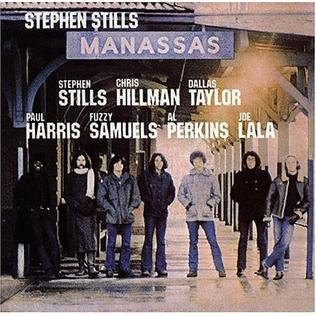
On 'MANASSAS' (1972) Stills incorporates blues, rock, bluegrass, funk and Latin-shuffles into a sprawling, nigh-on faultless collection.
r/musichistory • u/Objective_Horror_793 • 3d ago
I've been super into Peter Pringle lately, and old Babylonian love songs. I've watched his whole playlist about it already and I want to add something new into the mix. Maybe some ancient Greek love songs? Roman? But I would prefer if they were historically accurate channels using instruments contemporary to the period.
Thanks!