Got thinking today and I was curious. Obviously Atlanteans are pretty famous in different areas of mythology, the whole sunken and lost city and they all learn to breathe and live underwater etc.
But I wondered if there existed a culture in mythology or anywhere else in fiction or legend that did the same for the land and the air? A culture that had to adapt to these new terrains?
I imagine for the air the culture would’ve no doubt learned to fly in some capacity but what about those on land? Excluding humans obviously.
Just curious and interested to what anyone can tell me.
At least in my country mirrors were historically often could be other polished metals like bronze. And you can see reflections in many natural circumstances like water, others corneas etc.
It just seems like whatever the folk lore version of a folk etymology is to me. Though I do not know about the subject which is why I am asking here.
So, in Egyptian mythology, did the gods walk among humans and rule over them like kings, similar to how they were portrayed in the movie Gods of Egypt? If so, would they have human soldiers serving them? For example, if one god wanna to arrest another god, would he send his human soldiers to capture him? If yes, how could ordinary humans possibly arrest a god?
Full disclosure: I wrote both of the books I'm about to mention.
If you like the point where Greek story and Norse myth meet, medieval Iceland had its own Troy saga, Trójumanna saga. This is my English translation of the α (Dares Phrygius) version. The Icelanders told the Trojan War in saga style and gave it Norse gods. Priam builds a hall to Thor. At the sack, Kassandra and Andromache hide in Frigg's temple. The preface to the annotated edition also points to the passage in Snorri's Prose Edda where men called Asgard "Troy."
If the person on your list mainly wants the Norse myths themselves, Tales from the North retells the cycle from the creation through Ragnarök, then the hero legends, including parts of the Völsung cycle, the complete Hávamál, and the story of Amleth, and it closes with folk tales and material from the Kalevala. https://www.amazon.com/dp/B0C2RPGTXD
Happy to answer questions about the saga or the sources. I'm not trying to turn the sub into a storefront, and I'll leave it at this.
Heads up first, the visuals in this one are AI generated, so if you're not into AI art it's probably not for you and that's totally fine.
Turkic mythology almost never gets covered in English so I wanted to give it a proper go. It covers Kayra Khan and the seventeen layers of the sky, Ulgen and Erlik, Umay, Ak Ana, Oghuz Khagan and the sacred birds of his sons, Asena the grey wolf, Al Karisi, Tepegoz and the eclipse giants, mostly from Altai, Yakut and Gokturk traditions.
Where I could I used real historical images too, like the Kul Tigin monument, Kashgari's world map, the Jami al Tawarikh and the Dede Korkut manuscript in Dresden.
If you know these traditions better than me I'd really like to hear what I missed or got wrong.
Much of the discussion surrounding the Fourth Branch of the Mabinogi tends to focus on Arianrhod, while the part of the story concerning Blodeuwedd often seems to receive less attention.
Blodeuwedd’s actions can certainly be viewed as malicious, but interestingly, they also play a part in Lleu Llaw Gyffes’s transformation and eventual flight into the form of an eagle. As the saying goes, “What doesn’t kill us makes us stronger.” The scheme does not unfold quite as its perpetrators intended, and perhaps there is something meaningful in that.
Personally, I almost wish the story had ended with Lleu’s transformation. Why return to a kingdom where his own mother had decreed an unalterable fate. never being able to take a wife from among the human family?
I’ve been feeling a bit invisible in different aspects of my life lately, and I was wondering if anyone knew of folklore/myths/stories about humans fading away through loneliness/isolation etc. I’d like to read something along those lines.
I guess something similar to the Wendigo, but more from grief/sadness/loneliness
I’m trying to get into Mesopotamian mythology, but a lot of the books I’ve read are these very dry, nonfiction texts. I want something more like Neil Gaiman’s* take on Norse myths: a dynamic narrative that’s still an accurate retelling. Any suggestions?
*fuck Neil Gaiman; I read that book before the allegations came out
Almost every culture/ type of mythology I look into, there is at least one myth of an animal, creature, or monster that turns into a beautiful woman to seduce men and kill them.
Greek mythology has sirens, Japanese mythology has Jorōgumo, and Norse mythology has the Hulder. There are many more examples but it all boils down to the same archetype.
I am genuinely curious because I can’t think of any other trend such as this where one type of myth is consistently appearing throughout different mythologies
Not from books, but from real people who inherited them, yet they themselves no longer knew what they were for or where they came from.
One of these rituals ended up in the family of my close friend in Ukraine. It came from his great grandmother. In my country, the birth dates of people born before the 1920s are unknown, they celebrate their birthdays by the old calendar on their name day.
This ritual was passed down by a great grandmother who was born around the early 1900s.
The essence of the ritual is this: after washing your hands, it is strictly forbidden to shake them, because a imp is born from every drop of water.
I’m interested in old Slavic rituals. I’ve found a ton of them, from real stories, but not this one. Maybe someone knows what the meaning is and which religion it originally came from ?
In China, besides dragons and phoenixes, many ordinary animals are also revered or worshipped. These include tigers, snakes, bats, magpies, cranes, and deer. Examples can be found in the Chinese zodiac, as well as in the Five Immortals (Wuxian) of Northeast China's shamanic traditions, which consist of five animals: snakes, Siberian weasels, hedgehogs, red foxes, and rats.
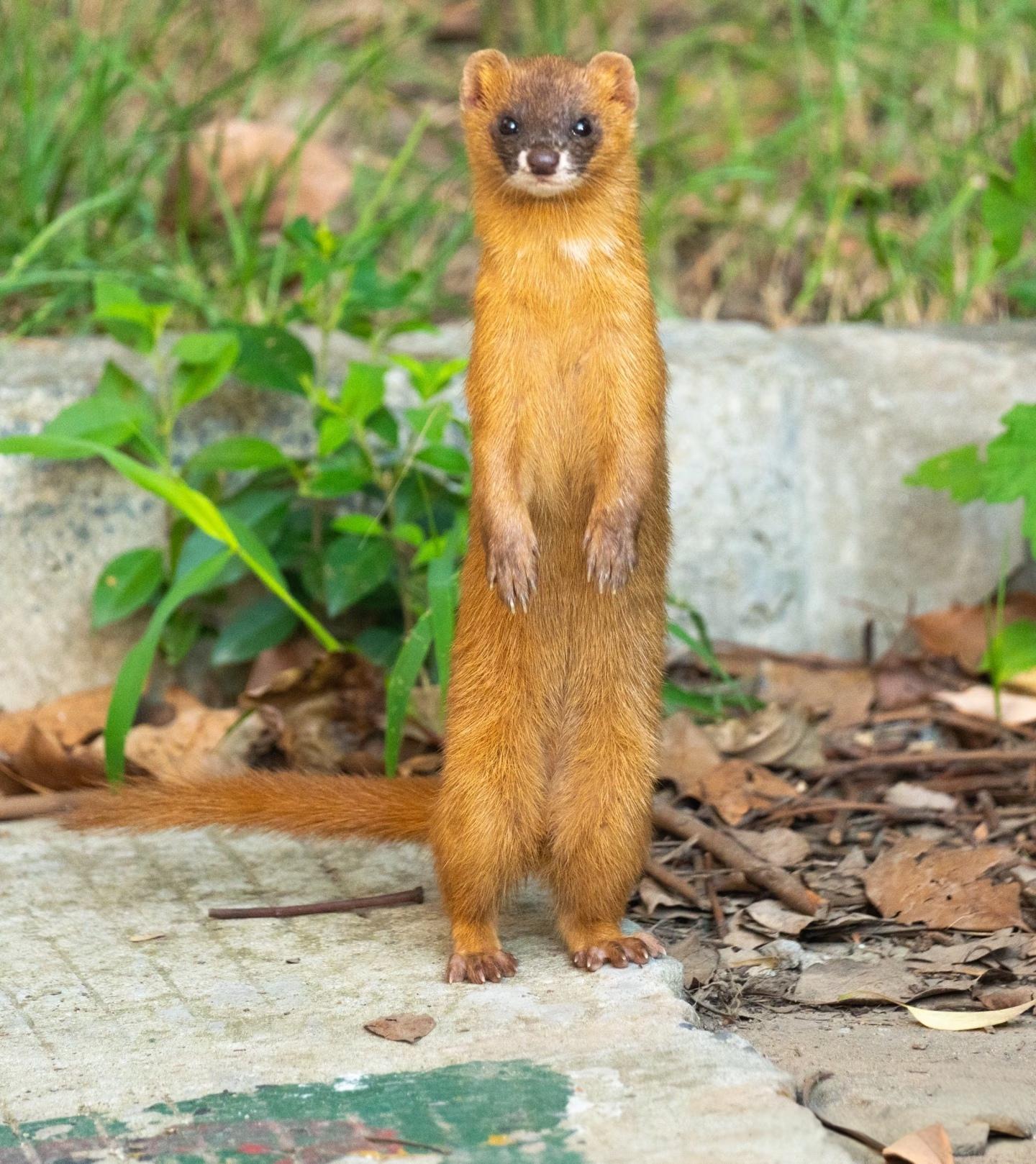
Among these animals is one that is now extremely common in Chinese cities: the Siberian weasel, which is also an object of worship.
Before getting into the details, it's worth briefly explaining the basics of Chinese mythology. In Chinese mythology, virtually anything can become a yaoguai (妖怪, spirit or supernatural creature) after accumulating enough qi (气, vital energy). Powerful yaoguai can even join the ranks of the deities after passing a trial held by the Celestial Court. Different kinds of yaoguai often possess distinct abilities. For example, tiger yaoguai are said to be able to command the spirits of tigers.
Siberian weasels and foxes are often portrayed as tricksters, although foxes tend to be more associated with sexual seduction, while Siberian weasels are more like mischievous pranksters. According to folklore, Siberian weasels may attack poultry, possess people, and cause hallucinations or mental disturbances.
In northern Chinese legend, powerful Siberian weasel spirits will stop travelers along the road and asks them a question: "Do I look like a human or a deity?" The answer has a direct impact on the Siberian weasel. A favorable response strengthens its power, and the traveler may subsequently receive gifts or assistance in return. An unfavorable answer, however, can provoke the Siberian weasel's revenge.
Statue of Siberian weasel on sale
Hurting or killing a Siberian weasel is believed to bring misfortune upon oneself. Some people worship Siberian weasels partly to avoid their mischief and retaliation, and partly in the hope of receiving their help and protection.
Today, Siberian weasels, along with small animals such as magpies, are among the most commonly encountered urban wildlife in China.