r/nasa • u/ye_olde_astronaut • 14h ago
NASA NASA Officially Takes Ownership of X-59 Supersonic Aircraft

442
Upvotes
r/nasa • u/ye_olde_astronaut • 14h ago
r/nasa • u/Light_Heart_Ed • 1d ago

r/nasa • u/Galileos_grandson • 21h ago

r/nasa • u/MeiloFeilo • 1d ago

A few weeks ago, I shared my 60 cm Saturn V cutaway here, and I was genuinely blown away by the response! Thank you to everyone who commented and shared suggestions. I loved reading all your feedback, and it inspired me to start a whole series of detailed engineering cutaway models.
Here's a first look at the next project: Space Shuttle Discovery STS-31, the mission that launched Hubble in April 1990!
It's a 1:144 scale CAD model of the complete launch stack, with the external tank, one solid rocket booster, and the detachable orbiter cut open to reveal their internal engineering.
The design is currently undergoing printing and assembly testing, and I'm aiming for even more detail than my Saturn V while keeping everything practical to print.
I'd really appreciate your suggestions while it's still a work in progress! Are there any important Shuttle details or systems you'd like to see included before I finalize it?
And what other historic NASA spacecraft would you love to see in this cutaway series?
r/nasa • u/MrAstroThomas • 1d ago

Hello everyone!
This is Thomas. I am a space scientist from Stuttgart, who works since 2014 on Cassini Cosmic Dust Analyzer (CDA) data.
My professor (who led the CDA project) had his 60s birthday recently, and we as a team prepared some gifts of course.
And I'd like to share my creation, we printed out as a poster: Cassini in a vintage flat color style!
What it shows: Cassini's flyby at Enceladus south pole and its geysirs. CDA measured these ice particles and therefore "casts the shadow" in the picture.
I am not a designer, so please don't yell at me. But maybe you have good feedback how to improve it :). Feel free to print it out!
Thomas
r/nasa • u/Aeromarine_eng • 1d ago

r/nasa
•
u/Morethan3D
•
2d ago

Hi everyone,
I've been working tirelessly on a project in the last few months - create one of the most detailed and accurate 3D-printable Space Shuttle models ever designed.
Being a huge fan of the Space Shuttle myself, I've always wanted one in my space collection, but I couldn't find any models on the market that meets my requirements, so I ended up designing one. After months of working on this, I can finally share with space enthusiasts around the world a model that combines:
- Exceptional accuracy: Faithfully recreating the Orbiter's iconic shape and intricate features.
- Unprecedented detail: Including the individual thermal protection tiles and blankets, carefully modelled to reflect their actual locations.
- Printability: Designed from the ground up for accessible 3D printing, without compromising on detail.
- Museum-worthy presentation: A stunning finished model that deserves a place in any space enthusiast's collection.
To me, this project isn't just another 3D-printable model. It's my tribute to NASA's incredible Space Shuttle programme and the people who made this extraordinary chapter in human spaceflight possible.
I would love to share with you some photos of my work. Hope you will enjoy it. Thank you!
r/nasa • u/OuroBoroSsA • 2d ago
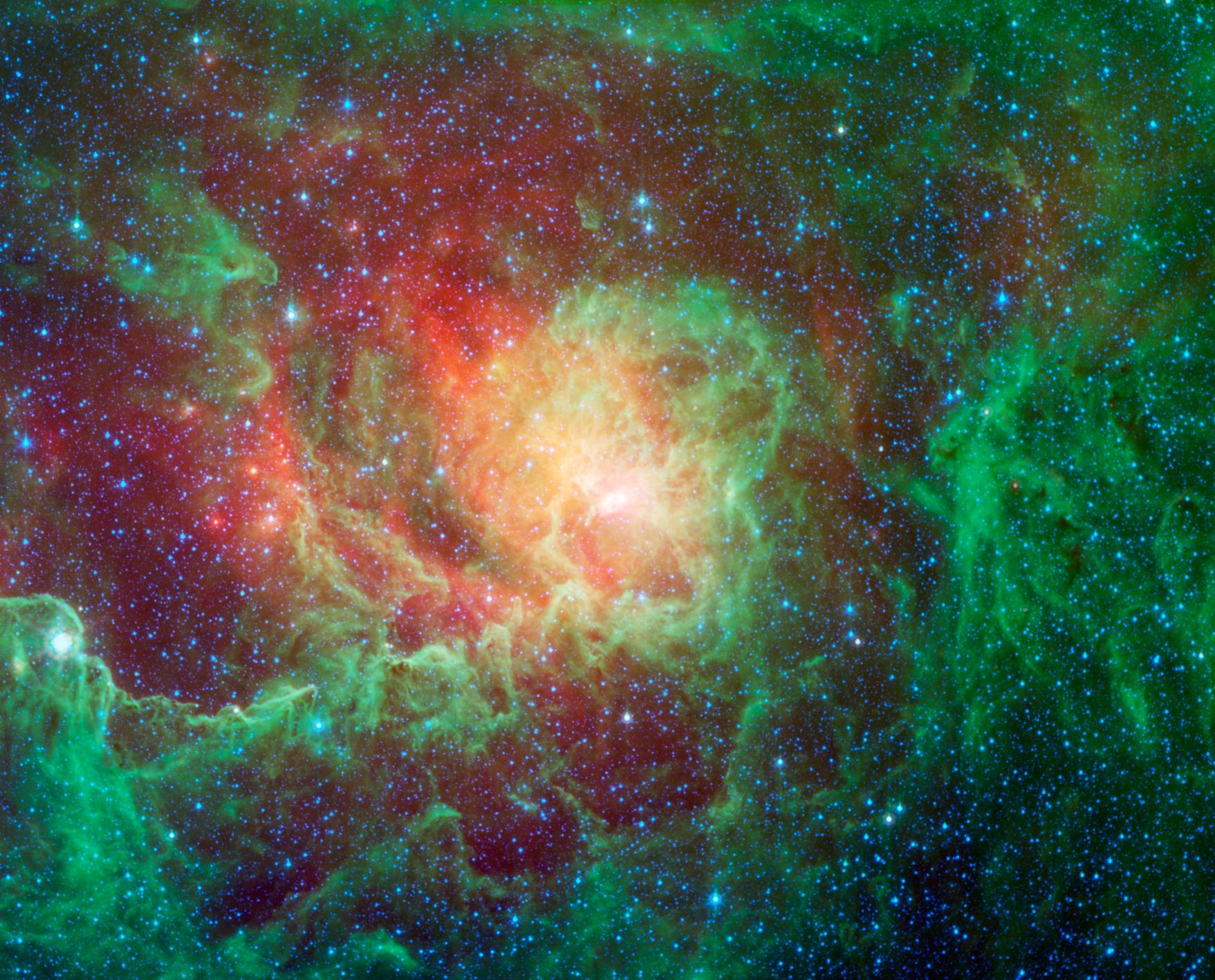
This image from NASA's Spitzer Space Telescope provides a stunning view into the heart of the Lagoon Nebula. It is dominated by swirling dust clouds and the radiant glow of bright, newly formed stars. The nebula serves as a stellar nursery, a region where dense pockets of gas and dust collapse under gravity to ignite new suns. Located in the constellation Sagittarius, the Lagoon Nebula lies in the general direction toward the bustling center of our galaxy.
The Spitzer Space Telescope's infrared capabilities are ideal for penetrating the thick dust, allowing us to observe these hidden stellar birthplaces. This detailed perspective helps scientists understand the complex processes of star formation within such dynamic environments.
Image credit: NASA
r/nasa • u/UCBerkeley • 3d ago

After loitering around Earth for nearly a year, NASA’s two ESCAPADE spacecraft — conceived, led, managed and operated by UC Berkeley — looped around Earth on Nov. 7 and Nov. 9, respectively, firing their engines to put them on a course toward the Red Planet.
r/nasa • u/ManagerGames • 3d ago

| January | Holiday Moon |
|---|---|
| July | Hungry Ghost Moon |
| February | Budding Moon |
| August | Harvest Moon |
| March | Sleepy Moon |
| September | Chrysanthemum Moon |
| April | Peony Moon |
| October | Kindly Moon |
| May | Dragon Moon |
| November | White Moon |
| June | Lotus Moon |
| December | Bitter Moon |
| January | Quiet Moon |
|---|---|
| July | Moon of Claiming |
| February | Moon of Ice |
| August | Dispute Moon |
| March | Moon of Winds |
| September | Singing Moon |
| April | Growing Moon |
| October | Harvest Moon |
| May | Bright Moon |
| November | Dark Moon |
| June | Moon of Horses |
| December | Cold Moon |
| January | Wolf Moon |
|---|---|
| July | Mead Moon |
| February | Storm Moon |
| August | Corn Moon |
| March | Chaste Moon |
| September | Barley Moon |
| April | Seed Moon |
| October | Blood Moon |
| May | Hare Moon |
| November | Snow Moon |
| June | Dyan Moon |
| December | Oak Moon |
| January | Ice Moon |
|---|---|
| July | Rose Moon |
| February | Snow Moon |
| August | Lightening Moon |
| March | Death Moon |
| September | Harvest Moon |
| April | Awakening Moon |
| October | Blood Moon |
| May | Grass Moon |
| November | Tree Moon |
| June | Planting Moon |
| December | Long Night Moon |
| Name | Rainbow Fish Moon |
|---|---|
| Name | Black Trevally Moon |
| Name | Parriotfish Moon |
| Name | Open Sea Moon |
| Name | Palolo Worm Moon |
| Name | Tiger Shark Moon |
| Name | Flying Fish Moon |
| Name | Rain & Wind Moon |
| January | Ice Moon |
|---|---|
| July | Ripe Corn Moon |
| February | Bony Moon |
| August | Fruit Moon |
| March | Windy Moon |
| September | Nut Moon |
| April | Flower Moon |
| October | Harvest Moon |
| May | Planting Moon |
| November | Trading Moon |
| June | Green Corn Moon |
| December | Snow Moon |
| January | Cooking Moon |
|---|---|
| July | Crane Moon |
| February | Little Famine Moon |
| August | Women’s Moon |
| March | Big Famine Moon |
| September | Mulberry Moon |
| April | Wildcat Moon |
| October | Blackberry Moon |
| May | Panther Moon |
| November | Sassafras Moon |
| June | Windy Moon |
| December | Peach Moon |
| January | Wolf Moon |
|---|---|
| July | Buck Moon |
| February | Snow Moon |
| August | Sturgeon Moon |
| March | Worm Moon |
| September | Corn/Harvest Moon |
| April | Pink Moon |
| October | Hunter/Harvest Moon |
| May | Flower Moon |
| November | Beaver Moon |
| June | Strawberry Moon |
| December | Cold/Long Nights Moon |
| January | Moon of the Terrible |
|---|---|
| February | Moon of the Raccoon, Moon When Trees Pop |
| March | Moon When Eyes Are Sore from Bright Snow |
| April | Moon When Geese Return in Scattered Formation |
| May | Moon When Leaves Are Green, Moon To Plant |
| June | Moon When June Berries Are Ripe |
| July | Moon of the Middle Summer |
| August | Moon When All Things Ripen |
| September | Moon When The Calves Grow Hair |
| October | Moon When Quilling and Beading is Done |
| November | Moon When Horns Are Broken Off |
| December | Twelfth Moon |
| January | Winter Moon |
|---|---|
| July | Summer Moon |
| February | Trapper’s Moon |
| August | Dog Day’s Moon |
| March | Fish Moon |
| September | Harvest Moon |
| April | Planter’s Moon |
| October | Hunter’s Moon |
| May | Milk Moon |
| November | Beaver Moon |
| June | Rose Moon |
| December | Christmas Moon |
| January | Old Moon |
|---|---|
| July | Thunder Moon |
| February | Snow Moon |
| August | Green Moon |
| March | Sap Moon |
| September | Fruit Moon |
| April | Grass Moon |
| October | Harvest Moon |
| May | Flower Moon |
| November | Hunter’s Moon |
| June | Rose Moon |
| December | Cold Moon |
| January | Wolf Moon |
|---|---|
| July | Mead Moon |
| February | Storm Moon |
| August | Wyrt Moon |
| March | Chaste Moon |
| September | Barley Moon |
| April | Seed Moon |
| October | Blood Moon |
| May | Hare Moon |
| November | Snow Moon |
| June | Dyad Moon |
| December | Oak Moon |
| January | Hay Moon, Buck Moon, Thunder Moon, Mead Moon |
|---|---|
| February | Grain Moon, Sturgeon Moon, Red Moon, Wyrt Moon, Corn Moon, Dog Moon, Barley Moon |
| March | Harvest Moon, Corn Moon |
| April | Harvest Moon, Hunter’s Moon, Blood Moon |
| May | Hunter’s Moon, Beaver Moon, Frost Moon |
| June | Oak Moon, Cold Moon, Long Night’s Moon |
| July | Wolf Moon, Old Moon, Ice Moon |
| August | Snow Moon, Storm Moon, Hunger Moon, Wolf Moon |
| September | Worm Moon, Lenten Moon, Crow Moon, Sugar Moon, Chaste Moon, Sap Moon |
| October | Egg Moon, Fish Moon, Seed Moon, Pink Moon, Waking Moon |
| November | Corn Moon, Milk Moon, Flower Moon, Hare Moon |
| December | Strawberry Moon, Honey Moon, Rose Moon |
| January | Thunder Moon |
|---|---|
| July | Old Moon |
| February | Grain Moon |
| August | Hunger Moon |
| March | Harvest Moon |
| September | Storm Moon |
| April | Hunter’s Moon |
| October | Seed Moon |
| May | Fell Moon |
| November | Flower Moon |
| June | Cold Moon |
| December | Fruit Moon |
r/nasa • u/ye_olde_astronaut • 4d ago

r/nasa • u/crossposter-app • 4d ago

r/nasa • u/ye_olde_astronaut • 5d ago

r/nasa • u/schrodingrcat • 6d ago

r/nasa • u/Own-Pomelo-1118 • 7d ago

Apparently NASA is asking people to do something pretty interesting for Voyager 1 tonight.
They want people to point their phone flashlights at the sky and flash V-G-R in Morse code. There's even a website that does the flashing for you.
Obviously, the light isn't going to reach Voyager or anything. It's just a symbolic way to celebrate it reaching one light-day from Earth.
Honestly, I think it's a pretty cool idea.
r/nasa • u/nighthawk0954 • 6d ago
That has been a thought that has been bugging me for a while. If we one day did something like a manned landing to Mars or another planet, how will they decide which astronaut shall take the honor of being the first to step foot?
I feel like there might be some tensions between the crew especially if they're from different countries since said countries would love to have their fellow take that achievement.
r/nasa • u/ye_olde_astronaut • 6d ago

r/nasa • u/FewConclusion4705 • 6d ago
NASA is hosting a challenge geared towards high school and college students:
The NASA Moon Base Challenge is a multi-phase competition designed to engage high school and post-secondary student teams in developing solutions for a long-term human presence on the Moon.
The NASA Moon Base Challenge invites high school and post-secondary student teams to design real-world solutions for NASA’s Artemis missions across six technical categories: Power Generation & Storage, Habitat Construction, Life-Support Systems, Surface Mobility, Communication Networks, and Astronaut Safety. Student concepts must address critical lunar constraints while operating with high self-sufficiency and minimal crew reliance.
Across two competition phases, student teams submit a Concept Overview Paper before advancing to deliver a Recorded Pitch Video and companion Presentation Slide Deck. Teams across both the High School and Post-Secondary divisions compete for a share of up to $1 million in monetary awards available to support leading solutions.
For complete competition details, eligibility requirements, and official rules, visit: https://moonbasechallenge.org/.
I was wondering if anyone on this subreddit who fits the criteria would like to participate and form a group--for reference I am a second year BME student at CWRU. Please let me know if you are interested!!
r/nasa • u/crossposter-app • 7d ago

From: Administrator Isaacman
Date: Monday, November 16, 2026 at 01:00 UTC
Subject: A remarkable year, with much ahead
NASA Team,
As we approach the end of the year, I want to take a moment to express my appreciation for everything you have accomplished, the obstacles you have overcome, and the extraordinary effort across the agency to do what we must and deliver what the world has been waiting for from NASA. It has been a remarkable year.
A record year for astrophysics missions, with first light from Roman on the horizon, captivating imagery from Hubble and JWST that continues to reveal the secrets of our universe, a surface distance record for Perseverance, groundbreaking missions underway like Europa Clipper, and in development Dragonfly, NEO Surveyor, Rosalind Franklin, VIPER, LISA, PROMISE, DAVINCI, and, looking even farther into the future, HWO and many more. Closer to home, our missions help us understand the only world we presently inhabit, while Earth science capabilities detect wildfires, respond to natural disasters, and protect lives and communities.
In human spaceflight, we brought Crew-11 home early, launched and recovered Crew-12, sent Crew-13 on its way, flew a historic Artemis II mission around the Moon, and now have Artemis III coming together for a year-end tanking test, with our first Moon Base missions beginning in January.
In aeronautics, we found our rhythm and sent X-59 across the country, gathering promising data on the future of quiet supersonic flight, announced X-70, and showcased our aircraft at events across the nation, giving the people plenty to get excited about, all while advancing technologies to make aviation safer for everyone.
There has been no shortage of challenges along the way, from confronting the Starliner CFT issues, both programmatic and cultural, to rolling Artemis II back to the VAB, the Blue Origin pad detonation event, brief scares with Voyager, and now this weekend's ULA Vulcan anomaly. But it is in these moments that we demonstrate what makes NASA great, as we lift ourselves up, and especially those around us, learn from what went wrong, and find a better way forward. As a result, Voyager's connectivity was quickly restored, putting her on course to soon pass one light-day from Earth, Artemis II was a major success, Artemis III will benefit from a new QD and a spacer built by NASA hands, and our teams are in the field, from Orion and Centaur to landers, suits, test chambers, and fiber cable repairs, helping solve problems and drive outcomes.
And the hard problems before us are even greater, because what we have inherited, past and present, does not always position us well for success. We have a launch industry to get back on its feet, CLPS landers that must actually land, a Moon Base to build, rovers to operate, high-performance upper stages and kick stages to qualify and integrate, HLS partners to assist, and new spacesuits for the ISS and the Moon. Across the agency, we have schedules to pull in, hardware that I only trust our people to build, mass and shielding challenges between SR-1 Freedom and the SkyFall payload to solve, aging infrastructure to revitalize, more X-planes to fly, and ambitious science missions to undertake, many of which I hope will be fission-powered, and perhaps someday, samples from another planet to recover.
We are not alone in our struggles or the opportunities we pursue, as we have a great rival overseas seeking to accomplish similar objectives, with an approach that in many respects is simpler and makes success more achievable. But we have been there before, we know the playbook, and I will never stop invoking Apollo or calling on Gerry, Gene, Harrison, Charlie, Rusty, and the other heroes when we need answers, inspiration, or both. The competition does matter, but what matters far more is that the challenges awaiting humanity, from establishing a permanent presence on the Moon to exploring the outer solar system, will not solve themselves, nor will they be solved by "old space" or "new space" alone, and in many cases, there is no one better positioned to solve them than us. That is why we are here.
There are few places in the world where the NASA logo does not instill a sense of wonder, and billions around the globe cheer on our efforts. We have the trust and support of the President, Congress, the Administration, and 78 other Artemis Accords nations standing in our corner. With much to do, I will advocate to the best of my ability for the resources required to safely succeed, because your performance this year has more than earned us the right to ask.
And after witnessing the magical highs and unfortunate lows across industry, one thing should be abundantly clear: there is, and will forever be, an indispensable role for NASA, and American leadership in space will always be linked to the people and capabilities of this great agency. It is also why I am passionate about declaring Centers of Excellence, restoring core competencies, and empowering this team to be builders again, and why we will end this year with over 20,000 civil servants, a level this agency has not seen since 1997.
And there is obviously more to be done. I hope you take great pride in what you have achieved this year, but even greater inspiration from knowing that so much of the history you came to this agency to make is within reach. We have an incredible responsibility, not simply to preserve the legacy of those who came before us, but to build upon it, to do the hard things that others cannot, and to leave the next generation with a future far more exciting than the one we inherited.
I have said it before, and I will keep saying it. Apollo was never meant to be the ceiling of what is possible at NASA, but the standard we should continuously aspire to exceed. And I believe, fueled by the soul of Apollo, that the people of this agency, the extraordinary capabilities at every Center, and the best of industry working alongside us, can do just that.
Thank you for everything you do. It is an honor to serve alongside all of you.
Regards,
Jared Isaacman


