r/neurology • • Apr 12 '26

Residency Applicant & Student Thread 2026 - 2027

20 Upvotes

This thread is for medical students interested in applying to neurology residency programs in the United States via the National Resident Matching Program (NRMP, aka "the match"). This thread isn't limited to just M4s going into the match - other learners including pre-medical students and earlier-year medical students are also welcome to post questions here. Just remember:

What belongs here:

  • Is neurology right for me?
  • What are my odds of matching neurology?
  • Which programs should I apply to?
  • Can someone give me feedback on my personal statement?
  • How many letters of recommendation do I need?
  • How much research do I need?
  • How should I organize my rank list?
  • How should I allocate my signals?
  • I'm going to X conference, does anyone want to meet up?

Example discussion: application timeline, rotation questions, extracurricular/research questions, interview questions, ranking questions, school/program/specialty x vs y vs z, etc, info about electives. This is not an exhaustive list.

The majority of applicant posts made outside this stickied thread will be deleted from the main page.

Always try here:

Neurology 2027 Match Discord

Neurology Residency Match 2027 Spreadsheet (Google docs)

Child Neurology Residency 2027 Spreadsheet (Google docs) - pending link - if someone makes one, let me know

Review the tables and graphics from last year's residency match at https://www.nrmp.org/match-data/2026/03/advance-data-tables-2026-main-residency-match/

r/premed and r/medicalschool, the latter being the best option to get feedback, and remember to use the search bar as well.

Reach out directly to programs by contacting the program coordinator.

No one answering your question? We advise contacting a mentor through your school/program for specific questions that others may not have the answers to. Be wary of sharing personal information through this forum.


r/neurology • • 11h ago

Miscellaneous A 3D human brain atlas reconstructed from real MRI data

70 Upvotes

Hi everyone,

I'm a PhD student in clinical neuropsychology, and I've been working on a side project that puts the different resources I use to learn the brain in one place. It's called Planum.

Most 3D brain models are made by 3D artists. This one is reconstructed from real MRI data (an openly shared research scan), and the surface, the sections and the white matter tracts all come from that same brain, so they actually line up with each other.

The usual parcellations like Destrieux, HCP-MMP and Julich-Brain are drawn on that same anatomy, and the deep structures are segmented on it with NextBrain, an atlas built from histology. Clicking a region shows what's been reported about it in the imaging, lesion and stimulation literature, with the sources. There are guided tours of the main pathways, and you can place a coordinate or a stat map from a paper on it, or switch to the MNI template.

It's free, runs in the browser, needs no account, and it's meant for learning and research. It works on a phone, but it's nicer on a computer.

Im still working on it, so I'd really appreciate feedback, especially if something looks anatomically wrong or confusing, or if there's something that would make it more useful for studying or teaching.

https://planumatlas.com

Here is the link for the atlas, the methods and sources for each feature are at https://planumatlas.com/docs/ and the code is at https://github.com/JoshuaDuq/planumatlas. The video is just the site recorded frame by frame with captions added. Happy to answer questions about how it's put together.

Please leave a star on the github repo to support my work :)

Thanks!

r/neurology • • 8h ago

Career Advice Advice/ Rate my current set up.

9 Upvotes

I’ve been at this position for 2-3 months now and finally have a routine down.

- Base salary 300k but get productivity at 58/wRVU above 4400 threshold, no cap.
- 7/7
- No stroke codes (handled by telestroke), no procedures.

- Consults only, everyone gets admitted to hospitalists. Only requirement is that I see new consults within 24 hours; follow ups are up to me.

- Technically on call at night but only for “FYI’s or ?should I Plavix load or ?get X MRI”; no one gets mad if I miss a call.

- Average maybe 3 phone call during on- weeks and never between 9PM- 6AM.

- Currently seeing between 11-14 pts per day and 2/3 of them are new. Most I’ve seen in 1 day has been 19. Highest amount of news in 1 day- 15. Light days: ~ 6 total pts.

- Usually leave by 5:30… have left much earlier
at times. Notes always done before leaving.
- On track to earn ~ 90K in productivity bonus based on reported wRVU so far.
- 5 weeks of vacation per year during year 1.
- desireable area in the Mid- Atlantic.

Will be negotiating again in a few months. Other than higher base pay, anything else I should consider asking?


r/neurology • • 5h ago

Residency PGY1 wondering about switching to medicine

3 Upvotes

Hi everyone! Neuro PGY1 at a fairly busy joint community/academic program. We are doing a fair bit of ICU/medicine intern year and somehow I have found myself second guessing my decision.

In medical school, I had a similar dilemma. I loved the systems based thinking and because (for some reason) I was scheduled for a lot of MICU/NCC/medicine, I got fairly proficient at medicine. But ultimately being a hospitalist didn’t excite me and I didn’t find myself very interested in any of the medicine subspecialties. I ended up choosing neurology because I felt it was similarly analytic and I liked the ability to build relationships with patients, do procedures, & look at imaging, and I think the brain is way more interesting than any other organ.

Now I find myself struggling a lot in neuro clinic and neuro wards. I second guess my exam a lot and I am not innately detail oriented enough to pick up some of the findings on imaging that my peers can. I struggle with coming up with an A/P for consults just because I have such a knowledge deficit. Some of my clinic patients with vague, nonspecific complaints and normal neuro exams and labwork frustrate me. Meanwhile medicine wards comes to me very easily because I’ve had much more experience which of course makes it more enjoyable. Some of my attendings have told me to switch to medicine, which I know is mostly a joke but it still made me think. I realize that some of my feeling is related more to a competence issue than an interest issue but I wonder if the way I like to think (big picture, relational) is better suited for another speciality. Anyone have similar experiences? I love neuro but I want to start actually liking it (if that makes any sense) — what are some tools or resources I can use to get better?


r/neurology • • 8h ago

Clinical Botulinum toxin injection textbooks

2 Upvotes

Any recommendations from movement specialists?
If you don’t use textbooks, please share any other learning resources that you use!


r/neurology • • 9h ago

Research Digital brain twins link aging and dementia with environmental conditions

Thumbnail thebrighterside.news
2 Upvotes

Nearly 7,000 people now have computer models of their brain activity, giving scientists a way to investigate differences hidden beneath conventional scans. These personalized simulations connect recorded signals with possible biological mechanisms. They also place brain aging within the social and environmental conditions of people's lives.

The international study appears in Nature Biomedical Engineering. Its authors include researchers from BrainLat at Universidad Adolfo Ibáñez. Their digital models represent selected brain processes, rather than complete copies of thoughts, memories or consciousness.

Participants ranged from 18 to 100 years old across 16 countries. The sample included 5,063 healthy individuals, 732 people with Alzheimer's disease, 459 with mild cognitive impairment and 732 with frontotemporal lobar degeneration. Together, they offered a broad view of differences across age and diagnosis.


r/neurology • • 6h ago

Clinical neuro textbook recommendations

1 Upvotes

hey good people!

I’m going to do an internship in neurology abroad, I’m in my 4th year rn (still a student) looking for something clinically useful and not detailed hopefully

Any recommendations??

my professor recommended our group this book “Neurological examination made easy” by Geraint Fuller

Thank you very much for your help!


r/neurology • • 1d ago

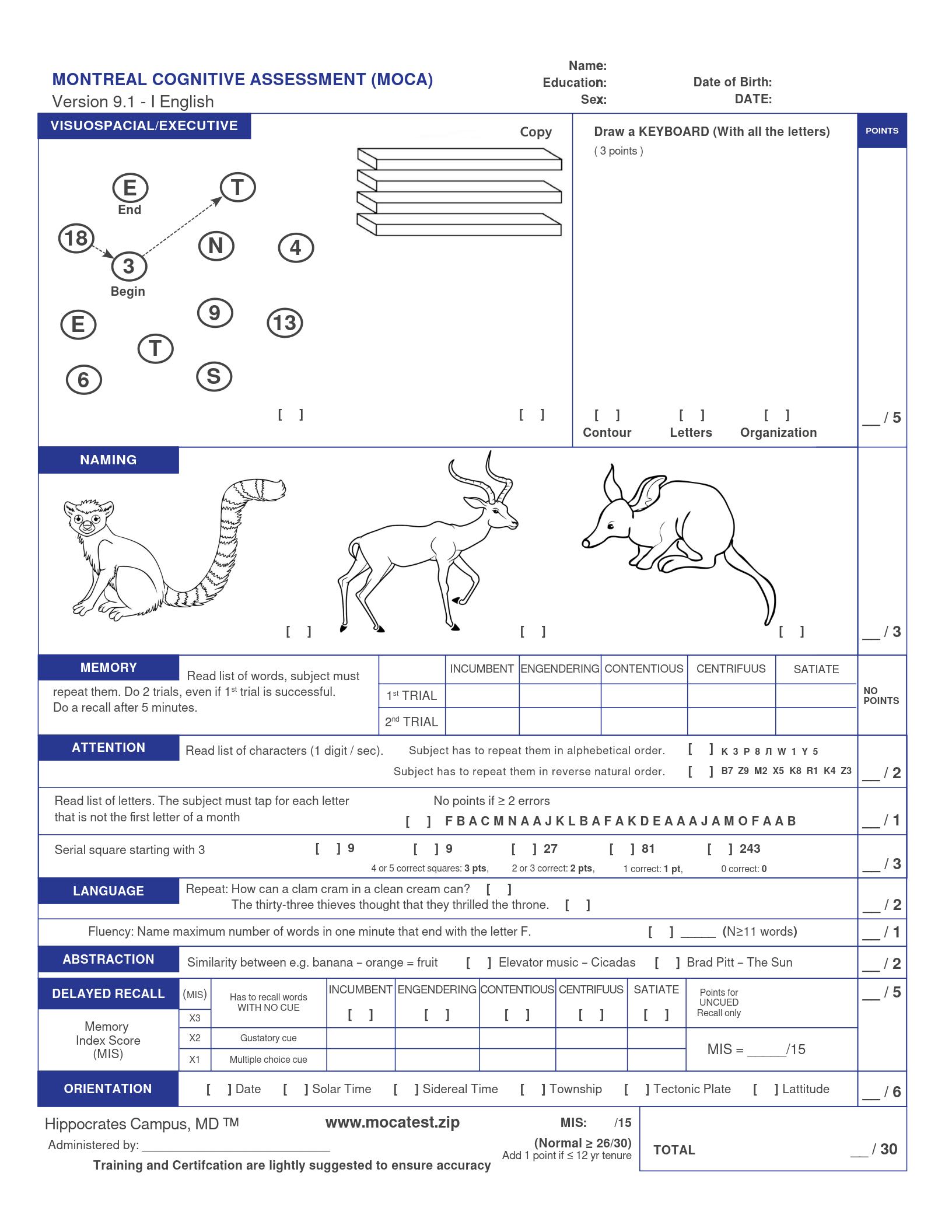
Miscellaneous Impossible MoCA Updated

Post image
15 Upvotes

r/neurology • • 1d ago

Clinical Molecular Mimicry in Guillain-Barré syndrome

25 Upvotes

r/neurology • • 2d ago

Clinical Tenecteplase: The Preferred Thrombolytic in Acute Ischemic Stroke

Thumbnail gallery
74 Upvotes

Tenecteplase (TNK) is preferred over alteplase, due to similar efficacy, safety, and ease of administration (given as single bolus without IV Infusion).

After Tenecteplase's Approval in 2025, There is NO Rationale to stick with alteplase for acute ischemic stroke treatment.


r/neurology • • 2d ago

Residency The first steps in clinical neurology

6 Upvotes

Hello everyone! I just finished med school and managed to pick neurology as my speciality, so i'm starting as a resident in january. I've been interested in neuroscience all of med school and first wanted to go into neurosurgery, then switched to psychiatry and finally decided to pursue neurology. I think it's a very vast, very interesting and definetly not a boring speciality. I enjoy the acute pathology, but also want to take an interest in the chronic patient's long time management of neurologic disease.

I'll practice at the regional emergency hospital, so i want to start with my basics covered so i have at least some knowledge to cling on in case i get overwhelmed in my first couple of months. I have started reading Kandel's Principles of Neural Science and Blumenfeld's Neuroanatomy through Clinical Cases. I have been hunting posts about books on this subreddit and figured these two would be a great start for shaping my understanding of what can and should be neurology.

Do you guys have any other book recomandations? Are there any groundbreaking studies that define neurological practice today that i should read before i tend my first patient? Do you guys know and watch any youtube channels on neurology? (Discovered "The neurophile" a couple of weeks ago and this channel is premium medical education compared to my med school)


r/neurology • • 2d ago

Residency EEG atlas/textbooks recommendations?

4 Upvotes

Can you suggest me the best EEG atlases/textbooks from begginer level to pro?


r/neurology • • 3d ago

Residency Neurology residents and attendings: What aspects of residency training actually matter for your clinical development and career?

19 Upvotes

Hi everyone!

I’m starting to think about how I want to order my Neurology residency rank list and would appreciate perspectives from current residents, fellows, and practicing neurologists.

I’m comparing programs with very different training environments, ranging from highly prestigious academic institutions to community/academic hybrid programs. They each have their own pros that are making me consider them in my top 3, such as one has a great proximity to home with a great work-life balance, another is also great proximity to home but super busy and notoriously yields confident residents even in their PGY-3 year, and last is further from home with very doable drive back home and the program is a prestigious academic institution.

I’m trying to understand which differences actually translate into better clinical training and long-term career opportunities. A few questions I’ve been considering:

  1. How much does institutional prestige REALLY matter?

For someone who doesn’t envision an academic or research-oriented career, how much does training at a nationally recognized T10 neurology program realistically benefit them? Beyond name recognition, networking, and fellowship opportunities, does it meaningfully improve clinical education, competence, or employment prospects? For those who trained at prestigious institutions but ultimately pursued general neurology or private practice, did you feel the reputation provided a tangible advantage?

2. How important is training on a primary inpatient neurology service versus primarily functioning as a consult service?

Does managing patients admitted directly to neurology meaningfully improve your development, particularly if you don’t intend to pursue neurocritical care? How common is it for practicing neurologists to serve as primary attendings for hospitalized patients, and could limited primary-service experience restrict future employment opportunities?

3. How important are formal didactics?

For those who trained in programs with extensive structured didactics versus limited or resident-led teaching, did you notice a meaningful difference? I’m fairly self-directed, but what do formal didactics provide that clinical exposure, independent study, and attending teaching might not? Did they meaningfully improve your clinical reasoning or preparedness for independent practice?

Lastly, but just as important:

4. For practicing neurologists, looking back, what aspects of residency had the greatest impact on your clinical competence and career trajectory? What do you wish you had prioritized differently when ranking programs?

I’d especially appreciate candid perspectives from those who have experienced different training environments or worked alongside graduates from different types of programs.


r/neurology • • 3d ago

Residency Current residents and attendings

7 Upvotes

How far did you fall on your ROL when you matched? Out of how many IVs?

Just curious to know


r/neurology • • 4d ago

Clinical IV Thrombolysis in Acute Ischemic Stroke

Post image
90 Upvotes

Tenecteplase is a Bio-engineered Variant of Alteplase With Amino Acid Substitution at 3 Locations Resulting in Prolonged Half-life and More Fibrin Specificity.

Both Alteplase & Tenecteplase have similar efficacy and safety in Acute Ischemic Stroke.

The Main Advantage of Tenecteplase over Alteplase is that it can be administered as a one-time bolus (no need for IV Infusion) which results in faster door-to-needle times (and transfer times, if needed).


r/neurology • • 4d ago

Residency Neurocrit people: looking back, which style residency program would you have preferred?

11 Upvotes

The two options are:

  1. a residency with a with neurocrit fellowship in house (plus many others) and very robust department, such that your exposure to the field always comes through working in conjunction with fellows.
  2. a residency without in house fellowship, but well built neurocrit department and much more exposure and opportunity to manage neuro ICU patients as a resident. Recent fellowship matches extremely competitive.

I’m trying to choose what will be best for me as a person looking to pursue NCC or vascular after residency. It’s hard to know what are the true cons of each of these when you haven’t been in residency yet.


r/neurology • • 4d ago

Residency HCA programs

6 Upvotes

Wanted to get people’s opinions on HCA programs? Are there any good ones for neuro? I have an interview at one and have a good amount of interviews so not sure if I just wanna DNR etc


r/neurology • • 5d ago

Research "Expressive" aphasia localized to Wernicke’s area

Thumbnail science.org
56 Upvotes

Really nice science by Alexander Silva PhD out of UCSF to tie this story together


r/neurology • • 6d ago

Research Is it possible to get a research post-doc without STEP 1?

3 Upvotes

Hey guys. So for context I am a final year international medical student. I’m really passionate about pursuing a career in neurology and health policy.

I’m looking to join a paid 2-year research post-doc next year after I graduate. I haven’t given my step exams yet due to certain circumstances. Should I giving step 1 in mid 2027, or is it okay for me to give the exam after I get a post doc position?

I know a post doc has nothing to do with step 1 since they fall under completely different branches of medicine, but since most IMG post docs I have seen have already done one or both of the steps, I am not too sure. Would love to hear your thoughts!


r/neurology • • 7d ago Bravo

Clinical Impossible MoCA Updated

Post image
311 Upvotes

After administering one too many MoCA's for 35yo patients with a granduncle who developed dementia in their 90's, I was trying to find a high quality image / original impossible MoCA but failed. I spent way too long copying it with some small tweaks.

I wanted to share it for anyone who needs a more rigorous test for patients to really drill down on which memory domains are really effective.

Updated PDF: https://archive.org/details/moca-8.1-i

I mostly wanted to make an updated/cleaner version that looks similar to all the other new MoCAs. Although I did make some changes, the original MoCA https://imgur.com/moca-impossible-version-ma7bBjf.


r/neurology • • 6d ago

Career Advice Neurophysiology Fellowship after Epilepsy Fellowship

11 Upvotes

Hello Fellow Neurologists

As title stated is that pathway doable ? If a neurologist finished Epilepsy fellowship and want to do EMG/NCS on top of his Epilepsy background

Is that pathway possible ? I know some Neurologist do Neuromuscular fellowship then they take 1 years Neurophys and they attend on their EEG consultations

Best regards


r/neurology • • 7d ago

Clinical Interesting insurance denial for anti-amyloid treatment

30 Upvotes

US based. A patient's insurance denied coverage of anti-amyloid treatments saying that they remain "investigational." They explained that even though the original trials showed a benefit, the difference between placebo and control was less than the established threshold for a clinically meaningful difference.

I am familiar with this criticism and think it's valid. What I found most striking was how this came from an insurance company denying coverage for a treatment approved by the FDA, and covered by CMS and most private payers.

I'm conflicted about my own opinion. OTOH: good for the insurance company. The clinical efficacy of these treatments is underwhelming, they're expensive and cumbersome, and I'm sympathetic to the argument they cite. Just like I appreciated that payors declined to cover treatment with aducanumab, so too payers should have the freedom to deny coverage for clinically dubious treatments.

OTOH: I prescribe AAT routinely, there is some benefit in my opinion (and the opinion of most neurologists), and who does this company think they are to deny coverage of an FDA approved treatment based on their own criteria?!


r/neurology • • 7d ago

Residency Choosing a neurology sub and career

9 Upvotes

I'm in between multiple different career paths and at the same time I'd like to keep practicing as a general neurologist if I could, but it would be nice to gain expertise in some subs.

I would appreciate if the subspecialists write a gist about their sub and why they chose it.


r/neurology • • 7d ago

Career Advice Is pursuing a career in EEG worth it long term especially with AI advancing?

4 Upvotes

Hi all,

Sorry if this post isn’t super relevant to this subreddit, the neurodiagnostics sub is pretty inactive.

I’m 27 and currently work as a CNA. I’m considering starting an EEG program because I want to remain in healthcare, but I don’t have the funds or time for a traditional associates degree program.

EEG seems like a really fascinating field and basically checks all of my boxes in terms of a career.

My only concern is long-term job security with AI advancing pretty quickly. Do you all think this will be a sustainable career for the next 30-40 years?