r/noir • u/ChristianVenali • 3h ago
r/noir • u/Tangentg • 17h ago
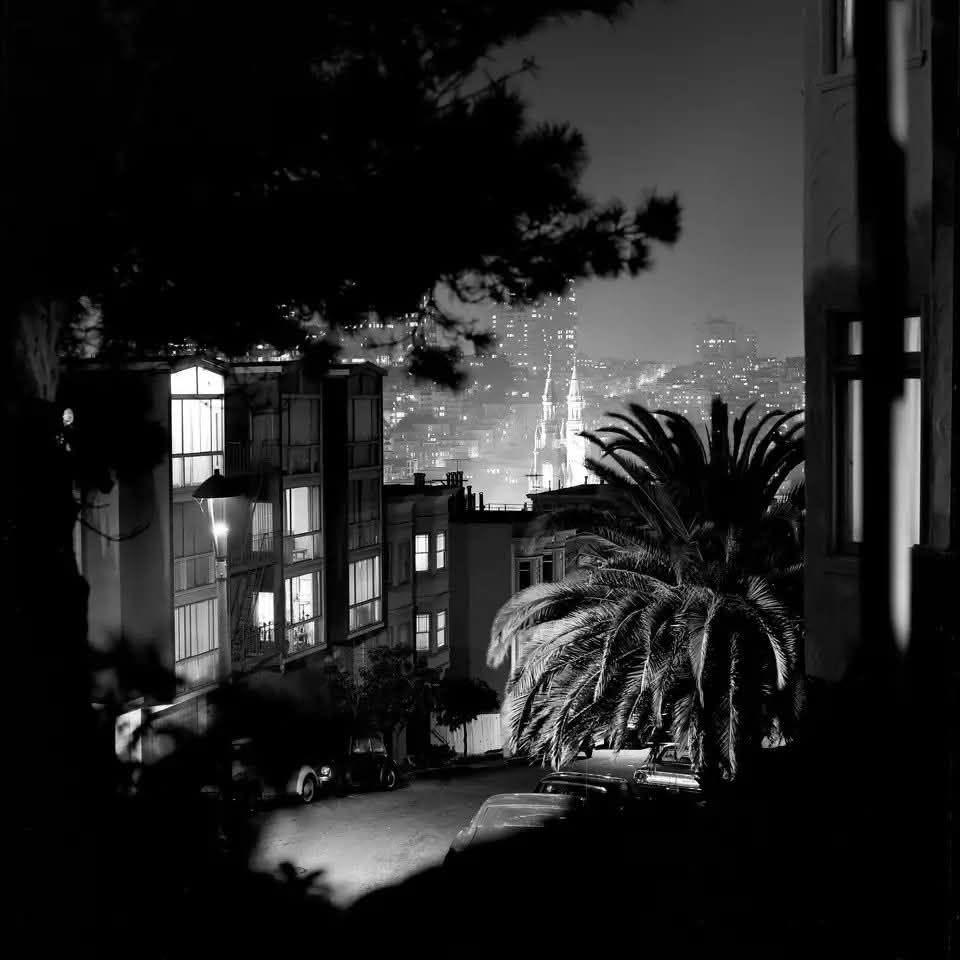
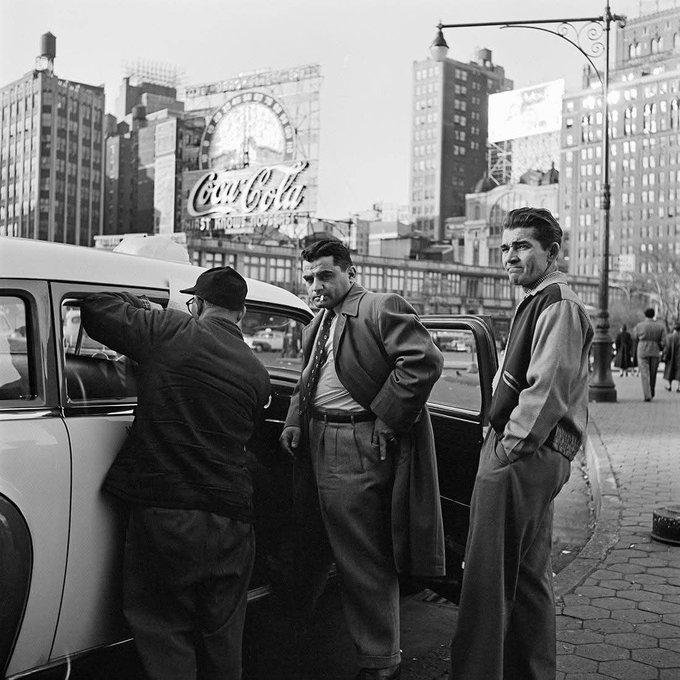
Noir photos I took
I wasn't able to find a book of noir photo collection so I decided to take some for myself. Here are 10 from the ones I took today.
r/noir • u/syntheticcontrols • 14h ago
Lazy photo taking and editing
Found in Cleveland, TN
r/noir • u/TohubohuFilm • 22h ago
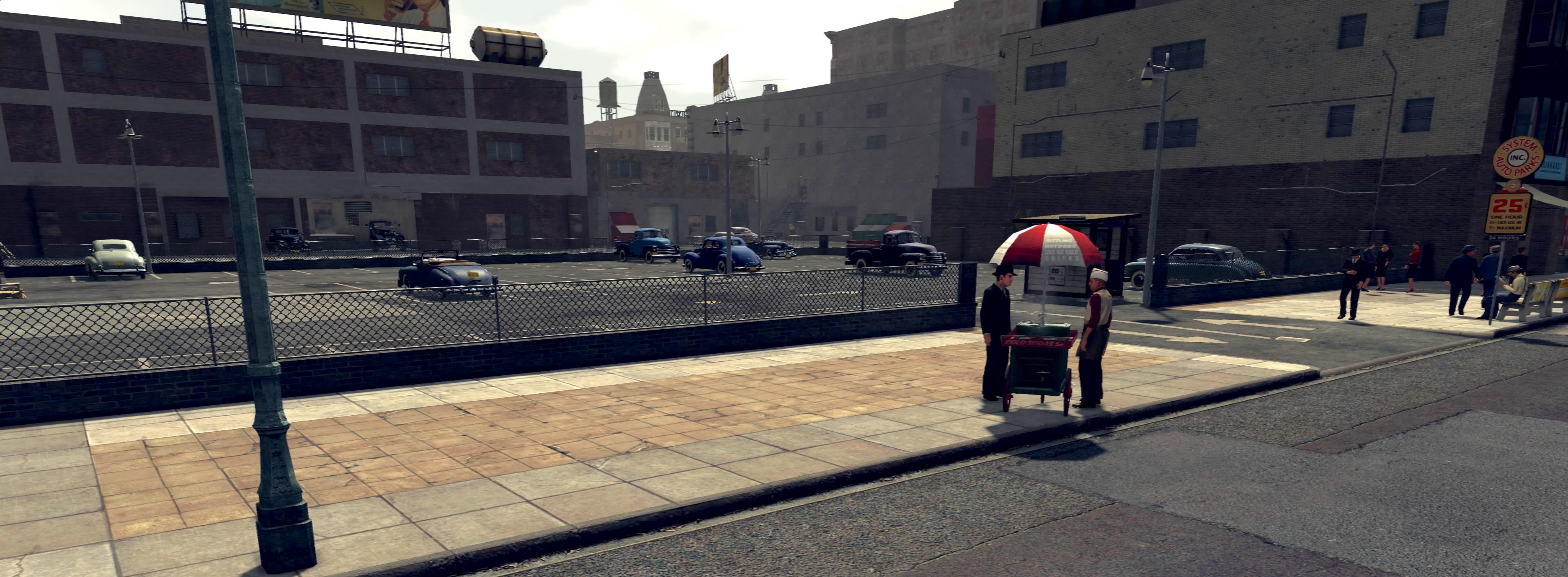
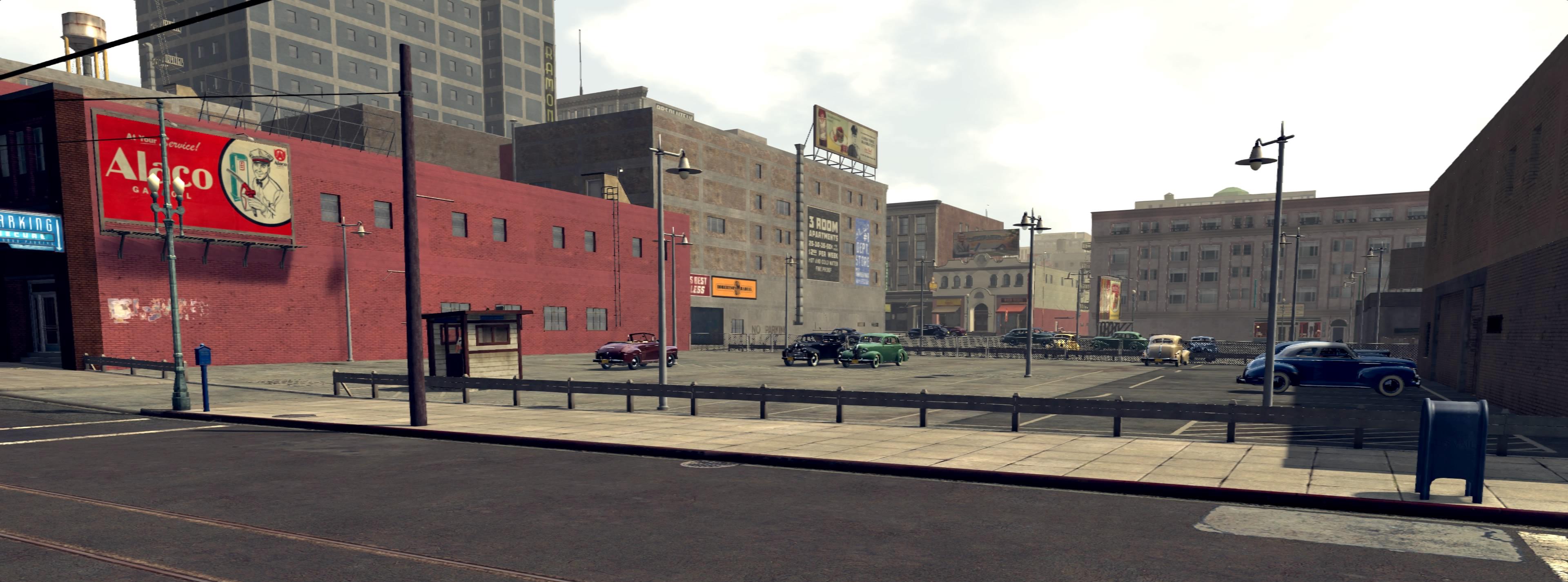
LA Noire Real-Life Recreations (LANFEP Post #518): 5¢ Rent a Car
Another out-of-order *non-*landmark entry: post #518 for the LA Noire Freeroam Explorer Project — posting locations replicated by Team Bondi for LA Noire (currently touring the downtown area) that are not considered landmarks (either official or historic) but do have real-world equivalents.
5¢ Rent a Car
Operated by Sam Fletcher and L.B. Doggett’s System Auto Parks, this facility paired a commercial surface lot with a vehicle rental stand. Sporting a prominent angular frontage, the strategic corner capitalized on post-war transit by painting bold mileage rate marketing hooks on the façade.
More info:
Real-World Points of Interest: Central District on the LA Noire Fandom Wikia site
Interactive LA Noire Touring Map on the LA Noire Fandom Wikia site
r/noir • u/polarpassion • 14h ago
Le Dogme des ombres de Mariane Gahengi. Parution janvier 2027 chez Polar passion éditions.
r/noir • u/DON_SERIES • 22h ago
Don Martini. A crime story set in 1930s new York, about loyalty morality and the costs of revenge. Chapter 11 is out. Catch up for free link in bio
r/noir • u/nlitherl • 17h ago
DINA Offers Educational Videos On The Carroll Institute
r/noir • u/OrionTrips • 17h ago
How "Manhunter" Explained the Psychology of a Killer
Michael Mann's crime-drama masterpiece, "Manhunter," celebrates its 40th anniversary this year. Even all these decades later, "Manhunter" remains at the top of its genre. In spite of its deceptively simple setup, the film ascends its superficial trappings, becoming a psychological study just as much as it is a thriller. The film by no means explains every last trauma that Francis Dollarhyde experienced in childhood--in fact, those details are left out, and we're forced to speculate what kind of harm was done to him as a kid. However, certain scenes, such as Francis snuggling up against Reba in bed, clue us in to the fact that Francis' wounds are, largely, related to abandonment. A feeling of rejection. Thus his fantasies of being wanted, loved, and accepted. It all stems from a painful rejection as a child, and now as an adult, Francis seeks to fill the void in his heart by creating fantasies which satisfy his desires.
Francis gains infamy for stalking and then murdering families, all the while pretending to be a loving member among them who is loved and accepted. When the fantasy becomes too much to contain in his head, and he needs a physical element to make it seem realer, Francis pays a visit to the family in question, and murders them, then engages in sexual activities with the mother's corpse. On the surface, he could be mistaken for an aimless killer. However, these are not just crimes of passion, they are plotted over an extended period, and serve an overarching fantasy. Francis, in his killings, isn't just letting off steam, rather he's collecting a debt. He's stealing affection from families because of his own lack of affection during youth. Abandonment and abuse from a young age taught Francis a harsh lesson, that love does not come voluntarily from others, and at the first chance, the people around you will hurt or leave you.
Thus, love, as he sees it, must be taken. Stolen before it can be revoked or denied to you. This of course is not real love, but Francis has come to accept this as a form of substitution. In a sense, he can get what he's always wanted, but not in a complete form. Not in its purest form. In fact it's in a ruined form, but ruined is what Francis has learned to accept. Anything other than ruined might very well overwhelm Francis, who is used to settling for heinous alternatives. Thus, when Francis is finally given voluntary affection from Reba, this is confusing and scary to him. And lovely. But as a man controlled by his traumas, Francis is seemingly incapable of letting a good thing go untainted, and thus he finds a way to ruin this love too. If only to continue the tragic pattern of his life.
I've got a great video on this topic that everyone who loves "Manhunter" should definitely check out! Thanks for reading!
r/noir • u/SamaraBellingham • 21h ago
[There's Always Another Ship] Sundays with Samara | The Sailor and the Showgirl | Part Two of Four: Another Ship (A Popeye & Betty Boop Romance) | Romance, Comedy, Crime Fiction, Noir
Last Sunday, Betty “Boop” Bupinski watched Pop-Eye leave Long Beach with a sailor’s bag and a berth on a departing ship. By the end of the chapter, he was standing at her door again.
This week, we find out what happened in between.
George has a ship to catch, an old friend who could use some help, and a remarkable talent for getting involved in other people’s troubles. The waterfront is waiting, but Long Beach seems determined to make his departure as complicated as possible.
After all, there’s always another ship.
There’s Always Another Ship is a four-part romantic noir novella from The Sailor and the Showgirl, serialized here on Sundays with Samara.
Chapter Two: Another Ship, begins below.
By the time the taxi reached the business district, Pop-Eye had looked through the rear window so often that the driver had begun looking through it too, in case they were being followed. They were not. Long Beach went by in storefronts, streetcars and delivery wagons, none of which offered the smallest view of Betty Bupinski, who had held his coat by the lapels that morning and told him to go. Pop-Eye knew perfectly well that she was a mile behind him and getting farther. He kept checking anyway, the way a man keeps patting a pocket for a wallet he has already decided to leave at home.
The driver was a talkative fellow who had been delivering a lecture on Long Beach traffic since they left Betty’s street. Finding his passenger unwilling to contribute, he had begun answering his own questions, which Pop-Eye considered a sound arrangement and very nearly restful, until the driver turned the subject to the reasons a sailor might be leaving town.
“Have you got a wife waiting somewhere?” he asked, finding Pop-Eye in the mirror as they stopped behind a streetcar.
Pop-Eye moved his sailor bag off the door, where it had been knocking against the upholstery like a passenger with a complaint. “Nope. Got a girl.”
“A pretty girl, I hope. A man wants something worth coming back to, especially if he’s going to be gone six months.”
“She’s a beaut,” Pop-Eye allowed. The driver took this as permission to explain the difficulties of keeping a girl interested across a long voyage, a subject he appeared to have studied from the losing side. Pop-Eye let him talk. Betty had never cared for promises about when a man would be home. She had a low opinion of calendars in general and a high one of her own ability to stay occupied.
Lately she had been occupied enough for a lifetime, most of it courtesy of Frank Bluto, who owned the Meridian and had finished the week with the club burned to the ground and an envelope in Pop-Eye’s hand: money, and a berth on a ship sailing that day. Frank’s favors generally came with the understanding that the man receiving them would be somewhere else. Pop-Eye had been somewhere else once before, years back, and come home to find Olive gone, with no note and nobody willing to say where. Frank had been very sure he didn’t know. Pop-Eye had never been very sure of Frank. Pop-Eye had taken it, which was not the same as accepting it. The envelope came with a story, too: a sailor seen at the scene, who ran. It was the running Pop-Eye didn’t care for. A man who runs from a thing he didn’t do has as good as signed for it, and a man who sails off and leaves two girls with Frank Bluto for a landlord, Castor’s friends for neighbors and the rent due on the first has signed for something worse. He had left half the money on Betty’s kitchen table. Mabel, who worked at the Meridian with Betty and had the black eye to show for it, had ordered him not to get dead. Betty had said less, one word at the door, and he had gone, which was the arrangement. Her face as he left had come along with him anyway, the way a tune does when nobody asked it to.
The driver turned onto a broad street running down toward the warehouses. “How long are you going to be gone, sailor?”
“Depends on the ship,” Pop-Eye said, still watching the rear window.
“I thought you knew where you were going.”
“I know where the ship’s goin’. That ain’t the same thing.”
The driver considered the distinction and concluded that sailors were an unnecessarily complicated class of passenger. He went back to the traffic. Pop-Eye went back to the faucet in Betty’s kitchen, which had been dripping when he left and would go on dripping, by his estimate, until the landlord’s plumber arrived or the Pacific dried up, whichever came later. The washer wanted replacing. It was a two-minute job. Betty had promised to kill him with her own hands if he touched it, and he believed her, but he did not care for the picture of some other man walking into her kitchen with a wrench to do what he could have done between his coffee and his coat.
He was still working out what was wrong with the plumber, whom he had never met, when he saw Ham Gravy being knocked against the shutter of a closed shop.
Ham was an old friend. He came from a California family with money, had quarreled with his father years ago about what a son was for, and had been living on his charm ever since, which in Ham’s case was a respectable income. Just now three men had him against the shutter. His hat lay in the gutter, and his coat had parted company with itself at the shoulder. Even from the cab Pop-Eye could see that Ham was explaining something. Ham had always kept a beautiful faith in explanation, particularly when the facts were against him, but the largest of the three men appeared to prefer punching.
“Pull over,” Pop-Eye told the driver, reaching for the door.
The driver glanced at a sign that forbade stopping. “I can’t stop here. There’s a cop around the corner.”
“Won’t be long.” Pop-Eye was in the street before the taxi had finished stopping, holding up one palm to an oncoming delivery truck the way a man asks a dog to sit. The truck sat.
By the time he reached the sidewalk, Ham had been hit again. He was folded over one hand pressed to his stomach while the largest man demanded to know what had become of the money.
Pop-Eye came up behind them with his pipe in his teeth. “Hey. What’re ya doin’ to my pal?”
The largest man turned, plainly displeased at the interruption, and his companions moved aside far enough to let him inspect the short, broad-shouldered sailor who had arrived at his elbow. Whatever he concluded, it did not impress him. “Your pal owes us money. Unless you’re paying it, keep walking.”
Pop-Eye looked past him at Ham. “How much do ya owe these fellas?”
“Pop-Eye, I’m delighted to see you, but I assure you the entire matter has been badly misrepresented. There was an investment, you see, and a gentleman whose understanding of the terms was rather—”
One of the men took Ham by the collar and shook the rest of the sentence out of him. Pop-Eye reached into his coat, past the pipe tobacco, for the small green tin with the anchor pressed into its lid. He opened it with his thumb. Click. STRONG ARM SEA-GREEN TABLETS, said the lid. CONCENTRATED VEGETABLE TONIC. FOR SAILORS & WORKING MEN. He put one in his mouth and chewed it with the unhurried attention he gave to every meal, including this one.
The nearest man laughed. “What’s that supposed to do, sailor?”
“Me tablets,” Pop-Eye said, as if that settled it, and caught the man’s wrist on its way to his face.
The man’s own momentum did most of the work. A turn of the wrist sent him into the knees of the largest attacker, and the two of them went down together beside a stack of produce crates, like a pair of drunks agreeing on something. The third came off the curb at a run. Pop-Eye caught him around the middle and lifted him clear of the pavement, and he was looking for somewhere harmless to put him down when the first man scrambled up and hit him under the left eye.
Pop-Eye set his man down on the crates, not gently, and turned around with two fingers on the place. “Now what’d ya wanna go an’ do that for?”
The man answered with another punch, which was the wrong answer. Pop-Eye caught the fist, drew it toward him and stepped out of its way, and its owner kept going until he met his largest companion. They went into the crates together. Cabbages rolled across the sidewalk in every direction, as though they had been waiting years for the chance. The third man came around the wreckage with a broken slat raised over his head. Pop-Eye took it away from him, snapped it over his knee and dropped the halves in the gutter, where they would be less of a temptation.
From an upstairs window a woman wanted to know who was destroying her property. Pop-Eye touched his cap to her and was explaining that he was only helping a friend when the friend helped too: Ham, having recovered his hat, struck one of the attackers with it. The blow had no effect except to remind the man that he had a grievance, and Pop-Eye was obliged to collect him by the collar and the seat of the trousers before he could act on it.
The fellow landed headfirst among the cabbages. His companions decided the money was unlikely to be recovered under present conditions and departed down the street, and he went after them, still trying to get a cabbage leaf out of his collar.
Pop-Eye watched them go before he examined the eye. It had begun to close, and a little blood came away on his fingers. Ham, meanwhile, was trying to persuade his hat that it was still a hat.
“Pop-Eye, I don’t believe I’ve ever been so glad to see another human being,” Ham said, coaxing the brim back into line. “I was conducting a perfectly reasonable negotiation when those gentlemen turned unpleasant.”
“Looked like they was negotiatin’ with their fists,” Pop-Eye said. “What’d ya do this time, Ham?”
“It’s complicated. I’d rather explain somewhere less public, particularly as one of those men is related to a lady whose reputation I have no wish to compromise.”
Pop-Eye turned back to the street, meaning to collect his bag and get on to the harbor. The taxi was gone. He looked along the traffic, then toward the corner, in case the driver had only gone around the block to avoid the cop. Nothing resembling the cab came back. His sailor bag, with his clothes and his papers in it, had shipped out without him.
“Well, ain’t that somethin’,” he said.
Ham followed his look. “What’s wrong?”
“Cabbie took off with my bag. Got a ship to catch, an’ now I gotta chase my own gear all over town.”
Ham considered the problem while he brushed the sidewalk off his coat. He knew where the taxi company kept its automobiles, having once been delivered there by a driver who declined his promise of future payment. If they hurried, he said, they might catch the cab before it went out again.
Pop-Eye looked his friend over. The lip was swelling, the sleeve was going, and the whole of him had the air of a man who had been pulled backward through several establishments that didn’t want him. “Ya know where the lot is?”
“Certainly, Pop-Eye. I’ve been thrown out of it twice.”
Pop-Eye started walking. Ham collected the last of his dignity from the gutter and hurried after him.
Ham’s explanation lasted most of the way. It had begun, he said, with an investment presented during a friendly game of cards. A gentleman had proposed an arrangement involving a shipment of household goods, and Ham, recognizing an opportunity, had agreed to participate. The gentleman’s wife had also taken an interest in the enterprise, though in time her interest had become less commercial than her husband might have liked. The shipment had failed, the cards had gone the way cards go, and the husband had discovered that Ham’s attentions were not confined to business.
“I maintain that a married woman is entitled to pleasant company,” Ham said as they crossed behind a delivery wagon. “Her husband knew perfectly well that we were acquainted. He encouraged it, when he thought I might be useful to him.”
“He know ya was courtin’ her?” Pop-Eye asked, stepping around a puddle that Ham stepped into.
“Not in so many words. Besides, Pop-Eye, I never said I was courting her. I merely admired her accomplishments.”
“What accomplishments?”
Ham straightened his collar, which had been stretched to twice its intended size. “She was an excellent dancer.”
Pop-Eye laughed, and the eye made him pay for it. Ham had always been able to present his most questionable conduct as a misunderstanding between reasonable people. Pop-Eye had known him for years, since the days when Ham was still Hamish Gravlin to everybody but him, and he could remember explanations of Ham’s so elaborate that the men listening had forgotten the question before Ham reached the end of the answer.
The street narrowed beside a loading dock, where a wagon driver was losing an argument with a stack of crates. One of them started for the pavement as they came up, and Pop-Eye caught it and held the load steady while the driver got the rope tight. Ham waited by a lamppost with the expression of a man watching a dog fetch a stick it has fetched before.
“You haven’t changed, Pop-Eye,” he said when Pop-Eye came back. “Still rescuing everybody who gets himself into trouble.”
“Crate was gonna fall.”
“So I noticed. And those fellows were going to finish beating me. I suppose you couldn’t allow either thing.”
Pop-Eye resettled his cap. “Ya want me to leave ya there next time?”
“I’d prefer you didn’t. Though I might have chosen a less painful morning to renew our acquaintance.”
They passed a bakery whose open door had spread the smell of bread halfway across the street. Ham slowed, visibly calculating whether the proprietor could be talked into credit. Pop-Eye did not slow, and Ham, after a short struggle, followed principle and Pop-Eye.
The talk turned to the ship. Ham knew her by reputation and asked about her captain, her cargo and where she was bound, expecting the usual enthusiasm. Pop-Eye answered readily enough, but the answers came out flat, like coins set down on a counter, and he could see Ham hearing it. Ham had watched him go up a gangway with a broken hand, with empty pockets, and once with a customs man still asking about something in his luggage, and on every one of those occasions he had gone up whistling. Somewhere between the bakery and the next corner, at a cost of several questions per syllable, Ham also learned that there was a girl named Betty.
Ham waited for a quieter street before he asked whether Betty was all right.
“She’s fine,” Pop-Eye said, in the voice of a man reporting the weather in a town he has left.
“I didn’t ask whether she could take care of herself,” Ham said. “From the little you’ve told me, I gather she can. But you’ve spent the last ten minutes walking like a man going the wrong way down a one-way street.”
Pop-Eye took the pipe out and looked into the bowl, which had gone out. “She’s had troubles, Ham. More’n she oughta.”
“I heard about the Meridian. A nasty business, from what little reached me.”
“Sure was.”
Ham studied him a moment. “And now you’re leaving her.”
“Got a berth. Frank fixed it.”
“So you’ve told me. You keep telling me, as though the berth were the question.”
Pop-Eye put the pipe back between his teeth and said nothing else. Ham, who could be wise when he was not busy with his own affairs, let the silence alone. They were nearly at the lot, and a missing bag was a problem the two of them could solve without discussing the others.
The yard was crowded with taxis waiting for fares or repairs. Mechanics worked under raised hoods, drivers stood smoking by the garage door and arguing about the day’s business, and somewhere inside a radio was playing dance music that the engines kept interrupting.
Pop-Eye found the cab halfway down the yard. His bag sat on the rear seat exactly where he had left it, wedged against the upholstery like a passenger who had paid in advance. The driver was nowhere in sight, and the door was locked.
Ham suggested they ask in the garage, but before they reached it a mechanic came out with a wrench in one hand and a ring of keys in the other. He looked at Pop-Eye’s cap, then at the cab blocking the lane between two rows of parked automobiles. “There you are,” he said, and tossed him the keys. “I thought you’d gone to lunch. Move that heap, will you? I’ve got a truck coming through.”
Pop-Eye caught the keys and began to explain that he did not work for the company, but the mechanic had already gone back inside. At the gate a truck leaned on its horn, and somebody shouted for the cab to be moved.
Ham regarded the keys with interest. “That seems to have settled matters rather conveniently.”
“Don’t settle nothin’,” Pop-Eye said. He unlocked the cab and lifted out his bag, and he had just set it on the pavement when the truck sounded again and the mechanic reappeared, waving at the lane as if Pop-Eye were personally responsible for the entire transportation industry. Rather than argue, Pop-Eye put the bag back on the seat and got in behind the wheel, meaning to move the cab a few yards and leave it somewhere it would not offend anybody.
Ham opened the passenger door. “Where are we going, Pop-Eye?”
“Outta the way.”
“Excellent. I’ve had quite enough walking for one morning.” Before Pop-Eye could object, Ham had settled in beside him.
The engine caught at once. Pop-Eye eased the cab forward around the parked cars while the truck driver waved him through, and he had barely cleared the gate when a man in a dark suit came hurrying in from the street with his hand up, calling for a taxi. Pop-Eye paid him no attention until the back door opened and the man climbed in.
“The hospital, please,” the man said, dropping onto the seat. “As quickly as you can.”
Pop-Eye turned around. “I ain’t no driver!”
Ham looked over his shoulder, one hand still holding his sleeve together. “And I’m not a passenger, sir, strictly speaking.”
The man looked at them, then at the meter beside the dashboard. His suit was good but slept in, and he had the gray, stretched look of somebody who had come a long way without lying down. A folded telegram stuck up out of his breast pocket.
“I don’t care who owns the automobile,” he said, keeping his voice level by main force. “I’ll pay whatever you like. I have to get to the hospital.”
Ham pointed toward the garage. “There are other taxis in the yard, my dear fellow. Perhaps one of the actual drivers—”
“My daughter is there.” The man drew out the telegram and unfolded it so carefully that Pop-Eye saw it had begun to split along the creases. “She’s very ill. My wife sent this yesterday, and I’ve been on a train all night. She’s eight months old.”
Pop-Eye looked at him in the mirror. The face was pale under a day’s beard, and the hands shook as they tried to put the paper back the way it had been. “Which way’s the hospital?”
The man looked up. “Will you take me?”
“Which way?”
“Straight ahead, then left at the next signal.”
Ham leaned closer and lowered his voice. “Pop-Eye, your ship—”
“I know about the ship.” Pop-Eye put the cab in gear and drove out through the gate.
The trip would have been shorter if Ham had not volunteered to navigate. He knew a great many Long Beach street names and had no reliable idea of how they joined, and his second suggestion put them in a narrow road between warehouses, behind a cart of chairs whose driver was losing an argument with a rope, with a truck coming in behind them and no room to go either way. Pop-Eye got out, lifted the back of the cart just far enough for the carter to straighten his wheels, and was behind the wheel again before the man had finished thanking the place where he had been standing.
“How did you lift that?” the passenger asked, leaning forward.
“Wasn’t so heavy,” Pop-Eye said, watching the road.
Ham turned to the stranger. “Pop-Eye has a rather generous definition of a reasonable weight. It includes most furniture and some automobiles.”
The next turn brought them into a market street, where a horse had stopped in the middle of the road and declined to continue. Its driver was offering a series of increasingly personal remarks about the animal’s mother, and a line of automobiles was collecting behind it. Pop-Eye saw a narrow lane between the stalls and took it before Ham could recommend another route.
For a few yards it worked. Then a boy with a tray of oranges stepped out in front of them, and Pop-Eye braked so hard that Ham met the dashboard with both hands. The boy kept his feet, but the tray tipped against the fender and sent oranges rolling under the cab and the vegetable cart beside it in a bright, unhurried rout.
Pop-Eye got out to clear them from under his wheels. He had the last one in his hand when the vegetable seller, who had been threatening to send for the police, took a good look at his face and recognized it from the trouble outside the shuttered shop. “You’re the sailor who smashed my crates!” he cried, pointing at the eye.
“Wasn’t me that smashed ‘em,” Pop-Eye said, handing the boy his orange.
“I saw you do it!”
“They was in the way.”
The seller wanted compensation, a subject Pop-Eye might have entertained on another morning, but the passenger had the back window down and was calling for them to hurry. Pop-Eye got back in and drove off while the seller was still building his case.
Ham looked out the back. “I don’t believe he was satisfied.”
“He’ll get over it.”
Past the market the streets widened and the traffic began to move. The passenger had stopped giving directions and sat with the telegram open on his knee, looking down at it whenever the cab slowed, as if it might have changed. Pop-Eye kept his good eye on the dashboard clock. The ship would not wait for him, and he had no intention of asking her to, but there was still time if the hospital stayed where the man said it was.
“What’s your little girl’s name?” Pop-Eye asked, finding him in the mirror.
“Margaret. We call her Maggie.” The man folded the telegram along its creases and then unfolded it again. “She’s a good baby. She hardly ever cries.”
Pop-Eye nodded and waited while the man worked the paper back into its shape.
“I was supposed to be home three days ago,” the man said. “There was trouble with the business, and I stayed to put it right. My wife told me not to hurry back on her account. Maggie only had a little cough then.” He stopped and looked out at the buildings going past.
Pop-Eye had heard the story before, from sailors with families ashore. A missed train, a cargo held over, a boss who needed one more day: the reasons were ordinary enough until something happened at home, and then every hour a man had spent somewhere else turned around and looked at him. Pop-Eye did not think about six months. He drove.
“She knows you’re comin’?” he asked.
“My wife? I sent a telegram from the station.”
“Good.”
The man pressed the paper flat against his knee. “I keep thinking I should have left when she first wrote.” Ham, who had been about to say something about the traffic, put it back wherever he kept such things.
They reached the hospital a few minutes later. Pop-Eye drew up at the entrance, and the man was out of the cab almost before it stopped. He turned back, fumbling for his wallet, and Pop-Eye waved it off. “Go see your girl.”
The man hesitated, looking from Pop-Eye to Ham as if he had only now remembered that neither of them had claimed to drive a taxi. “Thank you. I don’t know what I’d have done.”
“Go on.”
He nodded once and ran up the steps with the telegram in his hand. Pop-Eye stayed at the curb until he was inside. Through the open doors he could see a desk and a nurse going down a corridor. The man stopped her, asked something, and followed her out of sight.
Ham looked at the clock. “If we take the main road, Pop-Eye, I think we can still make the harbor.”
Pop-Eye put the cab in gear. “Then let’s take it.”
When they reached the waterfront the ship was making ready. They could see her above the warehouse roofs, with smoke going up from her funnel and a crane lowering the last of the cargo into her hold, while men worked along the quay with ropes and shouted over the engines.
Pop-Eye parked where they could see the gangway, and Ham slid across behind the wheel, since somebody would have to take the cab back. The captain stood at the top of it with a paper in his hand, listening to one of his officers. There was time to report aboard, though none to waste. Frank’s story would keep. Frank had told it in an alley, to one man, with the sirens coming, and Pop-Eye had been doing sums on it ever since. A murder charge needed a trial, and a trial needed the sailor in the witness box, where he could not be bought, scared or got drunk. Frank had paid off everybody else in that alley. He would not care to find out in front of a jury that there was one man he couldn’t. Pop-Eye took his bag off the back seat. The strap had twisted during the morning’s adventures, and he stood beside the cab straightening it with more care than a strap deserves.
“That’s a rather productive morning, Pop-Eye,” Ham said, resting his arm on the open window. “You’ve saved me, recovered your belongings and delivered a gentleman to the hospital without missing your ship.”
“Coulda done without the eye,” Pop-Eye said, touching it.
Ham examined the bruise, which had darkened since the fight to the color of a good plum. “It does make you look unusually fierce. Betty may have something to say about it.”
“Reckon she will.”
Ham watched him settle the strap on his shoulder. He had known Pop-Eye for years, and the sight of him going aboard a ship was ordinarily as natural as a carpenter picking up a hammer. Yet Pop-Eye stood by the cab longer than a man needs to, looking from the ship to the road they had come in by.
“There’s always another ship,” Ham said.
Pop-Eye looked down at him. “What’s that supposed to mean?”
“Only that there’s no shortage of them. If this one doesn’t suit you, another will.”
“Good ship.”
“I thought it looked like one.”
Pop-Eye shifted the bag. For a moment he looked as if he might say something more, but the captain had turned toward the gangway and was looking along the quay. He raised a hand to him and started for the ship.
Ham watched from the cab. Pop-Eye moved easily among the dockworkers, stepping over a coil of rope and trading a word with a sailor he knew near the foot of the gangway. Before he went up he laid his palm flat against the ship’s side for a moment, the way a man greets a horse he means to like, and Ham saw him grin. Whatever reluctance Ham had seen in him earlier was gone from his walk. He had the plain, square gait of a man arriving where his business was, and the captain, seeing him come, stepped forward to meet him. They shook hands at the top of the gangway.
From the cab Ham could see their mouths moving, but the waterfront swallowed every word. The captain consulted his paper, pointed toward the deck and talked for a while. Pop-Eye listened with the bag hanging from one hand. Then he said something that made the captain look at him more closely. The captain answered. Pop-Eye shook his head, and they spoke again.
Ham leaned forward over the wheel, trying to read their faces. There was no sign of a quarrel, and when the captain offered his hand a second time, Pop-Eye took it readily. They parted without ceremony, and instead of going aboard, Pop-Eye turned around and came down the gangway.
Ham watched him cross the quay with the sailor bag swinging at his side. The captain had already gone back to his business, and the crew went on getting the ship ready to leave. Nobody called after Pop-Eye or tried to stop him. When he reached the cab, Ham leaned across and opened the passenger door. He had watched both handshakes from behind the wheel, and whatever had passed between the two men had ended without hard words.
“I was about to ask whether the captain had thrown you off,” Ham said as Pop-Eye got in, “but he looked entirely too pleased with you for that. I suppose you’ve decided Betty has a better claim on your company.”
Pop-Eye set the bag between his feet, where it couldn’t slide. “Ain’t a claim, Ham. I’d sooner be where she is, murder charge or no. Ain’t right, leavin’ her and Mabel with Frank’s mess. Take me back.”
Ham started the engine. “With pleasure, Pop-Eye, and I shan’t ask about the murder charge until we’re moving. Though I should warn you that this taxi has already had a considerably longer voyage than its owner intended.”
As they pulled away, Pop-Eye looked back through the window. The ship was still at her berth, her crew at the last business of leaving. He watched until the warehouses closed over her, then settled into the seat and kept Ham to the main roads all the way home, which was safer for everybody. Ham drove with the air of a man entrusted with the crown jewels, glancing now and then at the meter as if the cab company might want the distance accounted for. Somewhere past the market he wondered aloud whether the lady’s husband might accept an apology. Pop-Eye advised him to stay away from the woman, pay back the money and find himself honest work. Ham agreed that all three suggestions had merit and promised nothing.
When they reached Betty’s neighborhood, Ham went quiet. The buildings were smaller here and the streets more familiar, and Pop-Eye began to recognize the shops he had passed that morning going the other way. A woman carried groceries into a doorway. Two children were arguing over a ball at the curb. A radio played in an upstairs window, and somewhere close by a man was hammering a piece of wood with more conviction than skill.
Pop-Eye knew these blocks well enough to steer Ham around a delivery truck without reading a street sign. He had walked them with Betty, sometimes on errands and sometimes for no reason but her company. She noticed things he didn’t: the price of a dress in a window, the way a woman walked when she wanted to look richer than she was, the look on a waiter’s face when he realized Betty understood exactly what he was up to. Pop-Eye noticed Betty noticing. He had found it a full-time occupation.
Ham drew up by the building. Pop-Eye collected his bag and got out, then leaned down to the open window. “Tell that mechanic we had a sick kid to take care of.”
“I shall, though I’m not convinced he knew whom he was handing the keys to, and I may leave out the market.” Ham considered him through the window. “Do me a kindness, Pop-Eye, and tell Betty I was the reason for the black eye. I’d hate for her to think you acquired it in some disreputable establishment.”
“Ya was in a disreputable establishment.”
“That was a perfectly respectable sidewalk. And if you meet any of those gentlemen again, I’d appreciate your not mentioning where I’ve gone.”
“Where ya goin’?”
Ham thought about it. “I haven’t decided.”
“Then I can’t tell ‘em.”
They shook hands through the window. Ham drove off toward the garage with a cheerful wave, already composing, by the look of him, a version of the morning in which the mechanic owed him an apology, and Pop-Eye turned toward the stairs.
The bag hung from his left hand, its weight familiar against his leg. He had carried it up gangways in half a dozen countries, gangways that shook under him, and through passages so narrow he had to turn sideways to keep from striking the bulkheads. Today he carried it up the narrow outside stairs of a cold-water flat, stairs he knew well enough to climb without watching his feet.
A woman coming down stopped when she saw his face. Her eyes went to the bruise and then to the bag. “Good heavens, sailor. Have you been in a fight?”
“Little one, ma’am.”
“It doesn’t look little to me.”
“Other fella’s worse.”
She shook her head, though whether in disapproval or admiration he couldn’t tell, and went on down.
Pop-Eye climbed the rest of the way to the landing. Through somebody’s open window a woman was singing to herself, and from another came the smell of onions frying. From Betty’s kitchen window, which he had persuaded to close that morning and somebody had since persuaded open again, came a smaller sound: the faucet, dripping. No plumber yet, then. Pop-Eye could live with that.
He had left that morning with Betty and Mabel still sorting through the wreckage of their week, and he had no reason to think it had tidied itself while he was gone. She had told him to go, after all, and Frank had told him what staying would cost. Pop-Eye had heard them both. Betty was not a woman who liked her decisions handled as though they were suggestions, and Frank was not a man who liked his stories left unused.
He shifted the bag to his other hand and knocked. Nobody came, though he could hear somebody moving inside, so he knocked again, more quietly, the way a man knocks where somebody may be sleeping, and took out his pipe, which had gone out on the climb. The lock turned, and the door opened.
Betty stood there with an address book in one hand, looking from the sailor bag to his face. Her eyes widened at the bruise, and she reached toward it and stopped just short of touching the swollen skin.
Pop-Eye tipped his cap. “Hey, Betty. I’m back.”
Next Sunday: The Empty Throne
A sailor can walk away from a ship. Walking away from a family business is considerably more complicated.
Next week, we turn to Frank Bluto, the Oyl family, and the consequences of Castor’s death. There are arrangements to be made, obligations to be honored, and people who have very different ideas about who ought to be in charge.
Coming next: Chapter Three — “The Empty Throne.”
r/noir • u/JohnDillinger90 • 2d ago
The Canary Murder Case (1929) stars William Powell as detective Philo Vance, investigating the murder of a scheming showgirl with no shortage of enemies. Also featuring Louise Brooks, Jean Arthur, and James Hall.
r/noir • u/TohubohuFilm • 1d ago
LA Noire Real-Life Recreations (LANFEP Post #517): First Street Loop
Still with the out-of-order *non-*landmark entries, here’s post #517 for the LA Noire Freeroam Explorer Project — posting locations replicated by Team Bondi for LA Noire (currently touring the downtown area) that are not considered landmarks (either official or historic) but do have real-world equivalents.
East First Street Crossover (time altered)
Though no longer active in 1947, this street-level track crossover served as the western terminus for Los Angeles Railway’s East First Street (1927–1928) and East Fourth Street (1930–1931) shuttle lines. (The game developers altered the simple crossover into a full “balloon loop” configuration.)
More info:
Real-World Points of Interest: Central District on the LA Noire Fandom Wikia site
Interactive LA Noire Touring Map on the LA Noire Fandom Wikia site
r/noir • u/No_Smell3270 • 2d ago
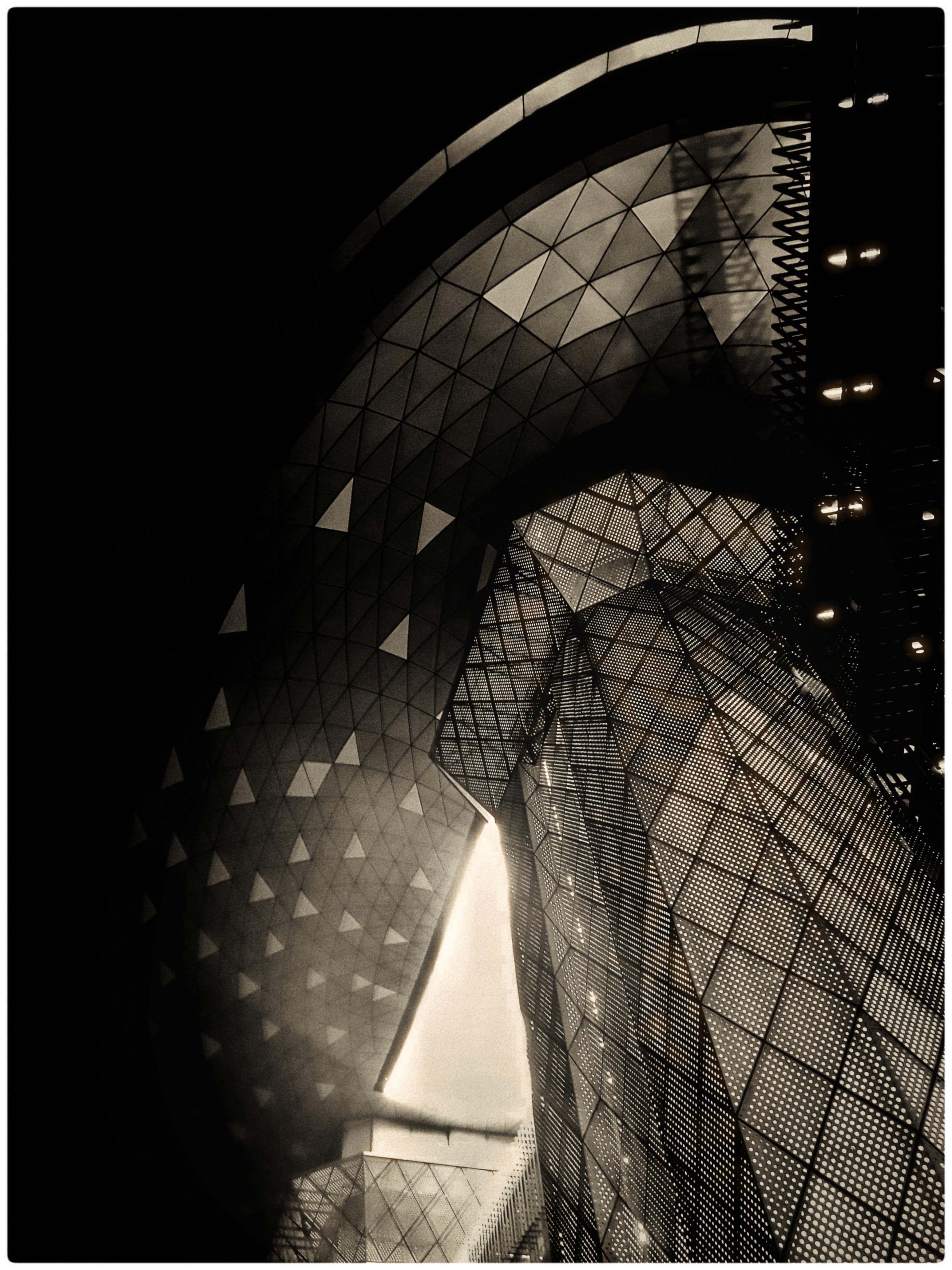
Out of this world
A mall in Yangzhou, China that i captured.
r/noir • u/TohubohuFilm • 2d ago
LA Noire Real-Life Recreations (LANFEP Post #516): Financial Center Auto Park
Another out-of-order non-landmark entry: post #516 for the LA Noire Freeroam Explorer Project — posting locations replicated by Team Bondi for LA Noire (currently touring the downtown area) that are not considered landmarks (either official or historic) but do have real-world equivalents.
Financial Center Auto Park
Operating as a sprawling mid-block vehicle yard, this fully paved commercial parcel replaced demolished 19th-century retail blocks. Bounded by protective masonry walls and timber buffers, the lot served as a critical daytime commuter hub facing the core banking structures across the street.
More info:
Real-World Points of Interest: Central District on the LA Noire Fandom Wikia site
Interactive LA Noire Touring Map on the LA Noire Fandom Wikia site
r/noir • u/TohubohuFilm • 3d ago
LA Noire Real-Life Recreations (LANFEP Post #515): Film Transport Supply Building
Another out-of-order non-landmark entry: post #515 for the LA Noire Freeroam Explorer Project — posting locations replicated by Team Bondi for LA Noire (currently touring the downtown area) that are not considered landmarks (either official or historic) but do have real-world equivalents.
Film Transport Supply Building
Constructed with reinforced concrete walls, this commercial structure (shown as an electrical appliance store in game) functioned as a vital hub for independent movie transport services, designed to safely process and load heavy metal canisters of motion picture film for theater circuits.
More info:
Real-World Points of Interest: Central District on the LA Noire Fandom Wikia site
Interactive LA Noire Touring Map on the LA Noire Fandom Wikia site
r/noir • u/SamaraBellingham • 4d ago
Wednesdays with Wes | Tales from Calder City, Episode Four of Eight: In a Sentimental Mood
Welcome back to Wes Hamilton & publicdomainpulp.net's, serial novella: A Good Man to Know, set in the Calder City universe. Even in Calder City, a man ought to be able to take his girl out for a pleasant evening without getting mixed up in trouble.
When James Harlow gives Hal Wagner two coveted invitations to hear Duke Ellington at the Shelter, Hal sees an opportunity to treat Dahlia to something extraordinary. Beneath the streets of Calder City, in Grant Ellis's remarkable underground jazz club, the city's usual divisions seem to fall away, and for one evening the future looks particularly promising.
But the past has a habit of keeping its own appointments.
In this week's installment, Hal discovers that he might want more out of life than a good supper, a friendly face, and another profitable day's work. Meanwhile, somebody has begun taking an interest in the city's less respectable businesses.
Welcome back to Calder City, where river meets rail—and everybody knows somebody.
Part 4: In a Sentimental Mood
Mr. Harlow asked me one afternoon did I care for jazz, which was a funny question from a man whose interest in most things went about as far as whether the freight got where it was going and whether the fellas who moved it kept their mouths shut. I told him I liked it good as anybody raised in Calder City, and I’d heard most of the big orchestras one way or another, if you counted the radio and the phonograph at the Albion, which I did. He put a folder away in his desk and asked had I ever heard Duke Ellington in person.
I said I never had that pleasure, which is how Mr. Harlow would of put it, and he took an envelope out of the same drawer.
“Then perhaps these will be of some use to you, Mr. Wagner. Mr. Ellington is expected at a private engagement tomorrow evening, once his orchestra has finished downtown, and I find I’m unable to attend. The proprietor is an acquaintance of mine. There are two admissions.”
Inside was a card with Duke Ellington’s name printed on it, and I about shit myself, and what come out of my mouth was that I’d be delighted. Mr. Harlow looked pleased, as far as you could tell with him, since being pleased and having got something arranged correctly always come out the same on his face, and he wished me a pleasant evening before I could make a fool of myself thanking him twice.
The place on the card was called the Shelter, and it belonged to Grant Ellis. Everybody in Calder City knew that name from the papers, where he was always flying an airplane across the Atlantic by himself or taking a boat up the Amazon or trying for the top of Mount Everest, which never made sense to me, climbing someplace cold enough to freeze your blood just to come down again. I never once heard the Shelter mentioned on the radio, and I figured that was the idea.
*
Dahlia was at her kitchen table with a column of figures half added and one shoe kicked off under the chair, and her coffee had gone cold enough to grow a skin. She kept her finger on her place while I told her Mr. Harlow had fixed us up with an evening, and when I got to Duke Ellington, the pencil stopped moving.
“You’re taking me to hear Duke Ellington? You’re not kidding me, Hal?”
“Unless you already promised the evening to somebody better, and I can’t think who that would be. I hear the President’s tied up.”
She took the envelope and read the card front and back and then held it up to the window, the way she did with anything that might be worth more than it said. Dahlia made her living knowing what people wrote down and what they took care not to. When she handed it back she wanted to know where the place was, what a woman wore to it and whether they fed you, and when I said Mr. Harlow hadn’t mentioned, she pointed out I’d accepted an invitation to a place I never seen without finding out did I own a suit fit to go in it.
“I own a perfectly good suit,” I said.
“You own three, and that wasn’t what I asked.”
She went back to her figures, though I noticed she added the same column twice. Before I left she had me promise to telephone the place about supper, told me what time to come for her, and said not to let that laundry on Mercer Street near my good shirt, because the last time they pressed a dress of hers they put a crease in it where God never intended one.
*
The next night I put on the blue suit, the one from the tailor Mr. Harlow sent me to, cut so it didn’t pull across the stomach when I sat down, which with an appetite like mine is the first thing a man ought to ask of a coat. I worked the shoes till I could see the window in the toes. When I come up Dahlia’s stairs she called through the bedroom door to ask had I telephoned, and when I said they had Mr. Harlow’s name and the kitchen would be open, she told me to pour myself a drink and make myself useful by keeping out of her way.
When she came out I forgot what I was drinking. The dress was wine-red, fitted through the waist and loose enough below it to move when she did, and she had diamonds at her ears and a bracelet I seen only once, in a velvet case at the back of her bureau drawer, never on her wrist. I always knew Dahlia was a good-looking woman, mornings in her old housecoat included, when she’d tell me to make my own breakfast, but there’s something about a woman who keeps her money quiet deciding for one night to let a little of it show.
She caught me looking at the diamonds while I put her wrap on her. “Before you go asking, Hal, I’ve had these for years. You didn’t find out nothing new about me.”
“I wasn’t going to ask. I was wondering should I send the car back for a better one.”
“You be grateful I’m getting in it at all. The last good shoes I owned, you walked me through a yard full of mud because you swore it would save us ten minutes.”
It had been a bad night for the shoes and a good one otherwise, and I told her the driver had orders to stay on pavement. She laughed and turned me around for a longer look than she’d given me in a while, then went to work on my tie.
“You been taking care of yourself,” she said, giving the knot one more tug than it needed.
“I been receiving professional instruction.”
“I can tell. They even taught you to stand still while a woman fixes your tie.”
“That part took the better part of a year.”
*
From the street the Shelter wasn’t much more than a door set between two bigger buildings, with a brass plate beside it and two lamps throwing yellow light on the steps, and nothing about it said one of the most famous musicians in America was due to spend the night there. The man at the door looked at our card and then at Dahlia, and he stood aside for her in a way that told me she’d been right not trusting the laundry on Mercer Street. Past him a staircase went down between brick walls, and from the bottom came a piano and the sound of a lot of people having a good time without needing to shout about it.
Dahlia peered down the stairs and back at me. “Are you sure this is the right place, Hal?”
“If it’s a cellar full of potatoes, we’ll have the driver take us someplace else.”
Halfway down she stopped at a framed photograph beside a brass plaque. It showed the ground over our heads before anybody put a door in it, a low concrete hump with two steel doors and an air shaft sticking up like a stovepipe, and the plaque said the city built it for a public tornado shelter. Tornadoes are no joke in Calder City. When I was a kid I sat out a spring night with my mother in a neighbor’s cellar, listening to the wind drag things down the street, and she said the rosary in the dark till the neighbor asked would she say it a little quieter, on account of he was Baptist. What I couldn’t figure was a fella looking at a tornado shelter and deciding what the city needed was a jazz club, and by the bottom of the stairs I’d about decided he had it right.
The room ran back under a row of low brick arches, every arch with its own lamp in an amber shade, so the light lay warm on the brick instead of cold the way you’d expect underground. They’d put dark wood on the lower walls and set the tables in bunches instead of rows, and the bandstand was close enough that a man who forgot his manners could of reached out and touched the piano. Nobody had tried to hide what the place used to be. The old ironwork still ran overhead, painted and polished till it looked like somebody meant it, and under the tobacco and perfume and good cooking you could smell the damp in the brick.
What got me was the people. There were Black men in dinner jackets that fit better than mine, white women in gowns that cost more than my suit, a Chinese gentleman in a silk vest arguing with an old white fella over something in a newspaper, and musicians who looked like they come straight from work with their cases under their arms. At the bar nobody was sorted by color or money or anything else I could see, only by who could get close enough for the bartender to hear him. I spent my life around the yards and the river, where nobody asks the freight car what color the fella loading it is, and I never found it paid to decide ahead of time what a man was by looking at him. Still, I never seen a room where a person could walk in wearing his best clothes and find most of the city already sitting at the tables, and get a chair.
Dahlia took it in quicker than me. Before we reached our table she’d traded a hello with a woman at the bar and pointed out a fella whose family owned half a block downtown, and whose wife, she said, once come to her about a charitable subscription, a story she had no intention of telling in a room full of people. While she was pointing him out, a Black musician come out of a door behind the bandstand, and a white woman got up from her table to throw her arms around him, and the two of them went right on talking like they’d been in the middle of the same conversation for years. A waiter took our wraps and sat us where we could see the keys, and he handed me the supper menu like he figured I’d know what to do with it, and I was pleased to find out I did.
“Somebody put an awful lot of money into this hole,” Dahlia said.
“Grant Ellis did. That’s the fella I was telling you about, the one who flies airplanes over the ocean.”
“The one who climbs mountains, too?” She took in the arches and the musicians and the old brick. “Well, he went and found himself a fancy basement.”
I looked back toward the stairs and thought about that photograph. Most men would of filled the thing in and built on top of it, if they could get anybody to pay for the ground. Ellis looked at a hole in the earth and put the best music in America down in it, along with the people to hear it, and I had to admire a fella who could do that.
*
When the waiter brought the wine list Dahlia passed it across to me with a look that said she meant to find out had all my instruction amounted to anything. I asked what she was having and picked a bottle to go with it without asking the waiter which one was supposed to impress somebody.
“You’re getting dangerous, Hal. There was a time you’d of ordered the most expensive thing you could pronounce and then hollered about the bill.”
“That was before I found out how many expensive things there are a fella can’t pronounce. A man could go broke trying to learn them all.”
The orchestra downtown must have finished, because musicians kept coming down the stairs in twos and threes, some still in their stage clothes with the ties pulled loose, filling the room with the noise people make when the day’s work is done. At the next table a woman was telling her friends the management downtown made some of the musicians come in by the side door, and one of the men asked did they make them play from the alley too, and the whole table laughed. Dahlia didn’t, and she kept her voice down.
“Imagine paying good money to hear a man play and then telling him he ain’t fit to use your door.”
“It don’t make sense to me neither. Duke Ellington comes to play in your place, you ought to be glad he come in any door at all.”
She was still chewing on that when a friend of hers stopped by to admire the dress, a tall woman in green with a laugh you could hear over the piano, and for a while I was part of a conversation about a tailor, a singer new in town, and how you can’t find a dressmaker who won’t take three weeks over what she promised in five days. Dahlia knew more about all three than I did and never once slowed down for me, which I enjoyed. When the woman moved on, I asked did Dahlia know half the people in the room.
“Not half,” she said. “There’s a few I ain’t met yet.”
After supper I ordered crêpes Suzette, which I had once with Mr. Harlow, and when the waiter went off Dahlia leaned over to ask what in the world I’d just done.
“Crêpes Suzette. I had them with Mr. Harlow, and I been wanting you to try them.”
“You’re getting awful particular about dessert. I remember when pie was plenty for you, so long as the waitress brought enough of it.”
“I still think the world of pie. A man’s got room in his heart for more than one dessert.”
She gave me a look over her glass, so amused I figured she’d found something in that I never put there, and before I could ask, the waiter came back pushing a little cart with a copper pan. Dahlia leaned in to watch him work the butter and sugar and turn the crêpes with two forks, and when he poured in the liquor and touched a match to it and the blue flame jumped up over the copper, she let out a yelp, a real one, and clapped a hand over her mouth, laughing at herself. The waiter, who’d met excited ladies before, went on turning the crêpes. The smell of hot orange and burnt sugar came across the table, and she ate the first bite of hers with her eyes shut.
“Now, that is worth knowing about. Your Mr. Harlow’s been teaching you more than how to wear a suit.”
I didn’t tell her Mr. Harlow wouldn’t of approved of me watching a woman’s face so long while a good dessert went cold on my plate. She refused some of mine on the grounds she’d eaten more than she meant to, and then she took a bite of mine anyhow, and I figured that was a fair settlement.
*
By the time the plates were cleared the room had got livelier. A fella by the bar took a trumpet out of its case to prove some point he’d been making to a friend, and the pianist on the bandstand answered him with a little run that got a laugh from three tables, and then the trumpet answered back. Musicians kept trading places at the piano or leaning over somebody’s table to argue about tempos, and a man in a brown suit was showing another man a passage by singing it at him over the ashtray.
Dahlia was looking across the room at a heavyset fella with a skinny mustache who sold insurance, and she leaned over to tell me he’d been making trouble for himself, writing credit for people who couldn’t carry it and crying when they couldn’t pay, so some of his paper ended up with the kind of people who collect what respectable businesses don’t like to collect themselves.
“That’s a lively line of work,” I said. “You meet all kinds of people, and most of them are already sorry to see you.”
She laughed, but not for long. Two of her own fellas got beat bad the night before on their rounds, and neither one could give her a straight story. Whoever done it didn’t take the money they were carrying or the books, and he didn’t ask them for nothing.
“Fists and feet, that’s all I get out of them,” she said, setting her glass to one side. “One looks like he stuck his face under a streetcar, and the other can’t get himself up a flight of stairs, and now I got to find somebody to finish their rounds.”
“Could be somebody owed money and didn’t like the terms. I known fellas would rather fight three men than pay one.”
“I asked them about that, and they say they never got as far as the next address.”
I asked were they working her regular accounts when it happened, and she made a face like the coffee had gone bad.
“That’s what they’re supposed to of been doing. They swear up and down they never did a thing to him, which is the part I believe least. Everybody’s minding his own business when he comes home with a busted nose, Hal, and then you find out whose business he was minding.”
Her eyes went back across the room to the fella with the mustache, and I didn’t ask. Neither one of us figured her collectors went around like altar boys, and I’d seen the kind of encouragement those fellas give a man who’s slow to pay. But there’s a difference between business and some stranger appointing himself judge of everybody else’s affairs.
“Whoever he is, I don’t care for his methods. If he’s got a quarrel with somebody, he ought to come out and say what it is.”
“He said plenty with his hands.”
The musicians were arranging themselves around the bandstand again, and I could see she’d put the thing away for the night, and I let her, since Dahlia ran her business fine for years before I come along.
*
There was a stir over by the stairs. People got up from their tables, and a fella at the bar quit his story in the middle to sing out a hello, because Duke Ellington was coming down the last few steps with some of his musicians, and Grant Ellis was with them. Ellis looked like his pictures in the paper, only easier, a man in a dinner jacket who didn’t seem to know he had it on, and coming across the room he called people by name like a fella at his own kitchen table. At the bandstand he put his arms around Duke and laughed at something Duke said into his ear, and the other musicians got the same, and one of them kept a hand on Ellis’s shoulder the whole time they talked.
“That’s your airplane fella, ain’t it?” Dahlia said. “He knows everybody in the place.”
“Well, he built it. A fella with his own club has a little advantage meeting the people who visit.”
“I don’t suppose everybody gets hugged for coming down the stairs, though.”
She had that right. I known rich men who liked to show off famous friends the way they’d show you a new automobile, and there was always something stiff about it, but Ellis acted like he forgot he was supposed to be impressive. Duke sat down at the piano with a bass player beside him and a drummer behind, and the applause was the kind you give a friend come home, not the kind you give in a theater. Dahlia moved her chair nearer mine.
“Well, Hal, you brought me someplace wonderful.”
I had a dignified answer ready, but she was smiling in a way that didn’t have anything to do with manners, and then Duke started to play and I lost track of it. The bass came up through the floor into my shoes, and the drummer worked his brushes so soft you’d swear he was sweeping crumbs off the snare, and Duke sat half sideways to the keys watching the others, leaving a little hole in the tune for somebody to step into and coming back in after like he’d been there all along. On a record it comes out the same every time, but down there you could hear them deciding. Once Duke looked over at the bass player and the two of them grinned at a joke the rest of us didn’t get till a few bars later, when a fella behind us laughed out loud. Dahlia tapped two fingers on the tablecloth, and when the rhythm turned she squeezed my arm, because she heard it coming a second before I did.
When the number ended the waiter come by, and Dahlia asked for water instead of another cocktail and then turned to me with something on her mind.
“Mr. Harlow must think a lot of you, giving you tickets like these.”
“He’s been good to me. He knows how to look after the people doing business for him.”
Dahlia knew Mr. Merriweather paid me to move freight, and that was all she knew. I been moving freight and arranging things for other men long before Mr. Merriweather ever heard my name, and she had no reason to think I went respectable just because the fellas paying me wore better suits. Her eyes went to my coat and back to the bandstand.
“He’s looked after you, all right. I remember when you thought a new hat meant your luck had changed.”
“A new hat can change a man’s luck considerable, provided he puts something worth looking at underneath it.”
She laughed, but she didn’t let me off. “You figure this arrangement of yours is going to keep going?”
“I figure it will. Mr. Harlow’s been giving me more to look after lately, not less.”
I didn’t go into it, and she didn’t ask. “Are you putting any of it aside, Hal?”
“More than I used to. I make enough now I don’t have to spend it the minute it hits my pocket.”
“That’s when a man ought to start paying attention. Anybody can be careful when he ain’t got nothing.”
I told her I took her advice serious. She looked at me a while like she was deciding whether to ask had I opened the bank account she told me to open months ago, and before she made up her mind, the bass player was counting off again.
After that one Duke said something to the others, and the drummer laid his brushes across the snare and left them there. Duke sat a while with his hands in his lap. Then he started a tune I knew from the phonograph at the Albion, In a Sentimental Mood, only on the record the saxophones carry it and here there wasn’t nobody but him to carry it, and he took it slow. He’d play a few notes and then wait, and I would of come back in a long time before he did. Every time I figured the next note wasn’t coming, there it was, and it was always the right one, with the bass walking under it so quiet you felt it more than heard it. A waiter stopped halfway across the room with his tray and stood there. Nobody at the bar was hollering for anything.
Dahlia laid her hand on the cloth near mine, and after a while I covered it, and she didn’t take her eyes off the piano, but her fingers moved under mine. I spent most of my life taking what come along, a good supper, a decent drink, some company, a woman who liked me well enough to ask me upstairs, and those always seemed like respectable ambitions to a fella who knew what it was to go without them. Sitting there with her bracelet under my thumb, I got to thinking again about something I been turning over for weeks. My apartment wasn’t bad. The landlord was decent and the rent was fair, and I knew where everything was, which matters to a fella who’s moved around as much as me, but lately I’d come home and hang up my good coat and wonder should I have something to show for all this work besides a rented set of walls, and it come to me mostly in the mornings, leaving Dahlia’s.
When Duke finished, the room stayed still a moment before anybody clapped, and then I clapped till my hands stung.
“I don’t expect I’ll hear anything finer than that for a good long while,” Dahlia said. “We ought to come back sometime.”
I said I’d like that. When she asked could Mr. Harlow fix it again, I told her I didn’t mean to make a nuisance of myself asking for tickets every time I wanted to take a lady out, and there were other good places for music in Calder City we could manage on our own money. She told me about a club where the tables were so close she about ate supper off the plate of the gentleman beside her, and I told her about a place by the river where I stood a whole evening because the owner swore he had chairs and couldn’t produce one nobody was sitting in, and somewhere in all that I said how long I’d been in my apartment.
“I been there so long the landlord sends me a card at Christmas. A fella ought to have something to show for all that besides a landlord who likes him.”
“You got that collection of hats, and the fishing tackle you never use. Your landlord ought to be glad you ain’t asked him for another closet.”
“I been thinking I might get a little more room. Maybe some floors of my own, a house, nothing big, someplace I don’t have to keep my good clothes next to a box of fishhooks.”
She set her glass down, and there was something in her face I couldn’t place. There was fun in it, sure, but she was turning the idea over the way she’d turned over Mr. Harlow’s card, which was more than she ever done for the fishing tackle.
“A house is a lot more trouble than an apartment, Hal. What are you going to do the first time the roof leaks?”
“Sweetheart, I know a plumber who owes me a favor, and two electricians, and one of them owes me money and would be tickled to work it off. You buy a place that needs a little work, you get a fella who knows how to do it. That’s what fellas who know how to do things are for. If everybody had to fix his own roof, nobody would have time to earn a living at anything else.”
She laughed till she had to dab her eyes with her napkin. “You’re going to run a whole house on favors.”
“I run freight halfway across the country on favors. I figure one little building ought to be manageable. I wouldn’t buy nothing till somebody I trust looked it over, though, and I was thinking maybe you’d come along and help me look.”
She got quiet enough I wondered had I finally said something foolish. Dahlia never asked me to marry her, and I never made her any promises. We’d been good company for years without accounting to each other for the nights apart, and there were other women I knew, and Dahlia never pretended there weren’t gentlemen willing to spend money on her. That was the arrangement, and it suited us. But sitting there I didn’t much care for the idea of some other fella taking her to hear Duke Ellington, and I wasn’t about to say so in a room full of people who’d paid to hear somebody else, and a house seemed a good deal more practical.
“So you want me to go inspect this imaginary house of yours,” she said at last.
“It ain’t going to be imaginary forever, I hope. I’m doing all right these days, and you got a better eye for property than I do.”
“And if I hate the one you like?”
“Then I guess we keep looking. I wouldn’t want to live someplace you wouldn’t visit on account of the wallpaper.”
That got a laugh out of her, and after it a warmer look than she’d given me while she was questioning me about roofs. She turned the bracelet around her wrist, watching the stones catch the lamplight.
“Let me think about it, Hal. And you find out will your bank lend you anything before you go admiring houses you can’t afford.”
I promised I would, and she slipped her hand back into mine for the next number, and we didn’t say anything more about houses.
*
We stayed till the musicians packed up, and nobody was in a hurry. When Duke got up from the piano a gentleman by the bandstand started telling him how much he enjoyed it, and over by the bar Grant Ellis had the bass player laughing at something. By the door a woman Dahlia knew stopped us to admire the dress and ask would we be coming again, and Dahlia said she hoped so, but she’d have to see what she could arrange with her escort. In the car we went over the musicians and the dessert and a gentleman at the next table who spent the whole evening trying to catch the eye of a woman perfectly happy to ignore him. Dahlia noticed he ordered another bottle of champagne after the woman left, and we passed a few blocks figuring how much a fella could spend proving he wasn’t disappointed. After that she leaned on my shoulder and didn’t say much, and upstairs she took off the diamonds one at a time and laid them back in their case while I got my tie loose.
“Does this house of yours have a window in the kitchen?” she asked, without turning around. “A person gets tired doing figures by electric light.”
“I expect that could be arranged.”
She shut the case, gave my hand a squeeze, and went ahead of me into the bedroom, telling me over her shoulder to come on before I started pricing curtains.
*
In the morning she was up before me, which wasn’t unusual. She was at the kitchen table in a housedress with the coffee made and a stack of papers by her cup, and she said I could make my own eggs, because she didn’t intend to cook for a man who slept through half the morning. I put bread in the toaster and asked did she have a good time.
“You asked me that three times already, Hal. I had a wonderful time, and I’m grateful you took me, and if you don’t quit fishing for compliments I’m going to start charging you for them.”
The knock came while I was buttering the toast. Dahlia said she wasn’t expecting anybody and went to answer it with her pencil still in her hand, and I heard two men’s voices in the hall, polite and even, like fellas used to being let in. Then she was back in the kitchen doorway with a pair of men behind her in plain suits, holding their hats. I been around Calder City’s police long enough to know a detective without him showing me a badge, and the older one showed me one anyway and gave me a name I never heard before, while the younger one stayed by the door.
“You’d be Mr. Harold Wagner, I take it.”
I put down the toast and got up, wishing he’d come after breakfast. “That’s me. What can I do for you gentlemen?”
“We’d like you to come down to headquarters with us, Mr. Wagner. We’re looking into the disappearance of a Miss Claire Lindt, and we understand you might be able to help us.”
Dahlia looked from him to me, and the kitchen got quiet enough to hear the toaster ticking as it cooled. I knew the name. I didn’t see any reason to tell him how well, standing next to Dahlia’s breakfast table, and the detective hadn’t said what he’d been told, so I asked was I under arrest.
“We’d just like to ask you some questions, Mr. Wagner, and we’d appreciate your cooperation.”
“Well, I don’t want to make any difficulty for you fellas. But if you’re going to ask me about a lady that’s gone missing, I expect I better have a lawyer along.”
The younger one kept an eye on Dahlia like he expected her to have something to say about that, and she did.
“I’ll telephone him soon as you’re gone, Hal. Write me the number, unless you finally put it someplace a sensible person could find it.”
“Call you-know-who. His number is in my-you-know what. Not the one you use, the one I use.”
Then Dahlia went to get my coat and left the two of them standing in her kitchen while I finished the coffee I already poured. When she came back her eyes went to the half of my toast I never touched.
“You get yourself something to eat when they’re through with you. I don’t suppose they feed you right down there.”
“I’ll see what the accommodations are like.”
She straightened my collar the way she’d fixed my tie the night before, and I kissed her cheek, and she kept a hand on my arm a moment before she let go.
“Don’t let them keep you all day. I got things to do, and I’d rather not spend my afternoon telephoning police stations.”
I promised I’d do what I could. The older one waited till I had my hat set right and then stood aside to let me into the hall, and when I looked back from the end of it, Dahlia was still in the doorway with the number in one hand and her pencil in the other, and she gave me a little wave with the pencil before she went in to the telephone.
Next Wednesday on Tales from Calder City
A wonderful evening with Duke Ellington. A conversation about buying a house. And two detectives at Dahlia's door before breakfast is finished.
Hal Wagner has made a great many friends in Calder City. Whether those friendships can help him answer some very uncomfortable questions remains to be seen.
Chapter Five arrives Wednesday, November 25.
Tales from Calder City is part of Wednesdays with Wes, an eight-part weekly crime serial by Wes Hamilton, published through Public Domain Pulp.
If you're enjoying Hal's adventures, please share Wednesdays with Wes with someone who appreciates classic American crime fiction, complicated characters, and a city where even an ordinary favor can change a man's life.
Coming January 1, 2027: The Calder City novels make their debut on Public Domain Day, alongside the complete novella A Good Man to Know, available on Kindle for just 99¢. Pre-Order now!
Thank you for reading—and welcome to Calder City.
Wes Hamilton
PublicDomainPulp.net
r/noir • u/TohubohuFilm • 4d ago
LA Noire Real-Life Recreations (LANFEP Post #514): Figueroa Auto Row Sales Lot
Another out-of-order entry: post #514 for the LA Noire Freeroam Explorer Project — posting locations replicated by Team Bondi for LA Noire (currently touring the downtown area) that are not considered landmarks (either official or historic) but do have real-world equivalents.
Figueroa Auto Row Sales Lot
Positioned along a highly competitive downtown transit artery, this paved commercial tarmac optimized open-air vehicle showcase staging. Capitalizing on post-war vehicular demand, the busy mid-block footprint paired transient customer parking with expansive inventory storage for regional merchants.
More info:
Real-World Points of Interest: Central District on the LA Noire Fandom Wikia site
Interactive LA Noire Touring Map on the LA Noire Fandom Wikia site