r/oil • u/berkeleyum • 11h ago
News 3 more tankers got hit in the Persian Gulf right now
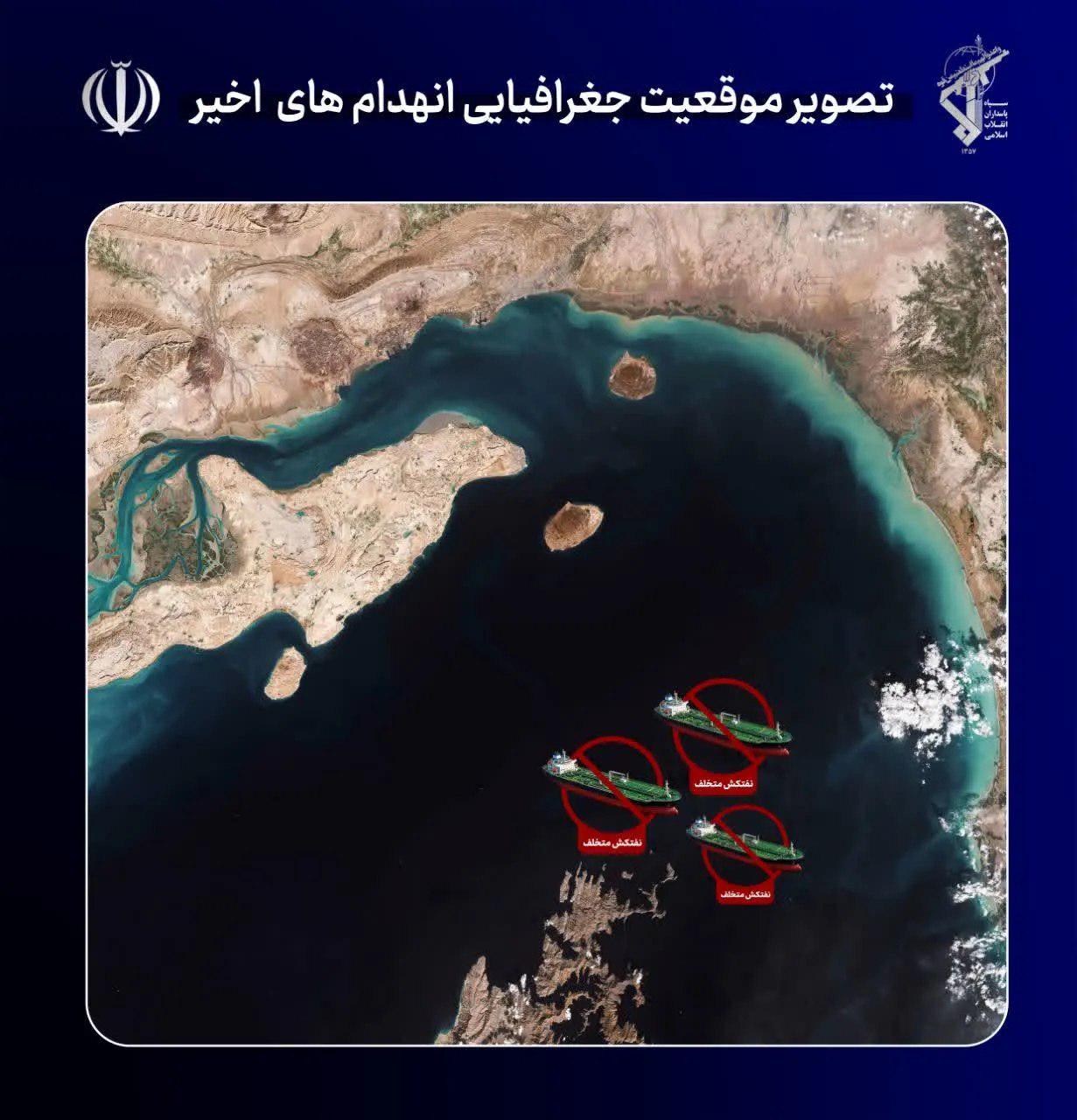
594
Upvotes
r/oil • u/berkeleyum • 11h ago
r/oil • u/TheExpressUS • 15h ago

r/oil • u/CartoonistFar2036 • 6h ago

Written by Valdemar Medeiros
Published on 23/11/2026 at 14:13 Updated on 23/11/2026 at 14:14
China Oilfield Services Limited (COSL) has placed an order for 59 offshore support vessels, worth approximately $1.64 billion to China’s shipbuilding industry. The package includes vessels for supplying oil platforms, transporting equipment and supporting offshore operations. Most of the new fleet will run on liquefied natural gas, while other vessels will have conventional high-power engines.
In a disclosure filed with the Hong Kong Stock Exchange, COSL said the contracts were signed on November 14, 2026, and officially announced on November 16. The total investment is 10.928 billion yuan, including taxes, to build vessels across six models. Deliveries are scheduled from 2028 to 2030, primarily to support oil and gas exploration and production in China’s coastal waters.
The agreement was signed with a consortium of three Chinese shipyards. The order will allow COSL to expand and modernize its offshore support fleet, which serves companies involved in oil and natural gas exploration and production.
The contract is worth approximately $1.64 billion, based on the conversion reported by specialist maritime media. The financial commitment was originally set in yuan, the currency used for the payments specified in the contracts.
COSL said the new vessels will be built to meet the needs of its operations. Construction had not yet begun when the disclosure was issued, and deliveries will be spread over three years.
Most of the order consists of 46 platform supply vessels, known by the acronym PSV. These ships carry materials needed to keep offshore oil installations running.
The vessels can carry equipment, parts, supplies and other materials used by offshore crews. They also play an important role in connecting onshore bases with platforms installed at sea.
The 46 PSVs will have propulsion systems powered by liquefied natural gas (LNG). The fuel is stored at extremely low temperatures and used in the engines after being prepared for combustion.
Choosing LNG could reduce certain emissions compared with conventional marine fuels. However, the environmental impact will depend on the engines, operating conditions and controls for potential methane leaks.
The contract also calls for the construction of 13 AHTS-type vessels, used mainly in operations requiring substantial pulling force.
These vessels can help move and position platforms, as well as transport materials and support operations involving anchors and marine equipment.
The acronym AHTS comes from the English term Anchor Handling Tug Supply, used to identify vessels that combine towing, anchor handling and supply functions.
Unlike the 46 PSVs, the 13 AHTS vessels will have conventional, high-power propulsion. COSL did not disclose individual prices or full engine specifications in its announcement.
Although the order includes two main groups of vessels, the company said the ships will be divided into six technical types.
This division will allow the vessels to be adapted to different operational needs. Some will be assigned to supply transportation, while others will be suited to supporting offshore structures and large equipment.
The announcement does not provide a full breakdown of the 59 vessels among the six models. It also does not disclose the length, speed or individual cargo capacity of each version.
Construction will be handled by a consortium comprising Fujian Southeast Shipbuilding, Fujian Mawei Shipbuilding and Fujian Funing Shipbuilding Heavy Industry. All three companies belong to the Fujian Shipbuilding Heavy Industry group.
Southeast Shipbuilding will lead the consortium, coordinating the work and contract execution. The other companies will take part in construction based on the allocation of available industrial capacity.
The contracts were awarded after a selection process that drew bids from two qualified suppliers. COSL evaluated prices, shipbuilding experience, delivery capacity and technical characteristics before selecting the consortium.
The investment will not be paid in full at the start of construction. COSL has set a disbursement schedule tied to each vessel’s physical progress.
The individual contracts call for five payments of 20%. The first installment will be released when the relevant contract takes effect. Subsequent payments will be tied to the start of construction, keel laying, launch and delivery.
The keel is one of the hull’s central structural components. Its installation marks an important stage in the vessel’s construction and assembly.
The arrangement makes it possible to monitor progress before releasing additional funds. The contracts also provide for guarantees and financial adjustments if vessels are delayed or fail to meet specifications.
The company said it plans to pay for the order using a combination of internal funds and financing from financial institutions.
The share covered by each source has not yet been disclosed. The announcement confirms the total contract value but does not identify a specific bank loan to finance the entire construction program.
The investment represents a long-term bet on demand for maritime services linked to the energy industry. The vessels will enter the fleet gradually as the shipyards deliver them.
The company also acknowledged that changes in prices charged for offshore services could affect expected financial returns.
COSL operates at different stages of oil and natural gas exploration and production. Its services include offshore support, drilling operations and technical work related to producing fields.
The new fleet will be deployed mainly in China’s coastal waters, where oil companies use platforms, drilling rigs and other offshore facilities.
Transporting equipment and supplies is necessary to keep these facilities operating. An offshore support vessel can make trips between port bases and offshore facilities, carrying materials as each operation requires.
The company is also considering opportunities related to new energy projects at sea. However, it has not disclosed specific contracts that would ensure the 59 vessels are used after delivery.
The contracts will involve three shipbuilders in Fujian province. Their work will include building hulls, installing engines, assembling equipment and integrating the systems needed for navigation.
The shipyards will also be required to conduct tests to verify that the vessels meet the specified requirements. Contract terms cover speed, vibration, noise and cargo capacity.
If a vessel fails to meet the established standards, its price may be discounted. In more serious cases, COSL will have the right to reject the vessel.
The agreement also provides for bank guarantees to protect payments made during construction, as well as a quality guarantee tied to delivery.
The first vessels are expected to be delivered in 2028, with additional batches arriving through 2030. The company has not disclosed how many vessels will be added each year.
The program will allow the company to expand its offshore support fleet gradually. This schedule will also require shipyards to plan for meeting deadlines and the technical specifications of the different models.
As of November 2026, construction of the vessels had not yet begun. The investment represents contracts signed for future construction, not a fleet already available for operations.
COSL also has not said how many jobs the order will directly create. The number will depend on how the shipyards and their suppliers organize their industrial operations.
The order includes vessels for two essential offshore industry activities: supplying platforms and supporting maritime operations that require substantial towing capacity.
With 46 LNG-powered PSVs and 13 high-powered AHTS-type vessels, COSL aims to expand its capacity to serve oil and natural gas exploration, development and production projects.
The 10.928 billion yuan investment was contracted in November 2026. The next step is to turn the agreements into construction projects at the three Chinese shipyards and meet the delivery schedule through 2030.
r/oil • u/berkeleyum • 10h ago

Political scientist John Mearsheimer has focused extensively on oil tankers and the dual naval blockades in the Persian Gulf, arguing that the ongoing standoff around the Strait of Hormuz is unsustainable and carries severe economic and military risks.
In recent commentary and writing—including his Substack post "Ending the Blockades" and a discussion with Tom Switzer and Justin Logan—Mearsheimer outlined several key points regarding tankers and the U.S.–Iran maritime conflict:
According to Mearsheimer, the combination of operational wear and tear on U.S. naval forces maintaining the blockade and the escalating damage Iran is inflicting on regional tanker traffic is placing heavy pressure on Washington to find an off-ramp to end the war.
r/oil
•
u/Due_Collar2
•
1d ago
r/oil • u/LaserRunRaccoon • 16h ago

r/oil • u/-Authorised- • 16h ago
In a single week: Brazil to China fixed at $65 million. Then $78 million. Then $82 million from the US Gulf to China.
A new VLCC ordered from a Chinese yard today costs $125 to $130 million. One voyage now earns two thirds of what the entire vessel costs to build. Pankaj Khanna, CEO of Heidmar Maritime Holdings (NASDAQ: HMR), calls the numbers unbelievable and says he has never seen anything like it.
Before the war broke out, VLCC rates were around $200,000 per day. They are now approaching $2 million.
r/oil • u/Independent-Ruin926 • 14h ago

(Note: Analysis is on best effort basis using public documents. Sometimes it's hard to determine whether increase in SPR was due to purchase or repayment, although i have used all purchase contracts available on SPR website and subtracted the amount purchased to determine repayments. Gemini AI has also been used for analysis and presentation, but not for the text in this post)
Edit: What I have also learnt, is that since Big Hill cavern is currently in outflow mode, it cannot take repayments.. After that it may take a month to shift all the systems and pipelines to inflow mode. So, I am not expecting repayment till Feb 2027 at the least. First they will prioritize the release of the 30-35 MMbbl remaining from RFPs.
r/oil • u/WeslyTank7895 • 1d ago
r/oil • u/QFGTrialByFire • 22h ago
Arabian sea/Hormuz up slightly on the daily, moving average still low. There is an odd Iranian AIS ship broadcasting eg KHAT SHEKAN which i didn't include in the count as i'm not sure its real. BAM, Malacca, Singapore down on the daily.
This is all the oil traffic out to the Arabian sea minus 2.5mb (pre war output of Fujairah and Oman) to estimate the additional output of dark traffic out of Hormuz as well as any additional output from the ADCOP pipeline. Usual traffic should be around 21mb of crude and oil products.

Adding this further crude vs product breakdown for Gulf of Oman to Arabian Sea as well.

ERECTER,BABYLON,KINGSTON added to the 20 nov data as they popped up near west coast of india.
Listing the actual ships and their draft/dwt as well as helps check if I messed up with double counts/fills

Data from: https://www.marinetraffic.com/en/ais/home/centerx:63.3/centery:23.5/zoom:7
Oil products going out south from the Red Sea. Usual traffic is around 8mb. Edit: I dont think much is coming out any more from the East/West pipeline its very unclear what is output now. That still means the amount overall is down. The drop below is more from dropping Russian and other sources of usual oil going south out of the red sea as the Yanbu/East/West pipeline is all going north to suez.

Ships: LUNA PELAGOS,HERA,ANTARKTIKA,JAL GARUDA,VOKKI
Data from https://www.marinetraffic.com/en/ais/home/centerx:45.8/centery:12.7/zoom:8
Usual oil products throughput is 16.5 mb crude and 6mb oil products. Also added how much of that malacca traffic is going to China as well as how much oil is from the Persian gulf.

Ships: MODI,AZURE NOVA,FRONT SINGAPORE,SEA POLARIS,BRISTOL,CY VICTORIOUS,SEAWAYS TRINITY,ENEOS ENDEAVOR,GRAND AMBITION,NEW DREAM
Data from https://tankermap.com/analytics/straits/malacca?unit=million_bbl_per_day
Note based on 2024 the average daily output in tonnes was 211,000 tonnes per day. I think 2025/2026 is much higher but they don't yet have official data.

Data from https://tankermap.com/analytics/ports/singapore-oil?unit=million_bbl_per_day
r/oil • u/Practical_Signal2318 • 22h ago

Pulled this from the IEA's new efficiency report, it uses their November oil market numbers. They've got diesel falling a bit more than gasoline this year, over 2% against 1.7%. And yet diesel has been the tight part of the barrel in the West this month, with Russian runs still sitting well under normal.
Link to report: https://www.iea.org/reports/energy-efficiency-2026
r/oil • u/RokoTheDreamer10078 • 1d ago
r/oil • u/helic_vet • 1d ago

r/oil • u/AutoModerator • 22h ago
What are your thoughts on today’s oil price? Drop your opinions, predictions, charts, memes , low and high effort post, your AI slop or even analysis below. Keep it civil and on-topic! This post is renewed daily.
Unless there is some compelling reason, other posts in the sub about oil prices will be removed. In a futile effort to improve the quality.
(Current WTI/Brent price can be checked on any major site.)
r/oil • u/Bishop__Brennan • 2d ago

r/oil • u/TheExpressUS • 2d ago

r/oil • u/AutoModerator • 1d ago
This is posted weekly at 0900 am AUET on Monday
This is the one official Hormuz Blockade Weekly Megathread
Is it open yet: https://www.ishormuzopenyet.com/
Everything else gets yeeted into the void (or at least politely redirected here). New articles, memes, wild speculation, questions about how screwed your superannuation is, grainy satellite pics of tankers doing U-turns — drop it all below.
Overview on Iran and the situation: https://www.iransitrep.com/
r/oil
•
u/alwaysboredatworkk
•
2d ago
r/oil • u/LearnbyStupidity • 1d ago
You don’t need to drive a diesel truck to care about diesel prices. Your groceries still arrive in one.
That’s what got me looking into America’s diesel deal with Russia. Leaders announce an agreement, promise more supply, and talk about bringing prices down. But what does that actually mean for the rest of us?
If you want the quick version, here’s my video: https://youtube.com/shorts/2tTkV6cZmg4?feature=share
Look at the first chart. The October 8 tooltip shows US retail diesel at $6.20 a gallon, compared with $2.34 for WTI crude and $3.10 for Brent, converted into dollars per gallon.
That puts diesel $3.86 above WTI and $3.10 above Brent in that snapshot.
Those are the numbers displayed in the image, though I haven’t independently verified that exact reading. And that gap isn’t all profit. It includes refining, transport, taxes, and other costs. Dividing crude prices by 42 puts them in the same units, but it doesn’t tell us what it costs to produce a gallon of diesel.
Still, it helps explain why “we produce plenty of oil” doesn’t automatically mean “fuel should be cheap.”
Then there’s the second image, the map showing hits on Russian facilities. Some locations have been hit more than once. But we need to be careful here. Hit doesn’t mean destroyed, and the map alone doesn’t tell us how much fuel production was lost.
That’s where the deal gets complicated. Announcing more diesel is one thing. Producing it, shipping it, and getting enough into the market to ease prices is another.
And for ordinary people, diesel costs can reach beyond the pump. When moving food and other goods gets more expensive, businesses may pass some of that cost on to customers. It won’t explain every increase at the supermarket, but it’s part of the picture.
I’m not saying these 2 images prove the deal caused higher prices. They don’t. What they raise is a pretty simple question:
Did the agreement actually make fuel more affordable, or did the announcement get ahead of the results?
That’s what I explore in my Short, “How America’s New Deal With Russia Became Our Problem.”
If you want the quick version, here’s my video: [insert your Short link]
What would convince you the deal worked: more deliveries, lower pump prices, or both?
r/oil • u/AutoModerator • 1d ago
What are your thoughts on today’s oil price? Drop your opinions, predictions, charts, memes , low and high effort post, your AI slop or even analysis below. Keep it civil and on-topic! This post is renewed daily.
Unless there is some compelling reason, other posts in the sub about oil prices will be removed. In a futile effort to improve the quality.
(Current WTI/Brent price can be checked on any major site.)
r/oil • u/RokoTheDreamer10078 • 2d ago
r/oil • u/QFGTrialByFire • 2d ago
Arabian sea/Hormuz implied, Malacca and Singapore down today. BAM up.
This is all the oil traffic out to the Arabian sea minus 2.5mb (pre war output of Fujairah and Oman) to estimate the additional output of dark traffic out of Hormuz as well as any additional output from the ADCOP pipeline. Usual traffic should be around 21mb of crude and oil products.

Adding this further crude vs product breakdown for Gulf of Oman to Arabian Sea as well.

none added to the data as they popped up near west coast of india.
Listing the actual ships and their draft/dwt as well as helps check if I messed up with double counts/fills

Data from: https://www.marinetraffic.com/en/ais/home/centerx:63.3/centery:23.5/zoom:7
Oil products going out south from the Red Sea. Usual traffic is around 8mb. Edit: I dont think much is coming out any more from the East/West pipeline its very unclear what is output now. That still means the amount overall is down. The drop below is more from dropping Russian and other sources of usual oil going south out of the red sea as the Yanbu/East/West pipeline is all going north to suez.

Ships: INTEGRATOR,SAVIR PUMA,RAINIER GLACIER,HELION,JUNDAR,LANIKAI,JM UNITY
Data from https://www.marinetraffic.com/en/ais/home/centerx:45.8/centery:12.7/zoom:8
Usual oil products throughput is 16.5 mb crude and 6mb oil products. Also added how much of that malacca traffic is going to China as well as how much oil is from the Persian gulf.

Ships: YUAN KUN YANG,KNOSSOS,VITTORIA,NAVE ALLEGRO,SWEDEN PROSPERITY,DELTA MARIA,ALBERT PARK,XIN MAO YANG,G.DREAM,SFL TIGER
Data from https://tankermap.com/analytics/straits/malacca?unit=million_bbl_per_day
Note based on 2024 the average daily output in tonnes was 211,000 tonnes per day. I think 2025/2026 is much higher but they don't yet have official data.

Data from https://tankermap.com/analytics/ports/singapore-oil?unit=million_bbl_per_day


