We've had a huge number of people ignoring this rule, and then asking why we removed their topics. We are not /r/AskDocs. This sub's focus is on the discussion of Orthopaedics as a whole, not to answer questions on personal ortho problems. Case studies and patient encounters are fine, so long as all identifying information has been scrubbed.
I'm a hospital outpatient PT within a well established Orthopedics department. Our surgeons for years have been fantastic in giving us autonomy in treatment, as we tend to do a great job keeping up with the evidence.
A few years ago our hospital hired a surgeon who transitioned from orthopedic oncology at a different hospital to our total joint team. Things have been going well, however in the last few weeks this surgeon has suddenly upended our process. The story goes is that his father got a total knee from a surgeon in New York where he basicallly pushes minimal pre-op exercise and almost no strengthening for 6 weeks. The thought is that less swelling and less opioids improves outcomes, and he essentially feels like there's no need for PT.
Our approach is based off brand new 2026 Clinical Practice Guidelines (https://academic.oup.com/ptj/article/106/7/pzag058/8742282) and essentially contradicts nearly everything this doc is promoting. It's causing quite a rift between Ortho and Rehab. Our Rehab Director as well as 2 of our C-Suite members at the hospital are former PTs, so I feel like we're well supported in this fiasco.
My question is: what sort of approaches can we bring to the surgeon to regain some of this trust? This surgeon feels like he's affecting the "status quo" (his literal words) and is bending some of his recommendations to I guess do us a favor? The "status quo" being literally up to date evidence. I'm just at a loss of what we can do to open a line of communication, as it seems he doesn't want anything from us lowly PTs.
I remember once upon a time gen surg was super competitive and paid very well. With all the new CMS cuts, and what seems like new cuts that keep happening, do you envision Ortho decreasing in compensation in the same way Gen surg did years back? Assuming if compensation went down, less people would be interested in applying as well.
I have always wanted this job since as far back as I can remember. I just graduated high-school, and don't have a lot of experience in casting or making splints, etc., but I would like to know if this is the kind of job you have to take a class for, or if there is in person training before getting hired. I want to know if I could get a job like this straight out of high school, but if not, I am understanding and willing to do whatever training is necessary for this job. Can you guys answer some of my questions, and please help me answer the biggest question of, how do I proceed in the process of getting this job, as someone right out of high-school with no experience? Thank you for your help.
Spouse will be interviewing there. Rankings online obviously show it's a very prestigious program but curious what the ortho community thinks/knows and if anyone has inside knowledge. Thanks!
On the applicant google sheet, there are indivduals saying there are open spots on thalamus for a few of the programs I applied to and have not heard back from.
Is it acceptable to send a letter to the PD and CC the program coordinator? I understand most likely it will not move anything.
My fiancé is applying ortho this cycle, and we’re honestly pretty shocked by how interview releases have gone. He applied to 42 programs and currently has 4 interview invites, 4 waitlists, 6 rejections, and hasn’t heard anything from the remaining 28.
His stats: ● Step 2: 274 ● 24 publications/research experiences (slightly below average for ortho, according to him) ● Currently completing his fifth away rotation ● Received interviews at 3 of the 5 programs where he’s done aways ● Waitlisted at his current away rotation; hasn’t heard back from one of the other away programs.
He has strong connections at 3 of the 4 programs where he received interviews, although one is a top 10 ortho program, so he knows that connection doesn’t necessarily make it any less competitive. His advisors considered him a very strong applicant and were actually surprised by how few interviews he received. Looking back, he thinks he may have applied too top-heavy, but based on his Step 2 score, aways, and advisor feedback, we really weren’t expecting this outcome.
We’re trying to get a realistic idea of where he stands. With only 4 interviews, how concerned should he be about matching? I’m also particularly curious about waitlist movement: ● Do applicants realistically get off multiple ortho waitlists, or is movement generally pretty limited? ● Does most movement happen immediately after the initial 48-hour acceptance window, or does it continue over the following weeks? ● Are ortho waitlists typically ranked, or is it more of a first-come-first-served situation when spots open? ● Should applicants be constantly monitoring their phones and emails because offers can expire quickly? ● Is there a realistic chance of receiving additional interviews at this point?
I understand ortho is extremely competitive and that there are many qualified applicants in the same position. We’re just trying to get a realistic understanding of what to expect from here, particularly regarding waitlist movement and the likelihood of additional interviews. I know every cycle is different, but I’d really appreciate honest insight from people who have been through this process or are familiar with how ortho programs handle waitlists.
EDIT: I misunderstood his research. He has about 25 research related items in total some of that is posters, abstracts etc. only 5 real peer reviewed publications and nothing that he is 1st author on.
I went through every ortho invite applicants logged since offers went out at noon ET yesterday (526 invites from 164 of 217 programs, through 4:30 AM CT today), plus four cycles of ortho application outcomes, and checked every number twice. You can see which ortho programs have sent, LIVE, on Rezumab: Ortho Interview Invite Live Tracker
Offer day: the signal did the work
98% of the invites logged went to someone who had signaled that program.
67% went to people who never rotated there. 28% went to away rotators, 5% to home students.
You needed the signal. You didn't need the away.
How ortho got here
Cycle
Median programs applied to
Median interview offers
Interviews from signaled programs
2022-23
58
11
79%
2023-24
41
10
87%
2024-25
32
10
90%
2025-26
30
10
94%
2026-27 offer day
30.5
8 so far
98%
Ortho had 30 signals in every one of those cycles. What changed is everything outside them. In 2022-23, 1 in 4 applicants applied to 32 or fewer programs. Last cycle, 7 in 10 did. This cycle, half the applicant profiles shared so far list exactly 30. The median interview count didn't move. The applications people stopped sending weren't turning into interviews anyway.
(The 2026-27 row is early: list sizes come from applicant profiles shared this cycle, and 8 is the day-one tally, which will grow.)
What each application was worth last cycle (2025-26)
Your tie to the program
Signaled
Not signaled
Rotated there
91%
85%
Geographic tie only
41%
18%
No tie
28%
8%
An away was close to a sure interview, signal or not (and almost everyone signals their aways anyway). A signal with no other tie got an interview a bit more than 1 in 4 times. No signal and no tie: about 1 in 13.
MD vs DO: for DOs, the away does the work
Last 4 cycles combined
MD
DO
Median interview offers
11
5.5
Rotated there, signaled
93%
81%
Geographic tie, signaled
41%
14%
Signal, no other tie
29%
7%
No signal, no tie
5%
2%
Share of interviews that came from aways
29%
73%
For an MD, a signal with no other tie got an interview a bit more than 1 in 4 times. For a DO, about 1 in 14, and it's been 5 to 9% in every cycle. DOs rotated more (typically 5 to 6 programs vs 4 for MDs) and nearly three quarters of their interviews came from those aways. The list-halving was an MD story: DOs were already applying to about 32 programs in 2022-23. No IMG outcome data here. In the 2026 Match, 10 of 963 ortho positions went to IMGs.
Counting your interviews today?
Among applicants tallying their counts, the median is 8 after day one (middle half 5 to 11). Last cycle's median finished at 10.
Match rate by number of interview offers, 2022-23 to 2025-26 combined:
Interview offers
Matched
0 to 2
41%
3 to 4
64%
5 to 6
78%
7 to 9
84%
10 or more
95%
Read those as upper bounds (see limits below). The biggest jumps come before you reach 5 or 6.
The rest
Rejections came fast: 371 logged from 36 programs in the first 17 hours. Harvard, UChicago and Carolinas lead with 19 each.
54 waitlist notices logged so far. St. Luke's and OHSU have sent the most (8 each).
Accepting opens today at noon ET (11 AM CT). Then you have 48 hours to schedule, until Thu, Nov 19 at noon ET. After that, programs can re-offer spots that were declined or never answered. If you're waitlisted, Thursday afternoon is your first real chance to move up.
Bottom line
In ortho, your signal list is your application list now. Unsignaled invites were 2% of offer day.
Aways turned into interviews about 9 times in 10. A signal with no other tie, about 1 in 4. Spend the 30 accordingly.
The day-one median is 8. In past cycles, 5 or 6 interviews matched about 4 in 5 applicants.
Waitlists can start moving after Thursday at noon ET.
Limits: offer-day numbers are invites applicants chose to log in the first 17 hours, which skews toward engaged applicants and good news. Outcome numbers over-represent US MD/DO applicants who matched (86% of them did), so treat the match rates as upper bounds. Shorter lists with steady interview counts is an association. It doesn't prove applying broadly never helps anyone: the people who stopped applying wide may be the ones it wasn't helping.
If a number looks wrong, comment and I'll fix it. And if you want to see which ortho programs have sent (and which haven't yet), the live tracker is free: Latest ortho invites
As the questions states. I’ve heard that some programs offer interviews still after the release date. There’s some programs I haven’t heard from that at this point given the interviews I have on hand would be impossible to attend. Is this the final list?
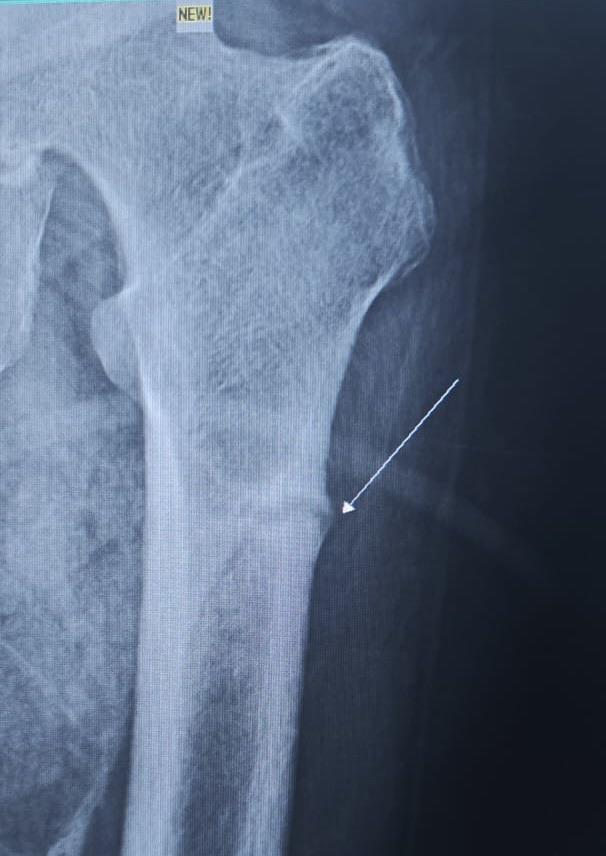
82 year old patient bed bound since the last 6 months with multiple comorbidities. No h/o bisphosphosponate use. Patient reluctant to get an MRI. Metabolic profile is all clear. How do we treat this AFF?
Patient with a tibial IMN with a sinus tract, possible osteomyelitis/pandiaphysitis. Had proximal screws removed few years back. I need help identifying this nail as it would help with its removal. Cheers.
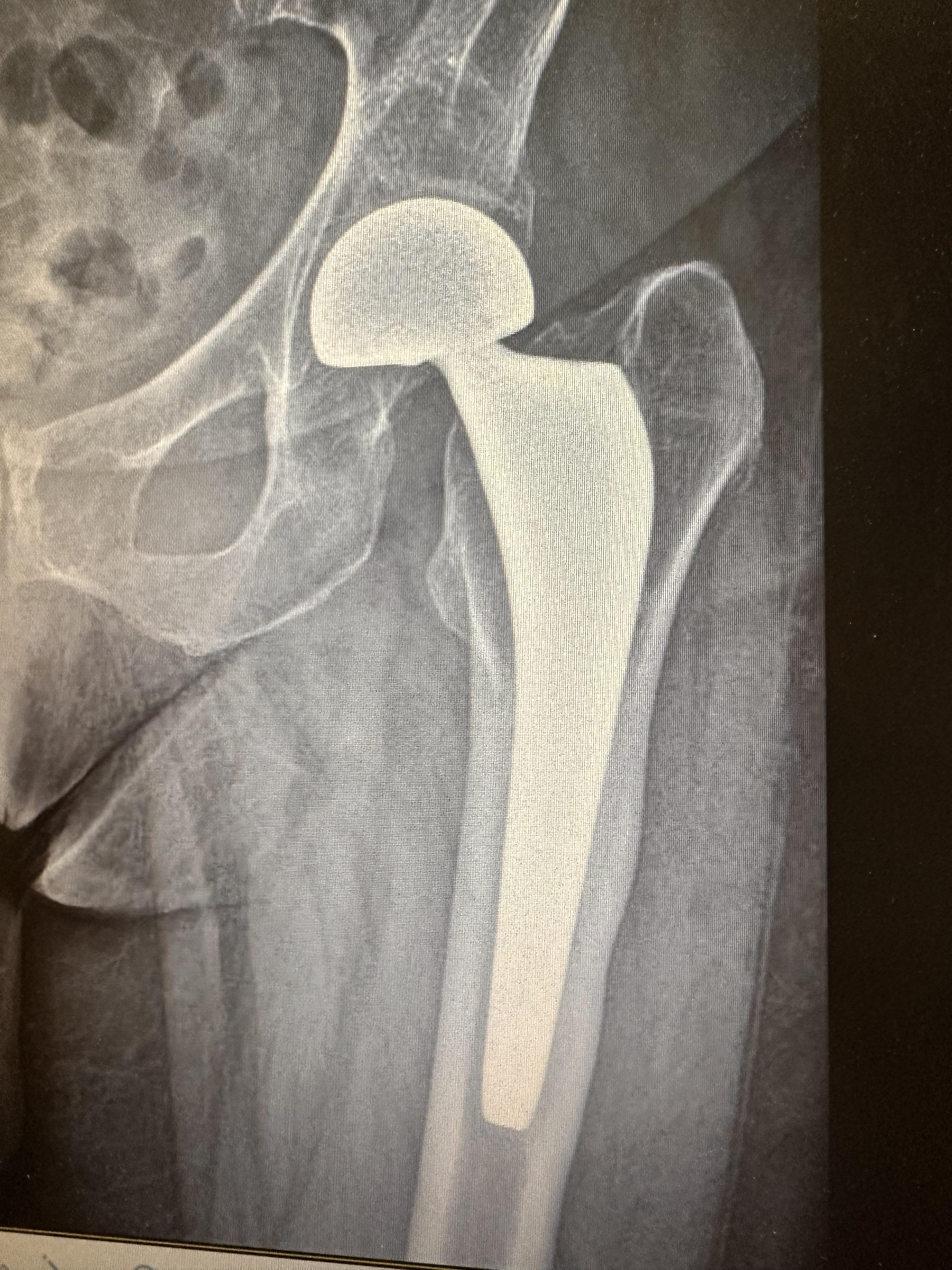
Lateral position with a single lateral incision to get all the hardware out and THA using posterior/lateral approach?
Or supine position with lateral incision(s) for ROH and a separate incision for DA approach?
I personally do it in lateral position with a single incision. I find it easier to remove the hardware and do all the appropriate releases. I do it on a Jackson table with C-arm. I usually dislocate/relocate the hip prior removing hardware to prevent iatrogenic proximal femur fractures.