Premodern Plus - The Comprehensive Nostalgia Format
**Premodern Plus**
**Comprehensive Format Guide**
**I. Core Philosophy: What is Premodern Plus?**
Many Magic the Gathering players desire to play with their favorite cards from the first decade of magic, the golden age of Magic. Of the various attempts at this, Premodern has proven to have the most staying power due to its depth, diversity, power balance, and accessibility.
Premodern’s one shortcoming is that, as a strict nostalgia format, it leaves out thousands of iconic early cards printed before *Fourth Edition* or in beginner-level sets. While the name Premodern implies that all sets printed before the Modern cardframe would be included, many are often saddened when they learn that 14 sets from the pre-Modern era of Magic are left out. Beautiful old cards from before the Modern era, sitting in boxes collecting dust rather than seeing play. As it so happens, the era encompassed by Premodern Plus includes every card printed in the first ten years of Magic (unless it is on the below banlist) and nothing printed after (except tentatively, the enemy fetchlands).
**Premodern Plus** is a curated, community-driven format designed to fix this. It's purpose is to serve as a nonrotating closed format in which the largest number of Oldframe era cards and strategies see competitive play. **It uses Premodern as its foundation, mana base and power-level calibrator, then expands backward into Old School (93/94) and sideways into Middle School (Portal/Starter sets).** The goal is to maximize the number of nostalgic cards from this era allowed while removing format-breaking power outliers that would otherwise limit the number of viable decks and strategies.
Every Premodern-legal deck remains fully viable in Premodern Plus, and the format maintains a very similar powerlevel. A player can register their existing Premodern deck at an Premodern Plus event and expect to fare reasonably well.
**Premodern Plus** describes the historical design era of the card pool (Alpha through Scourge), *not* the physical card frame you must use.
* **Printing Flexibility:** Any official printing of an eligible card is fully tournament legal. This includes white-bordered printings, modern-frame reprints, retro reprints, foils, foreign languages, secret lairs, Gold-bordered World Championship cards, and Collector’s/International Edition cards.
* **Proxy-Friendly:** To keep the format budget-friendly and inclusive, clearly identifiable playtest cards and proxies are permitted. Playtest cards and proxies must include legible text detailing the card's name, mana cost, card type, and current Oracle rules text.
**II. Deck Construction & Gameplay Rules**
* **Deck Size:** Minimum 60 cards mainboard, up to 15 cards in the sideboard.
* **Copy Limit:** Maximum 4 copies of any card by English card name (basic lands exempt). **There is no restricted list.** Restricted lists create swingy, high-variance gameplay
* **Rules Engine:** Uses current, contemporary Magic rules (the London mulligan, no mana burn, modern combat damage rules, current legend/token rules) and current Oracle card phrasing.
* *Note: Portal cards function according to their current Oracle wording, not the simplified rules language printed on the original cards.*
**III. Legal Card Pool**
The Premodern Plus card pool includes every card printed in the first ten years of Magic (unless it is on the below banlist). It draws from three historic reservoirs, plus one specific modern exception to aid format health.
**1. The Premodern Foundation** Every card currently legal in Premodern (tournament sets from *Fourth Edition* through *Scourge*) remains legal.
**2. The Old School Expansion**
* Alpha, Beta, Unlimited
* Arabian Nights
* Antiquities
* Revised
* Legends
* The Dark
* Fallen Empires
**3. The Portal & Starter Expansion**
* Portal
* Portal Second Age
* Portal Three Kingdoms
* Starter 1999
* Starter 2000
* *Supplemental Promos:* Arena, Giant Badger, Nalathni Dragon, Sewers of Estark, Windseeker Centaur.
**III. The Banned List & Design Philosophy - Open to Suggestions/Ideas**
Premodern Plus is a proxy friendly format and regulates power, not collectibility. Reserved List status does not determine legality. (Cards like Gaea’s Cradle, Mox Diamond, Survival of the Fittest, and City of Traitors are legal because they fit the Premodern environment).
A ban requires evidence that a card produces routine wins before interaction, creates excessive mana, requires narrow sideboard cards just to participate, or invalidates major deck categories.
**The following cards are all banned in Premodern Plus:**
**1. The Premodern Banned List (Inherited)**
Amulet of Quoz, Balance, Brainstorm, Bronze Tablet, Channel, Demonic Consultation, Earthcraft, Entomb, Flash, Force of Will, Goblin Recruiter, Grim Monolith, Jeweled Bird, Land Tax, Mana Vault, Memory Jar, Mind’s Desire, Mystical Tutor, Necropotence, Parallax Tide, Rebirth, Strip Mine, Tempest Efreet, Tendrils of Agony, Time Spiral, Timmerian Fiends, Tolarian Academy, Vampiric Tutor, Windfall, Worldgorger Dragon, Yawgmoth’s Bargain, Yawgmoth’s Will.
**2. The Power Nine are Banned**
*Ancestral Recall, Black Lotus, Mox Emerald, Mox Jet, Mox Pearl, Mox Ruby, Mox Sapphire, Time Walk, Timetwister.*
* **Reasoning:** These overpowered cards create swingy games and also bypass the fundamental economy of Premodern, which is built on spending cards, lands, life, and time to obtain resources.
**3. Dual Lands are Banned**
*Badlands, Bayou, Plateau, Savannah, Scrubland, Taiga, Tropical Island, Tundra, Underground Sea, Volcanic Island.*
* **Reasoning:** If allowed, Premodern loses the restrictions that make Premodern so balanced. Plus just becomes underpowered Legacy. Banning them forces players to rely on painlands, lair lands, Gemstone Mine, City of Brass, Reflecting Pool and basic-only fetchlands. In a format with dual lands, fetchlands enable perfect mana, and ensure that the vast majority of painlands, lair lands and fringe lands never see play. Banning dual lands preserves Premodern's mana tension, depowers fetchlands, and makes three-color decks a calculated risk.
**4. Older Fast Mana & Abnormal Engines are Banned**
*Bazaar of Baghdad, High Tide, Library of Alexandria, Mana Drain, Wheel of Fortune, Fastbond, Mana Crypt, Mishra’s Workshop, Sol Ring, Time Vault.*
* **Reasoning:** Bazaar is uncounterable, free graveyard filling that breaks Reanimator/Survival. High Tide converts several otherwise fair untap effects (Frantic Search, Reset, Turnabout, Cloud of Fairies and Snap) into powerful mana-generating spells that would dominate the format. Library provides repeatable advantage from a land slot with no deckbuilding commitment. Mana Drain converts interaction into acceleration, removing a basic restraint on control decks. Wheel of Fortune refills combo/graveyard decks for three mana while punishing opponents playing fairly. Fastbond is too dangerous with OP+ legal cards like Gush, Zuran Orb, and Horn of Greed. Workshop pushes artifact decks (which already have Metalworker, Candelabra, Ancient Tomb, City of Traitors, Tangle Wire and Smokestack) too far.
**5. Cheap Universal Tutors are Banned**
*Demonic Tutor, Imperial Seal.*
* **Reasoning:** Premodern deliberately bans efficient universal tutors (Vampiric, Mystical) while allowing narrow ones (Enlightened, Worldly). Demonic Tutor and Imperial Seal would not create new archetypes; they would simply make every black deck more consistent than its non-black competitors.
**6. Prison & Mana-Denial ("Conservative Launch" Bans)**
*Power Artifact.*
* **Reasoning:** Power Artifact is banned because Basalt Monolith is legal; together, they create a turn-three infinite mana engine easily assembled with Enlightened Tutor making them a default win condition for control decks playing Braingeyser. It is possible, though very unlikely, that once the meta settles, further testing discovers that either Nether Void or Tabernacle needs to be banned. A turn-one Dark Ritual into Nether Void creates immediate non-games. Tabernacle demands incredibly specific answers (Wasteland) and heavily punishes the fair creature combat (Goblins, Zoo, Sligh) the format is trying to foster.
**7. Ante, Dexterity, & Subgame Cards are Banned**
*All Ante cards, Chaos Orb, Falling Star, Shahrazad.*
* **Reasoning:** Banned for tournament operation, physical dexterity, and table-layout concerns rather than power level.
**IV. Format Design Targets & Expected Archetypes**
Premodern Plus should produce interactive games beginning on turn one or two. The format avoids generic staples that enter every deck (outside of Premodern pillars like Lightning Bolt, Swords to Plowshares, Duress, Portent, and Sylvan Library).
**Safe & Important Inclusions**
Premodern Plus successfully integrates powerful tools that require color commitments, deckbuilding support, or substantial mana:
* **Old School Staples:** Acid Rain, Ali from Cairo, Amnesia, Army of Allah, Avoid Fate, Berserk, Braingeyser, Brass Man, Candelabra of Tawnos, Chain Lightning, Chains of Mephistopheles, Copy Artifact, Desert, Diamond Valley, Drop of Honey, Elves of Deep Shadow, Elephant Graveyard, Eureka, Fellwar Stone, Flying Men, Forcefield, Fork, Gate to Phyrexia, Goblin Grenade, Goblins of the Flarg, Goblin Chirurgeon, Goblin Settler, Guardian Beast, Holy Light, Hymn to Tourach, Icatian Javelineers, Ice Storm, Illusionary Mask, Imprison, In the Eye of Choas, Juzam Djinn, Juggernaut, Karakas, Kird Ape, Land Equilibrium, Lifeblood, Mana Vortex, Maze of Ith, Mind Twist, Mirror Universe, Moat, Old Man of the Sea, Order of Ebon Hand, Order of Leitbur, Oubliette, Preacher, Psionic Blast, Psychic Purge, Roc of Kher Ridges, Rukh Egg, Seasinger, Sedge Troll, Serendib Djinn, Serendib Efreet, Sinkhole, Su-Chi, Tawno’s Coffin, Telekinesis, The Abyss, Transmute Artifact, Underworld Dreams, Urborg, Vesuvan Doppleganger, Word of Command.
* **Portal/Starter Staples:** Capture of Jingzhou, Cruel Tutor, Fire Ambush, Grim Tutor, Imperial Recruiter, Jungle Lion, Last Chance, Loyal Retainers, Personal Tutor, Raging Goblin, Ravages of War, Rolling Earthquake, Sea Drake, Sylvan Tutor, Temporal Manipulation, Warrior’s Oath etc.
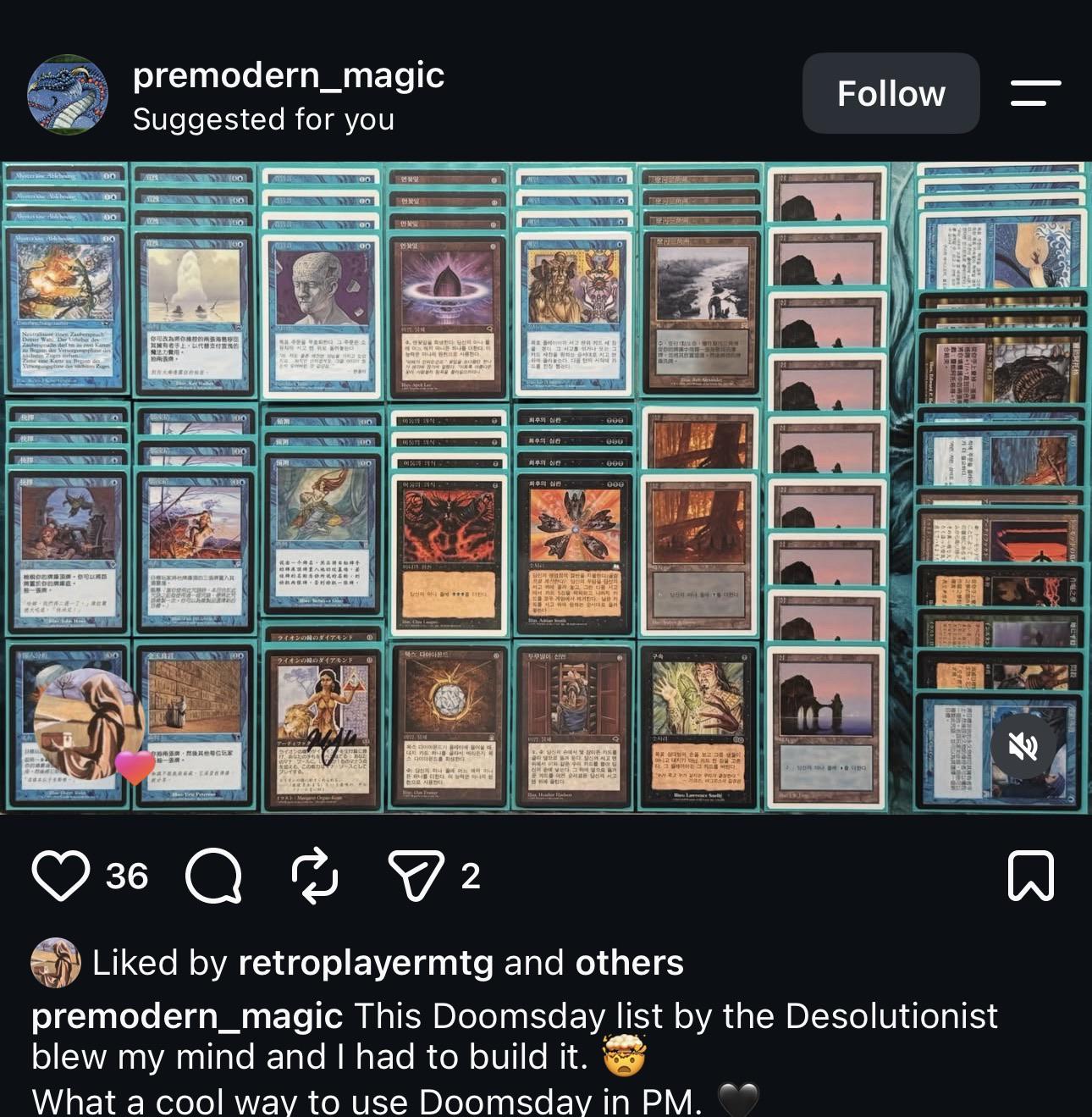
Pictures of the above cards being added to Premodern
**Competitive Deck Pictures/Decklists/Strategies:**
* **Black Disruption, Braids & Pox:** Gains Hymn to Tourach, Sinkhole, Oubliette, Mind Twist, Juzam Djinn, and The Abyss to establish a disruptive midrange/tempo presence that keeps combo and control strategies in check but remains weak to aggressive decks that quickly empty their hand and top deck well.
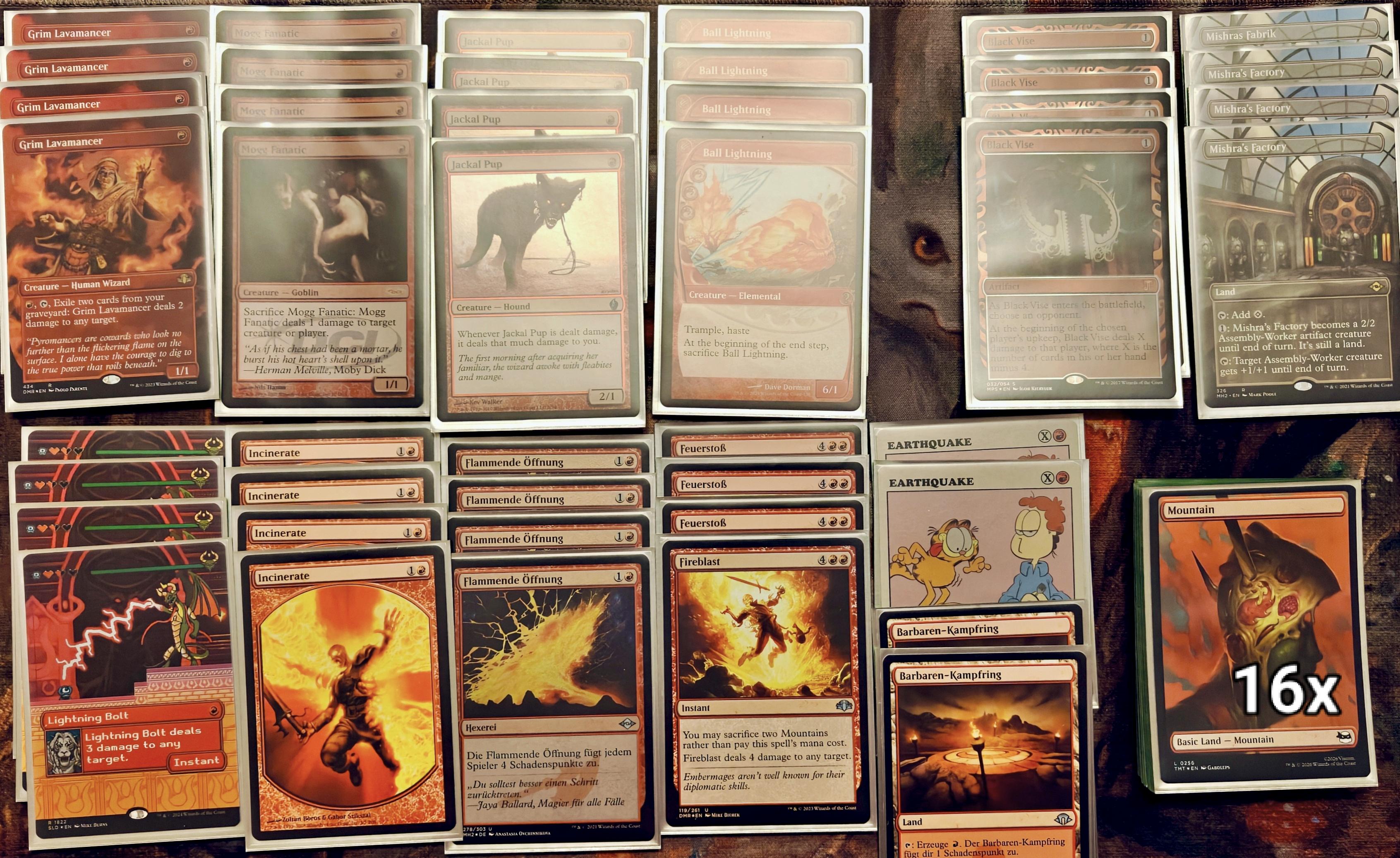
* **Old School Sligh, Burn & Zoo:** Boosted by Chain Lightning, Kird Ape, Jungle Lion, Icatian Javelineers, Fire Ambush, Sedge Troll, Concordant Crossroads and Berserk. Chain Lightning also empowers creatureless Burn decks that leverage punishing cards like Ankh of Mishra, Black Vise, Ensnaring Bridge, and Pyrostatic Pillar.
* **Expanded Goblins:** Bolstered by Goblin Grenade, Raging Goblin, Goblin Chirurgeon, and Goblin Settler. (Goblin Grenade and Raging Goblin also enables a Goblin Sligh list that pairs synergistic one mana goblins Mogg Fanatic/Goblin Cadets/Goblin Patrol with the very best burn spells).
* **Blue Tempo/Flyers:** Incorporates Flying Men, Psychic Purge, Psionic Blast, Sea Drake, Serendib Efreet, and Serendib Djinn to Curiosity decks.
* **Portal Creature Toolboxes:** Leverages Imperial Recruiter, Loyal Retainers, and Xiahou Dun to support Survival, Aluren, Eureka, Sneak Attack and Reanimator.
* **White Control & Prison:** Utilizes Moat, Karakas, Ravages of War, Maze of Ith and Preacher. The addition of Chains of Mephistopheles, Damping Field, Drop of Honey, Forcefield, Imprison, In the Eye of Choas, Lifeblood, Moat, Oubliette or The Abyss boosts current Enlightened Tutor boards.
* **Artifact Strategies:** Candelabra, Copy Artifact, Juggernaut, Su-Chi, Transmute Artifact boosts decks that utilize Thran Dynamo, Tangle Wire, Smokestack or Tron lands. Juggernaut, Su-Chi boost aggressive Ancient Tomb “stompy” decks.
* **Enemy Color Strategies:** It is expected that the addition of enemy color fetchlands will provide a consistency boost to existing Premodern archetypes that currently get color screwed too often to be competitive: Deadguy Ale, RW Fluctuator, UG Madness, GBw Food Chain, RW Weenie, Counterburn, UG Threshold, BW Control, Junk Rock, Wurm Rack, The Solution etc.
**V. The Watch List & Testing Metrics**
These cards are fully legal at launch but will be tracked carefully.
**1. Mono-Black Disruption (Hymn to Tourach, Sinkhole, Nether Void)** Black's mana-denial plan (Ritual, Hymn, Sinkhole, Wasteland, Port) could be uniquely punishing. This may help boost aggro and police combo/control (black historically preys on two card combos like Stiflenought and OpalWave but often has a harder time against sligh and similar aggressive decks that empty their hand quickly and top deck well).
* *Track:* Win rate on the play vs. draw; frequency of concessions to early disruption; impact of aggro decks, Compost, Misdirection and similar sideboards cards keeping black in check
**2. Burn and Sligh (Chain Lightning, Goblin Grenade)** Because players will take damage from painlands, fetchlands or City of Brass, efficient Burn could accidentally become the "best deck" early on. The addition of enemy fetchlands should mitigate the need for decks like Fluctuator to play City of Brass.
* *Track:* Win rates of pure Burn, Goblin Sligh, Traditional Goblins, and Traditional Sligh; impact of CoP: Red, Chill, Zuran Orb and similar sideboards cards keeping red in check.
**3. Imperial Recruiter & Aluren** Recruiter turns Aluren from a value-oriented combo into a highly deterministic tutor engine (finding Cavern Harpy, Raven Familiar, etc.).
* *Track:* Aluren’s goldfish speed; turn 3-4 win frequency; win rate when Recruiter is drawn vs. not drawn; ability to win through a single counterspell.
**4. Survival of the Fittest & Loyal Retainers** Survival can pitch a legendary creature (Akroma, Reya) to find Retainers, creating a compact reanimation package without needing Exhume/Reanimate.
* *Track:* Frequency of legendary creatures entering by turn 3; win rate through one piece of graveyard hate.
**5. Phyrexian Dreadnought, Berserk & Illusionary Mask** Berserk allows a 24-damage trample kill with Dreadnought, however, this requires a three card combo and a full turn to pull off. Mask allows non-blue decks to cheat Dreadnought into play (bypassing the need for Stifle/Vision Charm).
* *Track:* Kills from 20+ life; average turn of first Dreadnought attack; win rate against decks lacking Swords to Plowshares. *(If Mask makes Dreadnought oppressively ubiquitous, Mask will be banned).*
**6. Artifact Acceleration & Tutors (Transmute Artifact, Tinker)** Even without Workshop, artifact decks have Ancient Tomb, City of Traitors, Mox Diamond, Metalworker, and Voltaic Key. Transmute Artifact provides redundancy with Tinker to find lock pieces (Tangle Wire, Smokestack) or finishers.
* *Track:* Frequency of turn-1/turn-2 lock pieces; combined Tinker/Transmute counts in winning lists; most frequently searched artifacts.
**7. Coffers Control & Candelabra of Tawnos Engines** Candelabra can amplify Gaea’s Cradle, Serra’s Sanctum, or Cabal Coffers. It may prove to be win more but it's worth keeping an eye on as it allows green/black/enchantment decks to produce 10+ mana several turns earlier than intended. Coffers Control seems likely to be a healthy addition to the meta.
* *Track:* Max mana generated on turns 3-4; frequency of Candelabra producing net-positive mana.
**8. Armageddon Effect Density (Ravages of War)** Ravages effectively gives white decks 8 copies of Armageddon. Combined with Mox Diamond and resilient threats, this could become hyper-consistent, but the risk seems low as barely any decks even opt to play 4 Armageddon.
* *Track:* Frequency of mass land destruction before turn 5; win rate against mono-colored basic-land decks.
**9. Goblin Land Destruction & Reach** Goblin Matron can search for Goblin Settler (repeatable land destruction). Goblin Chirurgeon stops sweepers, Raging Goblin increases the critical mass of one drops and Goblin Grenade removes the deck's struggle to close out stabilized games.
* *Track:* Number of lands destroyed per game; Grenade damage dealt; win rate against Engineered Plague.
**10. Extra-Turn Redundancy** Capture of Jingzhou and Temporal Manipulation join Time Warp. More dangerously, Final Fortune, Last Chance, and Warrior’s Oath can be paired with Stifle to bypass the "lose the game" trigger.
* *Track:* Frequency of Stifle countering a lose trigger; average turn of extra-turn-based wins.
**11. Reanimator Speed & Redundancy** Reanimator gains Loyal Retainers and more legends. Does it become too fast/resilient when forcing opponents to fight standard reanimation (Animate Dead) and Survival/Retainers simultaneously?
* *Track:* Frequency of turn 1-2 reanimation; number of distinct reanimation engines per deck.
**12. Enchantress, Replenish, and Fortress Control** Moat, The Abyss, Chains of Mephistopheles, and Drop of Honey join Humility and Solitary Confinement. A single Replenish could create a board state where creatures are ineffective (but this is already true of current Replenish lists).
* *Track:* Unintentional draw rate; frequency of hard/near-hard locks; average game length.
**13. Blue Tempo & Ancient Tomb Threats** Sea Drake entering early via Mox Diamond + Ancient Tomb/City of Traitors, backed by Serendib Efreet & Psionic Blast.
* *Track:* Frequency of turn-1 Sea Drake; vulnerability to Lightning Bolt/Chain Lightning; Blue tempo’s win rate on the play.
**14. Utility-Land Saturation & Karakas** A deep utility land pool (Wasteland, Port, Dust Bowl, Maze of Ith, Karakas) is hard to interact with using spells. Karakas specifically wrecks legendary reanimation targets (Loyal Retainers) and creates draw-dependence.
* *Track:* Percentage of decks playing Wasteland; Reanimator win rate when Karakas is drawn; games stalled entirely by Maze/Karakas.