The first cup failed before it reached the kiln.
I learned this on a Tuesday morning.
My office assistant arrived carrying a paper bag and wearing an expression I had begun to recognize.
She was annoyed.
Not with me.
That was reassuring.
“Something happened?” I asked.
“The handle came off.”
“Whose?”
She looked at me.
“The cup's.”
“Oh.”
She placed her bag beneath the desk.
“One of the samples.”
“For the café?”
“Yes.”
“Can it be repaired?”
“Not reliably enough for what we're testing. We'll make another, but it won't be ready with this batch.”
I considered the problem.
“Does that mean five samples?”
“Five to fire. Perhaps fewer afterward.”
She removed her coat.
Then looked at the calendar.
“Thursday afternoon is still clear?”
I checked.
“Yes.”
“Good. I need to be at the studio when they load the kiln.”
I nodded.
She sat down.
Then she looked up again.
“And Maki thinks the handle wasn't the problem.”
“What does she think?”
“That the cup was too dry when we attached it.”
“Was it?”
She considered.
“Possibly.”
I smiled.
“Are you going to tell her?”
“Eventually.”
She opened her computer.
I returned to my paperwork.
A few minutes later, she called from the front desk.
“Reverend?”
“Yes?”
“If she asks, I admitted nothing.”
Three weeks passed.
During that time, I heard more about the cups than I had heard about pottery in the previous seven years.
The first firing had gone well.
Mostly.
One cup developed a small crack near its base.
Another survived but came out slightly warped.
The sisters disagreed over whether it could still be used.
My assistant believed it was acceptable for personal use but not as a sample for a commercial order.
Maki thought a little irregularity was part of the attraction.
They had apparently conducted this argument in the studio, in the car, and once over breakfast.
When I asked how it had ended, my assistant said:
“It hasn't.”
By the time the glazing and final firing were complete, four cups remained suitable to present to the prospective customer.
Two taller.
Two shorter.
All blue.
Not quite the same blue.
On Friday afternoon, she brought one to the temple.
It stood on my desk beside the appointment book.
A dark blue cup with a broad base and a handle that looked unusually sturdy.
I picked it up.
It was heavier than my pale blue cup at home.
“Different design?”
“Yes.”
“Which one is this?”
“The taller version.”
I placed my fingers through the handle.
Comfortable enough.
She watched.
“Would you use that for coffee?”
“Certainly.”
“Every day?”
I looked at it again.
“Probably.”
“Would you stack twenty of them?”
I stopped.
“Twenty?”
“Or twelve.”
I looked at the cup.
The rim was broad.
The base narrower.
I tried imagining another cup fitted inside it.
“Perhaps not.”
She nodded.
“Exactly.”
“Was it supposed to stack?”
“The café owner said it would be helpful. We didn't appreciate how important that might be until we started making them.”
I looked at the cup again.
A beautiful object.
Possibly an inconvenient one.
She picked it up.
“We're meeting him tomorrow.”
“With the samples?”
“Yes.”
“Are you nervous?”
“Very.”
I smiled.
She did not.
“I'm worried he'll say yes.”
That surprised me.
“I thought you wanted the order.”
“I want to know whether we can make it.”
She put the cup into its padded box.
Then returned to her desk.
Saturday afternoon, I happened to be passing the new café.
I had gone into town to buy drawing paper.
Nakajima had recommended a heavier kind for watercolor, and the art supply shop was only two streets away.
The café was farther down the same road.
Its windows were uncovered now.
The pale wood interior looked almost finished.
Blue seating lined one wall.
Several tables stood near the windows.
A small sign on the door read:
Opening This Spring
I slowed.
Through the glass, I saw Maki.
She was standing beside a table, speaking to a man in a white shirt.
Her sister was placing cups on a tray.
I considered continuing.
They were working.
I had not been invited.
Then Maki saw me.
She waved energetically.
The man looked toward the window.
So did my assistant.
I raised one hand.
Maki came to the door.
“Niioka-san!”
“Hello.”
“Come in!”
“I don't want to interrupt.”
“You won't. We're testing cups.”
“That sounds like something I could interrupt.”
She laughed.
“Come and have coffee.”
Before I could answer, my assistant appeared behind her.
She looked at me.
“Did my sister invite you?”
“Yes.”
She sighed.
“Of course.”
Then she smiled.
“You may as well come in.”
The café was warmer than the street.
Fresh paint.
New timber.
The faint smell of coffee.
The counter was installed, though several electrical fittings still had protective covers.
A stack of cardboard boxes stood behind the seating area.
The man in the white shirt introduced himself as Mr. Ogawa.
He was the owner.
I explained that I worked with one of the potters.
He nodded.
“She's told me.”
I looked at my assistant.
She seemed surprised.
“Have I?”
Ogawa smiled.
“You mentioned the temple when we discussed your schedule.”
“Oh.”
He looked at the cups.
“We're trying them with the machine.”
I glanced toward the counter.
A large espresso machine stood there.
Shiny.
Impressive.
Almost certainly expensive.
Maki looked pleased.
“Would you like to watch?”
I smiled.
“Certainly.”
Ogawa prepared coffee in one of the shorter cups.
He moved confidently.
Ground beans.
Measured.
Set the cup beneath the machine.
The coffee ran into it.
Dark at first.
Then lighter.
A thin layer of foam formed on top.
The machine stopped.
He lifted the cup.
Looked at it.
Then placed it on a saucer.
“Good.”
Maki smiled immediately.
My assistant leaned forward.
“Is the handle comfortable?”
Ogawa picked it up again.
“Reasonably.”
“Too small?”
“No.”
He drank.
Then returned it to the saucer.
“The weight is good.”
Maki looked at her sister.
My assistant was examining the cup.
“Does the rim feel too thick?”
Ogawa considered.
“A little.”
Maki's smile faded.
He continued:
“Not unpleasant. Just different from what I'm used to.”
My assistant nodded.
“That's useful.”
Maki looked toward the other cups.
“We can make the rim thinner.”
Her sister said:
“Possibly. We should test whether that changes the shape during firing.”
Maki looked annoyed.
Ogawa appeared not to notice.
Next came the taller cup.
This one was intended for a larger drink.
Ogawa prepared a café latte.
The cup looked beautiful on the counter.
Dark blue against pale wood.
White foam near the rim.
Maki took a photograph.
Then another.
Ogawa examined the cup.
Turned it slightly.
Picked it up.
Set it down.
“This looks very good.”
Maki smiled.
My assistant asked:
“How does it feel?”
“Comfortable.”
He drank.
Then looked toward the back counter.
“May I try stacking them?”
“Of course,” Maki said.
My assistant looked less certain.
Ogawa rinsed the cups and dried them.
Then carefully lowered one tall cup into another.
It stopped almost immediately.
The bases did not nest.
He tried again, gently.
Same result.
He looked at the two sisters.
“I see.”
Maki leaned forward.
“They're handmade.”
“Yes.”
“They won't be perfectly identical.”
“I understand.”
He placed the cups beside each other.
“But I have limited shelf space.”
My assistant nodded.
“We anticipated that might be a problem.”
Ogawa looked toward the shelving behind the counter.
“Forty cups that don't stack will require more space than I have.”
Maki was quiet.
For the first time since I had entered, she had nothing to say.
Ogawa invited us to sit.
I tried to decline.
He insisted.
Not forcefully.
He had made more coffee than he needed for the test.
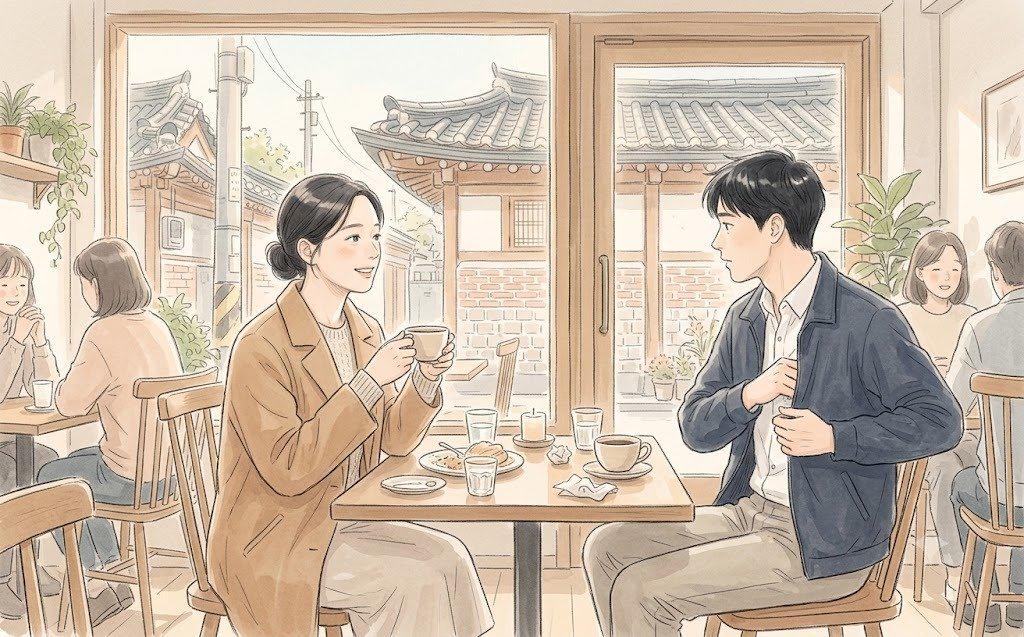
We took a table near the window.
Maki sat beside her sister.
Ogawa brought a notebook.
He opened it.
“I really like the cups.”
Maki looked relieved.
“They're beautiful,” he continued. “And I like that you're making them locally.”
My assistant thanked him.
“But I need them to work for the café.”
“Of course.”
He pointed toward the counter.
“We'll be washing and handling these all day. Different staff. Different hands.”
I remembered the way my assistant had asked Takahashi to try several handles.
Ogawa continued:
“If one cup holds slightly more than another, that's manageable. But the handles need to be comfortable, the cups need to be durable, and I need to store them efficiently.”
Maki nodded.
My assistant was writing.
Then Ogawa asked:
“Could you make forty of the shorter design if we adjusted it for stacking?”
My assistant looked at Maki.
Maki looked back.
Neither answered immediately.
Then my assistant said:
“We would need to make and test a revised sample first.”
Ogawa nodded.
“And the price?”
A different silence.
My assistant opened her folder.
Removed a sheet of paper.
Placed it on the table.
“We've prepared an estimate.”
Maki sat straighter.
I looked out of the window.
This was the point at which I became a guest who was very interested in passing traffic.
Ogawa examined the figures.
For a while he said nothing.
Then:
“Is this the price per cup?”
“Yes.”
He looked again.
“And that's for forty?”
“Yes.”
He rested his pen on the paper.
“It's higher than I expected.”
Maki leaned forward.
“We can discuss it.”
My assistant looked at her.
Maki continued:
“Perhaps if we make more at once—”
“Maki.”
Her sister's voice was quiet.
But unmistakable.
Maki stopped.
My assistant turned toward Ogawa.
“The estimate includes materials, firing, losses, labor, and the packaging and transport we'd need for an order of that size.”
He nodded.
“I understand.”
“We haven't added much allowance for unexpected problems.”
He looked at the cups.
Then at the sheet.
“I could buy commercial cups for less than half of this.”
Maki looked down.
My assistant nodded.
“Yes.”
Ogawa waited.
Then she added:
“Those would be a different product.”
He smiled slightly.
“That's true.”
Nobody spoke for several seconds.
Ogawa leaned back.
“I don't want you to lose money making cups for me.”
Maki looked up.
“Thank you.”
“But I also can't spend beyond my budget.”
“Of course,” my assistant said.
He turned the estimate around.
Pointed to the total.
“I might be able to order twelve for the opening, and use a standard line for the rest.”
Maki looked surprised.
“Twelve?”
“Yes. A small number for particular drinks.”
She considered.
Then asked:
“Would you want to add more later?”
“Possibly. If they work well and customers like them.”
My assistant glanced at the cup in front of Ogawa.
He continued:
“But the revised design would still need testing, and we'd need to agree on a delivery schedule.”
Maki opened her mouth.
Her sister touched the estimate.
“Could we discuss it between ourselves first?”
Ogawa nodded immediately.
“Of course.”
He smiled.
“I'm not asking you to decide today.”
We left shortly afterward.
Ogawa thanked the sisters for bringing the samples.
He offered to pay for the next round of development work if they agreed on a revised design and written terms.
Nothing was signed.
The first sample payment had already been handled.
The four cups went back into their boxes.
Maki carried two.
Her sister carried two.
I held the door.
Outside, the wind had picked up.
Maki stood beside her car.
She looked toward the café.
“Twelve.”
Her sister nodded.
“Twelve.”
“We were talking about forty.”
“Yes.”
“And now twelve.”
“Possibly twelve.”
Maki looked at her.
“You don't have to keep saying possibly.”
“Nothing has been agreed.”
“I know.”
She sounded tired.
My assistant looked at me.
Then at Maki.
“Let's discuss it at the studio.”
Maki shook her head.
“I've got to pick up the children.”
“All right.”
“Tomorrow?”
“Yes.”
Maki looked at the boxes in her hands.
Then said:
“I thought he loved them.”
“He does like them.”
“Not enough.”
My assistant was quiet.
Maki turned toward her car.
“See you tomorrow.”
She bowed to me.
I returned it.
Then she drove away.
My assistant remained beside the pavement.
She looked at the café.
The large windows.
The new chairs.
The nearly finished counter.
Then she turned toward me.
“Did you enjoy the coffee?”
“Yes.”
“Good.”
I hesitated.
“Are you disappointed?”
She considered.
“Yes.”
“About the number?”
“About several things.”
I nodded.
She looked at the two boxes she was carrying.
Then said:
“We should have tested stacking earlier.”
“Perhaps.”
“And the rims.”
“Yes.”
“And the handles.”
I looked at her.
“You did test the handles.”
“Not with someone making drinks all day.”
That was different.
She knew it.
I did too.
We stood for a moment.
Then she said:
“I'm going to the studio tomorrow. Maki and I need to decide what we're doing.”
“Would you like help?”
She looked at me.
“With pottery?”
“No. With anything practical.”
She smiled.
“Thank you. But I think this is something we have to work out ourselves.”
I nodded.
“Of course.”
She opened her car.
Then stopped.
“Reverend?”
“Yes?”
“Please don't mention the order to people at the temple yet.”
“Of course.”
“It's not an order.”
“I understand.”
She smiled faintly.
“Thank you.”
Then she left.
On Monday morning, she arrived before me.
That was unusual.
When I entered, she was already seated at the front desk with a cup of tea.
Not one of her handmade cups.
An ordinary white one from the office cupboard.
She looked up.
“Good morning.”
“Good morning.”
I put down my bag.
“How was Sunday?”
She thought.
“Long.”
I waited.
Then she said:
“Maki and I argued.”
“I expected as much.”
She smiled.
“Did you?”
“A little.”
“We argued about everything.”
I sat opposite her.
“The cups?”
“The cups. The price. The studio. Whether we want to make forty cups. Whether we want to make twelve.”
She looked into her tea.
“Whether we want to make any more cups for cafés.”
That sounded serious.
I said nothing.
She continued.
“Maki wants to build a business.”
I nodded.
“She'd like to rent a larger studio one day. Maybe hire someone. Sell to shops.”
“And you?”
She looked toward the window.
“I like making pottery.”
“Yes.”
“I like selling it at markets.”
“Yes.”
“But I don't know whether I want every weekend to become a production deadline.”
I considered.
“That sounds like a real difference.”
“It is.”
She smiled without much amusement.
“She's been talking about expanding for years. I've always said we'd think about it.”
“Did you mean that?”
“Yes.”
“Then what's changed?”
She looked at me.
“Someone actually asked us to make forty cups.”
I nodded.
She laughed softly.
“It's very easy to say you might want something someday.”
I smiled.
“Sometimes.”
“It's harder when somebody gives you a price, a quantity, and a deadline.”
She drank her tea.
Then looked at the clock.
Nine fifteen.
An appointment at ten.
There was work to do.
She stood.
“I should get started.”
I nodded.
She returned to the desk.
That afternoon, I made a mistake.
Not a serious one.
But worth admitting.
I had been considering her situation.
The cups.
The café.
Maki.
The possible order.
And I had started thinking about ways the temple might help.
Perhaps we could display some of the pottery.
Perhaps we could buy cups for visitors.
Perhaps I could introduce the sisters to people who ran local shops.
All reasonable ideas.
At least they seemed reasonable to me.
When my assistant came into the office with a file, I mentioned one.
“Have you thought about selling some pieces at the temple?”
She stopped.
“Why?”
“Visitors might be interested.”
She looked at me.
“Do you want pottery at the temple?”
“Not particularly.”
“Then why?”
I paused.
“Because it might help your business.”
She looked at me for a moment.
Then placed the file on my desk.
“That's kind of you.”
I waited.
“But please don't.”
I looked up.
She continued:
“I already have a business partner.”
“Yes.”
“And a place where we sell.”
“Yes.”
“If I want to discuss the temple as another outlet, I'll ask you.”
I nodded.
“I'm sorry. I was getting ahead of myself.”
She smiled.
“You were.”
Then she pointed toward the file.
“This family is coming on Thursday. Please check the time.”
I looked at the appointment.
Then at her.
She was already returning to the front desk.
The subject was closed.
At least for that afternoon.
Thursday evening, I went to drawing class.
Mrs. Harada had placed a collection of everyday objects on the central table.
A lamp.
A small radio.
A bowl.
Several cups.
One of them was pale blue.
Not unlike the one I had bought at the craft market.
I sat down.
Nakajima looked at the objects.
Then at me.
“Want to draw the cup?”
I smiled.
“Perhaps.”
He looked curious.
“Something funny?”
“No.”
I considered.
Then told him, briefly, about the pottery samples.
The café.
The difficulty of stacking handmade cups.
Nakajima listened.
Then picked up his pencil.
“That's interesting.”
“What is?”
“How many things a cup has to do.”
I looked at him.
He smiled.
“It has to hold coffee. Feel good in someone's hand. Fit on a shelf. Survive being washed.”
“Yes.”
“And look nice.”
“Apparently.”
He looked toward the cup on the table.
“I usually only think about how to draw it.”
I considered.
“So do I.”
Mrs. Harada called for us to begin.
Nakajima chose the radio.
I chose the cup.
The drawing went better than I expected.
Not perfectly.
The handle was still difficult.
The rim was uneven.
But I had improved at measuring proportions.
I looked more carefully before making each line.
The cup took shape.
A simple object.
The kind people used every day without thinking about its design.
I drew the shadow beneath it.
Then stopped.
There were twenty minutes left.
Mrs. Harada approached.
“Finished?”
“For now.”
She examined the page.
“Why this cup?”
I thought.
“Someone I know makes pottery.”
She nodded.
“Ah.”
“She's having trouble with a commercial order.”
Mrs. Harada looked at the cup.
Then at my drawing.
“Orders can be difficult.”
“Do you sell your work?”
“Sometimes.”
“Have you ever regretted accepting one?”
She smiled.
“Yes.”
I looked up.
She continued:
“And I've regretted refusing one.”
I laughed softly.
“Not much help.”
“No.”
She smiled again.
“It's her decision, isn't it?”
“Yes.”
“Then perhaps she'll make one she can live with.”
She moved to the next student.
I looked at my drawing.
The handle was still slightly too large.
I left it.
On Friday afternoon, my assistant asked whether we could talk after the last appointment.
I said yes.
The appointment finished at four.
A family planning a spring memorial.
We reviewed the arrangements.
Confirmed the date.
Checked the letter.
They left.
I returned to the office.
My assistant was waiting.
She had a folder in her hands.
Not pottery estimates.
A work schedule.
I looked at it.
“Something wrong?”
“No.”
She sat opposite me.
Then took a breath.
“I've been thinking about my hours.”
I looked up.
She continued:
“Not just because of the café.”
I waited.
“I'd like to spend more time at the studio.”
I nodded.
“How much time?”
“I'm not sure yet. Perhaps one afternoon a week to start.”
I looked at the schedule.
One afternoon.
The temple could probably manage that.
But it would require planning.
And perhaps hiring someone for part of the work.
She continued:
“I've been making pottery for seven years. I don't know whether I want to turn it into a full business.”
“Yes.”
“But I do know I want to give it more time than I have.”
I nodded.
Then asked:
“Have you and Maki decided about the twelve cups?”
“Not yet.”
She looked at me.
“That's the point.”
I waited.
“I don't want to change my work schedule only if someone buys the cups.”
I considered.
She continued:
“If we decide not to take the order, I still want to make things.”
I looked down at the paper.
The schedule.
The hours.
A very ordinary document.
And yet she had brought it to me because something in her life was changing.
Not necessarily a career.
Not necessarily a business.
Perhaps simply the amount of time she wanted for something she cared about.
I said:
“Let's work out what an afternoon away would mean for the office.”
She nodded.
“Thank you.”
“I can't promise a particular day without checking.”
“I know.”
“And we'll need to review the duties that would need covering.”
“Yes.”
She smiled.
“I've already made a list.”
Of course she had.
She opened the folder.
Two pages.
Tasks.
Days.
Telephone coverage.
Mail.
Appointment preparation.
Monthly accounts.
Everything arranged carefully.
I looked at her.
“You've been planning this.”
“For a while.”
“How long?”
She considered.
“Longer than the café order.”
I nodded.
Then began reading.
We spent forty minutes discussing the schedule.
Not deciding everything.
There were questions.
Which afternoon would work best?
Could some tasks move to another day?
Would we need temporary assistance during busy periods?
How would reduced hours affect her pay and responsibilities?
We identified what needed checking.
She would consider the hours she wanted.
I would examine staffing and costs.
We agreed to meet again the following week.
When we finished, she gathered the papers.
Then looked at me.
“Are you disappointed?”
I stopped.
“With what?”
“That I want to work less at the temple.”
I thought.
The truthful answer was not complicated.
“A little.”
She nodded.
I continued:
“You're very good at your job. I'll miss having you here as often if we change the arrangement.”
She smiled faintly.
“I like working here.”
“I know.”
“I don't intend to leave.”
“I understand.”
Then I added:
“But I also don't want you to feel you have to keep the same hours because it's convenient for me.”
She looked down at the folder.
Then nodded.
“Thank you.”
I looked at the clock.
Almost five.
“Do you have plans tonight?”
“Yes.”
“The studio?”
She smiled.
“Dinner with Maki.”
“More arguments?”
“Probably.”
I laughed.
She stood.
Then said:
“Actually, we might talk about something else.”
“What?”
“She's thinking of buying a bicycle.”
I looked surprised.
“A bicycle?”
“Yes.”
“What kind?”
“An expensive one.”
I smiled.
“That sounds dangerous.”
“It is. And she wants my opinion.”
“Will you give it?”
“Unfortunately.”
She laughed.
Then put on her coat.
That evening, I called Takahashi.
He was still at the garage.
I could hear Kuroda speaking in the background.
“Dinner?” Takahashi asked.
“Not tonight.”
“Then what's wrong?”
“Nothing.”
He waited.
I told him about the schedule.
The pottery.
The possibility that my assistant would reduce her hours.
He listened.
Then said:
“Are you going to need another employee?”
“Possibly. I haven't worked that out yet.”
“Can she afford to reduce her hours?”
“That's something she'll need to decide.”
He was quiet for a moment.
Then:
“Sounds like she's serious.”
“Yes.”
“Good for her.”
I considered.
“Yes.”
Then I added:
“She hasn't even accepted the café order.”
Takahashi laughed.
“Maybe the order doesn't matter as much as you thought.”
I looked toward the kitchen.
The pale blue cup stood on the counter.
“Perhaps.”
In the background, Kuroda said something.
Takahashi turned away from the phone.
I heard:
“No, not that drawer.”
A pause.
Then:
“Because I just organized it.”
I smiled.
Takahashi returned.
“Sorry. Emergency.”
“The cabinet?”
“Yes.”
“Serious?”
“Very.”
I laughed.
He sighed.
“Come by tomorrow if you're free.”
“I might.”
“Bring your drawings.”
“Why?”
“Kuroda wants to see whether you've improved.”
“That seems unlikely to be an emergency.”
“It's a professional evaluation.”
I smiled.
“Good night, Takahashi.”
“Good night.”
On Saturday morning, I made tea in the cup from the market.
Its pale blue glaze caught the light from the window.
The handle fitted my fingers.
The base stood firmly on the table.
I looked at it for a moment.
Then drank.
It was a comfortable cup.
I did not know whether the sisters would ever make forty matching ones.
Or twelve.
Or none.
Perhaps Maki would eventually open a larger studio.
Perhaps my assistant would remain at the temple while spending one more afternoon each week working with clay.
Perhaps they would make different decisions and stop selling their work together.
They had not decided.
Neither had I decided how we would cover the office if her hours changed.
There would be practical work to do.
But not that morning.
I finished breakfast.
Washed the cup.
Then drove to the temple.
At the entrance, a man was waiting near the office.
He held a small cardboard box.
I recognized him.
Mr. Ogawa.
The café owner.
I was surprised.
“Good morning.”
He bowed.
“Good morning, Reverend.”
“Is everything all right?”
“Yes. I'm looking for the woman who makes the pottery.”
I nodded.
“She's not here today.”
“I thought she might not be.”
He looked at the box.
“Could I leave something for her?”
“Of course.”
He handed it to me.
Inside was one of the sample cups.
The shorter design.
Dark blue.
Carefully wrapped.
I looked at him.
“Did something happen?”
He smiled.
“No. I just wanted to return it safely.”
Then he reached into his coat.
Took out an envelope.
“And this.”
I accepted it.
“Shall I tell her you came?”
“Yes, please.”
He hesitated.
Then said:
“I've been thinking about the cups.”
I waited.
“I'd still like to work with them, if we can find a design and quantity that suits both sides.”
I nodded.
“I'll pass that along.”
He smiled.
“Thank you.”
Then he left.
I carried the box into the office.
Placed it on the front desk.
Beside it, the envelope.
Her name was written neatly on the front.
I did not open it.
I sent her a short message.
Mr. Ogawa visited. He left one sample cup and a sealed envelope for you at the office.
She replied a few minutes later.
Thank you. I'll collect them Monday.
Then:
Was he upset?
I looked at the message.
Thought about his expression.
His words.
His manner.
He seemed friendly. He said he would still like to work with you if suitable terms can be found.
A pause.
Then:
That's interesting.
I smiled.
Another message arrived.
Maki is going to be unbearable.
I laughed.
Then wrote:
Please let her enjoy the possibility for a day.
Her reply:
I'll try.
I put the phone down.
The front desk was quiet.
The cup rested in its box.
The envelope remained sealed.
On Monday, she would decide what to do with both.
For now, I opened the temple calendar.
There were appointments to confirm.
Letters to check.
And, in the following week, a conversation about a different working schedule.
I began with the first appointment.