r/redlightpanels • u/J_Lynn16 • 8h ago
Hooga BF Sale
3
Upvotes
Hooga panels are 25% off today. For those that have purchased on BF does it get any better than that?
r/redlightpanels • u/AdequinRake • 28d ago

I've been using the RLT Home Total Spectrum Compact for about two weeks now. “Full Power” mode has become a favorite first thing in the morning. I feel noticeably more energized afterward, which is a pretty nice way to start the day.
In fact, it was so energizing that when I tried it right before bed, I lost about two hours of sleep. Apparently, “Full Power” wasn't referring to how deeply I was about to sleep. I mentioned that little experiment in an earlier post. Your experience might differ, but for me, that mode has earned a spot in the morning routine.
For anyone considering this panel, here are the basic manufacturer-listed specs:
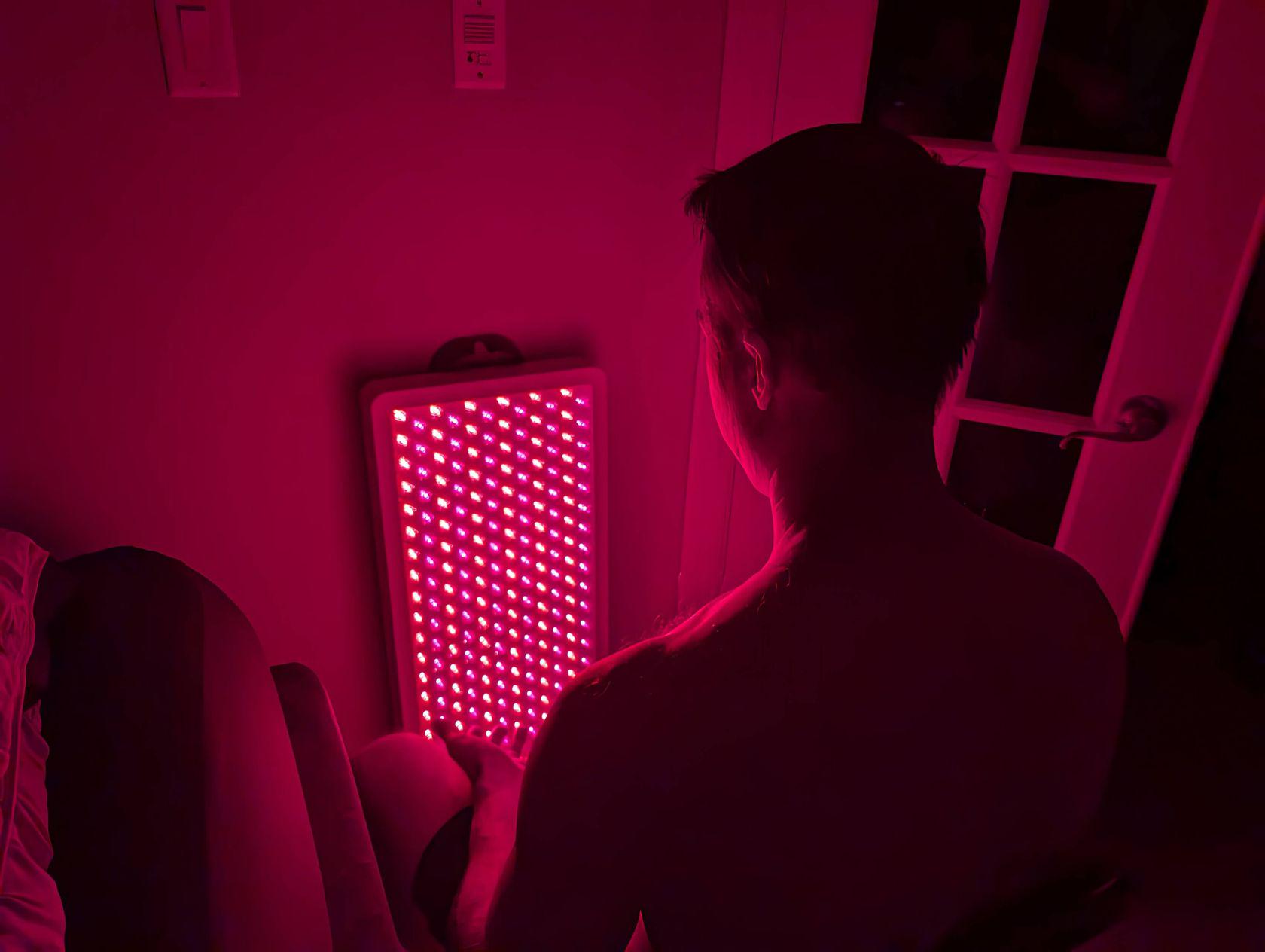
My sessions generally run 15–20 minutes. I sit in front of it, either facing the panel or with my back to it while I work on my laptop. In the evening, I've switched to Sleep mode. My skin definitely feels warmer during a session, and I find the warmth relaxing.
The touchscreen surprised me. I figured it would be a gimmick, but it's fast, responsive, and easy to understand. My favorite part is that the controls don't beep. My previous panel made a loud beep with every button press, which was terrible when I was trying to avoid waking my spouse. And frankly, it was just annoying even when nobody was sleeping.
You can hear the fans, though. Up close, there's a noticeable whooshing sound, like they're moving a lot of air. It surprised me initially, but it reminds me a little of the ocean and doesn't bother me. In my experience, you really have to be near the panel to hear it; it isn't a sound that carries around the house.
The stand is very stable and works well for how I'm using it. My previous panel didn't have one, so I leaned it against the wall. I prefer having a proper stand. There's also a remote included, although I'm still not sure how much use I'll get out of it because the touchscreen works so well.
I think the design looks pretty classy, too. A lot of panels have that familiar white metal box look, and I prefer the appearance of this one. Aesthetics aren't my main priority, but I appreciate something that looks good sitting in my home.
One small thing I'd change is the plug at the wall. I'd prefer a flat, low-profile connector that sits closer to the socket.
After two weeks, it feels worth the price to me. That's an early impression, so I can't speak to long-term reliability yet. The responsive screen and lack of button beeps are things I appreciate every time I use it.
r/redlightpanels • u/AdequinRake • Oct 13 '26
Two tabs open, two spec sheets, and both panels claim north of 100 mW/cm². One number was measured at six inches, the other at twelve, and nothing on either page tells you that. That's the moment in every panel purchase where you realize the $200 to $1,500 you're about to spend buys a device whose headline figures don't speak the same language as the competition's. I moderate r/redlightpanels, and I've watched the same three purchases go wrong enough times to recognize the pattern.
There's the bad device, bought on an uninterpreted number, underpowered or overhyped. There's the unexpandable device, fine on day one and incompatible with everything you try to add later. And there's the dust collector, a perfectly good panel that never fit the room, the outlet, or the routine. Learning how to choose a red light therapy panel is mostly learning which numbers to trust, and this piece walks the whole decision in order so you can buy once.
Panels are the flat, rigid grids of LED bulbs, from tablet-sized tabletop units up to full-body rigs over six feet tall that start to count as furniture. Whether that format fits depends on what you're trying to treat.
Panels are the higher-power, larger-coverage option, running $200 to $1,500+ for 1 to 4+ square feet of treatment area, while masks are face-and-neck-only with lower intensity and smaller LEDs, which means a mask needs longer sessions to deliver the same dose at $100 to $400. Which one fits comes down to how much of you you're treating and how patient you're willing to be about session length.
The full device field runs from handheld wands to face masks to targeted, mid-size, and full-body panels, up to whole-body beds. Handhelds and masks are convenient and low-powered; panels are where most serious users land. The goal mapping is plain enough: full-body skin work, widespread chronic pain, back pain, full-body recovery, and general wellness point to panels. Hair growth points to caps or panels.
Post-workout recovery depends on how much area you're covering. Single joints, crow's feet, and localized acute injuries belong with wraps or masks.
Wraps are the other comparison worth making. A panel delivers light from 6 to 18 inches away and has to be plugged in; a wrap sits flush against the skin, held on with adjustable straps and Velcro closures, and runs on battery or USB power. The penetration debate has two sides: the panel camp says raw power brute-forces the distance loss, the wrap camp says skin contact cuts reflection loss and partly makes up for lower output. Both have a point.
Wavelength and adequate irradiance matter more than device type. And the mechanism claim, hedged the way the research hedges it: red light is thought to boost collagen, reduce inflammation, speed tissue repair, and improve circulation, and studies suggest benefits for acne, fine lines, and joint pain.
Panels are the wrong choice for a single targeted joint, travel use, treating while you multitask, small budgets, or limited space. A wrap fits a knee, an elbow, a case of tennis elbow, or all-day chronic pain management, and you can read or watch TV while wearing one, which no panel allows. None of these formats are inferior overall; they're shaped for different jobs.
For anti-aging facial work, a panel is the better fit. Masks trade power for convenience and need longer sessions for the same result, so if you'll stand in front of a panel anyway, the panel wins on intensity per session. If you won't stand there, the mask you actually wear beats the panel you don't.
A quality panel puts out two families of light: red in the 630 to 670nm range, traditionally 660nm, for skin surface and shallow tissue, and near-infrared in the 800 to 1060nm range, commonly cited as 800 to 940nm, for muscle, joints, and bone. The traditional baseline is 660nm red plus 850nm near-infrared. Newer panels add 630nm and 810nm, and 810nm reportedly has more research behind it than the standard 850nm. Reportedly is doing honest work there.
The market moved while I wasn't looking. Biomax runs six wavelengths, Mito Pro four, and Catalyst panels run eight, spanning 630 through 670nm plus 810, 830, 850, and 1060nm on dual-chip LEDs. Red Light Rising sits in this multi-wavelength camp as well. One- or two-wavelength devices are more limited. That's a limitation, not a scandal.
Even the nerds don't agree on the near-infrared range itself; some sources say 800 to 940nm, others 810 to 1060nm. Catalyst's lineup is a clean example of one company covering the size range, Spot for targeted work, One mid-size, Max full-body, all FDA registered per the vendor's own disclosure, with an Oxygen Synergy System that pairs red light with EWOT, exposing as much skin as possible right after an oxygen session. Example, not endorsement.
Irradiance (mW/cm²) is how much light reaches you at a given distance. It's the spec that matters most and the one listings make hardest to compare.
Around 20 to 30 mW/cm² at the skin is the minimum effective floor, and irradiance testing has no industry standard, so claims measured at 1, 6, or 12 inches, peak versus average, don't compare across brands. Panels from established companies bought 2023 or later are already powerful enough. High-powered panels can be a disadvantage, because dose, measured in joules/cm², is irradiance times time, and more power buys shorter sessions. Panels run 20 to 100+ mW/cm² and 60 to 300+ watts. Think flashlight in a black room: what matters is how much light lands on you, not how bright the source says it is.
Quick test: Before comparing two panels' irradiance numbers, confirm both were measured at the same distance. If neither listing states one, assume nothing.
No. Ordinary LEDs lack the proven wavelengths and the irradiance, and cheap devices leave hot spots with insufficient light everywhere else. A red-looking bulb is not a red light therapy device.
LED count is the number every listing leads with and the least useful spec on its own; high count with low irradiance underdelivers. Dual-chip LEDs, two emitters per diode, generally produce more even, higher-output light than single-chip at comparable counts. True treatment area lines up with the physical LED grid regardless of beam-angle marketing. The common failure pattern in spec-sheet shopping: two shoppers pick the bigger mW/cm² number without noticing one was measured at 6 inches and the other at 12.
Independent lab reports are imperfect too. One reviewer I respect, about five years in the space, testing in the dozens-to-hundreds range across 15 criteria, pushes spectrometer testing as the only honest way to compare panels. That's his opinion. It's also a good one.
Size is where panel buying gets real, because the panel has to live somewhere and so do you.
A full-body panel runs roughly 36 by 13 inches, about the floor space of a narrow floor mirror or a small piece of exercise equipment, which means it lives where your mirror used to. The overall range runs from 12 by 18 inches up to 36 by 72, weighing anywhere from 5 to over 50 pounds, and the weight is the number that matters when you're the one mounting it.
| Tier | Rough size | Takes up about |
|---|---|---|
| Portable | ~11" x 6" | a tablet, bathroom-counter territory |
| Medium | ~13" x 9" | a small laptop |
| Large | ~21" x 14" | a computer monitor |
| Full-body | ~36" x 13" | a narrow floor mirror or small exercise equipment |
Between large and full-body sit half-body panels, around 20 by 8 inches, roughly medicine-cabinet wall space; the job mapping gets fuzzy in that middle, which is why it's not a table row.
Coverage runs 1 to 4+ square feet, which translates to chest, back, face, or multiple areas per session. Targeted panels cover one joint and make the cheaper entry point. Mid-size handles torso, back, or two limbs at once. Full-body means whole-body sessions without repositioning.
Two honest limits: panels are uniform on flat surfaces and less so on curves, and even at 6 to 10 inches the light concentrates in front of the LEDs, so the marketing coverage graphics oversell. Head-to-toe coverage requires a panel tall enough to actually do it.
Then the logistics nobody budgets for. A typical setup: buyers plan the footprint and forget the working distance, the mounting hardware, and which outlet the thing is reaching. All panels must be plugged in during use, so outlet proximity constrains placement. Panels need dedicated space, don't travel, and need somewhere to live when you're not standing in front of them.
The counterpoint: once it's placed, setup takes about a minute. Position it, set the distance, done. The m480 flex mini is the matched-to-job example here, a small panel for one sore shoulder, and its infrared version includes a built-in kickstand while the biomex tabletop charges extra for its stand. Small detail, real money.
For face work, the criteria are red wavelengths for skin-surface work, a panel sized to full-face coverage, workable session distance and duration, and eye protection:
The core requirement is embarrassingly simple: the panel outputs both red and near-infrared light. Everything else is garnish. The garnish, ranked honestly: a built-in timer is highly recommended, because it's the feature you'll use daily. Dimming helps, with 5% and 50% as common example levels.
Individual wavelength switching is nice. Pulsed mode rounds out the list. Controls vary more than listings suggest, and it's fair to say not all interfaces are equal: some panels run a touchscreen (WiMAX), some bury settings in LCD menus (Rouge, Mito Adapt), and some are just two switches (Hooga).
Then there's what no spec sheet discloses. Older or cheap panels may flicker, undetectable to the eye but capable of causing stress or headaches. Some emit non-native EMF, a spec some people care about and one I'll leave alone. And fan noise varies enough that I've switched panels off over it.
You'll be standing close to that fan 10 to 15 minutes a day, 5 to 6 days a week. That's exactly why noise matters.
Panels can be added over time to expand your treatment area, but only if they'll talk to each other. Two Biomax 900s, for instance, link wirelessly off one control panel, one power plug, and the same wall stud. Mito Pro panels, meanwhile, don't link with the newer Mito Adapt range, even within the same company. Confirm cross-generation compatibility with the manufacturer before the first purchase, unless three panels from three companies sounds like a collection you want.
The sticker price is the smallest part of the bill, and the vendor matters more than the specs.
A capable panel runs $200 to $1,500+, and under $300 covers masks and mini-panels. The sticker is where the math starts, not where it ends: a $1,000 panel, a common reference point in purchase discussions, plus a stand can push the real total well past checkout. Prices may vary, but the shape of the bill doesn't.
The full worksheet, with example figures from the reviewed market:
Buying from a company in your own country is the only way to know your exact total, since import taxes don't announce themselves in advance. Australian buyers may find low US prices partly offset by shipping. Discount codes float around via reviewers, which takes the edge off.
Cost check: A $1,000 panel plus a stand can push the real total well past checkout. Budget the accessories and taxes before the sticker price seduces you.
Juve panels are expensive and by no means the best. Expensive is a spec, not a verdict.
Cheap panels are fine when the vendor has been operating a year or two and offers at least a 2-3 year warranty, and a bad bet when they don't. The failure pattern is hypothetical until it happens: a new company ships a bad batch, takes a wave of returns, and folds, leaving owners with a panel and no support. A warranty only means something if the company exists long enough to honor it.
The trust signals community-minded buyers check first are independent reviewers over single-brand affiliates, vendor longevity, warranty length, and discount codes floating around via reviewers. From moderating r/redlightpanels, the questions that recur are exactly these: how long has this vendor been around, is the warranty real, what did you actually pay all-in. Those are the right questions to ask before the money moves.
FDA (Food and Drug Administration) clearance matters only as a signal of the narrow use a device was reviewed for; no FDA label, registered or cleared, proves a panel works for any condition. The three terms most listings blur:
Catalyst's FDA-registered status, for instance, comes from the vendor's own disclosure, and registration is the lightest of the three labels. Treat regulatory badges as manufacturer signals, not efficacy stamps. "FDA registered" on a listing may mean nothing more than a filing.
The standard protocol is 10 to 15 minutes per area at 6 to 12 inches, daily or every other day, starting at 5 to 10 minutes and building up, and since dose is irradiance times time, a higher-powered panel buys shorter sessions. Consistency over weeks and months is what drives results, so anchor the routine: keep the panel in plain sight, pair sessions with morning coffee or evening reading, use the built-in timer, take progress photos. Reputable panels are rated for tens of thousands of hours, so the device will outlast the habit you're building around it. Panels for home, wraps for on the go, is where the most committed setups end up.
Safe home use comes down to three rules: keep the panel 6 to 12 inches away, start with 5 to 10 minute sessions and build up, and wear eye protection whenever the beam could reach your face. Most panels ship with goggles, which is a hint.
Near-infrared is invisible. Brightness is not a reliable intensity or safety indicator, so a dim-looking panel may be delivering more therapeutic NIR than the one blinding you. Judge the spec sheet, not your squint.
Talk to a doctor first if you have a light-sensitive condition, take light-sensitizing medications, have had recent surgery, have a cancer history, or you're dealing with persistent pain, swelling, or new unexplained symptoms. Beyond that, these are supportive wellness tools, not disease treatments, and they work best when treated that way.
What to look for in red light therapy compresses to a short list:
Three scenarios, built from everything above.
A mini-panel like the m480 flex mini fits a single sore shoulder, and its infrared version includes a built-in kickstand, so no stand purchase. Masks also fit this budget. Next action: pick the body area first, then verify the irradiance is published at a stated distance. Checklist in miniature: wavelengths, irradiance, size-to-goal, features, vendor trust.
You want red wavelengths for skin-surface work and a panel sized to full-face coverage, with the eye-protection caveat front and center. Panels beat masks on intensity per session but cost more and need space. Next action: measure the wall or door space where it will live before you fall for a spec sheet.
A full-body tier panel, modularity verified with the manufacturer before purchase (the Biomax-style linking check), a vendor operating 1-2+ years with a 2-3 year warranty, and a total cost that includes stand and shipping. Next action: email the manufacturer about cross-generation compatibility before you buy, then price the stand.
If you want to pressure-test a shortlist before the money moves, that's most of what r/redlightpanels is for.
The short list: proven wavelengths (630-670nm red for skin, 800-1060nm near-infrared for deeper tissue), at least 20-30 mW/cm² irradiance at the skin published at a stated distance, coverage matched to the body area you're treating, and a vendor operating 1-2+ years with a 2-3 year warranty. A built-in timer is the one feature worth prioritizing because you'll actually use it daily.
Yes, most quality panels output both red and near-infrared simultaneously, and that dual output is the core requirement for a panel. Red handles skin surface and shallow tissue while near-infrared reaches muscle, joints, and bone, so a panel emitting both covers you in one session.
Panels win on intensity per session, they're higher-powered with larger coverage, while masks use smaller, lower-intensity LEDs and need longer sessions to deliver the same dose. Panels cost more ($200-$1,500+ vs $100-$400) and need dedicated space, though. The mask you actually wear beats the panel you don't.
A capable panel runs $200 to $1,500+, and under $300 covers masks and mini-panels for one sore area. But the sticker is where the math starts, not where it ends, a $1,000 panel plus a stand can push the real total well past checkout once you add shipping and import taxes. Price doesn't equal quality, either; expensive is a spec, not a verdict.
Only as a narrow signal, not an efficacy stamp. Cleared means the device passed 510(k) review for one specific use, temporary relief of minor muscle and joint pain, while registered just means the facility filed paperwork, and many consumer panels are sold as general wellness devices requiring no clearance at all. No FDA label proves a panel works for any condition.
r/redlightpanels • u/J_Lynn16 • 8h ago
Hooga panels are 25% off today. For those that have purchased on BF does it get any better than that?
r/redlightpanels • u/bumblebeetuna4ever • 11h ago
Anyone here purchase a rouge panel? I’m looking at the Pro G4 panel with floor stand. I am very interested in the pneumatic stand so I could lie on the bed and use the red light as I currently live in a condo and don’t have a lot of space. Looking for reviews and feedback on this panel, the company and use of both stand options I mentioned. I’m in Canada if that makes a difference. I also have seen people mention buying panels straight from Alibaba to avoid instance price mark ups - I have downloaded the app and taken a look but feel overwhelmed on how to go about it through Alibaba so any advice on that would also be appreciated.
Edit to add- I am looking for a panel that will help with inflammation, sore joints, recovery after the gym, skin care and helping with my dog getting older. If there are other recommendations I am all ears! Just want to avoid getting dinged with tariffs with the US/Canada stuff happening right now.
Thank you in advance!
r/redlightpanels • u/Sea_Tumbleweed_4941 • 2d ago
I want to share this so anyone considering the REDjuvenator knows what they're getting into.
I'm writing RedJuvenator Review i wish i found.
For years I'd heard about Leanne Venier as THE light therapy guru. Everything I came across was glowing. I used a friend's REDjuvenator #3 a few years ago and genuinely loved it, so owning one was a dream. I finally ordered my own (about $700).
The deeper I looked, though, the more I realized there wasn't much under the praise. The whole business seems to run on Zoom testimonials and a members-only Facebook community that honestly started to feel cult-like to me. I couldn't find a single negative review anywhere, which in hindsight should have been a red flag. So I'm writing the review I wish I'd found.
I work in tech, so before it shipped I asked Leanne one standard question: what's the red wavelength in nm and the power (mW/cm²) at the skin? Almost every red light company publishes these numbers, and I have Lyme, so I wanted to cross-check them against the research.
First she pointed me to the FAQ, which has no numbers. She sent me on a wild goose chase on her website for hours, and refused to answer. I come to learn... this number was not published at all. She must've known this.
I asked again. Then she told me to look up what "proprietary" means. Then I got testimonial videos and an invite to her Facebook group.
Every time I asked for even one study, one lab test, or one number, the replies got stranger and more personal.
Eventually I got a very long email that never answered the question. Instead she diagnosed me.
"your deep rooted insecurities (that you try to mask with your passive aggressiveness and pretend know-it-all-Behavior) come through loud and clear"
"I believe you're a low level YouTuber doing something about AI."
"REDjuvenator Therapy would ALSO heal your deep rooted insecurities and those childhood issues you cling to"
"Since day one, I have consciously chosen to ONLY work with people that are READY for TRUE PERMANENT HEALING... ... and I never try to convince anyone that they're ready. You clearly are NOT.
"I had already determined that I was going to refund your purchase because you are clearly not ready for REDjuvenator therapy... nor are you ready for our Global community of Highly supportive self-empowered individuals."
"I'm very good at reading people's energy and I'm also very good at psychoanalysis"
"Wearing that mask 24 hours a day (that you think people can't see through) gets exhausting. It's like a gerbil running on a wheel that never goes anywhere."
"All of your questions is all a very clearly a projection of how you view yourself -- ie. a fabricator of non-truths. And that sweetheart, is psychology 101."
"Your entire business, if you can call it that, is rooted in clickbait deception to get people to click on your videos" --> on this... i do AI explainer videos in my free time. Its not my primary job. I don't even know how she found this information
"...and that's where you earn your modest livelihood and why you have to use those earnings through PayPal when you want to buy anything." --> again, i paid her on paypal because she has an UNSECURE credit card form on her 2016 website. I didn't trust it. Like why would she start going after my financial status?
She also told me I'm "clearly NOT" ready for healing. When I said the personal attacks weren't okay, the next reply opened with:
"LOL. sweetheart, your true colors are really coming through now - the mask is off. lol"
All of this because I asked for a wavelength.
To be clear, I'm not saying the device doesn't work. My friend's unit helped me for the short period I used it. But here's what I found when I went looking for evidence:
This is my personal opinion on the matter. All opinions are my own. I am unsure of the effectiveness of this device. What is clear to me is the hype is entirely through believing she is a guru, self-published testimonials, and her community that support her. You are free to join it if you want. I personally want to get a device that publish basic specs, and have independent lab testing.
r/redlightpanels • u/user_anonymou • 2d ago
Acne and fine lines - should I do the red and then blue setting every night or alternate nights?
r/redlightpanels • u/Oncle_Picsou • 3d ago
I'm thinking about getting one of these 2 panels. I know these are most likely rebranded Chinese panels, but I was wondering if some of you recognise these panels and can tell me if the quality is decent enough, and which one of the 2 is most likely better.
They are the Nuvibody Lite 1500 and Vitalwave VT1200 (both Dutch companies):
https://www.vitalwave.nl/products/vitalwave-vt1200-roodlichttherapie
r/redlightpanels • u/Suspicious_Walrus233 • 4d ago
I’ve previously gone to a business for red light therapy. It had 4 Mito panels (2 top and 2 bottom. It was large. Will I be disappointed with 1 panel at home that’s 12x36?
r/redlightpanels • u/barbet • 5d ago
I’ve been scoping the rlt home ultra panel out forever and just struggling to pull the trigger. Does anyone have the panel? Thoughts? Anyone have the elite and think that’s a better investment?
r/redlightpanels • u/tadpoledreams • 5d ago
r/redlightpanels • u/PEJourney12 • 6d ago

Hello everyone
I am looking to do RTL at home. I have a chronic hand injury that was getting better until I injured it again. I then when to do some red light therapy using MLS laser from a random promotion I found on FB. It helped by hand get better but after 8 sessions I feel like I have overspend so much on it ( actually did with 150$ a session) then I just found out about the light panels.
The popular ones I can find in Australia are out of my budget and further research on Reddit and other places pointed me towards the large manufacturers in china that basically provide all the others with their devices.
It seems that the following one would suit me but I am not sure if that is a legitimate one in terms of the values. I would appreciate if anyone can let me know if this is worth it or they know which one I should get. I'm mainly looking for deep tissue healing, bonus if I could use it elsewhere.
It's from Shenzhen Idea Light on Alibaba
r/redlightpanels • u/AccomplishedNebula66 • 6d ago
r/redlightpanels • u/Sea_Sherbert_5170 • 7d ago
Looking for a full body panel for Black Friday for Deep Tissue, Recovery/Inflammation
other bonus: eyes, skin, hair thickness
Does anyone have experience with any of these panels/brand, and any advice on wavelength, output ratio (%), penetration depth (what's most important), LED count vs. Dual-Chip LED's..
These are the 3 I've narrowed to.
I got a response from Red Light Therapy by Alex Fergus and he recommended the BioMax Pro Ultra over the MitoAdapt, but didn't have any tests on the RLT Home which I came across after asking him. Thanks!
r/redlightpanels • u/AdequinRake • 7d ago

I frequently get scratches and abrasions from rock climbing, so I'm experimenting with using my panel on these spots as they come up. Biggest annoyance for me is not the acute injury, but that I often have hyperpigmentation for months and months afterwards. We'll see what impact this has over time. In the short term, this is healing nicely.
r/redlightpanels • u/Lingering_Fart • 7d ago
There is so much information out there about Red light therapy and ike many of you here, I have spent quite a bit of time trying to make sense of it all. I put together a Tech comparison and added Black Friday deals to see which panels offer the best price per LED with maximum output.
Hope it narrows down your options.
https://docs.google.com/spreadsheets/d/1RNFLbQbWZu0Knq_hbgeUC08TRxd5MdiXpnE7EEaZ7yk/edit?gid=0#gid=0
r/redlightpanels • u/Blue-Rain-Drops • 7d ago

r/redlightpanels • u/theejealouszelig • 7d ago
4 wavelengths up to 940nm
17 x 13"
thanks
r/redlightpanels • u/Ordinary_Fact3413 • 8d ago
I purchased the Platinum LED Pro just curious if there are any tips on protocol how often I should use it
r/redlightpanels • u/cianbox • 11d ago
They are both desk panel and similar in price (was quoted $318 for the RLPRO100 on Alibaba) but wondering if there is much material difference between them in terms of efficacy and/or design? I am looking to improve my skin health, my sleep and muscle recovery.
r/redlightpanels • u/Unusual-Rabbit-1123 • 11d ago
My RLT Home Ultra panel arrived which cost me $2600. All is well besides this faint humming that sounds like it is coming from the touchscreen area. Is it normal or is my panel defective? Thanks!
Edit: CS said it is normal but I don't trust them and considering the price
r/redlightpanels • u/Acceptable-Dust7183 • 12d ago
Hi all-- am thinking of getting this Idea Therapy red light blanket https://www.ideatherapy.com/product/tlb2000y-t-pro-red-light-therapy-sleeping-bag-manufacture.html
It comes in to around $950 with shipping, so not that far off some of the black friday deals from Bon Charge and also Higher Dose.
A few questions I'd love some help with:
(1) Are the specs on the Idea Therapy product good compared to Bon Charge/Higher Dose? I'm not too familiar with what's important as am new to RLT
(2) any experience on whether a mat is better than a sleeping bag?
Thanks!