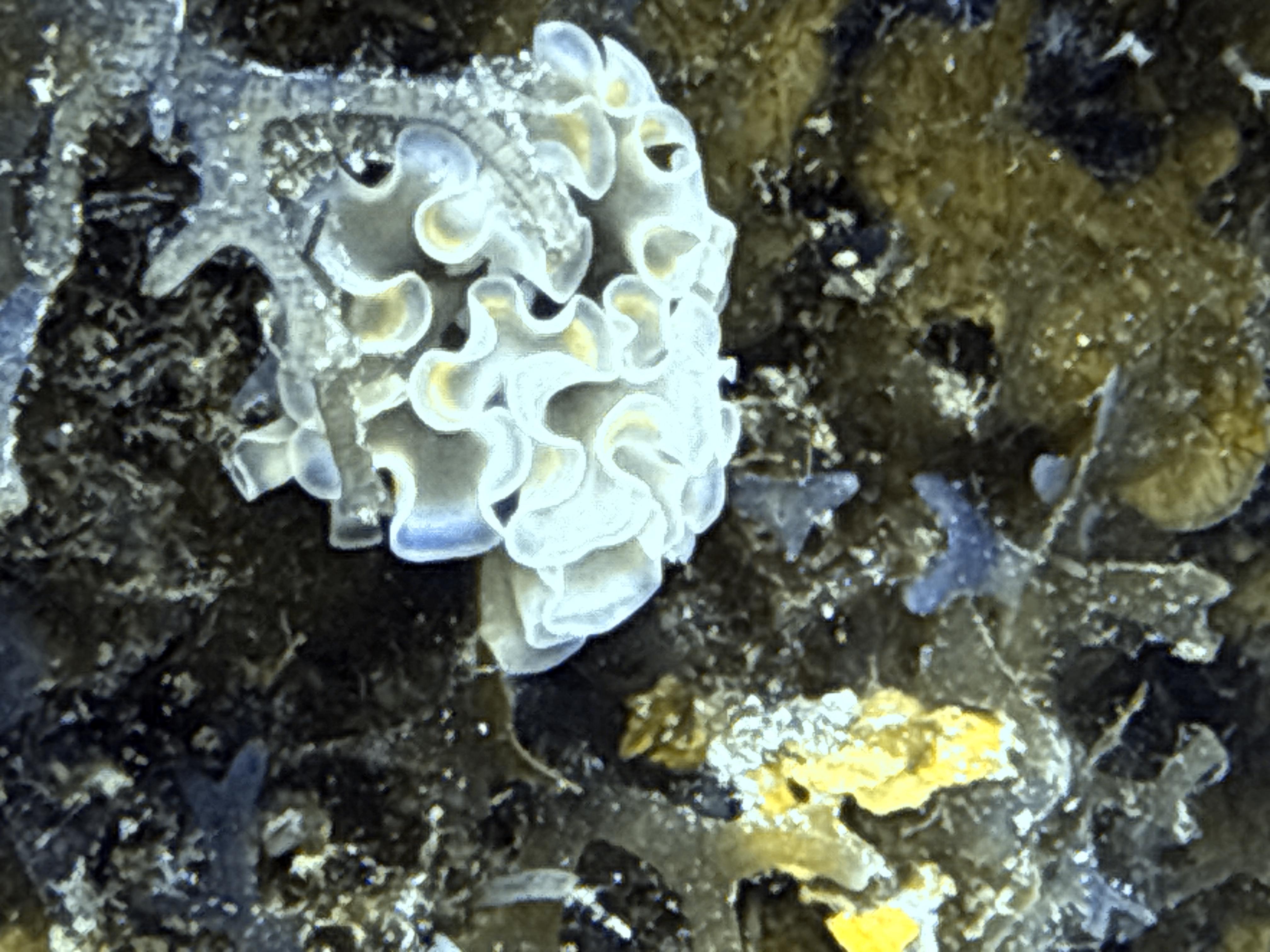
Every nudibranch is a sea slug, but not every sea slug is a nudibranch. “Sea slug” is the broad nickname. “Nudibranch” names one group within it. That’s the whole answer. You can stop here, but then you’d miss the bit about the lettuce that steals solar panels.
Sea slug is the big umbrella
When I say “sea slug,” I mean one of several kinds of marine snails that don’t carry an obvious shell like the snail in your garden. Nudibranchs are in that crowd, but so are sea hares and algae-eating slugs. A few also keep a small or reduced shell, so “I see a shell” isn’t the whole test. Same nickname, different animals. Think “dive gear”: every regulator is dive gear, but nobody wants to breathe through a fin.
How do I spot a nudibranch?
Start at the head. Many nudibranchs have two little scent-sensing feelers called rhinophores. Then look at the back. Many have a feathery tuft of gills toward the rear. Others have rows of little finger-like projections called cerata instead of a rear plume. Not every species plays by the same visual rules, so check the whole shape and what it’s sitting on. Looking like a disco sock is not a scientific test.
The name roughly means “naked gills.” Please leave that fun fact out of the dinner conversation until everyone’s finished.
How I look for the little stuff
At Blue Heron Bridge at Phil Foster Park, half the fun is slowing down and realizing how much you swam right past. Get your buoyancy settled, look carefully along algae and sponge edges from a respectful distance, and take a photo if you can do it without touching or moving anything. Note the size, colors, and what the animal was on. Then check Stuart Scuba Fish ID** **back on land. It’s still called Fish ID even when the fish have nothing to do with it. They’ve agreed not to file a complaint.