There are times in life when you find yourself waiting.
Waiting for things to get better. Waiting for someone to understand what you're going through. Waiting for the right opportunity, the right circumstances, or perhaps just a little encouragement to get moving again.
I think most of us have been there.
Sometimes we spend so much energy wishing things were different, wondering why certain things happened to us, or hoping someone would come along and make things easier. And without realising it, we give away a little of our own agency.
I remember thinking about how easy it is to postpone our own happiness until something outside us changes. A better job, a better relationship, more money, recognition, or simply a different phase of life.
But perhaps the uncomfortable truth is that change rarely begins with everything falling into place. Sometimes it begins with a small decision. Getting out of bed when you don't feel like it. Having a difficult conversation. Walking away from something that no longer serves you. Starting again, even when you aren't sure where the road leads.
People can encourage us, stand beside us, offer advice and even hold our hands through difficult moments. But they cannot make those decisions on our behalf.
I came across this quote by Carol Burnett, and it stayed with me:
"Only I can change my life. No one can do it for me."
Perhaps the most important part of growing up is realising that we don't have to control everything that happens to us, but we do have to take responsibility for what we choose to do next.
What about you? Was there a moment in your life when you realised that the change you were waiting for had to begin with you?
... one of the most powerful abilities you can develop is the ability to change your interpretation of a situation while you're still experiencing it, not tomorrow. not after you've spent three days overthinking it. in real time something goes wrong. your initial thought is, this is a disaster but instead of accepting that interpretation you interrupted. what actually happened? what does it mean? what can I do about it? that's cognitive reframing. you're separating the event from the story your mind immediately attaches to it. and when you practice this consistently, something remarkable happens. you become much harder to destabilize. disappointments stop consuming entire days. difficult conversations stop controlling your emotional state. setbacks become problems to examine. rather than verdicts your own future. that's the power of The Flint Mind.
So I seen a post on TikTok that said you should never heal alone after a relationship because being alone healing wont bring your triggers up… unless you’re detached, I personally don’t think you should continuously dating because that means you’re still triggered from your past situation and if you continuously date, you can bring that onto your new relationships or still would think about the past relationship. What do you guys think? I know some people can date to distract but then sometimes that doesn’t work out. Or do you have to heal all the way by yourself until you’re ready for something new? But then again, you can run to the same problems with a new person even though you’re healed because there’s nothing to trigger you when you were alone. Thoughts ???
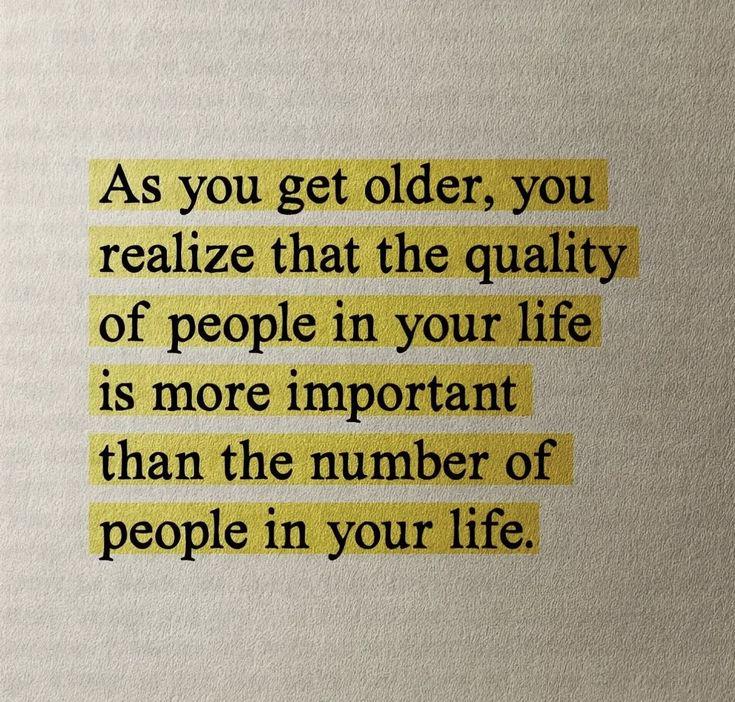
There's a feeling that comes with enjoying other people's company but not always feeling like the person others think to include. Sometimes, especially if you're more introverted, you get comfortable being the one who reaches out, makes an effort, remembers the little things, and hopes someone will think of you too.
It's important to remember that being overlooked doesn't mean you're forgettable, and being someone's second thought doesn't mean you have any less to offer. We all deserve friendships and connections where we're not just appreciated when we're around but thought of when we're not. <3
I am growing a garden. I spend my time and my energy tending to the things that grow there, moving from row to row with a watering can in my cute rubber clogs, planting seeds and pulling weeds.
When things die, I gather them up into piles for the invisible microbes to digest. How this works is a mystery to me, but I trust the process. Next season, I’ll spread the compost out over the rows, food for the fruits and veggies that will sustain me for another year.
If you come by, I might chat with you over the fence. After some time, I might invite you inside. You can walk along the rows and sniff the flowers. If you’re very lucky, I might even make you a meal. I hope that you’ll like it.
There have been some visitors who didn’t know how to respect my garden. They were greedy, taking too much from the land and not giving enough in return. Some stomped right through the rows like they didn’t know they were in a garden. A few even took pleasure in destroying my little seedlings, if you can believe it.
When I see that someone is hurting my garden, I don’t try to explain anything. I simply ask them to leave. I’m too invested in what I’m growing. My highest purpose is to protect it.
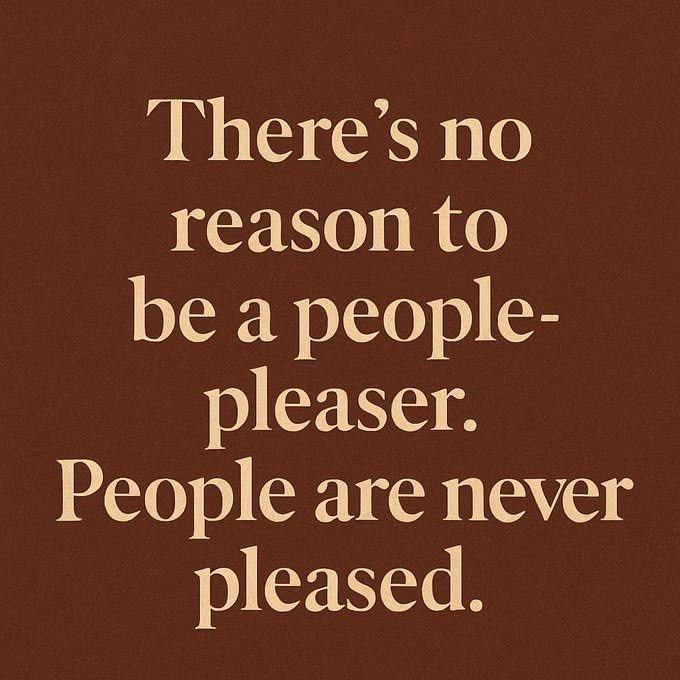
It is easy to believe that if you give more, explain better, work harder, stay longer, become more patient, more useful, or more undeniable, eventually the relationship will become fair.
Be careful with that belief.
Sometimes the problem is not that you have not done enough. The problem is believing fairness is something you can earn from a structure that is unable to give it.
... my take, just live life and see who pisses you off. life will present you with people and circumstances to reveal where you're not free. life is going to keep you pulling you into a state where you're gonna get triggered by stuff. wherever you get triggered, wherever you lose your center, your sense of peace, your sense of freedom, that is the opportunity for growth and expansion.
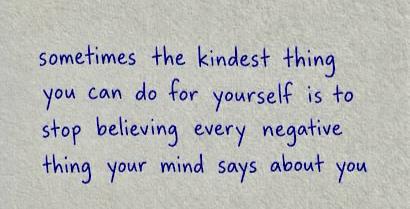
I have always found myself seeking this from someone else. I just don’t understand how to stop seeking it from others and to be content on my own. Maybe it’s my own emotional patterns, but sometimes it feels like brain is wired to seek these things, and yet that very need sometimes becomes a source of misery. Has anyone worked on this or managed to overcome it? I’d like to understand how.
My brother is vert smart, and has alot of life experience. I also have a friend who is like this. I cant help but feel like im less worthy sometimes when i speak with them. The lack of depth that i know i have in comparison to them makes me scared that im not worthy of their attention. How can i learn to accept that everyone differs in intelligence, experience, and depth, and that is ok?
I just graduated college in May and am now in my doctoral program. Since starting, my mental health and self-esteem have drastically decreased. In college, life was amazing. I had such great friends, professors, and I felt like I truly belonged, a feeling I have never really had due to my ASD. Until college, I have always had issues with a lack of self-concept and self worth, and I know I rely on other people to make me happy. I also have trouble coping with frustration because I am very sensitive. In college, had a solid understanding of where I stood: a friend group who understood me, clear expectations academically, etc. I was in clubs too, and it felt great to be a member of something. Most of all, I had time to invest in myself. I was able to regulate my nervous system (again, something I never had) and it physically showed. My skin glowed, sparkling eyes, etc. Mentally, I was not anxious and felt like I could do anything. Now, my spark is gone since starting grad school and moving to a new city. Its crazy how this manifests physically. My skin and hair are oily and I look tired. I have no time to take care of myself and I stopped going to the gym. I am not connecting with my cohort, but I am slowly finding community in other places and have made some great friends. However, I know I should not rely on them for happiness. In fact, I realize I know I love myself enough to make a change and become happy with myself, but I have no clue how to do this. I know I am capable, but it feels like I have no time. I also know I have to start small. What advice do you all have for me? How/what should I do to start small and progress from there?
Everyone has their own battles. Every day, we go through a lot and still choose to shine. Our everyday struggles sometimes break us and take so much from us. There are times when we forget how we used to laugh, what made us laugh, and how to take care of the inner child that each of us has somewhere hidden inside.
But this is temporary. And then comes a phase when our inner self reminds us that we have made it through so much. We begin noticing little things that assure us that we are slowly getting ourselves back, that our inner spark, which we once thought was lost, is finding its way back to us.
Here are some signs that you are getting your spark back:
Getting out of bed slowly becomes a little easier, and you begin to look forward to the possibilities of a new day.
You get dressed up for yourself, not for an occasion or anyone else, but simply because you want to look pretty.
You find yourself getting back to hobbies that you had long forgotten because of the pressures life had placed on your shoulders.
You start enjoying every moment, not because someone else is present, but because you are present in it.
You start taking care of yourself, your health, your heart, your mind and your peace. And somewhere along the way, you start smiling again.
You find your faith again, whatever that means to you. You surrender yourself to something greater than yourself and find comfort in knowing that you don't have to carry everything alone.
You start clicking pictures of yourself and the little moments in life, not to post them, but simply to keep them as memories.
New knowledge and experiences excite you again. Even the things that once felt like obligations sometimes become things you genuinely look forward to.
You start making plans for yourself, even when no one else is around. You don't always wait for someone to accompany you before doing the things you want to do.
Maybe getting your spark back isn't about becoming the person you were before. Maybe it's about becoming someone who has been through so much and is finally learning to feel alive again.
And if you notice even one of these signs in yourself, take a moment to appreciate how far you have come.
Hi, I’ve made a free interactive website/app that I’d like to share here if anyone is interested and it’s allowed. I made it for my clients and I’m getting really good feedback and many are finding it useful. It’s a combination of many practises I’ve used on myself and have seen work. I am a holistic psychotherapist, and not looking for clients or selling anything, and there is no tracking either. Let me know what you think, I’d welcome feedback for improvement - I’ve not shared it before publically outside my immediate circle. https://love-yourself.space.fast
You wake up before your alarm. For once, there is no heaviness in your chest. You sit up, walk toward the mirror, and stop. The morning light falls across your face, and you barely recognize the person staring back at you. In your eyes, everything looks impossibly perfect. The proportions. The symmetry. The definition. The way every feature seems to fit together exactly the way you spent years wishing it would. You turn your head slowly from side to side. You lean toward the glass. Nothing to criticize. Nothing to fix. You smile at yourself, almost laughing because after everything, it finally happened. You get dressed and leave the house. The first thing you notice is the door. Someone holds it open for you. You thank them. They smile back. You keep walking. A person who normally wouldn't even acknowledge you says good morning. Someone asks how you're doing and actually waits for your answer. In class, people turn toward you when you speak. Someone laughs at your joke. Someone asks you to sit with them at lunch. You're confused at first. Then you start noticing the pattern. People are looking at you differently. They're warmer. More patient. More interested. They interrupt you less. They smile more. Even strangers seem strangely comfortable around you. And suddenly you remember how different yesterday was. How often people ignored you. How conversations could die when you joined them. How you could stand beside a group and somehow feel completely invisible. How many times you'd spoken and watched someone look past you like your words weren't worth hearing. How often you'd wondered what you were doing wrong. You remember all those moments at once, and then you look at the reflection in the window beside you. You understand the thought arrives so quickly that you almost wish it hadn't. They are treating you differently because you look different. You don't need anyone to explain it. You can see the contrast happening in real time. The realization should hurt. Somehow, it feels like relief. Because for years you thought you were imagining the difference. Maybe you were too quiet. Maybe you were awkward. Maybe you weren't interesting enough. Maybe there was something fundamentally wrong with your personality. But today you're still you. Same voice. Same jokes. Same interests. Same awkward pauses. The only thing that changed is what you see when you look in the mirror. Later, a girl walks over. She smiles and starts talking to you. You talk for a while, and eventually she says, "I really like your personality." You almost believe her. Then she looks at your face and smiles again. "You're actually really good-looking." And suddenly the entire day makes sense. The kindness. The attention. The invitations. The way people suddenly seem interested in every word you say. You go home feeling almost weightless. You close your bedroom door and stand in front of the mirror again. Your face looks beautiful under the warm light. You finally have the reflection you spent so long chasing. You should feel victorious. Instead, you just stare at yourself. Because now you can't unsee the contrast. Yesterday, you were the same person standing in the same world, saying the same things, trying just as hard to be kind, and nobody seemed to care. Today, they can't seem to get enough of you. You touch the reflection on the glass, then slowly pull your hand away. For the first time, you realize that you haven't changed at all. The face in the mirror is different, but the person behind it is exactly the same. And somehow, that's the saddest part. Because maybe you were never asking for too much. Maybe you just wanted to be seen, heard, and treated like you mattered. But apparently, all it took was a different face.
I think it's time I stopped measuring my life by the things that happened to me.
Some things were beyond my control. Some people left. Some plans didn't work out. And some experiences changed me in ways I am still trying to understand.
But I don't want the past to keep deciding what my future looks like.
I want to make room for new experiences, unexpected friendships, little adventures and the courage to try things I've never tried before.
Perhaps moving forward isn't about forgetting what happened.
Perhaps it's about finally giving myself permission to discover what could happen next.
There are no wrong turnings. Only paths we had not known we were meant to walk.
— Guy Gavriel Kay, Tigana
A while ago, I decided to enrol in a weekend improv theatre workshop. It was one of those decisions that seemed rather exciting when I signed up and considerably less sensible when I actually walked into the room.
I was surrounded by people from completely different walks of life. There were software professionals, entrepreneurs, students, people from the creative industries and others who, like me, were simply curious about trying something different.
I wasn't quite sure where I fitted in.
My professional life usually involves preparing lectures, organising thoughts, making arguments and occasionally pretending that I have everything under control. Improv theatre, as I soon discovered, offers very little opportunity for any of that.
The instructor began with a simple instruction: "Don't think too much. Just respond."
One of the first exercises involved making up imaginary situations with a partner. The rule was simple: whatever the other person said, you had to accept it and build on it. No correcting, no rejecting, no explaining why something wouldn't work.
It sounds easy until someone tells you that you're both astronauts stranded on Mars because you forgot to pack lunch.
I struggled. I overthought things, hesitated and occasionally produced responses that were considerably less amusing than I had imagined in my head. There were moments when I wondered whether I had accidentally enrolled in a workshop designed to expose all my limitations.
But something gradually changed.
I began noticing the people around me. The quiet software engineer who turned out to have a wonderfully absurd sense of humour. The seemingly reserved participant who could transform an ordinary sentence into an entire comedy scene. People who, outside that room, probably led very different lives, worried about different things and had entirely different ideas about the world.
During the breaks, conversations became just as interesting as the exercises. We spoke about work, relationships, personal ambitions, failures and the strange turns our lives had taken. I found myself listening to perspectives I would probably never have encountered in my usual professional circle.
And then there was the principle of improv: "Yes, and..."
Rather than dismissing someone's idea, you accept it and add something of your own. You listen, respond and allow the conversation to go somewhere neither person had anticipated.
I began to wonder how often we do the opposite in everyday life. We are so busy preparing our responses, defending our opinions and deciding whether someone is right or wrong that we sometimes forget to be genuinely receptive to what another person is saying.
I had joined the workshop to learn something about theatre. I came away thinking about communication, human behaviour and the unexpected things people can teach us.
I also learnt that making a fool of yourself occasionally is not such a terrible experience. In fact, it can be rather liberating when you stop worrying about how you appear to others.
Looking back, I am glad I took that little detour. Had I stayed within the familiar boundaries of my professional and social circles, I might never have met those people or encountered those ideas.
Perhaps that is the interesting thing about taking an unfamiliar path. You don't always know what you are going to learn, whom you are going to meet or which of your assumptions might be challenged along the way.
Sometimes you sign up for a class and end up discovering an entirely different way of looking at the world.
Have you ever joined something for one reason and walked away with something completely different?