r/sociology • u/awesomeness6698 • 1h ago
The victim of an injustice should not be name called or condescended to for not taking precautions to avoid being victimized.
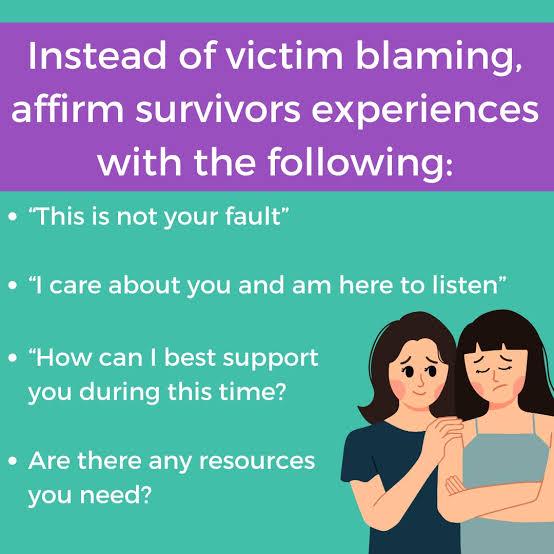
For the sake of this discussion, injustice refers to unfair treatment. In order for any action or situation to constitute an injustice, there has to be a victim who suffered and did not deserve to suffer. A criminal being convicted and going to prison is not an injustice, the criminal deserved it. If someone is wrongly convicted, then an injustice has occurred. Injustices can occur by accident. For a person to be guilty of an injustice, that person must violate a moral duty. There is such a thing as a victimless crime. A victimless crime is when a person shows malice or negligence and, although no one incurred undeserved harm, undeserved harm could have happened and taking that risk shows a disgusting lack of scruples.
I believe that victim blaming rhetoric should be protected under free speech. However, just because something is technically your legal right does not mean that it is a good idea. Besides, freedom of speech does not mean freedom from social repercussions. You reserve the legal right to victim blame, but others are not required to agree with you.
My point is that, just because there is a certain measure the victim could have taken to stop the abuse from happening, that should not preclude the survivor from receiving sympathy and the sufferer should not be verbally abused as revenge for having fallible judgement. Obviously though, there are situations where it is not clear who the villains are.
There is nothing wrong with offering victims and potential victims advice on how to avoid being victimized. The problem arises when you phrase the advice in the form of an accusation and accompany it with childish name calling.
Any time that you fall victim to an injustice, there is a chance (not a guarantee, but a chance) someone will not only get mad at you, but get way angrier at you than the person who committed the injustice.
I believe that the reason why people victim blame can be summed up in three words, just world hypothesis. The just world hypothesis is a cognitive bias whereby one assumes that, because a quandary or calamity transpired, the person in the predicament must have done something to deserve it. The reason why people think this way, and I am not saying this excuses it, is as follows. It is unsettling to grasp that not only do brutes commit iniquitous acts, not only do devastating situations occur for the stupidest and most petty reasons, calamitous events can befall innocent victims for literally no reason. It is much easier to say what the victim should have done in a situation to avoid a catastrophic outcome, especially when it is after the fact and it is too late to do anything about it. I do not not know for sure that that is why people blame the victim, I am speculating. Even if that is the rationale, that would not necessarily signify that it is the only motive. There could be other reasons involved.
One of the best ways to stop people from victim blaming is to use the active voice rather than the passive voice ( https://scispace.com/pdf/double-standards-in-sentence-structure-passive-voice-in-d2sudfratj.pdf ). The active voice is a grammatical structure whereby one focuses on the person who performed the action. The passive voice is a grammatical structure whereby one focuses on the person who received the action. In other words, if you phrase the description of the injustice in such a way as to focus on the perpetrator, people are far less likely to blame the victim ( https://www.researchgate.net/publication/328175699_Assault_and_accusation_without_agents_Verb_voice_in_media_narratives_of_campus_sexual_assault#:~:text=Keywords:%20Agency%2C%20sexual%20assault%2C,stories%20about%20campus%20sexual%20assaults ).
When describing the crimes committed by Jeffrey Dahmer, in lieu of saying that those children were murdered and eaten, say that Jeffrey Dahmer murdered and cannibalized innocent children in cold blood. When describing the Sandy Hook shooting, rather than saying that students and teachers were shot, say that Adam Lanza shot and murdered 20 children and 6 adult staff members. When describing a situation in which a mother physically abused her child, rather than saying he was abused, say she maliciously abused him.
Let us define what it actually means to say that something is your fault.
To say that something is your fault, means one or both of the following things. Either;
You caused something to happen by accident or on purpose.
OR
You had/have a responsibility to forestall the thing in question from happening and you failed to fulfill that duty.
If the perpetrator clearly committed an offense and the victim did not ask for and did not want the offense to happen, the idea that the victim is at fault (even partially) for the crime is based on the philosophical proposition that the victim has an obligation to avoid being victimised and that anyone who does not take the precautions should be blamed and shamed.
There are certain situations where the potential victim could have and did not take measures to forefend the injustice. In that scenario, it is correct to assess that the survivor demonstrated defective judgement. However, indiscretion from the sufferer does not mean that the victim deserved it.
In lieu of nitpicking semantics over what it means or does not mean to say that the culpability for a grievance is partially on the sufferer, I think it would be better to debate the practical arguments against berating a survivor of a traumatic event for not taking preventative measures.
If someone is on the receiving end of an injustice, the victim clearly showed imprudence and it is apparent that the aggrieved party could have avoided having this baneful scenario betide him/her by taking more safeguards, you should not chastise the offended party for his/her foolish decision. That is my opinion. I take that stance, even if it is glaringly obvious that the victim demonstrated folly.
Imagine that your friend, who is a survivor of domestic violence, returned to his abusive girlfriend or did not leave in the first place. I propose that you should offer support to your friend. You should tell your friend that you hold him completely blameless.
This is what you should say to the victim.
You are running the risk of being abused by going back to her. I hope you understand that any abuse that you suffer is NOT your fault. If you go back to her and he abuses you, that is still NOT your fault. It is, after all, the potential malefactor’s obligation not to commit the crime, not the potential victim’s responsibility to avoid being victimised. I think that you are a great person. You tend to see the good in people, that is why you believe that your girlfriend will stop with the abuse. I want to let you know that if you decide to leave the relationship, I would happily provide you with all the love, affection and support in the world and I would not fault you for a second.
The above paragraph is what I would recommend saying if you want to encourage a domestic abuse survivor to leave the relationship. You should NOT rake someone over the coals for returning to or remaining in the relationship. Whether or not it is even true that the victim is at fault really depends on your definition of fault, but I propose telling the abuse victim that they are not at fault, whether you see it that way or not, because the entire point should be to empower victims, offer them support, help them leave the dangerous situation and encourage them to come forward.
Here are my reasons behind that belief.
Reason #1: The victim may be remaining in an abusive relationship, because trying to leave can put the victim in more danger.
If you tell the abuser to their face that you are leaving them, they might get angry, hit you in retaliation, physically block you and stop you from leaving. They might even kill you. A study published in the journal of public health cited statistical data to suggest that those who try to leave abusive situations are more likely to be murdered by their partner ( https://ajph.aphapublications.org/doi/10.2105/AJPH.93.7.1089 ).
Reason #2: The potential sufferer cannot decrease his/her risk of being victimized to zero. The potential wrongdoer can lower his/her chances of committing an injustice to zero.
Imagine a woman, let’s call her Angie, attends a frat party. She opts not to drink alcohol and she dresses modestly. She does this, because she fears that rapists could be at this party. Now imagine that Angie is correct and there is a rapist at the party. Dressing modestly and opting not to drink alcohol does reduce the probability that someone will assault Angie, but there is still a non-zero chance that someone will victimize Angie.
Imagine a different woman, let’s call her Michelle. Michelle attends a frat party wearing a belly shirt and short shorts. Michelle gets drunk and passes out. Now imagine that none of the people, who know where Michelle is and have access to her, are rapists.
Even though Angie took provisions to avert sexual assault and Michelle did not, Angie is in more danger than Michelle, because Angie is in the presence of a predator and Michelle is not. If intoxication and slutty clothes were what caused rape, Michelle would be in more danger, because Michelle is inebriated and wearing revealing clothing. The fact that Angie is the one is more danger proves that it is rapists that cause rape.
Reason #3: There is absolutely no harm (that I can think of) in holding the victim irreproachable and feeling sympathy for the victim regardless of what precautions the victim took or did not take. There is plenty of harm in condemning the trauma survivor for not having infallible judgement.
Multiple statistics have shown that, if you lambast the victim, it makes the victim more likely to experience PTSD ( https://pmc.ncbi.nlm.nih.gov/articles/PMC5468506/
) and it deters future victims from coming forward, for fear that they will be rebuked ( https://pmc.ncbi.nlm.nih.gov/articles/PMC1705531/ ).
Do you believe that the victim should be verbally abused for not taking the proper precautions to avoid being victimized? If there is even one precaution the victim could have taken that he/she did not, should that preclude the victim from receiving any sympathy or support?
If you say no to both of the above questions, I agree with you. If you said yes to one or both of the above questions, here is what you must do to justify that belief. Not only must you explain what terrible awful horrible thing would happen if you feel sympathy for the victim despite their imperfect judgement, you must demonstrate that such an outcome is worse than the outcome where more people experience life ruining psychological trauma and future victims are afraid to come forward. Not only must you explain the benefit of name calling victims for having bad judgement, you must show that that benefit is more important than empowering survivors to come forward and helping them heal from the trauma.
Reason #4: An explanation as to why a domestic abuse survivor would go back to their abuser (or not leave in the first place) lies in a psychological phenomenon called Stockholm Syndrome.
Hostages and domestic abuse survivors often begin to display loyalty and affection toward their captors or abusers. These victims may view the abuser or captors as a protector and hold this view as a survival mechanism. The captor or abuser wields power over the victim, so the victim feels an intense need to placate their abuser or captor. This shift in perception is a form of trauma bonding and self-preservation. This psychological phenomenon was named in reference to a bank robbery where the hostages bonded with the robber as a coping strategy ( https://www.charliehealth.com/post/understanding-the-roots-of-stockholm-syndrome ). A domestic abuse survivor, who returns to their abuser, might have Stockholm syndrome.
Stockholm Syndrome is not listed in the DSM-5, nor is it recognized as an official diagnosis ( https://www.psychiatry.org/ ), but the behaviors and feelings it describes (trauma bonding, appeasement and adaptation) are real ( https://statmodeling.stat.columbia.edu/2025/10/14/stockholm-syndrome/ ). Victims do not feel genuine affection toward their abusers, but they fake it so effectively that it might look like genuine affection from the perspective of an observer ( https://my.clevelandclinic.org/health/diseases/22387-stockholm-syndrome ). What happened was the police were incompetent, so the hostages bonded with their captors because it was the only way to survive ( https://www.history.com/articles/stockholm-syndrome ).
The message of that story is as follows. If someone is in peril, you need to let them know that you are able and willing to rescue them and that you will not blame them. Otherwise, they may feel the need to placate and feign a bond with the abuser, because they will view it as their only way to stay alive.
Reason #5: The victim may have allowed himself/herself to be abused, for lack of a better phrase, because they have such low confidence that they feel that they deserved to be abused.
Being abused makes you feel humiliated, powerless and inferior. This makes the victim afraid to stand up for himself/herself. If you resent the victim for not taking the proper protections to impede the abuse from happening, this makes the victim less confident. This will make the survivor more scared to stand up for himself/herself, which will make them more vulnerable to abuse and more of an appetizing target for abusers. It is a vicious cycle.
To hear more about this topic, go on google and type one of the following prompts into the search bar.
- Is there a word to refer to the psychological phenomenon whereby low self-esteem makes an abuse victim more likely to remain with or return to an abusive partner?
- Learned helplessness can stop domestic violence victims from trying to leave, because of financial dependence on their lover.
- Trauma bonding is when an abused person feels a bond with the abuse perpetrator, because all the mistreatment and malice makes it that much more appealing when the malefactor acts kind and affectionate.
- Due to internalized self-blame, abuse survivors might either not realize that help is available or refuse to accept help, because they believe that they do not deserve it.
Type any of those prompts into the search bar and the conclusion will be conspicuous once you look at the search result. There is no empirical data (that I found when I typed those aforementioned prompts into the search bar) that suggests victim blaming helps victims, hinders crime or benefits society. There is overwhelming evidence to demonstrate that victim blaming exacerbates psychological damage in victims who already feel cripplingly insecure and benefits abusers by making sure the crime does not get reported.
Grey Area situations.
Suppose you specifically ask someone to hurt you physically. Imagine that you verbally insult someone because you are baiting them into assaulting you. In situations like that, you are trying as hard as you can to get hurt. I would feel sympathy for you, in the same way that I would feel sympathy for someone who has a drug problem. If you have a drug problem, it is clearly your fault for taking drugs. But apart from the distinct possibility that traumatizing events might have led you down that path, meaning that the people who mistreated you are partially at fault, I am a firm believer in offering rehabilitative measures to those who make bad decisions. If you are acting in a self-destructive manner, I will offer you helpful advice on how to escape that quagmire. After all, you may need help, you might not be able to get out of it on your own.
Suppose that the person ends up dead from the self-destructive behavior? In that scenario, you should handle it the same way that you would handle it if someone committed suicide. If the victim is dead, you could blame the victim all day long and the victim will not know. The problem with speaking ill of the dead is that the surviving friends and family members might get offended, they will feel like you are pouring salt in the wound. This is how you want to frame it. Say something like this. The thing that they did was destructive. That is why we need to help and support each other so that we do not feel prone to that behavior.
- If the person died from suicide say;
This is why we need to provide mental health services to those who are suicidal. If you know someone who is depressed and you worry that they might be suicidal, do not confront them, do not show them vitriol, tell them how much you would miss them if they kicked the bucket. Tell them that you would rather listen to their problems, dry their tears and be their shoulder to cry on than attend their funeral.
- If the person died from a drug overdose, say;
This is why those who have an addiction need to be offered support. If someone you know has a drug problem, hold their feet to the fire. Do it in a constructive way. If you try to hurt the person, it might just make them want to use drugs more as a means to spite you.
- If the person was murdered by an abusive partner, say;
This is why, if someone you know is in an abusive relationship, you need to spot the abuse and rescue the victim from it. Let the endangered party know that you will offer them your help, welcome them with open arms and you will not blame them. If you victim-blame them, lambasting them will only drive them closer to their abuser.
Let’s address some counter arguments that will surely come up.
- Telling the victim how they could have averted it will help potential future victims figure out how to avoid being victimized.
If there are certain things that the potential target can and should do to avoid being victimized, you can just tell the person in danger what those precautions are, you do not need to patronize the victim for not taking those protective measures, you do not need to name call the victim and you certainly do not need to tell the victim that you cannot or will not feel any sympathy for them considering how easy it was to stave off the offense.
2. Victim blaming protects the wrongly accused.
The purpose of victim blaming is to make the victim feel bad for a crime that actually occurred. In the case of a false allegation, the crime did not actually happen. If you are concerned that a false accusation might occur, the solution is simple. Give the accused the benefit of the doubt.
3. Imagine if a single mother allows an abusive boyfriend around her children, you would blame her for the abuse.
I define blame as you had a duty to prevent something from happening and you failed to fulfill that responsibility. If you make the free will choice to bring a child into this world, you have an obligation to keep your children safe. The idea that you have a duty to avoid being victimized yourself sets a dangerous precedent, one that will make future victims afraid to come forward and make those who have already been victimized more likely to incur psychological damage. The idea that a single mother has a duty to protect her children from abuse sets a good precedent, because she as the mother knows what is best for her children better than her children understand what is best for themselves.
Rather than nitpicking the semantics over what it means or does not mean to say that something is or is not your fault, it makes more sense to focus on the practical benefits of feeling sympathy for the victim regardless of what preventative tactics the victim took or did not take and the drawbacks of showing acrimony to the victim for not taking the steps to obviate a traumatic event.
If your friend returned to her abuser, do not blame and shame her for returning to her abuser. Maybe she has such low confidence that she feels she deserved to be abused and you are making it worse by admonishing her. Instead, inform her that she can stay at your house if she needs to and try to build her up by informing her that she deserves better. You can offer her helpful advice on how to avoid being victimized, you do not need to blame and shame her.
If a single mother lets her abusive boyfriend near her children and the man abuses the children; what I would blame her for is not the abuse per se, but failure to protect her children.
Say something to her like;
They are your children. You have a responsibility to protect them. It is not fair that you should have to worry about your children being abused. In a perfect world, no one would commit abuse, but we do not live in a perfect world.
The above paragraph is what you should say to a woman who was irresponsible enough to let an abuser near her children. There is no need to censure her or call her a bad mother. If there is something she should be doing that she is not doing, just offer her advice and move on.
4. You should blame and shame an abuse survivor for returning to his/her abuser, just as you would blame someone for hoping in the bear habitat.
The logic of this argument essentially says; If you hop in a bear habitat, you should blame yourself for being mauled. Similarly, if you return to your abuser, you should blame yourself when the abuse happens again.
These two scenarios are comparable, but not for the reason that you would probably think.
When a bear attacks you, it is because attacking you is just in their nature.
When a human being abuses another human being, the decision to commit the abuse is made unilaterally by the abuser. In the case of a bear attack, the human being who was attacked did not make the decision to attack, but neither did the bear. The bear was mandated by the laws of nature to attack you.
That said, the two scenarios do have some things in common.
In both cases, the decision to put oneself in a dangerous situation can be explained by mental health issues.
A woman who returns to her abusive ex might have Stockholm syndrome or be so lacking in confidence that she feels she deserves to be abused. Even if that is not the case, I would argue the implied theoretical possibility that it could be is sufficient to make me feel sympathy for the victim, hold the victim completely blameless and offer all the support in the world to the victim. Not being of sound mind can also serve as an explanation for why one might enter a bear habitat.
Just because someone is stupid, you do not need to inform them how stupid they are.
If your friend survived a bear attack and you would prefer that the friend not enter a bear habitat ever again, you can just tell your friend not to enter the bear habitat ever again. You do not need to call them stupid.
If your friend survived a bear attack, calling them stupid will increase their chances of experiencing PTSD, at least I think. I do not know for sure that name calling a bear attack survivor will make the bear attack survivor more likely to suffer psychological trauma, I am guessing. However, I would argue the theoretical possibility that that could happen is good enough. After all, I have never read a single scientific study that said that name calling a bear attack survivor and calling them stupid will make them feel empowered.
5. You should blame an abuse survivor for returning to their abuser, just as you would blame a man for jumping off of a 40 foot cliff.
For the sake of this discussion, I am mostly talking about situations where there is a clear aggressor who committed a harmful act and a clear victim whose chances of being victimized would have been zero had the reprobate not committed the crime. The man in this hypothetical made the free will choice to jump off of a cliff.
Imagine if the man went on a date with a woman and she pushed him off of a cliff. The man should be treated as though he is completely blameless. I say that for two reasons.
Reason #1: The man cannot lower his risk of being pushed off of a cliff to zero, the woman who malignantly pushed him can decrease her risk of pushing him to zero.
The man could opt never to go near a cliff and someone can kidnap him and drag him to a cliff or force him there at gun point.
Reason #2: The man may have gone near a cliff despite not wanting to, because he was desperate or lacking in confidence.
Maybe the man is a people pleaser who felt the need to placate the woman who asked him to go near a cliff. To see why the tendency to be a people pleaser is such a problem, click this link ( https://youtu.be/Md5UYlfM-yo?si=0e43IDLxe05gqRBk ).
If the man already has very low confidence, blaming and shaming him, kicking him while he is down will only make him feel worse which will make him more vulnerable to being abused.
If he survived the fall off the cliff (we are now talking about a situation where the man chose to jump) and you visited him in the hospital, I see no problem with giving him advice on how to avoid getting hurt, the problem arises when you call him names and phrase the criticism in the form of an accusation. If you believe that the man should not have jumped off the cliff, just tell him that and do so calmly and politely. You should probably preface the criticism by telling him that you are glad he survived.
Suppose the man keeps going on dates with obviously crazy women, because that's what he is attracted to, to a look out point called push your date off the cliff point. Then the 5th or 6th woman he goes with to push your date off the cliff point. She asks him to stand near the edge for a great picture and she asks him to close his eyes.
Then as the man is falling to the ocean below, he is asking himself. Why would she do this to me? It's so totally unexpected.
I would probably take pity on the man in the same way that I would take pity on someone who has a drug problem. The person is clearly engaging in self-destructive behavior. The person is likely engaging in self-destructive behavior, because they are not of sound mind. You probably should offer them support and critique the behavior, not the person. The person needs your help. Be supportive.
6. You should blame someone for returning to their abuser, just as you would blame an overweight person for eating too much and not exercising.
Just like the aforementioned example of the bear attack, this is comparable, but not for the reasons you would think.
You should take care of your body, it is the only one you get. You need to eat right and exercise, because you are the only one who can take on that responsibility.
Not only are there certain things you can do to lower your risk of being victimised, not only is it a good idea to take those precautions, it demonstrates bad judgement if you do not take those safeguards. But putting aside the fact that you will never be able to reduce your risk to zero, you would not need to take those measures if the miscreant did not commit the destructive act.
With ending up overweight, you cannot point to a corrupt act someone committed and say that you would not need to eat right and exercise if the scoundrel did not do that. No matter the circumstances, it is, always has been and always will be your duty as the owner of your body, to live an active lifestyle and eat nutritious foods. No one can do it for you.
That said, victim blaming is similar to fat shaming is the sense that both have been proven to make the situation worse.
The general consensus among psychologists is that fat shaming not only does not motivate people to lose weight ( https://www.healthline.com/nutrition/fat-shaming-makes-things-worse ), but makes them feel bad about themselves ( https://www.cnn.com/2025/06/06/health/weight-loss-stigma-wellness ), which makes them more prone to gluttony and less motivated to exercise ( https://pmc.ncbi.nlm.nih.gov/articles/PMC6565398/ ).
Similarly…
If you blame and shame a victim for not doing what they should have done to thwart the crime, you make the victim more likely to incur trauma and future victims will be apprehensive about reporting the crime.
7. People will remember being berated and will not remember being talked to kindly.
I went online and typed the following prompt into the search bar.
yelling at someone angrily makes them more likely to obey you
The top search result stated (and I am paraphrasing);
There is no evidence to suggest that angrily and hostility yelling at someone produces long term cooperation. At best, it may force the person to cooperate in the short term either due to fear or because of prioritizing peace over being right. Over time, the long term effects are usually negative ( https://jamanetwork.com/journals/jamapediatrics/fullarticle/2801808 ).
Being talked to with an angry tone fires off the stress response in the mind, triggering anxious thoughts and shutting down constructive thinking ( https://www.mentalhealth.org.uk/explore-mental-health/publications/cool-down ).
A more effective means of communication would be to set a boundary with a calm tone without raising one's voice or resorting to insults. It behooves the person doing the speaking and the person being spoken to if neither party reacts purely from emotion and the primary or sole purpose of communicating is address the root cause of non-compliance ( https://www.psychologytoday.com/us/blog/towards-recovery/201704/please-yell-at-me ).
I went online and typed the following prompt into the search bar.
people are usually more receptive to criticism is you talk to them calmly and politely
The top search result stated (and I am paraphrasing);
Generally speaking, people are substantially more willing to listen to and accept criticism when it is delivered in a calm, polite and empathetic manner ( https://www.wondermind.com/article/constructive-criticism/ ). Your best best bet is to select a calm moment when anger is not high ( https://psychologylounge.com/12-techniques-for-giving-criticism-and-feedback-so-that-people-can-hear-it-without-getting-defensive/ ). Harshness and emotional force are ineffective in motivating people toward self-improvement. Harsh tone can trigger a fight or flight response, making the person being talked to feel threatened and not want to listen constructively or think critically ( https://www.betterhelp.com/advice/psychology/why-am-i-defensive-understanding-the-root-cause-of-defensive-behaviors/ ).
8. Imagine that a teenager did not take the precautions that his parents told him to.
If you told your teenage son that you want him home by curfew, he should be home by curfew. If he stays out past curfew and gets mugged, this probably makes you feel that you were right to tell him you want him home by curfew.
What you should punish your son for is not putting himself in a dangerous position per se, but disobeying you.
9. If you could have stopped your apartment from being burglarized and you did not, those who live in your home would be understandably angry at you.
If the following hypothetical sounds bizarrely specific, that is because it is in reference to the 90’s situation comedy Friends.
You are a 20-something year old man living with another 20-something year old man, the two of you are roommates. You are looking to sell your entertainment center. You show it to a potential buyer, a strange man who you have let in your home. You inform the potential buyer that the entertainment center is large enough to fit a grown man. When the buyer is incredulous, you get in the entertainment center to show him. The stranger turns out to be a con man. The man shoves a hockey stick through the handles of the door to the entertainment center and burglarizes your apartment. Your roommate finds out about it and is angry at you for letting it happen.
Here are my thoughts in this hypothetical, based on an actual storyline from the show Friends. If your roommate were there with you (or instead of you) would your roommate have done anything to protect the apartment from being burglarized? If your roommate could not have or would not have prevented the burglary from happening had they been there, then it is hypocritical of your roommate to get angry at you for not stymieing the burglary, when they would have done the same thing you did. If, however, your roommate would have averted the burglary had they been there, then however much blame you deserve for getting in that entertainment center, trusting a complete stranger or not foreseeing this burglary, your roommate deserves as much blame or more for not being there. Maybe your roommate had no idea that you were letting strangers into your apartment. In that case, what you deserve blame for is not failure to foil a burglary per se, but letting people in your apartment without the consent of your roommate.
10. Telling potential perpetrators that they should not commit the offense will do nothing, they know that what they are doing is bad, but they do it anyway.
I could turn that around. Name calling the victim after the fact when there is nary a thing that can be done about it not only will not change the events of the past but will add insult to injury.