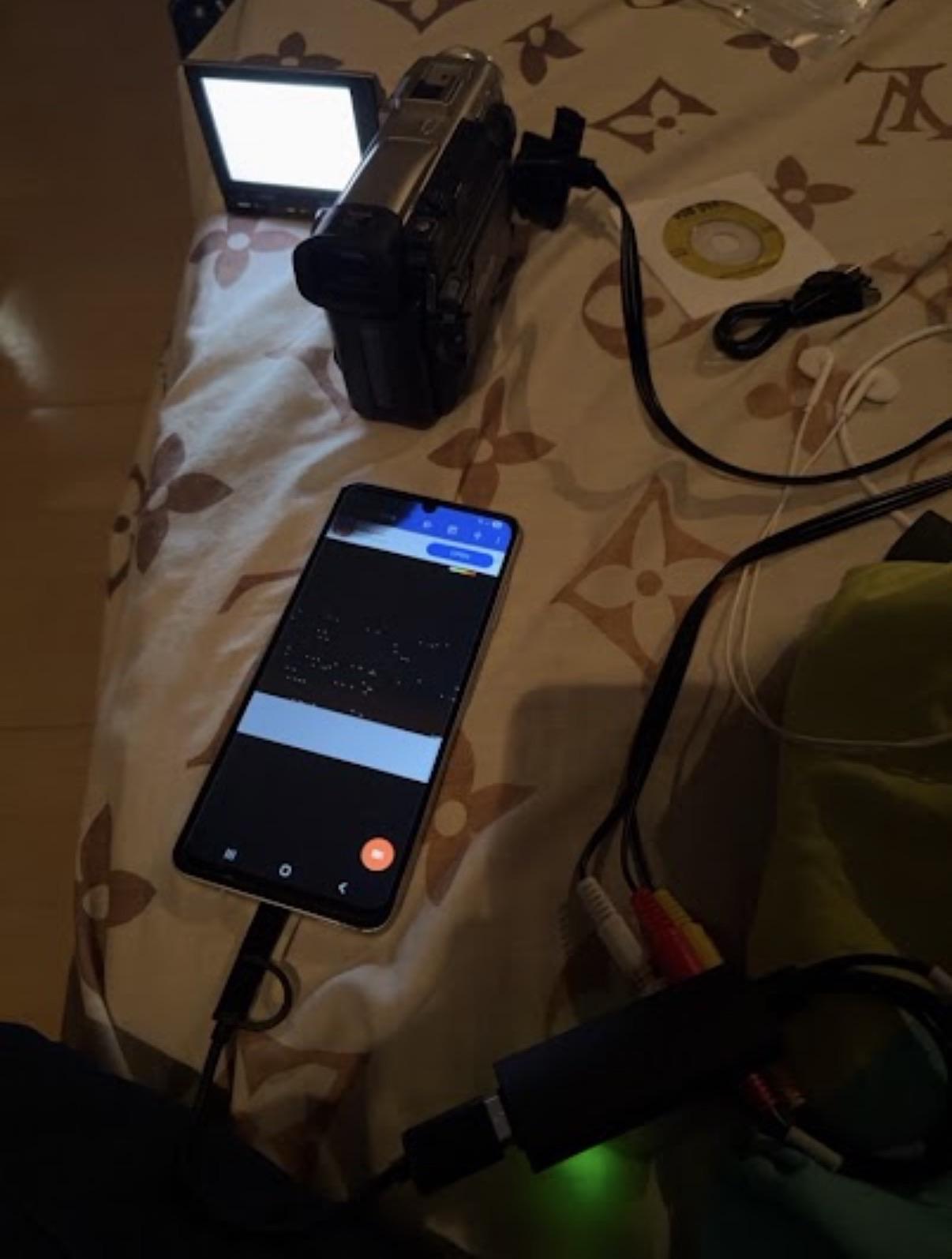
Pardon the long winded nature of this post. A few months ago I spent some time browsing this sub looking at setups, and ultimately decided a proper FireWire capture rig was more than I wanted to spend right now. Womp womp.
More recently, I've been ripping old behind-the-scenes documentaries off my Blu-rays for the Plex. A lot of these featurettes were originally from older DVD releases, so they're native 480i. I went down a rabbit hole researching how to handle 480i properly so it actually looks good on modern screens, and landed on VapourSynth and FFmpeg to deinterlace them using modern methods. I was blown away by the results - taking 29.97i footage (two alternating half-frames/fields) and reconstructing smooth, native 59.94p motion.
That whole process gave me an idea: You could do it in reverse.
Instead of taking interlaced SD and making it progressive HD, I realized I could use the exact same tools to take modern 1080p60 footage from my more modern camcorder (a Canon VIXIA HF R800) and interlace it to replicate a 2000s MiniDV camera.
After digging into the actual technical specs of the MiniDV standard, it became obvious that frame rate is a small piece of the puzzle - there are a bunch of specific hardware and signal/codec bottlenecks and quirks that give MiniDV its look.
So I wrote a PowerShell + VapourSynth + FFmpeg script that runs modern footage through a real DV25 (dvvideo) tape stream while modeling the optical, sensor, and audio chain along the way.
This is different from adding scanlines and filters in post. Filters and scanlines paint fake "damage" on top of an intact HD video, whereas this pipeline physically destroys and reconstructs the video using the exact mathematical bottlenecks of 2000s tape hardware.
Basically the signal path is like this...
- Modern
1080p60 (59.94p, Rec.709): Starts as progressive HD footage. Downscaled & Interlaced into 480i (720x480, 29.97i BFF, BT.601):
- Scaled down to SD
720x480 with 4:1:1 chroma subsampling (YUV411P8). - Passed through the modeled camera chain (lens softness, CCD field-integration, per-field edge-enhancement halos, sensor noise, and the electret mic + AGC audio chain).
- Split into 60Hz temporal fields and woven into a real
480i Bottom-Field-First DV25 (.dv) tape stream (25 Mbps dvvideo + 48 kHz 16-bit PCM).
Deinterlaced & Upscaled back to 1080p60 (1440x1080, 59.94p**, Rec.709):**
- Read back out of that
.dv tape file and deinterlaced via QTGMC (or LinearBob) back into 59.94p progressive frames. - Upscaled cleanly to
1440x1080 (4:3) in Rec.709 x264 (CRF 17) so modern platforms like YouTube, Reddit
The video attached to this post is an example of the results, recorded on my Canon Vixia in 1080p60 and sent through the pipeline.