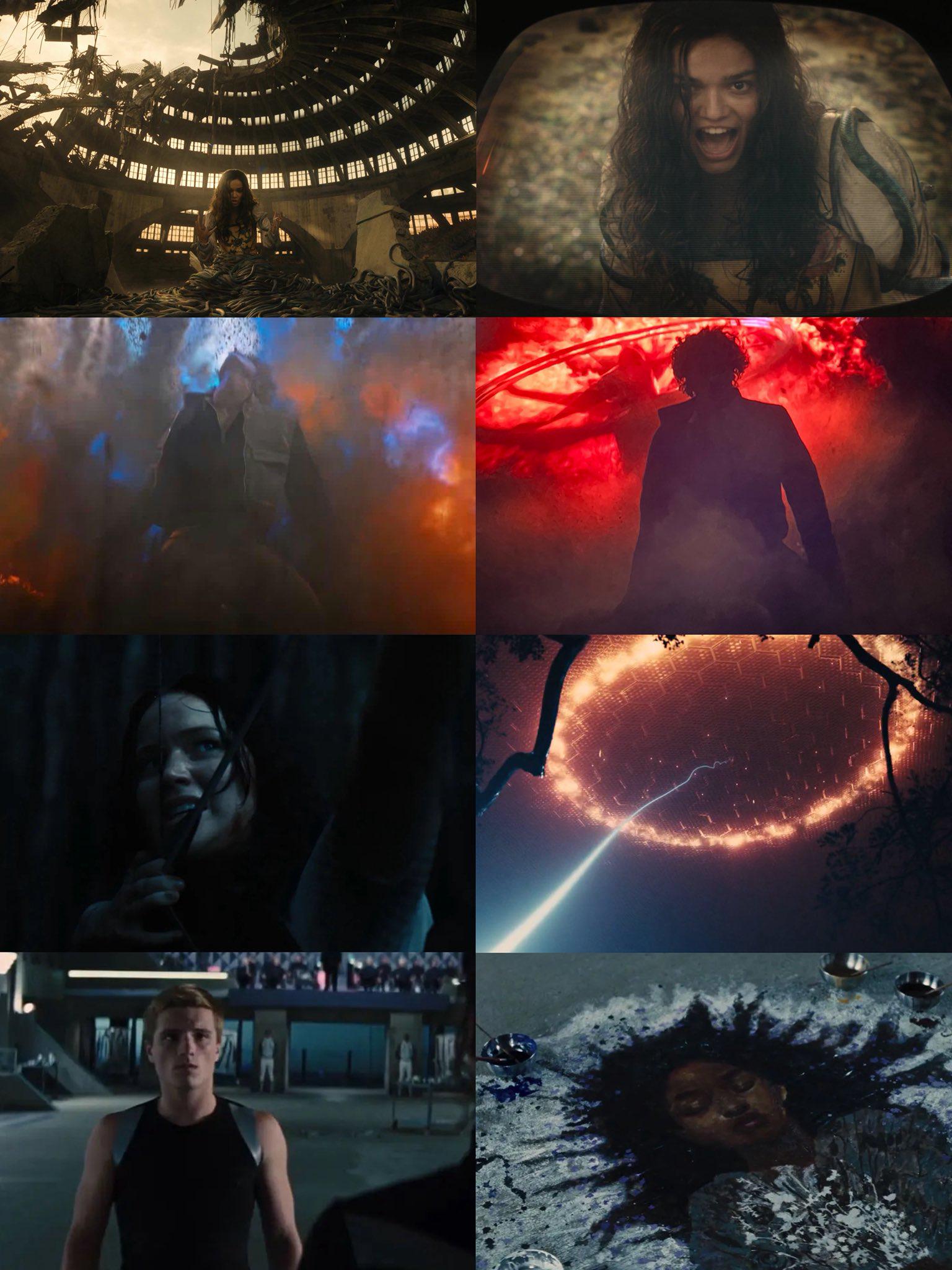
Suzanne Collins tells us exactly what happens to her before it even happens. She vanishes. That's it. That's the whole answer, and it's supposed to be unsatisfying. No, she’s not Greasy Sae, she’s not Hattie, and she's definitely not Coin. These theories can't be real because they provide an answer where one cannot exist.
(TL;DR at the end)
Lucy Gray is named after a poem by William Wordsworth. Wordsworth was an actual, real guy who was known for publishing lyrical ballads. Like they say in the book, Wordsworth actually has a poem called Lucy Gray! Maude Ivory sings it in the hob, and it’s pretty much exactly the same as the original. Collins makes a few changes to a handful of words, but the substitutes don’t change the meaning and actually modernize it and make it a bit easier to understand. When Maude Ivory sings, Snow…tries to understand it, but he’s a little dense. And apparently everyone who thinks Lucy Gray is making soup or hooch in the hob or ruling district 13 (???) is also a little dense… (no offense, I’m being dramatic, I’m sorry, I love you, don't be mad at me).
This old ass poem literally tells the story of Lucy Gray Baird. When you're reading it for the first time, it's not obvious, but when I read it a second time it really just hit me in the face. (Edit: rewording to avoid repetition)
Oft I had heard of Lucy Gray
And, when I crossed the wild,
I chanced to see at break of day
The solitary child
No Mate, no comrade Lucy knew;
She dwelt where none abide,
-- The sweetest thing that ever grew
Upon the mountainside!
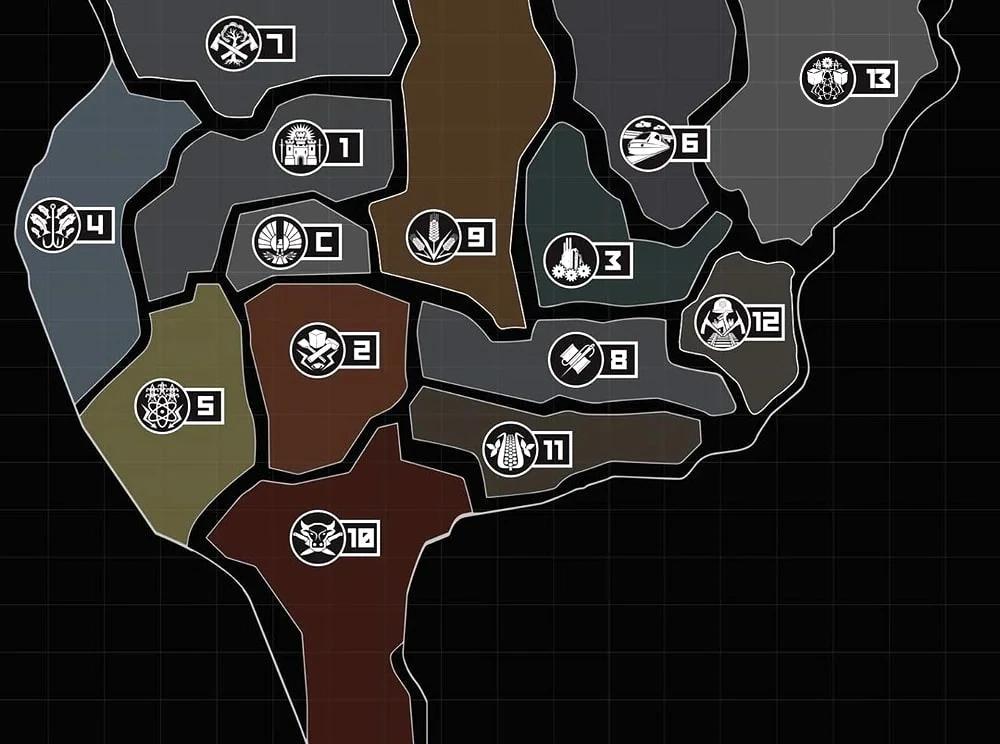
Lucy Gray and the Covey aren't district. If Coriolanus Snow has told us anything, it's that she's not district. She's from the in-between places "where none abide." And gosh darn if she isn't the sweetest thing!
You yet may spy the fawn at play
The hare among the green;
But the sweet face of Lucy Gray
Will never more be seen
Lucy Gray herself will be forgotten, but the mark she leaves on District 12 won't be. Not only do her songs outlast her, but she herself haunts the narrative of the entire franchise.
"To-night will be a stormy night--
You to the town must go;
And take a lantern, Child, to light
Your mother through the snow."
"That, Father! Will I gladly do:
'Tis scarcely afternoon --
The village clock has just struck two,
And yonder is the moon!"
At this the Father turned his hook
To kindling for the day;
He plied his work; -- and Lucy took
The lantern on her way
This part isn't directly one-for-one with Lucy Gray Baird, but I could make the argument that the father sending the girl to the village is Lucy Gray being sent to the games. It's not a good argument, but I could make it. Maybe it's referring to when she and Snow decide to flee. Maybe it's just "lots of nonsense words."
As carefree as a mountain doe:
A fresh, new path she broke
Her feet dispersed the powdery snow,
That rose up just like smoke.
Here's where I will connect it to Lucy Gray and Snow leaving 12. They're abandoning Panem to start a new life, forge a new path, be as carefree as a mountain doe! She's literally dispersing Snow...I don't really have much else to say about that. She brought Coriolanus through the woods, their past disappearing behind them like smoke.
The storm came on before its time:
She wandered up and down;
And many a hill did Lucy climb:
But never reached the town.
Snow finds the rifles from the murder in the cabin. They hiked for a few hours before getting caught in a literal rain storm, but also the metaphorical Coriolanus Snow storm. As he is wont to do, Snow's thoughts spiral out of control. He realizes that the weapons are no longer his problem and the only loose end left is Lucy Gray Baird. Bad news for Lucy Gray...
The wretched parents all that night
Went shouting far and wide;
But there was neither sound nor sight
To serve them as a guide
Lucy Gray takes a knife and goes to get some Katniss (swamp potatoes)...or does she?? Snow realizes that Lucy Gray isn't a girl, but a cold-blooded killing machine who ditched him and loses his ever loving mind, running around, freaking out, shouting her name.
At daybreak on a hill they stood
That overlooked the scene;
And thence they saw the bridge of wood,
That spanned a deep ravine
They wept -- and, turning homeward, cried,
"In heaven we all shall meet";
--When in the snow the mother spied
The print of Lucy's feet.
The rain had stopped, so it was easier to look. Snow almost abandons hope when suddenly...the scarf. He sees the orange scarf he gave her, "I don't want you to lose me," she had told him when he asked why she wore something so bright when they were trying to run away.
Then downwards from the steep hill's edge
They tracked the footmarks small;
And through the broken hawthorn hedge,
And by the long stone-wall;
And then an open field they crossed:
The marks were still the same;
They tracked them on, not ever lost;
And to the bridge they came.
They followed from the snowy bank
Those footmarks, one by one,
Into the middle of the plank;
And further there were none!
The footprints just stop. The song just scatters. Lucy Gray is officially gone, lost in the wind. When Snow is scrambling around trying to find her, he hears her singing the Hanging Tree. He takes this as confirmation that she knows. She knows about Sejanus, she knows that he was going to abandon her, she knows that he knows that her knowing about the guns is the only thing keeping other people from knowing about the murder. But when he tries to track her song, the mockingjays pick it up and he loses the trail. She vanishes into the song and into the ether.
--Yet some maintain that to this day
She is a living child;
That you may see sweet Lucy Gray
Upon the lonesome wild.
O'er rough and smooth she trips along,
And never looks behind;
And sings a solitary song
That whistles in the wind.
"To this day she is a living child" doesn't mean she survived. It doesn't tell us she died either, it tells us what people say. And here's the wild part: Wordsworth based the poem on a real girl whose body was found in a canal. He knew how the story ended, but he left it out on purpose. He said he talked about "spiritualizing" her instead of telling her story in a matter-of-fact way. So the most famous thing about Lucy Gray is that the poet erased her ending. And Collins did the exact same thing.
So with the whistling thing, we literally have her singing The Hanging Tree that is picked up by the mockingjays, but also, we have her haunting Snow. We have her haunting district 12. That's really the theme of the whole thing. Whether she's alive somewhere or not, she's gone from Snow's life and from the story. Her songs outlived her and helped incite a rebellion. A haunting doesn't require a ghost.
TL;DR: The poem Lucy Gray is named after is based on a real girl who dies, but Wordsworth deliberately cut her ending so she vanishes and the reader doesn't know what happened to her. Collins does the same exact thing with Lucy Gray Baird. Theories that she's Greasy Sae, Hattie, Coin, or anyone else miss the point, because insisting on an answer is exactly how Snow interprets the story.