I was reading the book Outsiders: Five Women Writers Who Changed the World by Lyndall Gordon. It features profiles of five women writers in the 19th and early 20th century: Mary Shelley, Emily Bronte, George Eliot, Olive Schreiner, and Virginia Woolf. But what I particularly liked was how Gordon did not focus merely on each author as an individual, but how their work and legacies inspired women like the authors from later generations, who were still dealing with the same or similar issues. For example, while Mary Wollstonecraft is not fully profiled, she figures into the story of her daughter Mary Shelley, and you also see later authors, particularly Emily Bronte and George Eliot, and how they engaged with Wollstonecraft (or not), and how the stigma against her work post-mortem impacted that. And you also see comparisons in the women’s lives, and how the importance of access to literature and growing up in an intellectually enriching environment, plus one’s financial standing impacted their eventual ability to write. And just like Wollstonecraft herself, either they/their families chose to censor more scandalous parts of their lives, or society scandalized them and suppressed them for choosing to live their truth, contributing to the impression that these women weren’t scandalous, so being a rebel and challenging the norms was abnormal and isolating. It was only with Virginia Woolf proudly embracing the notion of being an “Outsider,” buoyed by the feminist movement of the early 20th century, that that trend of women’s legacies in literature stopped being suppressed, even though there were still other battles being waged against other marginalized groups, with the text highlighting Woolf exploring queerness in a time when it was taboo and/or illegal (for men).
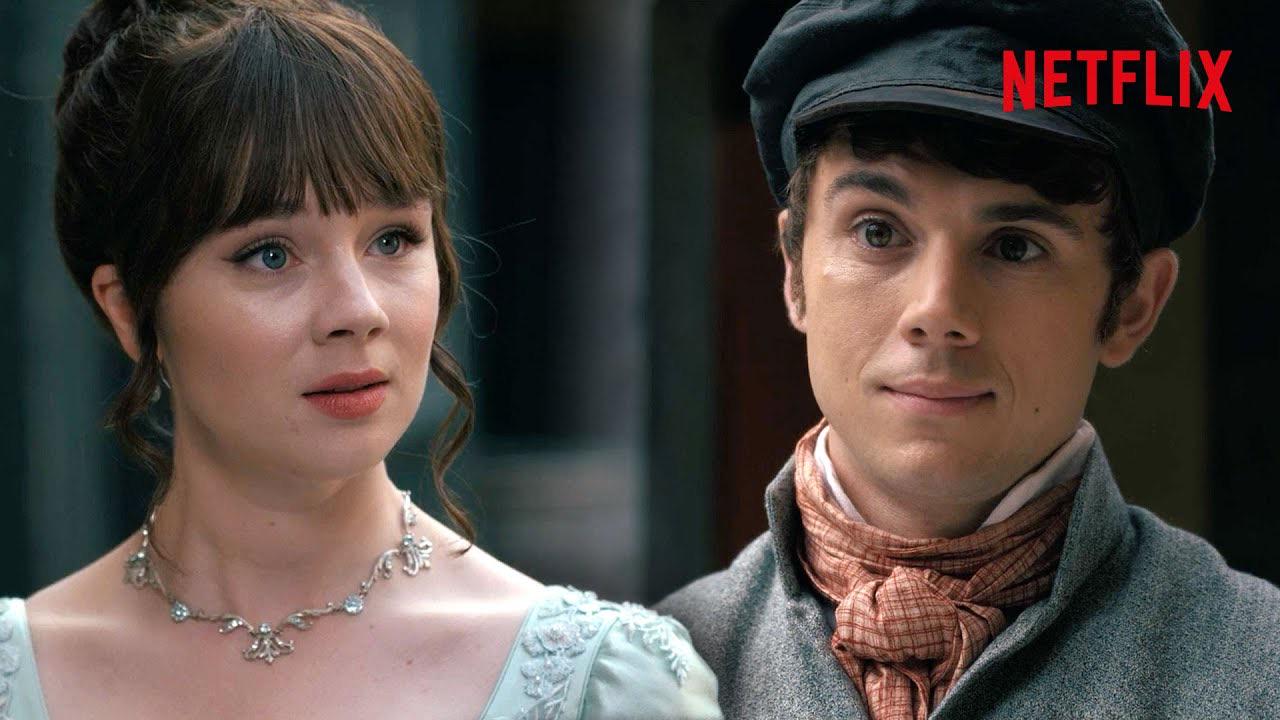
Just as I saw parallels between Eloise and Wollstonecraft in the evolution of her feminism to be more inclusive to other women beyond her sphere of experience, so too do I see a parallel here too. With the Violet spinoff coming, it’s quite likely there will be a comparison between Young Violet and Eloise, just as there was with Violet and Benedict. And even the “love changed me” aspect still aligns with the journey of the “Outsider,” because four of the five women featured found partners with whom they had fruitful partnerships, both professionally and personally, defying norms of their time in some way, whether it was living together outside of marriage or defying bigotry of the time (Leonard Woolf was Jewish). And a consistent thread for all of them was a sense of mutual respect and affection, if not great love, and most of the narratives emphasized how important the intellectual connection was when it came to their prospective romantic partner. That, of course, presents parallels to Theloise.
And in summing up the connections between these “Outsider” authors, Gordon writes: “We have long known the greatness of these five as individual writers, but here we have looked at them collectively. A recurring issue has linked them. These outsiders do not make terms with our violent world; they do not advance themselves by imitation of the empowered. Instead, they speak out against the humbug of authority and its ‘baubles’—the decorations and honours—disguising the mess rulers have made. These voices say no to arms and patriotism. ‘“For,” the outsider will say, “in fact, as woman, I have no country. As a woman I want no country. As a woman my country is the whole world.’”
While far from perfect when it comes to relationships with other women in their lives (as the short biographies in the book illustrate), all of these women were true fighters for women’s liberty in their own way, and were as unapologetically themselves as they could be, even as the world around them attempted to marginalize them. But none of them wavered or truly gave into the temptation to conform.
And I really hope we see more of that with Eloise. She’s such an empathetic person, and you see that in her interactions with Cressida, Hyacinth, Penelope to a degree in S3, and Posy. And in her family, she’s the Bridgerton with the most connections with other siblings, with Benedict and Fran being the ones she seems most connected to, with substantial progress made with Hyacinth.
This, as well as engaging with the work of her activist and intellectual female forebears, puts Eloise in great company with the real-life women of “The Outsiders Society,” a concept Woolf attempted to bring about when she and Leonard launched their publishing company, Hogarth Press (and of course, there’s the Bloomsbury connection!)
And in such a modern show, albeit using set pieces from the Regency, why should Eloise not have it all? In getting there, there is a rich opportunity to explore women’s history and Eloise’s place within it, colored by various influences around her, but still end up in a place that does not betray her core values, and take up the mantle of fully realized “Outsider” in the most complimentary sense.