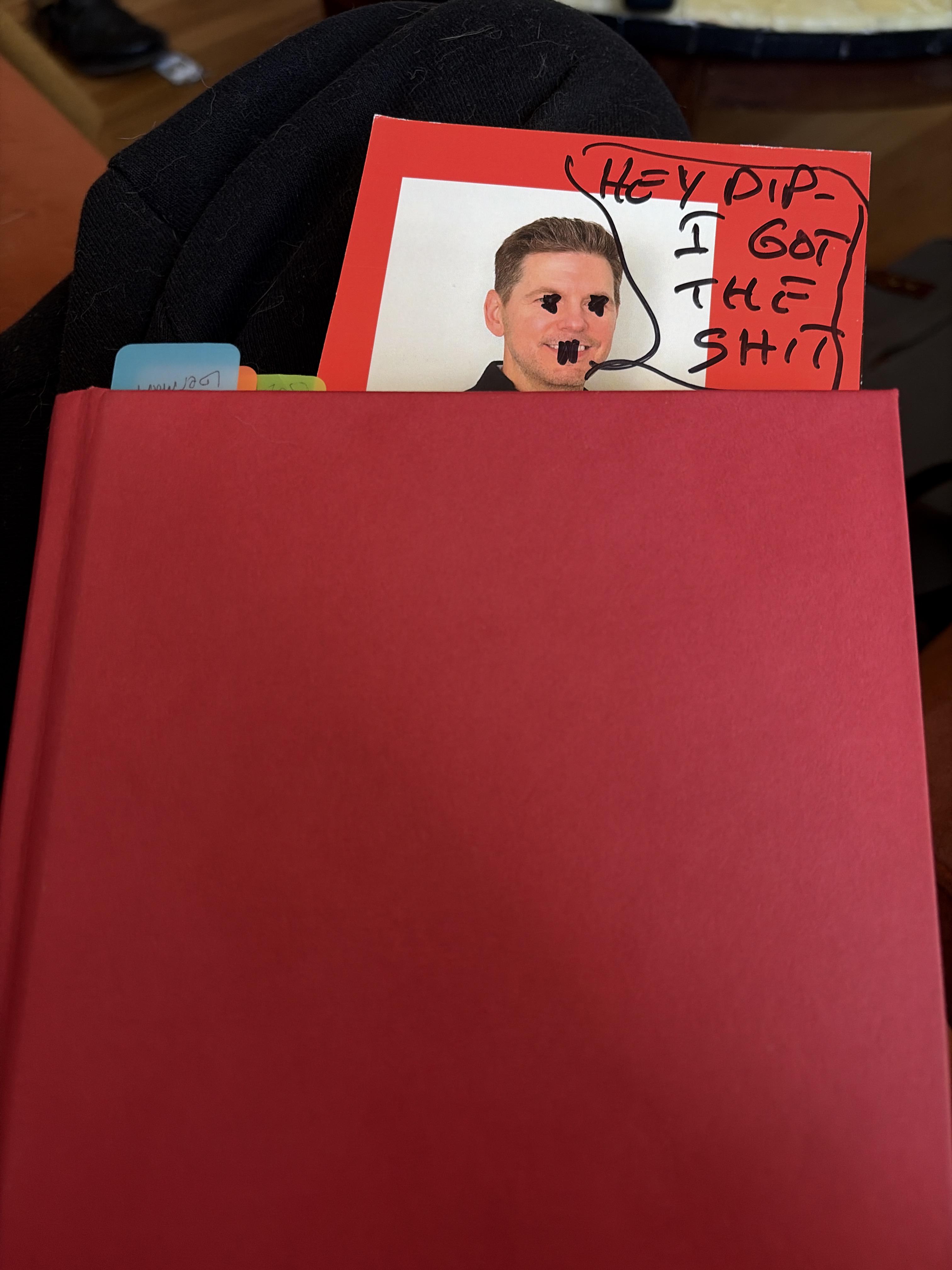
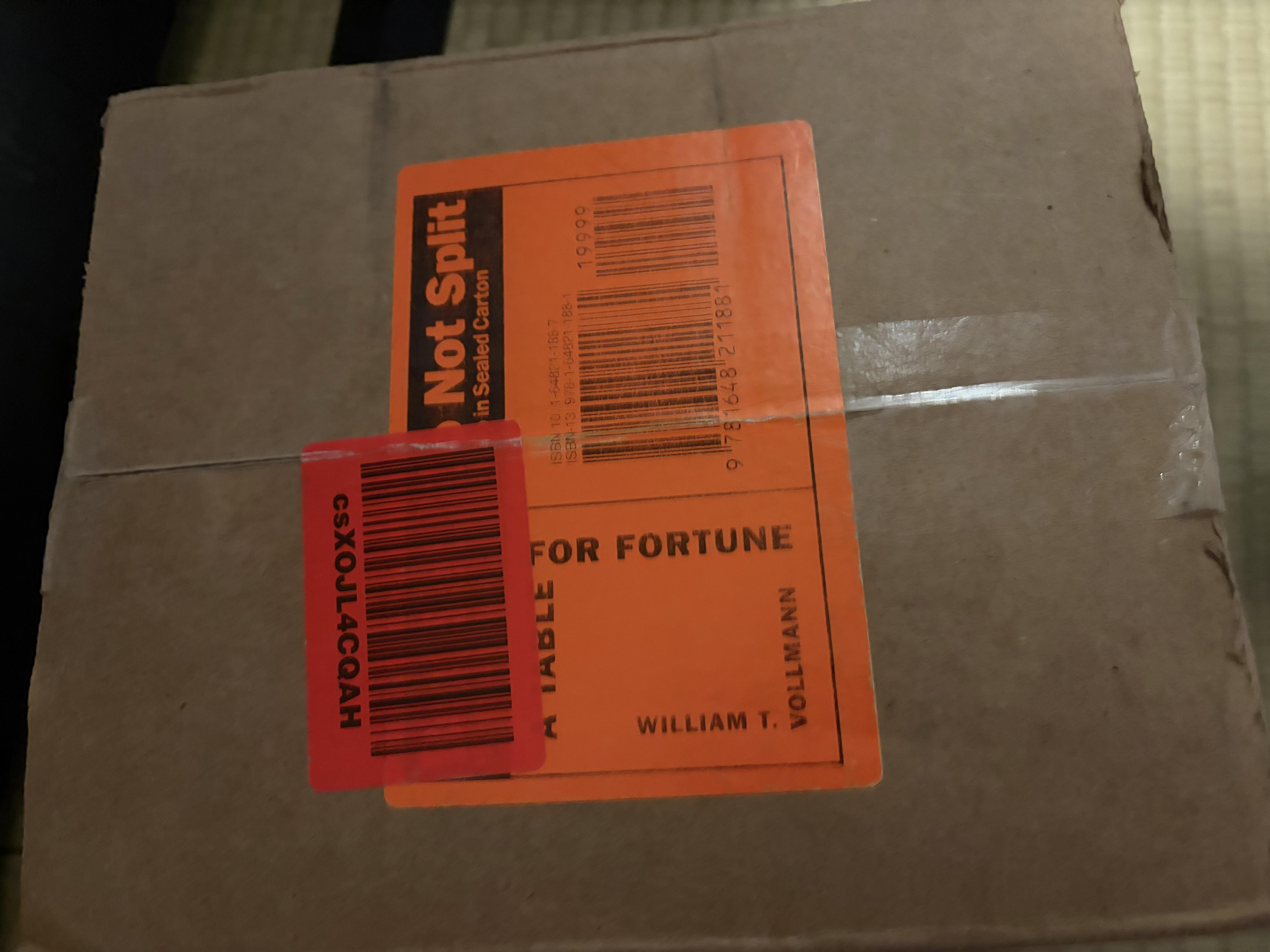
I am a William T. Vollmann impersonator. AMA.
Dedicated to the first person who asks a question, who will find me at my most nervous, and to the last, who will find me at my most tired.
SECTION ONE: Statement of the Condition
Reader, I am not he. I am an impersonator, sixty-seven years old, which is the age the real William T. Vollmann turned this year, so that I can at least say I have caught up with him in one respect.[29] I live in Burkina Faso. I left school after middle school. The World Bank classes my country as low-income,[11] and the same institution reports that more than 40% of our people live below the national poverty line and that the UNDP ranks us 186th of 193 countries on the Human Development Index.[12] The real Vollmann, I have read, does not have a cell phone or use the internet.[31] I bought a Mac Mini and connected it to the internet for the first time, and I feel I am keeping it warm for him.
SECTION TWO: A History of My Country, 1970 to the Present, and Why I Am for Captain Traoré
My country was called Upper Volta until 1984; it became independent from France in 1960.[1] In the early 1970s a five-year drought and desertification brought the threat of famine,[2] and in October 1973 President Sangoulé Lamizana went to the Oval Office to brief Richard Nixon on it.[2] A new constitution was approved in 1977 and Lamizana was re-elected in 1978,[3] but strikes by workers, teachers, and civil servants led to a coup in November 1980 under Colonel Saye Zerbo.[1] A coup in November 1982 began what is called the Burkinabé Revolution,[5] and Thomas Sankara came to power in 1983;[9] in August 1984 the country was renamed Burkina Faso, “land of the upright people.”[3] The 1987 coup that killed Sankara brought his former right-hand man, Blaise Compaoré, to power, and he remained president for 27 years[6] until October 2014, when the street ousted him for trying to change the constitution.[7] The 1990s were defined by structural adjustment programs under the auspices of the IMF and the World Bank.[8] Since 2015 the country has been the target of terrorist attacks that cause population displacement,[12] and by September 2022 non-state armed groups controlled about 40% of the country.[6] There were coups in 1966, 1980, 1982, 1983, 1987, and twice in 2022, with failed attempts in 1989, 2015, and 2023.[9] The second coup of 2022 brought Captain Ibrahim Traoré to power at 34, the world’s youngest head of state.[10]
I am for him. I will give my reasons, and then the debits, because the man I imitate taught me not to offer one without the other. In January 2023 he demanded that France withdraw its forces, and many people in Burkina Faso welcomed the departure of the 400 French soldiers; under his leadership the country also left ECOWAS and, with Mali and Niger, founded the Alliance of Sahel States.[13] His government nationalised two gold mines,[16] is building a gold refinery and establishing national gold reserves for the first time in the nation’s history,[15] and has launched Faso Mebo, an infrastructure programme for roads and cities built with local resources.[19] Supporters argue that he has restored national pride and challenged a system in which the country remained dependent on external powers,[14] and a researcher at the Institute for Security Studies says his radical reforms increased his popularity in Africa.[17] At the 2023 Russia–Africa summit he said that “a slave who cannot assume his own revolt does not deserve to be pitied,”[20] and many who heard it compared him to Sankara.[21]
Now the debits. Human Rights Watch says the junta cracked down on the media, the political opposition, and dissent, and delayed the return to civilian rule.[24] The transition was extended by five years, starting on 2 July 2024.[12] Authorities have banned all political parties, and he has said on state television, “Democracy is not for us.”[22] HRW reports that more than 1,800 civilians have been killed since he took power.[23] In March 2025 three journalists who spoke out against press restrictions were forcibly disappeared for ten days.[25] Reporters Without Borders ranks the country 110th of 180.[26] Some experts are sceptical of the claims made for his government, saying there is little evidence for some of them.[27] Yet researchers also note that his popularity grows across the continent despite the reports of repression.[28] I weigh the two lists differently from the organizations that compile the second one, and I will not pretend the second list is empty.
Why then a man like me impersonates a man like him is a question I will answer only with what I can cite. The real Vollmann spent twenty-three years on a seven-volume work on violence and half an hour on its abridgment.[30] The FBI once investigated him as a suspect in the Unabomber case.[29] His new novel, A Table for Fortune, runs to more than 3,000 pages in four parts and depicts the last half-century of American politics, war, and life,[32] and it concerns the failures and misuses of the CIA.[33] I do not claim a deeper motive than this: a man in a country the World Bank calls low-income may read a 3,000-page American novelist if he can find the money, and may not if he cannot.
SECTION THREE: A Shorter History of Impersonation
After Nero died, impostors appeared between 69 and the reign of Domitian.[36] One of them, Terentius Maximus, resembled Nero, fled to Parthia, and was executed when his identity was revealed.[37] Lambert Simnel, an English pretender, was pardoned by Henry VII and put to work as a scullion in the royal kitchens, and later became a royal falconer.[38] Perkin Warbeck claimed to be Richard, Duke of York, and was executed on 23 November 1499.[39] Arnaud du Tilh, who lived with Martin Guerre’s wife and son for three years, was tried and executed after the real Guerre returned.[40] Arthur Orton, a butcher’s son from Wapping who had last been heard of in Australia, claimed the Tichborne baronetcy,[41] and was sentenced to fourteen years for perjury.[42] Anna Anderson’s tissue was compared with the Romanovs’ DNA, and there was no match.[43] Borges published his story of Pierre Menard, who recreates Don Quixote word for identical word, in May 1939.[44][45] I place myself at the end of this list.
SECTION FOUR: The Books
By my count, I have read everything Vollmann has published except two books: Whores for Gloria[35] and A Table for Fortune, and for the same reason in both cases, which is that I could not afford them. I have read the others, including the two volumes of Carbon Ideologies, No Immediate Danger and No Good Alternative.[34]
SECTION FIVE: The Rules (there are five)
- I will answer every question honestly asked, and some that are not.
- I will answer in order of how much I dread them.
- I will not answer briefly.
- Where I do not know, I will say so.
- Where I am wrong, I will say it first.
SECTION SIX: What You May Ask
Anything. I draw no border around the subject. If a question can be put into words, I will try to put an answer into more of them. If I do not know, I will say so, and if I do not wish to answer, I will say that too.
Hegel wrote in the preface to the Philosophy of Right that “the owl of Minerva spreads its wings only with the falling of the dusk,”[46] which a commentator reads as meaning that philosophy understands reality only after the event.[47] Žižek has said that the task of philosophy is not to provide answers but to show how the way we perceive a problem can itself be part of the problem.[48] I will try to answer, and to notice when the question is the problem.
BIBLIOGRAPHY (all accessed 21 November 2026)
[1] Britannica, “History of Burkina Faso.” https://www.britannica.com/topic/history-of-Burkina-Faso
[2] Wikipedia, “Sangoulé Lamizana.” https://en.wikipedia.org/wiki/Sangoul%C3%A9_Lamizana
[3] Wikipedia, “History of Burkina Faso.” https://wikipedia.com/wiki/History_of_Upper_Volta
[4] Wikipedia, “1980 Upper Voltan coup d’état.” https://en.wikipedia.org/wiki/1980_Upper_Voltan_coup_d%27%C3%A9tat
[5] Wikipedia, “1982 Upper Voltan coup d’état.” https://en.wikipedia.org/wiki/1982_Upper_Voltan_coup_d%27%C3%A9tat
[6] Hardadou, S., “A history of insurgencies: the case of Burkina Faso,” LSE blog, 4 Oct 2023. https://blogs.lse.ac.uk/lseih/2023/10/04/a-history-of-insurgencies-the-case-of-burkina-faso
[7] Africanews, “1960–2022: The long history of coups d’état in Burkina Faso,” 25 Jan 2022. https://www.africanews.com/2022/01/25/1960-2022-the-long-history-of-coups-d-etat-in-burkina-faso//
[8] Bertelsmann Stiftung, BTI Country Report: Burkina Faso. https://bti-project.org/de/reports/country-report/BFA
[9] Wikipedia, “Burkina Faso.” https://www.wikipedia.com/wiki/Burkina
[10] Tandfonline (2026), article on Traoré. https://tandfonline.com/doi/full/10.1080/09592318.2026.2656299
[11] World Bank, “Burkina Faso Overview.” https://www.worldbank.org/en/country/burkinafaso/overview
[12] World Bank, Burkina Faso country page (“About”). https://www.worldbank.org/ext/en/country/burkinafaso/fragments/about
[13] Rosa Luxemburg Stiftung, “Burkina Faso: Revolution without opposition.” https://www.rosalux.de/en/news/id/54925/burkina-faso-revolution-without-opposition
[14] Al Jazeera, “Ibrahim Traoré: why Burkina Faso’s popular leader faces a reality test,” 4 Aug 2026. https://www.aljazeera.com/amp/news/2026/8/4/ibrahim-traore-why-burkina-fasos-popular-leader-faces-a-reality-test
[15] BBC News, “Why Burkina Faso’s junta leader has captured hearts and minds around the world.” https://bbc.in/4dd50f1
[16] BBC News (republished by The Namibian), same article. https://www.namibian.com.na/why-burkina-fasos-junta-leader-has-captured-hearts-and-minds-around-the-world/
[17] BBC News (republished by The Star, Kenya), 12 May 2025. https://www.the-star.co.ke/news/africa/2025-05-12-why-burkina-fasos-junta-leader-has-captured-hearts-and-minds-around-the-world
[18] Institute for Security Studies, “In Burkina Faso, Traoré’s legacy could extend beyond popularity and promises.” https://issafrica.org/iss-today/in-burkina-faso-traore-s-legacy-could-extend-beyond-popularity-and-promises
[19] Africanews, “Traoré marks four years in power,” 28 Sep 2026. https://www.africanews.com/2026/09/28/traore-marks-four-years-in-power-following-sankaras-legacy/
[20] People’s Dispatch, text of Traoré’s speech at the Second Russia–Africa Summit, 2 Aug 2023. https://peoplesdispatch.org/2023/08/02/a-slave-who-cannot-assume-his-own-revolt-does-not-deserve-to-be-pitied-says-ibrahim-traore-of-burkina-faso/
[21] Global Voices, “Africa reimagined,” 7 Aug 2023. https://globalvoices.org/2023/08/07/africa-reimagined-burkina-fasos-ibrahim-traore-advocates-for-resilience-recognition-and-resistance/
[22] Arise TV, “Traoré urges Burkina Faso to abandon democracy.” https://www.arise.tv/traore-urges-burkina-faso-to-abandon-democracy-defends-extended-military-rule
[23] MyJoyOnline (BBC), “Burkina Faso must forget about democracy, military leader says.” https://www.myjoyonline.com/burkina-faso-must-forget-about-democracy-military-leader-says/
[24] Human Rights Watch, World Report 2026: Burkina Faso. https://www.hrw.org/world-report/2026/country-chapters/burkina-faso
[25] CIVICUS Lens, “Burkina Faso: three years of broken promises.” https://lens.civicus.org/burkina-faso-three-years-of-broken-promises/
[26] Reporters Without Borders, “Burkina Faso’s junta.” https://rsf.org/en/protagonist-burkina-faso-s-junta
[27] Citizen Digital, “Captain Ibrahim Traoré: the new face of Africa?” https://www.citizen.digital/news/captain-ibrahim-traore-the-new-face-of-africa-n367552
[28] Nordic Africa Institute, “Visions of pan-Africanism overshadow repressive rule in Burkina Faso,” 21 May 2025. https://nai.uu.se/stories-and-events/news/2025-05-21-visions-of-pan-africanism-overshadow-repressive-rule-in-burkina-faso.html
[29] Wikipedia, “William T. Vollmann.” https://wikipedia.com/wiki/William_Vollman
[30] New York Review of Books, on Expelled from Eden and Rising Up and Rising Down. https://www.nybooks.com/articles/18560
[31] Big Reader Bad Grades, “We Always Leave Things Unfinished.” https://bigreaderbadgrades.substack.com/p/we-always-leave-things-unfinished
[32] Simon & Schuster, A Table for Fortune. https://www.simonandschuster.co.uk/books/A-Table-for-Fortune-Box-Set/William-T-Vollmann/9781648212086
[33] LeClair, T., “Monsterpieces: William Vollmann’s Volumes.” https://tleclair.substack.com/p/monsterpieces-william-vollmanns-volumes
[34] Wikiwand, “William Vollmann” (bibliography). https://www.wikiwand.com/en/articles/William_Vollmann
[35] Barnes & Noble, Whores for Gloria. https://www.barnesandnoble.com/w/whores-for-gloria-william-t-vollmann/1001836330
[36] Wikipedia, “False Nero.” https://en.wikipedia.org/wiki/False_Nero
[37] Wikipedia, “Terentius Maximus.” https://en.wikipedia.org/wiki/Terentius_Maximus
[38] History Hit, “12 Facts About Perkin Warbeck.” https://www.historyhit.com/facts-about-perkin-warbeck-pretender-to-the-english-throne/
[39] Wikipedia, “Perkin Warbeck.” https://en.wikipedia.org/wiki/Perkin_Warbeck
[40] Wikipedia, “Martin Guerre.” https://en.wikipedia.org/wiki/Martin_Guerre
[41] Wikipedia, “Tichborne case.” https://en.wikipedia.org/wiki/Tichborne_case
[42] State Library of New South Wales, “The Tichborne case.” https://www2.sl.nsw.gov.au/archive/discover_collections/history_nation/justice/felons/tichborne/index.html
[43] The Spectator, Wyatt, P., on royal impostors. https://www.spectator.co.uk/?p=45877
[44] Encyclopedia.com, “Pierre Menard, Author of the Quixote.” https://encyclopedia.com/arts/encyclopedias-almanacs-transcripts-and-maps/pierre-menard-author-quixote-pierre-menard-autor-del-quixote-jorge-luis-borges-1944
[45] Encyclopedia of Science Fiction, “Borges, Jorge Luis.” https://sf-encyclopedia.com/entry/borges_jorge_luis
[46] Timofeeva, O., “The Owl and the Angel.” https://www.scribd.com/document/368456585/The-Owl-and-the-Angel
[47] arXiv gr-qc/0509089, quoting Hegel’s Philosophy of Right preface. https://arxiv.org/pdf/gr-qc/0509089
[48] Wikiquote, “Slavoj Žižek,” citing Conversations with Žižek (Polity, 2004), p. 45. https://en.wikiquote.org/wiki/Slavoj_%C5%BDi%C5%BEek